Every few years a haircut comes along that quietly suits almost everybody, and curtain bangs are that cut right now. I resisted them for a long time because my last fringe, years ago, was a blunt straight-across style that needed trimming every ten days and misbehaved in the slightest humidity. Curtain bangs are a completely different experience. They part in the middle, sweep away from the face like a pair of curtains opening, and blend into the rest of your hair instead of sitting on top of it. The result is softness around the face without the commitment of a full fringe, and a grow-out phase so gentle that most people never have an awkward week.
If you have been hovering over the idea, saving photos and then talking yourself out of it, this guide walks through everything: what the cut actually is, how it works on long and medium hair, exactly what to ask your stylist for, how to style it at home in about four minutes, and the small mistakes that make the difference between bangs that flow and bangs that fight you.
What Curtain Bangs Actually Are
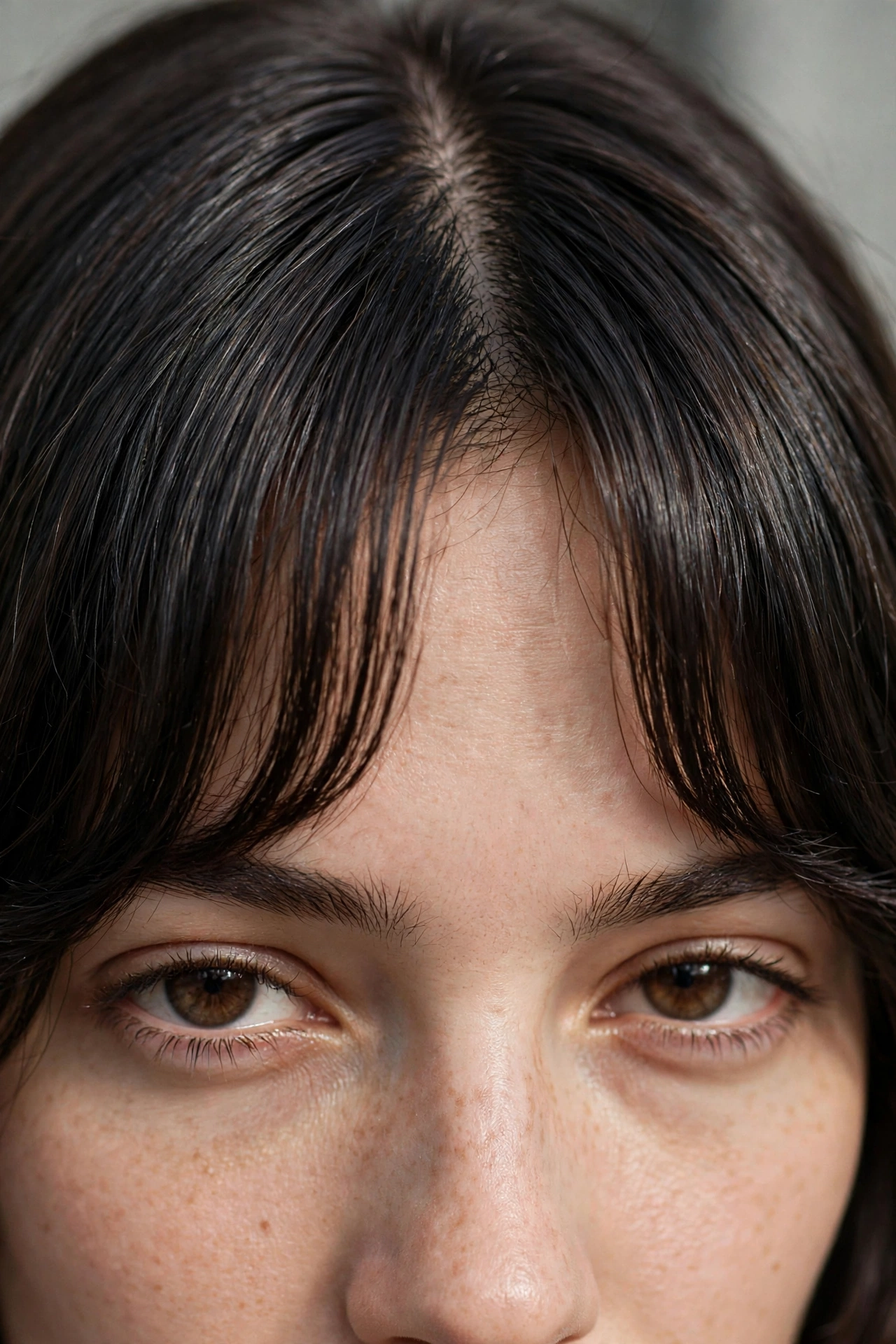
A curtain bang is a centre-parted fringe cut on a gradient: shortest at the middle of the forehead, usually somewhere between the brows and the bridge of the nose, and gradually longer towards the sides until it melts into your face-framing layers around the cheekbones or jaw. That angled shape is the whole secret. Because the longest pieces sit at the edges, the bangs open up the face instead of closing it off, and because there is no hard line, regrowth simply becomes a longer face-framing layer rather than an obvious fringe growing out.
They flatter most face shapes for the same reason. On round faces, the centre opening and the longer side pieces add length. On square faces, the soft curve of the sweep takes the edge off a strong jaw. On long faces, keeping the middle a little shorter and fuller adds width where it is welcome. Heart-shaped faces love them because the cheekbone-length sides balance a narrower chin. The one honest caveat: if you have a very strong cowlick right at the centre hairline, mention it to your stylist, because the parting may need to sit slightly off-centre to cooperate.
Curtain Bangs on Long Hair
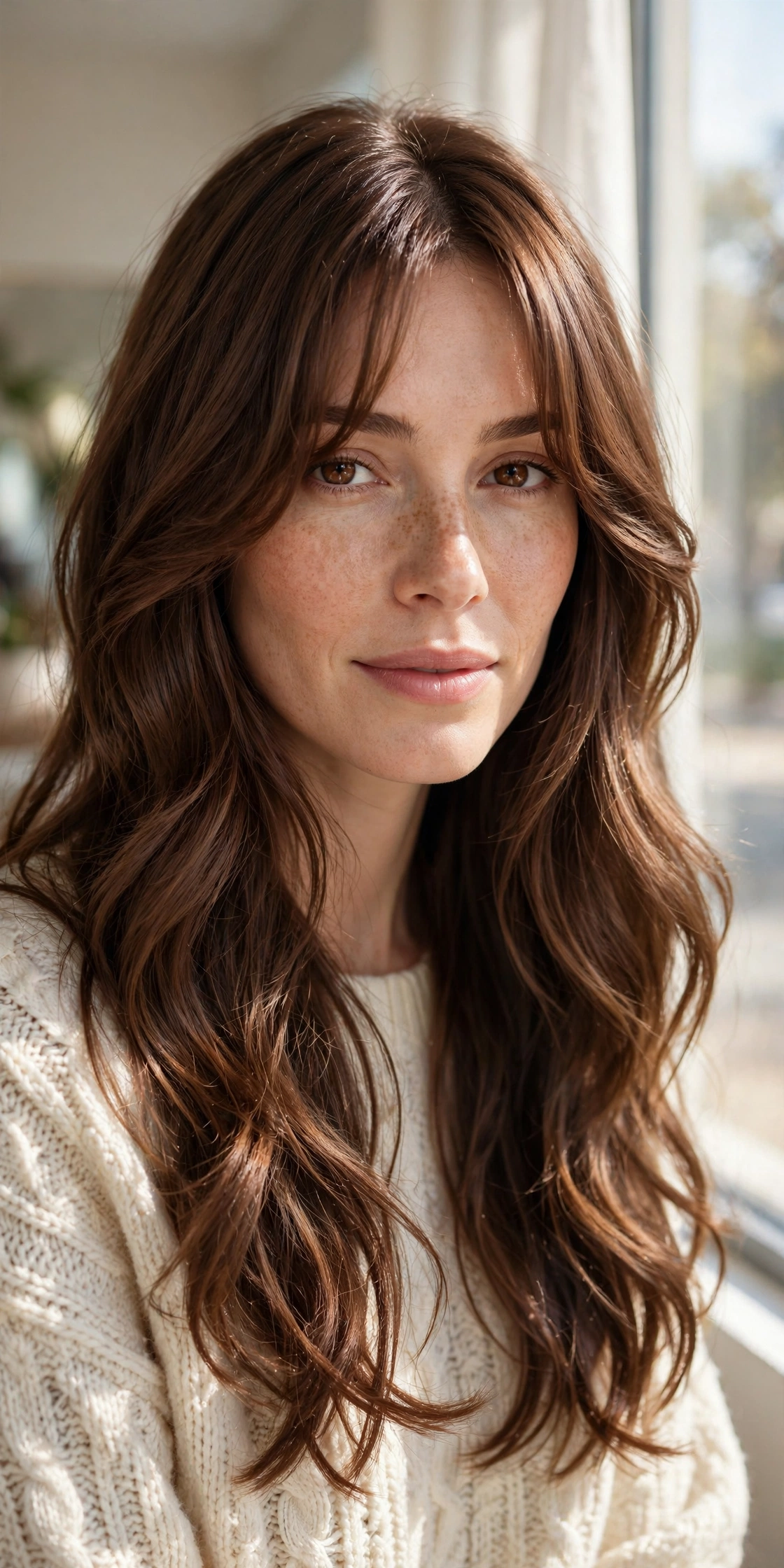
Long hair is where curtain bangs first made their name, and it is still the easiest pairing. With lengths past the shoulders, ask for the side pieces of the bang to connect into long face-framing layers that start at the cheekbone and graduate down. This gives that swishy, seventies-inspired movement when you turn your head, and it takes visible weight off the front of long hair so the whole style looks lighter rather than dragged down.
Two variations worth knowing: a shorter, brow-skimming centre gives a more polished, deliberate look that pairs beautifully with sleek blowouts, while a longer centre that starts nearer the nose reads softer and more undone, and is the most forgiving version if you are nervous. On long hair you can also afford a slightly thicker bang section, because there is plenty of length behind it to keep the proportions balanced.
Curtain Bangs on Medium Hair and Lobs
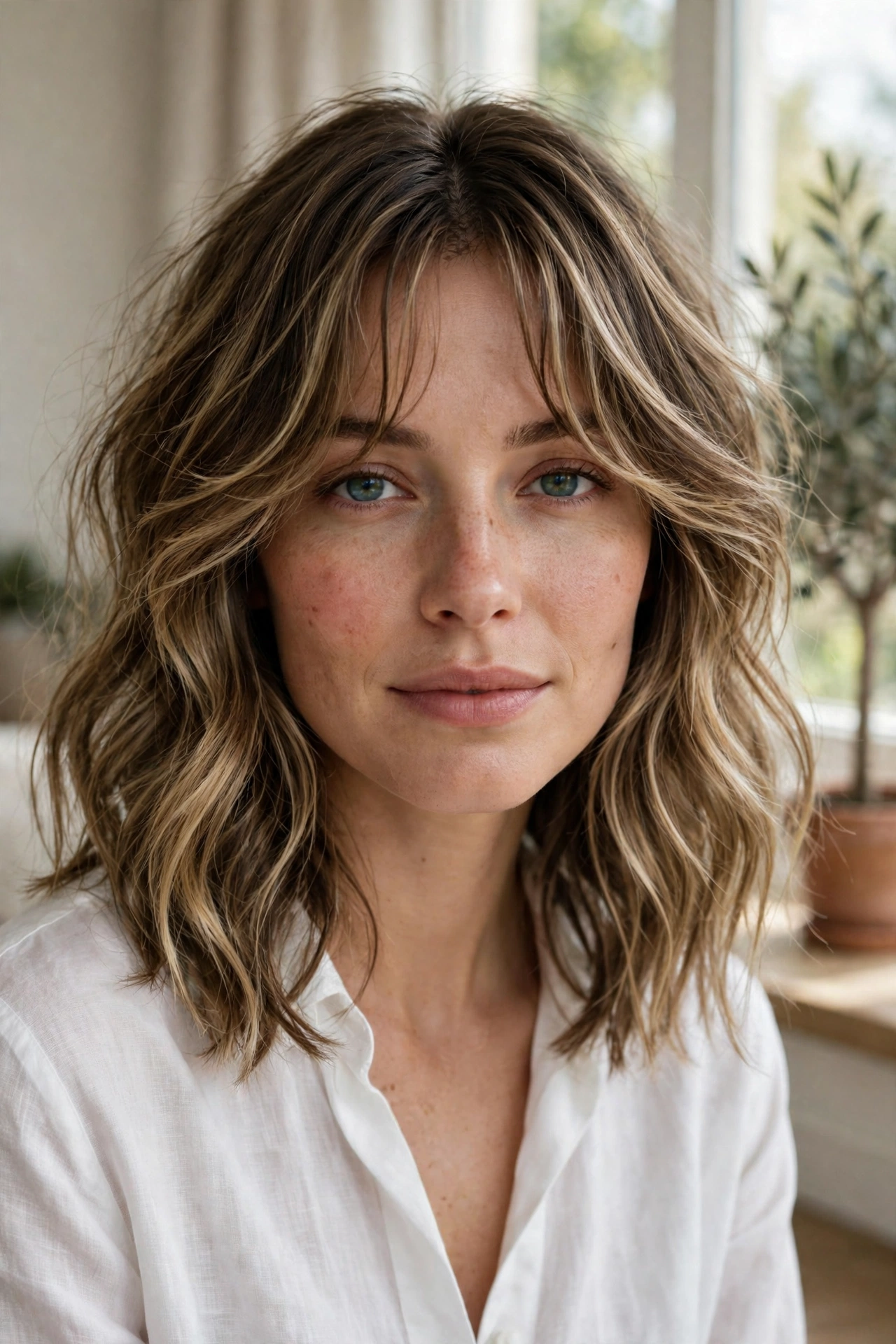
Medium lengths and lobs are arguably where curtain bangs do the most work. A shoulder-length cut can look a little plain from the front; curtain bangs add a focal point, break up the outline and make a simple lob look styled even when you have done almost nothing to it. Keep the bang a touch airier on medium hair — a slightly finer section and softer ends stop the front from looking heavy against a shorter length.
Waves are the natural partner here. A loose bend through the mid-lengths makes the bangs curve away from the face on their own, so the style practically falls into place after air-drying. If your lob is blunt, ask for the very ends of the bang to be point-cut rather than sliced, which keeps them feathery instead of chunky.
What to Ask Your Stylist For, Step by Step
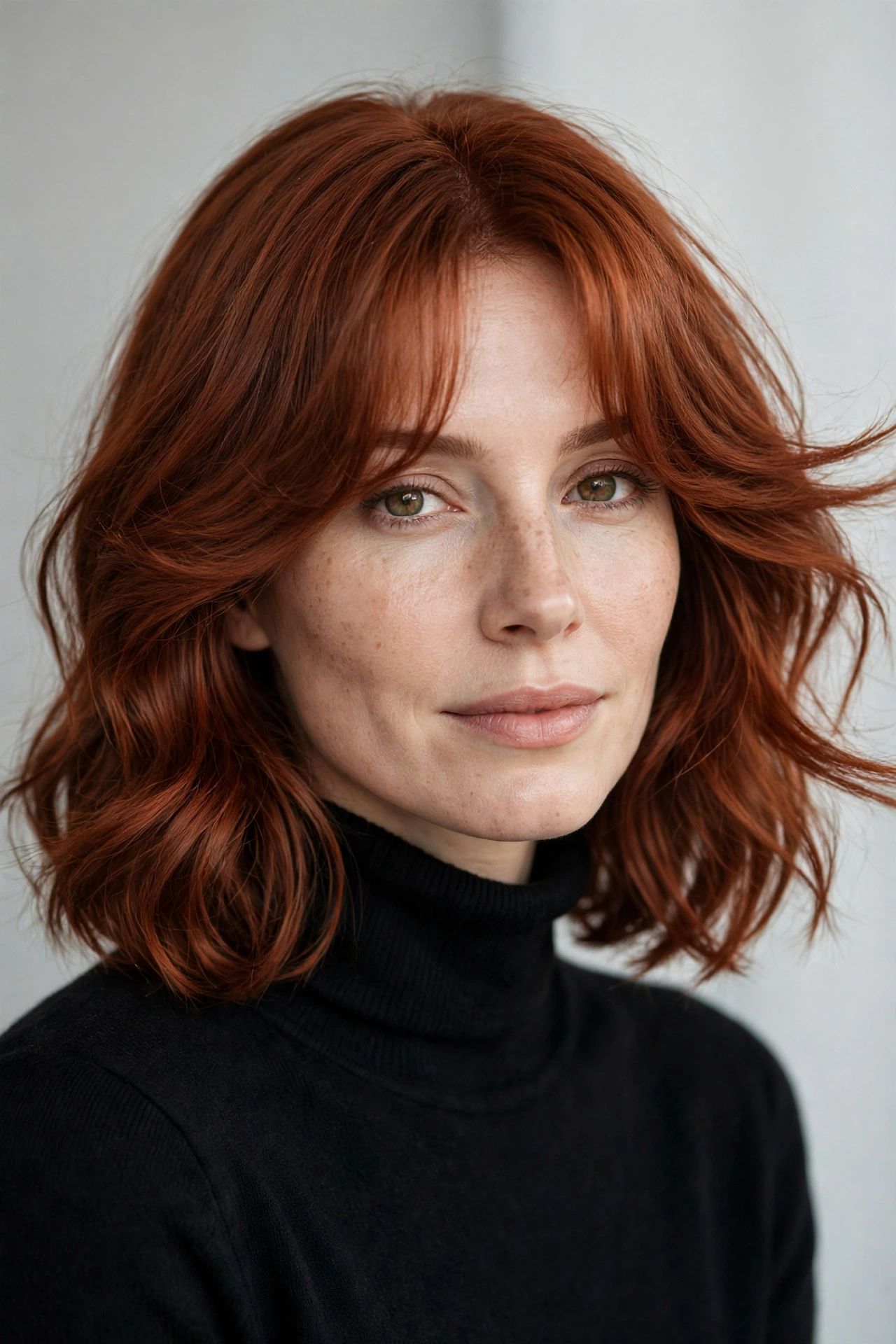
Bring two or three photos of curtain bangs on hair that resembles yours in length and texture — a photo of fine straight hair will not translate directly onto thick curls, and a good stylist will tell you so. Then be specific about three things. First, the centre length: point to exactly where you want the shortest piece to land, because “short” means different things to different people. Second, the side length: cheekbone is classic, jaw-length is softer and grows out fastest. Third, the thickness: how much hair the bang section takes from the hairline back. A shallow triangle is subtle; a deeper one is bolder and needs more styling.
Also ask them to cut the bangs dry or to check them dry before you leave. Bangs spring up when they dry, especially wavy ones, and a fringe that looked perfect wet can sit a centimetre shorter an hour later. Finally, get them to show you the thirty-second styling move — a stylist who styles them in front of you is teaching you the exact angle your hair wants to be dried at.
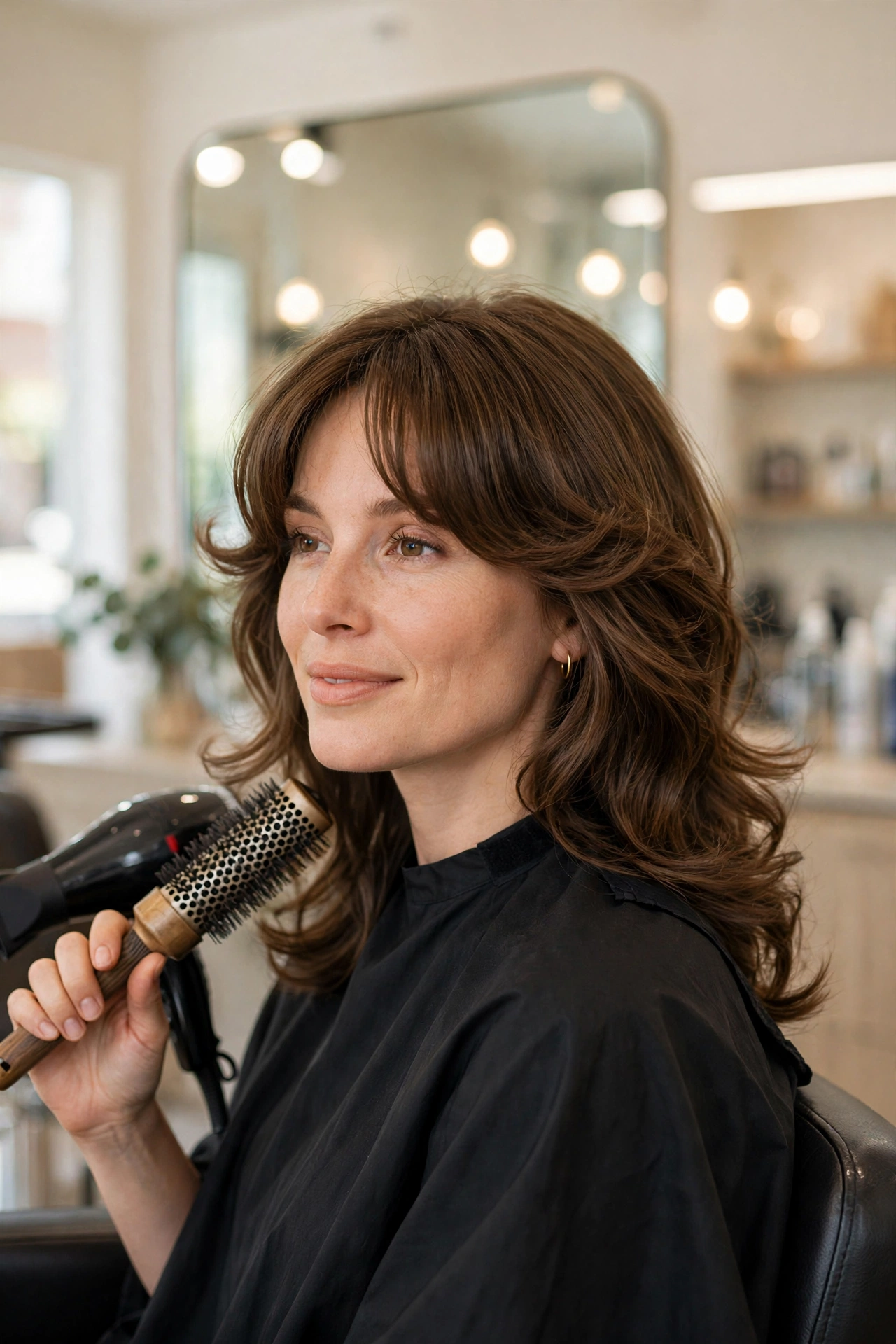
How to Style Curtain Bangs at Home
The good news: curtain bangs are one of the lowest-effort fringes to style, because they are meant to fall open rather than sit flat. On damp hair, apply a small amount of heat protectant and find your centre part while the hair is still wet — the part is much harder to move once dry. Using a round brush, blow-dry the bangs forward and down first, aiming the airflow from above, for about twenty seconds. This settles any cowlick at the root.
Then comes the move that creates the curtain shape: gather both sides together, and dry them as one section, brushing forward and then sweeping the whole thing back and away from your face, or roll them around the brush away from your face and hold for a few seconds while they cool. Let them fall, and they will naturally split at the centre and curve outwards at the sides. On second-day hair, a large velcro roller worn while you do your makeup does the same job without heat, and a quick blast with a straightener curved away from the face fixes any pieces that slept badly. Resist over-styling: a little movement looks intentional, while glass-flat bangs lose the softness that makes the cut.
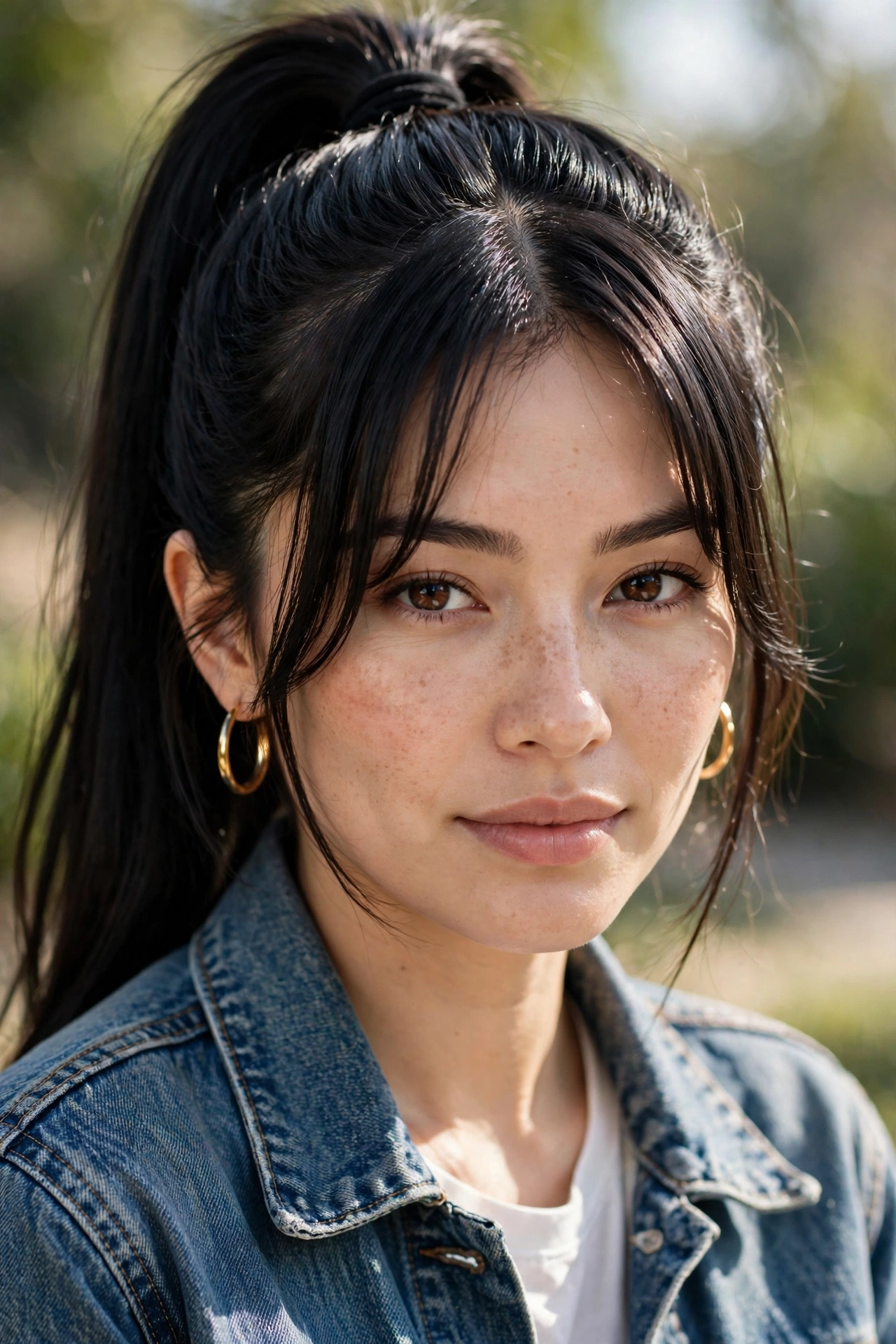
Updos, Ponytails and Colour Pairings
One underrated joy of curtain bangs is what they do for tied-back hair. A ponytail or bun with a blunt fringe can look severe; with curtain bangs left loose, the same ponytail gains two soft face-framing pieces that keep the look feminine and deliberate rather than scraped-back. For updos, pull the longer side pieces out before you pin everything up — it takes seconds and photographs beautifully.
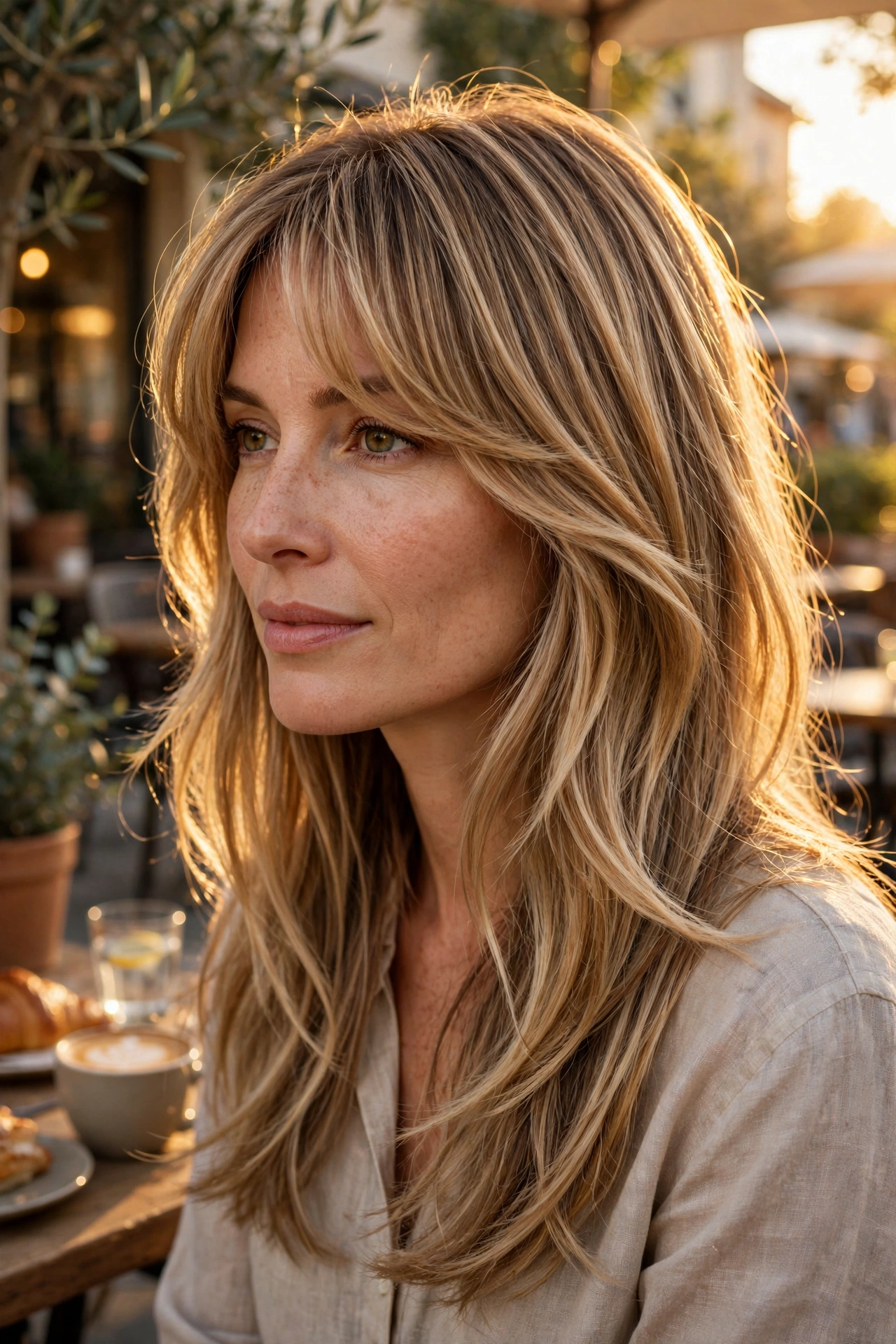
Colour-wise, curtain bangs love dimension. Balayage and money-piece highlights placed through the bang section brighten the whole face, and a slightly lighter tone on the face-framing pieces makes the sweep of the cut more visible. If your colour is all-over, even a subtle gloss makes the bangs catch the light as they move.
Maintenance, Grow-Out and Honest Costs
Expect a tidy-up trim every four to six weeks to keep the centre length where you like it. Many salons offer quick fringe trims at a low price, sometimes free between full appointments, so it is worth asking before you book a whole haircut just for the bangs. Between trims, the shape degrades gracefully: the centre pieces become longer face-framers, and nothing looks unfinished. If you decide to grow them out entirely, you are looking at a few months of slightly longer layers, not a year of pinning and suffering. Budget-wise, that is the appeal — the cut itself is part of a normal haircut price, and upkeep is among the cheapest of any fringe style.
Common Mistakes to Avoid
The most common mistake is cutting the centre too short. It is always safer to start longer — hair can be taken up at your next visit, but a too-short curtain bang has to be lived with while it grows. Second, styling them flat like a regular fringe: pushing curtain bangs straight down kills the sweep and usually creates a stubborn split in the wrong place. Third, using heavy oils or rich creams on them. Bangs sit against the forehead, pick up oil faster than the rest of your hair and can look stringy by midday; keep products light, use dry shampoo at the roots, and wash just the bang section in the sink on days when the lengths are still fresh. Fourth, trimming them yourself with the hair pulled tight — tension makes them spring up shorter than you measured. If you must tidy the very ends at home, do it on dry hair, in tiny amounts, with the scissors pointing up into the ends rather than across.
Frequently Asked Questions
Do curtain bangs suit a round face?
Yes, they are one of the most flattering options for round faces. The centre opening creates a vertical line that visually lengthens the face, and side pieces ending at the cheekbone or jaw add definition. Ask for the centre slightly longer if you want the gentlest slimming effect.
How often do curtain bangs need trimming?
Every four to six weeks keeps the shape crisp, but they are forgiving if you stretch it. Because the edges blend into layers, an extra two weeks simply looks like a longer, softer version of the same style rather than an overgrown fringe.
Can I have curtain bangs with curly or wavy hair?
Absolutely, with the right cut. They should be cut dry, in their natural curl pattern, and left longer than the straight-hair version to allow for shrinkage. Styled with a diffuser or simply air-dried with a light curl cream, they give curly hair a beautiful framed shape.
Are curtain bangs high maintenance day to day?
No — most people spend two to four minutes on them. A quick blow-dry with a round brush, or a velcro roller while you get ready, is enough. They are far lower maintenance than a blunt fringe because they are supposed to move and separate naturally.
What is the difference between curtain bangs and face-framing layers?
Curtain bangs are a true fringe: a section at the front hairline is cut shorter, with the shortest point at the centre of the forehead. Face-framing layers are longer graduated pieces around the face that usually start at the cheekbone or below. Many haircuts combine both, with the bangs blending into the layers at the sides.
The Bottom Line
Curtain bangs earn their popularity honestly: they soften your features, make simple haircuts look styled, pair with everything from long waves to a plain ponytail, and grow out without a single bad week. Start a little longer than your reference photo, learn the one-minute blow-dry sweep, and keep the trims regular. It is the rare trend that asks very little of you and gives a lot back — which is probably why, years after it resurfaced, it still has not gone anywhere.