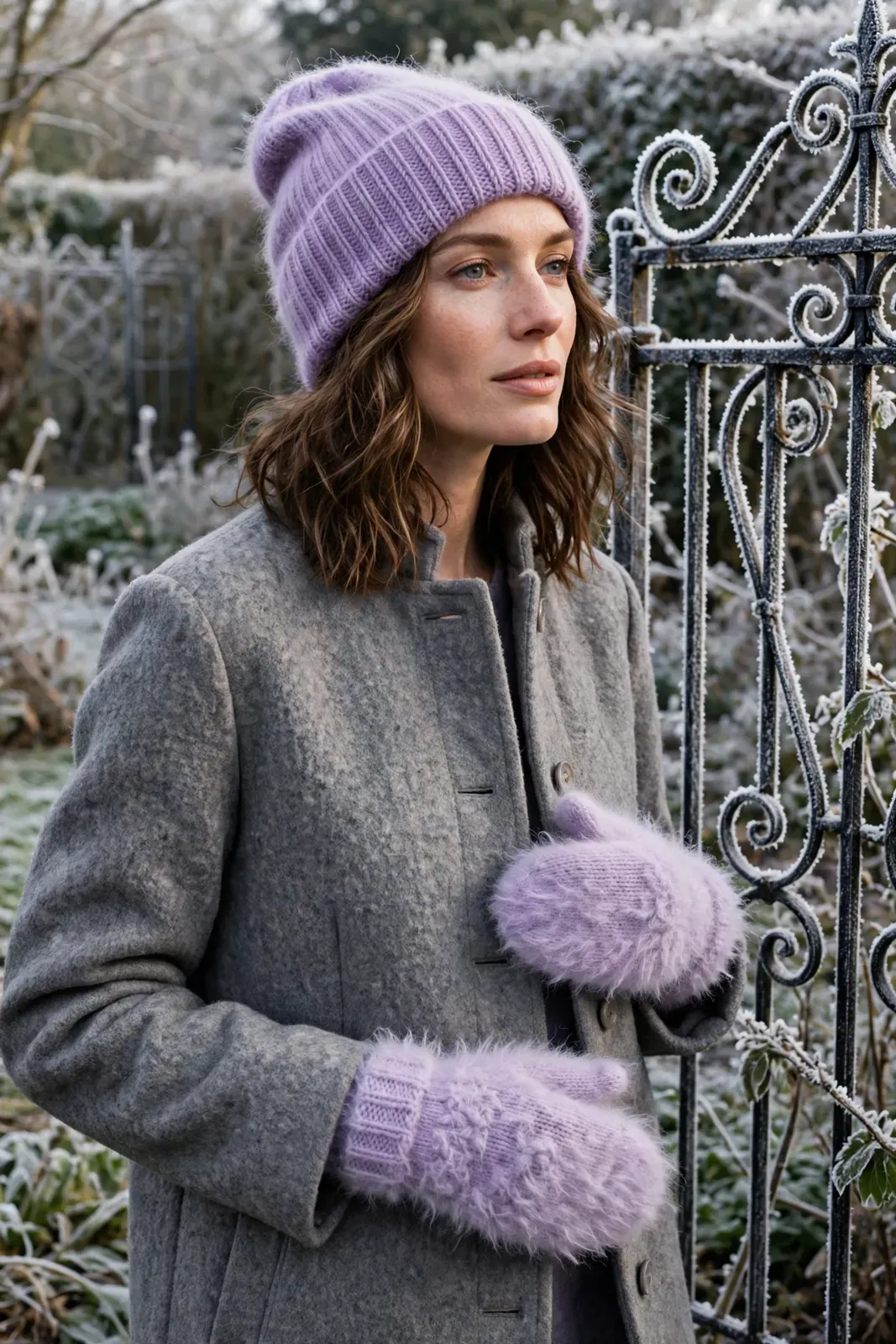
Some winter accessories earn their keep quietly, and my daphne lilac angora mittens are exactly that kind of piece. They are soft lilac mittens in fluffy angora, the colour of daphne flowers in late winter, and they have turned frosty morning walks from something I endure into something I actually look forward to. The hero photo is how they start most days: pulled on with a cream coat, wrapped around a warm mug before I have properly woken up.
I bought my daphne lilac angora mittens on a cold market morning when my old gloves had finally given up at the seams. The stallholder held them up and the light caught that soft halo angora gets, and I was sold before I even tried them on. Two winters later they still look almost new, and I have learned a lot about wearing, pairing and caring for angora in that time. This guide shares the nine ways I wear my daphne lilac angora mittens most, a simple frosty-morning routine, honest buying advice, and the care mistakes that can ruin a good pair.

Why Daphne Lilac Angora Mittens Work So Hard
Angora is one of the warmest natural fibres you can wear, and it achieves that warmth without weight. The fibres are fine and hollow, so they trap still air close to the skin, and a mitten that feels like a cloud can keep fingers warmer than a much heavier wool glove. Mittens help too: fingers share warmth inside one pocket instead of sitting alone in separate glove fingers, which is why mittens beat gloves on genuinely cold days.
The colour does the rest. Daphne lilac sits between pink and purple, soft enough for neutrals and strong enough to lift a grey winter wardrobe. It flatters cream, charcoal, navy and denim, and it photographs beautifully in pale winter light, which is why my daphne lilac angora mittens end up in so many of my cold-weather pictures. For a sleeker contrast on smarter days, I also keep a pair from my leather gloves for women guide in rotation.
9 Frosty Ways to Wear Daphne Lilac Angora Mittens
1. With a cream coat and a warm mug, the morning hero
The look in the hero photo. Cream and lilac are gentle together, and the fluffy texture stops a plain coat from looking flat. This is my school-run, dog-walk and bakery-run uniform from November to February.
2. With a grey wool coat for a tonal pairing
The pairing photo below shows the grey coat combination. Grey and lilac are cousins, so the outfit reads calm and deliberate rather than matched. Add a lilac beanie if you like a set, or keep your daphne lilac angora mittens as the only colour.
3. With navy for contrast that still feels soft
Navy makes lilac look brighter without shouting. A navy peacoat, dark jeans and these mittens is the combination I reach for on city days when I want colour but not a statement.
4. With a white puffer on the coldest days
When the temperature drops properly, my daphne lilac angora mittens go on with my white puffer and waterproof boots. Angora over a thin liner glove gives you a two-layer system for the very coldest mornings.
5. With a plaid scarf for market mornings
The lifestyle photo below is a market morning: mittens, a plaid scarf and a basket. Lilac picks up the soft stripes in most plaid scarves, and daphne lilac angora mittens slip off quickly when you need fingers for change or phone payments.
6. Dressed up with a black coat for evenings
Black can look hard in winter, and a soft lilac mitten is an easy way to soften it for evening walks, carol concerts and winter weddings where you stand outside chatting longer than planned.
7. With knitwear in the same colour family
A lilac or mauve jumper with the mittens in a slightly different shade creates a tonal column of colour that looks expensive. Keep everything else neutral so the shades can do the work.
8. With denim and trainers for mild winter days
On milder days my daphne lilac angora mittens are the only winter piece I need: jeans, trainers, a sweatshirt and warm hands. They are light enough to stuff into a coat pocket when the sun comes out.
9. As a gift-ready pairing with a matching scarf
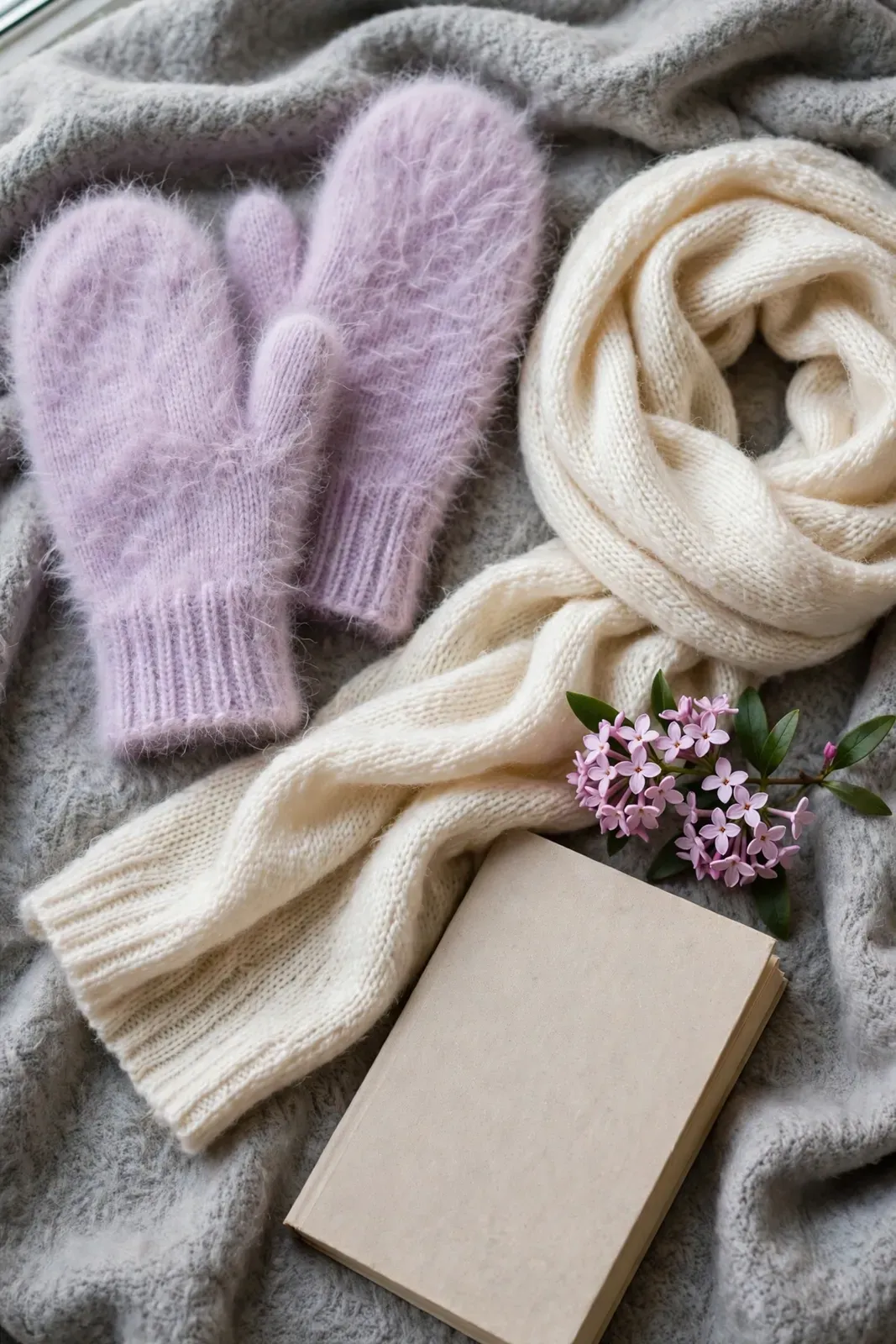
I have given this exact pairing twice: lilac mittens with a cream scarf, wrapped in tissue. Angora feels luxurious, sizing is forgiving, and the colour suits almost everyone.
A Frosty-Morning Routine, Step by Step
Step 1: Keep your daphne lilac angora mittens by the door, not in a drawer. Mine live in a small basket with my keys, because the pair you forget is the pair that does not warm you.
Step 2: Put them on before you go out, not after your hands are already cold. Angora traps the warmth your hands already have; it works much better as a keeper of heat than a rescue.
Step 3: Warm the mug trick. On the coldest mornings I hold a warm mug for two minutes before leaving, as in the hero photo. Warm hands plus angora mittens stay comfortable for the whole walk.
Step 4: Use the phone rule. Mittens and touchscreens do not mix, so I check messages before I leave and put the phone away. The walk is calmer for it, and the mittens stay clean.
Step 5: Shake off the frost at the door. A quick shake and ten minutes airing on the radiator rail — never on a hot radiator — keeps the fibres fluffy instead of damp and flat.
Buying Advice: Choosing Good Angora Mittens
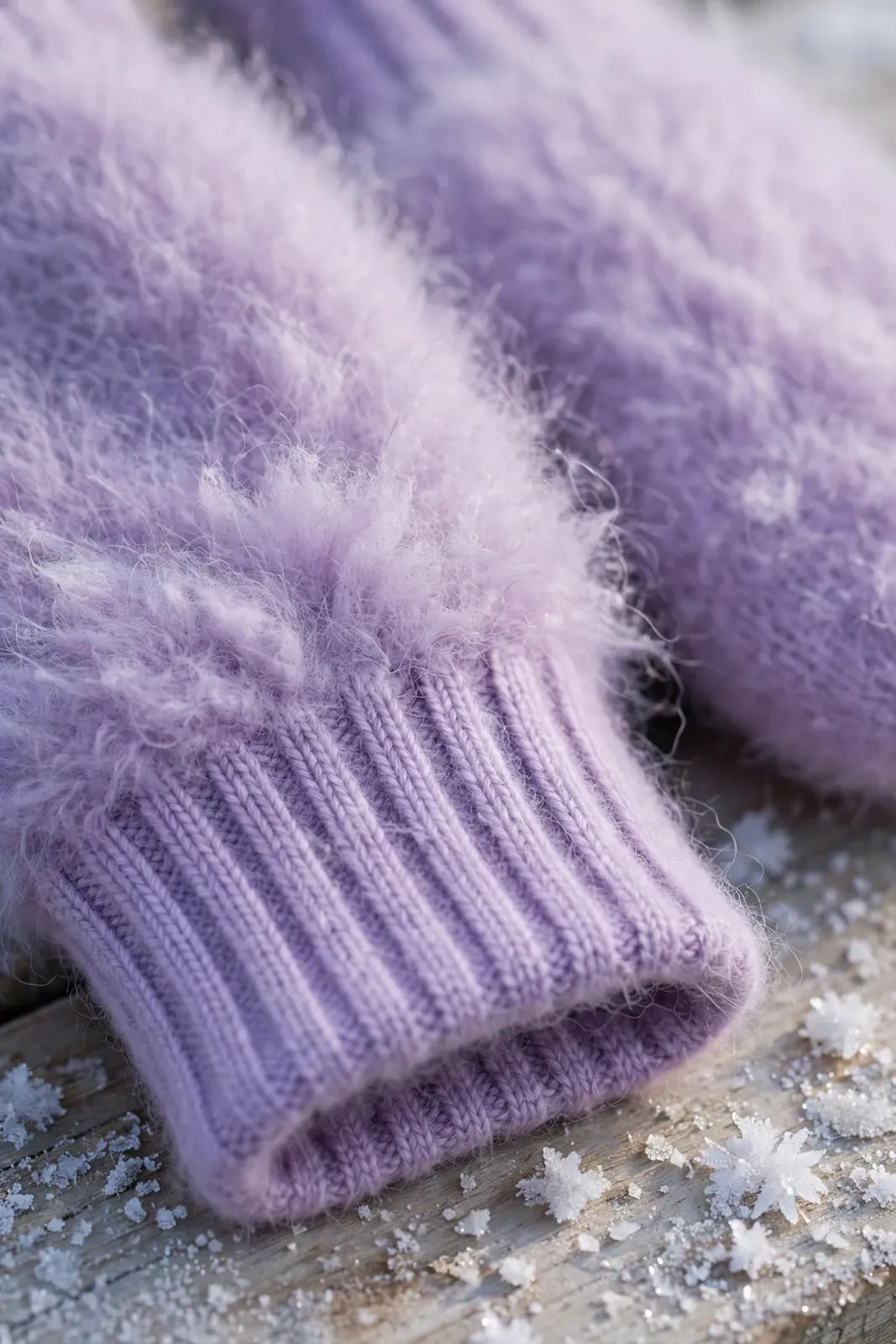
Real angora fibre comes from the angora rabbit and is known for its softness, fine fibres and the fluffy halo you can see in the detail photo. Good daphne lilac angora mittens feel light, warm within seconds and slightly springy when you squeeze them. Check the label: many pairs are blends, and a blend with fine wool is often more hard-wearing than pure angora, which can felt if it is rubbed and damp. A sensible angora share still gives you the halo and the warmth.
The colour name comes from daphne, the late-winter flowering shrub with lilac-pink blooms — that soft in-between shade is what to look for, not a bright purple. Then check the construction. The cuff should be ribbed and long enough to tuck under coat sleeves so no wrist gap lets the cold in. The thumb seam takes the most strain, so look for neat, dense stitching there, and hold the mitten to the light: thin patches between the fingers will wear through first.
Size honestly. Mittens should hug without squeezing; fingers need a little air space because that trapped air is the insulation. If you are between sizes and walk in very cold weather, size up and add a thin liner glove underneath on the bitter days.
Angora Care and Common Mistakes to Avoid
The biggest mistake is washing daphne lilac angora mittens like everyday laundry. Heat, agitation and wringing felt those fine fibres into a tight mat, and the halo never fully comes back. Wash rarely — a good airing handles most days — and when you do wash, use cool water with a gentle wool wash, press the water out in a towel, reshape, and dry flat away from direct heat.
The second mistake is storage. Cramming mittens into a crowded pocket or bag rubs the halo flat and can snag the knit on keys and zips. Store your daphne lilac angora mittens flat or loosely rolled, ideally in a small cloth bag, with cedar or lavender nearby in moth season. The third mistake is wearing them for gritty jobs — carrying rough firewood, scraping ice off a car — which pills the surface. Keep a tougher old pair for chores and save the angora for everything else. A soft clothes brush, used gently in one direction, lifts the halo again after a few wears.

Frequently Asked Questions
Are angora mittens warmer than wool gloves?
For most people, yes. The fibres in daphne lilac angora mittens are hollow and trap more still air for their weight, and the mitten shape lets fingers share warmth. On very cold days, adding a thin liner glove underneath makes them warmer still.
Why do my angora mittens shed fibres?
New angora sheds loose surface fibres for the first few wears; this is normal and settles down. Wear them over smooth coat fabrics at first, shake them outdoors, and avoid brushing them hard while they are new.
Can I wash angora mittens in a machine?
It is safer not to. Machine agitation and warm water can felt angora quickly. A cool hand wash with gentle wool detergent, no wringing, and flat drying keeps the halo and the shape.
What colours go best with lilac mittens?
Cream, grey, navy, charcoal and black all work well with daphne lilac angora mittens. Cream gives the softest look, grey the most tonal, and navy the most contrast while still feeling calm. Denim is an easy everyday partner too.
How do I stop the halo going flat?
Air your daphne lilac angora mittens after wearing, store them uncrushed, and revive the surface with gentle steam and a soft brush. Never iron angora, and never leave it damp in a pocket, which mats the fibres in patches.
Warm Hands, Softer Mornings
Cold hands can spoil the prettiest winter outfit and the nicest morning walk. A pair of daphne lilac angora mittens fixes both at once — real warmth, a colour that lifts every coat I own, and a softness that makes frosty mornings feel like a pleasure instead of a chore.