Table of Contents
The first time I tried dining bench mixed seating, it was not a design decision at all. We had four chairs, six people coming for dinner, and a garden bench that I dragged in, wiped down and hoped nobody would comment on. Nobody did comment — except to say the table felt friendlier. That setup is now permanent in our house.
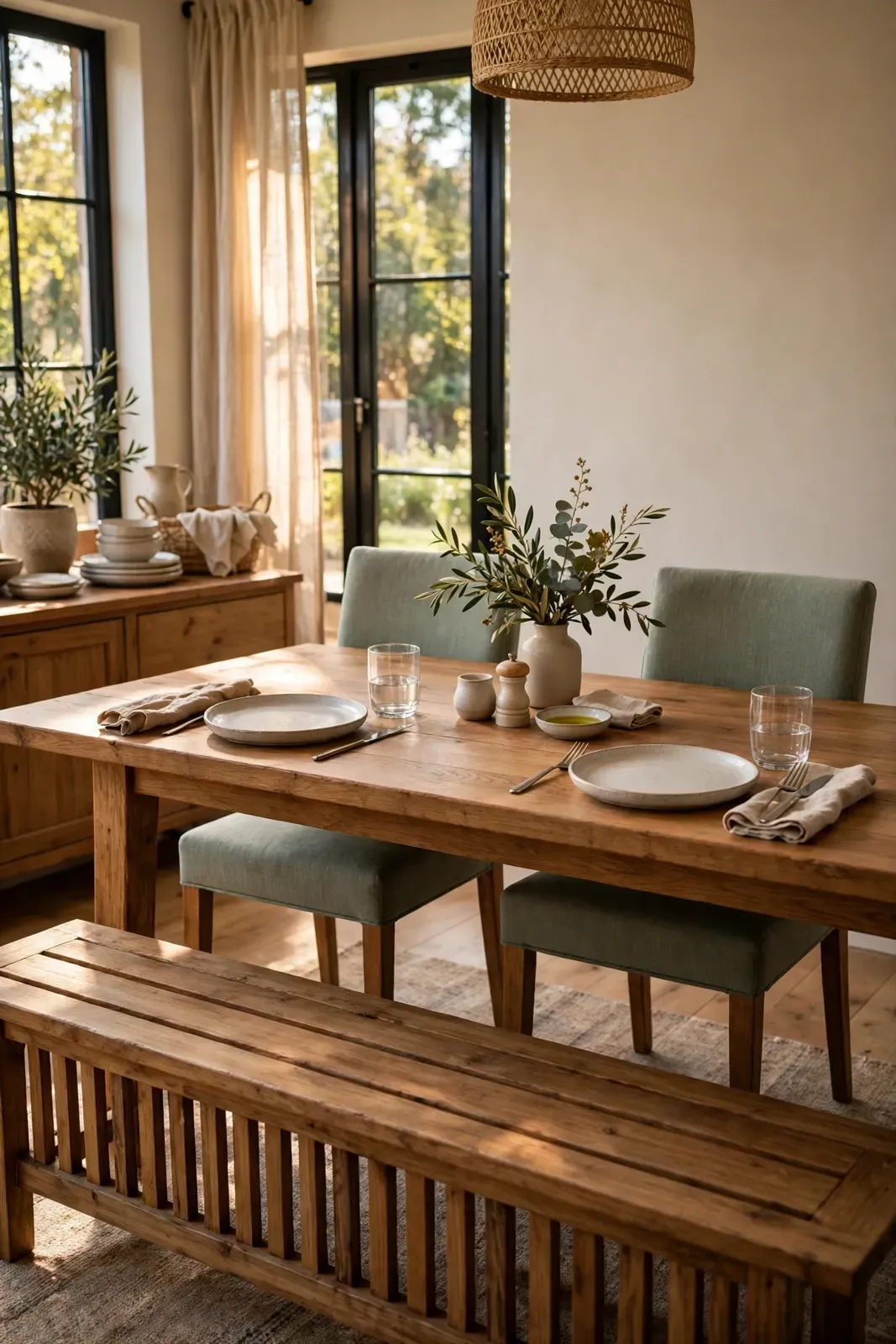
Why Dining Bench Mixed Seating Works So Well
A bench changes the mood of a table before anyone sits down. Chairs divide people into separate spots; a bench lets people settle shoulder to shoulder, which is why children gravitate to it and why long conversations seem to happen on the bench side. On a 150 centimetre side, two chairs give you two seats, while a bench gives you two adults comfortably and three at a friendly squeeze. This shoulder-to-shoulder closeness is the heart of dining bench mixed seating.
Mixed seating simply means not matching every seat: a bench along one long side, chairs opposite, and often an armchair at each end. It is an old arrangement too — historically, a bench is a long seat on which several people may sit at the same time, and backless forms were used in dining rooms for centuries. A low bench also keeps one side open, so the room looks less crowded and light travels further. It is why dining bench mixed seating suits both everyday meals and big gatherings.
Bench on One Side, Benches on Both, or Chairs at the Ends?
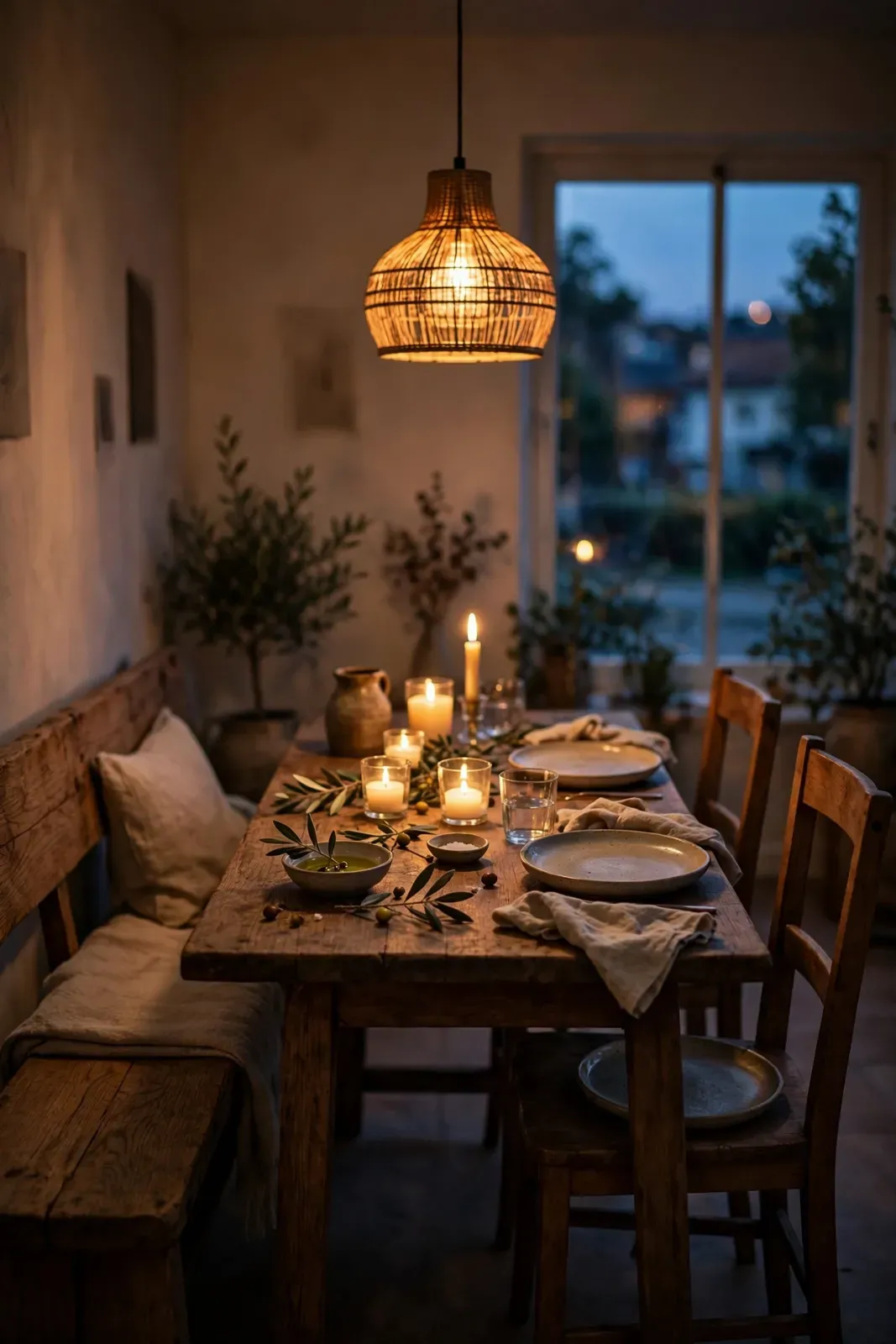
The most forgiving layout, and the one in the hero photo, is a bench on one long side with chairs opposite. The chair side suits anyone who needs back support or finds it easier to get up from a defined seat — grandparents, for instance, almost always prefer the chairs. The bench side takes the children, the extra guest and anyone who likes to tuck a leg up while talking. Arranged this way, dining bench mixed seating keeps everyone comfortable.
Benches on both sides, like the family-style table in the fourth photo, seat the most people and look wonderful for big, sharing-style meals. It is dining bench mixed seating at its most generous.
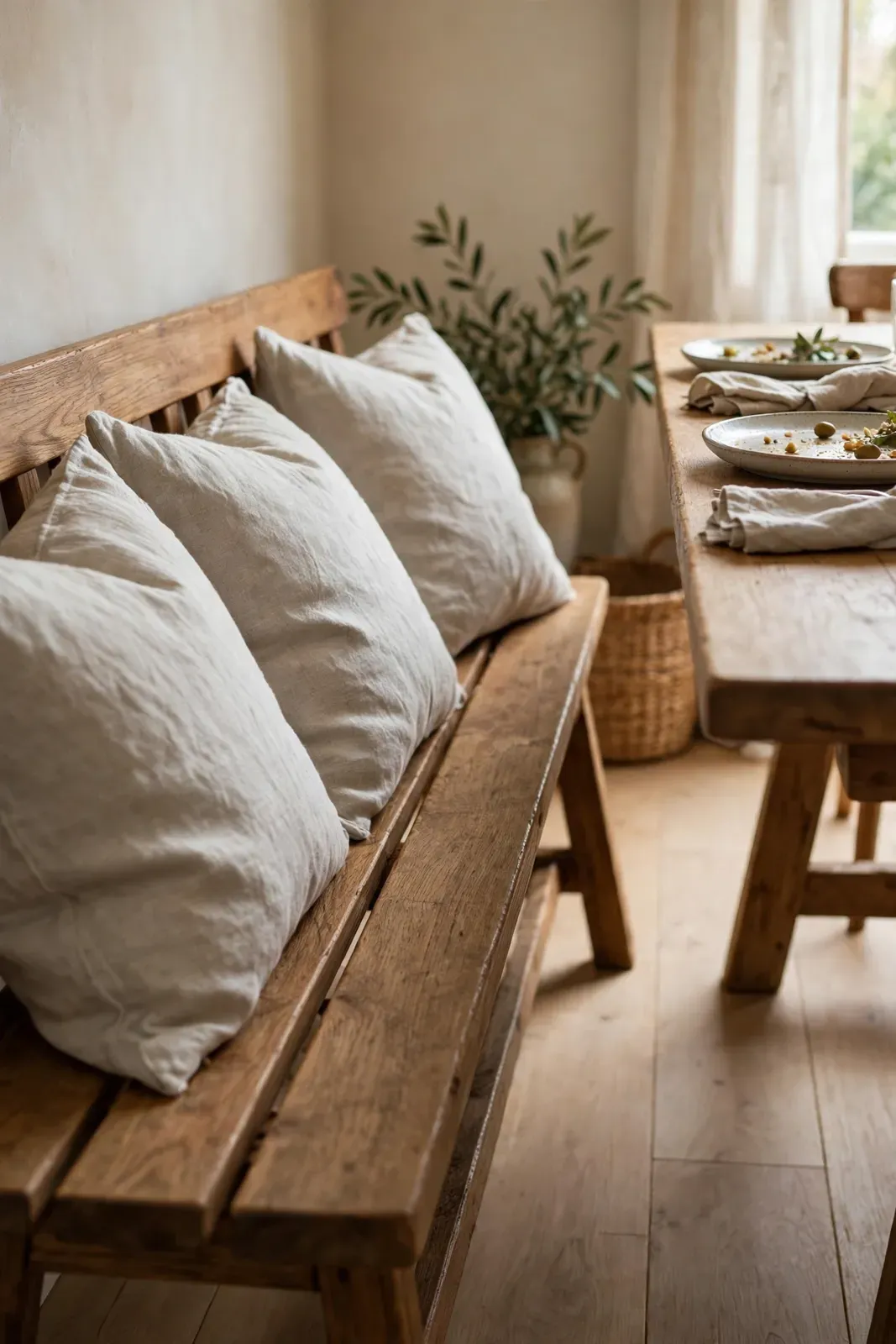
Heights and Legroom: The Simple Maths of Dining Bench Mixed Seating
Comfort here is mostly arithmetic, and it is forgiving once you know three numbers. First, seat height: a dining bench should sit between 43 and 48 centimetres from the floor, close to a standard dining chair seat, so everyone’s elbows meet the table at roughly the same level. Second, the gap: leave 25 to 30 centimetres between seat top and the underside of the tabletop — a standard 72 to 76 centimetre table with a 45 to 46 centimetre bench lands right in that zone. Get these three numbers right and dining bench mixed seating stays comfortable through a long meal.
Third, length per person: allow roughly 55 to 60 centimetres of bench per adult. A 120 centimetre bench seats two properly; 150 centimetres seats two generously or three closely; 180 centimetres takes three with room for plates to pass. Depth matters as well — 35 to 40 centimetres is the sweet spot. Shallower feels perched, deeper pushes people forward because there is no back to lean against, and knees start to ache by dessert. Comfort is the quiet promise of well-planned dining bench mixed seating.
How to Measure Your Table and Choose a Bench, Step by Step
Step one: measure the tabletop length and the clear space between its legs on the long side. Write both down; the leg gap is the number that decides your maximum bench length. Step two: subtract 20 to 30 centimetres from the tabletop length as a starting bench size, then check it against the leg gap and take the smaller figure. Step three: measure the table height and the thickness of the top and apron, and confirm your bench height leaves that 25 to 30 centimetre gap underneath.
Step four: count your regular diners honestly. Buy for the five ordinary weeknights, not the one big gathering a year — an extra chair borrowed for a party is cheaper than an oversized bench you shuffle around daily. Step five: tape the bench footprint on the floor with painter’s tape and live with it for a day. Walk past it, pull it out, sit at the table. Aim for 75 centimetres or more of walkway behind it. Step six: only then order, and if you are between two lengths, take the shorter one — a slightly short bench looks intentional, an overlong one just looks stuck. That bit of patience is what makes dining bench mixed seating work in real homes.
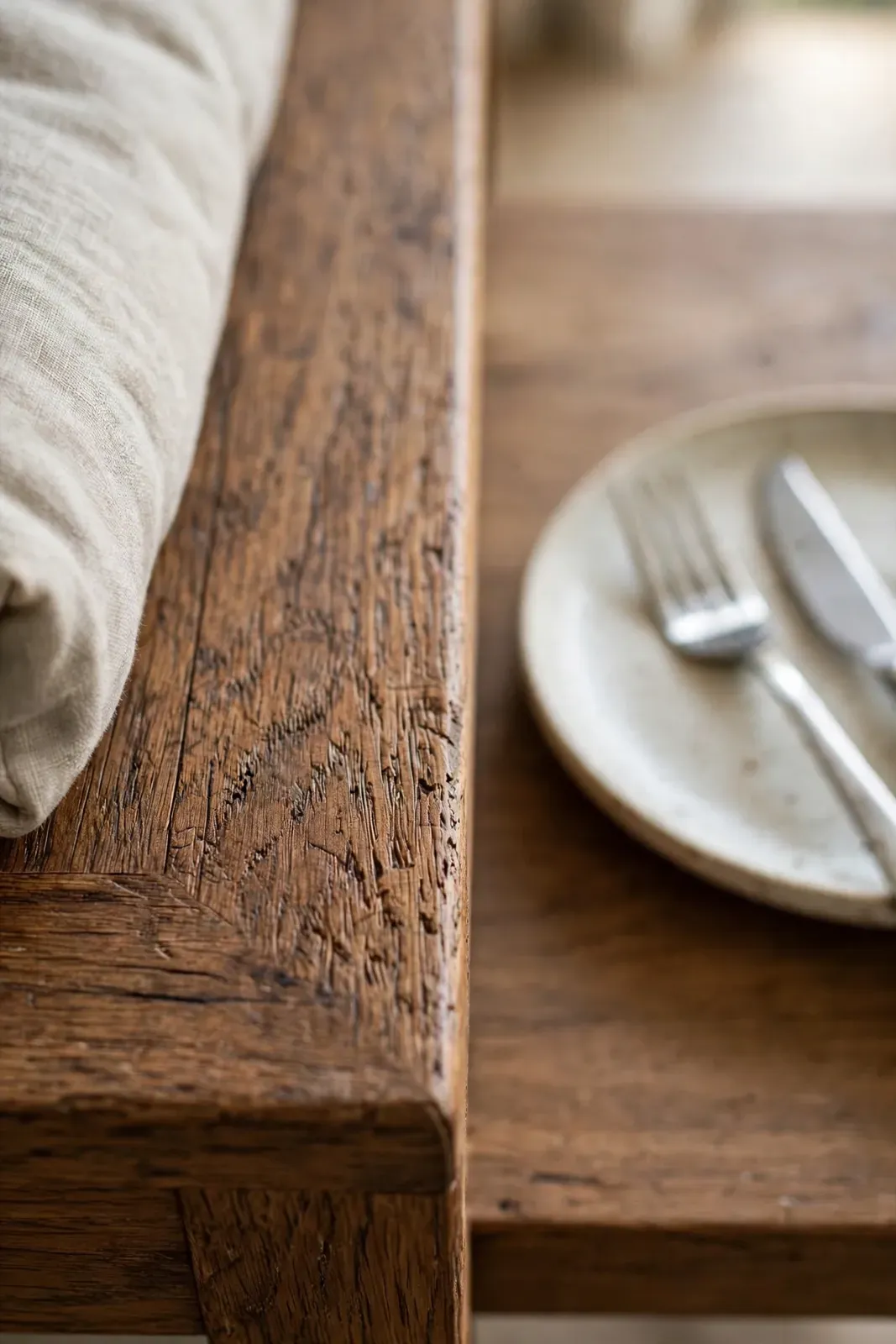
Add a chair at each end if you have room: end chairs frame the table and give hosts a natural spot. And always check the table legs before buying — a bench should slide at least partly underneath, so measure the clear gap between the legs, not just the tabletop. It is a small check that protects the whole dining bench mixed seating plan.
Cushions and Comfort Fixes for a Hard Bench
The honest complaint about benches is comfort over a long meal, and it is fixable. A single long bench pad, 4 to 5 centimetres thick in firm foam, transforms a hard wooden seat without hiding its shape. Choose a washable cover in a fabric that can handle gravy — a sturdy cotton, an outdoor fabric, or faux leather that wipes clean. Tie the pad on with fabric ties or use a non-slip mat underneath, because a sliding cushion is more annoying than no cushion. Small fixes like these keep dining bench mixed seating comfortable from starter to dessert.
Styles That Pair Well Together
The safest rule is to share one thing between bench and chairs: the wood tone, the leg shape, or the colour family. A warm oak bench with sage upholstered chairs, as in the hero photo, works because the chair legs echo the table wood. A painted bench in cream or soft green pairs happily with natural wood chairs. Follow it and dining bench mixed seating looks chosen rather than accidental.
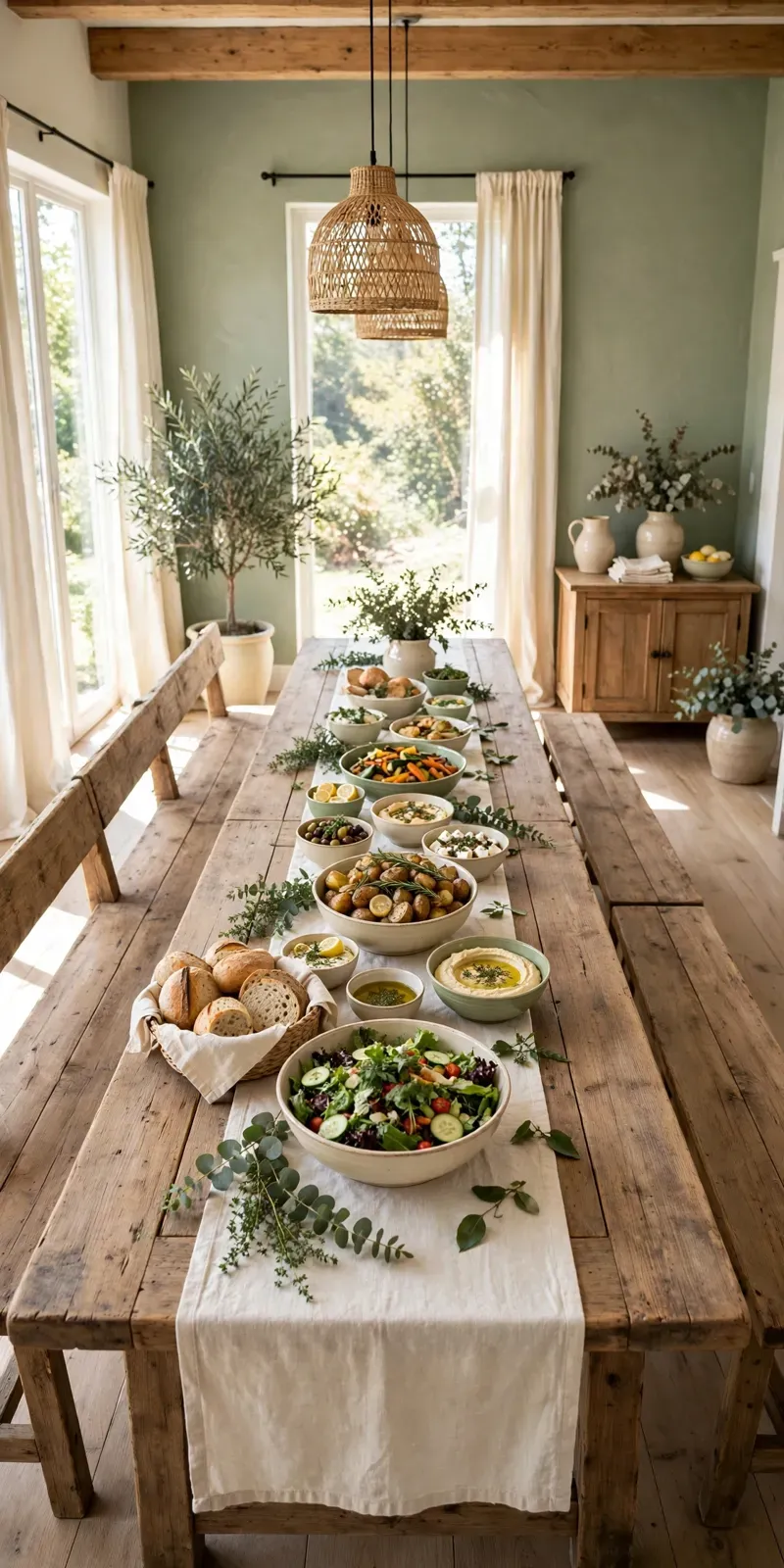
Farmhouse tables take almost any bench. For a formal room, choose an upholstered bench and keep the chairs simple. In desi and Pakistani homes, a plain bench in a matching stain bridges a carved family table and newer chairs without forcing a full matching set. However formal or relaxed the room, dining bench mixed seating adapts without losing its charm.
Mixed Seating in Small Dining Rooms
Small rooms are where this layout earns its keep. A bench pushed fully under the table frees floor space that chair backs would steal, and in a narrow room that can be the difference between squeezing past and walking past. It also helps to understand the room you are working with: a dining room is a room for consuming food, but in most modern homes it doubles as a homework desk, a work-from-home corner and a wrapping station at birthdays.
Put the bench on the wall side where possible. Children climb in once and stay put, the walkway stays clear on the chair side, and the table can sit closer to the wall on ordinary days and pull out when guests come. If your table seats four now, a bench on one side often turns it into an honest six without buying a bigger table — the single cheapest capacity upgrade in the house. The same space-first thinking drives these small living room layout ideas.
Budget and Buying Advice: What to Spend On, What to Save On
Spend on the frame and save on the cushion. A solid wood or well-joined bench will last decades and can be re-stained when tastes change; a cheap flat-pack bench with thin legs starts to wobble within a year, and wobble at a dinner table annoys everyone, every meal. Check the underside before buying: look for corner blocks, a centre support on benches over 150 centimetres, and legs that are part of the frame rather than screwed-on afterthoughts. A solid frame is the backbone of good dining bench mixed seating.
Second-hand is genuinely good hunting here. Benches are simple, honest furniture, and a solid used one often costs a third of new — check for woodworm holes, sit on it and shift your weight. For cushions, buy foam and fabric separately and have a local tailor sew the cover; it usually costs less than a ready-made bench pad and fits exactly. And keep one chair budget line untouched: if older family members visit often, two good chairs with arms matter more than a beautiful bench. Even bought second-hand, dining bench mixed seating rewards a careful eye.
Common Mistakes to Avoid
The first mistake is buying a bench the same length as the table, then discovering the table legs will not let it tuck in, so it juts out permanently. Measure the leg gap, not just the top. The second is ignoring seat height: a bench even 5 centimetres too low makes adults feel like children at the grown-ups’ table, and too high leaves feet dangling and knees jammed against the apron. Most dining bench mixed seating problems are measurement problems, not style problems.
The third mistake is benches on both sides in a room where people need to get up often — every tea refill becomes a group shuffle. The fourth is a deep, soft cushion that looks inviting and sits terribly, pushing diners too high and too far forward. Firm and thin beats thick and soft at a table. The fifth is forgetting the floor: a heavy bench dragged in and out twice a day will scratch wood and tile, so fit felt pads or small castors from day one.
Frequently Asked Questions
How long should a bench be for a 6-seater dining table?
For a table around 180 centimetres long, a bench of 140 to 160 centimetres usually works well, seating three people at about 55 centimetres each. Always check it fits between the table legs so it can slide underneath when you need the floor space back. That fit check is the first rule of dining bench mixed seating.
Is a bench or chairs better for children?
Children usually prefer the bench: they can sit close, kneel up safely to reach, and fit a friend in without fetching another chair. Adults who need back support or help standing up are generally happier in chairs. Good dining bench mixed seating lets both groups sit the way they like best.
Can I use a bench with a round dining table?
A straight bench does not sit neatly against a round table, so it is not the natural partner. A curved bench can work with a large round table, but for most round tables, chairs all round remain the practical choice. Mixed seating shines with rectangular and oval tables. For those shapes, dining bench mixed seating is hard to beat.
How do I stop a bench cushion from sliding?
Use a non-slip rug mat cut to size under the cushion, or choose a pad with fabric ties that loop around the bench seat or legs. A cushion with a grippy, rubberised underside also works. Avoid loose throws as seat pads — they bunch up within minutes. A steady cushion keeps dining bench mixed seating comfortable all evening.
Will mixed seating look unfinished or mismatched?
Not if the pieces share one link — a wood tone, a colour, or a leg style. That single connection is enough for the set to read as chosen rather than accidental. Keeping the tableware and centrepiece simple also helps the different seats feel like one deliberate arrangement. With that link in place, dining bench mixed seating always looks intentional.
One table, two kinds of seat, and room for whoever turns up.
That is the quiet charm of this layout: it flexes with real life, from Tuesday homework to a full house on Sunday. Measure the leg gap, get the height right, add a firm cushion, and your bench will stop being the spare seat and become the spot everyone quietly hopes is free. That is dining bench mixed seating done right.