Interior doors are usually painted the same white as the trim and then forgotten. That is a missed chance. Trying door colour statement ideas is one of the cheapest ways to give a plain hallway or bedroom a clear identity, because a door is a large flat surface you see every day, and paint costs far less than new furniture. One strong colour on a door can pull a whole room together, mark a child’s room, or make a small rental feel deliberately styled rather than temporary.
This guide works through the colours that actually work on doors, how to pair them with walls and handles, and a careful step-by-step painting plan. It also covers budget, renting, and the mistakes that make a bold door look accidental instead of confident.
Table of Contents
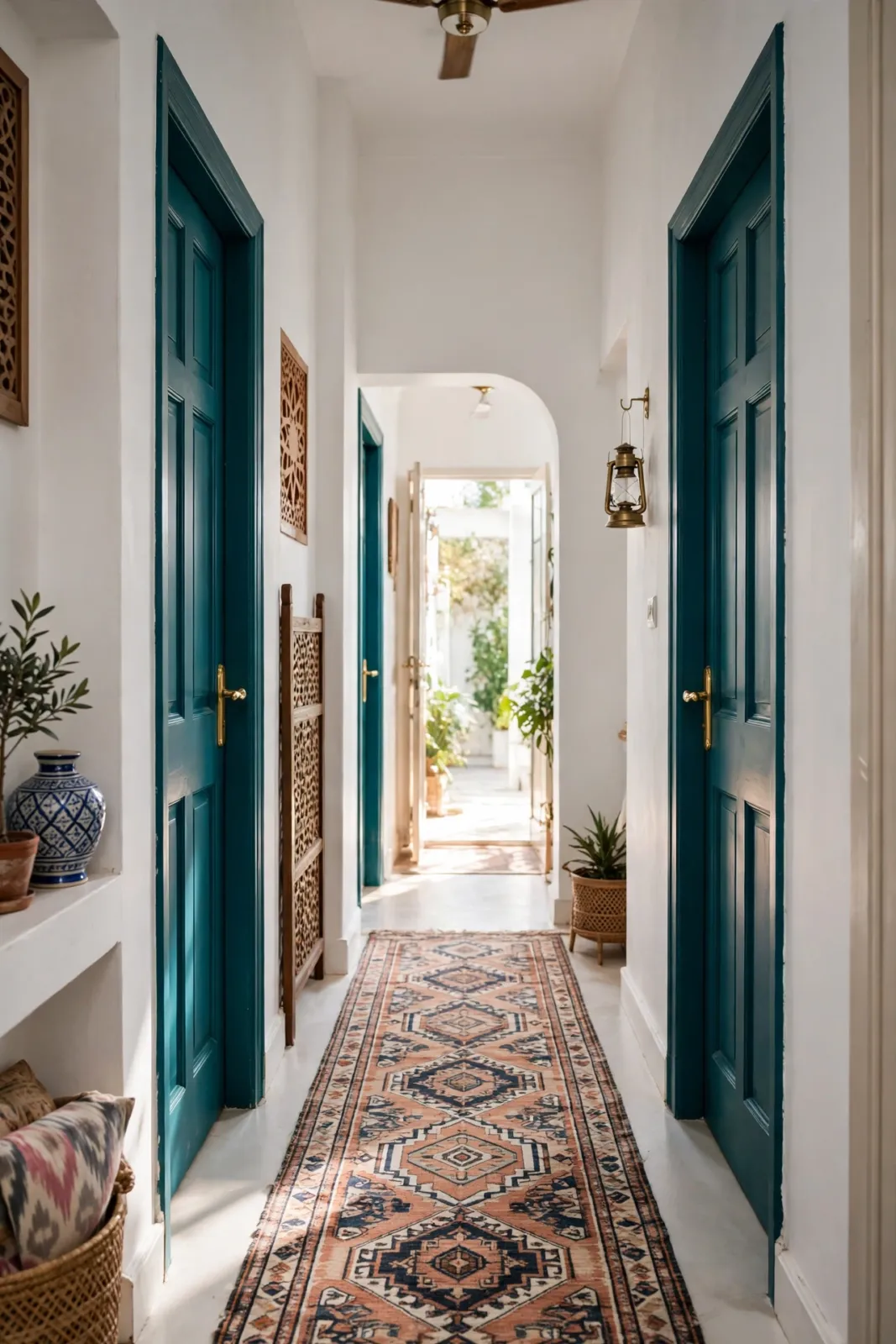
Why Door Colour Statement Ideas Work So Well
A door takes up roughly two square metres of vertical space. Painting it is faster than painting a whole wall, uses less paint, and is easy to reverse. That makes door colour statement ideas ideal for a first bold experiment: if a deep teal door feels too strong after a month, repainting it takes an afternoon, not a weekend.
Colour on a door also creates rhythm in a home. In a long hallway with four identical doors, painting each one the same rich colour turns a corridor into a designed passage. Painting only one door — the study, the nursery, or the main bedroom — creates a quiet signpost that guests understand without any signage.
There is a practical side too. Mid-tone and darker door colours hide scuffs, fingerprints and shoe marks far better than white, especially around the handle and the bottom edge. In busy family homes that alone is a good reason to try a colour with some depth.
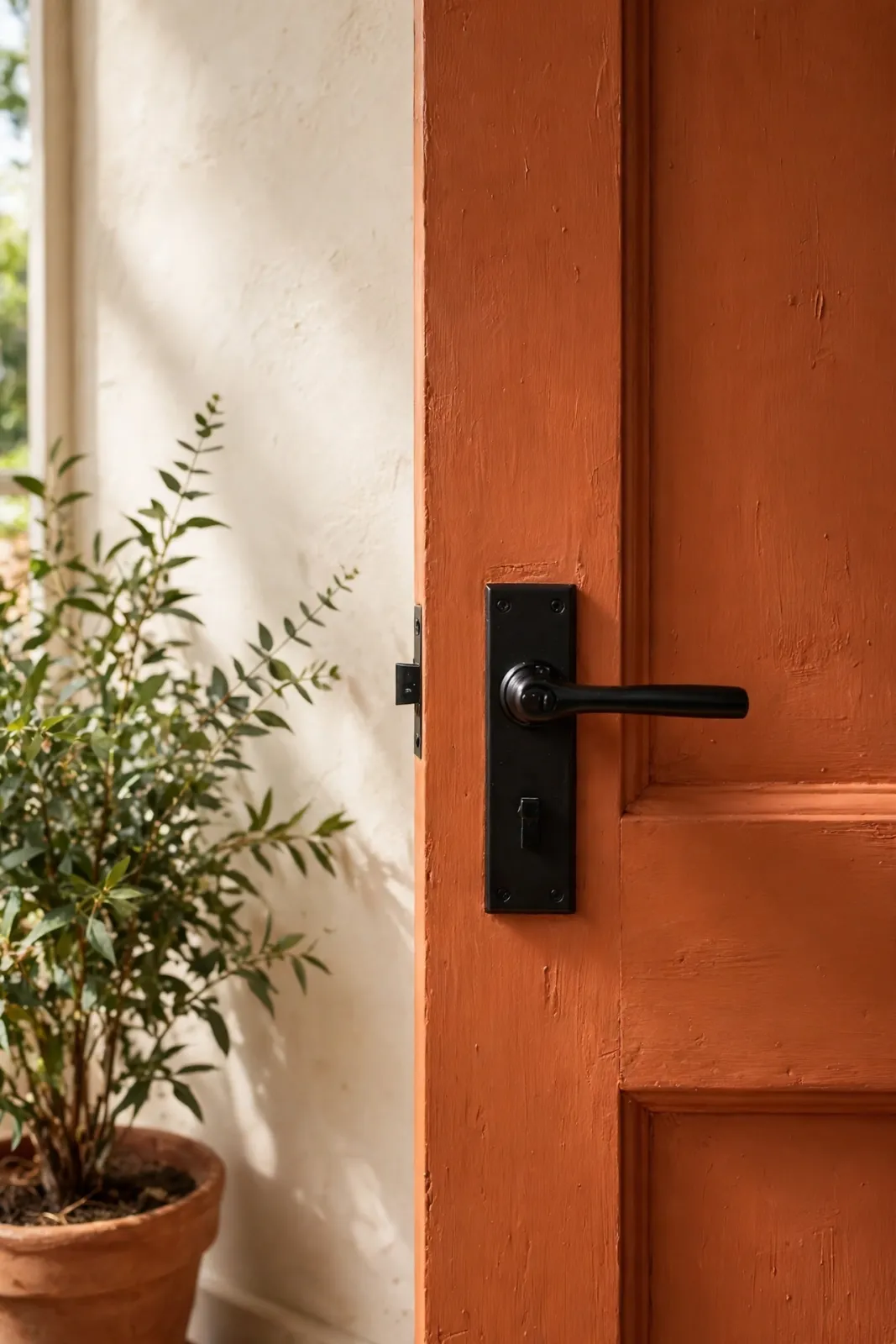
Choosing a Colour: Door Colour Statement Ideas by Mood
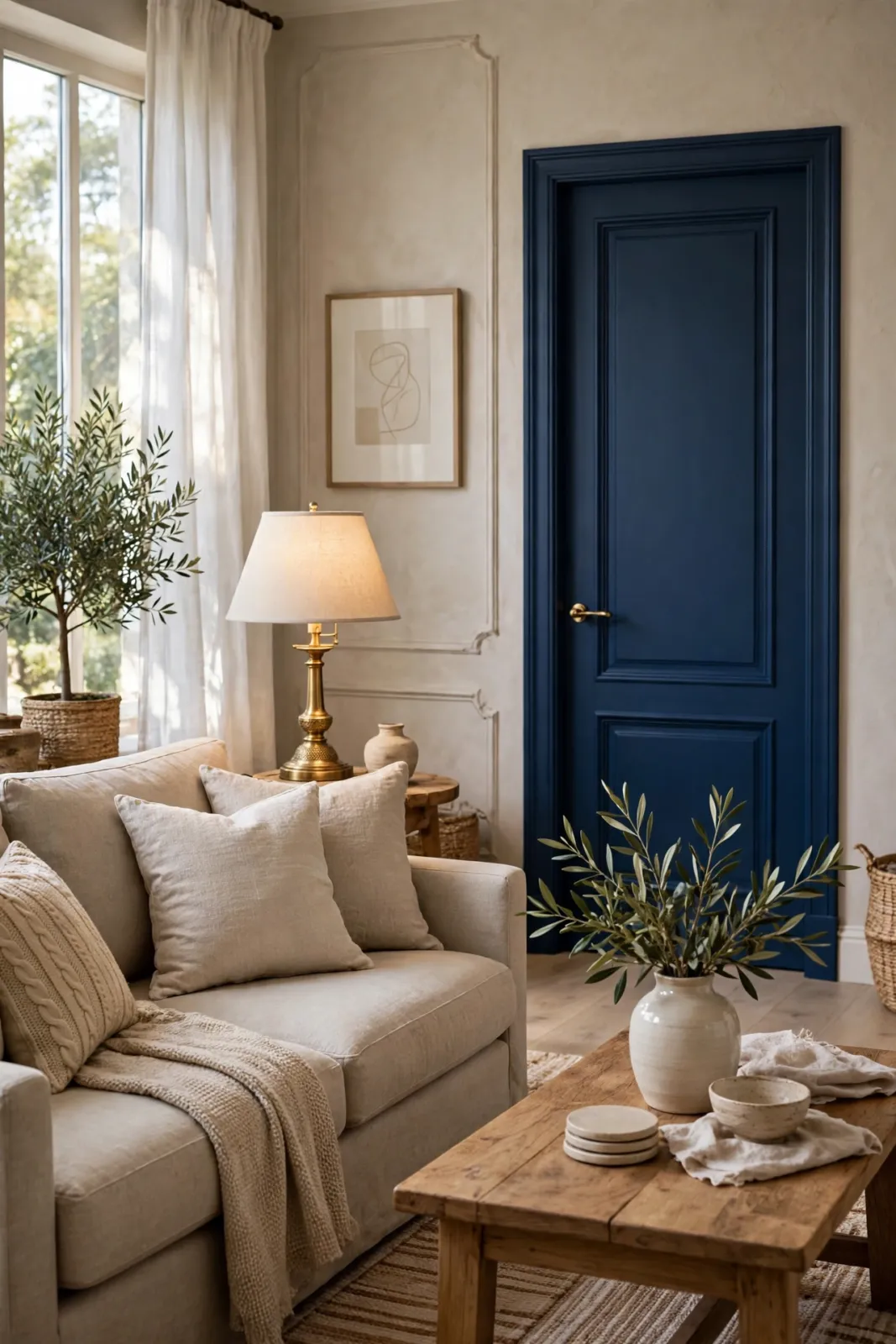
Deep teal and petrol blue feel calm and slightly formal. They suit hallways, studies and bedrooms, and they pair beautifully with brass or gold handles. Navy is the safest dark option: it reads almost neutral, works with grey, beige and white walls, and rarely dates.
Terracotta, rust and warm clay bring heat into north-facing rooms that get cool light. Sage and olive greens sit in the middle — colourful, but soft enough for bedrooms and nurseries. Mustard and ochre are cheerful in entryways, though they are best kept to one door so the welcome does not become overwhelming.
For a softer route, try blush pink, powder blue or lavender on a bedroom or bathroom door. These pastels work when the walls stay white or very pale grey. Black doors are the boldest classic: they look sharp with white walls and light floors, and they make simple slab doors look more expensive. A standard door is a simple panel in a frame, which is exactly why colour and hardware carry so much visual weight.
Test before you commit. Paint a large card, tape it to the door, and look at it in morning and evening light. Door colours almost always read darker indoors than the tin suggests, so many people end up happiest one shade lighter than their first instinct.
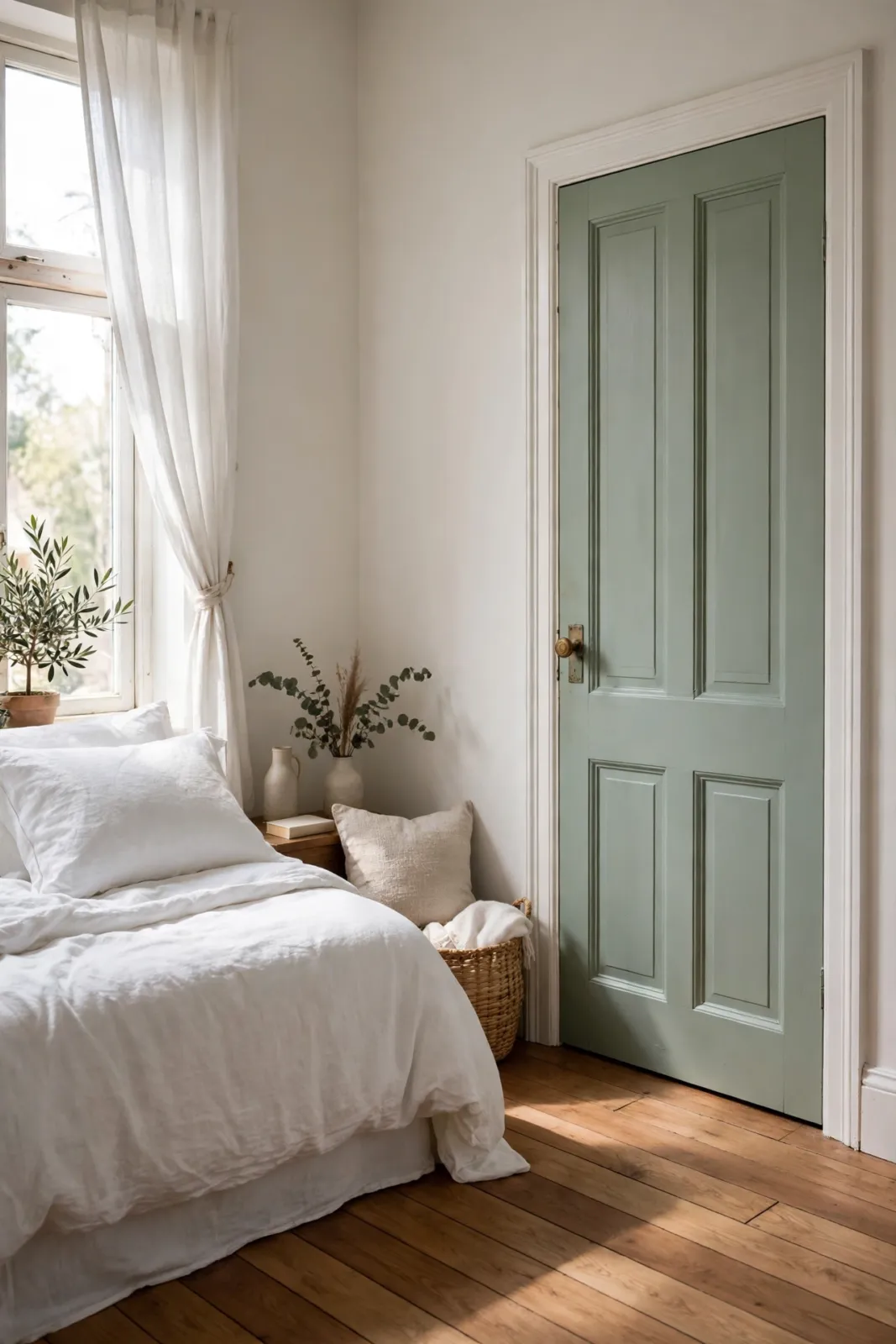
Pairing Doors With Walls, Trim and Handles
The easiest pairing is a coloured door against neutral walls. White, warm white, light greige and pale stone all let the door speak. If your walls already carry a strong colour, choose a door colour from the same family — a deeper or lighter tone of the wall colour — rather than introducing a rival.
Decide what happens to the frame and skirting. Painting the frame the same colour as the door gives a modern, solid block of colour and makes the doorway look taller. Keeping the frame white gives a crisper, more traditional outline. Either works; mixing the two approaches from room to room looks untidy.
Handles finish the job. Brass warms up teal, navy and green. Matte black sharpens pastel and white-adjacent doors and matches black doors without competing. Chrome suits blue and grey schemes. Replacing a handle costs little and is reversible, so it is worth doing at the same time as the paint. For more on how colour behaves in a room, the basics of colour — hue, warmth and saturation — explain why a warm door can balance a cool room.
If you are styling the rest of the hallway too, our guide to small living room layout ideas shows the same principle at room scale: one clear focal point, everything else quieter.
How to Paint an Interior Door: Step by Step
Step 1: Remove the handle and any hooks. Wash the door with sugar soap, rinse, and let it dry fully. Step 2: Fill dents with wood filler, sand smooth once dry, and sand the whole surface lightly with fine paper so the new paint grips. Wipe away dust with a damp cloth.
Step 3: Mask the hinges, the floor and the frame edges with painter’s tape. Step 4: Apply a suitable primer or an undercoat, especially if you are painting over a dark colour, bare wood, or a glossy finish. Skipping this step is the most common reason bold colours need four coats.
Step 5: Paint the panels first if your door has mouldings, then the rails and stiles, working from top to bottom and following the grain. A small foam roller gives the flattest finish on flat areas; use a brush for edges and mouldings. Step 6: Apply two thin coats rather than one thick one, letting each coat dry as the tin directs. Step 7: Remove tape while the final coat is still slightly tacky for a clean line, leave the door ajar until fully dry, then refit the handle.
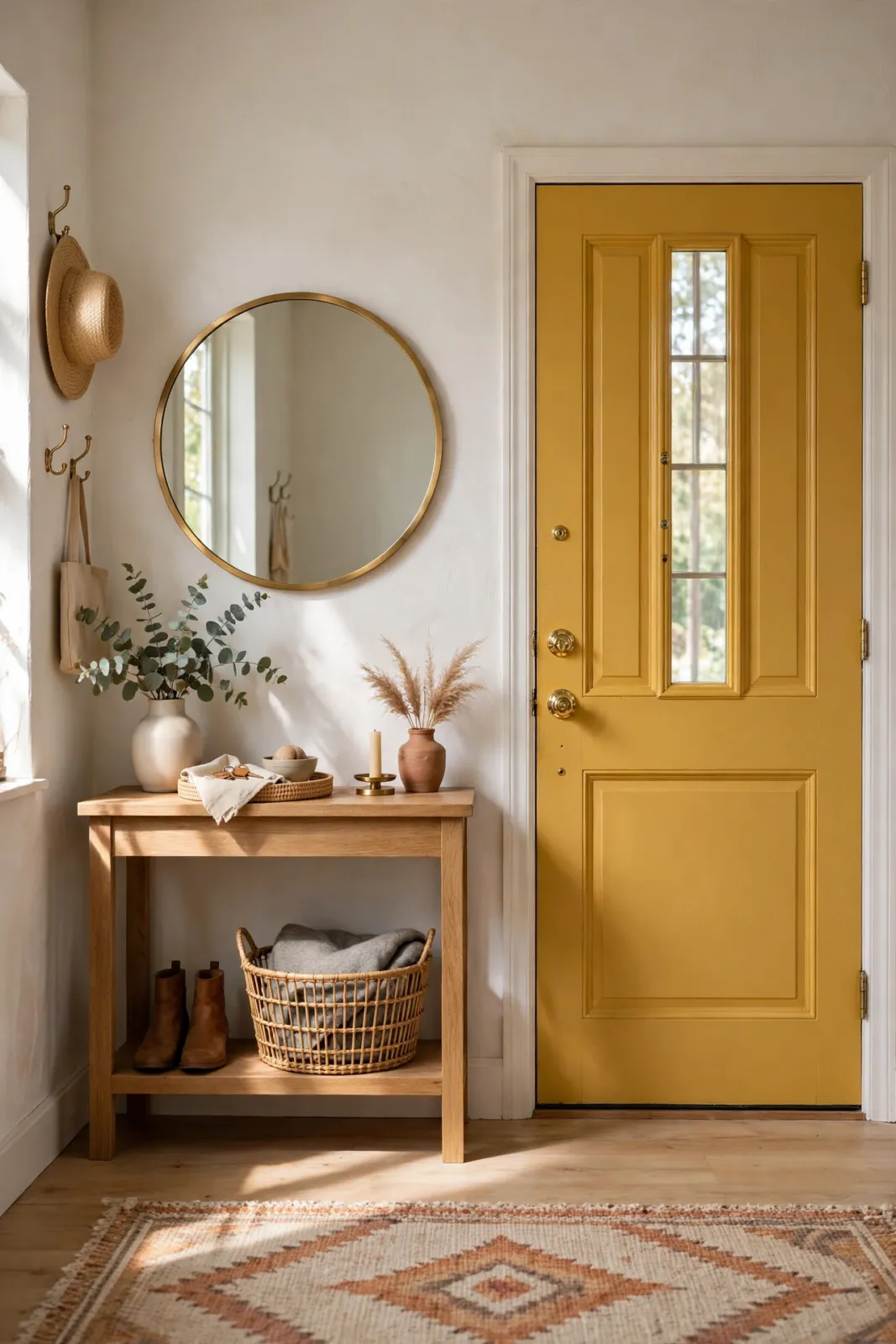
Budget and Buying Advice for Door Colour Statement Ideas
One door usually needs 500ml to 1 litre of paint for two coats, so a small tin is enough and keeps the cost low. Eggshell and satin finishes are the practical choice: they wipe clean, reflect a little light, and hide brush marks better than flat matt. Gloss looks striking on black doors but shows every flaw in the surface, so preparation has to be excellent.
Buy a decent brush and a foam roller rather than expensive paint upgrades; finish quality on a door comes mostly from preparation and thin coats. If you rent, ask permission first, keep the original colour name noted, and remember a light original colour may need primer and two coats to restore. Many landlords accept a repaint-back agreement in writing.
Sample pots are worth the small cost. Two or three samples painted as large cards will save you from repainting a full door in a colour that looked right only in the shop.
Common Mistakes to Avoid With Door Colour Statement Ideas
The first mistake is choosing colour from a tiny swatch in artificial light. The second is painting over a dirty or glossy door without sanding or primer, which leads to peeling around the handle within months. Thick coats are another frequent problem: they drip on vertical surfaces, dry with ridges, and take far longer to harden.
Painting every door a different bright colour can turn a home into a patchwork unless the colours share the same depth and warmth. Pick a family — all deep jewel tones, or all soft pastels — and repeat it. Finally, forgetting the edge of the door is common: when the door is open, its edge is visible from the next room, so paint the edges in the same colour for a finished look.
Frequently Asked Questions
Can I paint a door without taking it off its hinges?
Yes, and most people do. Wedge it open, protect the floor, mask the hinges, and paint in place. Removing the door gives a slightly flatter finish on the edges, but it is not necessary for a good result.
What is the best finish for a painted interior door?
Satin or eggshell is the safest all-round choice. It is durable, washable, and forgiving of small surface flaws. Gloss is bolder but demands near-perfect preparation.
How many doors should I paint in a bold colour?
Start with one hallway set in a single colour, or one feature door. You can extend the scheme later; it is much easier to add more doors than to undo a whole house of competing colours.
Will a dark door make a small hallway feel smaller?
Usually not, if the walls stay light. A dark door at the end of a pale hallway adds depth and a focal point. Two dark walls plus a dark door would be a different, heavier combination.
Can renters try door colour statement ideas?
With written permission, yes. Keep a note of the original colour, use quality paint, and agree to repaint before leaving. Some renters use removable panels or paint only a wardrobe door they own instead.
A painted door is a small project with an outsized effect. Choose one colour you genuinely like, prepare the surface properly, and give it two thin coats. Whether you land on teal, terracotta, sage or classic black, the door stops being background — and the whole room feels more deliberate for it.