French Braid Ponytail: 9 Neat Ways to Wear a Braided Ponytail for Busy, Active Days
Some hairstyles look lovely for exactly one photograph and then give up on you. A French braid ponytail is the opposite. It starts neat, stays neat, and still looks intentional at six in the evening after a school run, a gym session, a windy walk and a full day of work. The braid does the holding, the ponytail does the moving, and together they keep hair off your face without a single tight, headache-causing pull.
I first learned this style for netball, of all things, because a plain ponytail swung into my face and a bun fell out by half time. The braided version survived the whole match. Years later it is still the style I reach for on busy days, long walks, travel days and any morning when I need my hair handled once and properly.
Below are nine neat ways to wear a French braid ponytail, a clear step-by-step for the braid itself, advice on hold, comfort and hair type, the mistakes that make braids slip or frizz, and answers to the questions readers ask most.
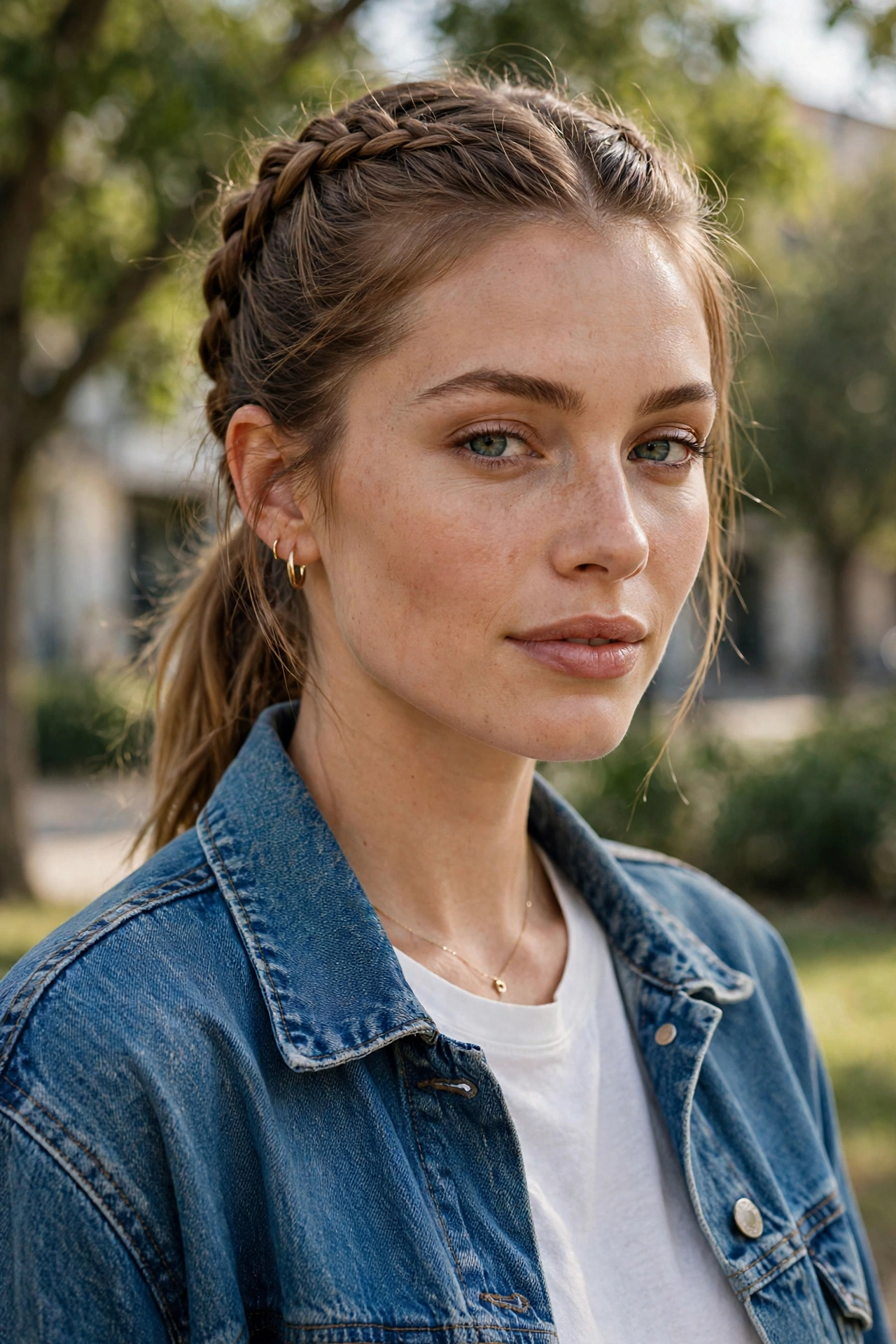
Everyday Braided Ponytails: High, Low and Side
1. The Classic High French Braid Ponytail
Start the braid at the crown and finish it into a high ponytail at the back of your head. This is the sportiest, cleanest version: hair is fully off the neck, the tail swings freely, and the braid keeps every short layer contained. Smooth the sides with a brush as you braid so the finish looks polished rather than rushed. A fabric-covered elastic matches most outfits and will not snag when you take it out.
2. Low Braid Into a Soft Ponytail
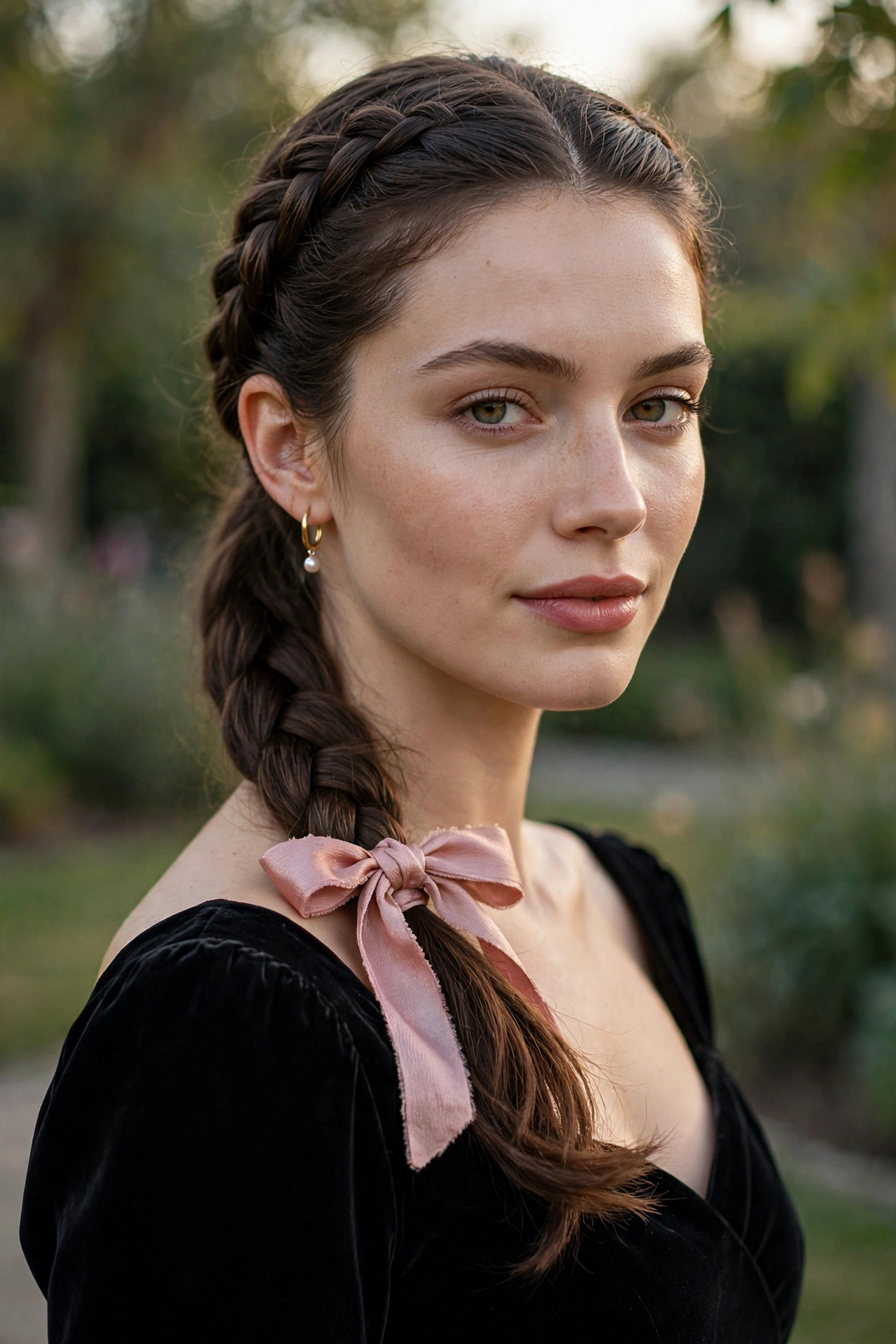
For a gentler look, braid from the crown down to the nape and tie the ponytail low. The tail rests over one shoulder or down your back and reads softer and more grown-up than the high version. This suits workdays, lunches and any outfit with a collar, because the low tail does not fight with necklines. Leave the braid slightly looser for a relaxed finish.
3. Side French Braid Ponytail
Braid along one side of your head, from above the ear down and back, then gather everything into a side ponytail. The asymmetry is pretty without trying hard, and it shows off earrings on the exposed side. This version photographs beautifully and works well for parties where you want something more interesting than a plain pony but nothing fussy.
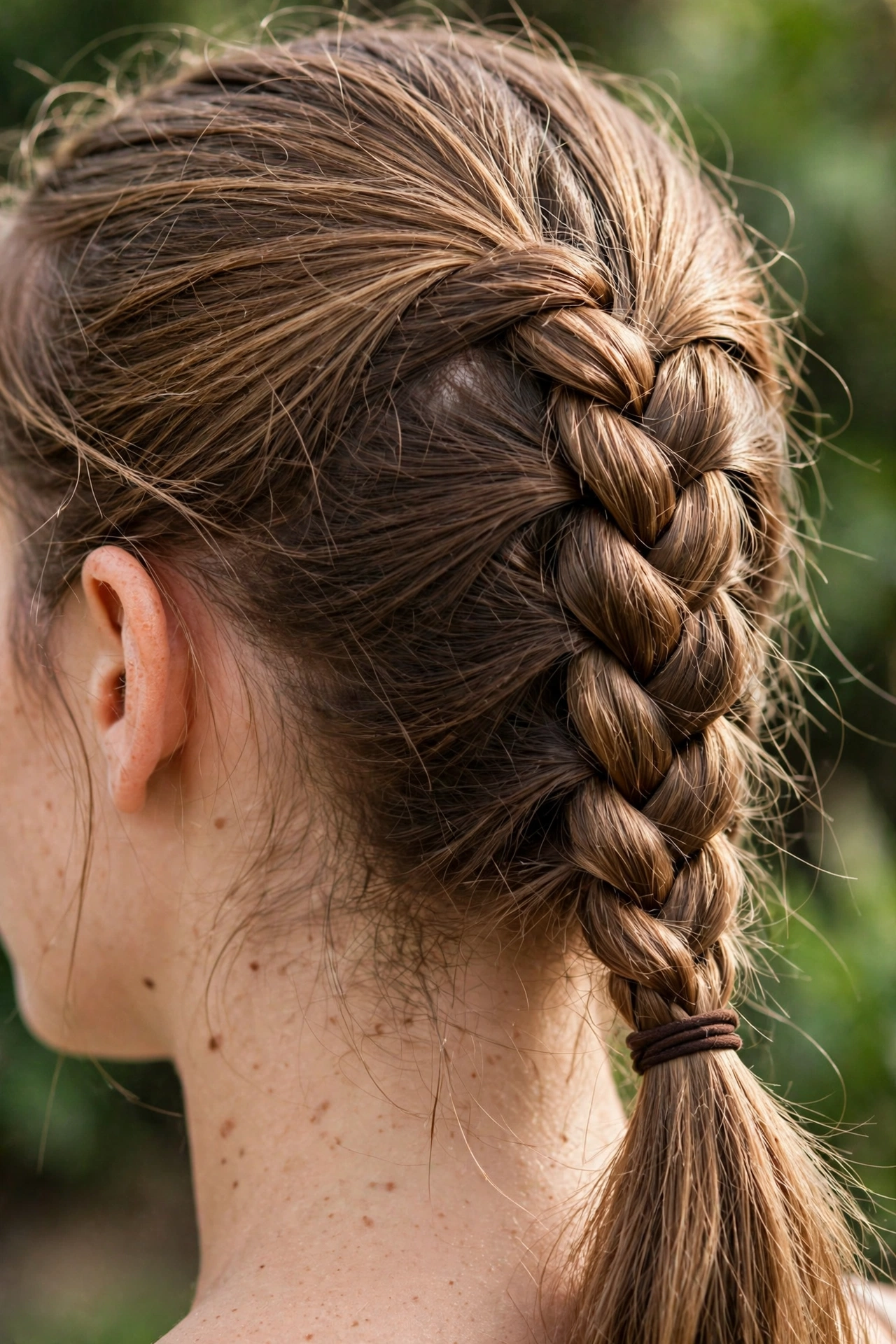
Polished Variations: Sleek, Double and Wrapped
4. Sleek Braided Ponytail for Work
Brush hair smooth, add a pea-sized amount of smoothing cream, and braid tightly and evenly before tying off. A sleek finish changes the whole mood: the same braid suddenly looks boardroom-ready with a blazer or a smart dress. Wrap a thin strand of hair around the elastic and pin it underneath for a finished, salon-style detail.
5. Double French Braids Into One Ponytail
Part your hair down the middle and braid each side, joining both braids into a single ponytail at the back. Two braids hold even better than one, especially on thick or layered hair, and the symmetry looks striking. This is the version to choose for running, riding or a long day outdoors when you cannot stop to fix your hair.
6. Braid and Bubble Ponytail
Braid the top section as usual, tie off the ponytail, then add small elastics every few centimetres down the tail, gently puffing each section into a soft bubble. It turns a practical style into a playful one and keeps very long hair from tangling into one heavy rope. Match the elastics to your hair colour for a subtle effect, or use clear ones.
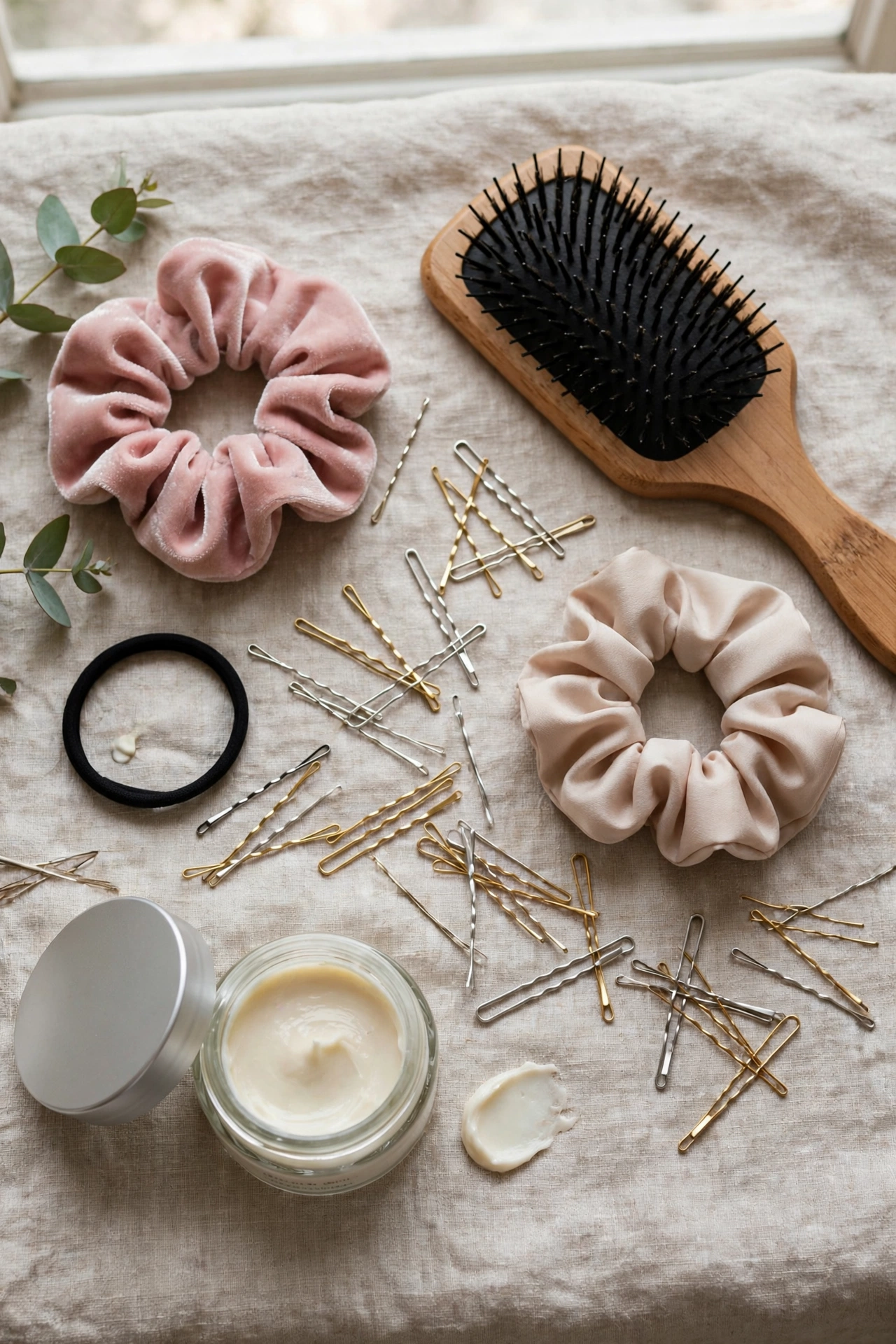
Softer Looks: Loose, Curly and Dressed Up
7. Loose, Lived-In Braid Ponytail
Not every braid needs to be perfect. Braid loosely, tie the ponytail, then gently pull at the edges of each braid section to widen it slightly. Let two fine strands fall at the front. The result is romantic and forgiving, ideal for weekends, sundresses and days when a too-neat style would feel stiff. A light mist of flexible hairspray keeps the softness without freezing it.
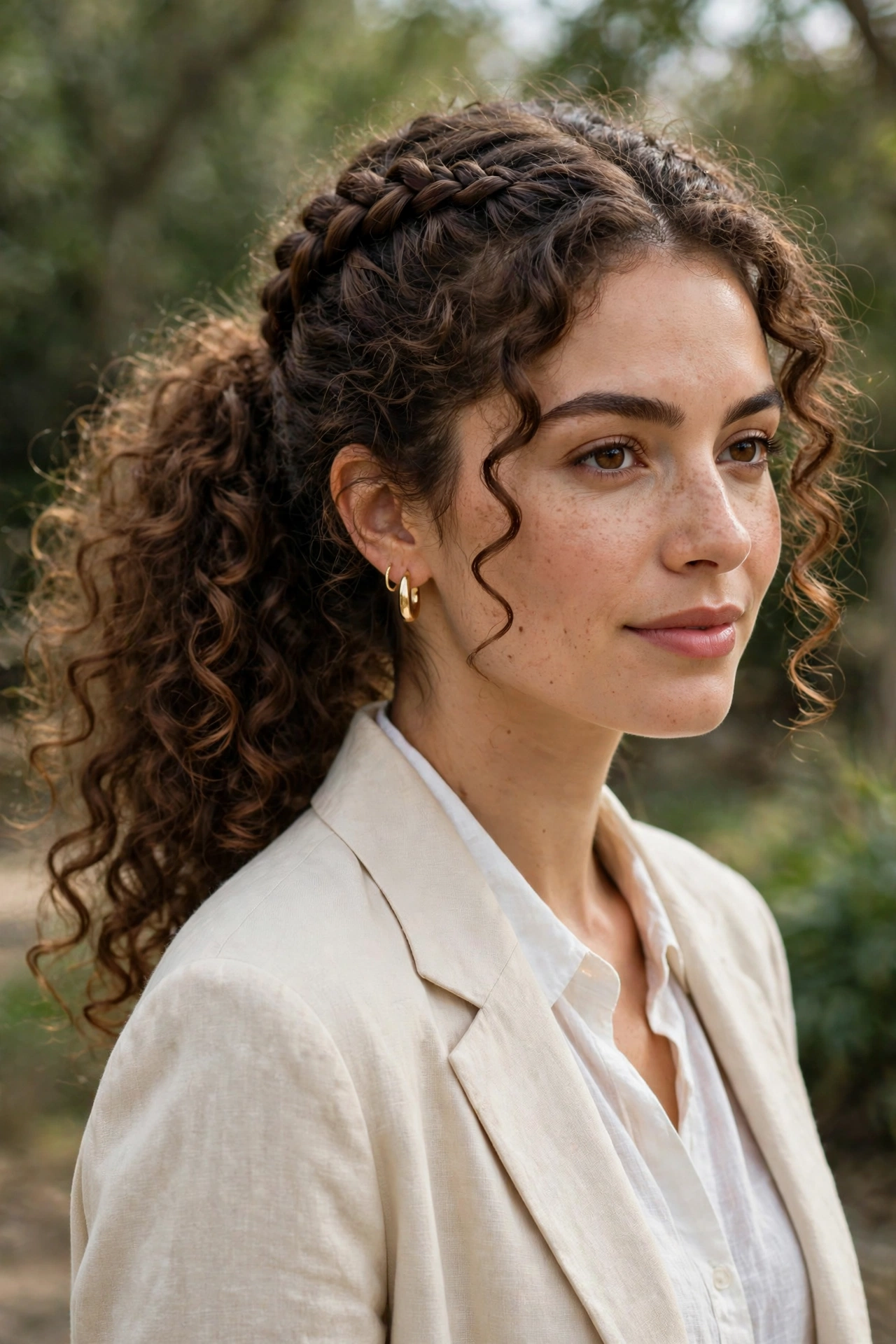
8. Braided Ponytail on Curly Hair
On curly hair, braid on damp, detangled hair with a leave-in conditioner worked through first. The braid stretches and smooths the top while the ponytail keeps its natural curl and bounce below, which is a lovely contrast. Use a wide-tooth comb, never a fine brush, and tie off with a satin scrunchie to protect the curls from snapping.
9. Dressed-Up Braid With Ribbon or Pins
For an evening or an event, weave a thin ribbon through the braid as you go, or slide two or three decorative pins along it after tying. Keep the rest of the look simple so the detail earns its attention. A velvet ribbon suits winter parties, a satin one suits weddings, and simple gold pins work almost anywhere.
How to French Braid a Ponytail, Step by Step
Step 1: Prep the hair. Brush or comb out tangles. Day-two hair braids best because it has grip; if yours is freshly washed and slippery, work in a little dry shampoo or texturising spray.
Step 2: Take the first section. Gather a triangle of hair at the front of your crown, roughly from temple to temple, and split it into three equal strands.
Step 3: Cross and add. Cross the right strand over the middle, then the left over the new middle. Before each new cross, pick up a small section of loose hair and add it to the strand you are about to move. Keep the added sections even on both sides.
Step 4: Keep tension even. Hold the braid close to your head and keep a steady, gentle pull. Too loose and it sags by midday; too tight and it pulls at the hairline. Your scalp should feel secure, never sore.
Step 5: Finish into the ponytail. When you reach the point where you want the ponytail to sit, stop adding hair, gather everything together smoothly, and tie it off. Either leave the rest loose as a ponytail or braid the tail itself for extra hold on very active days.
Step 6: Set and soften. Smooth any flyaways with a fingertip of cream or a light spray, and loosen the braid edges slightly if you prefer the softer finish.

Hold, Comfort and Hair-Type Advice
Fine hair slips most, so braid it a little tighter, use a texturising product first, and choose a grippy elastic rather than a silky one. Thick hair needs the opposite: looser sections and a strong elastic that will not snap, plus a second tie doubled up on sport days. Very layered hair pokes out of braids; braid it slightly damp and tuck the shortest layers in as you add each section. If your scalp aches, the braid is too tight at the front: redo it with the first two crosses looser. For exercise, the high or double-braid versions hold best. For sleep before a big day, braid the ponytail itself loosely and you will wake up with soft waves and no re-styling.
Common Mistakes and Care
The most common mistake is adding uneven sections, which makes one side bulky and the other saggy; work in a mirror until the motion feels natural. Next is braiding soaking-wet hair tightly, which can strain it as it dries and shrinks. Skipping prep on fine hair leads to a braid that slides out within the hour. Care is simple: do not wear any tight style two days in a row, take elastics out gently rather than dragging them down the hair, and give your hairline a rest day with a loose style between braided days.
Frequently Asked Questions
How long does a French braid ponytail take?
About five minutes once the motion feels familiar, and ten while you are learning. Practice twice in front of a mirror in the evening, when there is no time pressure, and the morning version becomes quick.
Why does my braid keep slipping out?
Usually the hair is too clean and silky, the sections are too large, or the tension is uneven. Add a texturising spray, take smaller added sections, and finish with a grippy elastic. Braiding slightly damp hair also helps it hold.
Can I do this style on short or layered hair?
Yes, if your longest layers reach past your shoulders. Keep the braid starting higher, add small sections so short layers get caught early, and expect the tail to be shorter and bouncier, which still looks neat.
Is a French braid ponytail good for workouts?
It is one of the best workout styles. The braid holds the top and sides securely, the ponytail keeps length off your back, and nothing swings into your face. The double-braid version holds hardest of all.
How do I stop the front looking frizzy?
Smooth a tiny amount of cream over the front sections before braiding, keep your hands close to the head while you work, and finish with a light spray. Avoid re-brushing the top once the braid is in, which lifts frizz back out.
A Style That Stays With You All Day
A French braid ponytail asks for five minutes and a little practice, and in return it handles school runs, deadlines, workouts and dinners without a single rescue trip to the mirror. Learn the classic version first, then play with the low, side and double variations. Busy days feel easier when your hair is one thing you do not have to think about again.