Some nail designs come and go within a single season. The French manicure is not one of them. I painted my first French tips as a teenager, and I still return to the same soft-pink-and-white finish when I want my hands to look clean and put-together. A French manicure does not shout for attention – it simply makes everything else look better, from a plain white T-shirt to a wedding dress. And lately, it has become far more interesting than the stark white smile line many of us remember. Slimmer tips, coloured edges, milky bases and tiny embellishments have turned a timeless classic into a whole menu of looks. This guide walks through the designs worth trying, plus the practical details that make them last beyond the weekend.
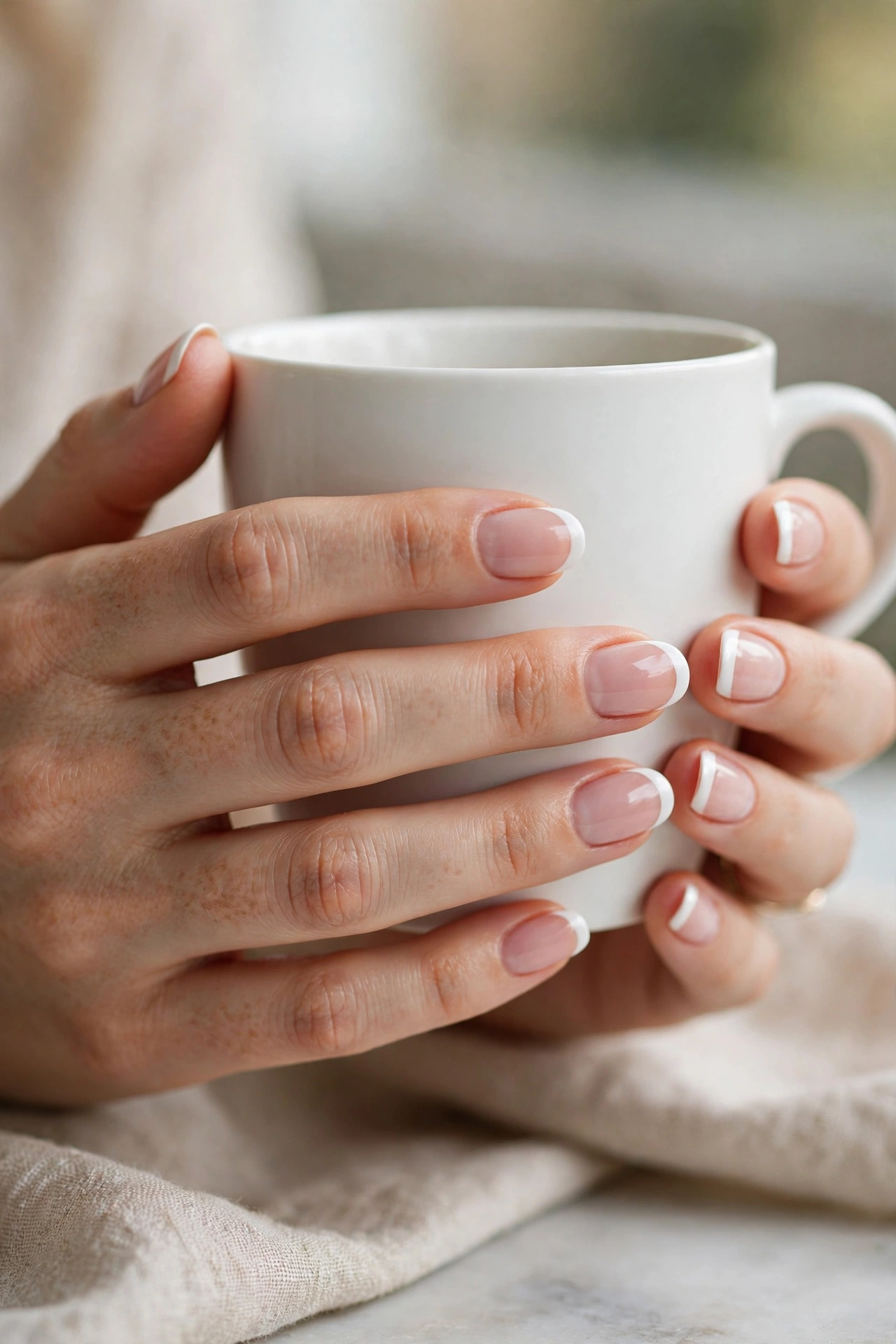
1. The Classic French Manicure, Done Softly
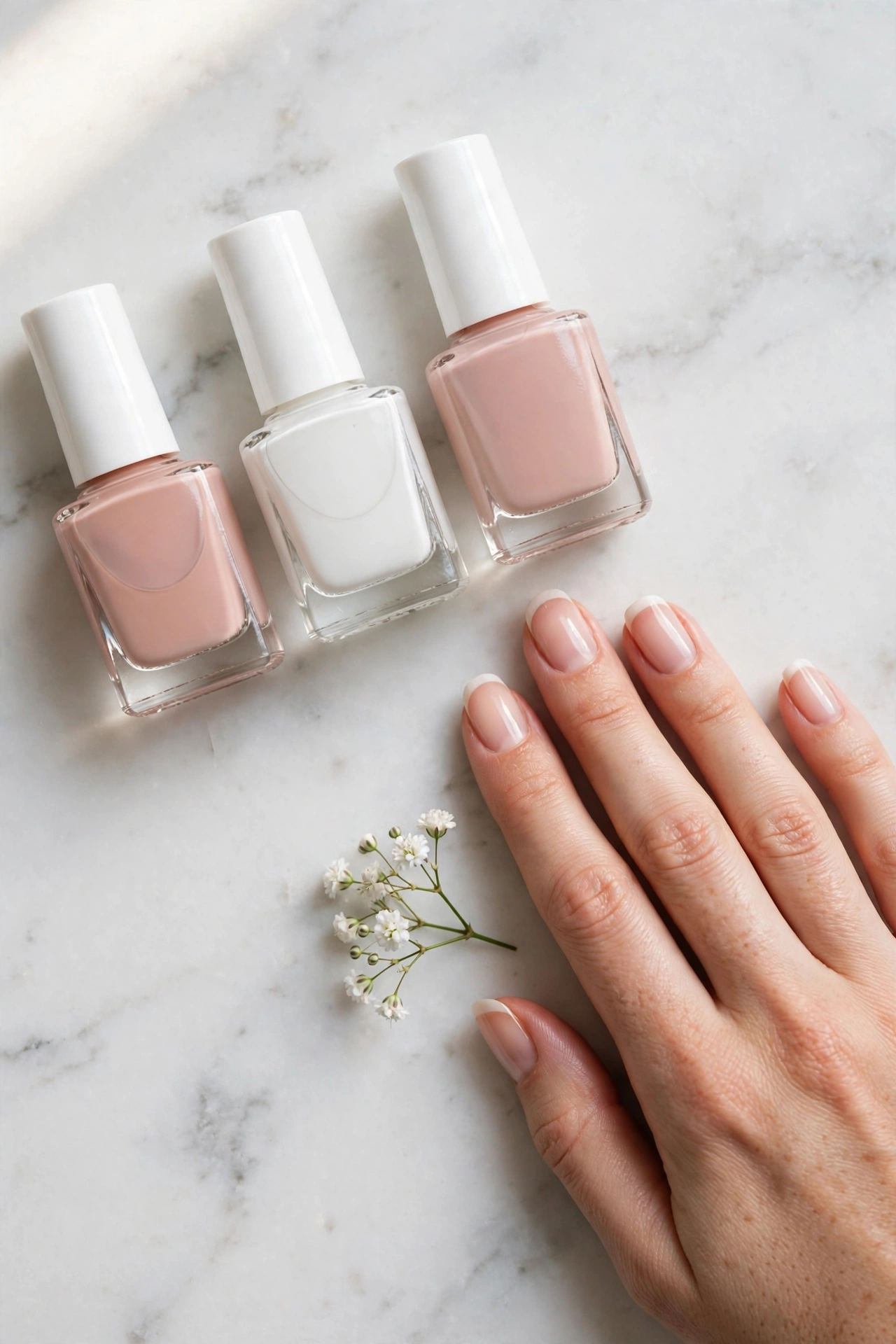
The version most people picture is still the prettiest place to start: a sheer pink or peachy nude base with a neat white tip that follows the natural curve of the nail. The modern difference is restraint. Instead of a thick, bright-white band painted with a ruler-straight edge, ask for a softer, slightly diffused smile line that hugs your own nail shape. On short and medium nails, keep the white portion slim – roughly a fifth of the visible nail – so your fingers look longer rather than stubby. The base shade matters more than the tip. Fair skin tends to suit cool, translucent pinks; medium and olive skin glow with warmer peach-nudes; deeper skin looks wonderful with rich caramel or rosy-brown sheer bases that let the white tip pop without looking chalky. If you need a set for a job interview, a holiday, or any week when you cannot think about your nails, this is the one to book.
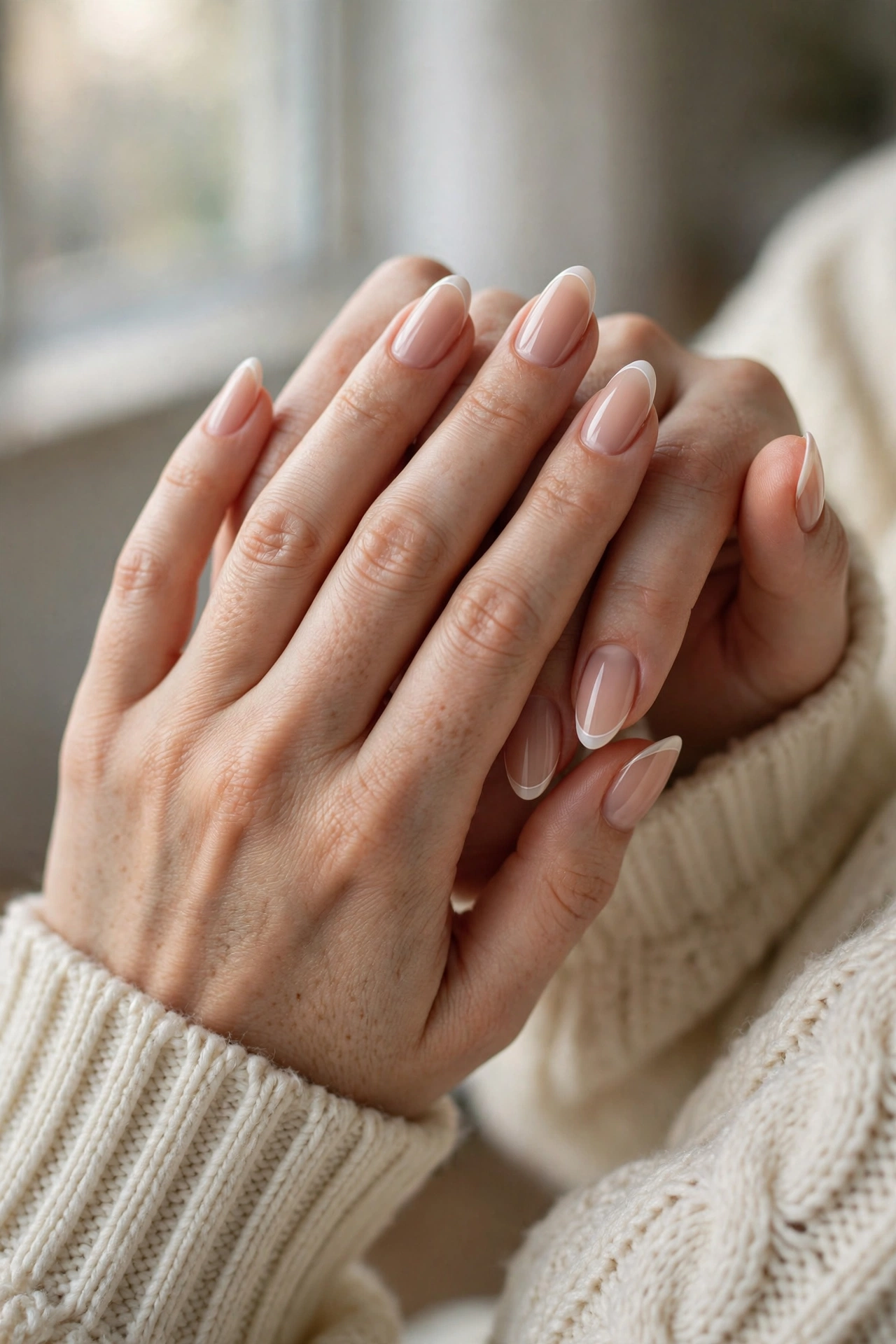
2. Micro French Tips for a Barely-There Finish
If full white tips feel a little formal, the micro French is your answer. The white line is painted hair-thin, right along the very edge of the nail, over a milky nude base. On almond and oval shapes it looks especially elegant, lengthening the nail without adding any visual weight. This style has quietly become the wedding-day favourite of the last few seasons, and for good reason: it photographs beautifully up close, it never competes with jewellery. A micro tip also forgives slightly uneven nail lengths, and a small chip is far less obvious than on a thicker band of white.
3. Coloured French Tips That Still Feel Grown Up
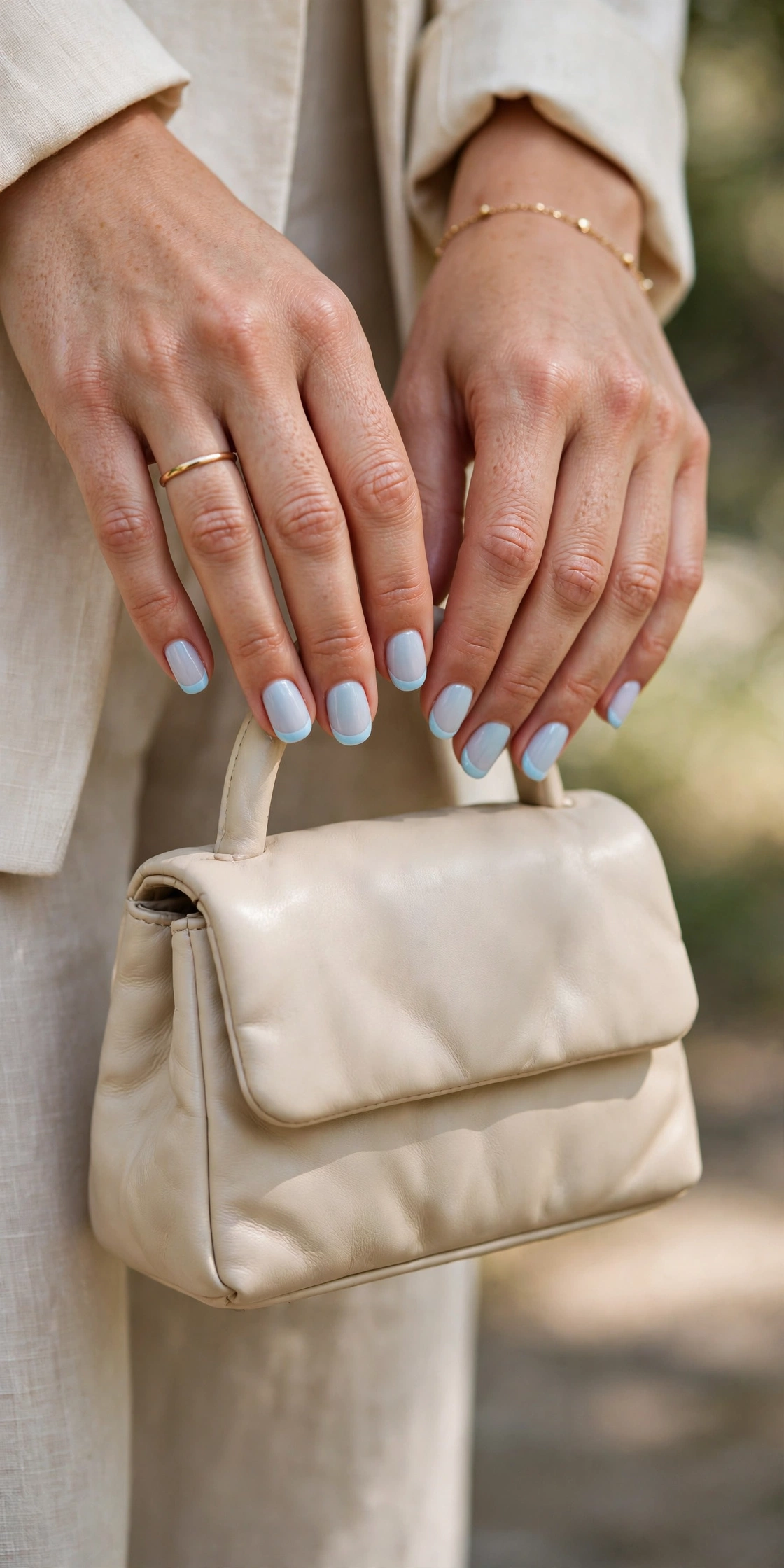
Swapping the white tip for colour is the easiest way to wear the French trend with personality, and it works at almost any age when you choose the shade carefully. Pastel blue, sage green and soft lilac tips feel fresh in spring and look surprisingly refined on short square nails. Deeper shades – burgundy, forest green, chocolate brown, even a true black – turn the same design into something polished and a little moody for autumn evenings. Keep the base nude and neutral whatever colour goes on the tip – the contrast is what makes it read as a French manicure rather than ordinary nail art. Try one colour across all ten nails first; once you are comfortable, a muted rainbow of pastels, one per finger, is a playful holiday option that still grows out gracefully.
4. French Tips With a Little Extra Detail
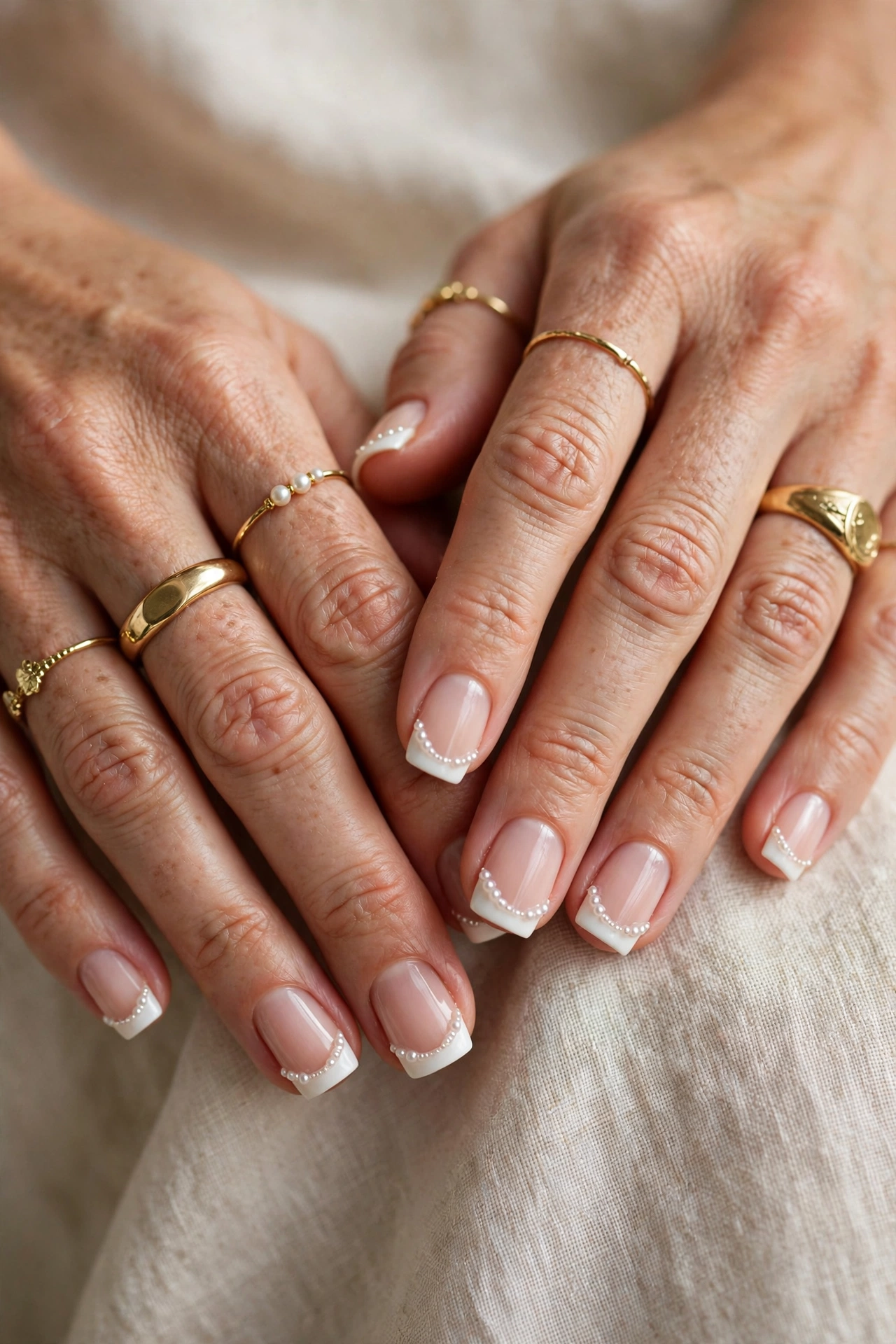
Small details let you personalise the classic without abandoning it. A row of tiny pearls tracing the smile line turns plain French tips into a bridal or party set in minutes, and the pearls sit flat enough to survive normal wear if they are sealed with gel or a thick top coat. Gold or silver foil flecks pressed along the tip edge pair beautifully with evening jewellery. A single delicate dot, a tiny heart at the base of one accent nail, or fine glitter faded from the tip inward are all versions I see requested constantly because they feel special but still look appropriate on Monday morning. Less really is more here: choose one detail family and repeat it across the set rather than mixing pearls, foil and art on every nail.
5. Choosing the Right Nail Shape and Length
The same design changes character completely depending on the shape underneath it, so it is worth thinking about your hands, not just the inspiration photo. Almond and oval shapes soften the look and make fingers appear longer; they are the kindest choice if your nail beds are short. Squoval – square with softly rounded corners – suits the classic thick-ish tip and busy hands that catch on things, because the corners are less likely to snap or chip. Coffin and stiletto lengths carry coloured and glitter tips well but demand more upkeep and, honestly, more careful typing. If your natural nails break easily, a short French manicure in gel polish on your own nails will almost always look better after two weeks than long extensions that are lifting at the edges. Be honest with your technician about how you use your hands; a good one will steer you toward the version that still looks good on day twelve.
6. How to Do a French Manicure at Home, Step by Step
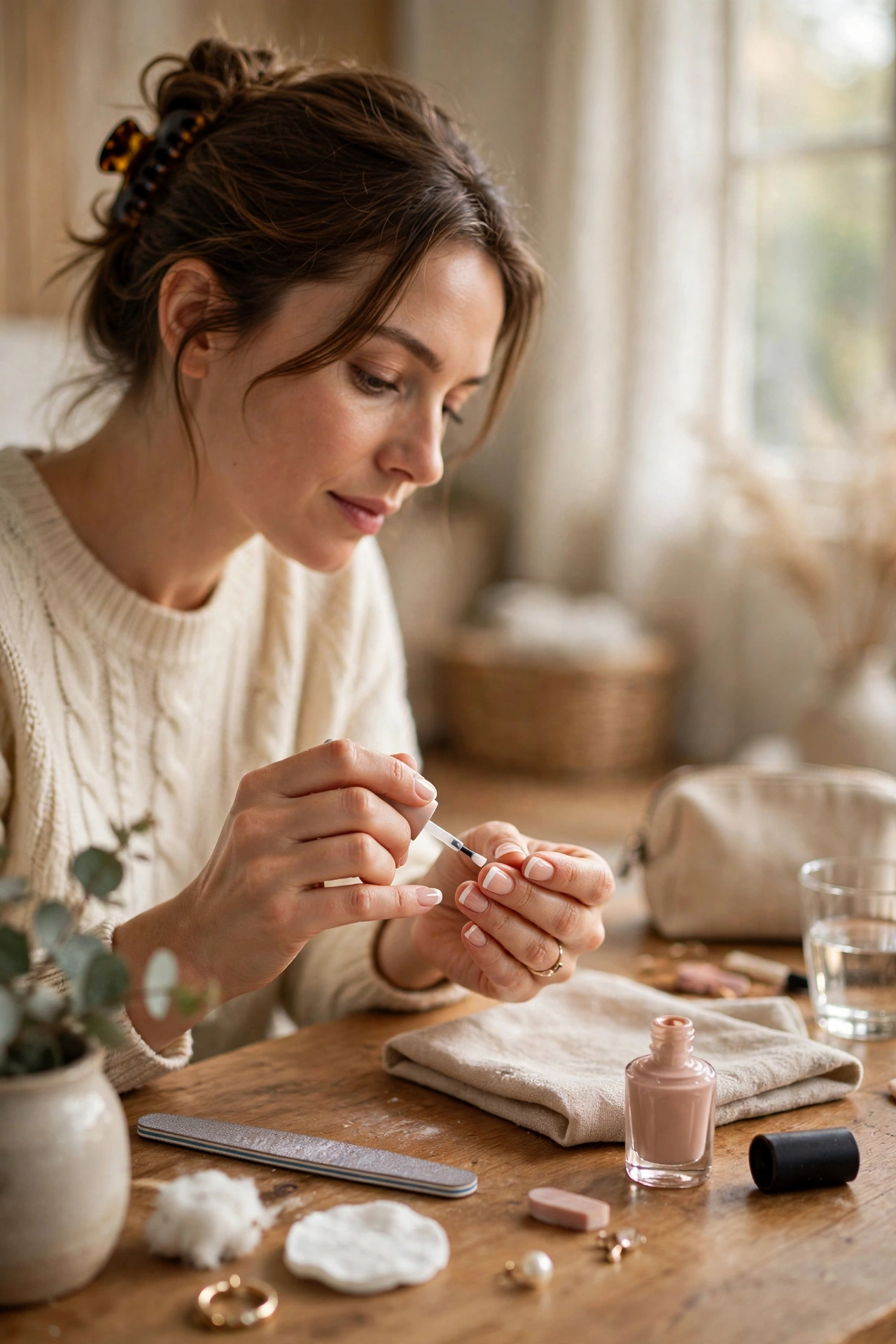
A salon finish is lovely, but French tips are very achievable at home with a little patience and the right order of steps. Start with clean, dry nails: push back cuticles gently, shape with a fine file in one direction, and wipe each nail with a little nail polish remover or alcohol to remove oils – this single step doubles the wear time. Apply a thin base coat and let it dry fully. Next, paint two thin coats of your sheer nude-pink shade, waiting a few minutes between coats rather than applying one thick layer. For the tips, rest the side of your hand on the table, hold the brush still, and rotate your fingertip under it in a small arc; this is far easier than trying to draw the curve freehand. Stick-on guides work too; remove them while the white is still wet. Finish with a glossy top coat, flooding it slightly over the tip edge to seal it, and reapply a thin top coat every second day to keep the shine and protect the white from staining.
7. Making Your Manicure Last: Care, Products and Small Habits
A French manicure shows wear at exactly the place you look most – the white edge – so aftercare matters more than with many other designs. Wear gloves for washing up and cleaning; hot water and detergent are the fastest way to lift polish and yellow the tips. Keep a small bottle of cuticle oil in your handbag and use it once a day; hydrated nails flex slightly instead of snapping, which is what protects the tip line. When you shop for products, look for a base coat described as ridge-filling if your nails are uneven, a white polish with good opacity so you need only one tip coat, and a quick-dry glossy top coat. Gel systems last longest, usually two to three weeks, while regular polish realistically gives five to seven good days with the top-coat refresh described above. If the white starts to dull before the manicure itself is tired, a gentle wipe with non-acetone remover on a cotton bud brightens the tips without removing the whole set.
Common Mistakes to Avoid
The most frequent mistake is a tip that is too thick for the nail. A wide band of white shortens the fingers visually and is the main reason some people think French tips look dated. The second is choosing a base that fights your skin tone – a blue-pink base on warm skin can make hands look grey, while a yellow-orange nude on cool skin can look muddy; when in doubt, go sheerer rather than more opaque. Skipping prep is the third classic error: polish applied over oily nails or rough cuticles will peel in sheets no matter how expensive the bottle. Finally, avoid matching the tip colour to an exact white outfit. The polish white is brighter than most fabrics, so side by side the dress can look cream or grey. A softer, slightly off-white tip shade sidesteps the problem entirely.
Frequently Asked Questions
How long does a French manicure usually last?
With regular polish, expect five to seven days of neat wear if you seal the tips with top coat and refresh it every other day. A gel French manicure typically stays glossy and intact for two to three weeks, with the smile line holding up well because the white edge is cured hard.
Does a French manicure suit short nails?
Yes, very much so. On short nails, keep the white tip slim or choose the micro version so the proportions stay balanced. The pale base visually lengthens the nail bed, which is why this design is so often recommended for people who keep their nails practical and short.
What is the difference between a classic and an American French manicure?
A classic French uses a pink-tinted base with a bright white tip. The American version uses a more neutral, beige-toned base and a softer off-white tip, blended with no hard line between them. The American finish looks gentler and a touch more natural, and it is a kind choice if stark white feels too strong on you.
Can I wear French tips for a wedding without them looking plain?
Absolutely – they are a bridal staple precisely because they complement rings, bouquets and every dress colour. If you want a subtle flourish, add tiny pearls along the smile line, a faint shimmer in the top coat, or a slightly deeper pink base to warm up your hands in photographs.
How do I stop the white tips from turning yellow?
Yellowing usually comes from sun exposure, smoking, strong spices and dark polish worn previously without a base coat. Always use a base coat as a barrier, wear gloves for cleaning and food prep with ingredients like turmeric, and choose a top coat with UV protection if you spend a lot of time outdoors.
A Quiet Classic Worth Keeping
Fashion will keep offering louder trends, but the French manicure earns its place because it fits every wardrobe, every age and almost every occasion. Start with the soft classic, try a coloured tip when you want a change, and keep the care habits that make any version last. Your hands will simply look cared for – and that never goes out of style. Save the design you love most, show it to your technician or try it at home this weekend.