A good jumpsuit solves the hardest part of getting dressed: the top and bottom already agree. A khaki twill safari jumpsuit solves it particularly well. The colour goes with nearly every shoe and bag you own, the twill holds its shape all day, and the safari details – chest pockets, collar, belted waist – make one piece look like a considered outfit, not a shortcut. First time I wore one, I was ready in four minutes.
This guide shows nine easy ways to style it, from white trainers on a city street to gold heels in the evening, using the photos here as a working wardrobe. There is a step-by-step routine for putting the look together, honest buying advice on fit and fabric, and washing habits that keep khaki twill crisp.
Why Khaki Twill Is Such a Reliable One-Piece Choice
Khaki is a working neutral. It is warmer than grey, softer than black, and it pairs naturally with brown leather, white trainers, gold jewellery, black sandals and denim jackets – which is to say, with the accessories most of us already own. On a one-piece that matters doubly, because no second garment adds contrast. Khaki carries the whole look calmly, in almost every season.
Twill earns its place too: its fine diagonal weave makes cotton sturdier, more crease-resistant, and firm enough to hold a collar, a pocket flap and a clean trouser line. A safari cut uses that structure well: shirt on top, trouser below, belt joining them – the ease of one piece with the polish of two.
1. The Classic Street Look: Brown Belt and White Trainers
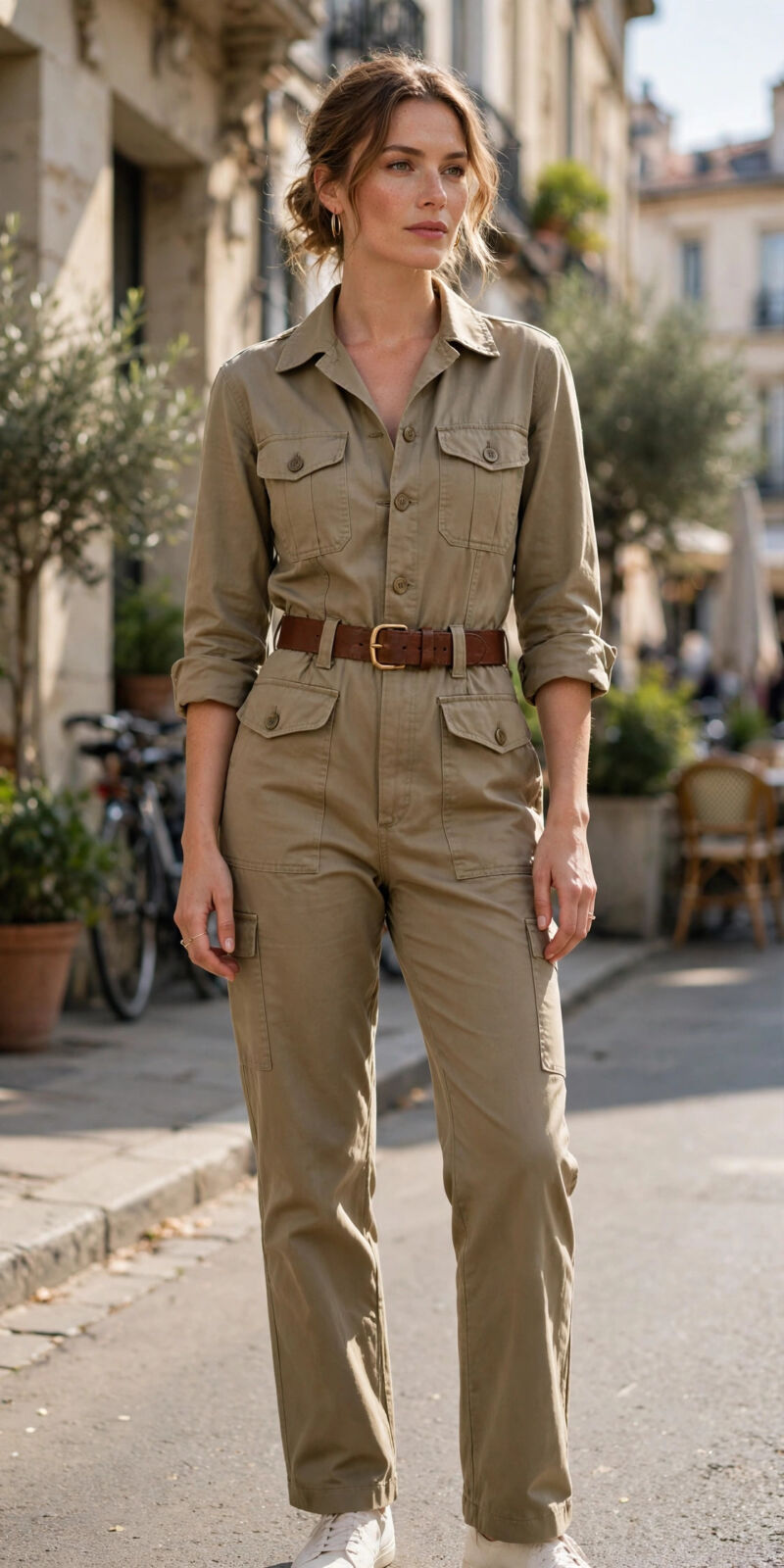
The first photo is the jumpsuit in its natural state: sleeves rolled to the forearm, a brown leather belt firm at the waist, white trainers below. Nothing here is trying hard, and that is the point. The belt does the most important job – without it, a safari jumpsuit drifts toward boiler suit. Start with this version and change one element at a time.
2. Look Closely at the Details Before You Judge the Fit
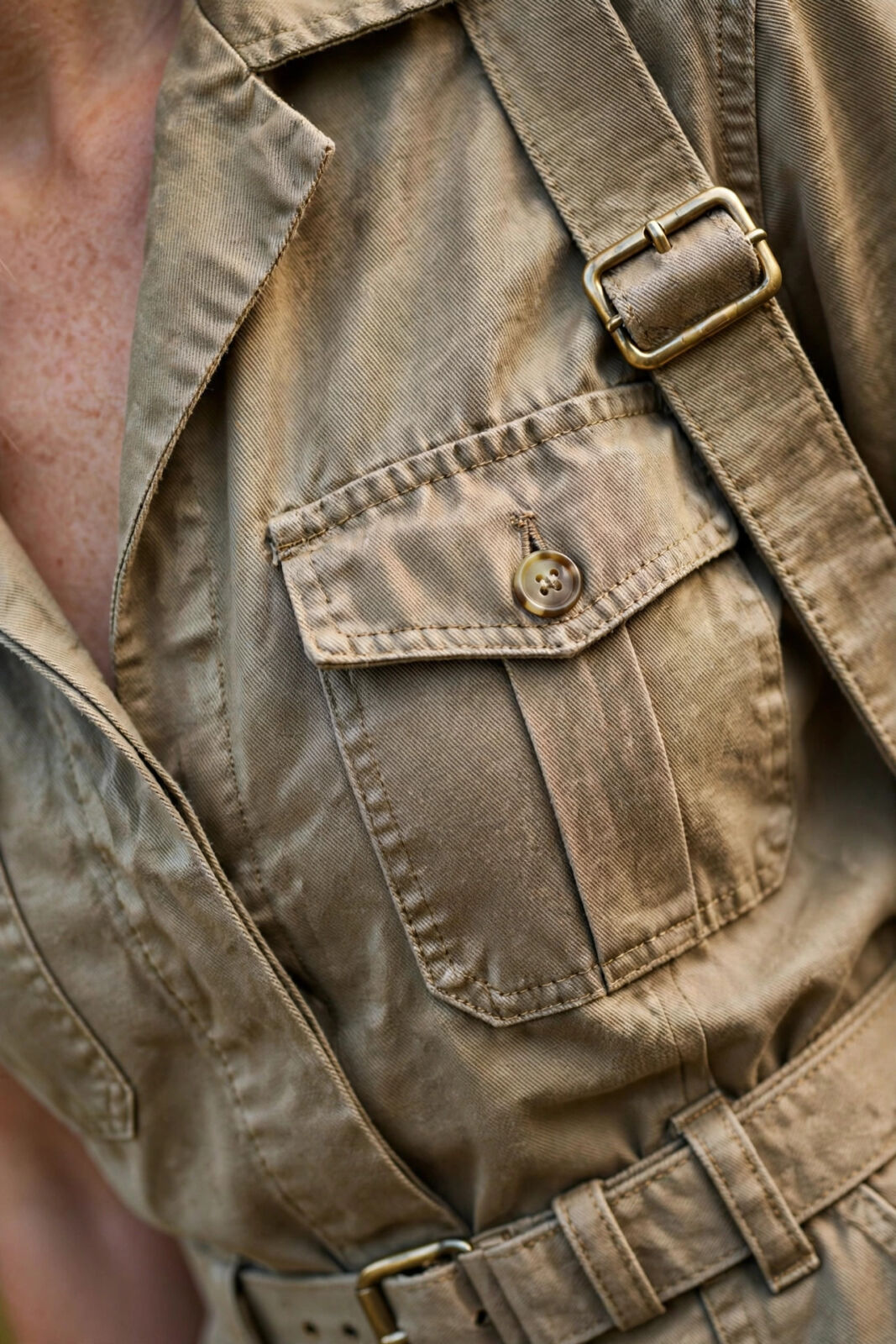
The close-up shows why this style looks smart rather than sloppy: a buttoned chest pocket that lies flat, a clean twill weave, a belt buckle with some weight to it. When you try one on, check these same points. Pockets should sit flat, buttons close without pulling, and fabric stay smooth over the hip when you sit. Small details are the whole difference here.
3. Plan It as a Flat Lay: Belt, Sandals, Sunglasses
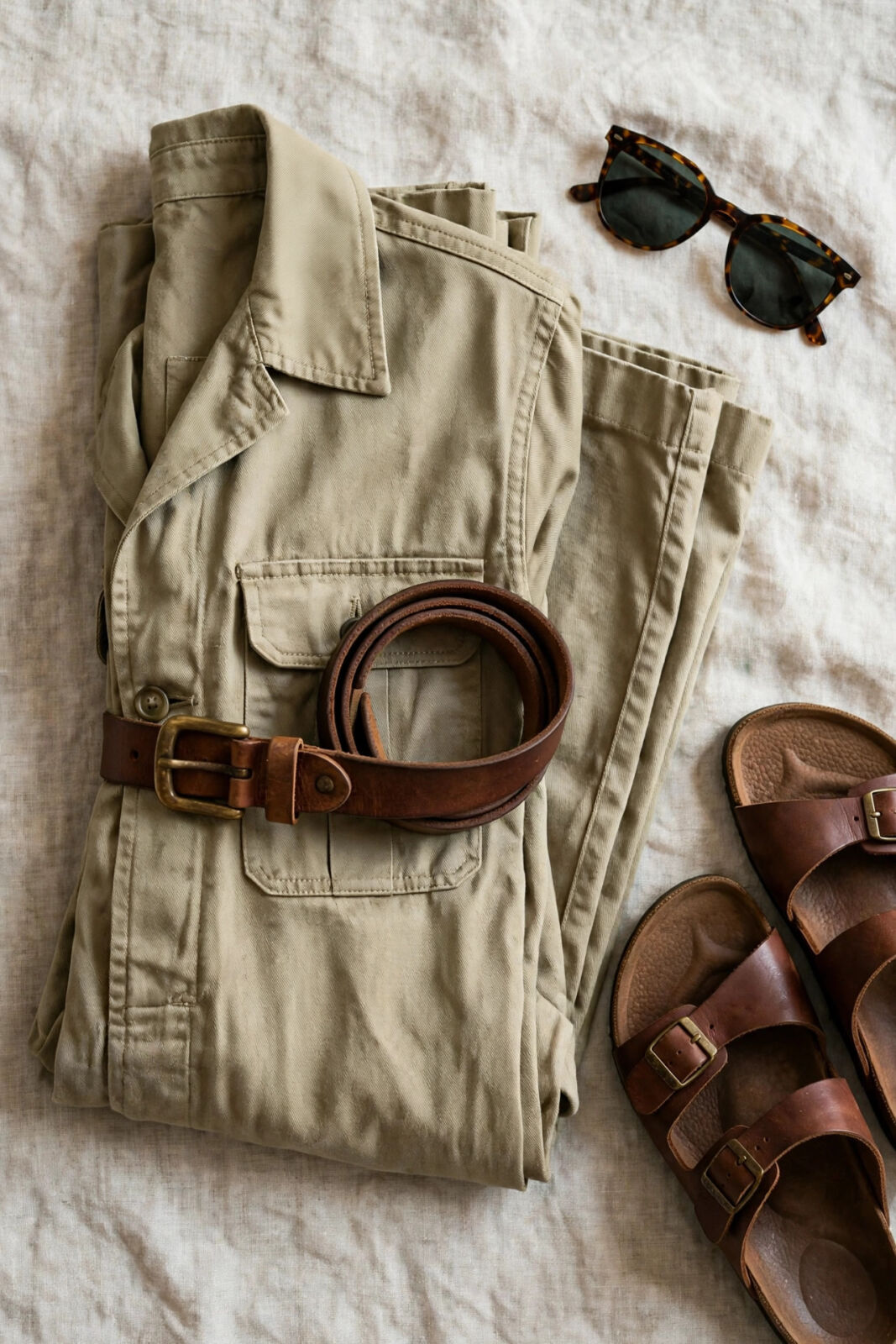
The flat lay in this guide is a packing list in picture form: jumpsuit, brown belt, leather sandals, sunglasses. That is a complete warm-weather outfit in four items, which is why this jumpsuit travels so well. Khaki, brown and tortoiseshell sit together without a jarring note, so you can pack light and still feel dressed.
4. Dressed Up: Gold Heels and Layered Gold Jewellery
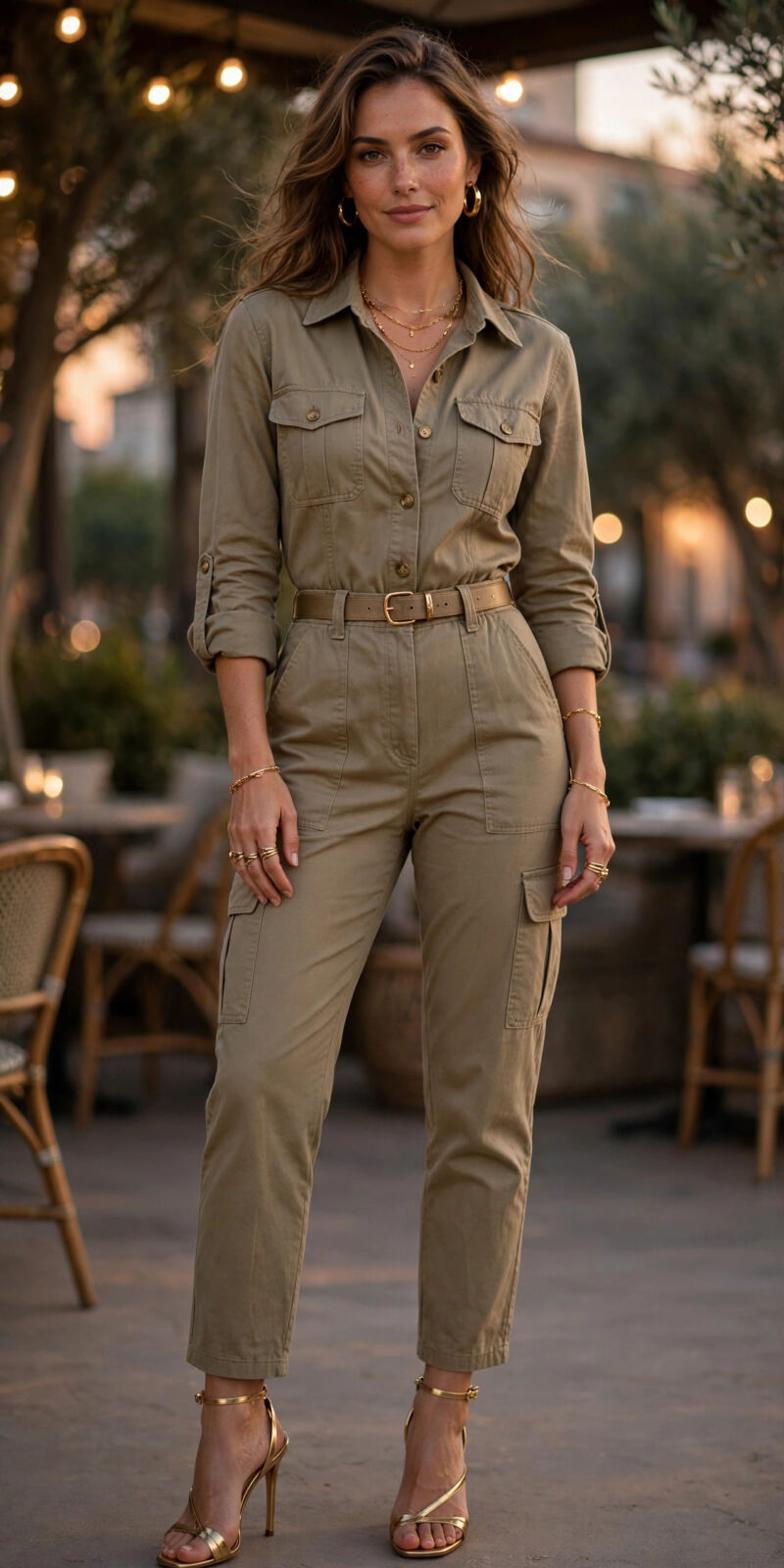
The fourth photo proves the evening case. Same jumpsuit, but the trainers are gone, replaced with gold heeled sandals, layered fine gold necklaces, hoops and bracelets, and the belt swapped for a slimmer matching one. Khaki takes gold beautifully – the warmth in both colours agrees. Roll the sleeves neatly, open one extra button, and a daytime one-piece becomes a dinner outfit.
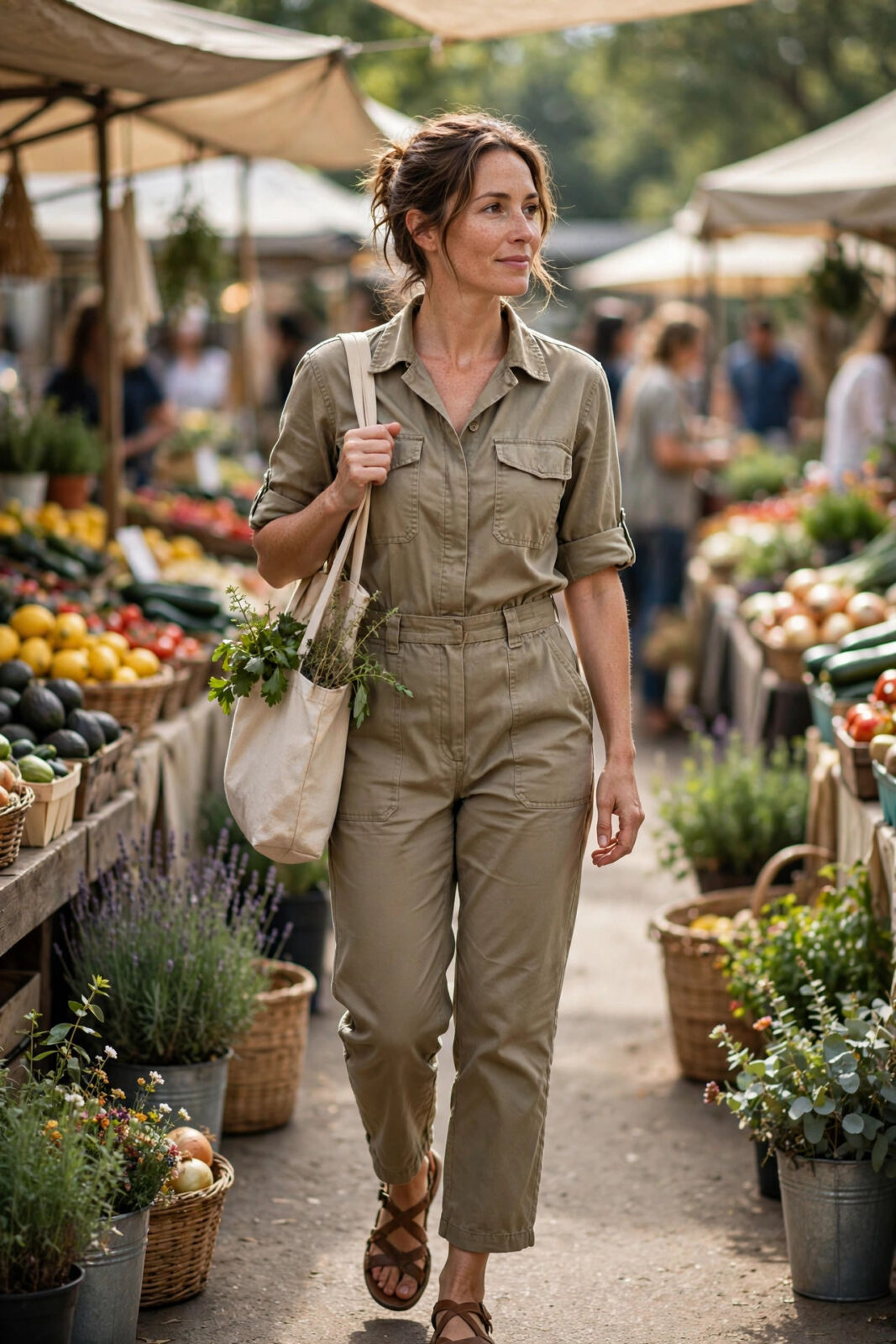
5. Market Morning: Sandals and a Canvas Tote
The last photo is the weekend version: sleeves pushed up, flat brown sandals, a canvas tote over one shoulder, walking through a market. The pockets earn their keep here – phone in one, card in another – and this is the outfit you reach for when you want to leave quickly and still feel right.
6. With a Denim Jacket When the Air Cools
Khaki and mid-blue denim are old friends. A denim jacket over the jumpsuit adds a layer without hiding the belt, as long as you wear the jacket open. Choose classic blue rather than black denim, which looks hard against khaki. This pairing stretches the jumpsuit from spring into autumn.
7. Rolled Ankles and a Bare Sandal for Summer
In real heat, roll the trouser hems twice to show the ankle, wear a flat leather sandal, and push the sleeves above the elbow. The rolls lighten the leg, the outfit breathes better, and the safari shape reads relaxed rather than uniform-like. Add a woven bag and sunglasses for the holiday version.
8. Smartened for Casual Workdays
In offices with a relaxed dress code, the jumpsuit works with a few adjustments: belt neat and firm, sleeves rolled evenly rather than pushed, a closed flat shoe or a clean loafer instead of trainers, and one simple piece of jewellery. A blazer worn open finishes it for meetings, and the one-piece base keeps your morning routine short.
9. Boots and a Knit Layer for Autumn
When the weather turns, swap sandals for tan or brown ankle boots and add a fine knit under or over. A thin roll-neck under the jumpsuit, with the collar open over it, looks layered and warm without bulk; a long cardigan over the top works too, belted or not. Khaki sits happily next to rust, cream and chocolate knits, so autumn dressing is mostly a matter of reaching into the drawer.
How to Put the Look Together, Step by Step
Step 1: Check the torso length first. Before shoes or belts, sit, bend and reach in the jumpsuit. A one-piece lives or dies by torso length: if it pulls when you sit, the body is too short, however good it looks standing.
Step 2: Fasten, then belt firmly. Button up to the point that feels natural – most people leave the top one or two open – then add the belt at your true waist and fasten it firmly, not loosely. The belt is what turns one long piece of khaki into a waist and two halves. A loose belt is worse than none.
Step 3: Set the sleeves and hems. Roll sleeves to the same point on both arms, just below or above the elbow, and roll the trouser hems if you are wearing sandals or trainers. Matching rolls on both sides are the small thing that makes the whole outfit look deliberate.
Step 4: Choose shoes by the day, not the outfit. Trainers for walking days, sandals for warm and market days, loafers or flats for work, gold heels for evening. The jumpsuit accepts all of them, so let your schedule decide. Just keep the shoe clean – a scruffy shoe drags khaki down faster than any other colour.
Step 5: Add one bag and one jewellery note. Finish with a single bag – canvas tote, brown crossbody or clutch – and one jewellery note: small hoops, a fine necklace, or a watch. Restraint here keeps it looking easy.
Buying Advice, Fit and Twill Care
When buying, put torso length and sitting comfort first, then check that chest pockets lie flat, buttons and the fly fastening feel sturdy, and belt loops are firmly stitched – they carry real tension on a jumpsuit. On fabric, look for cotton twill with a close, even diagonal weave and some weight in the hand; flimsy twill creases and twists at the leg. A little stretch helps comfort, but too much bags the knees. For care, wash inside out in cool water with similar colours, fasten buttons and remove the belt first, and dry on a hanger rather than in a dryer, which can shrink the torso length – the one measurement you cannot afford to lose. A warm iron or a steamer brings the collar and pockets back to crisp.
Common Mistakes to Avoid
The biggest mistake is buying a jumpsuit by your dress size alone and never sitting down in the fitting room – torso length is the fit, and it only shows when you sit, bend and reach. Second is wearing it without a belt or with the belt loose, which is where the unflattering one-piece look comes from. Third is washing it hot or tumble drying it and shrinking the body length by a centimetre that you will feel all day. And do not overload the chest pockets; they are a design detail that stays smart only while it lies flat.
Frequently Asked Questions
How should a safari jumpsuit fit?
Neat but not tight: shoulders in place, buttons closing without pulling, and enough room to sit, bend and climb a step. The trouser should skim, not cling. Between sizes, size up and let the belt define the waist – slightly easy looks relaxed, slightly tight looks strained.
What shoes go with a khaki jumpsuit?
Almost all of them: white trainers for everyday wear, brown leather sandals in summer, loafers or clean flats for casual work, tan ankle boots in autumn, and gold or black heeled sandals in the evening. The only shoes that fight it are formal black patent styles and heavy chunky boots, which argue with its easy character.
Is a jumpsuit practical for a full day out?
Yes, with two honest notes. The pockets and one-piece ease make it genuinely practical for markets, travel and sightseeing, and twill wears well through a long day. The one inconvenience is the bathroom, which takes a little longer – a button front, like this safari style, is the easiest version to manage.
How do I stop khaki looking dull?
Give it contrast and texture: brown leather at belt and shoes, white trainers, gold when you dress it up. Khaki only looks dull when everything around it is the same flat tone. A steamed collar and flat pockets also make the colour look richer.
Can I wear a khaki jumpsuit in winter?
In mild winter weather, yes: layer a thin roll-neck underneath, add ankle boots and a long coat over the top, worn open so the belt and shape still show. In very cold weather cotton twill alone is not warm enough, so treat it as a three-season piece and let coats do the heavy work on cold days.
A Last Word Before You Wear It
A khaki twill safari jumpsuit is the rare outfit that is both the easy option and the good-looking one. Get the torso length right, belt it firmly, set your rolls evenly, and let your shoes decide the mood – trainers by day, gold heels by night. Wash it cool, dry it on a hanger, and it will stay the piece you reach for whenever deciding feels like too much work.