Table of Contents
The medlar tan leather satchel is the bag I judge all other work bags against. It is structured enough to look smart against a blazer, like the first photo here, soft enough to sling crossbody on a Saturday, and that warm medlar tan — a ripe, reddish mid-brown — goes with cream, navy, black and denim without ever looking like it is trying to match. Mine has carried laptops, library books, a spilled coffee and three years of commutes, and it looks better now than the day it arrived.
A satchel earns its keep differently from a tote or a handbag: the flap and buckle keep everything shut and private, the top handle keeps it ladylike, and the long strap keeps your hands free. This guide walks through nine smart ways to wear one on work days, how to choose the right size and carry it step by step, how to organise what goes inside, and how to buy and care for real leather without wasting money. If you prefer a bolder texture for smarter days, our guide to the embossed croc handbag is worth a look; day to day, though, the medlar tan leather satchel is the easier bag to live with.

9 Smart Ways to Wear a Medlar Tan Leather Satchel on Work Days
First, the hero look above: carried by the top handle or in the crook of the arm with a cream blazer and tailored trousers. This is the boardroom version — structured bag, structured outfit, nothing slouching. Second, on the shoulder with the strap shortened, tucked close under the arm over a navy dress. Tan against navy is the oldest smart pairing there is, and the brass buckle picks up gold jewellery nicely.
Third, the commute version: long strap crossbody over a trench coat, flap buckled properly, hands free for tickets, coffee and door handles. On commute days the medlar tan leather satchel earns its keep twice over.
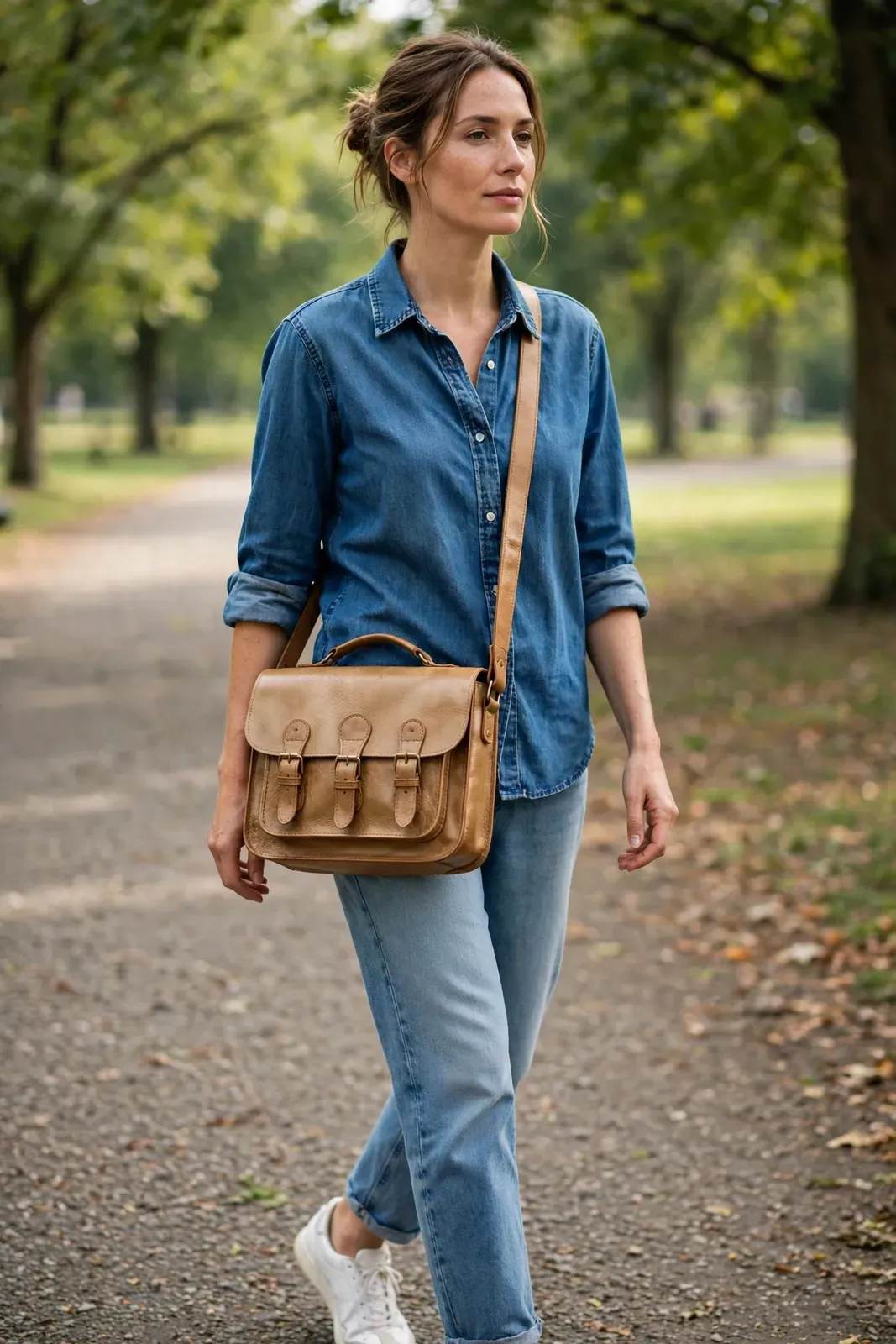
Fourth, the smart-casual Friday look in the fourth photo: crossbody with a denim shirt and white trainers, where the leather keeps the denim from looking scruffy.
Fifth, with a black outfit — black knit dress or black suit — where the warm tan breaks up the black and stops it looking severe. Sixth, the bookshop look in the last photo: carried by the handle with a cardigan and a midi skirt, books inside, on slower days when the bag is half work, half pleasure. Seventh, the winter version: over a camel or charcoal coat with leather gloves in a shade close to the bag; near-matching leathers look deliberate even when they are not identical. A medlar tan leather satchel against camel, in particular, looks rich rather than matchy.
Eighth, the meeting-to-lunch carry: top handle in hand, strap removed or tucked inside, so the satchel reads as a briefcase-soft handbag at the table. Ninth, the travel work day: crossbody at the station, then by the handle at the other end — the same bag doing both halves of the day without a swap. Nine ways, one bag, no outfit it cannot finish. Swap the order through the week and the medlar tan leather satchel never looks like yesterday’s bag.
How to Choose and Carry Your Medlar Tan Leather Satchel Step by Step
Step one: size it against your real life, not your ideal one. Lay out what you actually carry — laptop, notebook, purse, phone, keys, bottle, book — and measure the laptop. A satchel that swallows the laptop diagonally but not flat is the wrong satchel.
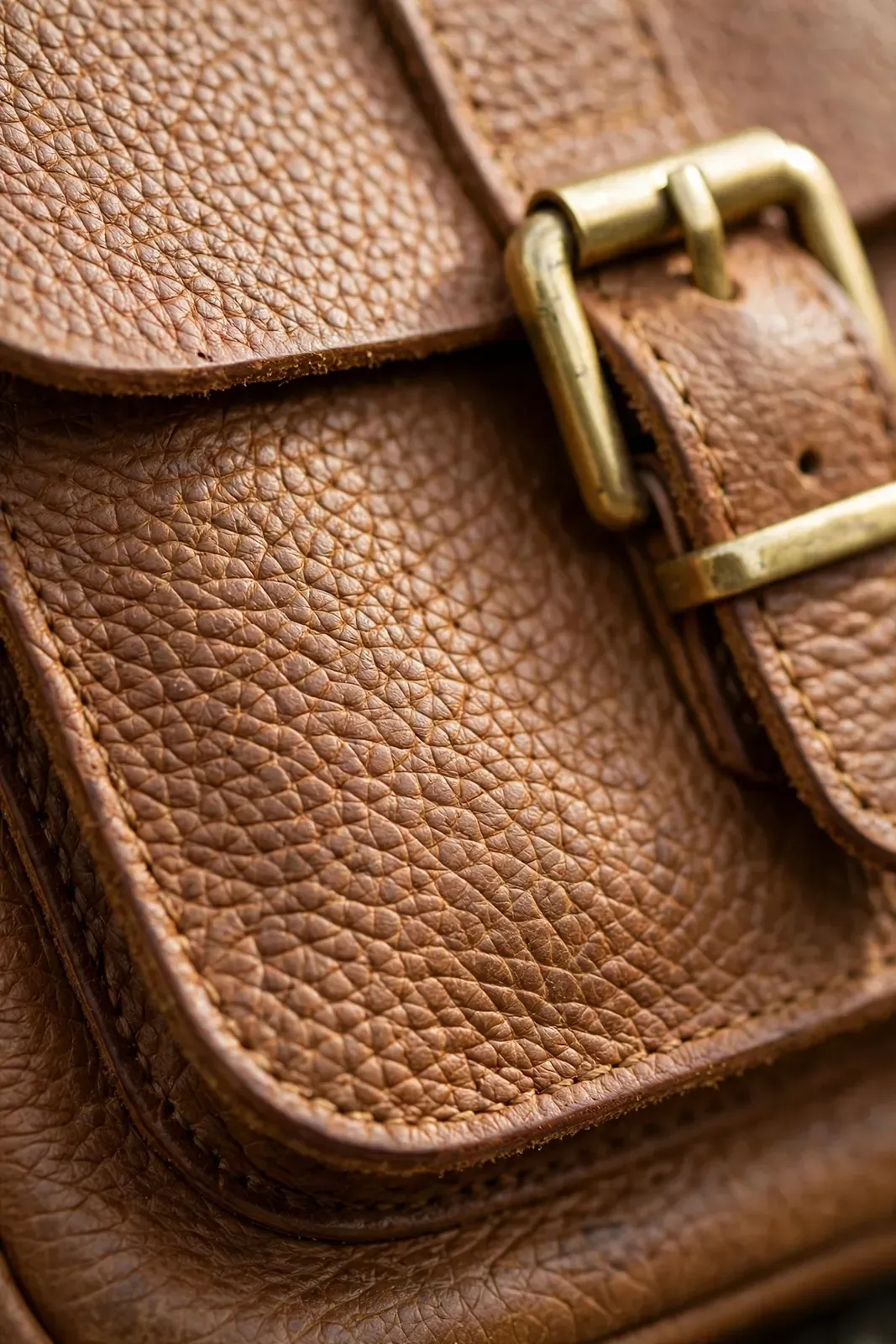
Step two: check the leather in the close-up way, like the second photo: real leather is tanned animal hide with a grain that varies gently across the surface, pores and all; a perfectly uniform, repeating pattern is usually a coated split or a synthetic, which will peel at the edges instead of ageing. Step three: test the hardware. Buckle and unbuckle the flap five times in the shop; check the strap rings take weight without creaking, and look at the stitching — even, tight, and finished cleanly at the ends. A well-made medlar tan leather satchel should feel solid at every one of these checks.
Step four: set the strap length properly at home. Crossbody, the bag should rest on your hip bone, not bounce against your thigh; on the shoulder, the top of the bag should sit just under your arm so you can clamp it lightly. Step five: load it heavy-side down — laptop against the back panel, heaviest items at the bottom — and buckle the flap every time, because an unbuckled satchel gaps and strains the strap. Step six: swap shoulders through the day. Even a good bag is a one-sided load, and alternating sides is the cheapest back care there is. Get the strap right and a medlar tan leather satchel all but disappears on the shoulder — in the good way.
What Fits Inside: Organising the Satchel So Mornings Stay Calm
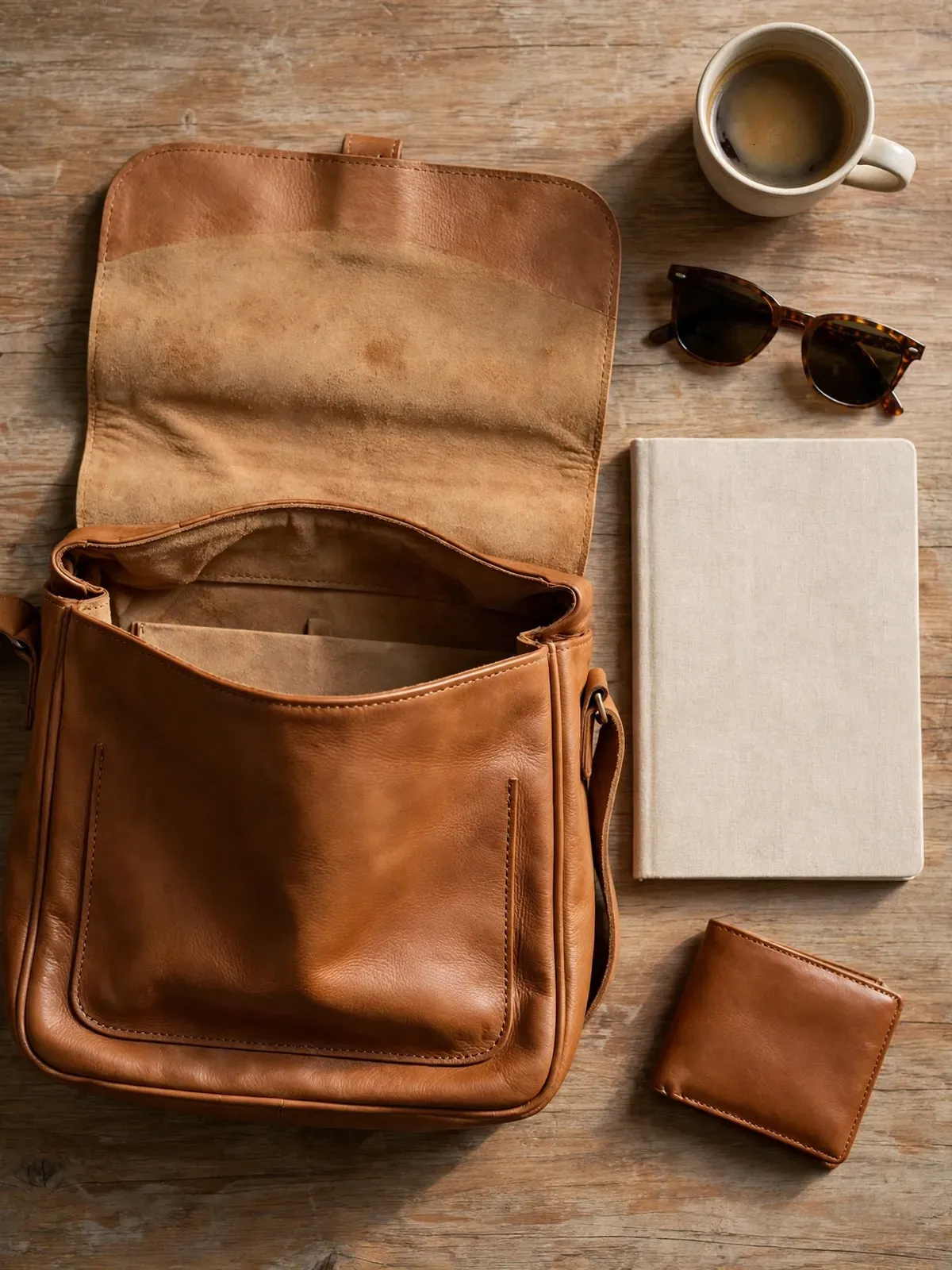
The flat-lay above is my actual layout. Laptop flat against the back. Notebook and papers in front of it, standing upright so corners do not fold. A small zip pouch holds the loose things that otherwise migrate — lip balm, plasters, pens, charging cable — and the purse sits on top where my hand lands first. Sunglasses live in their case in the outside back pocket if your satchel has one; if not, they go in the pouch, never loose against keys. Loaded this way, the medlar tan leather satchel still closes flat.
Two rules keep the system working. First, the Friday empty-out: once a week, tip everything onto the desk, shake out the crumbs and receipts, and only put back what belongs. Satchels collect paper the way pockets collect coins. Second, respect the weight limit you set when you bought it — a leather satchel is strong, but its strap stitching is not endless, and a bag that is always at bursting point ages twice as fast at the seams. If your daily load has outgrown the bag, the honest answer is a bigger bag, not a stronger shove.
Buying, Budget and Leather Care Advice
The colour name first, because it helps you shop: medlar tan takes its name from the ripe fruit of the common medlar, a small tree whose fruit turns a rich russet brown when it softens. That russet warmth is exactly what to look for — a tan with red in it, not a flat beige and not an orange. Photograph the bag beside something white in daylight before you commit; screens and shop lights both lie about tan. When a true medlar tan leather satchel catches daylight, you will know it at once.
On budget, leather is one of the few places where the mid price genuinely buys you more years. Full-grain leather, decent brass hardware and stitched — not glued — strap attachments cost more up front and far less per year than a cheap bag replaced every season. What you can save on: logos, linings with prints, and this-season hardware shapes. What never to skimp on: the strap and its rings, because that is where satchels die. Pay for the strap, the grain and the stitching, and a medlar tan leather satchel becomes the cheapest bag you own per wear.
Care is a small, regular habit. Wipe the bag down with a dry cloth when you come home in the rain, let it dry at room temperature away from radiators, and feed the leather with a proper leather conditioner every few months — little and often, rubbed in and buffed off, never soaked.
Store it stuffed loosely with paper, flap buckled, in a cloth bag, standing upright. Scratches on tan leather mostly rub out with the heat of a fingertip and a little conditioner; deep marks become part of the patina, which is the point of the material. Keep it away from hand sanitiser and perfume sprays, which spot the finish faster than rain ever will. Ten quiet minutes of care keep a medlar tan leather satchel glowing for years.

Common Mistakes to Avoid with a Leather Satchel
The first mistake is buying for the photograph instead of the laptop — a satchel that fits everything except the one thing you carry daily. Measure first. The second is overloading: a bulging flap and a straining buckle spoil the line of the bag and the life of its stitching. The third is the rain panic — leather is not ruined by getting wet, it is ruined by being dried on a radiator afterwards, which cracks it. Blot, air-dry, condition.
The fourth mistake is cleaning it with whatever is under the sink. Baby wipes, sprays and detergents strip the finish and can lift the tan unevenly; a dry cloth and proper conditioner are all it needs. The fifth is leaving it buckled shut in a damp cupboard all summer — leather wants air. Store it in its cloth bag with the flap closed but the cupboard door opened now and then, and it will come out smelling of leather, not mildew.
Frequently Asked Questions
Does a medlar tan leather satchel go with black outfits?
Yes — warm tan against black is one of the smartest pairings, because the brown softens the black and the black makes the tan look richer. Add gold or brass-toned jewellery to echo the buckle and the combination looks planned. It is the pairing I reach for most with my own medlar tan leather satchel.
How can you tell if a leather satchel is real leather?
Look at the grain: real leather varies gently, with pores and small natural marks, and it smells of leather rather than plastic. Press a fingertip into it — real leather wrinkles softly and recovers. Check a cut edge if you can; real leather is fibrous, not layered like foam.
Will a tan leather satchel show rain marks?
Fresh rain spots usually dry out evenly on their own if you let the bag air-dry at room temperature. Marks that linger respond to an all-over light conditioning, which evens the tone. Never use heat to dry it — that is what turns a spot into a crack.
Is a satchel big enough as an everyday work bag?
A medium medlar tan leather satchel comfortably holds a slim laptop, notebook, purse, phone, bottle and a paperback, as the flat-lay here shows. If you carry a large laptop, gym kit or bulky chargers daily, choose the large size or pair it with a separate tote on heavy days.
How often should you condition a leather satchel?
Every two to three months with regular use, or whenever the surface starts to look dry and pale. Apply a small amount with a soft cloth, let it sit for ten minutes, then buff. Over-conditioning makes leather limp and dark, so little and often is the rule.
Buy the size honestly, buckle the flap, condition it now and then.
That is the whole secret of the medlar tan leather satchel: real leather, warm russet colour, nine ways to carry it, and ten minutes of care a few times a year. Mine still turns heads at the bookshop — yours will too.