A nightstand is the hardest-working square of furniture in the house and the one most likely to become a dumping ground. Phone chargers, half-read books, loose change, three glasses of water at different stages — it all lands there. Good nightstand styling essentials are not about making it look like a magazine; they are about deciding, once, what genuinely belongs within arm’s reach of sleep, and giving everything else a home elsewhere. A bedside that holds only what the night actually needs looks calmer, cleans faster, and works better.
This guide sets out the nine nightstand styling essentials worth keeping, how to arrange them so the surface stays clear, a simple step-by-step reset you can repeat weekly, what to buy and what to skip, and the small mistakes that turn a tidy bedside into clutter within a fortnight. Whether your nightstand is a proper drawer unit, a floating shelf, or a stool pressed into service, the same rules apply.
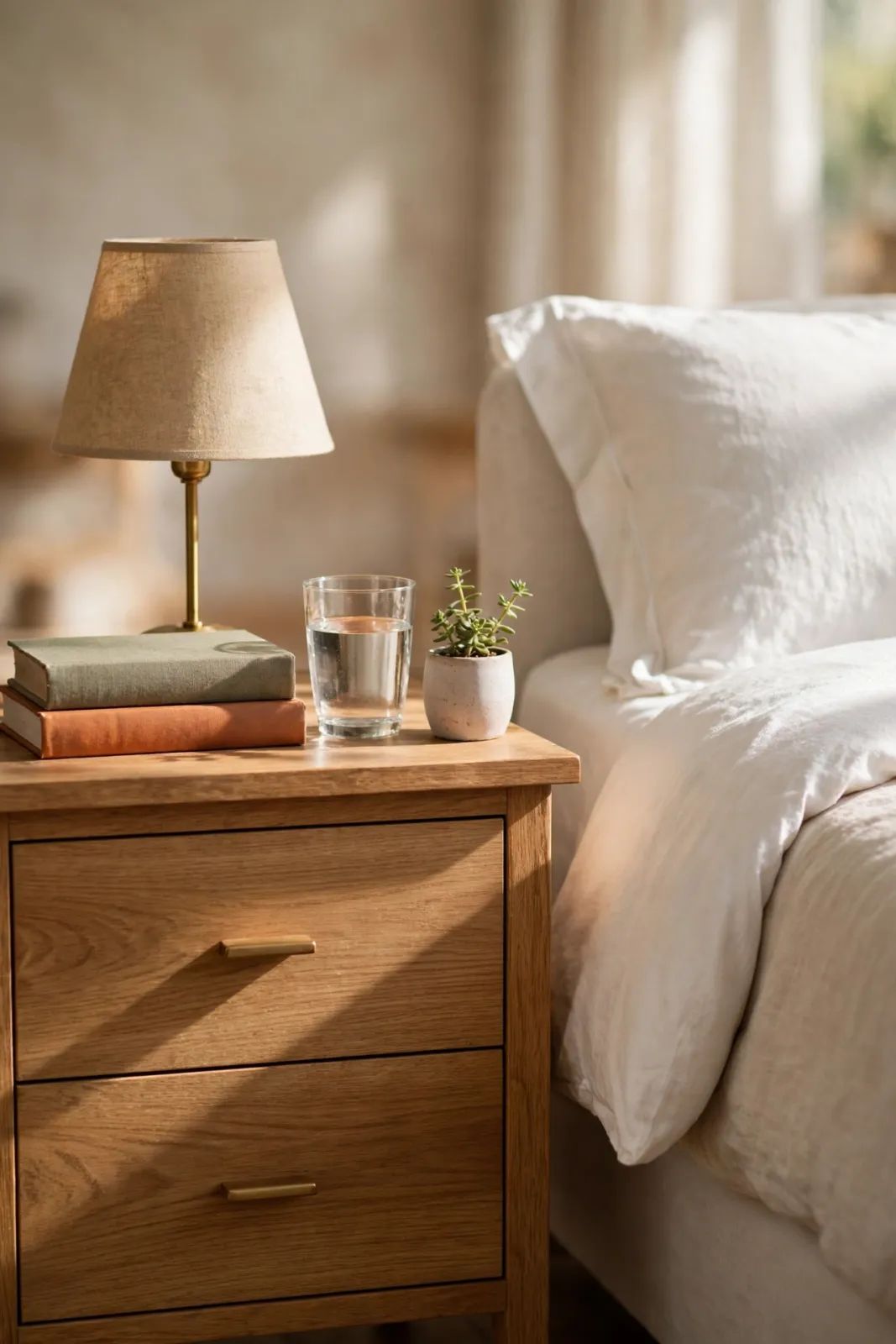
Table of Contents
The Nine Nightstand Styling Essentials Worth Keeping
Start with light. A lamp with a shade that throws light down onto a book, not out into a partner’s eyes, is the one true essential; wall lights and clip lights count if space is tight. Second, a carafe or glass of water — one, washed daily, not a growing collection. Third, your current book or e-reader, singular; the reading pile lives on a shelf, not the bedside. Fourth, a small tray or dish that corrals the tiny things — glasses, lip balm, hair tie, watch — because loose small items are what clutter actually looks like. Fifth, the phone charger, routed behind the unit so the cable never drapes across the surface.
Sixth, a clock if you want to keep the phone out of the bedroom, which is the single best sleep upgrade on this list. Seventh, one personal thing that makes you glad — a small plant, a photo, a stone from a beach — chosen once, not rotated weekly. Eighth, hand cream or tissues in the drawer, not on top. Ninth, empty space. At least a third of the surface should hold nothing at all; that breathing room is what makes the arrangement read as styled rather than stored. The classic nightstand was designed around exactly this idea — a small surface, a drawer, and nothing more.
Arranging Nightstand Styling Essentials So They Stay Tidy
Arrange by height and by reach. The lamp goes at the back corner, furthest from the bed’s edge, so its light pools over the surface and it is never knocked reaching for water. The water sits nearest your pillow hand. The tray takes the middle ground, and the book lies flat in front of the lamp — flat, because a standing book invites a standing pile. If two people share the bed, each side gets its own small set rather than one grand shared arrangement; symmetry matters less than each person reaching their own things without leaning across.
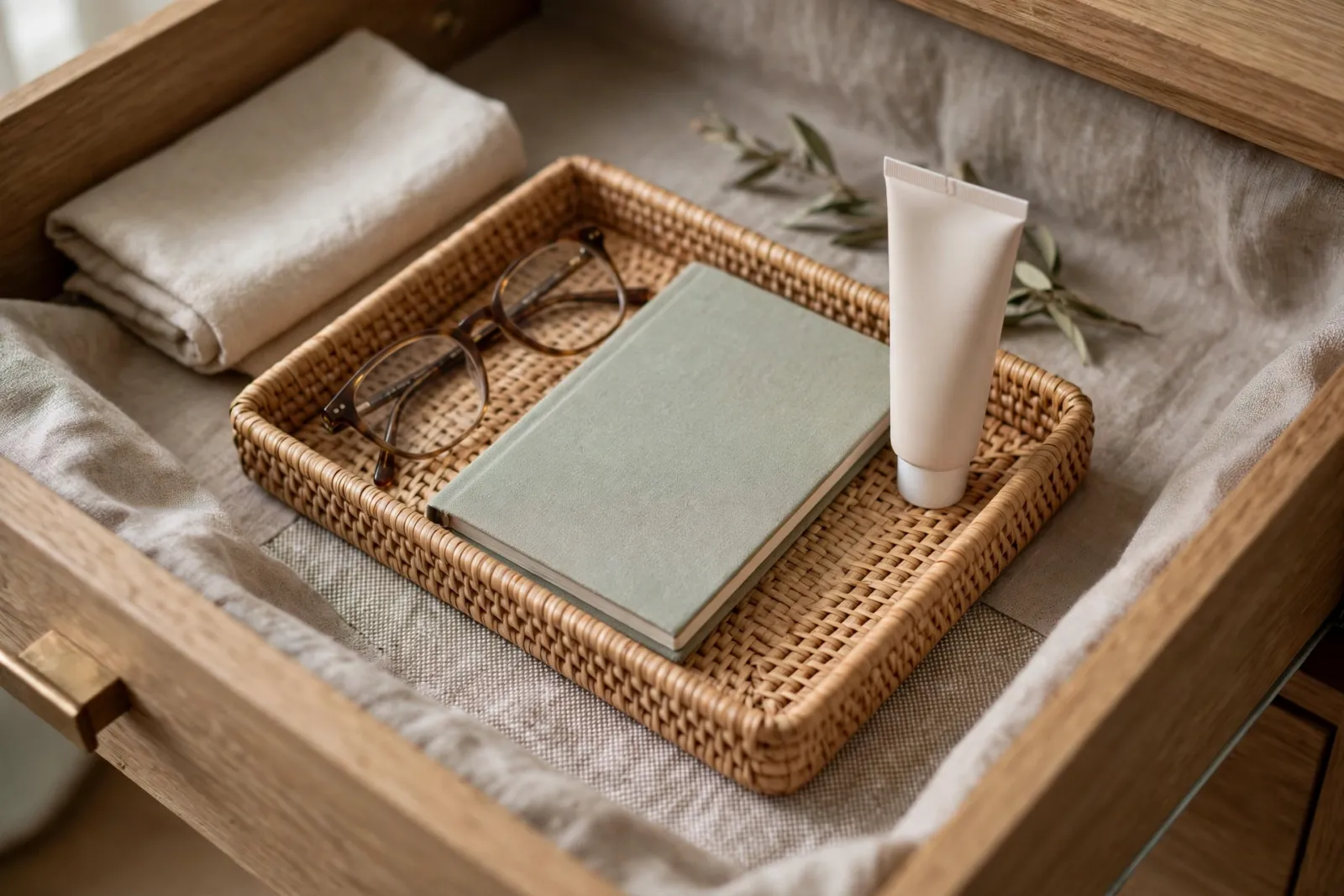
Drawers need zones, not luck. One drawer, three zones: a small box or divider for the nightly items (glasses case, medication, earplugs), a soft pouch for chargers and cables, and the back third left deliberately empty so there is always somewhere for a temporary guest item to go. The moment a drawer has an overflow plan, the surface stops being the overflow. For open shelves and stools with no drawer, a single lidded basket underneath does the same job. Zones are what turn nightstand styling essentials from a one-off tidy-up into a system that actually holds.
Step by Step: The Ten-Minute Bedside Reset
Once a week, ideally while the bed linen is in the wash, reset the nightstand completely. One: take everything off, including the drawer contents. Two: wipe the surface and the lamp base — bedside dust is mostly fabric lint and it builds up faster than anywhere else in the room. Three: return only the nine essentials, checking each against the list; anything that fails goes to its real home now, not later. Four: refill the water, replace the book with the one you are actually reading, and empty the tray of receipts, wrappers, and coins.
Five: check the cable routing and the lamp bulb while you are there. Six: look at the bedside from the bedroom door and remove one more thing — there is almost always one more thing. This small ritual is the entire secret. Nightstands do not stay tidy because of willpower; they stay tidy because somebody resets them on a schedule, the way hotels reset a room. Other furniture types forgive neglect for months; a nightstand shows it in three days.

Small Spaces: Nightstand Styling Essentials Without a Nightstand
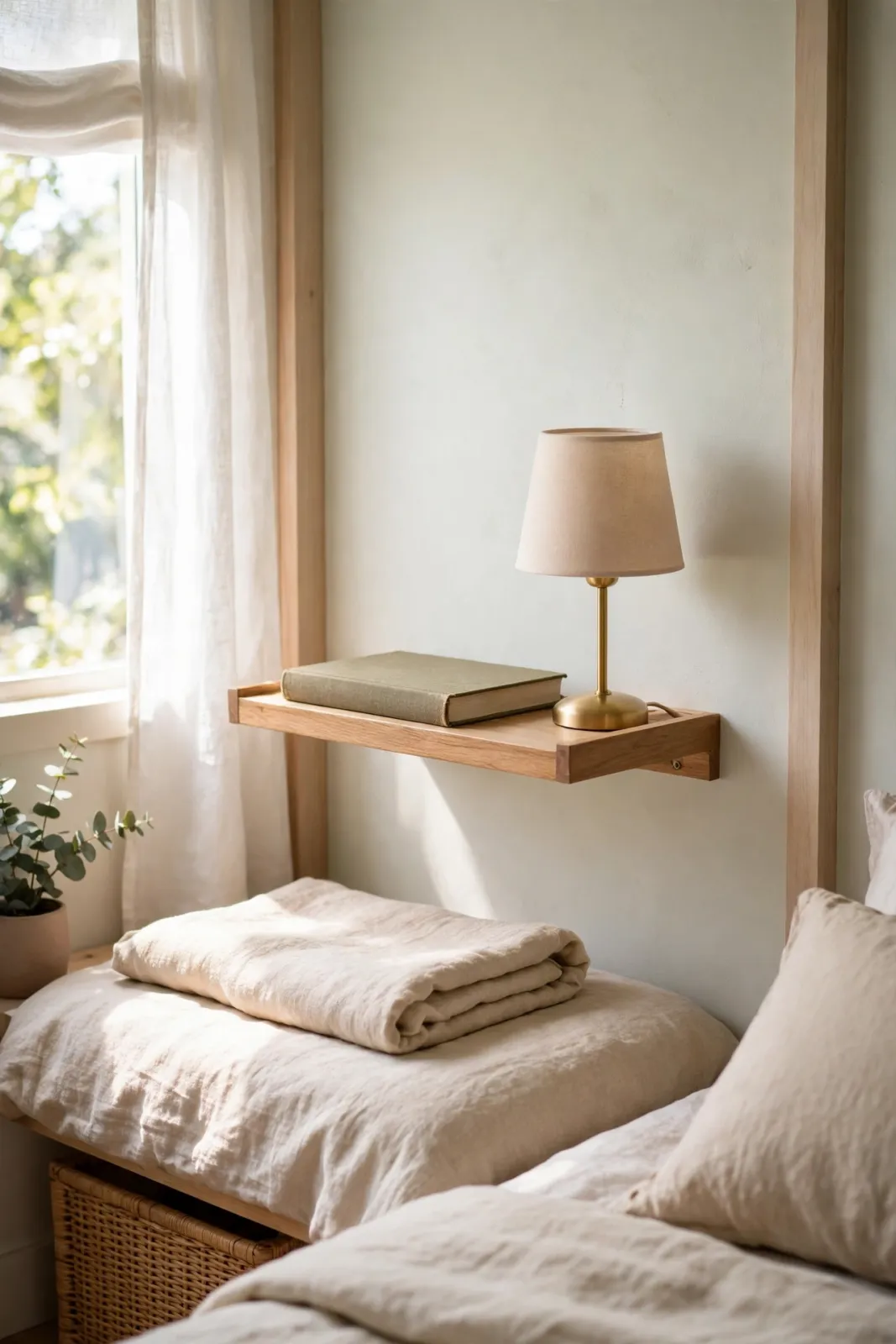
No floor space does not mean no bedside. A floating shelf at mattress height holds the lamp, water, and tray if it is at least 30 cm deep and fixed into studs or proper plugs — test it with books before trusting it with a glass of water. A wall-mounted light frees the whole shelf surface, which is why small-room stylists reach for it first. A narrow stool, a stack of sturdy vintage suitcases, or a small wall cabinet all work, provided the surface is level, at roughly mattress height, and close enough that you never have to sit up fully to reach water.
What does not work is the floor. Glasses get stepped on, water gets kicked, and the room always looks mid-tidy. If the only option is a windowsill, clear it completely and treat it as the nightstand, with the tray doing extra duty against draughts knocking light items over. The nightstand styling essentials still apply; only the furniture changes.

Budget and Buying Advice
Buy the lamp first and buy it properly: a stable base, a shade you can dust, and a switch you can find half-asleep. After that, a tray — any material, as long as it has a lip — is the highest-value small purchase in the bedroom. Dividers for the drawer can be cut-down boxes covered in leftover wrapping paper; they work exactly as well as bought ones. Spend nothing on matching bedside sets of objects sold as decor; they age fast and none of them hold water or light a page.
If you are replacing the nightstand itself, drawers beat open shelves for real life, a width of 40–50 cm is plenty, and the top should sit level with or just below the mattress top so glasses and water are reached down onto, not up. Second-hand solid wood units are common, cheap, and one sanding away from handsome. Spend where the nightstand styling essentials are touched every single day, and save on everything else.
Common Nightstand Mistakes to Avoid
The water-glass collection is mistake number one — one glass, washed daily, ends it. Then the charging station creep, where every device in the house migrates to the bedside and the cables follow; charge phones in the kitchen if sleep matters. Oversized lamps that dominate a small unit, books stacked more than two high, scented candles left where sleeves and bedding brush past — unlit decor candles belong on a dresser, not beside a pillow. And the drawer of doom: if the drawer will not close without a push, it is not storage any more, it is a postponed decision.
Frequently Asked Questions
How many things should be on a nightstand?
Five to seven visible items is the comfortable range: lamp, water, book, tray with small things, clock or charger, and one personal object. If you count more than nine, something on there has a better home elsewhere in the room. In short, nightstand styling essentials are a short list, deliberately kept short.
Should both nightstands match?
They do not need to match in objects, only in rough visual weight. Each person should keep their own essentials on their own side. Matching lamps with different personal items looks intentional and works better than identical styling nobody maintains. The nightstand styling essentials themselves matter far more than the matching.
What height should a nightstand be?
Level with the top of the mattress, or up to about 5 cm below it, is the comfortable zone. Much higher and you reach up for water half-asleep; much lower and glasses and books slide toward the edge and onto the floor. It is the quiet detail that makes nightstand styling essentials feel considered rather than guessed.
How do I hide charger cables at the bedside?
Route the cable down the back of the unit, fix it with a clip at surface height so the end cannot fall to the floor, and keep the plug block behind the nightstand, never on it. A drawer with a hole drilled in the back is the neatest permanent solution. Small cable discipline keeps nightstand styling essentials looking intentional rather than accidental.
What should go in the nightstand drawer?
The things you need weekly rather than nightly: spare glasses, medication, earplugs, a torch, tissues, and one charging cable. If an item has not been touched in a month, it belongs somewhere else — the drawer is prime space and should earn it. That is nightstand styling essentials at their most practical: everything close, nothing crowding the surface.
A Bedside That Lets the Day End Quietly
A good nightstand is nearly invisible: light where you need it, water where your hand expects it, and nothing asking for your attention at the end of the day. Choose the nine essentials once, give them fixed places, and spend ten minutes a week putting them back. The result is the calmest small surface in the house — and the last thing you see at night is order, not errands. Choose your nightstand styling essentials once, and the bedside will mostly look after itself.