The first time I tried dressing head to toe in one soft colour family, I picked black, because black felt safe. It worked, but it also felt a bit flat by lunchtime. The oat milk version of monochrome is different. Cream, oatmeal, ivory, stone and soft beige layered together look calm and expensive at the same time, and somehow the outfit feels lighter on your mood too. I started with one cream knit and an oatmeal coat I already owned, and I have been building on it ever since.
If you have ever stood in front of your wardrobe thinking you have nothing that goes together, this is the easiest fix I know. When everything sits in the same warm neutral family, pieces stop arguing with each other. You still need to think about texture and shape, but the colour question answers itself.
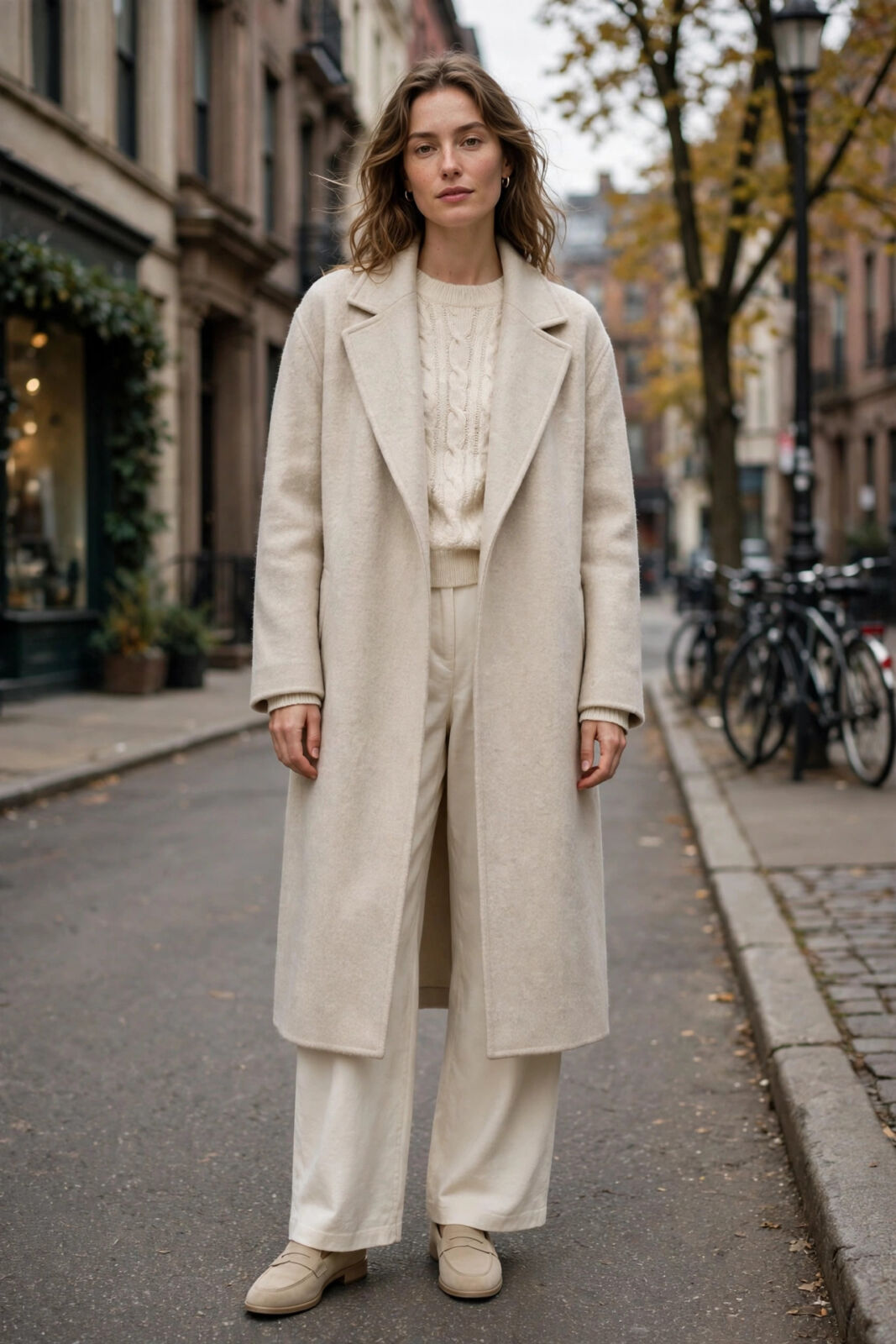
What Oat Milk Monochrome Actually Means
Oat milk is not one colour. It is a small family of warm, pale neutrals: creamy white, ivory, oatmeal, ecru, stone, light beige and the faintest hint of taupe. Monochrome layering means wearing several of those shades together in one outfit, close enough to read as one colour story, different enough that each layer stays visible.
The warmth matters. Pure bright white can look harsh next to cream and make the cream piece look yellow by comparison. Oat tones are all slightly warm and slightly muted, so they blend instead of competing. If a piece looks good next to a cup of milky coffee, it probably belongs in this palette.
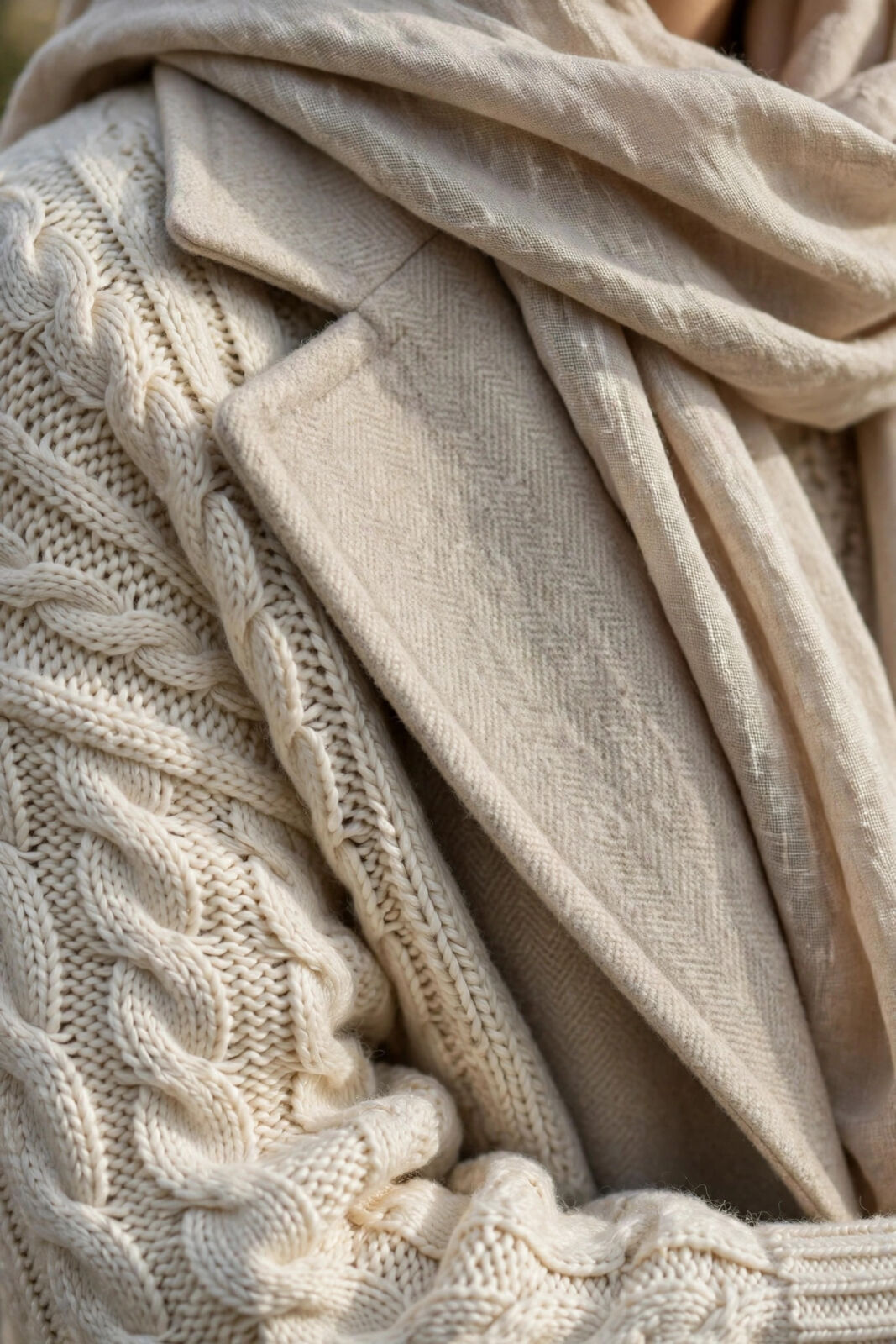
9 Soft Ways to Wear Head-to-Toe Neutrals
1. Start with the coat as your anchor. A long oatmeal or cream coat over a matching knit and ivory trousers is the outfit that convinced me. The coat sets the colour story, and everything underneath just has to sit inside it. Keep shoes beige or cream and the whole look reads as one long, clean line.
2. Mix three textures, minimum. This is the rule that stops neutrals looking like pyjamas. Pair a chunky cable knit with smooth tailored trousers and a brushed wool coat, or a fine ribbed knit with satin and suede. Same colours, different surfaces — that contrast is where the interest lives.
3. Use the lightest shade next to your face. Ivory or cream at the neckline brightens your skin the way a reflector does in photos. Save the deeper stone and taupe shades for trousers, skirts and shoes, where a little grounding weight looks good.
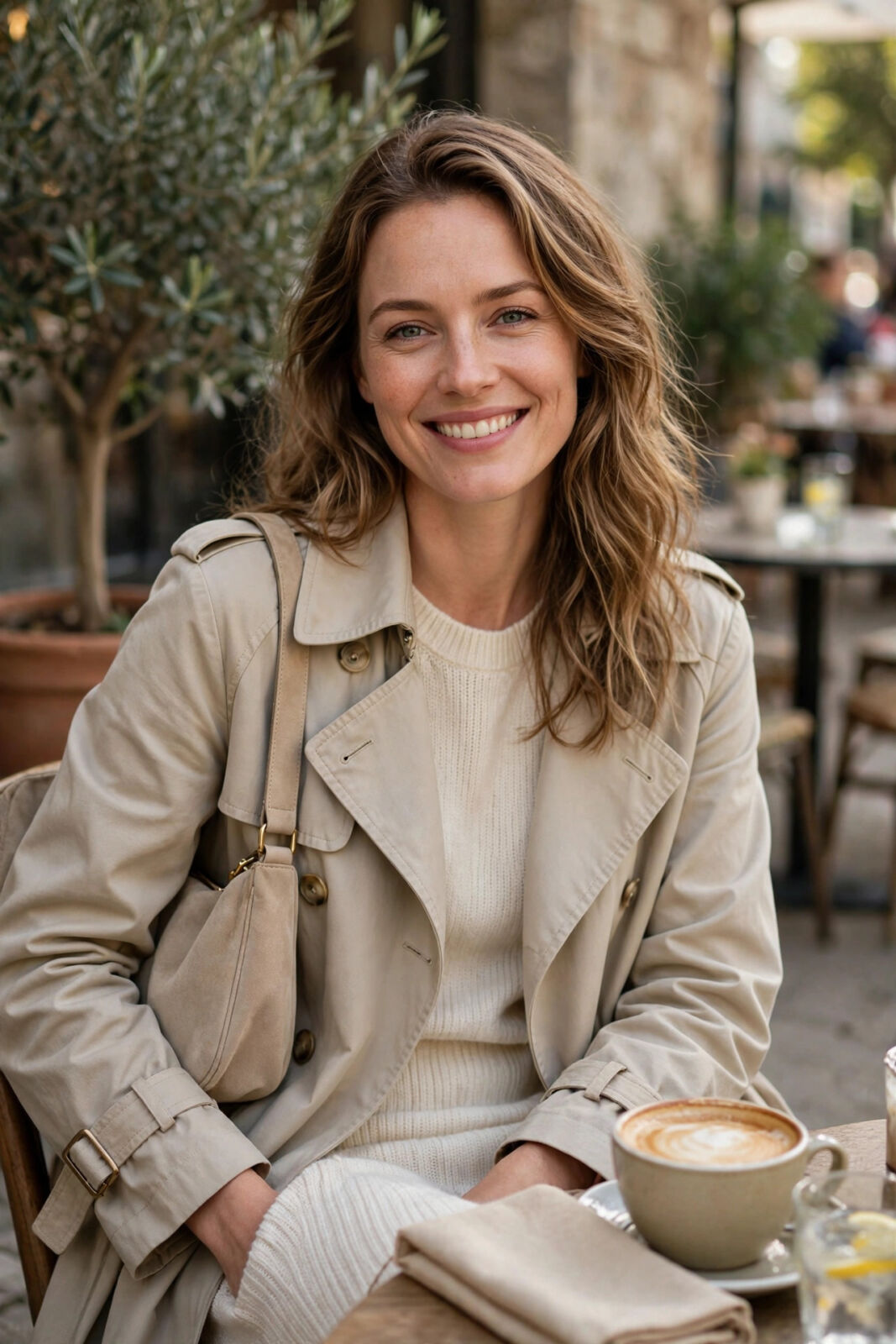
4. Try a knit dress under a trench. A cream ribbed knit dress with a beige trench and a small suede shoulder bag is my most-worn version. It takes two minutes to put on, works for lunch, school runs and casual meetings, and the trench belt gives it shape without effort.
5. Add one slightly deeper piece. All-pale can wash some people out. A tan bag, camel loafers or a stone-coloured scarf adds just enough depth. Think of it as the shadow in the picture: small, but it makes the lighter shades look intentional.
6. Go tonal with denim. Ecru or cream jeans with a cream sweatshirt and an oatmeal cardigan is the weekend version. It feels relaxed like jeans and a tee, but the single colour family makes it look planned rather than thrown on.
7. Layer a fine knit under a shirt. A thin ivory turtleneck under a beige overshirt or cream shirt adds warmth without bulk and gives you that visible layered edge at the neck and cuffs. It is also the practical answer to in-between weather.
8. Keep jewellery warm and simple. Small gold hoops, a thin gold chain or a cream pearl stud suit this palette best. Silver can work, but warm metals melt into oat tones more naturally. One or two pieces are enough; the outfit is quiet on purpose.
9. Finish with matching-toned shoes. Beige loafers, cream trainers or tan suede boots keep the line unbroken and make your legs look longer. A black shoe is not wrong, but it cuts the outfit in half visually, so save it for days when you want that contrast.
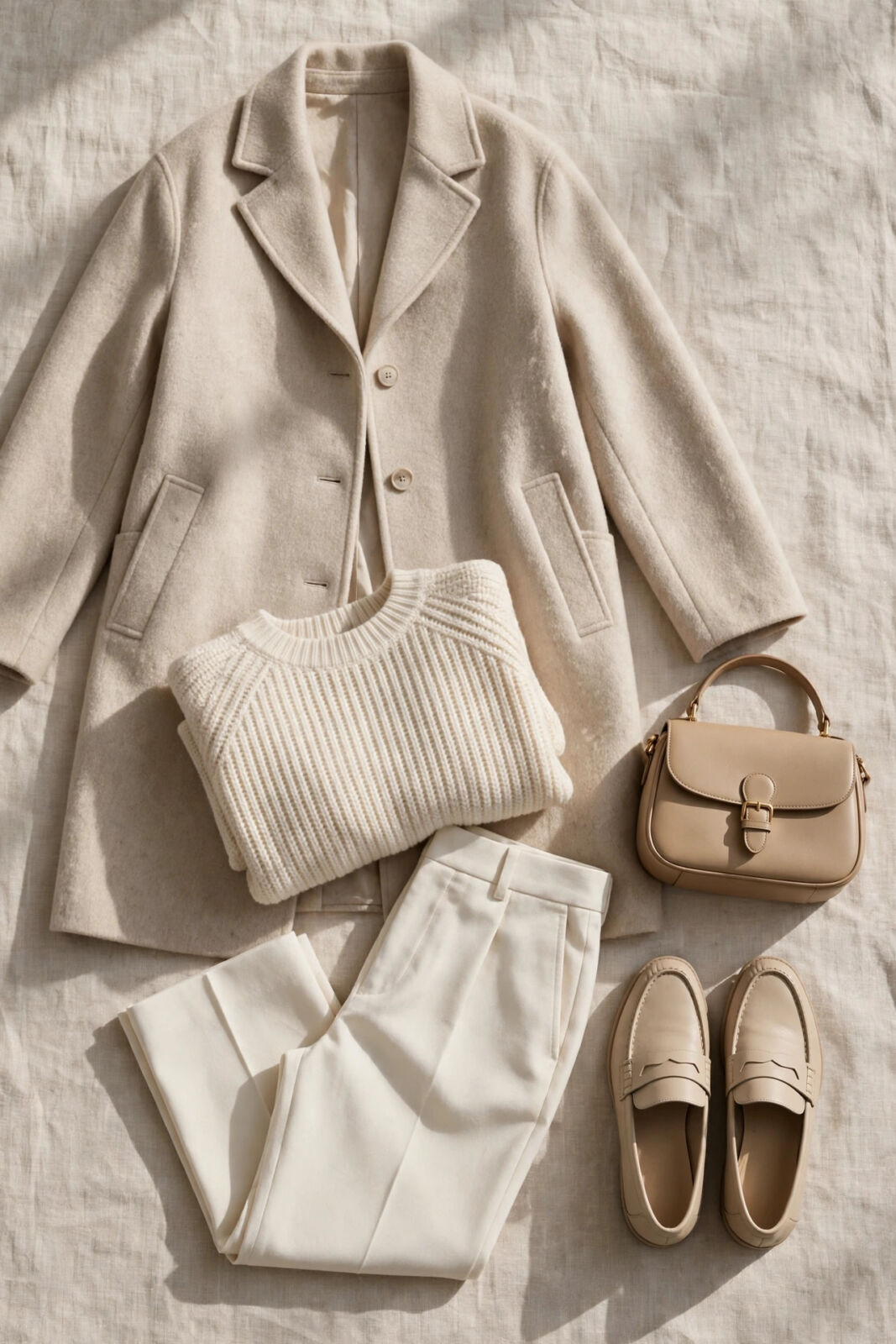
How to Build Your First Oat Milk Outfit, Step by Step
Start by pulling every cream, ivory, oatmeal and beige piece you own onto the bed. Most people are surprised how much they already have. Group them into tops, bottoms, layers and shoes, and be honest about which ones are warm-toned and which are blue-grey or bright white — the cool ones sit this outfit out.
Pick your base first: trousers, a skirt or a dress in the mid-tone of your group. Add a top one shade lighter or darker, never exactly the same flat shade in the same fabric, or the two pieces merge into a jumpsuit effect. Then add your third layer — coat, cardigan or blazer — in a different texture from both. Finish with shoes and a bag within the family, one of them a touch deeper than the rest. Stand back and check in daylight: you want to see three or four gentle steps of colour, like shades in a paint strip, not one flat block.
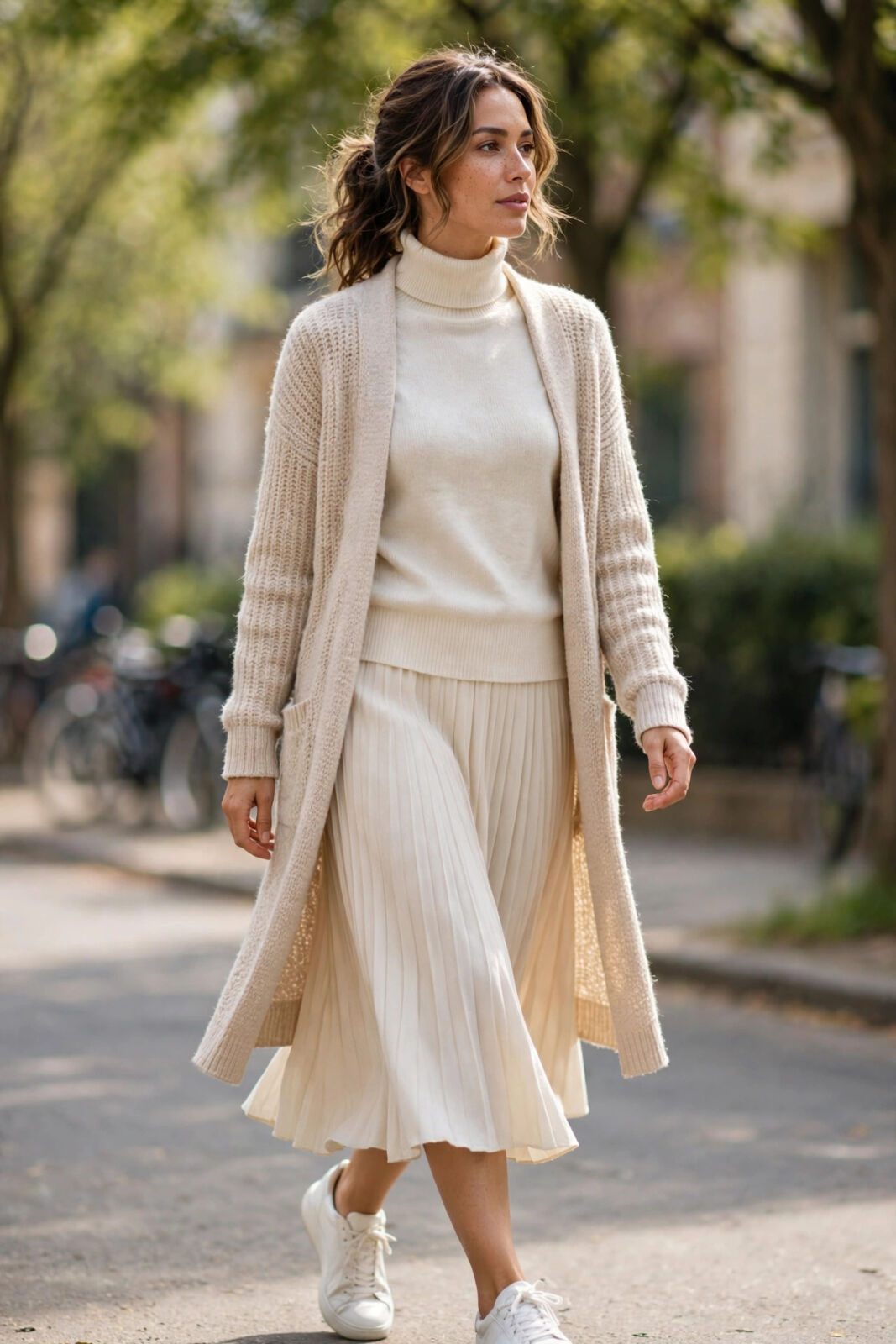
Fit, Fabric and Budget Advice
Fit matters more in monochrome because there is no colour contrast to hide behind. Trousers should skim rather than cling, knits should sit cleanly at the shoulder, and a coat that ends at a flattering point on the leg pulls everything together. If one piece is oversized, keep the others neater so the outfit looks relaxed, not swamped.
For fabric, natural fibres wear this look best: wool, cotton, linen in summer, and cashmere if your budget allows one good piece. You do not need everything new. Most oat milk wardrobes start with two or three pieces bought deliberately — usually the coat, one good knit and the trousers — and are filled out with basics you already own. Buy the coat in the best quality you can manage, because it is the piece people see most and it decides the tone of every outfit built under it. Check second-hand shops too; cream and beige classics are always there, often barely worn.
Common Mistakes to Avoid
- Wearing one exact shade in one flat fabric from head to toe. Without texture or tonal steps it reads as a uniform. Always mix at least three textures.
- Mixing warm oat tones with blue-grey or icy white pieces. The cool pieces will look dirty next to the warm ones, and the warm ones will look yellow. Keep two separate neutral families if you love both.
- Forgetting the depth piece. All pale, all the time can look washed out in photos. One tan, stone or camel item grounds the outfit.
- Choosing shades under shop lighting only. Fluorescent light lies. Check new pieces against your existing neutrals in daylight before you cut the tags.
Frequently Asked Questions
Does oat milk monochrome suit every skin tone?
Mostly yes, because you control which shade sits near your face. Warmer, deeper skin often glows in the creamier and more golden shades, while fairer skin usually looks best with a little contrast — a stone or tan layer somewhere in the outfit. If pale neutrals wash you out, keep the lightest shade away from your face and wear the deeper oat tones on top instead.
Can I wear oat milk layers in summer?
Yes. Swap wool for linen, cotton and fine knits in the same shades. A cream linen shirt, ecru shorts or wide trousers and tan sandals give the same calm effect without the warmth. The palette actually suits summer well because it reflects light and never looks heavy.
How do I keep cream clothes clean?
Treat stains the same day with a gentle stain remover, wash similar pale shades together on a cool cycle, and keep a small scarf or apron handy for cooking and makeup. Store knits folded so shoulders do not stretch, and keep white and cream pieces away from dark denim in the wash, which is where most greying starts.
What colours can I add when I get bored?
Soft sage, dusty blue, blush and chocolate brown all sit happily next to oat tones. Add one as a bag, scarf or shoe first rather than a main piece, and the outfit stays monochrome at heart with a small lift of colour.
Is monochrome dressing slimming?
It can be, because your eye travels up and down one unbroken column of colour instead of stopping at contrasts. The effect is stronger when the shades are close in depth and the fit is clean. A very pale top with much darker trousers breaks the column, so keep the steps gentle.
A Last Word on Dressing in Oats and Cream
Oat milk monochrome is the outfit I reach for when I want to look put together without thinking hard. Build the family slowly, mix your textures, keep one deeper piece in every look, and check new buys in daylight. Once the pieces are in your wardrobe, getting dressed becomes the easiest part of the morning.