I bought my olive braided trail sandals for a walking holiday and then, slightly to my own surprise, I never really stopped wearing them. They became the pair I reach for with dresses at lunch, with jeans for errands, and even with neat trousers in the evening, because the braiding softens the sporty shape and olive goes with almost everything I own.
Here are nine honest ways to wear them, from a plain garden morning to a golden-hour terrace, with a simple step-by-step styling routine, straight advice on fit, comfort and budget, and the small mistakes that make a trail sandal look scruffy when it could look considered.
Why Olive and Braiding Work So Well Together
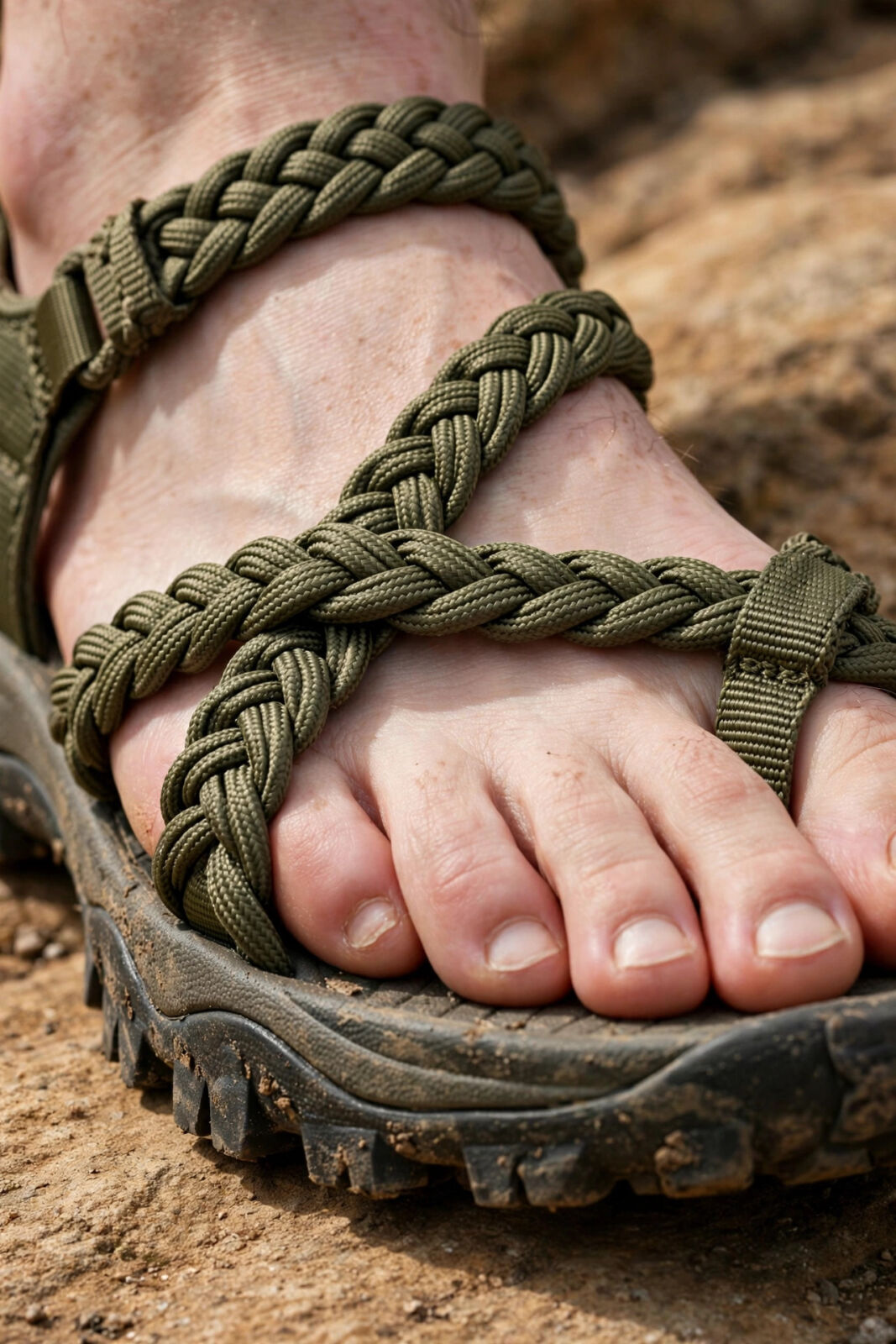
A plain trail sandal can look purely functional. Braiding changes that. The woven straps catch the light, add texture, and make the sandal read as a made thing rather than outdoor kit. In the close-up photo here you can see how thick the braid is: it holds its shape, does not cut in like thin straps can, and gives a simple outfit a finished detail.
Olive is the other half of the trick – a neutral, but warmer and more interesting than black. It sits happily with cream, white, tan, denim blue, rust, mustard and soft pink, and does not show dust like white sandals do. If you are tired of choosing between pretty shoes that hurt and practical shoes that spoil an outfit, these are a sensible middle ground.
Three Easy Ways With Dresses
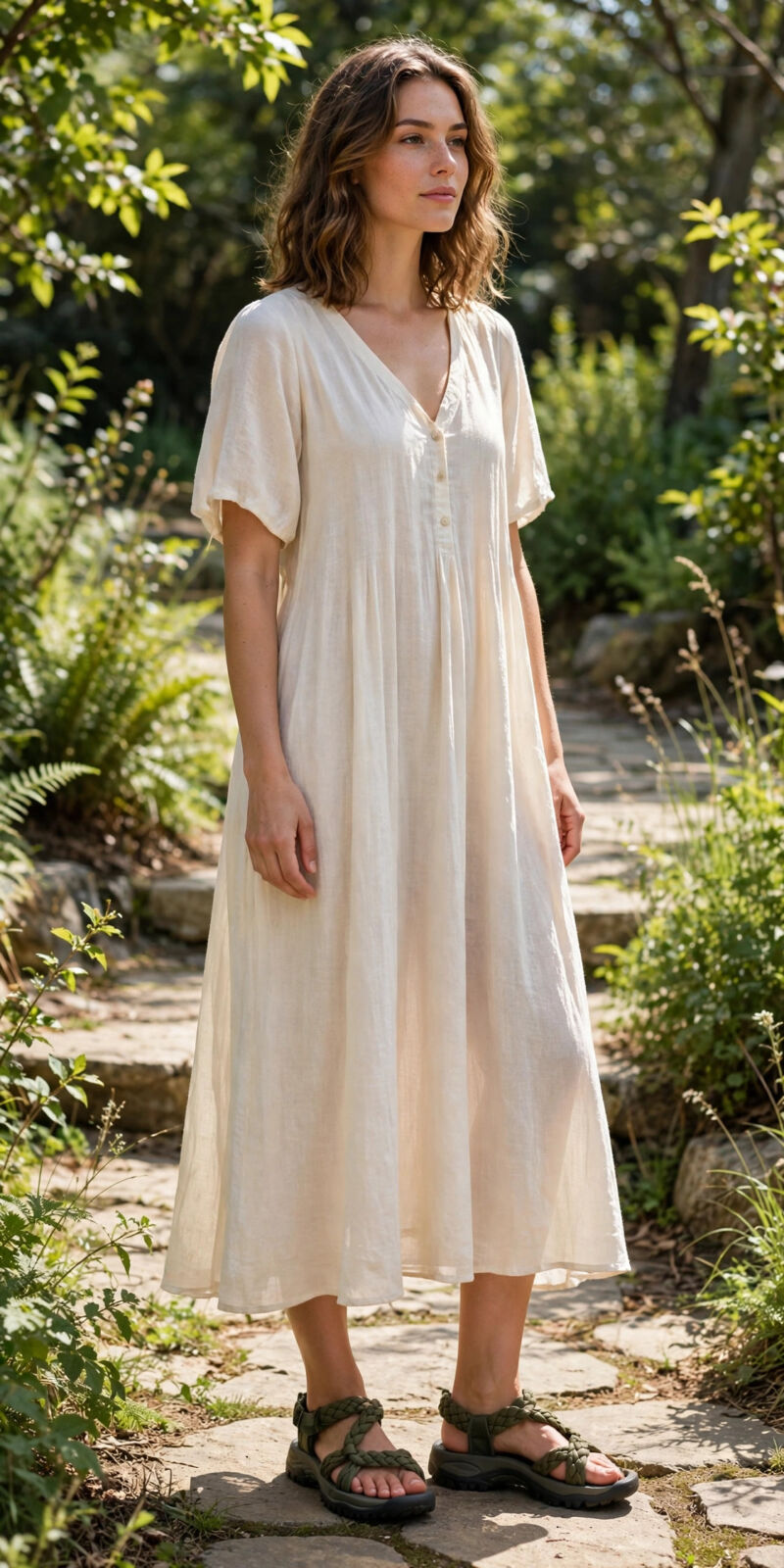
1. A flowing cream or white midi dress. The garden look in the first photo, and the one I wear most: a loose cream dress, bare arms, and the olive sandals grounding the softness. Pale dresses can look too sweet, and a trail sole brings them back to earth. Keep jewellery simple and let the contrast between the airy dress and sturdy sandal do the work.
2. A shirt dress, sleeves rolled. A cotton or linen shirt dress in khaki, stone or a soft stripe is a natural partner. The collar gives structure, the sandals keep it relaxed, and the braiding echoes linen’s woven feel. Add a woven tote and sunglasses, as in the flat lay here, for a market or travel-day outfit that copes with heat and many steps.
3. A printed sundress with olive in it – or near it. Florals and leaf prints with any green in them will pick up the olive tone without matching it exactly. Prints in rust, ochre or warm brown also sit well beside olive. Avoid sharp, glossy party dresses – the textures fight. Cotton, linen and matte jersey are its friends.
Three Ways With Jeans and Everyday Bottoms
4. Cropped straight-leg jeans and a white shirt. The cafe look in the fourth photo: blue jeans rolled to the ankle, a loose white linen shirt half-tucked, and the sandals showing below the hem. The crop matters. If denim pools over the straps, you lose the braiding – the best part. An ankle-length hem is the whole secret.
5. White jeans or cream trousers for a softer contrast. Olive against white denim is fresh without being stark. Add a striped tee or tan knit on top, and keep the bag in a natural fibre – straw, canvas or woven leather suit the sandals better than shiny patent.
6. Denim shorts or a denim skirt on very hot days. This is the sandals’ home ground, but two details help: choose tailored shorts rather than cut-offs for lunch in town, and add one neat element – a tucked-in shirt or a belt – so the trail sole reads as a choice, not the start of a hike.

Three Ways With Tailoring, Day to Evening
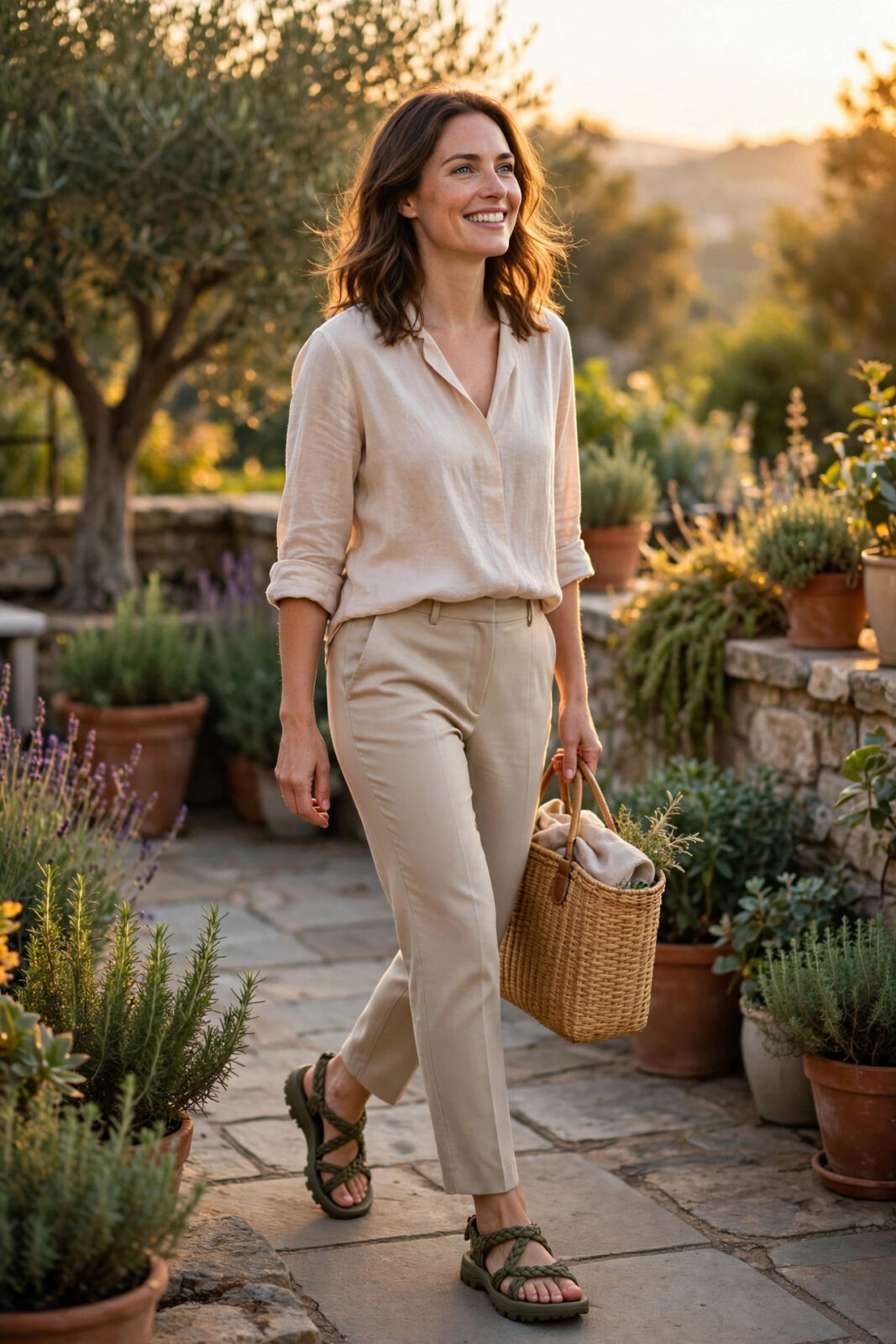
7. Beige or stone tailored trousers and a soft blouse. The golden-hour look in the last photo: tapered beige trousers, a cream blouse, a woven tote, and the olive sandals underneath. Tailoring plus a sporty sandal works when everything else is clean and calm – no loud prints – much like trainers with a suit once people stopped apologising for it.
8. A linen blazer over a simple dress or trousers. For an evening that involves walking, add a soft, unstructured blazer in stone or khaki over look 1 or look 7. The blazer smartens the top half, the sandals keep you steady on lawns and cobbles, and olive sits under both colours. This is my standard answer to outdoor events with a vague dress code.
9. Monochrome olive and green tones, head to toe. An olive or sage dress, or green trousers with a toning top, worn with the sandals in a deeper shade, gives a calm outfit that photographs beautifully. Break it with one natural accent – a straw bag or tan belt – so the green does not become a uniform.

How to Style Them, Step by Step
Step 1: Set the straps before you judge the outfit. Adjust the ankle and forefoot straps so the braid lies flat and even, with no twisting. A trail sandal worn loose looks sloppy and will rub; worn snug, it looks neat and walks quietly. Take the extra minute – it changes the whole impression.
Step 2: Show the ankle. Aim to end the bottom half at or above the ankle bone: cropped trousers, rolled jeans, midi dresses and skirts all do this naturally. The braided straps are the detail you paid for, so give them clear space.
Step 3: Match the mood of the sole, not just the colour. A rugged sole suits natural fabrics and relaxed shapes. Build the outfit from linen, cotton, denim, straw and canvas first, and add only one smarter piece – a blazer, tailored trousers, a neat blouse – to lift it. Several very formal pieces on top of a trail sole is where the look starts to argue with itself.
Step 4: Keep feet and nails tidy. Honest advice: open sandals show everything, and a braided pair draws the eye to your feet. Trimmed nails, moisturised heels and a neutral polish make the same sandals look twice as expensive. Chipped polish and dry heels undo careful styling faster than anything else here.
Step 5: Choose the bag last, in a natural texture. Woven straw, canvas totes, basket bags and soft tan leather all echo the sandals’ character, as the photos here show. If the bag and shoes agree in texture, the outfit in between can be very simple and still look finished.
Fit, Comfort and Budget Advice
Fit matters more in a trail sandal than in most shoes, because you will walk real distances in it. Your heel should sit fully inside the footbed, your toes should not reach the front edge, and the widest strap should not press on the bone at the base of your big toe. Walk around for a full five minutes, including a slope if you can. A sandal that is fine standing still can slide badly downhill.
For comfort, look for a contoured footbed with arch support, a cushioned but not spongy sole, and straps woven softly where they touch the skin – braiding spreads pressure instead of concentrating it on one edge. If you are between sizes, most people do better going up, then taking up slack with the straps. On budget, buy at mid-range: the difference from a cheap pair shows in the sole and strap lining after a week of walking, not in the shop. One well-made olive pair, worn nine ways, will out-earn three flimsy pairs that rub by lunchtime.
Common Mistakes to Avoid
The most common mistake is hiding the sandals under long, wide hems, which wastes the braiding. Second is wearing them with socks out of hiking habit – it muddles the look. Third is letting them get filthy: olive hides dust, not mud caked into the braid, so brush them down after country walks. And finally, saving them only for holidays – a shoe this versatile earns its keep on ordinary days.
Frequently Asked Questions
Are braided trail sandals comfortable for walking all day?
Yes, if the fit is right and the sole has real support. The braided straps spread pressure across the foot, and a contoured trail footbed is made for distance in a way a flat fashion sandal is not. Break them in with shorter walks first, and adjust the straps as your feet warm up during the day.
Can I wear trail sandals with a dress without looking like I am going hiking?
You can, and the braiding is what makes the difference – it reads as a woven summer sandal rather than outdoor gear. Choose soft, natural dresses in cream, floral or linen, keep the rest of the outfit tidy, and show your ankles. The contrast between a flowing dress and a sturdy sole looks deliberate, not accidental.
What colours go best with olive sandals?
Cream, white, stone, tan, denim blue and khaki are the easy partners, and rust, mustard and soft pink work beautifully for more colour. Olive is a warm neutral, so it prefers warm company. Very cold, blue-grey tones and stark black can sit awkwardly beside it, though black trousers with a warm-toned top will usually pull it together.
How do I clean braided straps?
Brush off dry dirt with a soft brush, working along the braid, then wipe the straps with a cloth dampened in water with a drop of mild soap. Stuff the sandals with paper while they dry away from direct heat, so the shape holds. Avoid soaking woven straps for long periods, which can loosen the weave.
Do trail sandals work for evening?
For relaxed summer evenings, yes – with tailored trousers, a neat blouse or a linen blazer, and tidy nails, they look calm and considered rather than sporty. For a formal dress code or a polished cocktail outfit, choose a finer sandal instead. The honest line is smart-casual: if trainers would be too casual, these probably are too.
A Last Word Before You Wear Them
Olive braided trail sandals are not a compromise shoe, and they are not only for trails. Show the ankle, keep textures natural, look after the braid, and they will carry you from a morning path to an evening terrace without a change of shoes – which is, in the end, the whole point of them.