Table of Contents
One big open room can feel generous and light, and then, a week after moving in, it can start to feel like everything is happening everywhere at once. The sofa drifts, the dining chairs wander, and there is no clear place where relaxing ends and eating begins. That is exactly where open plan zone rugs earn their keep. A well-chosen rug under each group of furniture draws a soft border on the floor. No walls, no screens, no building work. Your eyes read the edge of the rug as the edge of a room, so a single space quietly becomes two or three places with their own job and mood.
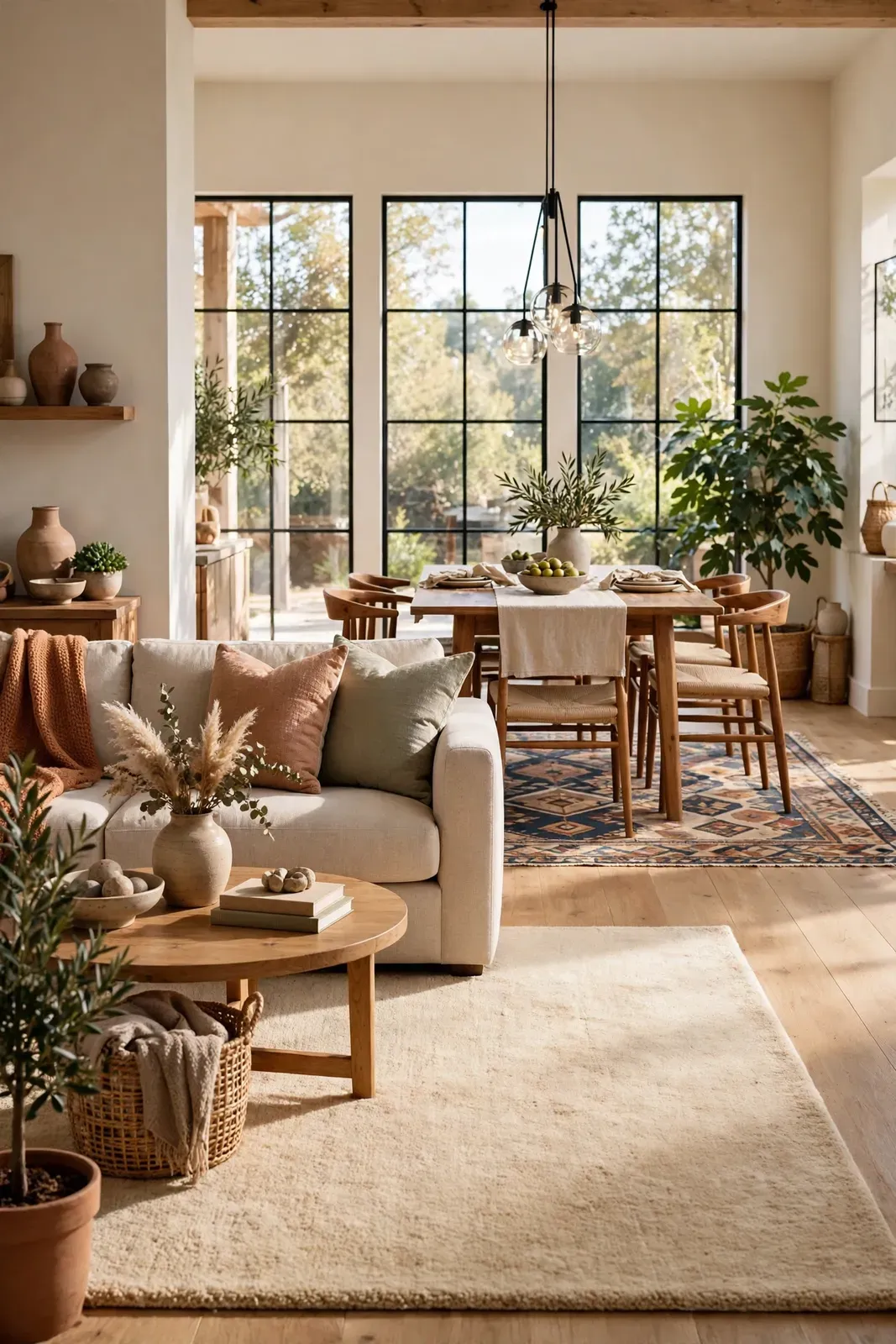
Why open plan zone rugs work so well
Designers call this zoning, and open plan zone rugs are the simplest tool for it because they work on three levels at once. First, they give furniture a home base. A sofa, two chairs and a coffee table floating on bare floor look temporary. Set them on one rug and they become a group that belongs together. Second, rugs change how a room sounds and feels. Hard floors in a large room bounce noise around, so conversation, television and footsteps all mix together. A rug softens that echo in its own area, which helps a reading corner feel calm even when dinner is being served a few steps away.
Third, open plan zone rugs add colour and pattern without committing you to paint or wallpaper. In a rented home, that matters a great deal. The idea behind open plan living in residential design was always to remove barriers between everyday activities. Zoning with rugs keeps that openness while giving each activity a defined spot, so the room feels connected rather than confused.
If your wider layout still feels unsettled, it helps to think about furniture placement first and rugs second. Our guide to practical small living room layout ideas that make the most of every corner covers the same grouping principle in tighter spaces, and the two approaches pair well together.
Choosing colours and patterns for open plan zone rugs in each zone
Start with one rug, usually the largest one for the living zone, and let it set the palette for the rest. Its colours do not need to match the second rug exactly. In fact, identical rugs in two zones often look like a hotel corridor. A better approach is a shared thread: the dining rug picks up one or two colours from the living rug, or both rugs share a similar warmth, one plain and one patterned. That gives each zone its own character while the room still reads as one home.
Pattern also has a practical side. A patterned rug under a dining table hides crumbs and small spills between cleans, while a plainer, softer rug suits the place where you walk barefoot and stretch out.
Think about light, too. In a north-facing room, warm cream, clay and soft rust rugs stop a large floor from feeling cold. In a very sunny room, deeper teal, slate or faded vintage tones hold their own against strong daylight. Keep the floor itself in mind as the neutral background that separates the rugs, leaving a clear strip of wood, tile or laminate visible between zones so each rug reads as its own island. That separation is what makes open plan zone rugs read clearly from across the room.
Step by step: measuring and placing open plan zone rugs, zone by zone
Step 1: Name your zones. Walk the room and decide what actually happens there. Most homes need a living zone and a dining zone. Some add a reading corner, a play area for children, or a small desk zone. Two or three zones is plenty; more than that and the floor starts to look patched.
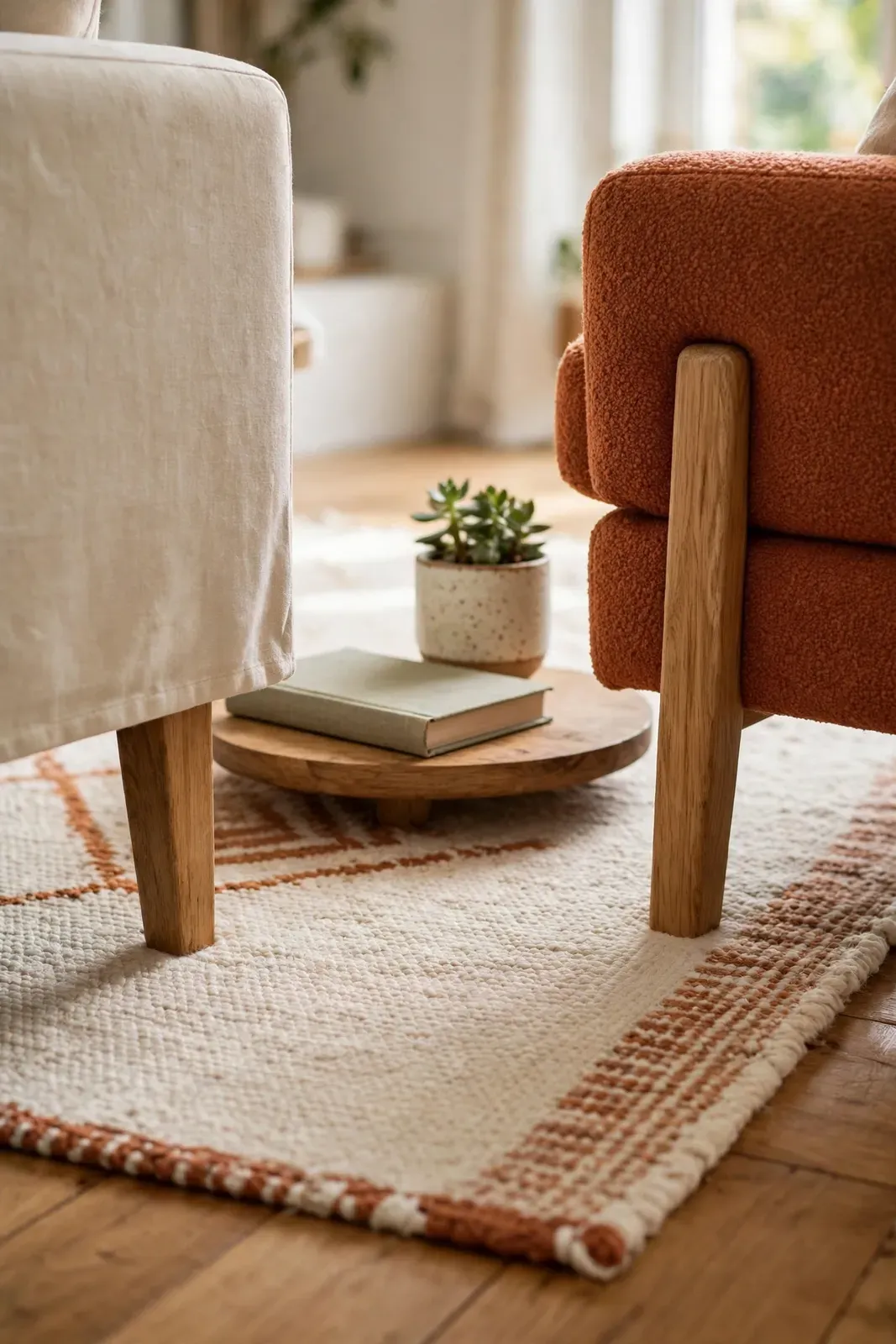
Step 2: Measure the furniture group, not the whole room. For the living zone, measure the width of your sofa and the depth from the sofa back to just past the coffee table. The rug should be wider than the sofa by at least 20 centimetres on each side, and deep enough that the front legs of the sofa and chairs sit on it. For the dining zone, measure the table, then add about 60 centimetres on every side so chairs stay on the rug when pulled out.
Step 3: Mark it with tape. Before you buy anything, outline each rug size on the floor with painter’s tape and live with it for a day. Walk the routes you use most, from the door to the kitchen, from the sofa to the balcony. Those walkways should stay mostly rug-free, or land fully on a flat, low rug, never half on a thick edge.
Step 4: Place the living rug first. Centre it on the main feature of that zone, such as a fireplace, window or media unit, not on the whole room. Push the front legs of every seat onto it.
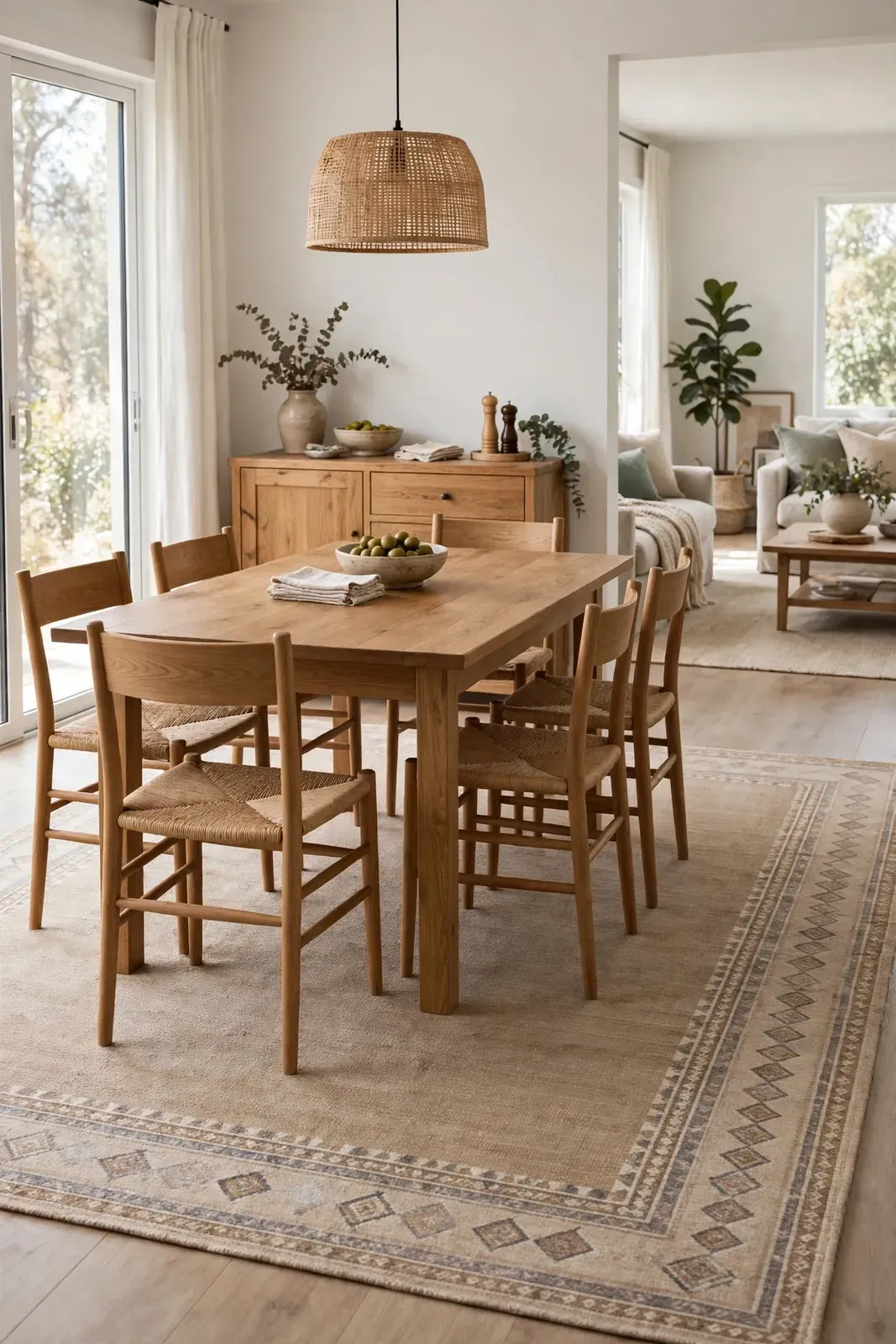
Step 5: Place the dining rug. Centre it under the table and the pendant light above it, with all four chair legs on the rug when the chairs are pushed in. Step 6: Check the gap. Leave roughly 20 to 40 centimetres of bare floor between the two rugs. That breathing space is what makes the zoning clear. Checked in that order, open plan zone rugs sit where people actually live, not just where they look good in a photo.
Materials and pile for open plan zone rugs: matching the rug to the job
Not every rug suits every zone, and the history of the craft explains why choice matters. As the reference on rug and carpet fibres, weaves and construction shows, rugs range from flat flatweaves to deep hand-knotted pile, and each behaves differently under daily use. Under a dining table, choose a flatweave or a low, tight pile. Chairs slide easily, crumbs shake out, and a dropped glass of water is less of a disaster. Wool is hard-wearing and naturally resists stains, while cotton and washable synthetic flatweaves suit busy family dining areas.
In the living zone you can afford comfort. A medium or high pile in wool or a wool blend feels warm in winter and stands up to years of feet. A reading corner is the place for the softest rug you own. In a play zone, look for a washable, low-pile rug with a pattern that forgives marks. Whatever the material, add a good rug pad under each rug. Pads stop sliding on hard floors, add cushioning, protect the floor underneath, and make even a thin rug feel more substantial. Choose open plan zone rugs by job first and by colour second, and each zone will work better day to day.
Budget and buying advice for open plan zone rugs
You do not need to buy every rug in the same month, and you should not buy the cheapest large rug you can find just to fill the space. A thin, badly sized rug that curls at the corners will annoy you daily. A calmer plan is to spend most of the budget on the living zone rug, because it is the biggest, the most seen and the one your feet meet most often. Save on the dining rug by choosing a durable flatweave, which usually costs less per square metre than a deep pile.
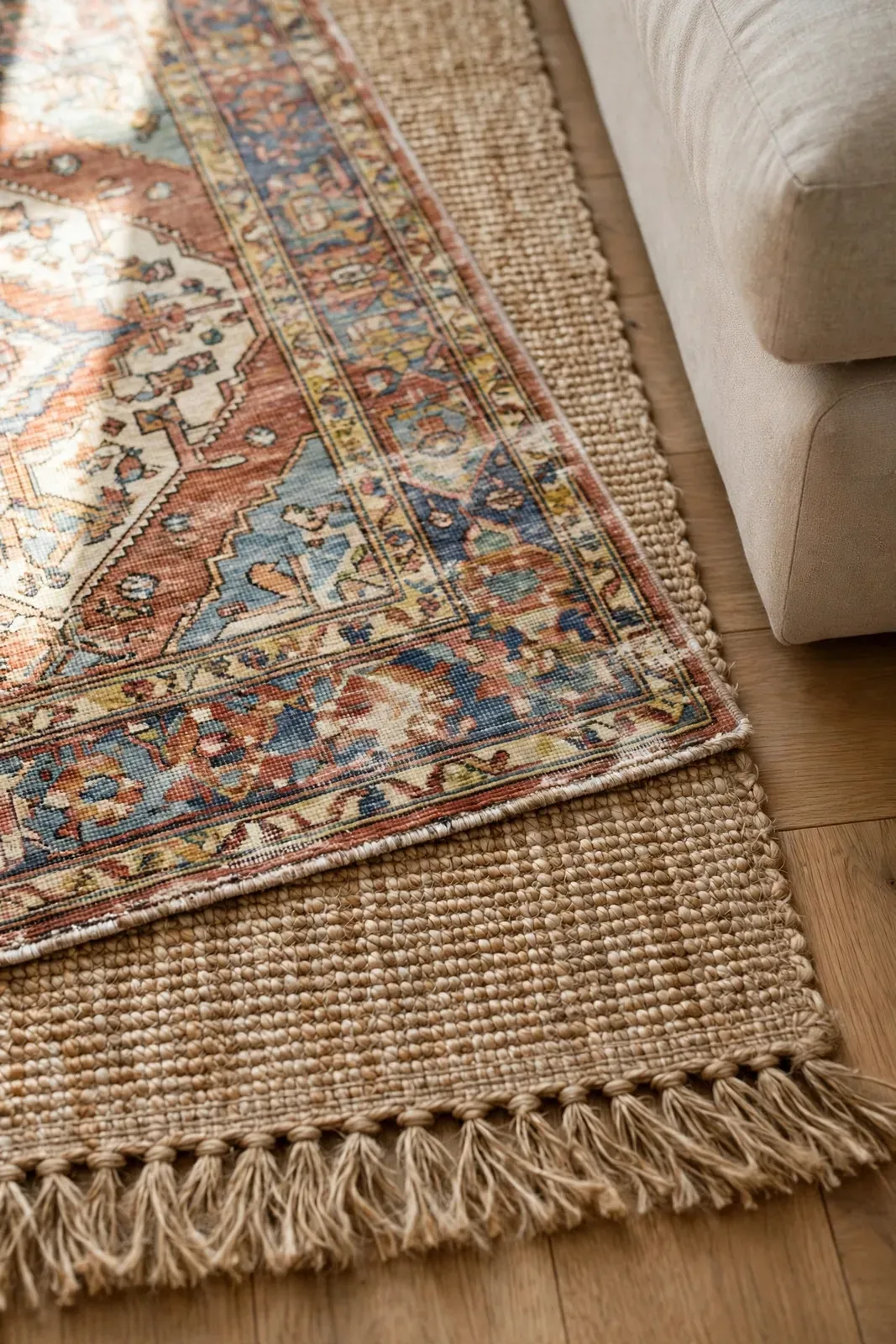
Shop standard sizes first, since 160 by 230 centimetres and 200 by 300 centimetres are far cheaper than custom cuts. Consider layering to stretch the budget: a large, inexpensive natural jute or plain flatweave as the base, with a smaller, better patterned rug on top in the middle of the zone. That layered look adds texture and lets you replace only the top rug when you want a change. Buy from sellers with clear returns, order the largest rug first, live with it for a week, then choose the second rug against it in real light. Bought in that order, open plan zone rugs stay coordinated without looking matched.
Common mistakes to avoid with open plan zone rugs
The most common mistake is buying rugs that are too small. A small rug under a coffee table alone, with the sofa and chairs off it, makes the furniture look scattered rather than grouped. If in doubt, size up. The second mistake is pushing every rug against a wall. Zone rugs should sit under furniture in the middle of their area, with floor showing around them; a rug touching skirting on one side looks like leftover carpet.
Third, avoid matching everything. Two identical rugs can flatten a room, while two rugs that clash in both colour and pattern fight each other. Aim for related, not identical, and not random.
Fourth, do not ignore pile height at door swings and under dining chairs, where thick rugs cause daily friction. Finally, do not forget the walkways. A rug edge placed exactly where everyone steps, especially a thick edge, becomes a trip point and wears out fast. Shift the rug so the main path is either fully off it or fully on a flat section. A quick tape outline and a walk-through will catch most of these problems before open plan zone rugs are ordered.

Frequently asked questions about open plan zone rugs
How many rugs do I need in one open plan room?
Most rooms need one rug per clear activity, which usually means two open plan zone rugs: one for living and one for dining. A third small rug can mark a reading, play or work corner if the room is large. If you cannot name what a zone is for, it probably does not need its own rug.
Should the rugs in different zones match?
Open plan zone rugs should relate, not match exactly. Share a colour family, a similar warmth or a repeated accent colour, then vary the pattern or texture. One patterned and one plain rug in related tones is the easiest combination to get right and keeps each zone distinct.
What size rug works best under a dining table?
Choose a rug that extends about 60 centimetres beyond the table on all sides. That way the back legs of the chairs stay on the rug when people pull them out to sit down. Measure your table, add roughly 120 centimetres to both the length and the width, and round up to the nearest standard size.
Can I use rugs to zone a rented home?
Yes, and rugs are one of the best tools for renters because they change nothing permanent. They define areas, protect the landlord’s floor, reduce echo and can be rolled up and taken with you. Use rug pads rather than adhesive tapes so you leave no marks behind when you move.
How do I stop zone rugs from sliding on hard floors?
Put a non-slip rug pad cut slightly smaller than the rug under each one. Heavier furniture also helps anchor it. A felt and rubber pad grips the floor and adds comfort.
An open room does not need walls to feel settled. With open plan zone rugs doing the dividing, each area keeps its own mood. Give each group of furniture its own rug, leave honest floor between them, and the whole space starts to make sense the moment you walk in. Start with the zone you use most, get that one right, and the rest of the room will tell you what it needs next.