Most mornings used to end the same way in my house: a pile of clothes on the bed, a wardrobe full of things I liked, and the flat feeling that I had nothing to wear. The problem was never the clothes. It was that I had no outfit ideas ready, so every morning started from zero. Once I began treating my wardrobe like a small set of building blocks — and learning which pieces happily work together — getting dressed became a five-minute job instead of a daily negotiation.
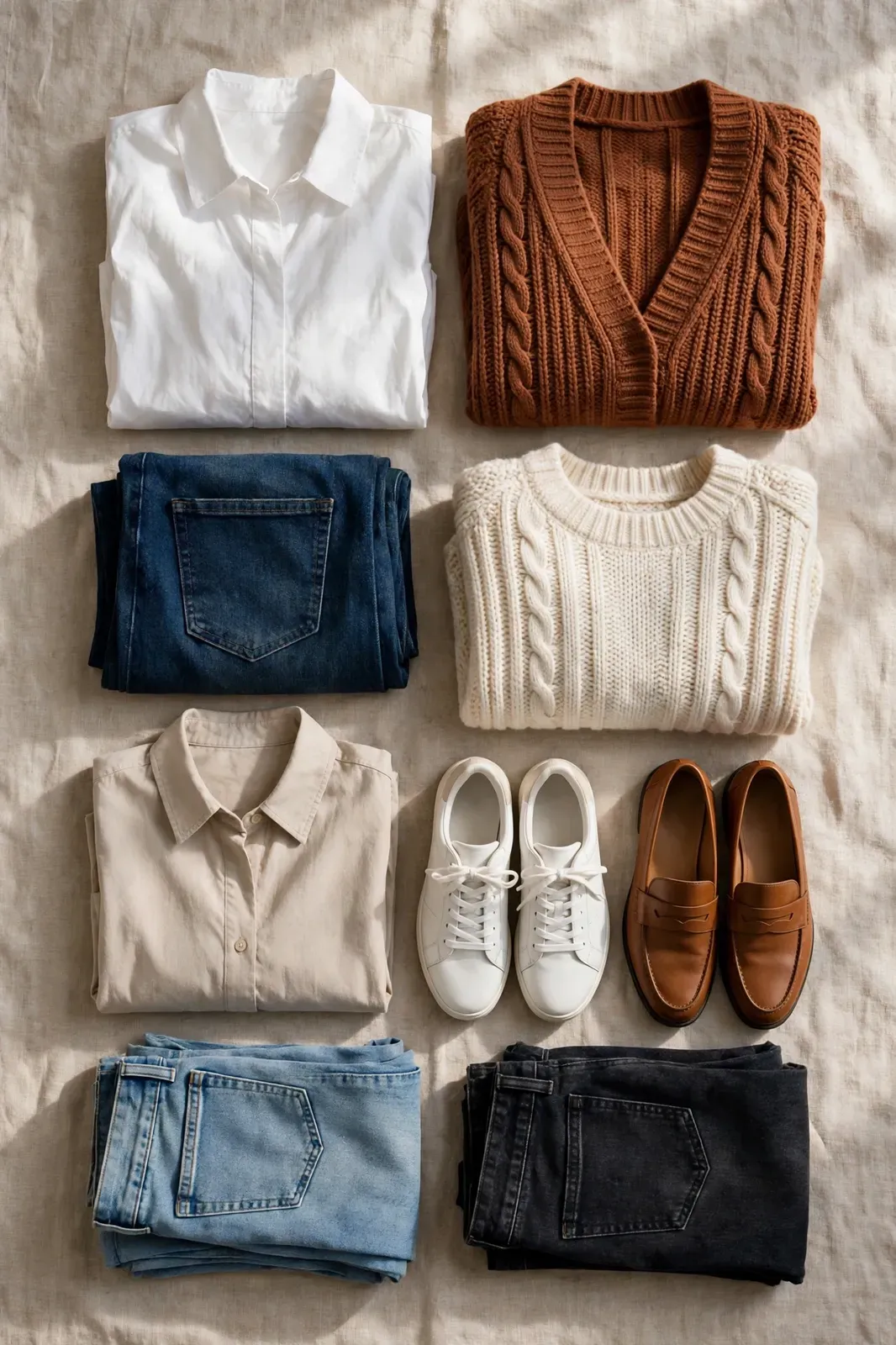
The outfit ideas in this guide come from a normal wardrobe, not a stylist’s rail. Jeans, a white shirt, a couple of knits, a blazer, a midi dress, sneakers and loafers: if you own versions of these, you already own most of the 15 looks below. The aim is not to buy more. It is to see what you have with fresh eyes, combine it in ways you have not tried, and keep a short list of combinations that work so busy mornings run themselves.
Table of Contents

Outfit Ideas Start With the Pieces That Do the Most Work
Every reliable wardrobe has a backbone. Straight or slim jeans in a mid-blue wash go with almost every top you own and dress up or down with a shoe change. A white shirt works tucked into trousers, open over a T-shirt, or knotted over a dress. A neutral blazer turns jeans and a plain top into something you could wear to lunch, a meeting, or parents’ evening without a second thought, as the hero look in this post shows.
Add two knits — one fine, one chunky — a plain white T-shirt, a striped long-sleeve top, and a midi dress, and the combinations multiply quickly. This is the thinking behind a capsule wardrobe built from pieces that mix and match: fewer items, chosen carefully, each earning its place by working in several outfits. You do not need to cut your wardrobe down to a strict number. Just notice which pieces you reach for weekly, and let those guide what a good outfit looks like for you. Our winter capsule wardrobe essentials checklist shows the same approach in a colder-weather version.
Everyday Outfit Ideas Built on Jeans and a Shirt
Jeans carry more outfits than any other item, so start there. Look one: jeans, white shirt tucked in with the sleeves rolled, loafers, and a watch — clean and finished. Look two: the same jeans with a striped top and white sneakers for weekends and school runs. Look three: jeans, a fine knit, and the blazer over the top, which works for most casual offices. Look four: darker jeans with a black T-shirt and ankle boots for an evening that is not formal but still deserves some effort.
The white shirt deserves its own list. Worn open over a T-shirt and jeans, it acts like a light jacket. Tied at the waist over a midi dress, it changes the dress’s shape and makes it feel new. Half-tucked into wide trousers with sneakers, it looks relaxed but deliberate. Small changes — a tuck, a roll, a layer — are where most fresh outfit ideas actually come from, not from new purchases.
Layering Outfit Ideas for Unpredictable Weather
Layering is what makes the same clothes work across a whole season. A knit worn over a shirt, with the collar and cuffs showing, is a classic combination because it adds colour contrast and texture at the edges; the close-up in this guide shows how much difference that small white border makes. A cardigan over a T-shirt and jeans carries you through cool mornings, and a blazer over a hoodie — yes, really — works surprisingly well for casual days if the hoodie is plain and not too bulky.
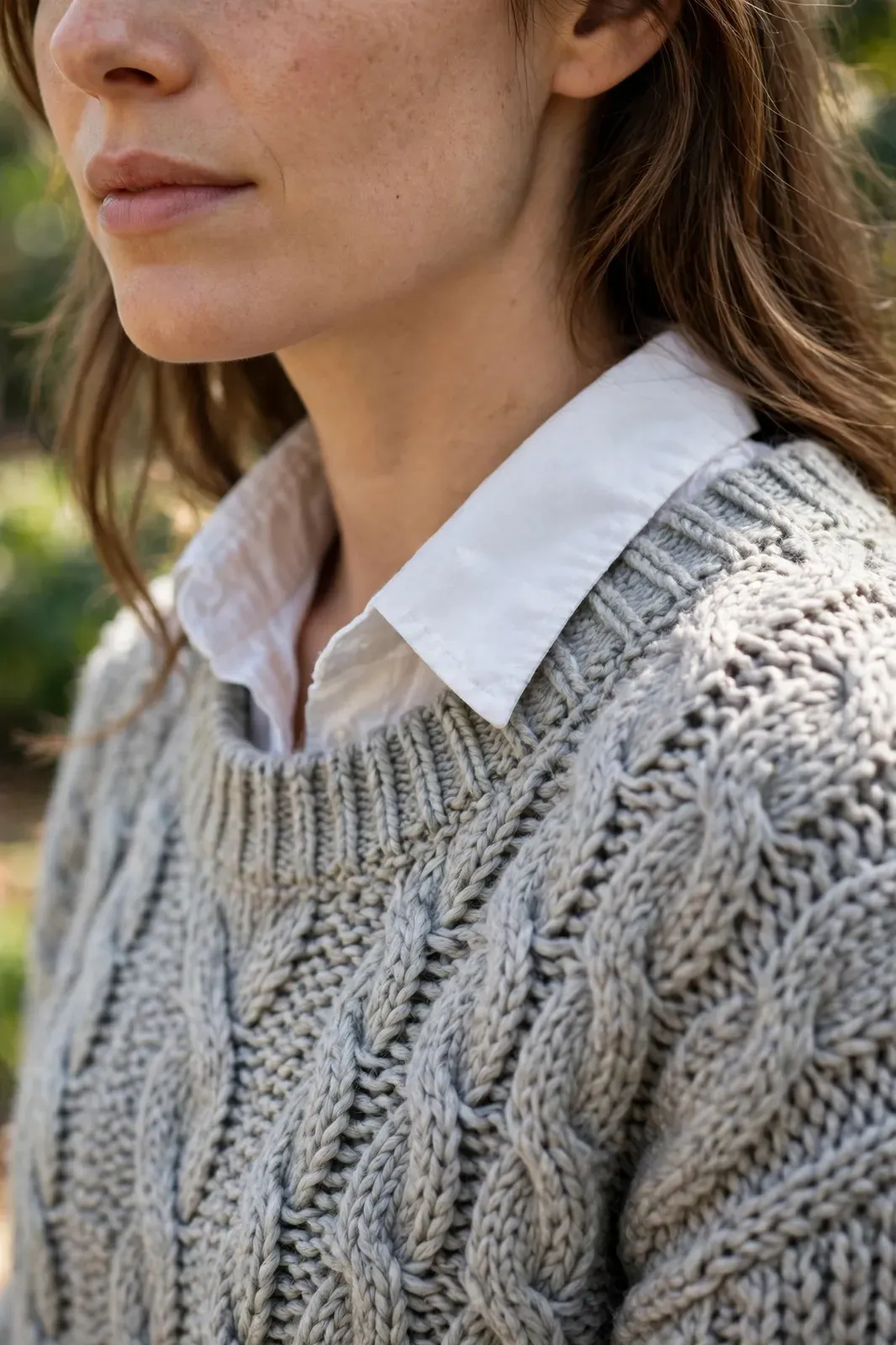
Think in three layers: a base that touches your skin, a middle layer for warmth, and an outer layer that finishes the look. If each layer can stand on its own, you can adjust through the day without feeling undressed when you take a coat off. Keep the colours of your layers within a family — navy, grey and white, or beige, cream and tan — and mixing becomes almost automatic. Texture does the rest: smooth cotton under chunky wool, denim under a soft blazer.
One-Colour and Dress-Based Outfit Ideas
Wearing one colour head to toe sounds bold, but in soft neutrals it is one of the easiest looks to pull off. A beige knit with cream trousers, or a tan shirt with matching wide trousers like the outfit pictured here, reads as calm and put-together, and it takes no matching skill at all because everything already agrees. Vary the textures so the outfit does not look flat: matte cotton with ribbed knit, linen with a smooth leather shoe.

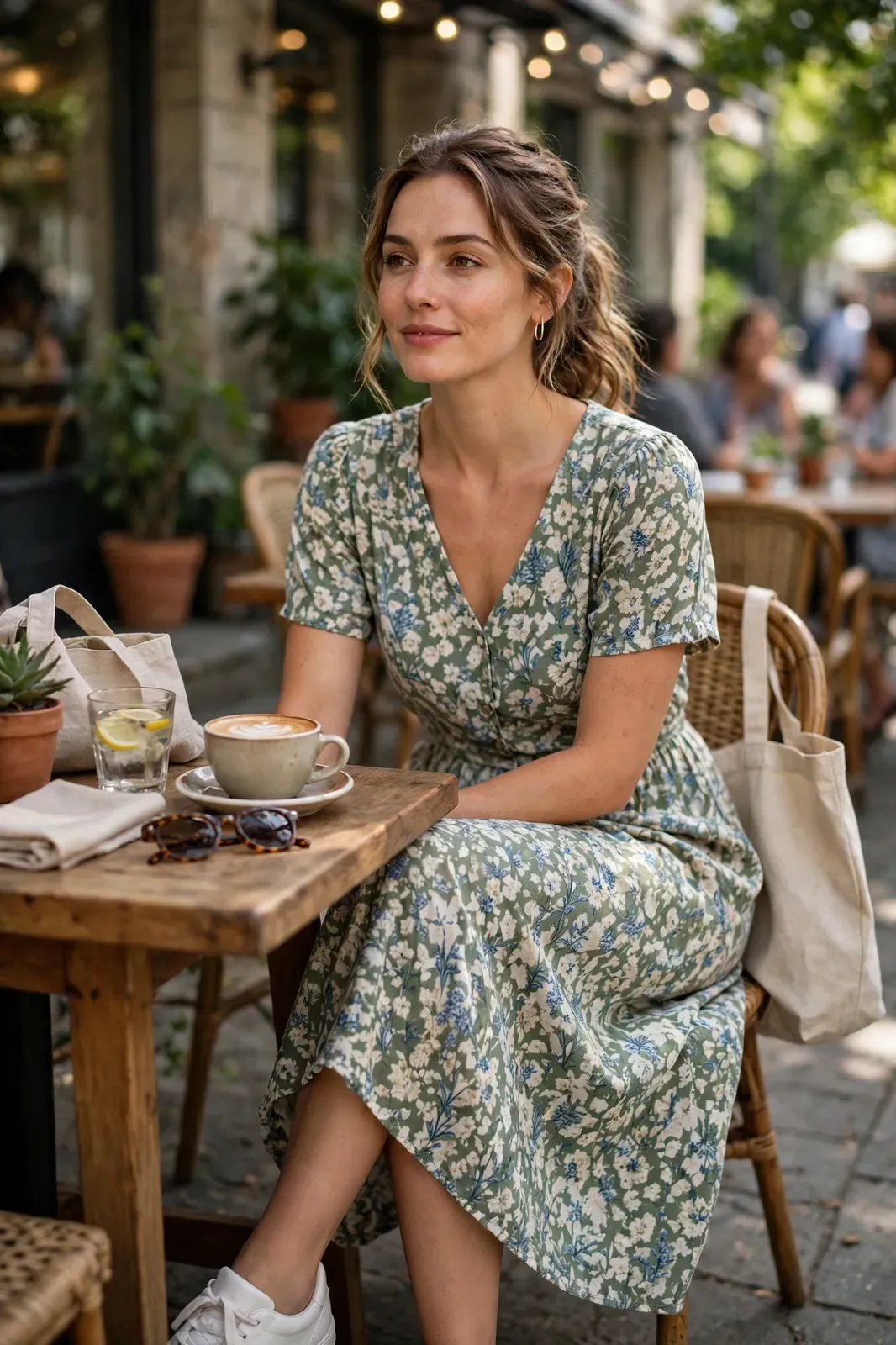
The midi dress is the other shortcut. With sneakers and a tote, it handles a cafe lunch, as the final photo in this post shows. With loafers and a blazer, it works for smarter days. With a knit pulled over it, the dress becomes a skirt, which quietly doubles its uses. If you own one dress that fits well and makes you feel good, building four outfits around it is better value than owning four dresses you feel unsure about. Browsing a broad overview of how fashion and personal style have evolved is a nice reminder that dressing well was never about owning the most.
How to Build a Week of Outfit Ideas, Step by Step
Here is the ten-minute Sunday routine that ended my morning stress. First, check the week’s weather and your plans: workdays, anything social, anything active. Second, pick your bottoms for each day — rotating two pairs of jeans, one pair of trousers, and a skirt or dress covers most weeks. Third, pair each bottom with a top you have not combined with it recently; this is where new outfit ideas appear.
Fourth, choose shoes and one finishing piece per outfit: a blazer, a scarf, a belt, or simple jewellery. Fifth, take quick phone photos of each finished combination and save them in an album. On a rushed morning, you open the album instead of your whole wardrobe. Sixth, hang each day’s pieces together if you have space, or keep the list on your phone. After a month of this, you will have 20 or more proven combinations, and the photos will show you patterns — the colours you love, the fits that flatter you, and the pieces that never get chosen, which is useful information when you next shop.
Buying, Budget and Caring for What You Own
The cheapest outfit is the one already in your wardrobe, so shop your own rails first with these combinations in mind. When you do buy, spend on the backbone pieces you wear weekly — good jeans, a shirt that does not gape, shoes that survive daily wear — and spend less on trend pieces you will tire of. A simple test before buying anything: can you name three outfits it completes with things you already own? If not, it will likely sit unworn, however pretty it is in the shop.
Care keeps these pieces earning their keep. Wash knits folded or on a gentle cycle and dry them flat so they keep their shape. Hang shirts straight from the wash to cut ironing time. Clean white sneakers little and often — five minutes with a cloth beats an hour of scrubbing later. Mend a loose button the week you notice it, not the morning you need the shirt.
Common Mistakes That Make Outfits Feel Wrong
The most common mistake is buying single statement pieces with nothing to wear them with, so they hang with their tags on while you repeat the same three outfits. Another is ignoring fit: a simple outfit that fits well always looks better than an interesting one that pulls, rides up, or needs adjusting all day. If a backbone piece fits badly, a small alteration often costs less than replacing it.
Keeping clothes for a life you do not live is another quiet trap — a rail of formal dresses when your weeks are school runs and desk work. Dress for your real week and you will feel right far more often. Finally, many people try a new combination once, on a rushed morning, and judge it unfairly. Give a new pairing a normal day, check it in daylight, and take the photo before you decide. Some of my most-worn outfit ideas felt odd for the first hour and obvious ever after.
Frequently Asked Questions About Outfit Ideas
How many basic pieces do I need for plenty of outfit ideas?
Around 12 to 15 well-chosen pieces is enough for weeks of combinations: two or three bottoms, five or six tops, two knits, a blazer, one dress, and two pairs of shoes. The key is that most tops should work with most bottoms, which is why neutral colours help.
What do I wear when I feel I have nothing to wear?
Go back to a proven formula instead of inventing something under pressure: jeans, a white shirt or plain knit, loafers or clean sneakers, and one finishing piece like a blazer or scarf. It is simple, it always works, and you can add personality with jewellery or a bag.
How can I make the same outfit look different?
Change one element at a time: swap sneakers for loafers, add or remove a layer, tuck the top differently, or change the bag. Shoes alone can move the same jeans and shirt from weekend casual to smart enough for dinner.
Are monochrome outfits hard to wear?
No — they are among the easiest, because you do not have to match colours at all. Keep the shades in one family, like beige and cream or navy and black, and mix textures so the outfit has depth rather than looking like a uniform.
How often should I plan outfits in advance?
Once a week for ten minutes is enough for most people. A quick Sunday plan with phone photos covers workdays and likely plans, and you can still change your mind — the plan is a fallback for rushed mornings, not a rule.
A Calmer Way to Get Dressed
You do not need a bigger wardrobe to dress better; you need a handful of combinations you trust and a list you can open when your brain is still half asleep. Try the Sunday planning routine for two weeks, photograph what works, and let your own photos teach you your style. That is the real secret behind good outfit ideas: they are not copied from someone else’s life, they are built, one ordinary morning at a time, from the clothes you already own and like.