There are mornings when your hair has a plan of its own and you have about four minutes to change its mind. That is exactly where a plum padded velvet headband earns its place. It is soft, it is structured enough to look deliberate, and the deep plum colour does something plain black never quite manages: it makes a simple outfit look considered, even when you got dressed in a hurry.
I reach for mine on second-day hair, on video-call days, and whenever a plain knit or a white shirt needs one finishing touch. Velvet catches the light gently, the padding gives the band its raised, polished shape, and plum sits happily with navy, charcoal, cream, black and even soft pink. Here are nine easy ways to wear it well, plus a simple fitting routine, honest buying advice, and the small mistakes that make a headband look like an afterthought instead of a choice.
Why a Padded Velvet Headband Works So Hard
The padding is the point. A flat band can disappear into the hair or slip backwards within the hour, while a padded band holds a gentle arch, stays where you put it, and frames the face. Velvet adds grip, so the band is far less likely to slide on fine or freshly washed hair, and its matte pile looks rich in both daylight and evening light.
Plum is a forgiving colour, too. It warms cool skin tones, deepens nicely against dark hair, and stands out softly against blonde and grey hair without shouting. If you usually avoid hair accessories because they feel childish, a wide padded band in a deep jewel tone is the grown-up version: simple shape, good material, no bow, no sparkle needed.
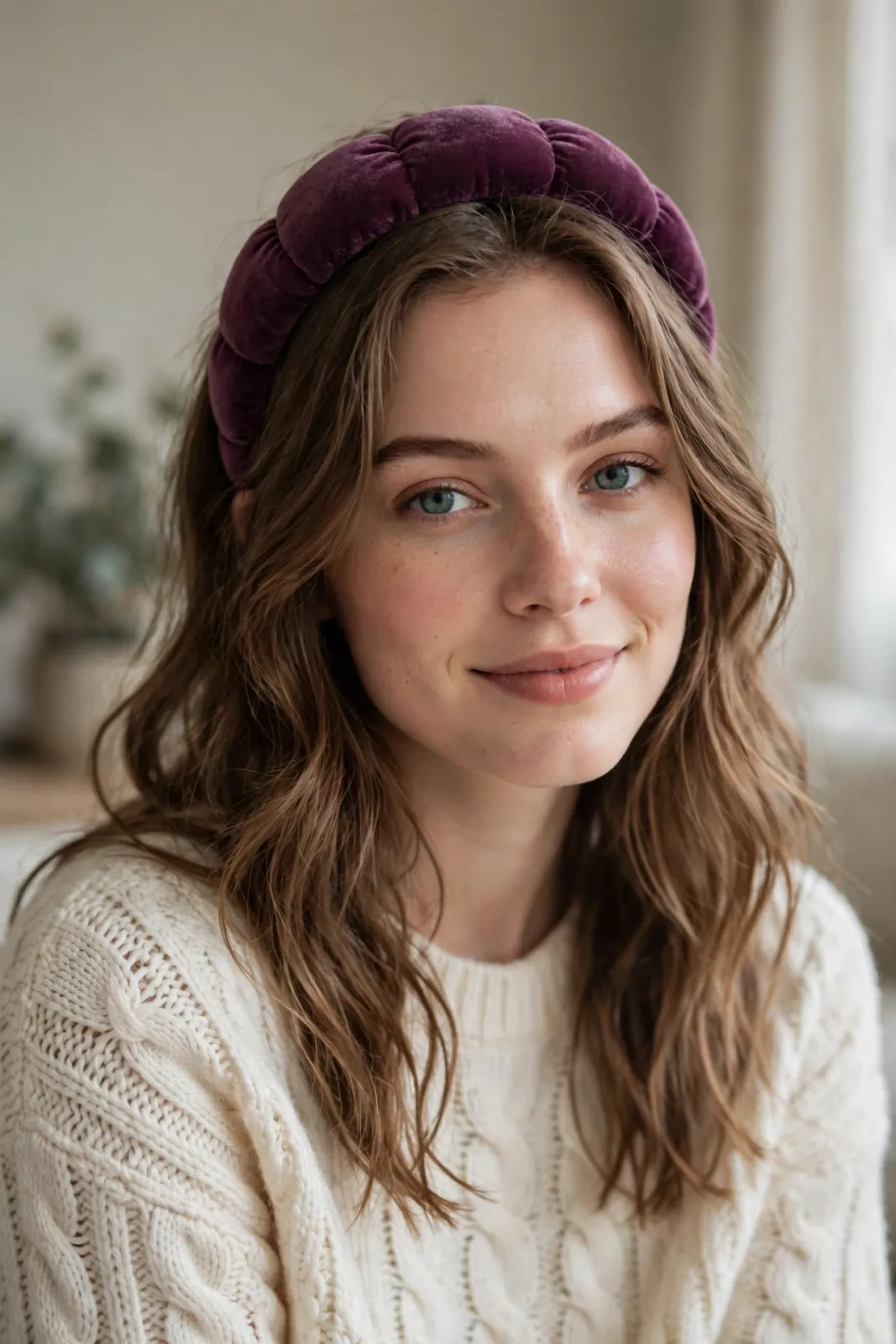
1. With Loose Waves and a Cream Knit
This is the everyday combination in the hero photo, and it works because the textures talk to each other: soft waves, soft knit, soft velvet. Push the band back about two finger-widths from your hairline, let a few strands fall in front of your ears, and keep the rest of the outfit simple. Cream, oatmeal and soft grey knits all let the plum stay the one colour note.
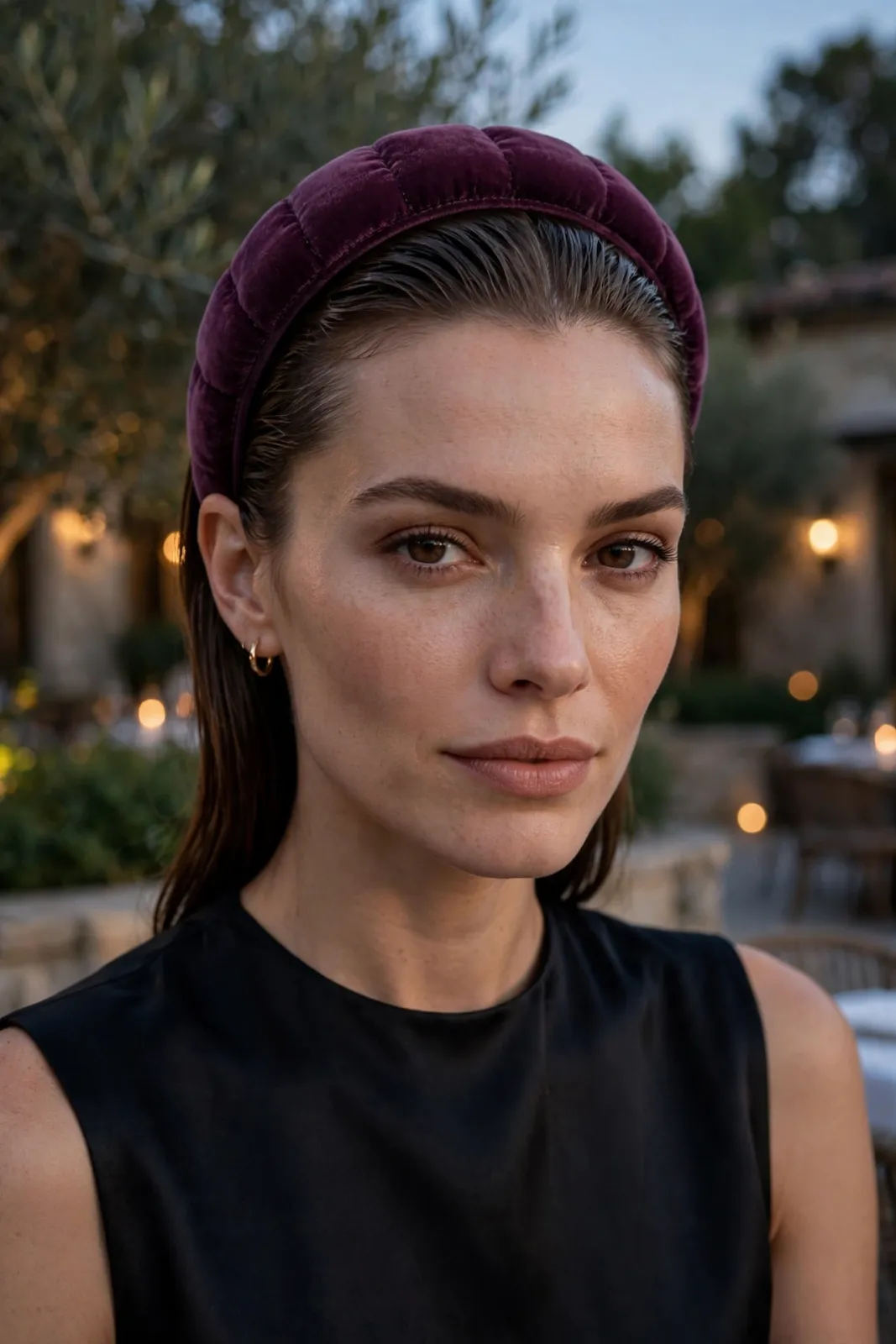
2. Slicked-Back and Sleek for Evenings
For a sharper look, brush your hair straight back with no parting, add a touch of serum to the lengths, and place the band so it holds everything cleanly off the face. With a black dress or a tailored blazer, the effect is neat and confident — like a low bun’s more relaxed sister. Statement earrings work beautifully here because your hair is completely out of the way.
3. Over a Low Ponytail for Work
Gather your hair into a low ponytail first, then slide the band on from the front, tucking it just behind your ears. The ponytail anchors the style, the band hides any unevenness at the hairline, and the whole thing reads tidy in meetings without a single hairpin. It is also comfortable for a full day because the band is not fighting loose hair.
4. With a Centre Part and Hair Tucked Behind the Ears
If you love your centre part, keep it. Part your hair as usual, place the band slightly further back than feels natural, and tuck the front sections behind your ears so the band sits over them. This keeps the part visible at the very front while the band does its holding work behind it — a good compromise if a fully swept-back look feels too exposed.
5. On Second-Day Hair With Dry Shampoo
This is the headband’s rescue job. Work dry shampoo into the roots, brush through, add loose bends with a tong only to the front pieces if you like, then place the band. It covers the flattest part of the hair at the crown, presses flyaways down at the hairline, and buys you one more day before washing. Nobody needs to know.
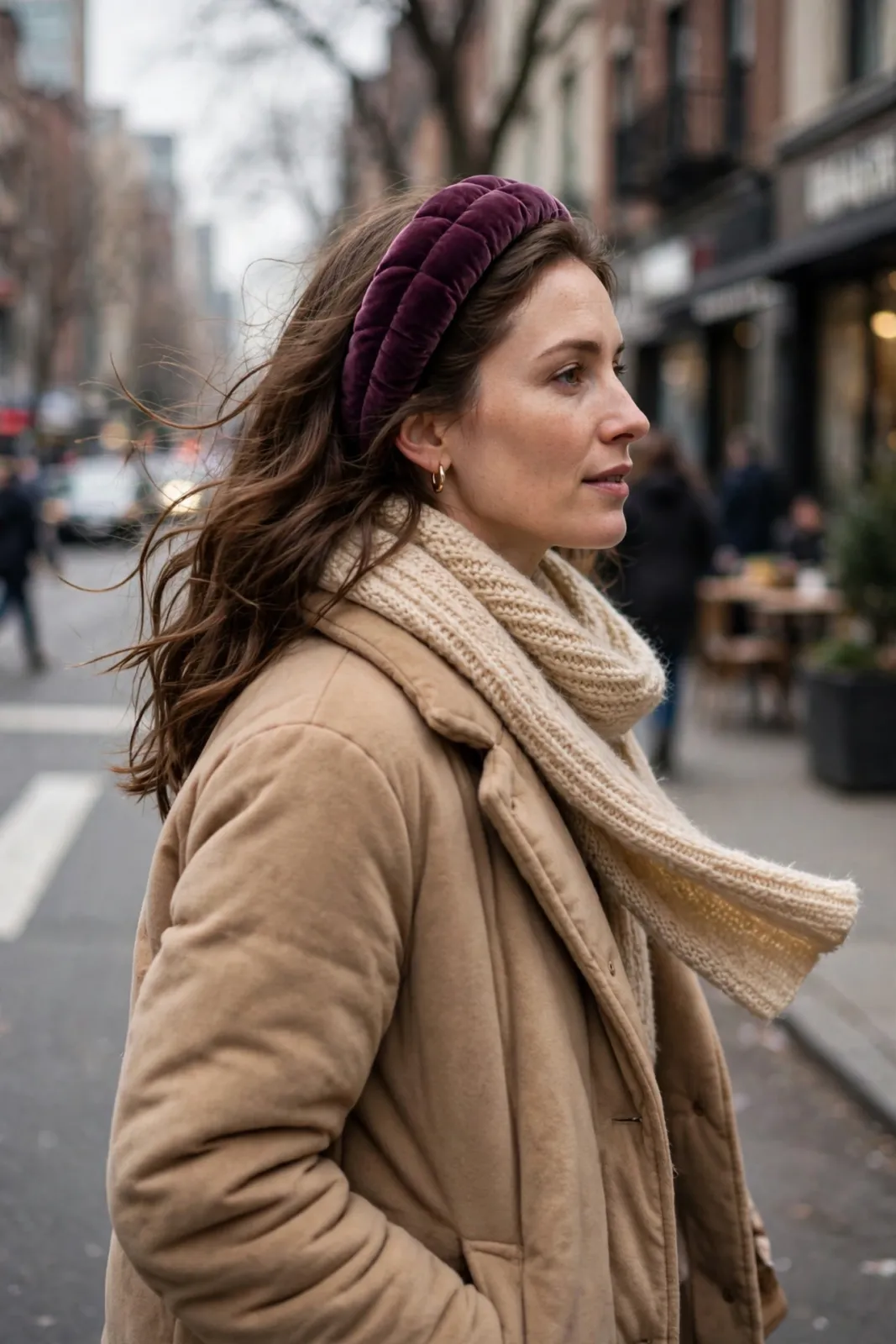
6. With a Coat and Scarf in Cold Weather
Hats flatten hair; a padded band does not. On cold days, wear the band with your coat and scarf as your visible hair styling — it survives being indoors and out again without hat hair, and velvet suits the season’s fabrics. Plum against a camel or charcoal coat is especially good. If you wear earmuffs or a hood for part of the journey, the band slips back on in seconds afterwards.
7. Dressed Up: Velvet on Velvet, Done Carefully
A velvet headband with a velvet dress can look wonderful for a party, but keep the colours related rather than matched exactly. Plum with deep burgundy or with black velvet works; plum with an identical plum dress can look like a uniform. Break it with metallic shoes or a small gold clutch, and keep jewellery simple.
8. With an Updo for Weddings and Events
Place the band over a finished low chignon or twisted updo and it becomes the decoration — no pins or jewels needed. This is a kind option for wedding guests who want their hair to look done without a salon visit. Set the updo first, mist it lightly, then position the band last so you do not disturb the shape.
9. Casual Days: Denim, a White Shirt, and the Band
Jeans, a white shirt, and one plum band is a complete, easy outfit formula. The band adds the colour and the polish, so you can keep shoes and bag plain. It also works with a plain T-shirt dress or a denim jacket — anywhere an outfit is almost right but needs a finish.
How to Put a Padded Headband On So It Stays: Step by Step
First, brush your hair in the direction you want it to lie and decide on your parting, or brush it all back. Second, hold the band by its ends and hook it low at the nape area behind your ears, then slide it up and over into position — placing it from the front and pushing back causes less snagging than dropping it straight down. Third, set it about two finger-widths behind your hairline for a relaxed look, or right at the hairline for a sleeker one. Fourth, tuck or release the strands in front of your ears, whichever suits your face. Finally, press down gently at the crown and behind the ears; if it pinches behind the ears within a minute, slide it a fraction forward — a good band should be forgettable by the time you leave the house.
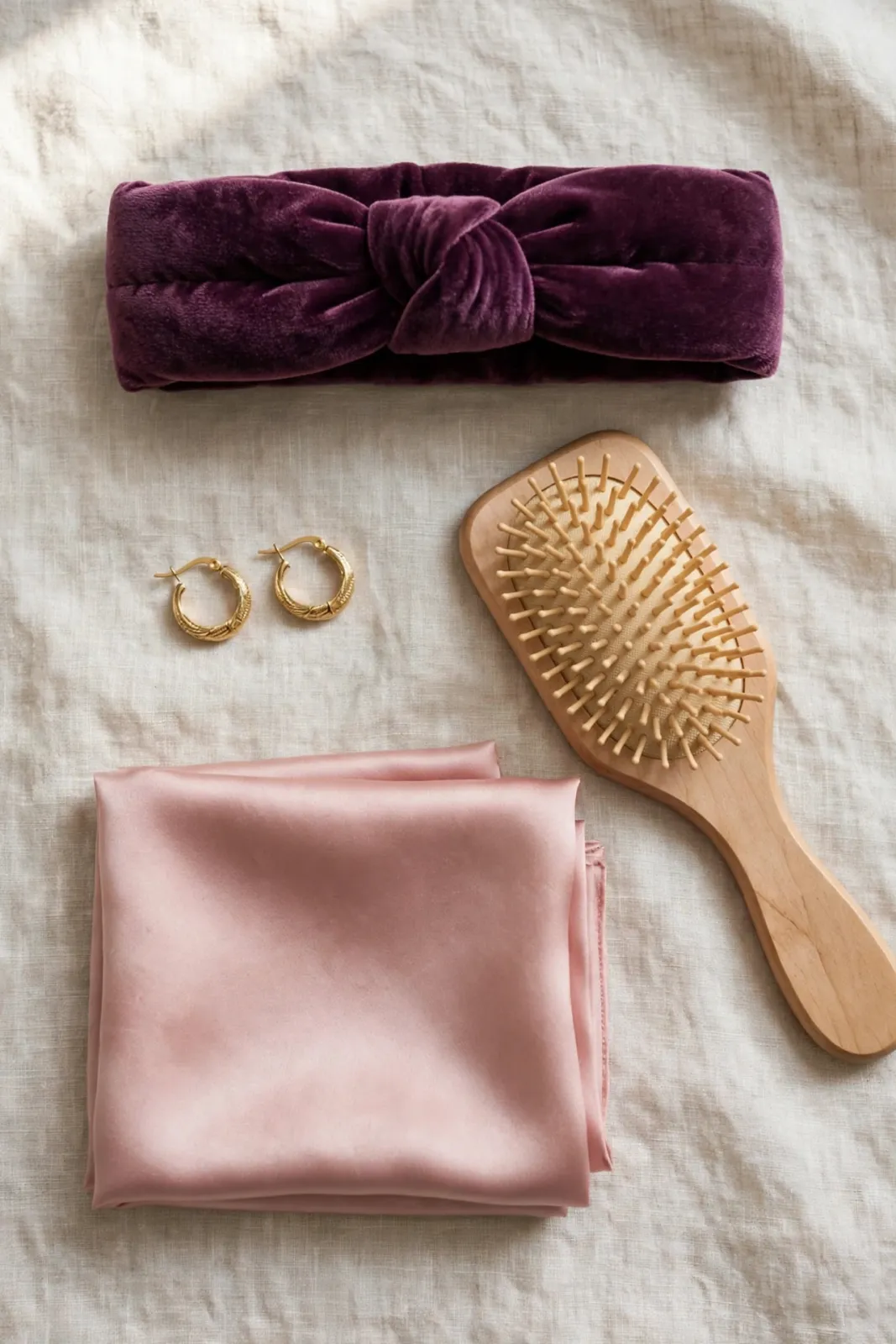
Buying and Care Advice That Actually Helps
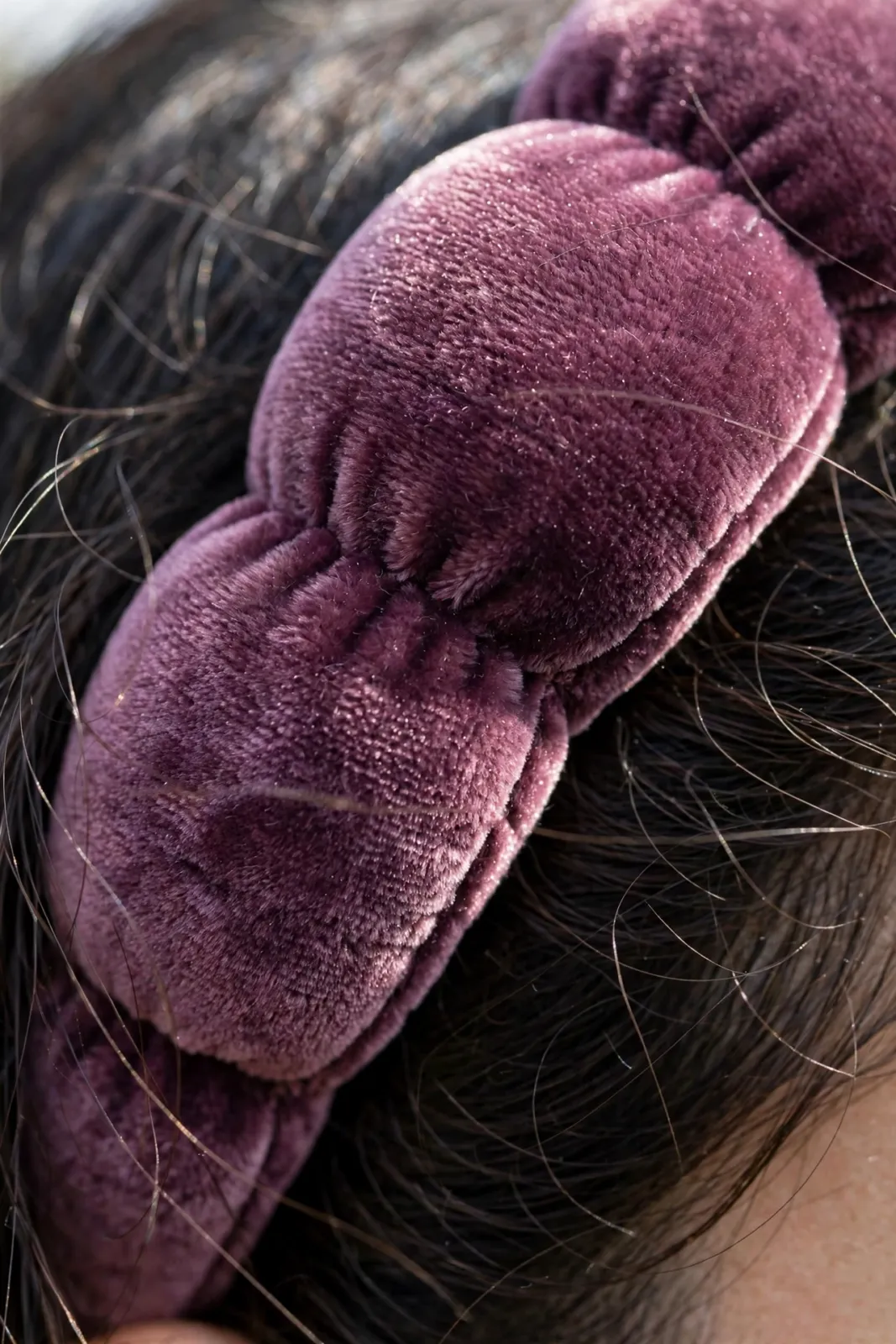
Look for a band with even padding that springs back when you press it, velvet with a dense, short pile, and ends that are wrapped or capped so they do not dig in behind your ears. Try to check the inner band: a slightly grippy lining helps fine hair, while a smooth satin lining is kinder to curly hair and reduces friction. One size suits most people, but if you often get headaches from bands, choose the widest, most padded style you can find — pressure spread over a wider area is far more comfortable.
Care is simple. Spot-clean velvet with a barely damp cloth and let it dry away from radiators; do not soak it, because the padding can stay damp and lose its shape. Store it on a hook or a small stand rather than crushed in a drawer, and brush the pile gently in one direction with a soft clothes brush to revive it. Keep it away from hairspray where you can — spray your hair first, let it dry, then add the band.
Common Mistakes to Avoid
Wearing it too far forward is the most common one: pushed right onto the forehead, a padded band looks tense and can give you a headache. Too far back is the opposite problem — it will slide and take your confidence with it. Second, pairing a jewel-tone band with several other strong colours at once; let plum be the one note. Third, putting it on over wet hair, which leaves dents and flattens the pile. Fourth, giving up after one try: most people need two or three placements to find the position that suits their face, and that position is worth learning because you will reuse it daily.
Frequently Asked Questions
Will a padded headband give me a headache?
It should not if the fit is right. Choose a wide, well-padded band, position it just behind your ears rather than on them, and take it off for a minute if you feel pressure building. A band you have to endure is the wrong band.
Does velvet work on fine or slippery hair?
Yes — velvet is one of the better choices for fine hair because the pile grips. A little dry shampoo or texture spray at the roots first gives it even more to hold on to, and placing the band over a low ponytail adds extra security.
What colours go with a plum headband?
Cream, charcoal, navy, black and soft pink are the easiest partners. Camel and olive also work well in autumn. Try to keep plum as the single rich colour in the outfit and let the rest stay quiet.
Can I wear a padded headband to a formal event?
Absolutely. In a deep jewel tone like plum, worn with sleek hair or a neat updo, a padded velvet band reads as elegant rather than casual. Keep the rest of the styling clean and add one piece of simple jewellery.
How do I stop the band marking my hair?
Only wear it on dry hair, avoid placing it in exactly the same spot every day, and brush your hair out as soon as you take it off. A satin-lined band reduces friction marks if your hair dents easily.
A plum padded velvet headband is a small thing that does a disproportionate amount of work: four minutes, no heat, no pins, and your hair looks deliberately styled. Find your placement once, keep the rest of the outfit simple, and it will quietly become the most useful accessory you own.