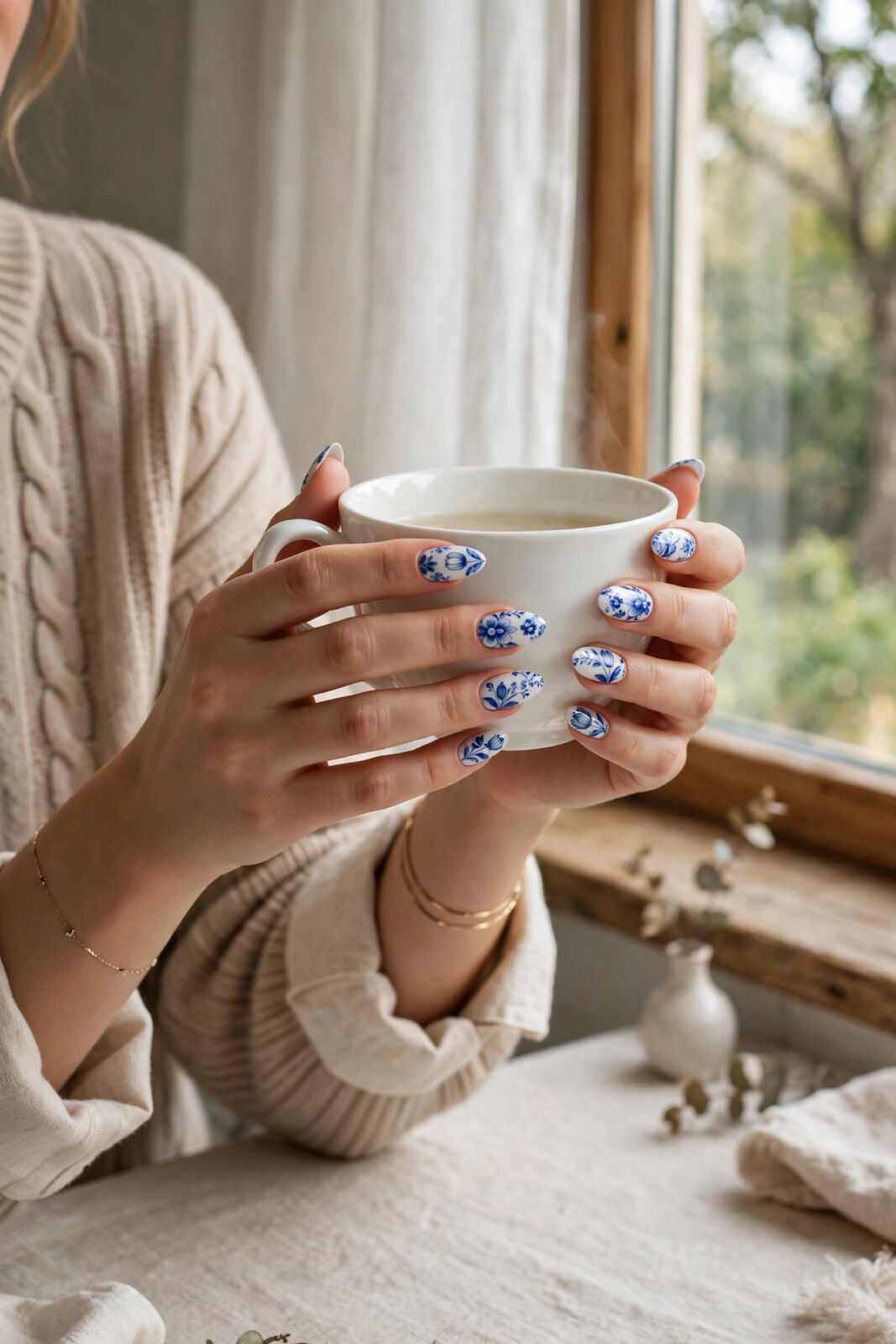
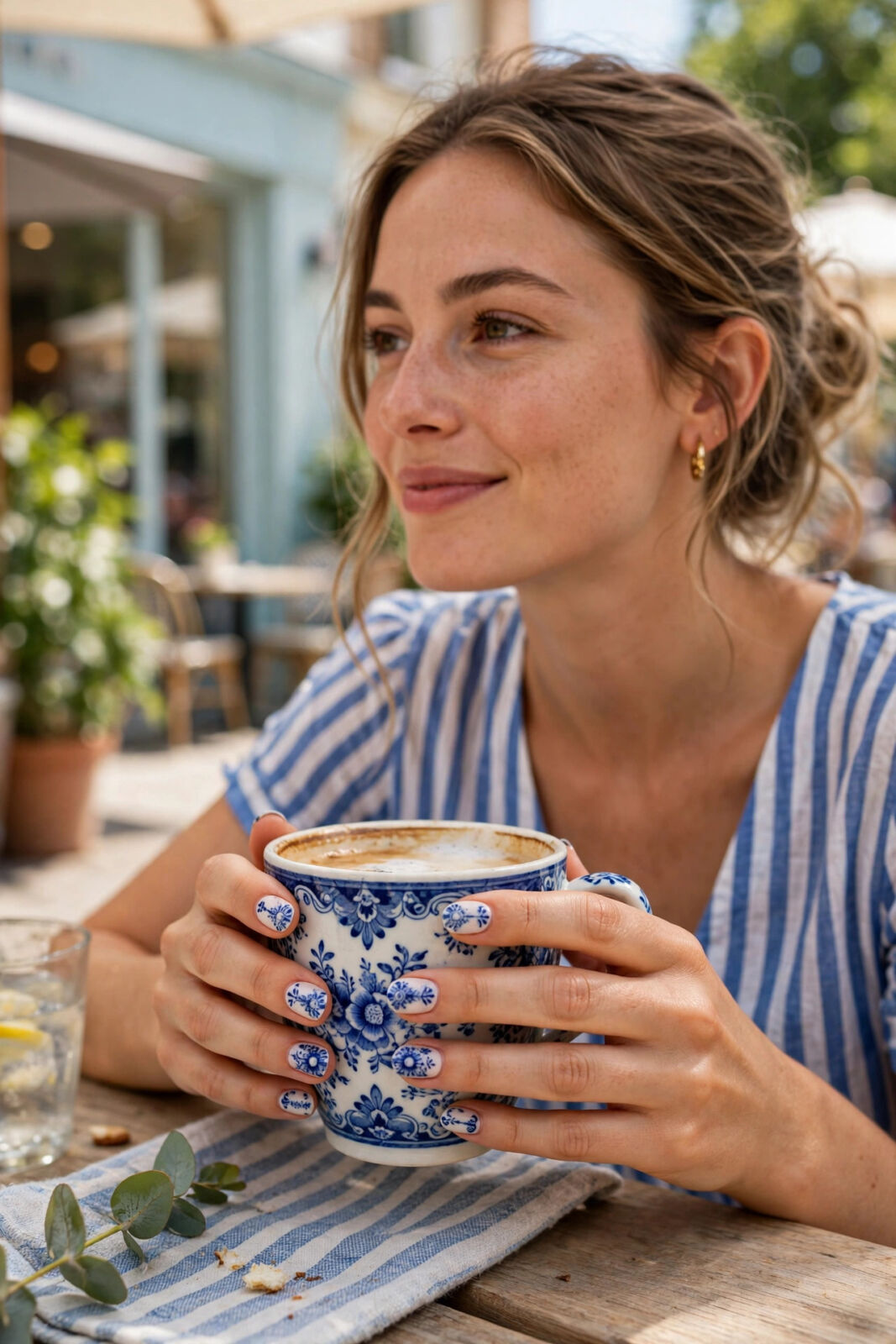
The first time I saw porcelain blue delft nails, I was holding a cup of tea in a little cafe that used blue and white china, and the woman at the next table had the exact pattern of the teacup painted across her nails. Tiny cobalt flowers, delicate leaves, little scrolling vines on a milky white base. I nearly asked her for a photo. Delft nail art takes its cue from Dutch delftware pottery — that classic blue on white porcelain — and turns it into one of the prettiest, most wearable nail designs I have come across in years.
What makes it special is the balance. The blue is vivid but the white base keeps everything fresh and clean, and the hand-painted style florals feel romantic without being sugary. It works on short nails and long nails, in a salon or, with a little patience and the right shortcuts, at your own kitchen table. Here is everything I have learned about wearing it well.
What Delft Nail Art Actually Is
Delftware is the famous blue and white pottery from the Dutch city of Delft, painted with cobalt blue floral and landscape designs on a bright white glaze. The nail version borrows that exact language: a porcelain white or very pale blue base, with flowers, leaves, vines and sometimes tiny birds or windmills painted in shades of cobalt and cornflower blue.
The designs are deliberately a little imperfect. Real hand-painted pottery never has two identical flowers, and the charm of delft nails is the same — each nail carries a slightly different sprig or bloom, so the set looks collected rather than printed. If you love the blue and white china aesthetic in home decor, this is that same feeling, worn on your hands.
9 Ways to Wear Porcelain Blue Delft Nails
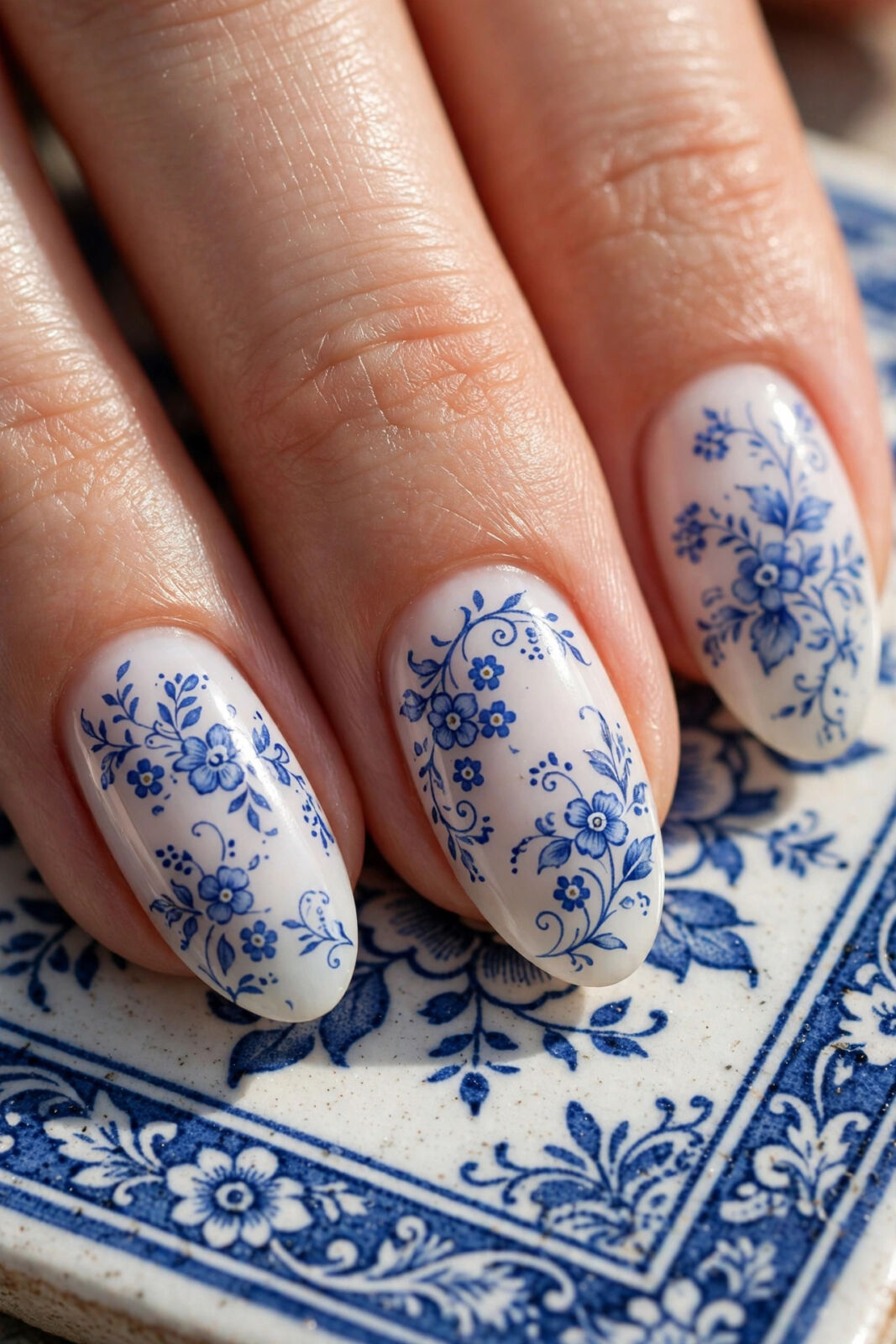
1. The full hand-painted set. Every nail carries a full floral design in cobalt on white. This is the statement version and the one that gets photographed. It suits almond and oval shapes best, because the curved canvas lets the vines flow.
2. Two accent nails only. Paint eight nails a plain porcelain blue or milky white and keep the delft florals for the ring fingers. This is the version I recommend for work or for anyone easing into nail art — the charm is there, but it whispers instead of shouting.
3. The short squoval version. On short squoval nails, ask for one small sprig per nail instead of a full bouquet. The design scales down beautifully and grows out gracefully, which matters on short nails that show regrowth sooner.
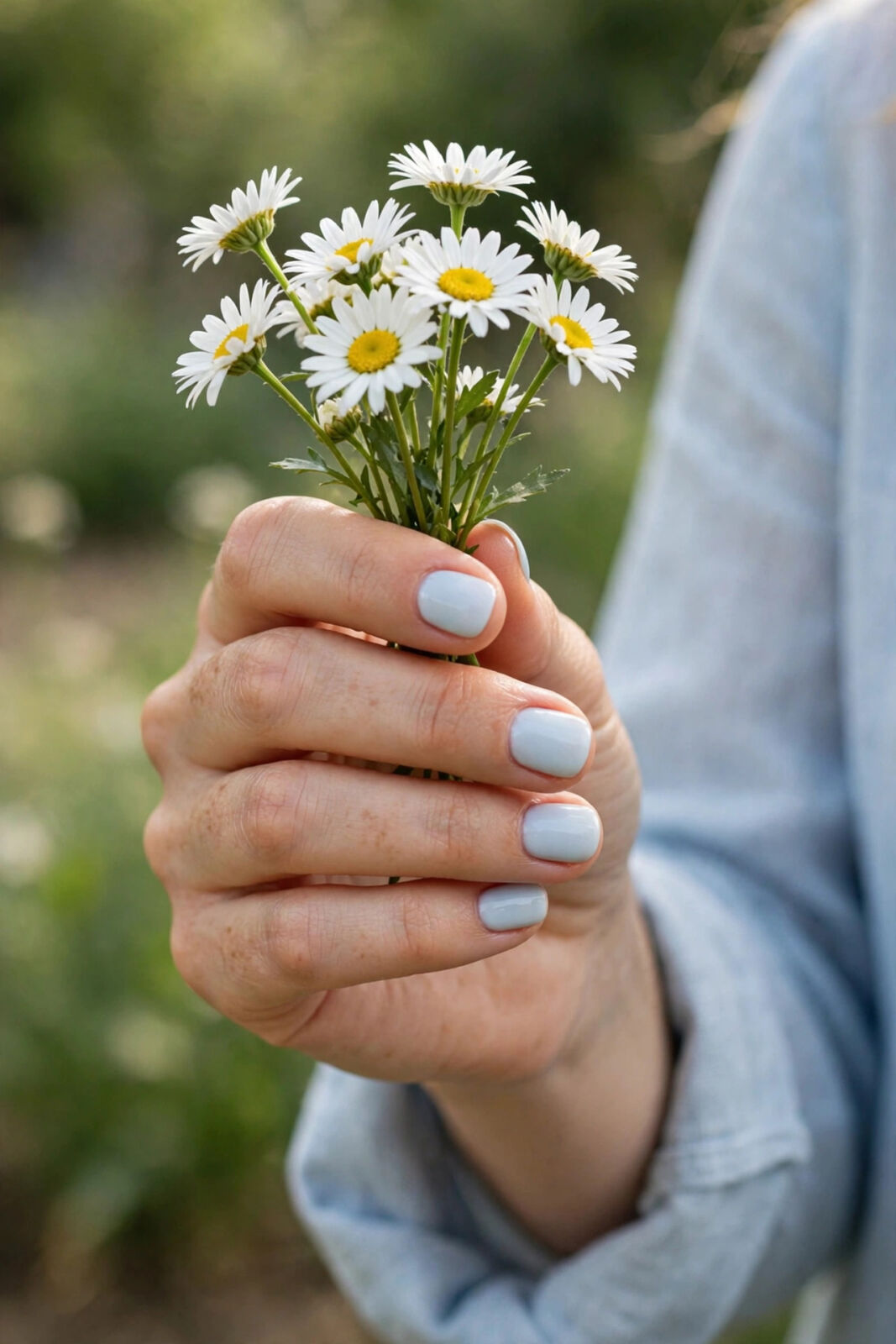
4. The plain porcelain blue variation. Some days the pattern feels like a lot, and a solid pale porcelain blue — no art at all — gives you the same fresh, china-inspired mood in five minutes. It is also the perfect base colour to add art to later in the week.
5. Delft French tips. Keep the nail bed milky and natural, and paint the tips white with tiny blue florals along the smile line. It reads like a French manicure from a distance and like a painting up close.
6. Mixed blues. Use two blues instead of one: deep cobalt for the main flowers and a softer cornflower for leaves and filler dots. The two-tone painting is how real delftware looks, and it gives the nails real depth.
7. One statement nail per hand. A single fully painted nail — the middle finger works beautifully — surrounded by plain glossy white nails. Minimal, modern, and very easy to copy at home with a sticker or transfer on just those two nails.
8. The vintage frame design. Paint a thin cobalt border around the edge of each nail, like the rim of a plate, with one tiny flower in the centre. Elegant, unusual, and surprisingly forgiving, because the border hides a multitude of wobbly lines.
9. Matte porcelain finish. A matte top coat turns the whole design into something that genuinely looks like unglazed pottery. It is the most authentic-looking finish of all, though it shows wear a day or two sooner than gloss.
How to Get the Look, Step by Step
Start with shape and prep, because nail art on a rough base never looks like porcelain. File to an almond, oval or squoval shape, push back cuticles gently, and wipe each nail with polish remover or alcohol so the base coat grips. Apply a thin base coat and let it dry fully.
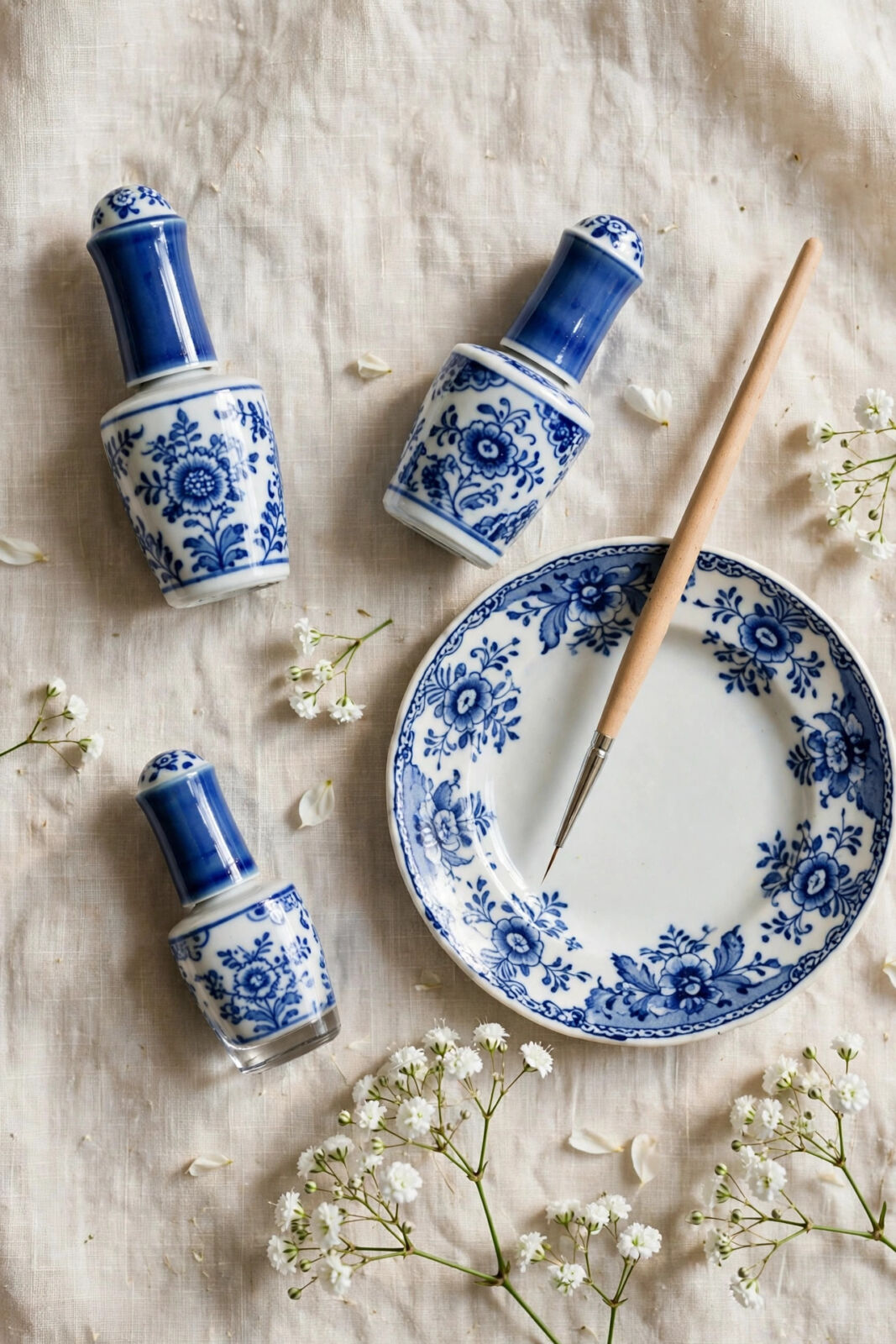
Paint two thin coats of a milky white or the palest porcelain blue, letting each coat dry between applications — thin coats are the secret to that smooth glazed finish. For the art, use a fine detail brush or a toothpick and a cobalt blue polish thinned slightly if it drags. Paint the largest flower first, roughly in the centre or off to one side, then add leaves, a curling vine, and tiny filler dots. Work one nail at a time and do not aim for symmetry between nails; pottery is not symmetrical, and neither should this be.
If freehand painting feels daunting, use water-transfer decals or stamping plates with floral designs — both give a convincingly hand-painted result, and honestly, most people cannot tell the difference once the top coat is on. Finish with a glossy top coat applied in one confident float over the nail, which seals the art and gives that glazed ceramic shine. Add a drop of cuticle oil once everything is dry.
Choosing Colours, Cost and Care Advice
The blue matters more than anything. A true cobalt reads classic delft; a navy can look heavy on a white base, and a very pale blue can disappear. If you are buying one polish for this design, buy the cobalt. The base should be a milky, slightly translucent white rather than a stark chalky one — it is far more flattering on the hands and much more porcelain-like.
At a salon, detailed hand-painted art like this usually costs more than a plain gel manicure because of the time involved; the accent-nail and decal versions bring the price right back down, so ask for those if budget matters. At home, the whole look costs little more than two polishes and a fine brush. To make it last, wear gloves for washing up, reapply a thin layer of top coat every two to three days, and keep cuticle oil by the sink — hydrated nails flex instead of chipping.
Common Mistakes to Avoid
- Painting the art too big. Delft flowers are small and scattered with white space around them. Crowding every millimetre of the nail is the fastest way to lose the porcelain effect.
- Skipping the base wipe. Oils on the nail plate make white polish streak and lift at the edges within days.
- Using a stark white base. Chalky white looks like correction fluid next to cobalt. A milky, soft white is the whole point of the porcelain look.
- Rushing the top coat. Dragging a half-loaded brush over fresh art smears the flowers. Float a generous bead of top coat over the nail in as few strokes as possible.
Frequently Asked Questions
How long do delft nails take at a salon?
A full hand-painted set usually takes 60 to 90 minutes, depending on how detailed the designs are. Accent-nail versions and decal sets are much quicker, often 30 to 45 minutes including the base manicure.
Can I do delft nails on short nails?
Yes — short nails are lovely with this design as long as the art is scaled down. One small sprig or a framed single flower per nail works better than trying to fit a full bouquet onto a small canvas.
What colours go with delft nails in an outfit?
White, cream, cornflower blue, navy and soft denim all sit beautifully with them, and a blue and white striped shirt is the classic pairing. They also look wonderful against plain gold jewellery, which warms the cool blue palette.
How long will the design last?
With gel polish, expect two to three weeks. With regular polish and a refreshed top coat every few days, a week to ten days is realistic. The light base is forgiving — small chips are much less visible than on dark colours.
Are decals cheating for this look?
Not at all. Real delftware itself was often decorated with transfer techniques, so decals are arguably the most authentic shortcut there is. A glossy top coat melts them into the base so they look painted.
A Last Word on Blue and White
Porcelain blue delft nails are one of those rare designs that feel special without feeling costume-like — fresh, romantic and quietly artistic all at once. Start with two accent nails if the full set feels bold, keep the white space generous, and let each little flower be its own imperfect self. That is exactly what makes them look like porcelain.