Some accessories sit quietly in a drawer for months, and then there is the one piece you reach for three mornings in a row without even thinking about it. For me, that piece has become a rosewater pink satin scarf. It is soft in colour, soft in feel, and surprisingly hard-working. The shade is not bubblegum and it is not dusty rose either. Rosewater pink sits right in between, a gentle blush with just enough warmth to flatter plain white shirts, cream knits, grey coats, and even a simple black dress that needs something kinder near the face.
I bought mine on a whim, folded neatly beside a till, mostly because the satin caught the light when I picked it up. Instead, it has been tied in my hair on rushed mornings, wrapped around a tired-looking tote, knotted at my wrist, and draped over my shoulders on a cool evening. One small square, nine different jobs.
If you have a similar scarf sitting unused because you are not quite sure what to do with it, this guide is for you. Below are nine soft ways to tie and wear a rosewater pink satin scarf, a simple step-by-step for the basic folds, honest buying advice if you are still shopping for one, and the care routine that keeps satin looking smooth instead of tired and creased.
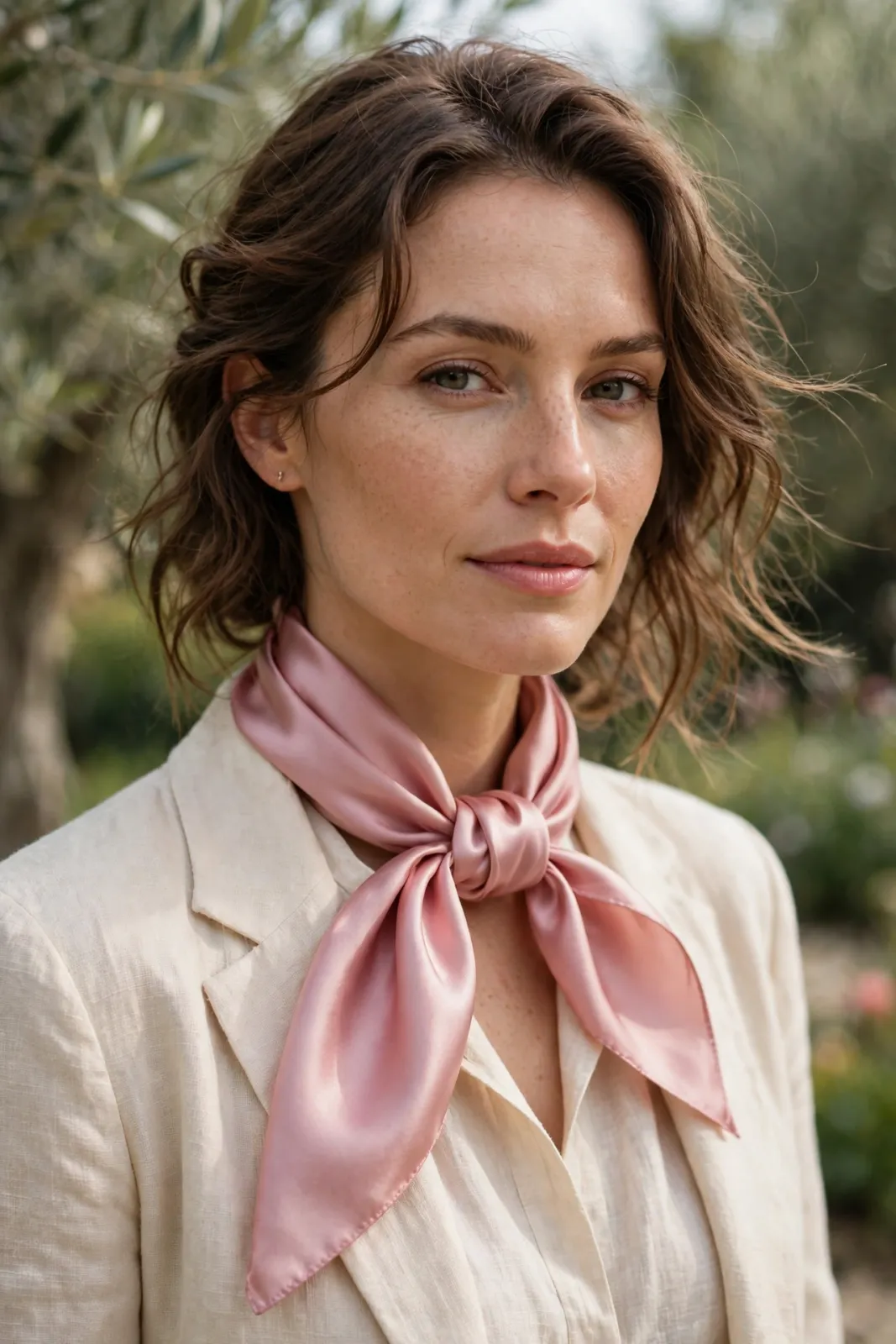
1. The Classic Loose Neck Knot
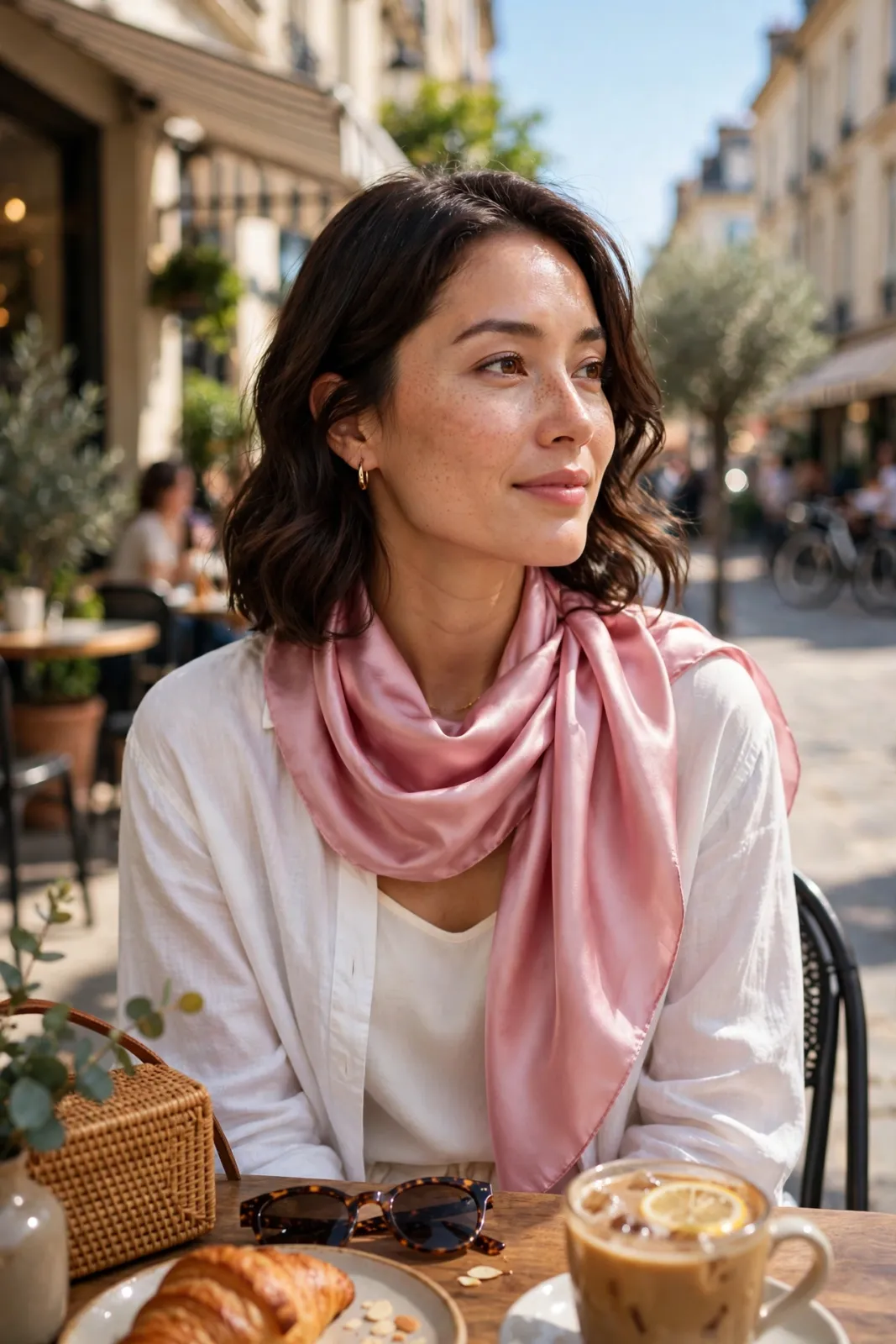
This is the way most of us picture a satin scarf, and it is popular for a good reason. Fold the scarf into a long band, drape it around your neck with the ends hanging down your front, then tie one loose knot at about collarbone height. Let the ends fall unevenly, one a little longer than the other. That small unevenness is what stops it looking stiff or overly neat.
It works with a crew-neck jumper, a white shirt, or a simple dress, filling the neckline without the weight of a necklace. Try rosewater pink against navy, charcoal, or soft white, where the gentle contrast and sheen do the work jewellery normally would.
2. The Small Side Knot and the Shoulder Drape
The side knot is the softer cousin of the classic knot. Instead of tying in the centre, slide the knot to one side, just above the collarbone, and let both ends rest over one shoulder. It suits boat-neck tops and off-shoulder dresses particularly well, and it has a relaxed, slightly French feel that takes about ten seconds to achieve. Keep the knot small and loose. A tight, bulky knot in satin quickly looks like a school tie.
The shoulder drape is even simpler. Unfold the scarf fully, lay it over both shoulders like a tiny shawl, and either leave it open over a sleeveless dress or secure it at the front with one small knot low on the chest. This is my favourite answer to chilly restaurants and evening events. The pink adds colour to a plain dress, the satin adds a dressed-up finish, and you are warmer than you look.
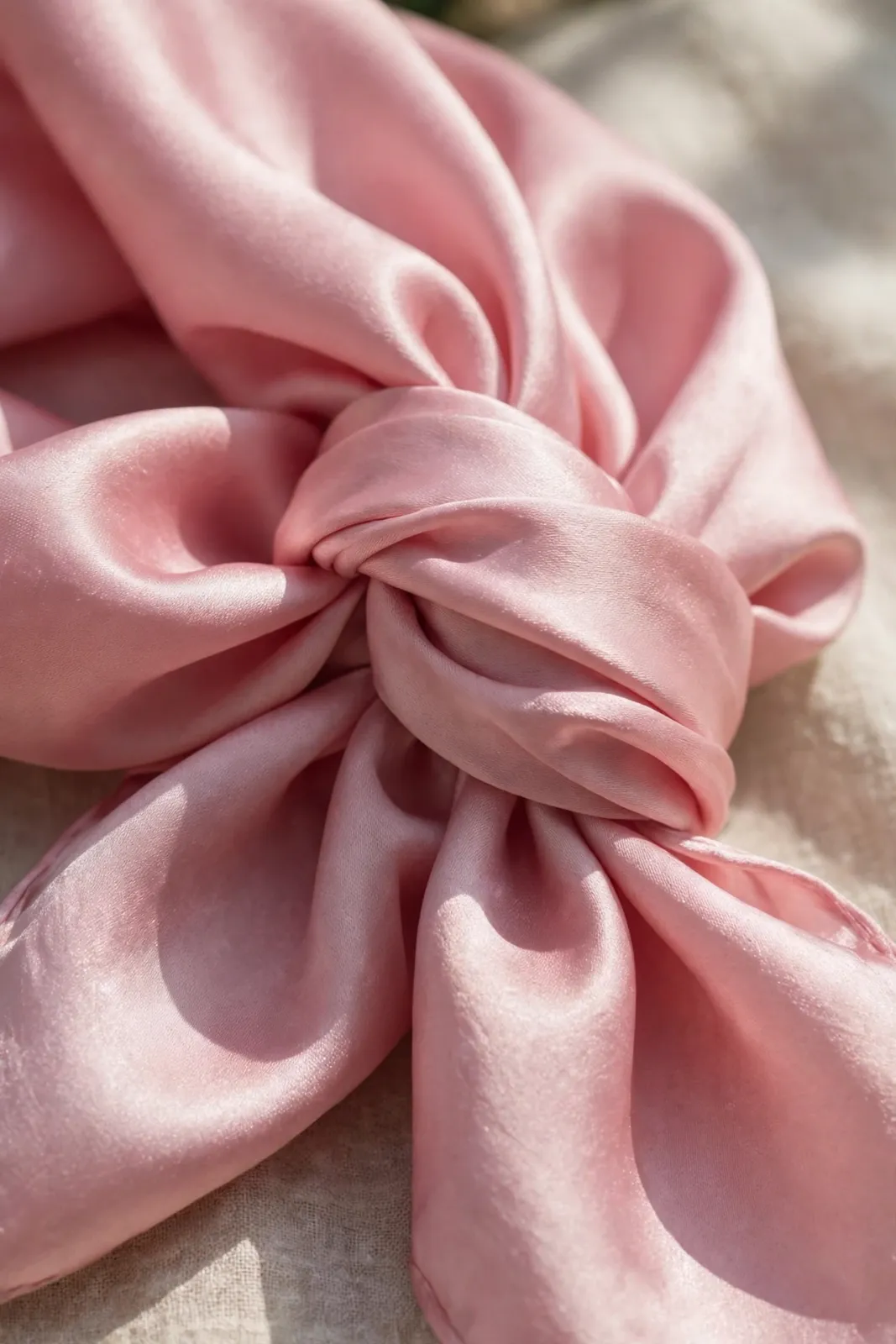
3. Hair Scarf, Headband and Ponytail Tie
Satin and hair are natural partners, because the smooth surface glides instead of pulling. These next three ways are the ones I use most on busy days.
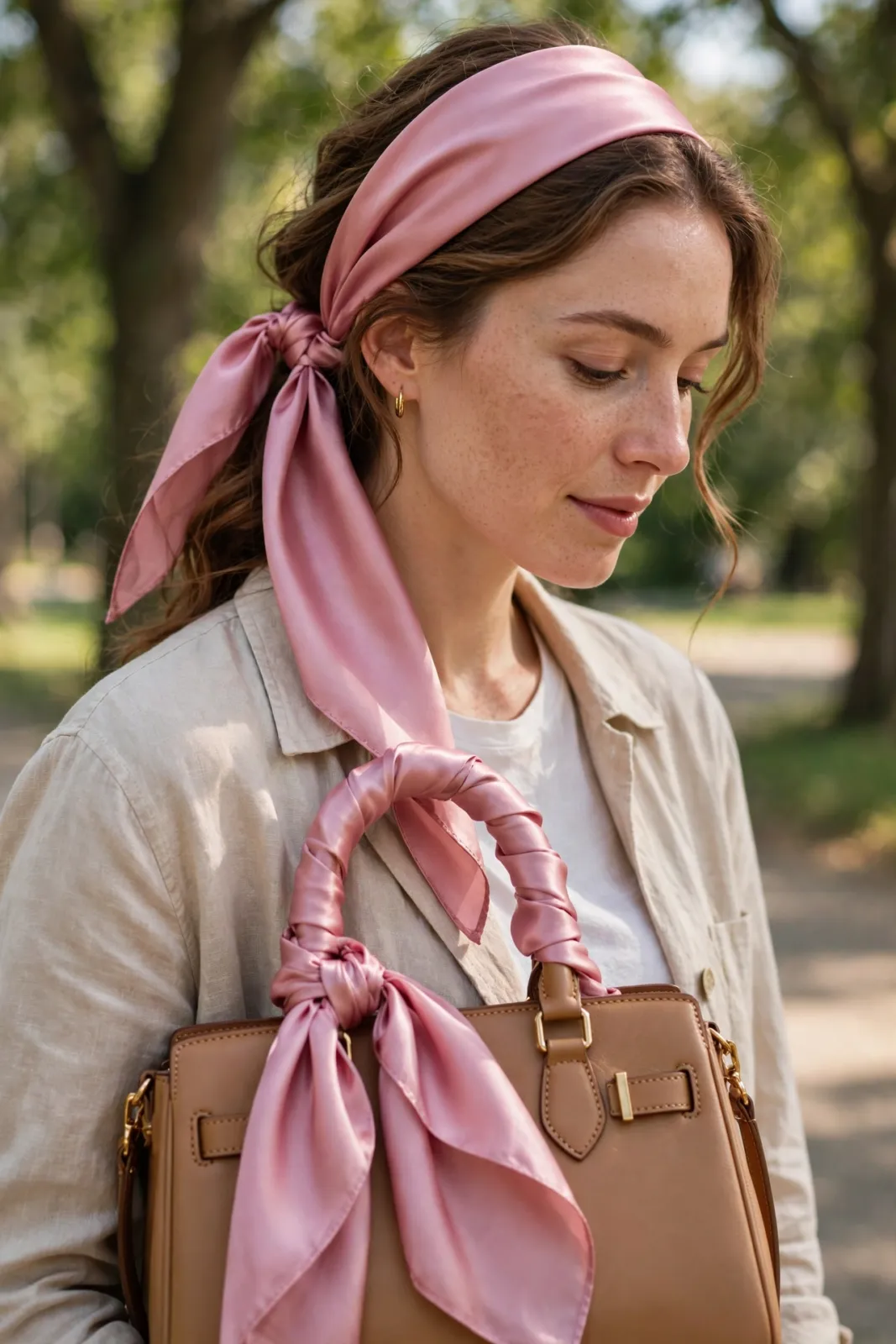
As a hair scarf, fold the scarf into a wide band, place the centre at the nape of your neck, bring the ends up over your ears, and tie a small bow or knot on top of your head. Tuck the corners in neatly. It hides a fringe that will not behave and makes a plain outfit look planned.
As a headband, fold it narrower, sit it behind your hairline, and tie it underneath at the back. As a ponytail tie, put your hair up with a plain elastic first, then knot the scarf around the base. Always use the elastic underneath — satin alone will slide out within the hour.
4. The Bag Handle Wrap and the Wrist Tie
If pink near your face feels like too much some days, put the colour on your accessories instead. For the bag handle wrap, knot the scarf at one end of the handle, twist it tightly along in even spirals, and knot it at the other end. Rosewater pink looks pretty on tan, cream, and soft grey bags, and protects pale handles from marks.
The wrist tie is the smallest commitment of all. Fold the scarf thin, wrap it twice around your wrist, and finish with a tiny bow. It sits happily next to a watch and is far more comfortable on hot days than stacked metal bangles.
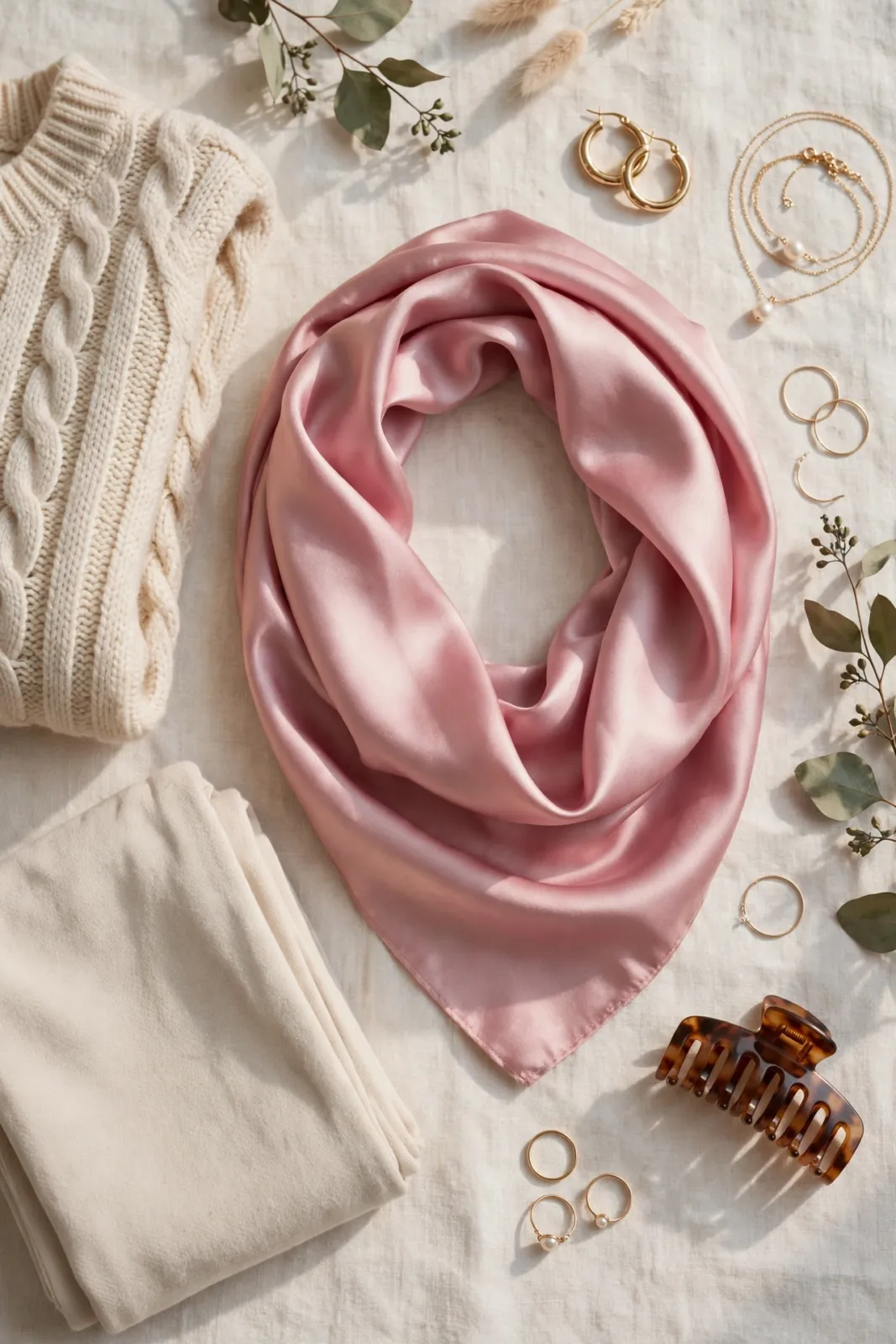
5. The Belt Loop Tie and the Bow at the Waist
Threading a satin scarf through the belt loops of jeans or trousers is an easy way to break up a plain top-and-bottoms outfit. Fold the scarf into a band, feed it through the loops, and tie it at the front or slightly to one side in a soft bow. With high-waisted jeans, a tucked white T-shirt, and the pink bow at the waist, the whole outfit suddenly has a focal point.
For dresses, tie the scarf directly around the waist, knotting it at the side. Keep the rest of the outfit simple — the scarf is the detail and should not compete with prints and statement jewellery.
How to Fold and Tie a Satin Scarf, Step by Step
Almost every style above starts from one of two basic preparations. Learn these and the rest is just placement.
The basic band fold
Step 1: Lay the scarf flat, printed or smoothest side down, and smooth out any creases with your hands. Step 2: Fold one corner across to the opposite corner if your scarf is square, making a triangle, or simply fold a long scarf in half lengthways. Step 3: Starting from the longest edge, fold the fabric over in bands about two inches wide. Step 4: Keep folding until you have one long, even strip. Step 5: Run the strip once between your palms to settle it before tying.
Keeping satin from slipping
Satin is slippery, so give it small anchors: a plain elastic under hair styles, a discreet bobby pin under a headband, and tight, even twists on a bag handle. If a neck knot keeps rotating, a tiny knot worn slightly to the side usually settles it.
Choosing a Good Satin Scarf Without Overspending
Very cheap satin can feel plasticky and crease badly. Look for a smooth weave with a soft glow rather than a harsh shine, clean stitched edges, and a colour that stays pink in daylight, not only under shop lights. Hold it against your face before buying — paler rosewater shades can wash out very fair skin, while deeper ones are often safer.
Size matters more than brand. A medium square, roughly 70 centimetres across, covers neck knots, hair styles, and bag wraps. If your budget allows one purchase, choose that size in plain rosewater pink over a busy print — it will match far more of your wardrobe.
How to Wash and Store Satin So It Lasts
Wash your scarf by hand in cool water with a little mild detergent, swishing slowly rather than scrubbing or wringing. Lay it flat on a towel, roll the towel to press out water, then dry it flat away from direct sunlight. Hanging wet satin can pull it out of shape, and hot water dulls the sheen.
To press it, use the coolest iron setting, a thin cloth over the fabric, and iron on the reverse. Store it folded loosely or rolled in a drawer, away from rough jewellery and velcro that can snag the weave.
Common Mistakes to Avoid
The most common mistake is tying satin too tightly — tight knots crease the fabric and look severe. Next is wearing a large, shiny scarf with an already busy outfit, so nothing stands out. Third, many people skip the elastic under a ponytail and then decide hair scarves do not work. They do, with anchoring.
Finally, do not wash satin in a mixed load with zips and warm water and expect the sheen to survive. A two-minute hand wash is the whole secret.
Frequently Asked Questions
Is a satin scarf the same as a silk scarf?
No. Silk is a natural fibre, while satin describes a smooth weave that is often made from polyester. A good polyester satin scarf costs far less, washes more easily, and still gives you the same soft sheen for everyday styling.
How do I stop a satin scarf slipping out of my hair?
Always anchor it first. Use a plain elastic for a ponytail, then tie the scarf over it, and add a bobby pin hidden under each side of a headband. A light mist of hairspray on the hair, not the scarf, also helps it grip.
Can I wear a pink satin scarf to work?
Yes, if you keep the styling simple. A small side knot with a shirt, a bag handle wrap, or a neat headband all read as polished rather than playful. Save the big top bow and long flowing ends for weekends and evenings.
What colours go best with rosewater pink?
Cream, white, soft grey, navy, tan, and light denim are the easiest partners. It also looks lovely with sage green and, for bolder contrast, black in the evening. Avoid neon shades, which make the pink look washed out.
What size scarf is best for beginners?
A medium square of about 70 centimetres is the most forgiving place to start. It is big enough for neck, hair, wrist, and bag styles, without the excess fabric that makes larger scarves awkward to knot neatly.
A Small Scarf With a Lot of Range
A rosewater pink satin scarf earns its place not by being dramatic, but by being useful in nine quiet ways, from a ten-second neck knot to a bag wrap that rescues a plain tote. Start with the two or three styles that fit your normal week, anchor the satin properly so it stays where you put it, and wash it gently so the sheen lasts. That is all it takes for one soft square of pink to become the hardest-working accessory you own.