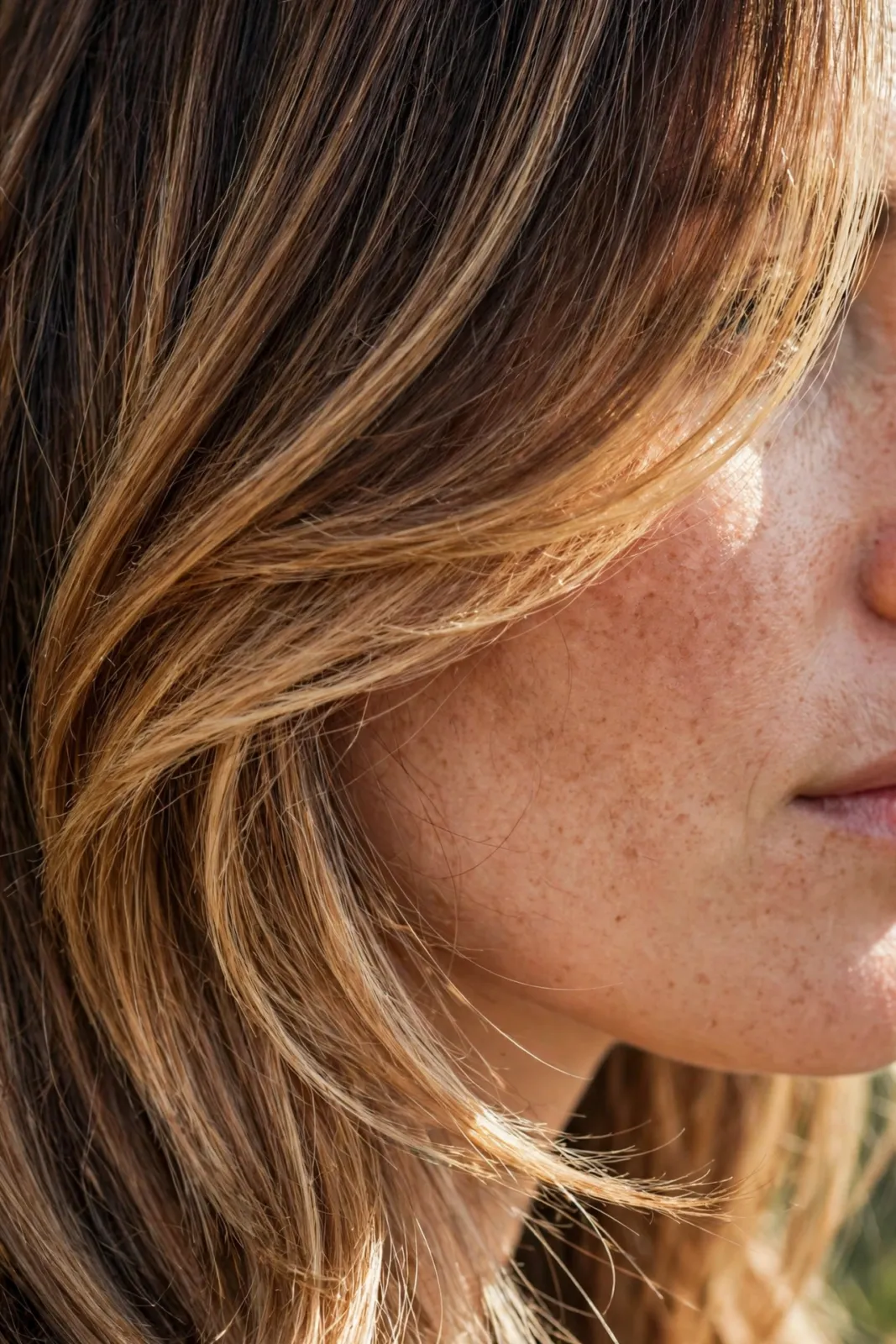
There is a particular kind of hair envy that happens under cafe lights. A friend turned her head, the front pieces caught the sun, and suddenly her whole face looked warmer, softer, and more awake — though she swore she had barely changed anything. That is what toffee balayage through face-framing layers does. It is not a dramatic colour overhaul or a heavy, blunt cut. It is warm, melted toffee tones painted where hair naturally catches light, paired with gentle layers that start around the cheekbones and curve toward the face.
If your brown hair feels flat, or your last highlights grew out in a harsh line, this combination is worth a serious look. The colour brings the glow, the layers bring the movement, and together they grow out softly, so you are not chained to the salon every six weeks. Below are the shades for different skin tones, nine ways to wear the look, what happens at the appointment, and the care habits that keep toffee rich instead of brassy.

What Makes Toffee Balayage Through Face-Framing Layers So Flattering
Balayage is hand-painted, so colour is swept onto the surface of the hair rather than saturated root to tip in foils. Toffee balayage stays in the warm caramel family — melted toffee, golden honey, light copper-brown, and soft amber — concentrated through the mid-lengths and ends, and brightest around the front, where the face-framing layers fall.
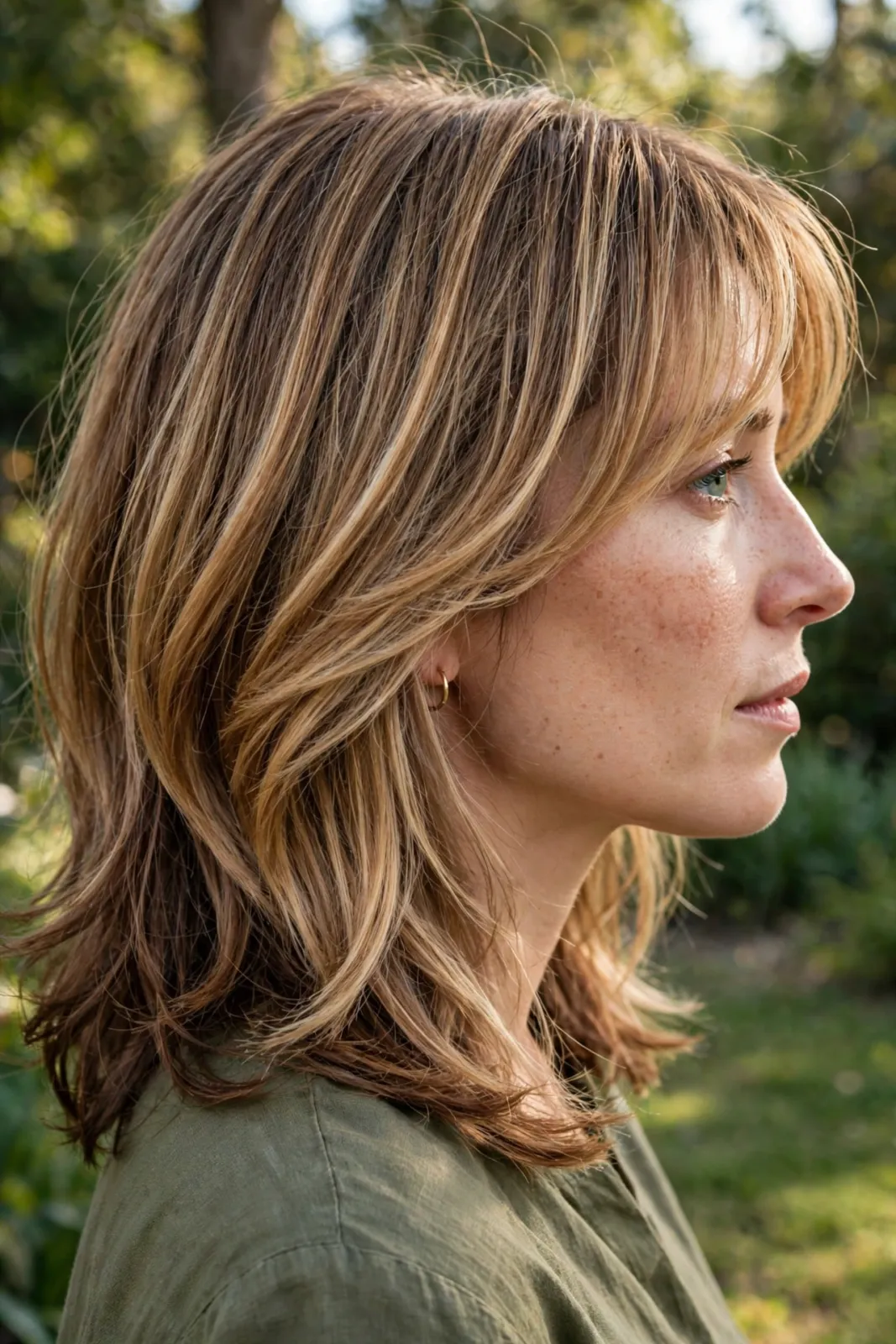
Face-framing layers are the shorter pieces around your hairline, usually starting between cheekbone and jaw. They remove weight where hair looks heavy and boxy, and create that soft curve when someone tucks hair behind an ear. With the brightest toffee pieces inside those layers, the eye goes straight to your cheekbones and eyes — a little like bronzer, only it does not wash off at night.
The other quiet advantage is grow-out. Painted away from the root and blended at the top, there is no hard regrowth line, so most people stretch twelve to sixteen weeks between appointments.
9 Ways to Wear Toffee Balayage Face Layers
This look adjusts easily — polished, beachy, or quietly glamorous, depending on brightness, layer placement, and styling. These nine variations come up again and again:
- Classic long layers: toffee pieces through hair past the shoulders, front layers starting at the chin. The most requested version, and it suits almost everyone.
- Soft lob: a collarbone-length cut with cheekbone layers and a brighter piece at the very front for instant lift.
- Curtain-style framing: longer front pieces that split in the middle and sweep back, lovely with a centre part.
- Golden toffee: the lightest end of the palette, best on medium brown bases that lift easily.
- Deep toffee melt: darker caramel kept close to your natural shade, ideal for very dark brown hair.
- Wavy and undone: loose bends through the ends so the layers flick out and the colour shows in ribbons.
- Sleek and straight: a smooth blow-dry that shows off the clean blend from root to tip, smart for work.
- High ponytail framing: leave the front layers loose when hair is up; the toffee pieces soften the whole style.
- Short layered bob: a jaw-length cut with warm pieces through the front, full of movement and easy to grow out.
Choosing the Right Toffee Shade for Your Skin Tone
Toffee is warm by nature, but picking the right end of its range makes the difference between glowing and washed out. A good colourist holds swatches near your face in daylight first; you can test at home with gold and copper jewellery.
Warm and golden skin tones
If your skin tans easily and gold jewellery flatters you most, you can carry the richest shades: amber, caramel, and light copper-brown. They echo the warmth in your skin, so the result looks harmonious rather than brassy. Keep brightness mainly in the front layers, with natural depth at the back for contrast.
Neutral and olive skin tones
Neutral and olive skin suits a softer toffee: balanced, not too orange — more honey than copper — with a touch of your natural root showing. That shadow root stops warm colour making olive skin look sallow, and makes grow-out easier.
Cool and fair skin tones
Fair, cool-toned skin does best with a lighter, muted toffee — sometimes called toffee blonde at the front. The key is dilution: thinner pieces, plenty of your own base between them, and a gentle gloss. Build brightness over two appointments if your base is dark.
How It Is Done: A Step-by-Step Look at the Appointment
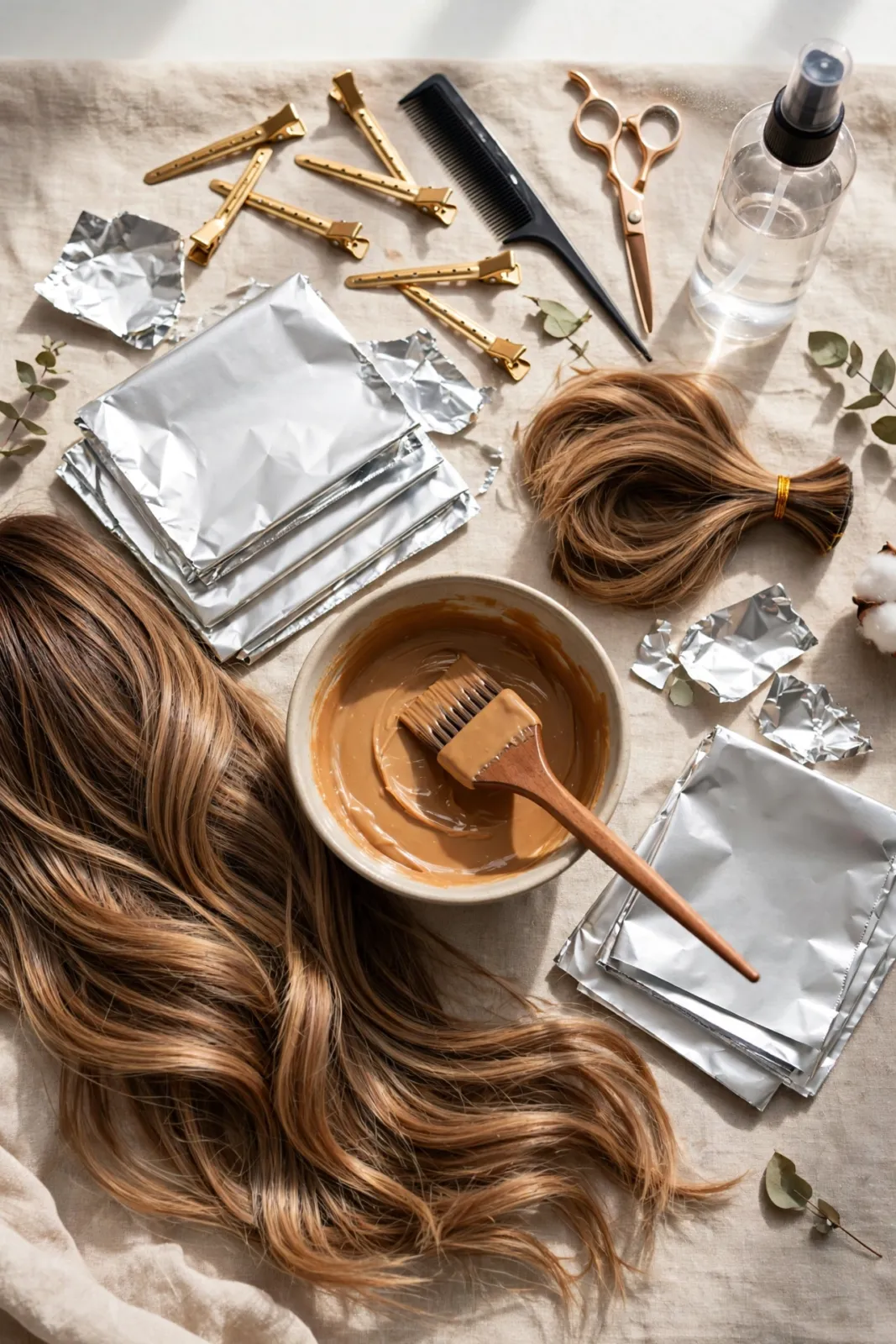
Knowing what happens in the chair helps you book the right amount of time — usually two and a half to three and a half hours — and ask better questions.
- Consultation and strand check. Your colourist checks your natural base, previous colour, and hair condition, and agrees where the layers will start and how bright the front should go.
- The cut is mapped first. Many stylists cut the face-framing layers before colouring, or at least mark them out, so the brightest pieces land exactly in the new shorter sections.
- Sectioning. Hair is divided into clean sections, with the front hairline pieces clipped separately because they get the most attention.
- Freehand painting. Colour is swept onto each section in soft V shapes, heavier toward the ends and feathered upward. The front layers are painted brighter and taken slightly higher.
- Processing. The colour develops for roughly thirty to forty-five minutes, checked regularly so hair lifts to warm caramel rather than pale yellow.
- Rinse and gloss. At the basin, a toffee-toned gloss is applied for five to fifteen minutes. This gives the colour its rich, syrupy finish and seals in shine.
- Finish and style. Layers are refined if needed, then hair is blow-dried with soft bends so you can see how the framing pieces fall before you leave.
If you try a gentle version at home, work only on front sections and ends, use mirrors on both sides, and keep product away from the roots. Previous box colour can lift unevenly, though — that is the one case where a salon visit first really pays off.
Styling Your Face-Framing Layers at Home
The cut does most of the work, but a few habits help. Apply heat protectant and rough-dry until hair is eighty percent dry. Then wrap each front section around a round brush and blow-dry it away from your face. Let it cool in that swept-back position for a minute — that cooling moment sets the curve.
For waves, use a medium curling iron on the mid-lengths only, leaving the last inch straight. Alternate each wave’s direction except the two front pieces, which should both curl away from the face. A little lightweight oil through the ends brings out the shine, and on later days only the front layers usually need refreshing.
Care, Costs, and Keeping Toffee Tones Rich
Warm colours fade faster than cool ones, so care is about slowing that fade. Use lukewarm water and a sulphate-free shampoo for coloured hair, and wash two or three times a week rather than daily. A weekly hydrating mask keeps lightened ends soft, and a brief blue-toned shampoo every couple of weeks calms brassiness without dulling the warmth. Always use heat protection — high heat strips a gloss fastest.
On budget, the first full balayage with a cut costs the most; maintenance costs much less. A gloss refresh every six to eight weeks is a far smaller bill and restores most of the richness in under an hour. Many people alternate: a full refresh twice a year, gloss visits in between. Ask the gloss price before you leave, so you can plan upkeep instead of letting the colour fade until a full redo is the only option.

Common Mistakes to Avoid
- Going too bright at the root. Colour painted right up to the scalp loses the soft effect and creates the harsh regrowth line you wanted to avoid.
- Skipping the gloss. The painted lift alone looks raw and yellowish; the toffee tone comes from the gloss step, so never leave without it.
- Cutting layers too short. Front layers starting above the cheekbone on long hair can look disconnected. Start at the cheekbone or lower — you can always go shorter later.
- Hiding an old box dye. Painting over dark box colour without telling your colourist leads to patchy, orange results. Always mention your full colour history.
- Over-washing in the first week. Hot daily washing strips fresh gloss quickly. Wait forty-eight hours before the first wash, then keep water warm, not hot.
Frequently Asked Questions
How long does toffee balayage with face-framing layers last?
The gloss softens after six to eight weeks, but the painted placement grows out gracefully for three to four months. Most people book two full appointments a year, with small gloss refreshes in between.
Will toffee balayage suit very dark brown or black hair?
Yes, with realistic expectations about brightness. Dark bases lift to deep caramel and amber rather than light golden toffee, giving rich, subtle warmth around the face. Going lighter may take two sessions.
Do face-framing layers work on fine hair?
They do, and they often help fine hair look fuller around the face. Keep the layers long and few, starting at the chin rather than the cheekbone. Too many short layers can thin out the ends, so ask for soft, minimal framing.
Can I get this look without bleach?
Virgin, naturally medium brown hair can sometimes reach soft toffee with a high-lift colour alone. On darker or previously dyed hair, gentle lightener is usually needed. A strand test shows what is possible.
How do I stop toffee hair from turning brassy?
Limit heat styling, use a colour-safe shampoo, and rinse with lukewarm water. A brief blue-toned shampoo every couple of weeks neutralises orange tones, and a salon gloss restores the proper shade. Rinse hair before swimming, too, since chlorine pushes warmth toward brass.
A Warm Finish Worth Trying
Toffee balayage through face-framing layers earns its popularity honestly: it flatters most skin tones, grows out without panic, and makes everyday hair look considered even when you have done very little to it. Start with the shade family that suits your skin, agree the layer length before any colour is mixed, and protect the gloss with gentle washing and heat care. Bring photos to your appointment, including one of what you do not want. On an ordinary Tuesday morning, that warm frame around your face in the mirror is a small, reliable pleasure.