I bought my first tooled brass concho belt almost by accident. It was hanging near the till in a small leather shop, the brown strap covered in swirling hand-stamped flowers and a row of round brass discs that caught the light. I told myself I did not need another belt. Then I tried it over the plain midi dress I was wearing that day, and the whole outfit suddenly looked planned. The dress had shape. The flat fabric had contrast. I have worn that belt most weeks since.
That is the real appeal of this piece. A tooled brass concho belt is not a quiet, hide-in-the-loops accessory. The leather is worked with carved-looking floral patterns, and the conchos — those round western medallions, named after the Spanish word for shell — sit along the strap like small pieces of jewellery. It also defines your waist and holds your jeans up. If you have one sitting in a drawer because you only wear it with cowboy boots, or you worry a new one will look like a costume, this guide is for you. It works far more often than you would expect, with dresses, jeans and tailoring.

What Makes a Tooled Brass Concho Belt Different
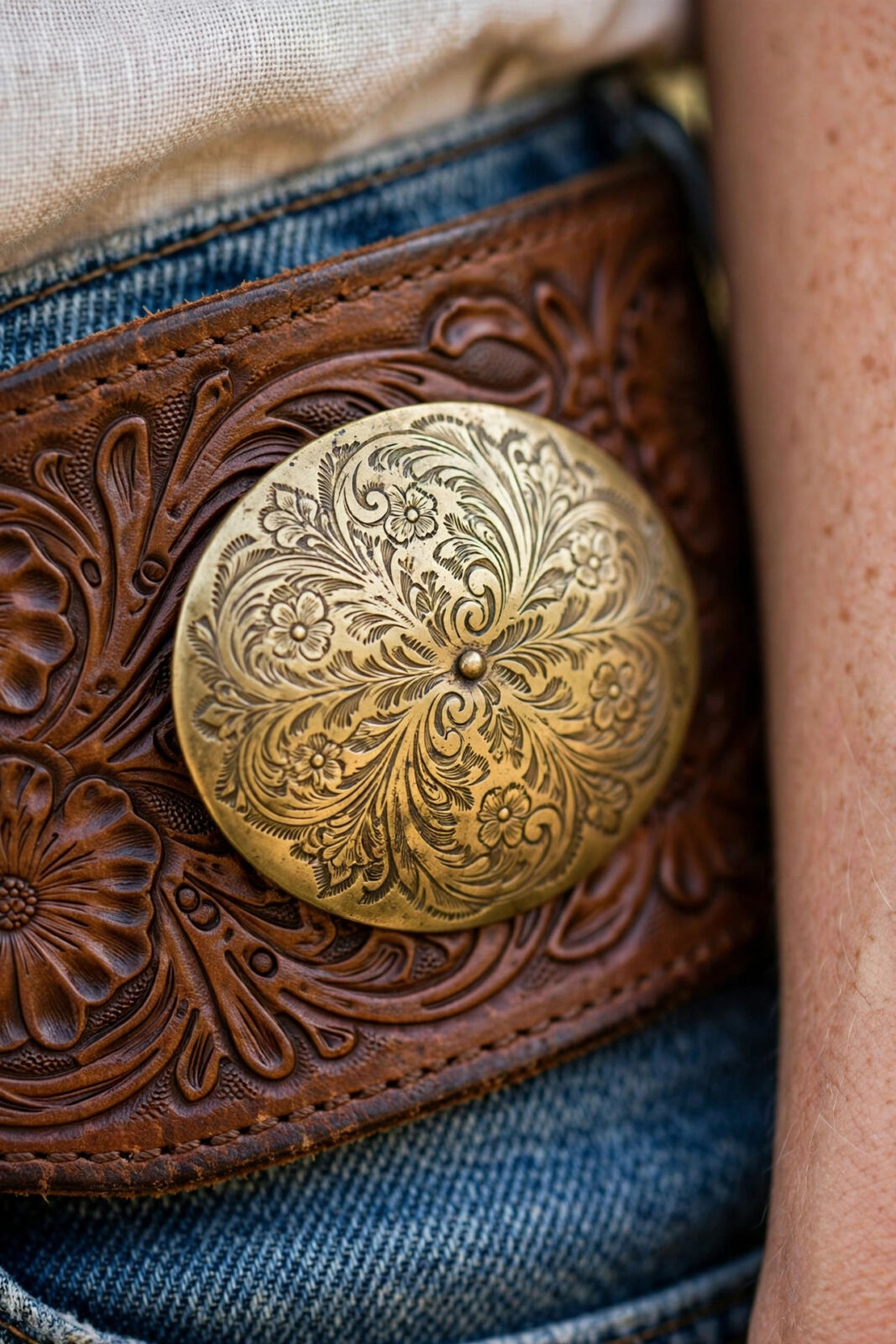
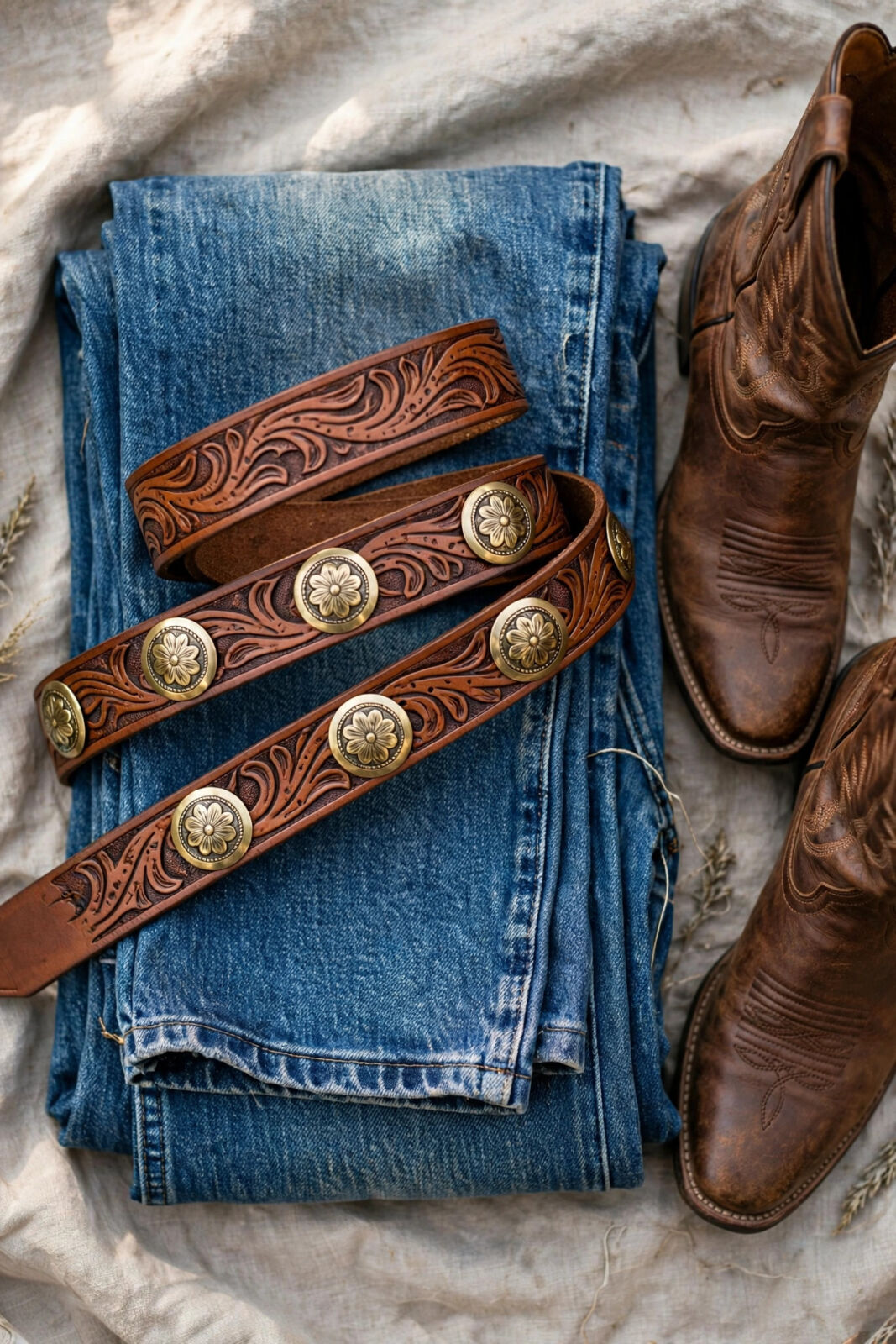
Most belts are a plain strap and a buckle. A concho belt is built differently. The strap is usually wide, around one and a half inches, and made from vegetable-tanned leather that has been tooled — pressed and carved while damp, so the floral patterns sit deep in the surface and stay there for years. Onto that strap go the conchos, evenly spaced discs of brass, often engraved with sunbursts, flowers or rope edges.
Brass matters here. It has a warm, slightly aged gold tone that suits tan, chestnut and chocolate leather far better than bright silver does, and it develops a soft patina instead of peeling the way plated metal can. Because the belt already carries so much detail, it does the styling work for the rest of the outfit. Keep everything else simple — a plain dress, a white shirt, straight jeans — and you still look like you thought about it. That balance, busy belt and calm clothes, is the secret behind almost every look below.
Ways 1 to 4: With Dresses and Soft Pieces
1. Over a flowing midi dress. This is the easiest place to start. A loose floral or plain midi can drift a bit shapeless by midday; put the belt on at your natural waist, over the dress, and the silhouette appears at once. Tan leather with a cream, rust or sage dress rarely fails, and boots or simple sandals both work.
2. With a shirt dress, as the only accessory. Button the dress, add the belt at the waist, and stop there. The brass does the work of jewellery, so skip the necklace, roll the sleeves once, and the look stays relaxed.
3. Over a knitted dress or long cardigan. Belt a straight knit dress at the waist to stop it reading as a jumper with ambitions. The same trick rescues a long cardigan: belt it closed and it becomes a proper layer.
4. With a slip dress or satin skirt, for contrast. Smooth, shiny fabric plus rough tooled leather is a lovely clash of textures. Keep colours toned — black satin with chestnut leather and brass — and it stops looking too dressy for daytime.
Ways 5 to 9: With Jeans, Shirts and Tailoring
5. Through the loops of straight or wide-leg jeans. The classic way, and still the best for everyday wear. Check the loops are wide enough for the strap first, and wear a half-tucked top to show the front conchos.
6. With jeans and a white shirt. If I had to pick one outfit from this list to wear on repeat, it would be this one. Crisp white shirt, tucked in properly, mid-blue jeans, concho belt, sleeves pushed up. The shirt is plain enough to let the tooling show, and the brass warms up the blue-and-white combination. Loafers, boots or clean trainers all finish it well.
7. Double denim, broken up by leather. A denim shirt with jeans in a similar wash can look like a uniform. A wide band of tooled brown leather at the waist splits the two halves and gives the eye somewhere to rest.

8. Over a blazer or tailored jacket. Belt a single-breasted blazer on the outside, at the waist, worn over a plain top and trousers. It sounds bold, but the result is tidy: the belt gives the tailoring a waist, and the straight lines of the jacket stop the western detail looking costume-like. Navy, charcoal and black tailoring all take chestnut leather well.
9. With tailored trousers and a plain knit. Thread the belt through high-waisted tailored trousers and wear a fine, plain jumper tucked in. The conchos become the one decorative thing in an otherwise quiet outfit, which is exactly when they look most expensive.

How to Get the Fit Right, Step by Step
Sizing is where most people go wrong, because this belt is often worn in two different positions.
Step 1: Decide where you will wear it most. Through jean loops means measuring wherever the waistband sits. Over dresses and blazers means measuring at your natural waist, the narrowest part of your torso. The two numbers can differ by several inches.
Step 2: Measure over clothes, not bare skin, using a soft tape. Breathe out and stand normally; a belt measured while you are holding everything in will be uncomfortable by lunchtime.
Step 3: Buy so that your measurement falls on the middle hole. That leaves room to loosen it over a thick knit and tighten it over a thin dress. If a belt lists only dress sizes, check the length from buckle fold to middle hole rather than trusting the label.
Step 4: Check the width against your loops and the concho size against your frame. Very large conchos on a narrow strap can twist as you move; evenly spaced conchos on a firm strap sit flat, with the centre concho in the middle, not pulled to one side.
Buying Well: Budget, Leather and Brass Care
A good concho belt is a buy-once piece, so it is worth knowing where the money goes. Full-grain leather costs more because it is the strongest part of the hide and the tooling holds crisply; cheaper split or bonded leather looks similar for a few months, then the pattern softens and the edges flake. Solid brass conchos cost more than plated alloy, but they can be polished back to life for decades, while plating wears through to a grey base metal. If your budget is tight, a plain tooled strap with fewer, solid conchos beats a crowded belt made of thin materials.
Care is simple. Wipe the leather with a dry cloth after wearing, and feed it with a little leather conditioner every few months so the tooling does not dry and crack. Rain is fine; a long soak is not. For the brass, a soft cloth is usually enough. If the patina gets heavier than you like, use a gentle brass polish on the conchos only, keeping it off the leather, which it can stain. Store the belt hanging or loosely coiled, never folded tightly.
Common Mistakes to Avoid
The most common mistake is piling on other western pieces at the same time. Concho belt, cowboy hat, fringed jacket and boots together reads as fancy dress; one or two of those elements at a time reads as style. Let the belt be the statement and keep the rest ordinary.
Second, do not wear it so loose that it slides down and sits crooked, or so tight over a dress that the fabric bunches above and below it. Either way it looks borrowed. Third, avoid forcing a wide strap through narrow fashion loops — you can stretch the loops and crease the leather in one go. If the loops are too small, wear the belt over a dress, cardigan or blazer instead. Finally, do not match your other metals too hard. Brass sits happily next to gold or silver jewellery; making every buckle, button and earring identical usually makes an outfit look stiffer, not smarter.
Frequently Asked Questions
Can I wear a concho belt if I do not dress in a western style? Yes, and most people who own one do not. Treat it as a statement belt rather than a themed piece: plain dresses, jeans with a white shirt, and tailored trousers all give it a neutral background. Keep other western items out of the same outfit and it reads as a detailed leather belt.
Should the concho belt sit at the waist or the hips? Both work, but they suit different outfits. At the natural waist it shapes dresses, cardigans and blazers. Through jean loops it follows the waistband, which is usually lower. Buy for the position you will use most, with the middle hole as your guide.
How do I stop brass conchos from going dull? A little dullness is part of brass, and most people like the softer shine. If you prefer it brighter, rub each concho with a soft dry cloth after wearing, and use a mild brass polish now and then, keeping it off the leather.
Does a wide concho belt suit petite frames? It can, as long as the proportions are in step. Choose a slightly narrower strap and smaller conchos, and wear it at the natural waist so it shortens the torso deliberately rather than cutting a long dress in half. A tone close to your dress also softens the effect.
Can I wear one to work? In most workplaces, yes, with tailoring. Over a navy or charcoal blazer, or through the loops of smart trousers with a plain knit, it looks deliberate and tidy. If your office is very formal, choose smaller conchos and less contrast in the tooling.
A tooled brass concho belt earns its place because it solves small problems every week: the dress that needs a waist, the jeans and shirt that need a finishing touch, the blazer that needs loosening up a little. Start with the outfit you already wear most, add the belt, and leave everything else alone. Chances are it will stop being the western belt in your wardrobe and become simply your belt — and that is when you know it was money well spent.