Table of Contents
Toys have a way of being everywhere except where they belong. The fix is rarely more storage — it is the right storage, at child height, with a place for every category and nothing that takes longer than a minute to put back. Good toy storage that looks tidy works for the adults who look at the room and the children who use it: low, open, sorted by type, and calm enough in colour that the room still feels like a room, not a warehouse. This guide covers choosing containers, zoning by play type, the step-by-step reset, budget choices, and the mistakes that make tidy systems collapse within a week.
The goal is simple: a five-minute tidy that a child can mostly do alone, and a room that stays restful even on busy days.
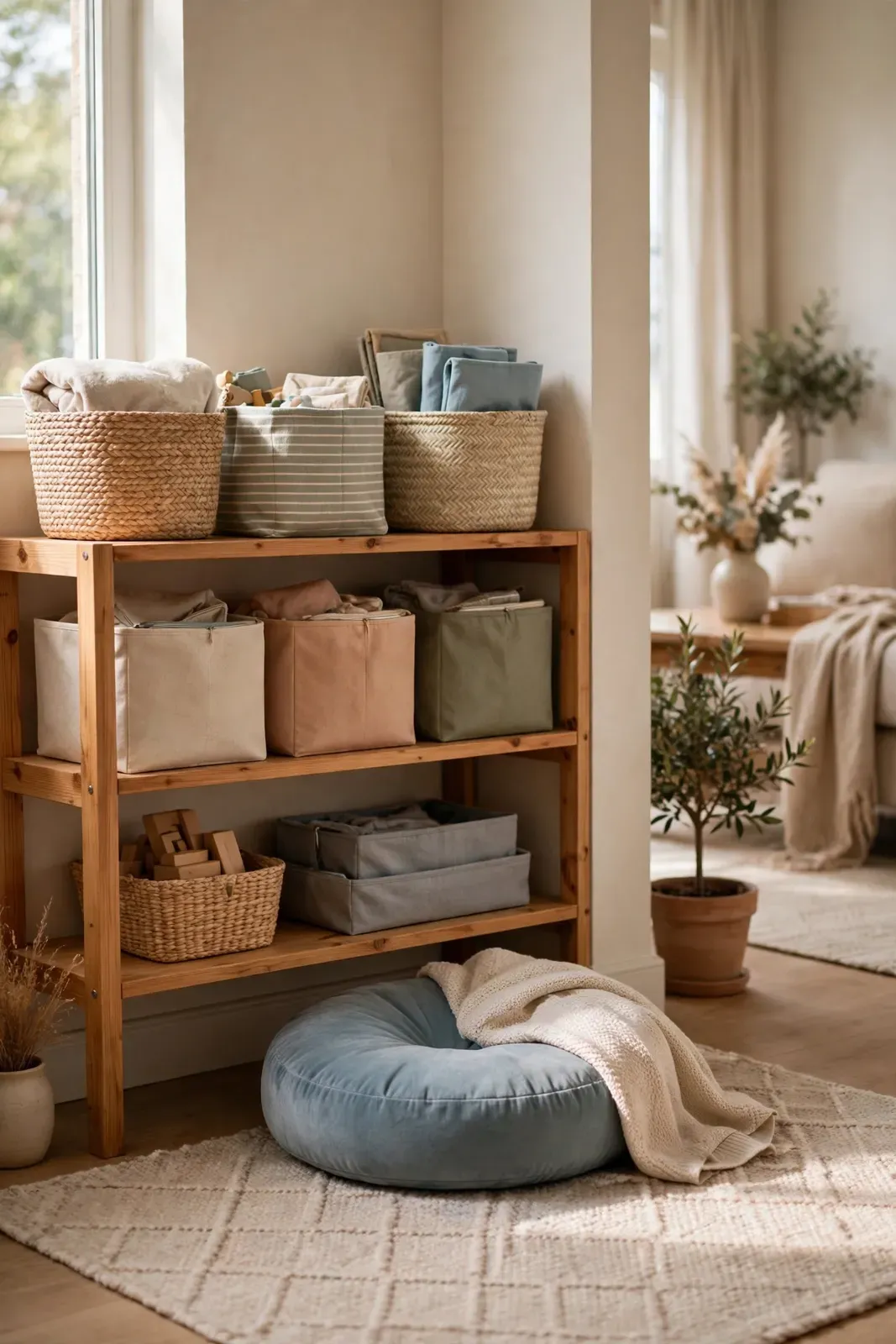
Toy Storage That Looks Tidy Starts With Categories, Not Containers
Most toy clutter is a sorting problem wearing a storage costume. When every toy shares one big box, children dig, dump and abandon — the classic toy-box avalanche. Sort first into the groups children actually play in: building toys, vehicles, dolls and figures, art supplies, books, dress-up, and games with pieces. Each group then gets its own right-sized home, so putting away means matching, not stuffing. The simple toy has been sorted this way in nurseries for generations because young children think in categories long before they think in systems.
Count honestly as you sort. If building blocks fill three baskets, the collection is too big for the room, and no container will save it. A rotation box in a wardrobe — a third of the toys rested for a month — keeps the visible collection small enough to stay tidy and makes old toys feel new again when they return. Rotation is a quiet hero of toy storage that looks tidy.
Low, Open and Labelled: The Three Rules Children Can Follow
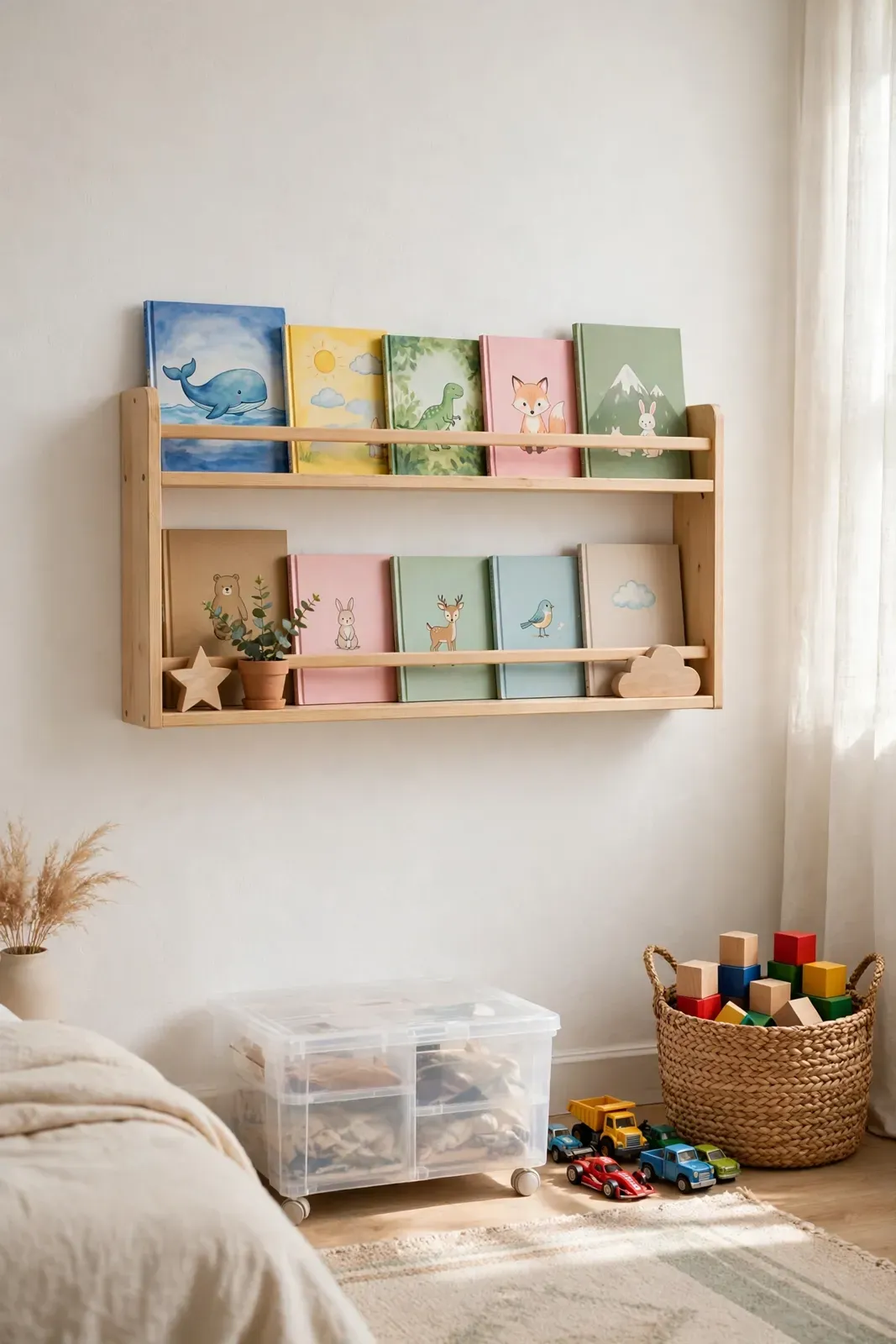
Storage a child cannot reach is storage an adult must operate. Keep everyday toys between knee and shoulder height for the youngest user: low open shelves, floor baskets, and shallow bins pulled out like drawers. Open beats lidded for daily toys because a lid is a decision, and decisions are where tidying goes to die. Save lidded boxes for games with small pieces and for the rotation store. Reach is the rule that makes toy storage that looks tidy possible.
Labels do quiet magic. Picture labels for pre-readers — a photo of blocks on the block bin — turn putting away into a matching game, and word labels join in as reading starts. The dedicated playroom is a luxury most homes do not have, which is why these rules matter even more in a living-room corner or a shared bedroom: the storage itself has to carry the whole system. Matching is how toy storage that looks tidy survives real children.
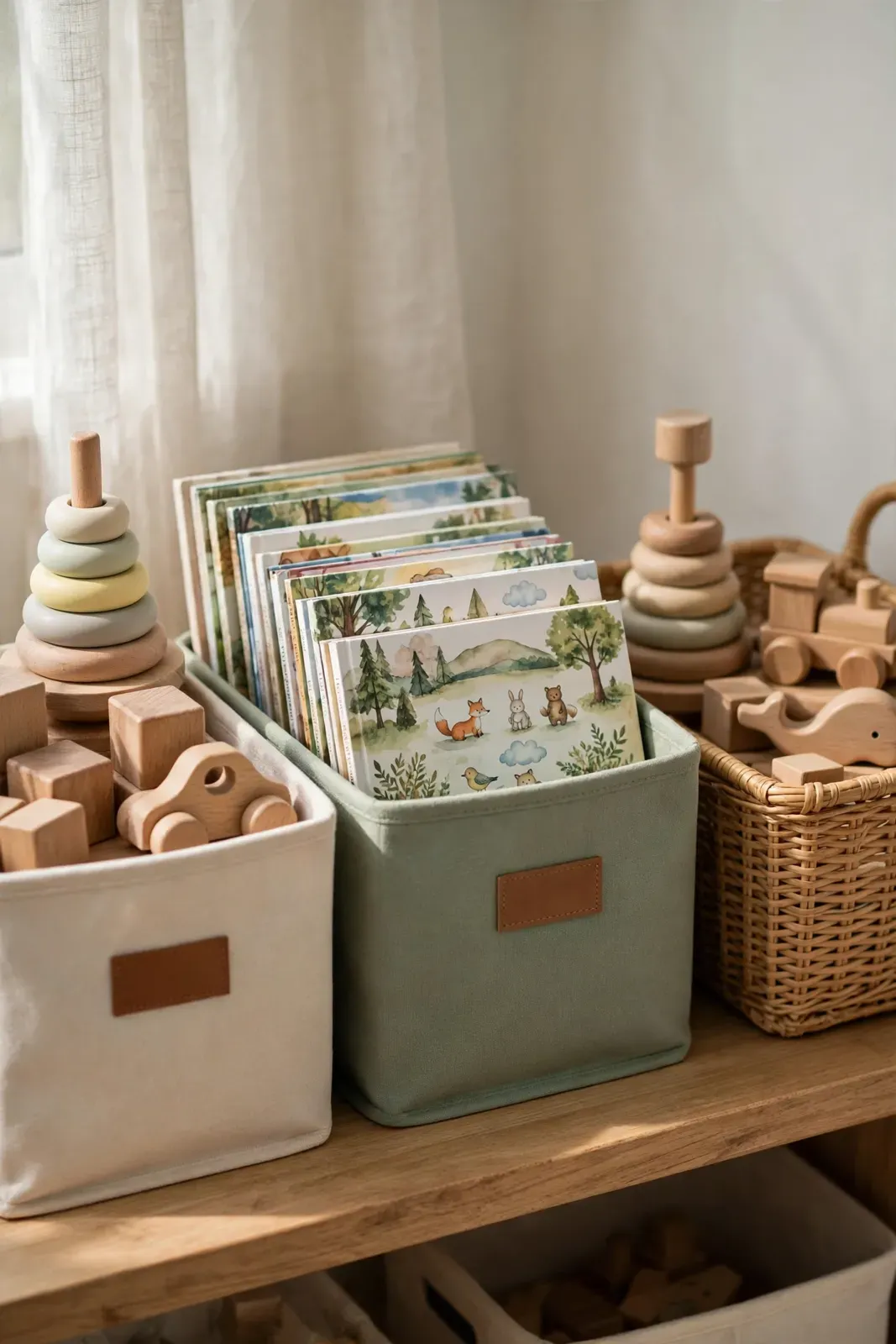
Choosing Pieces: Shelves, Baskets, Benches and Boxes
A low, wide shelving unit is the backbone — cube shelves suit bins perfectly and grow with the child into books and games. Woven baskets soften the look in living areas and hide visual noise; clear tubs belong inside cupboards where seeing contents helps but looks do not matter. A storage bench or ottoman earns double duty in small rooms: seating on top, board games or dress-up inside. Under-bed rolling boxes rescue the dead space in bedrooms for trains, tracks and seasonal toys. Each piece should earn its place in toy storage that looks tidy.
Match the material to the room the storage lives in. Toys stored in the living room deserve adult-room finishes — wood, woven fibre, calm fabric — while the child’s own room can carry brighter colours. One consistent bin colour per room reads tidy even when contents vary; a rainbow of plastic shouts clutter at the same volume. Calm finishes are the visible side of toy storage that looks tidy.
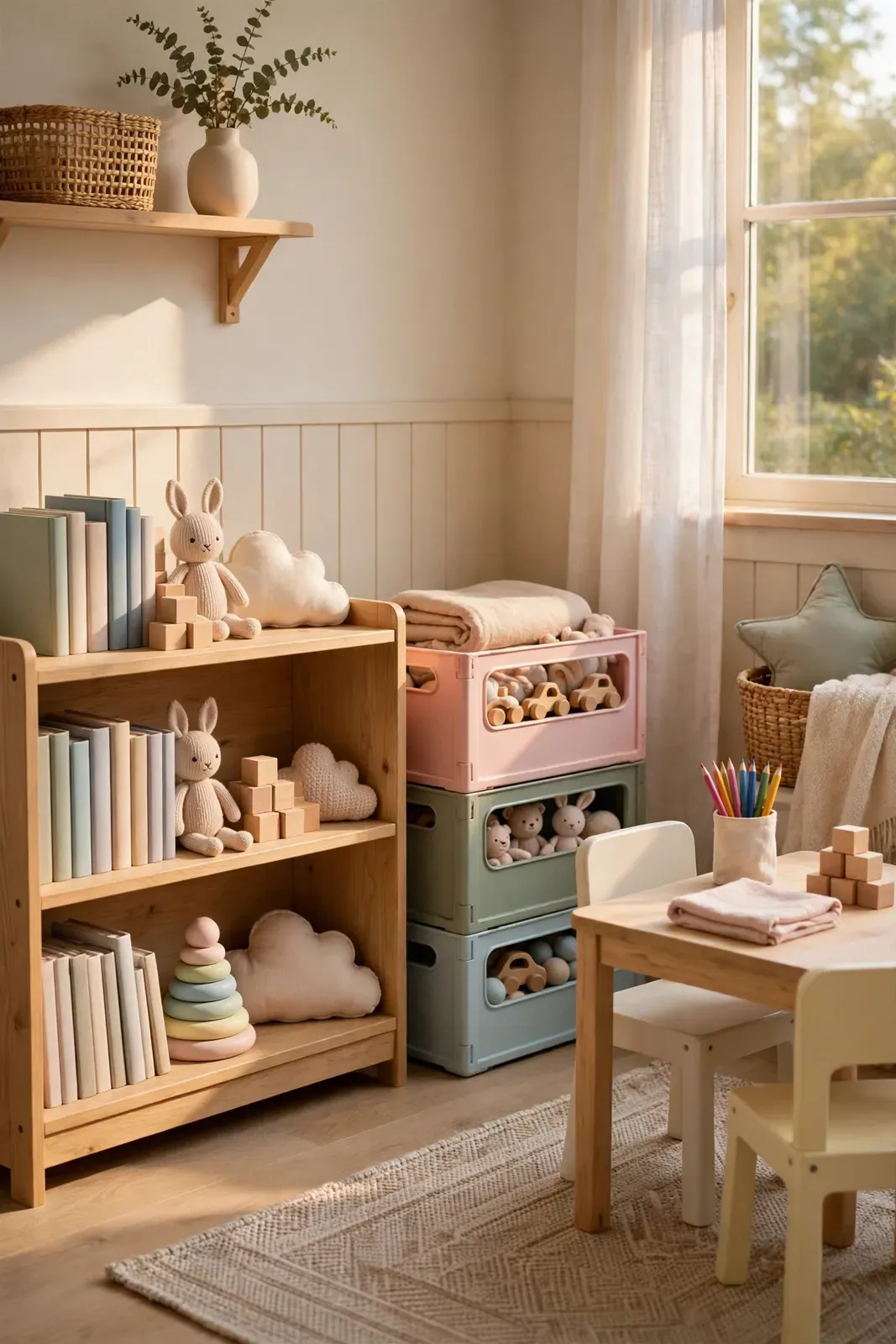
Step by Step: The One-Afternoon Toy Reset
First, empty everything into the middle of the room while the children are out or happily sorting with you — the full pile is the honest starting point. Sort into the play categories, and set aside broken toys, duplicates and outgrown items for repair, donation or the bin. Second, count what remains against the homes you have: one category, one container, no overflow allowed.
Third, place containers where the playing actually happens — blocks near the building rug, art beside the table, books by the reading chair — because toys stored across the room from their play spot travel and stay travelled. Fourth, label every home together and do the first tidy as a game against a five-minute timer. Finally, agree the one daily rule: the floor is clear before dinner or before bed, whichever your house runs on, and keep the rule small enough to survive tired evenings. A timer turns toy storage that looks tidy into a game children can win.
Budget Storage and Where to Spend
This is one of the cheapest order problems in a home. Cardboard-free basics — a low second-hand shelf, fabric bins, woven baskets from market stalls — cover most needs, and uniform cheap bins look better than one expensive statement piece surrounded by chaos. Spend real money only on the backbone shelf if it will live in the living room for years, and on castors for under-bed boxes that get pulled daily. Picture labels cost a printer sheet. Skip themed character storage: it dates in a year, clashes with every room, and children outgrow the theme long before the box wears out. Cheap and uniform beats pricey and scattered in toy storage that looks tidy.
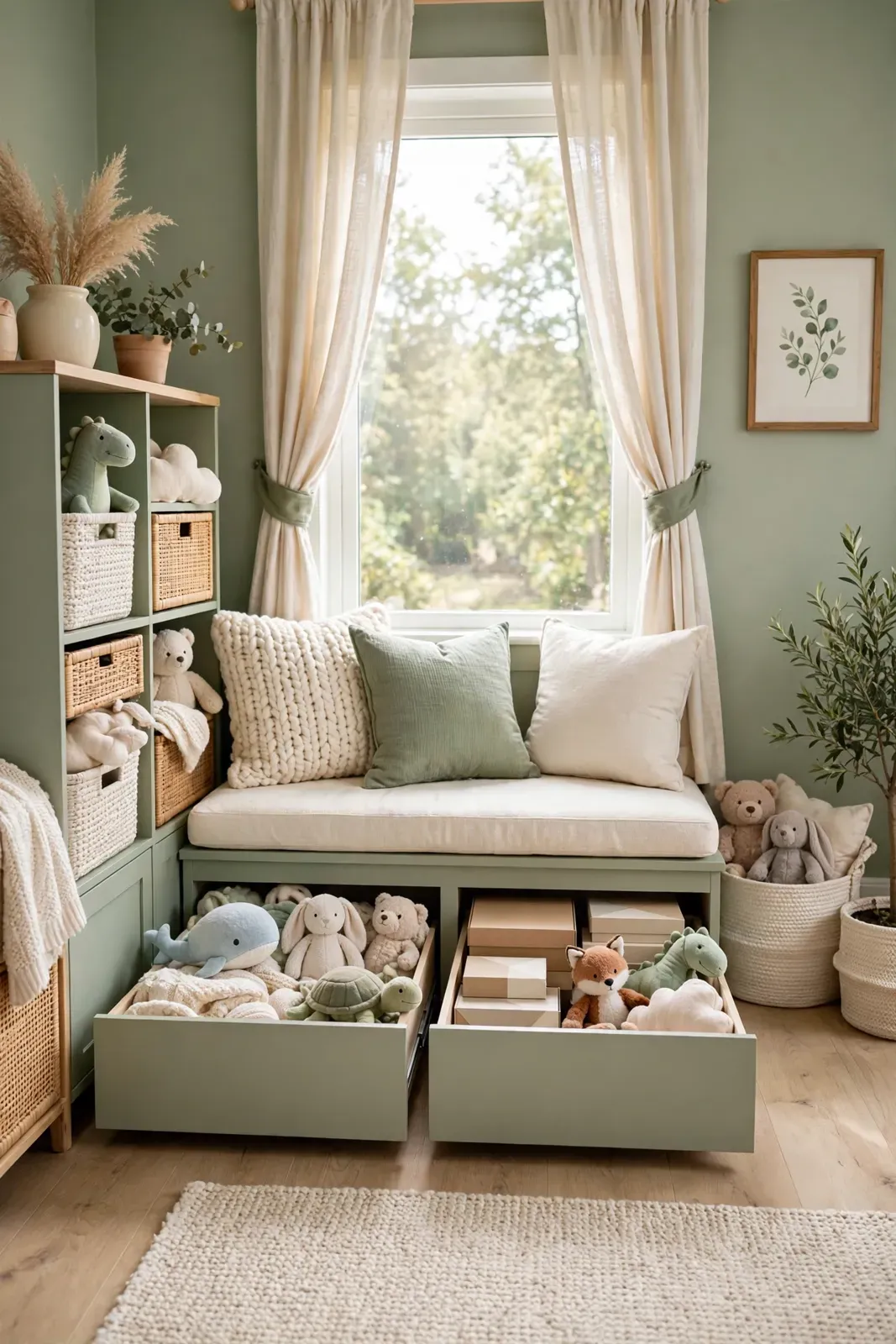
Mistakes That Make Toy Storage Fail
The giant single toy box is the first failure — everything in, nothing findable, daily dumping guaranteed. Second: storage that needs an adult’s height, strength or patience, which quietly transfers the whole tidy job to parents. Third: too many toys out at once; tidiness has a volume limit no system can beat, and rotation is the honest fix. Every one of these breaks toy storage that looks tidy in the same way.
Fourth, containers without categories, where art pens migrate into the vehicle bin within days. Fifth, a tidy standard set for photographs instead of for living — shelves styled so precisely that children fear touching them. The system works when the room looks good at the end of a normal day with a normal five-minute reset, not when it looks good for one careful hour.
For more small-space systems that keep everyday rooms calm, see our small living room layout ideas guide.
Frequently Asked Questions
How many toys should be out at one time?
As many as fit their labelled homes without overflow — for most rooms, one container per play category plus books. Rest the remainder in a rotation box and swap monthly; children play longer and tidier with fewer choices. Fewer, well-homed toys are the basis of toy storage that looks tidy.
Are open shelves or closed cupboards better for toys?
Open low shelves for daily toys, because children use and return what they can see and reach. Closed storage suits games with pieces, art supplies and the rotation store, where adult control helps. Visibility is why toy storage that looks tidy prefers open shelves for the everyday.
What labels work for children who cannot read yet?
Picture labels: a photo or simple drawing of the contents taped at child eye level on each bin. Putting away becomes matching, and word labels can be added beside the pictures as reading begins.
How do I keep toy storage tidy in the living room?
Use adult-finish containers in one calm colour family, give toys one defined zone with a rug edge, and run the five-minute reset at the same time daily. A storage bench hides the rest. That defined zone is the anchor of toy storage that looks tidy in a shared room.
What do I do with toys children have outgrown?
Sort monthly into keep, donate and store-for-younger-siblings. Passing toys on while they are complete and clean keeps the system light and teaches children that letting go is normal.
Toy storage that looks tidy is not about hiding childhood — it is about giving it furniture that fits. Sort by category, keep it low and labelled, rotate the excess, and the five-minute reset will hold the room together on all but the wildest days.