Table of Contents
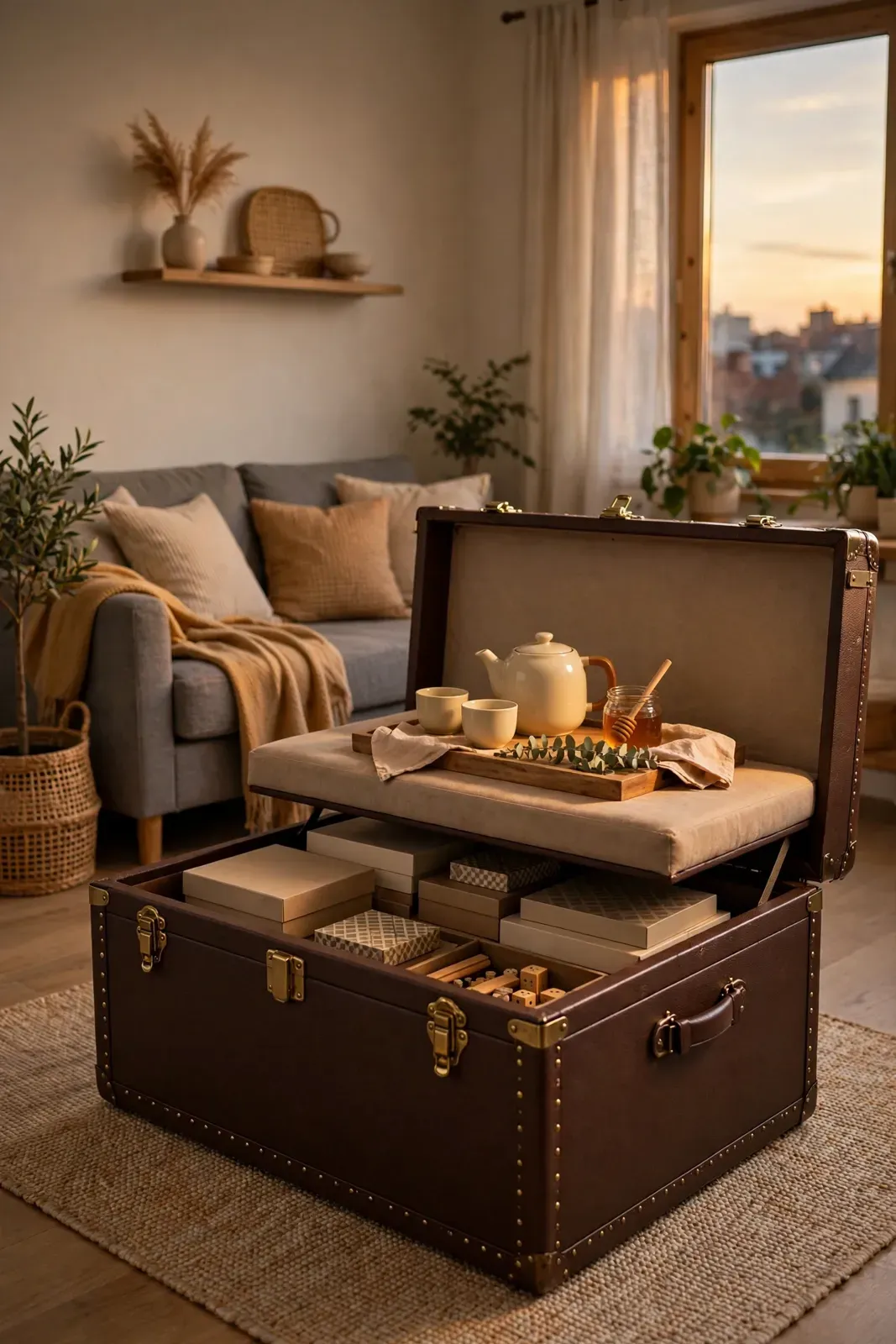
Some furniture does one job. A trunk storage ottoman does three without asking for any extra floor: it hides the blankets, seats the extra guest, and holds the tea tray steady in between. In small homes especially, that triple duty is the difference between a room that works and a room that merely contains things. This guide covers how to choose trunk storage ottoman seating that is genuinely comfortable to sit on, honestly sized for the storage you need, and styled so it looks like furniture — not like a box you are apologising for.
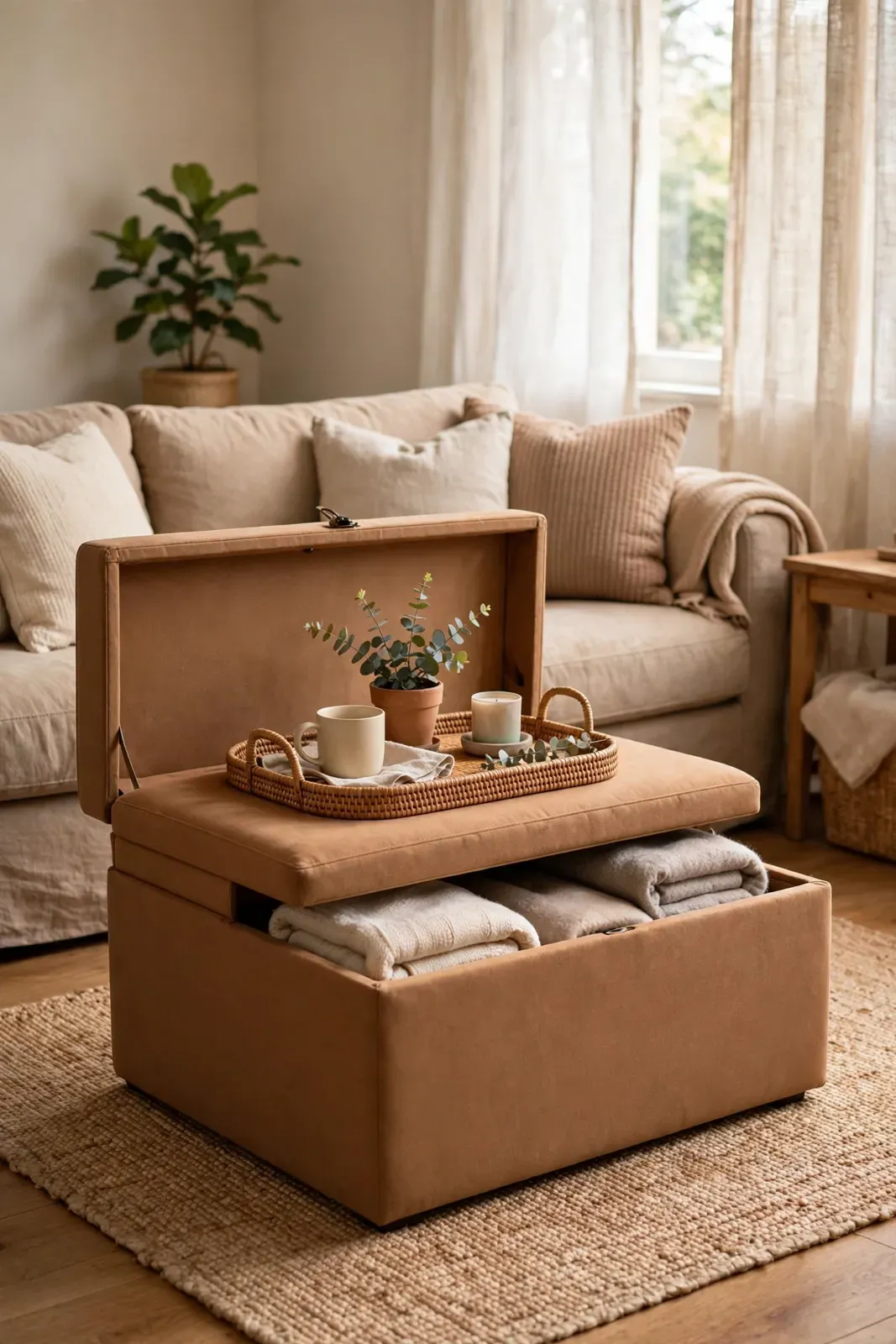
Why Trunk Storage Ottoman Seating Earns Its Floor Space
The idea is old. Storage chests have doubled as seats for centuries — the history of the furniture chest is full of pieces that carried dowries, guarded valuables and served as the bench by the door, and wagon chests in Dutch colonies were literally built with a reinforced top so the driver could sit on them. The modern upholstered trunk is the same idea with better padding: a lidded box, a cushioned top, and a room that needs both storage and seating. Modern trunk storage ottoman seating is that same idea, padded.
The maths is what sells it in a modern flat. A separate blanket box plus a separate spare chair might take a square metre between them. One ottoman trunk takes half of that, and the half it takes sits in the middle of the room where a coffee table would go anyway. If a piece replaces two others and occupies the footprint of a third you already had, it has not added clutter — it has subtracted it. Measured against single-purpose furniture, trunk storage ottoman seating returns more from every square foot.
It also changes how a room feels. Sofas face each other better with something soft-edged between them, children colonise a trunk as a seat, a stage and a treasure chest in rotation, and guests perch on it without anyone performing the chair-fetching dance from the dining room.
Choosing the Right Trunk: Size, Lid and Comfort
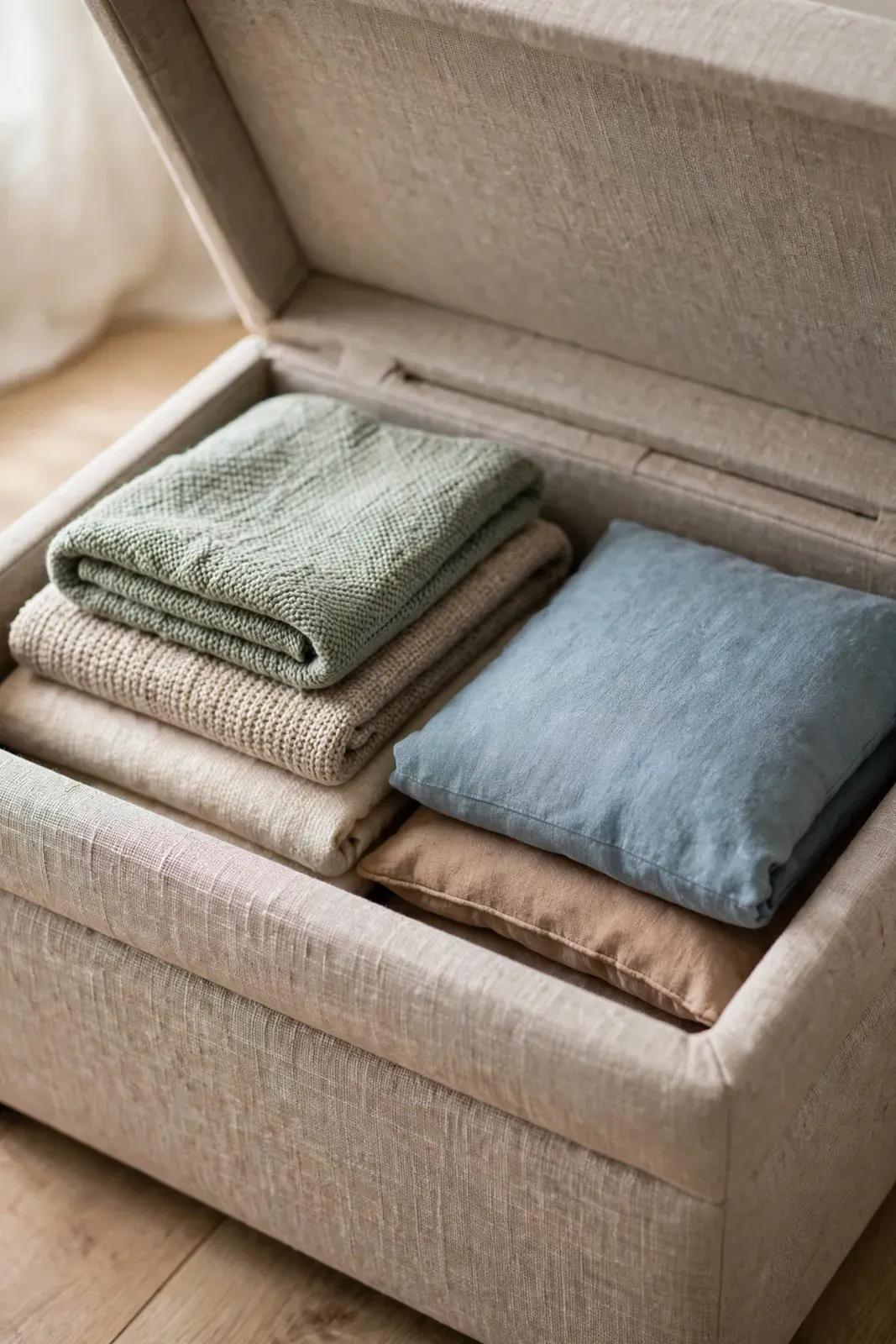
Start with the storage truth: list what will actually live inside before you shop. Throws and cushions need volume but weigh nothing. Board games and books weigh a great deal and test hinges. Bedding for a spare bed needs the biggest boxes of all. Measure the largest item — a folded winter duvet defeats more ottoman purchases than any other single object — and buy for that, not for the showroom’s artfully rolled single throw. With that list in hand, trunk storage ottoman seating is far easier to size honestly.
The lid decides daily happiness. A fully removable lid is simple and strong but needs somewhere to go every time you open it. A hinged lid with a soft-close or stay-open hinge is the family choice: it cannot slam on small fingers and it leaves both hands free. Check that the hinge holds the lid at ninety degrees without flopping back. If you will sit on it daily, the top should be firm foam over board, not a soft pillow top — you want a seat that supports, with a tray doing the balancing work for drinks. Whatever the lid style, trunk storage ottoman seating only stays useful when opening it takes one hand and two seconds.
Height matters more than people expect. Seat height around 45 centimetres matches a sofa and a dining chair; a trunk much lower becomes a footrest pretending, and much higher feels like perching on luggage. For a fuller rundown of shapes and uses, this guide to what an ottoman is and how it differs from a pouf is a clear starting point.
Where Trunk Storage Ottoman Seating Works Hardest
Living room. The classic spot: centre of the seating group, tray on top, throws inside. Choose upholstery that can survive feet-up evenings, and keep the inside for the things that living rooms generate — blankets, remotes’ chargers, the game box. Centred well, trunk storage ottoman seating anchors the whole seating group.
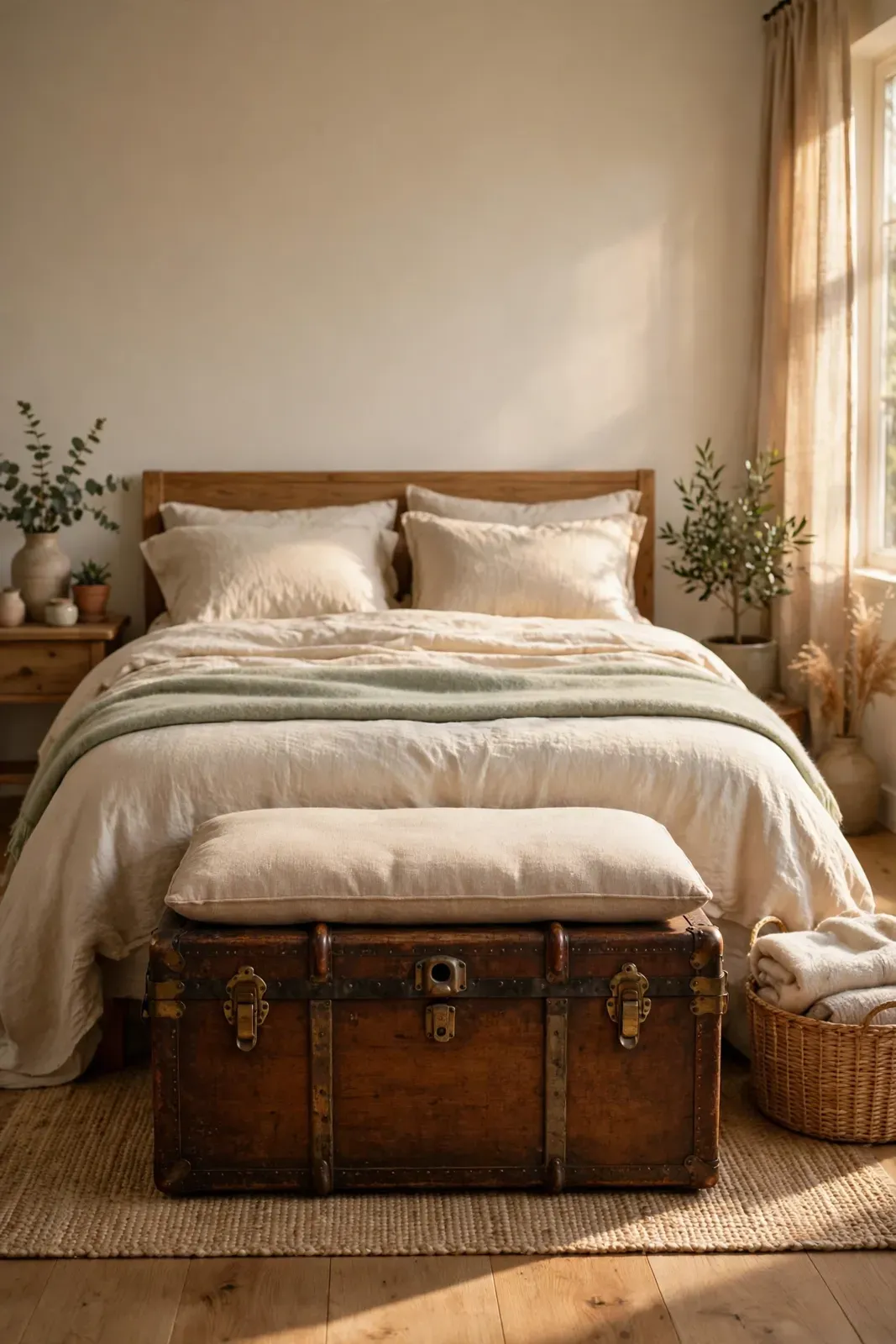
Foot of the bed. A wooden or upholstered trunk here holds the spare bedding exactly where it is used, gives the room its finished edge, and provides the seat every bedroom secretly needs for putting on shoes. At the bed’s foot, trunk storage ottoman seating swallows the winter duvet without a closet raid.
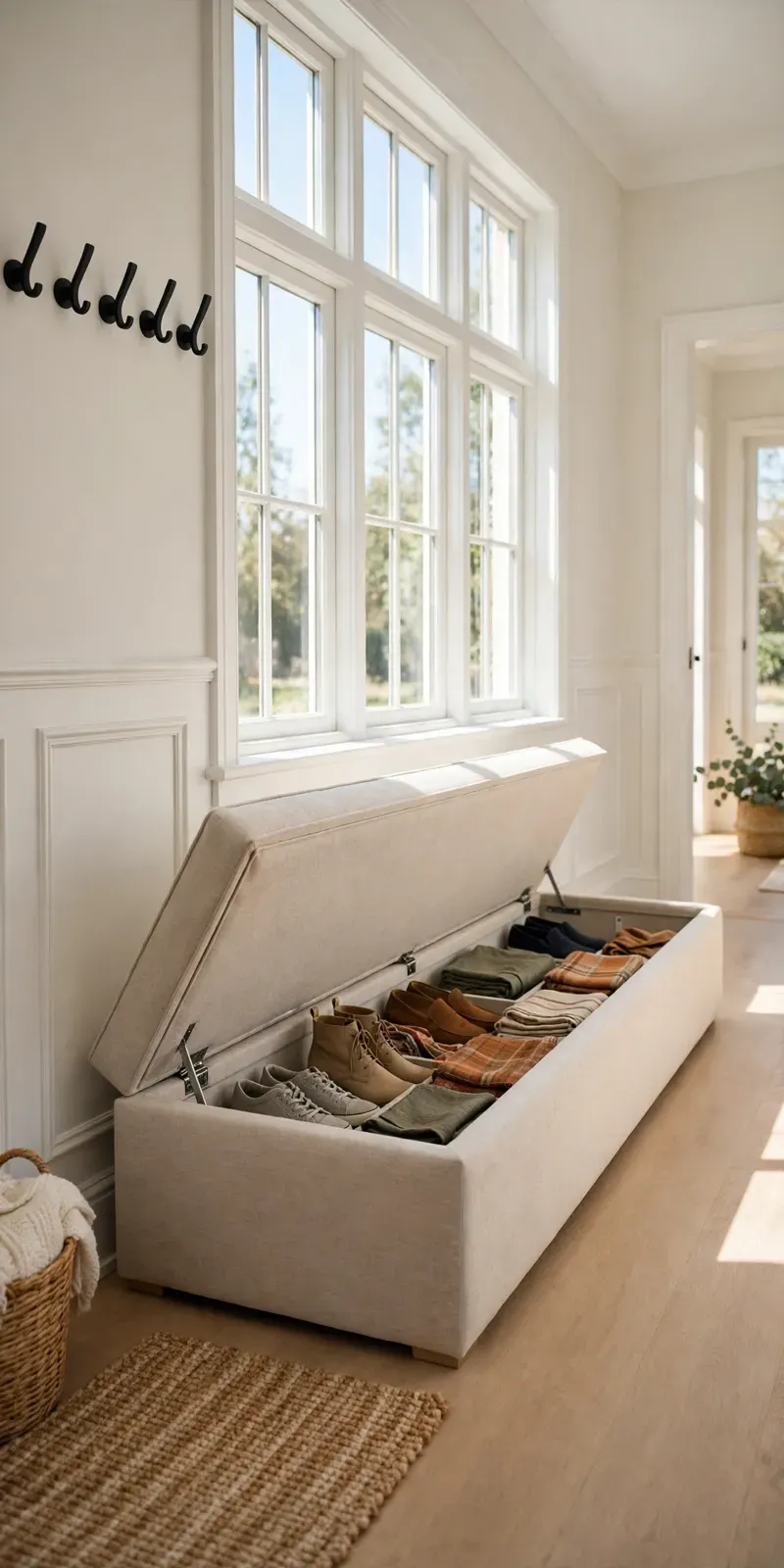
Hallway. A long, low storage bench under the window swallows scarves, gloves and the shoe overflow, and turns the morning rush into a sit-down event. In narrow halls, measure the open lid’s swing against the wall before you commit. In a narrow hall, trunk storage ottoman seating earns its place twice a day.
Children’s rooms. A trunk is a toy box that grows up: toys now, sports kit later, and a seat for the reading parent throughout. Soft-close hinges are non-negotiable here, and air holes or a lid that cannot latch shut are a safety basic worth checking on any chest a child will open. In a child’s room, trunk storage ottoman seating doubles as the tidy-up deadline enforcer.
Setting It Up and Organising the Inside
Step 1 — Place it, then live a day. Put the trunk where you think it belongs and use the room normally for a day before filling it. If you keep walking around it, it is in the wrong place, and no organisation system survives that. Placement is half the craft of trunk storage ottoman seating.
Step 2 — Zone the inside. Soft dividers or two fabric boxes inside the trunk stop the interior becoming a lucky dip. One side for textiles, one for objects, and a small pouch fixed inside the lid for the tiny things that always sink. Zoning is what turns trunk storage ottoman seating from a dumping box into a system.
Step 3 — Set the top. A tray defines the table surface and lifts away in one motion when you need inside. Keep one corner of the top clear as the sitting corner — a tray covering the whole lid turns your seat back into a table.
Step 4 — Label by habit, not by label-maker. The rule that keeps it tidy is simple: only the listed contents live here. The moment the trunk becomes the house’s general overflow, all three of its jobs get harder.
Budget and Buying Advice
Prices spread widely because construction hides where you cannot see it. A cheap trunk with a stapled frame and thin foam feels fine in the shop and sags by winter; the things worth paying for are a solid or plywood frame, a metal hinge with a stay, and foam firm enough that a seated adult does not feel the lid’s edge. Sit on it in the shop, hard, and open and close the lid a dozen times. Wobble and hinge squeak only ever get worse.
Second-hand wooden trunks are the budget star: solid, repairable, and one cushion pad away from seating. Check for woodworm holes, a lid that sits flat, and a clean interior smell — mustiness inside a closed box is hard to evict. Reupholstering a sound frame, or adding a made-to-measure cushion, usually costs less than a mediocre new piece and looks better. Restored well, a vintage find delivers trunk storage ottoman seating with the patina already included.
Buy the biggest your room honestly fits. Storage furniture is rarely regretted for capacity; it is regretted for the duvet that did not fit. But leave walking room — a trunk you bruise a shin on nightly will be hated out of the house within a season.
Common Mistakes to Avoid
Overfilling is the first: a trunk stuffed to the lid loses its seat, because the lid will not close level, and loses its storage, because nothing can be found. Keep it at eighty percent. The second mistake is storing the wrong things — heavy books in a fabric ottoman bow the base, and damp items in a closed trunk scent everything stored after them. Respect the lid line, and trunk storage ottoman seating keeps all three of its jobs.
Styling mistakes count too. A trunk shoved against a wall becomes a shelf for clutter; it earns its keep in the middle of the room’s life. Matching it exactly to the sofa fabric can look like a showroom suite; a contrasting texture — leather against linen, wood against both — usually looks more collected and more real.
Frequently Asked Questions
Can you really sit on a storage ottoman every day?
Yes, if it is built for it: a framed box with a firm foam top is a seat that happens to open. Check the maker’s stated weight limit, sit-test it in the shop, and avoid pillow-top styles for daily seating — they are footrests in disguise.
What should I store inside, and what should I avoid?
Textiles, games, toys, spare bedding and seasonal items are ideal. Avoid heavy book collections in fabric ottomans, anything damp, and valuables — a trunk is convenient storage, not a safe. Keep that list short, and trunk storage ottoman seating stays easy to live with.
How do I keep the inside smelling fresh?
Air it open on a dry day now and then, keep contents clean when they go in, and tuck a small lavender or cedar sachet in a corner. Mustiness usually means something went in damp; find it and the problem ends.
Trunk at the foot of the bed or in the living room — which first?
Wherever the storage pain is worse. Bedrooms usually win on bedding volume; living rooms win on daily use. If you can only buy one, the living room trunk serves more people more often.
How do I child-proof a storage trunk?
Soft-close or stay-open hinges, no latch that can trap a child inside, and ventilation — many modern chests include air gaps for exactly this reason. Teach the trunk as furniture, not a hiding place.
One Box, Three Jobs
A good trunk is the hardest-working square in the room: storage below, seating above, and a surface in between. Choose it for the duvet test and the sit test, organise the inside once, and let it quietly absorb the clutter that makes living rooms feel smaller than they are. Trunk storage ottoman seating is not a trend piece; it is one of the oldest furniture ideas there is, still earning its place one blanket at a time.