A single necklace can look lovely, but two necklaces worn well together look like a decision — and that is the whole secret of turquoise pendant choker layering. A short choker traces the base of the neck, a turquoise pendant drops below it, and suddenly a plain white shirt or a simple summer dress has a focal point, a colour story and a holiday feeling all at once. I started layering mine on a beach trip years ago and never really stopped; the combination now works just as hard with evening black as it does with linen.
Below are nine easy ways to layer a turquoise pendant with a short choker, a step-by-step method for getting lengths and spacing right every time, buying advice on stones, metals and clasps, care tips that protect turquoise properly, and the layering mistakes that turn two pretty necklaces into a tangle.
Why Turquoise and a Choker Layer So Beautifully
Turquoise carries its own contrast: cool blue-green stone against warm skin, smooth cabochon against fine metal chain. That contrast means it does not need much company — but a choker gives it structure. The short layer frames the neck and stops the pendant chain from wandering, while the pendant gives the eye a resting point below. Together they follow the oldest rule in jewellery styling: short, shorter, longest — pieces descending in length with clear air between them.
Turquoise also flatters nearly every skin tone, because its blue-green mix holds both warm and cool notes. On white, denim and black it reads vivid; on beige and camel it reads earthy and expensive. Few stones are this cooperative, which is why the layered turquoise look returns every single summer and never really leaves.
1. The Classic: Gold Choker, Turquoise Pendant, White Shirt
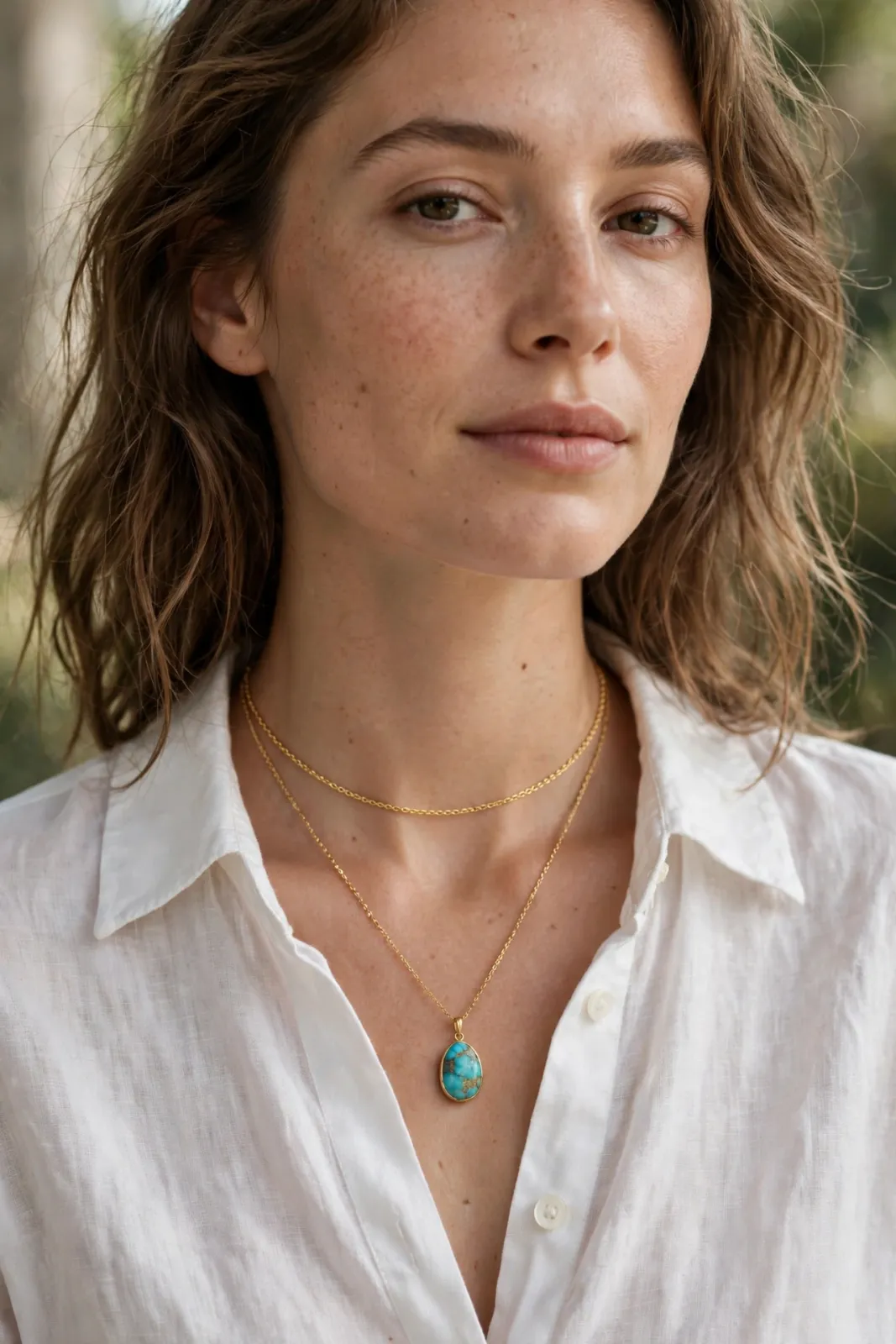
The hero look is the blueprint: a fine gold choker sitting at the collarbone, a turquoise pendant on a slightly longer chain, and an open-neck white linen shirt. Leave the top two buttons open so the layers sit on skin, not fabric — necklaces layered over a high collar bunch and disappear. This combination carries a whole outfit; keep earrings small and let the neckline do the work.
2. Read the Stone Up Close
The detail photo below shows what to look for in a pendant: a smooth, evenly coloured cabochon with natural matrix — those fine darker veins are the stone’s fingerprint and a sign of character, not a flaw. The setting should hug the stone without gaps, and the bail (the loop the chain passes through) should be sturdy, because a pendant takes more knocks than any other necklace you own.

3. Beaded Turquoise Choker With a Gold Pendant Chain
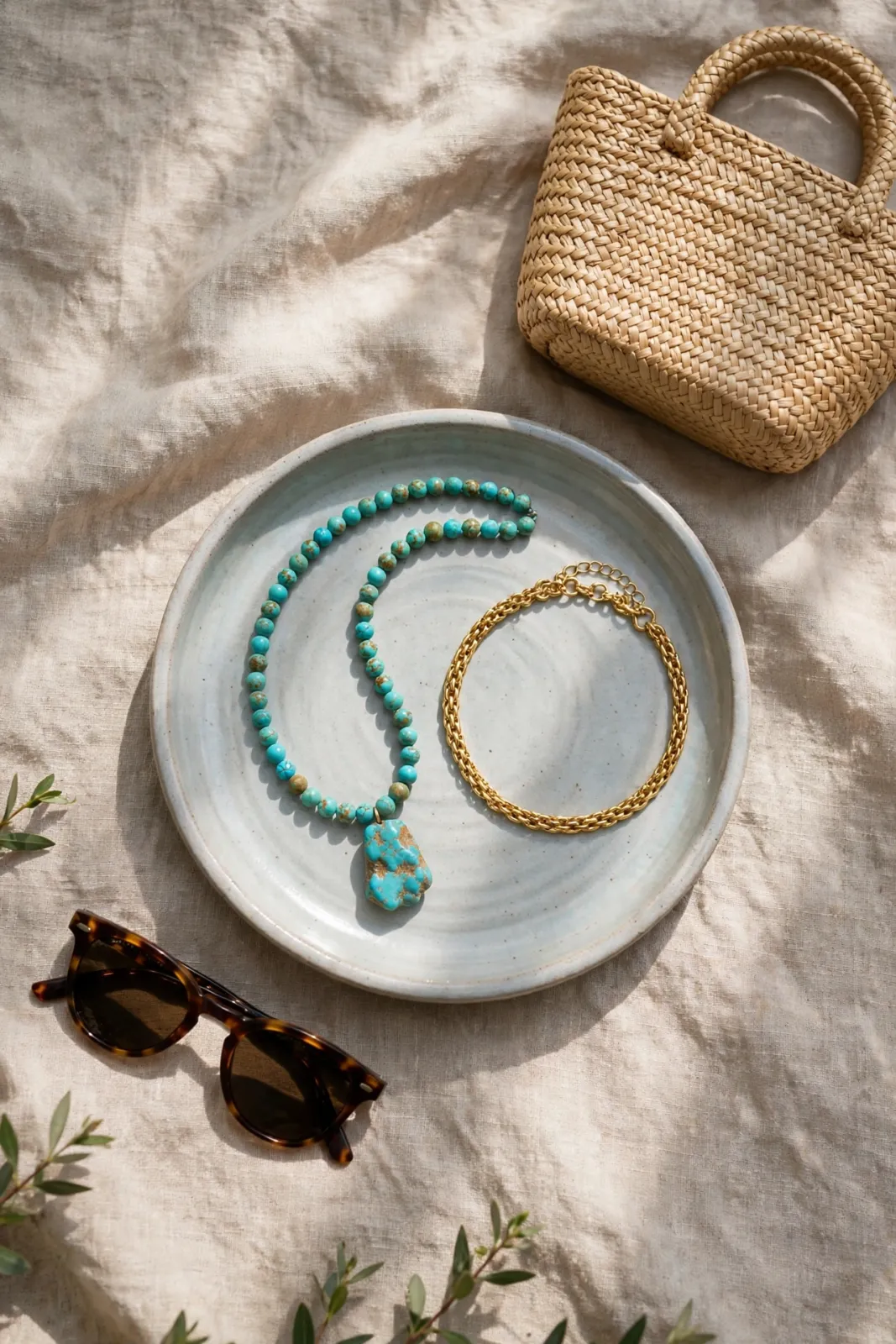
Swap the roles: wear a short string of small turquoise beads as the choker and hang a delicate gold pendant — a coin, a tiny charm — below it. The flat lay in this post shows the pairing resting on a ceramic dish, and it is the most holiday-ready version of the look. Beads at the throat read relaxed and handmade; the fine gold layer below keeps it polished rather than craft-fair.
4. Flat-Lay Rules for Building a Layer
Before you buy or wear any layer, lay it flat like the stylists do: choker first, pendant second, checking that at least two finger-widths of space separate them when worn. If the chains are the same thickness and metal, they will compete and tangle; contrast is the goal — one fine chain, one beaded or textured layer; one gold, one stone. The flat lay below also shows how naturally turquoise sits beside straw, tortoiseshell and linen, which is why it anchors summer outfits so well.
5. Silver Choker With Black for the Evening
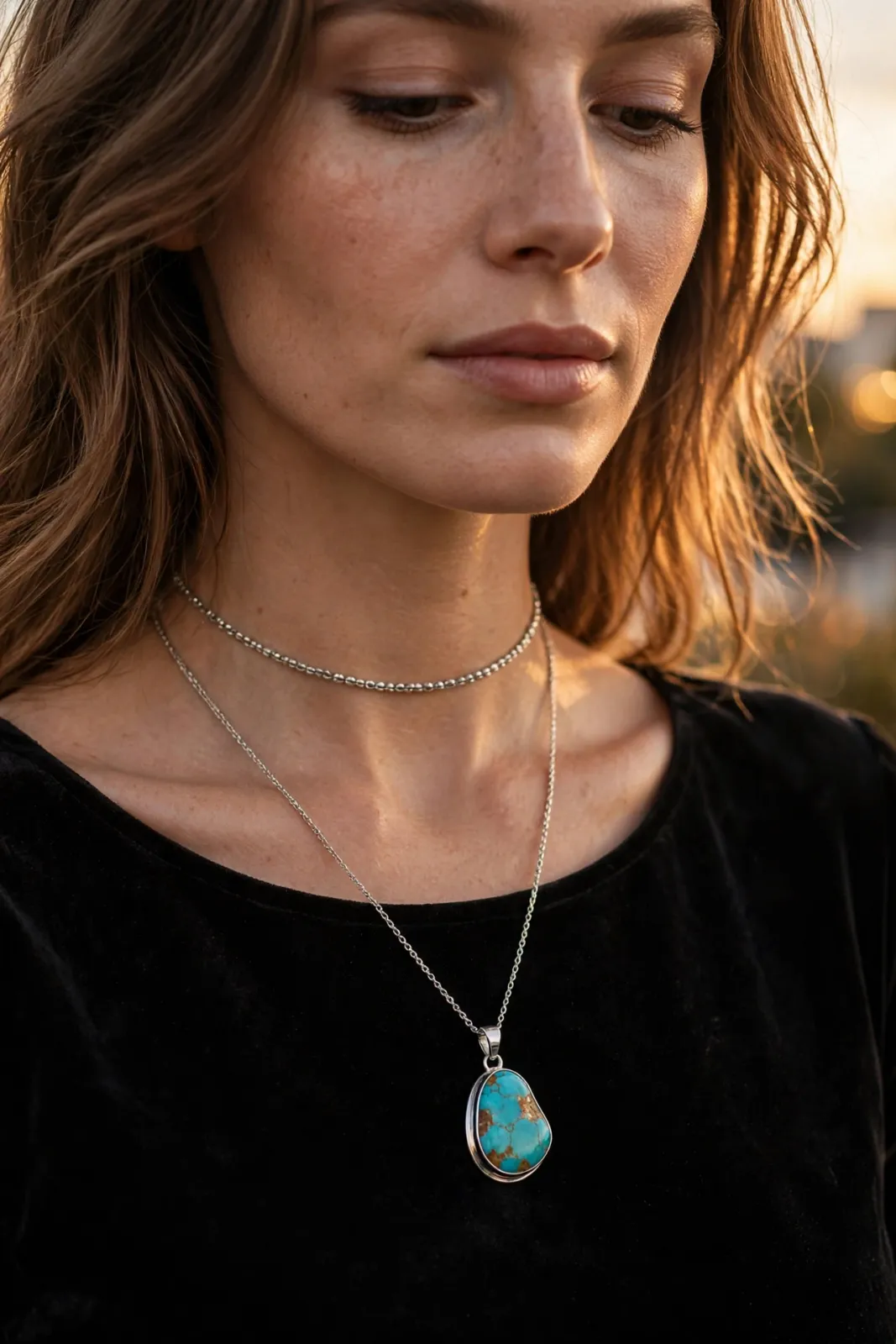
In the variation photo, a silver choker and a larger turquoise pendant dress up a black top — proof this layer is not only for daylight. Silver cools the turquoise down and sharpens it, so the combination reads modern and a little bold against black. For evening, choose one statement pendant rather than a cluster, keep the choker plain, and let the stone be the single colour in the outfit.
6. Over a White Summer Dress by the Sea
The lifestyle photo at the end is the look in its natural habitat: white sundress, sea breeze, turquoise at the throat. White fabric is turquoise’s best friend, and a scoop or V-neck gives the layers their stage. If the dress has straps, a choker that sits above the strap line looks cleanest — measure so nothing overlaps awkwardly.
7. Denim Shirt, Both Layers in Gold
A denim shirt with the collar open is the weekend version: gold choker plus gold-chain turquoise pendant, sleeves rolled, nothing else needed. The blue of the denim and the blue-green of the stone are cousins, so the effect is tonal and calm rather than clashing. This is the layering I recommend to beginners because it is almost impossible to get wrong.
How to Layer Without Tangles: A Step-by-Step Method
First, put the choker on and fasten it so it sits at the base of your neck without pressing — you should fit two fingers under it comfortably. Second, measure the pendant chain: it should fall five to seven centimetres below the choker, landing in the hollow above your neckline or just at it. Third, if your pendant chain has an extender, use the longest setting; spacing is what prevents tangling, because chains of clearly different lengths swing separately. Fourth, fasten the pendant at the back, then slide both clasps to the back of the neck and check in a mirror that the pendant hangs centred. Fifth, if the layers still kiss and twist during the day, add a tiny trick professionals use: a small clear jewellery spacer or simply fasten the pendant chain once through the choker’s end ring before clasping, which locks their distance apart. Finally, take layers off in reverse order and store them hanging or in separate pouches — most tangles are born in the jewellery box, not on your neck.
Buying Advice: Stones, Metals and Honest Prices
Turquoise ranges from affordable stabilised stone to rare natural material, and for everyday jewellery, good stabilised or reconstituted turquoise in a well-made setting is the sensible buy — it is harder-wearing and colour-consistent. Natural untreated stones are beautiful but softer and pricier; save them for pendants you wear carefully. On metals, choose gold vermeil or gold-filled chains over thin gold plate if you wear the layer weekly, because choker chains rub constantly against skin and collars. Check the clasp: a lobster clasp outlasts a spring ring, and an extender chain of five centimetres gives you layering options for free. A fair everyday pendant-and-choker set sits comfortably in the low-to-mid price range; you are paying for the setting’s finish and the chain’s construction, not the label.
Common Mistakes to Avoid
The classic mistake is two chains the same length — they twist into one rope within the hour. Second is layering over the wrong neckline: high crew necks and collars swallow chokers whole. Third is mixing three metals at once with a coloured stone; turquoise plus one metal is a look, turquoise plus two is a jumble. Fourth, spraying perfume after putting jewellery on — the chemicals dull both metal and stone, so perfume first, jewellery last. And finally, showering in turquoise: it is a porous stone that absorbs oils and chemicals, so take it off before water, gym and swimming.

Frequently Asked Questions
How far apart should a choker and pendant sit?
Aim for five to seven centimetres between the bottom of the choker and the pendant’s resting point. That gap keeps each piece readable and stops the chains tangling as you move. If your choker is adjustable, set it first, then choose the pendant length to match.
Can I mix gold and silver in a turquoise layer?
Yes, deliberately and in proportion: one dominant metal with the second as a small accent works well, such as a gold choker with a silver-set pendant. What looks accidental is an even fifty-fifty split across several pieces. Turquoise itself bridges warm and cool metals, which makes it the easiest stone to mix metals with.
Is turquoise suitable for everyday wear?
Yes, with small habits: take it off for showers, swimming and workouts, wipe it with a soft dry cloth after wearing, and store it away from harder gemstones that could scratch it. Turquoise sits mid-range on the hardness scale, so it handles daily life happily if you skip the water and chemicals.
What necklines work best with a choker and pendant layer?
Open necklines are the stage this layer needs: V-necks, scoop necks, square necks, off-shoulder tops and open-collar shirts. The choker needs visible skin above the fabric line and the pendant needs room to hang. Boat necks can work if the choker sits clearly above the fabric edge.
My necklaces always tangle — what am I doing wrong?
Almost always it is equal lengths or equal chain weights. Give the layers different lengths, different textures — one beaded, one fine chain — and store them separately and unclasped. A layering clasp, a small multi-strand connector worn at the back, also solves chronic tangling completely.
Two Necklaces, One Lovely Decision
Turquoise pendant choker layering is jewellery styling at its most friendly: two pieces, one clear method, and an effect far bigger than either necklace alone. Start with the gold-and-white-shirt classic, try the silver evening version next, and keep the spacing rule taped inside your jewellery box. Your plain tops are about to have much better days.