Turquoise Ring Stacking: 9 Fresh Ways to Stack Turquoise Rings With Silver Bands
My love of turquoise rings started with a single one, bought at a small market stall on a hot afternoon. It had a cloudy blue stone, a plain silver band, and it went with almost nothing in my jewellery box, or so I thought. Within a month I was wearing it every day, and within a year I had added thin silver bands on either side of it, almost without deciding to.
That is how stacking usually begins: not with a grand plan, but with one ring you love and a growing curiosity about what might sit beside it. Turquoise and silver are natural partners. The cool metal keeps the blue-green stone looking bright, and the stone stops plain silver bands from feeling dull.
Below are nine ways to stack turquoise rings with silver bands, from a quiet trio for workdays to a full, cheerful handful for weekends, plus a simple step-by-step method, honest buying and care advice, the mistakes I see most often, and answers to the questions readers ask me again and again.

Getting Started: Light Stacks for Every Day
1. One Statement Ring With Thin Silver Bands
Begin with your largest turquoise ring on the middle or ring finger, then add one slim silver band above it and one below. The plain bands frame the stone and make it look more important, not less. Keep the bands narrow, around two millimetres, so the stack stays comfortable and the stone remains the clear centre of attention.
2. A Slim Trio on One Finger
For a neater look, choose three slim rings that were almost made for each other: a tiny turquoise bead ring between two plain silver bands. This trio suits shorter fingers because nothing is bulky, and it reads as one tidy column of colour and shine. It is the stack I wear most on busy days, because it never catches on anything.
3. Midi Rings for a Lighter Touch
A midi ring, worn above the middle knuckle, adds interest without adding weight. Try one small turquoise midi on the index finger alongside a simple two-ring stack on the ring finger. The uneven heights keep the look playful, and because midi rings are small, they are an inexpensive way to test whether you enjoy wearing more rings than usual.
Bolder Combinations With More Colour
4. The Full Finger Stack
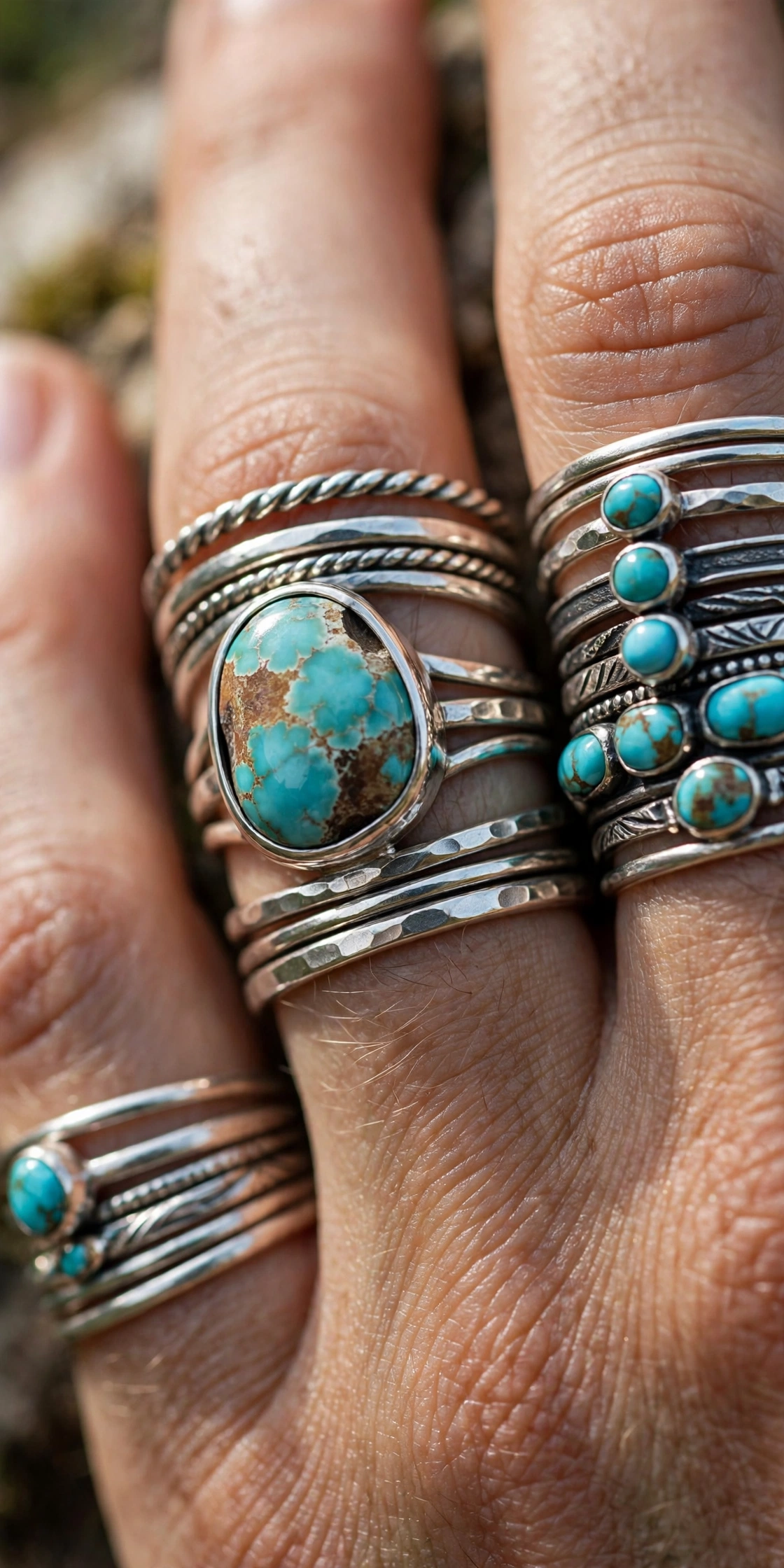
Some days call for more. A full stack mixes four or five rings on one finger: hammered silver, a twisted band, a row of small turquoise stones and one larger oval. The trick is contrast in texture rather than size alone. Alternate smooth and rough finishes, and leave a little skin visible at the base so the stack looks chosen, not crowded.

5. Two Hands, Uneven Numbers
Matching both hands exactly can look stiff. Instead, wear three rings on one hand and two on the other, or a bold stack on your dominant hand and a single turquoise ring on the other. The imbalance feels relaxed and personal, and it stops the jewellery looking like a uniform. Photographs of your hands will thank you for it, too.
6. Mixing Stone Shapes and Sizes
Turquoise comes in ovals, rounds, teardrops and rough little nuggets, and a stack is more interesting when the shapes differ. Pair one large oval with two or three small rounds, letting the silver bands separate them so each stone can be seen. Stones with brown or grey veining add depth next to clearer blue pieces, so do not insist on a perfect colour match.

Stacks That Suit Your Outfit
7. With Denim and a White Shirt
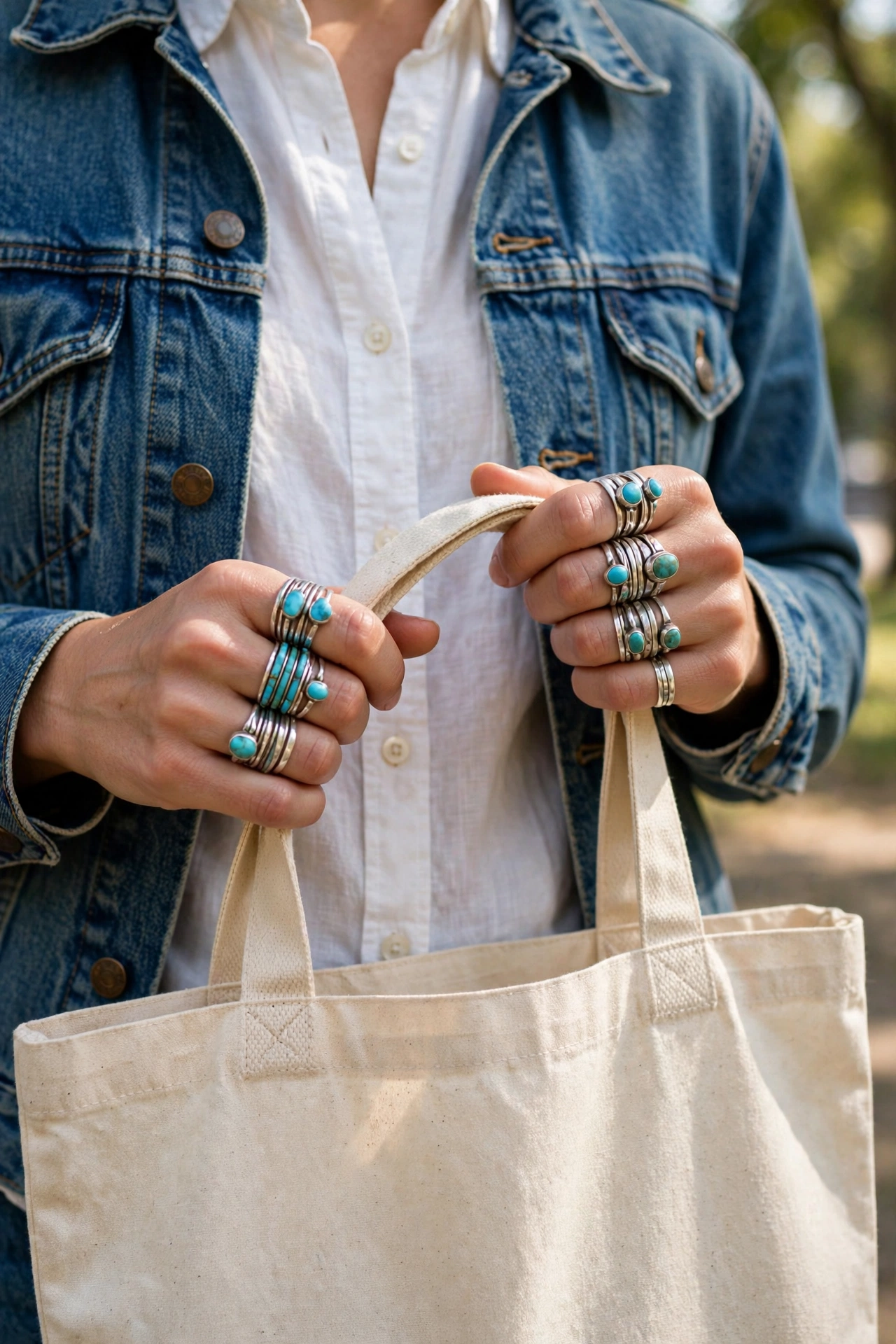
This is the pairing that never fails. Blue denim echoes the stone, a white shirt keeps everything fresh, and silver looks clean against both. Wear a medium stack here, perhaps four rings spread over two fingers, and carry a plain canvas or leather bag. It is a market-day, lunch-with-friends outfit where the rings do most of the talking.
8. With Soft Neutrals and Linen
Cream, sand and stone-coloured linen make turquoise look warmer and richer. With these soft outfits, a fuller stack works well because the clothes are quiet. Let the rings be the colour in the outfit, keep nails short and natural or in a pale polish, and skip other strong jewellery so the blue-green stones hold the eye.
9. An Evening Stack With One Larger Stone
For evenings, remove rings rather than adding them. Keep one larger turquoise stone, two fine silver bands and nothing else, and wear it with a dark dress or a simple black top. In low light the silver catches small highlights and the stone reads deeper in colour. A leaner stack looks more dressed up than a crowded one after dark.

How to Build a Stack, Step by Step
Step 1: Start with the anchor ring. Choose the turquoise ring you love most and put it on first. Everything else in the stack should support it, in size, colour or texture.
Step 2: Add plain silver on both sides. Place one slim band above and one below the anchor. This simple frame suits almost everyone and shows you how much room the finger really has.
Step 3: Vary one thing at a time. Swap a smooth band for a hammered or twisted one, or add a second small stone. Change a single element, live with it for an hour, then decide.
Step 4: Spread the weight across fingers. If one finger feels full, move the next ring to a neighbour rather than forcing the stack higher. Comfort is the test: you should forget the rings while typing.
Step 5: Check both hands together. Hold them side by side in daylight. The stacks should feel related through silver and turquoise, not identical, and no single ring should shout over the rest.
Buying, Care and Budget Advice
Turquoise varies a great deal in price. Natural, untreated stone with strong colour costs more; much of the affordable turquoise on sale is stabilised, which means it has been treated to harden it, and that is fine for everyday jewellery as long as the seller says so plainly. Check that stones sit firmly in their settings and that thin bands are truly silver rather than silver-coloured metal that will flake. On sizing, a stack of three or four rings feels tighter than a single ring, so consider going up half a size for the finger that will carry the most. For care, turquoise is porous and fairly soft: keep it away from perfume, sunscreen and cleaning sprays, wipe it with a dry cloth after wearing, and store stacks in separate pouches so stones do not rub against harder jewellery. On budget, buy the anchor ring well, then add inexpensive plain silver bands slowly; a good stack is built over seasons, not in one shopping trip.
Common Mistakes to Avoid
The commonest mistake is stacking too much, too soon: eight new rings at once usually means three are worn and five live in a drawer. Build slowly and notice what you actually reach for. Next is ignoring comfort, forcing wide stacks onto fingers sized for one ring, which leaves marks and makes hands swell by evening. A third mistake is matching every stone to the same shade of blue, which can look flat; real turquoise varies, and that variation is its charm. Finally, many people wear their stacks into water, soap and hand cream all day. Silver copes, but turquoise slowly dulls. Slip the rings off for washing up and workouts, and they will keep their colour for years.
Frequently Asked Questions
How many rings should a beginner stack?
Start with three: one turquoise ring and two plain silver bands on a single finger. Wear that for a week or two. If you keep wishing for more, add one ring at a time until the stack feels like yours rather than a copy of a photograph.
Can I mix turquoise with gold jewellery?
Yes, in small doses. A thin gold band beside silver and turquoise can warm the whole stack, especially if you also wear gold earrings or a watch. Keep silver as the main metal, though, because it flatters the cool blue of the stone best.
Which finger is best for a turquoise stack?
The middle and ring fingers carry stacks most comfortably, and the index finger suits a single bold ring. Try the thumb only with slim bands, since it bends more and catches on pockets. There is no strict rule; comfort and proportion matter more.
How do I stop stacked rings spinning or rubbing?
Rings spin when they are slightly loose, and a full stack often steadies them by filling the finger. If one still turns, wear it between two snugger bands. A jeweller can also add tiny sizing beads inside a band, which helps without changing the ring’s look.
Is turquoise suitable for everyday wear?
It is, with a little care. Turquoise is softer than many gemstones, so it suits rings worn at desks and on errands better than rings worn for gardening or lifting. Take stacks off for heavy work, keep them dry and clean, and everyday wear is perfectly reasonable.
Small Stones, Worn Your Way
A turquoise stack is never really finished, and that is the pleasure of it. One good stone, a few honest silver bands, and the freedom to rearrange them with your mood and your outfit: that is all it takes. Start small, wear what you buy, and let your stack grow at the pace your hands, and your life, actually want.