The television is usually the biggest black rectangle in the room, and the wall around it decides whether it looks like a planned feature or an appliance that landed there. Good tv unit wall design ideas solve three things at once: they hide the cables and clutter, give the screen a frame that suits its size, and add storage the room actually needs.
Below are practical tv unit wall design ideas for real homes — panelled walls, floating consoles, shelving mixes and small-room layouts — plus measuring rules, a step-by-step planning routine, buying advice and the mistakes that make a media wall look off-balance. As interior design basics go, this wall rewards planning more than spending: the best results come from proportions, not price tags.
Table of Contents

Panels and Backdrops: Tv Unit Wall Design Ideas That Frame the Screen
A panelled backdrop is the most reliable way to make a television look intentional. Vertical wood slats, wide painted boards, or a simple framed rectangle of moulding behind the screen all give the eye a boundary, so the TV reads as one element inside a larger design. Keep the panel at least 30 centimetres wider than the screen on each side; a panel barely bigger than the TV looks like a mistake.
Colour does heavy lifting here. A backdrop one or two shades deeper than the surrounding walls softens the screen’s black glass, while a full dark wall — deep green, navy or charcoal — makes the television almost disappear when it is off. In bright rooms, warm wood tones stop a media wall feeling cold and technical, and they pair kindly with most sofa fabrics. That balance of colour and texture is what makes tv unit wall design ideas feel finished rather than improvised.

Consoles and Storage: Tv Unit Wall Design Ideas Below the Screen
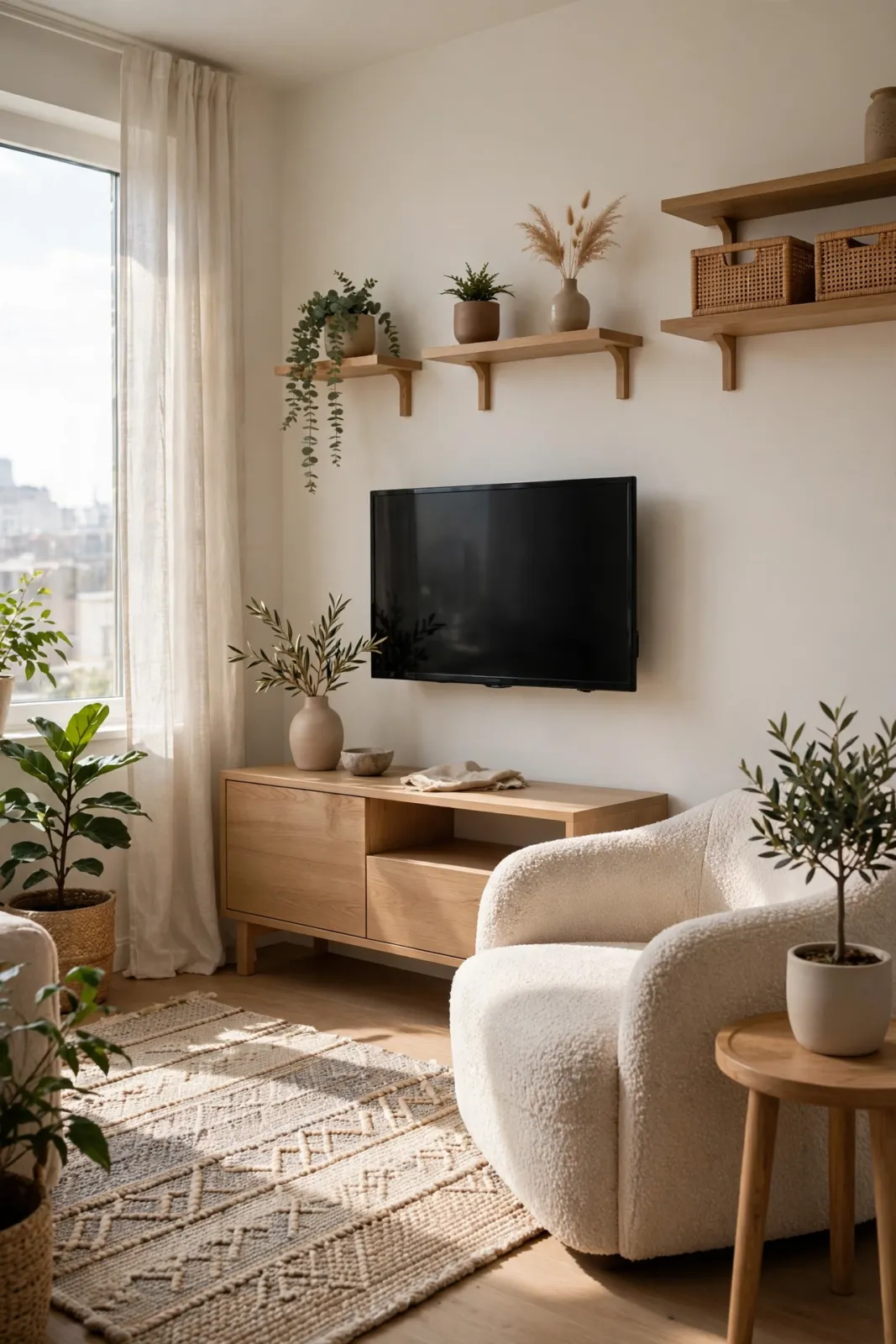
The console under the television should be wider than the screen — ideally 20 to 40 centimetres longer in total — so the arrangement looks grounded rather than top-heavy. Floating consoles keep the floor visible and make small rooms feel larger, and they simplify cleaning; floor-standing units offer deeper storage for games consoles, routers and the inevitable box of cables. Proportion is the quiet engine behind tv unit wall design ideas at every budget.
Mix closed and open storage honestly. Closed cabinets hide the messy equipment; one or two open sections are enough for books, a plant and a basket. Leave ventilation and a cable route at the back of any closed section — overheated boxes and pinched cables are the unglamorous failures behind many pretty media walls. A soundbar needs either a shelf of its own or a console top kept clear in front of the screen. Good tv unit wall design ideas always leave breathing room around the equipment.

How to Plan a TV Wall Step by Step
First, measure the wall, the screen and your seating distance. The centre of the screen should sit roughly at eye level when seated — about 100 to 110 centimetres from the floor for most sofas — and the panel and console sizes follow from the screen width, not the other way round. This measuring stage is where tv unit wall design ideas succeed or fail.
Second, mark the whole design on the wall with painter’s tape: panel outline, screen position, console width and shelf lines. Live with the tape for a day and view it from the sofa and the doorway; balance problems are obvious at this stage and free to fix. Third, plan power and cables before anything is fixed — sockets behind the console or screen, and a simple in-wall or surface channel for the cables you cannot hide.
Fourth, fix the panel or paint the backdrop, then mount the screen, then set the console, and only then style the shelves. Keep styling last and light: a plant, a stack of books and one or two objects per open section is plenty. Step back after each stage — a media wall is seen from one main seat, and that view is the one that must work.

Shelves, Lighting and the Finishing Layer
Shelving around a television works best asymmetrically or in one clean run above the console; identical towers on both sides can feel like a shop display. If you add shelves, stop them short of the panel edges and keep the objects quieter than the screen area — the wall should not compete with what you are watching. Asymmetry like this keeps tv unit wall design ideas relaxed and personal.
Lighting changes everything after dark. A warm LED strip behind the panel or screen edge softens contrast and makes evening viewing easier on the eyes, while two small lamps at console height balance the wall better than a single ceiling light. Avoid downlights that shine directly onto the glass; reflections will undo all your careful colour choices. Layered lighting is one of the tv unit wall design ideas that costs little but changes the room most.
Buying Advice and Budget Notes
Put the budget into the console and the mounting first — those are the pieces you touch and rely on daily. Paint is the cheapest backdrop of all and often the most effective; slat panels and wood veneer sit in the middle; full custom joinery is a luxury that mainly buys exact-fit storage in awkward rooms.
Measure doorways and stair turns before ordering a long console — media units are famously the furniture that will not make the corner. Buy the wall mount with tilt if your seating is low or the screen must sit higher, and choose a console with at least one open-backed section for equipment that needs air. Second-hand solid-wood sideboards, cut down or wall-hung, make characterful consoles for a fraction of new prices. Shop with your measurements in hand, because tv unit wall design ideas only work when the pieces fit the wall and the route into the room.
Common Mistakes to Avoid
Mounting the screen too high is the most common error — a television you watch with a raised chin belongs in a sports bar, not a living room. The second is a console narrower than the screen, which makes the whole wall look ready to topple. Third, ignoring cables until the end guarantees a visible tangle, because no styling trick hides a power strip at eye level. Avoiding these three errors covers most of what separates weak tv unit wall design ideas from strong ones.
Also avoid filling every shelf: a media wall with forty objects reads as clutter no matter how expensive they are. And do not centre the design on the wall if the sofa is off-centre — align the panel and screen with the seating, because that is the view that matters every evening. Checked against the seating, tv unit wall design ideas stay balanced from the main seat and the doorway.
Frequently Asked Questions
How high should a TV be on the wall? Aim for the centre of the screen at seated eye level, usually 100 to 110 centimetres from the floor. If the unit must sit higher — over a fireplace, for example — use a tilting mount and angle it down toward the seats.
What colour should the wall behind a TV be? A shade deeper than the other walls works in most rooms, and dark green, navy or warm charcoal make the screen blend in when off. Test with a large painted board first, because dark colours read differently at night under lamps.
Can a TV wall work in a small room? Yes — a floating console, a painted backdrop panel instead of joinery, and one shelf run keep it light. Choose a console with doors so everyday clutter disappears, and skip side towers entirely. Small-space tv unit wall design ideas rely on keeping the footprint light.
How do I hide the cables? Plan sockets behind the screen and console first. For existing walls, a paintable surface channel down to the console hides most runs neatly. Keep one accessible point — sealed cables become a problem the day a box needs replacing.
Should the console match other furniture? It should share a tone or material with something in the room — the floor, a bookshelf, the coffee table — rather than match everything. One link is enough for the wall to feel part of the room.
The Wall That Earns Its Place
Good tv unit wall design ideas are mostly decisions made in the right order: proportions first, power and cables second, furniture third, styling last. Give the screen a backdrop that frames it, a console wider than itself, and shelves with room to breathe, and the biggest object in the room becomes the calmest one.