Some necklaces shout for attention, and some quietly make everything else you are wearing look better. A twisted gold rope necklace belongs in the second group. Its woven, spiral texture catches the light in a way a plain flat chain never quite manages, so it looks rich and finished even with a simple white t-shirt and jeans.
If you have bought one and then stood in front of the mirror wondering whether it should sit alone or with other chains, you are not alone. Layering looks effortless in photos, but in real life chains tangle, lengths clash, and one necklace can overpower the rest of your outfit. A rope chain is sturdy, has presence without a pendant, and is one of the easiest pieces to layer once you know a few rules about length and neckline.
Below are nine wearable ways to layer it, a step-by-step method for building a stack that does not knot by lunchtime, and practical advice on buying, caring for, and storing your chain.

Why the Twisted Rope Design Works So Well for Layering
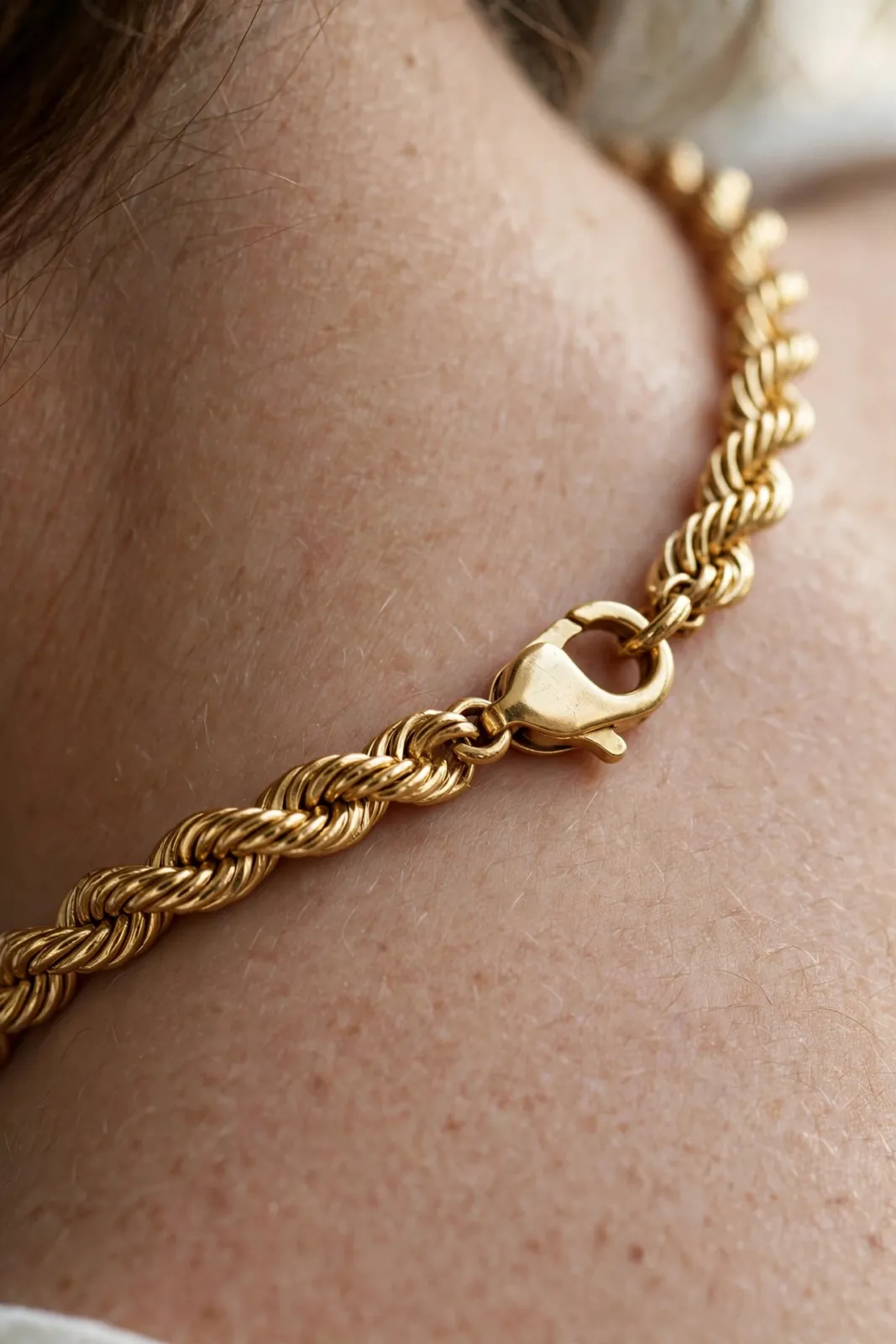
A rope necklace is made by twisting two or more strands of metal together in a spiral, a bit like an actual rope. That twist gives it strength: the tightly woven links resist kinking and sit with a pleasing weight on the collarbone instead of sliding around. It also reflects light from many tiny angles, so it looks brighter than a plain chain of the same weight.
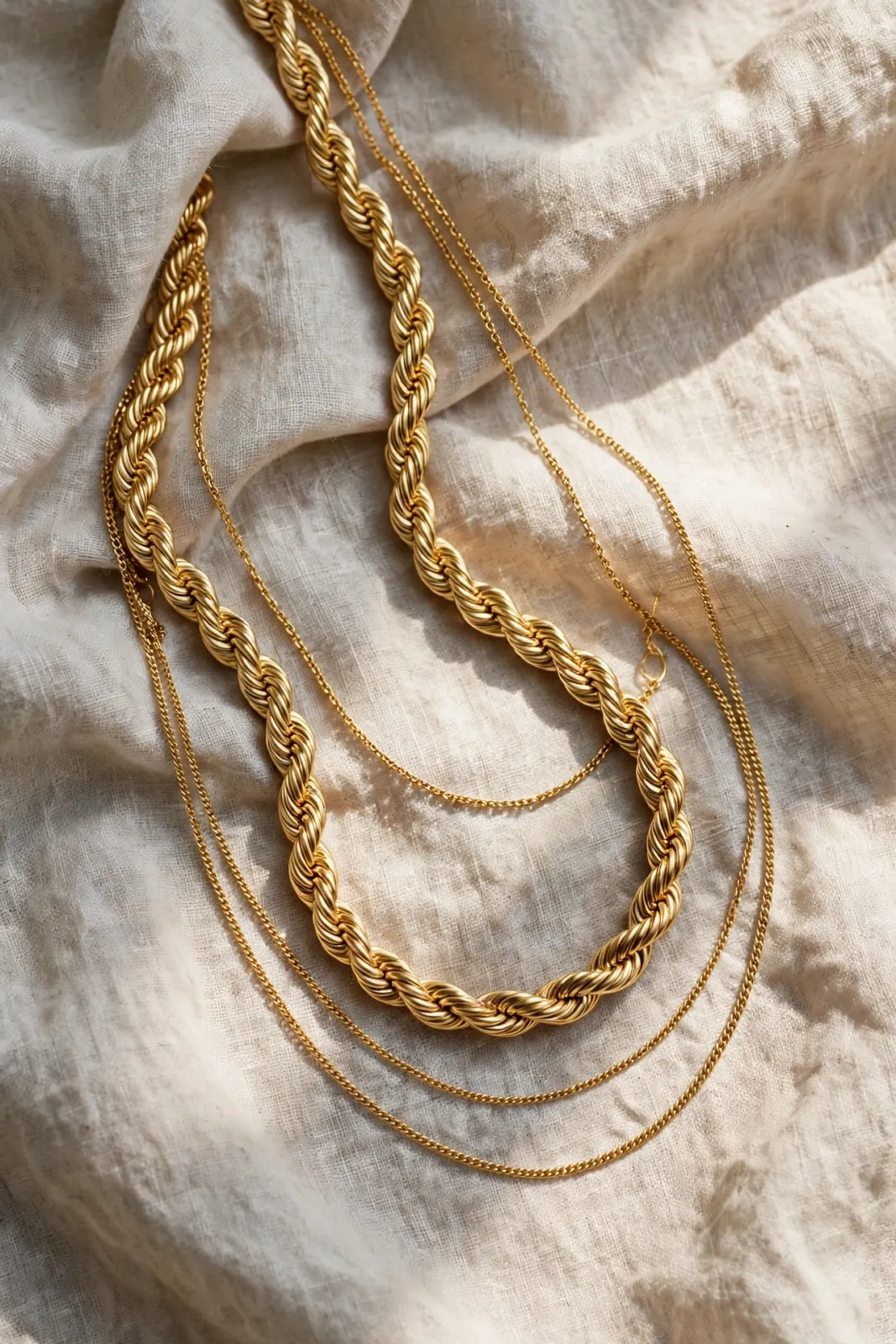
For layering, that texture is a real advantage. Flat chains side by side can blur into one sheet of metal, while a rope chain still stands apart. It works best as the anchor piece, usually the thickest chain, with finer chains above and below it.
9 Elegant Ways to Layer a Twisted Gold Rope Necklace
These nine combinations work across ages, budgets, and dress codes. Start with the first two or three if you are new to layering.
1. The classic three-chain cascade
Wear a fine chain at 40 centimetres close to the throat, your rope at 45 to 48 centimetres, and a longer pendant chain at 55 centimetres. The five-centimetre gap between layers keeps the look tidy and helps prevent tangling. Best with a V-neck, scoop neck, or unbuttoned shirt.
2. Rope chain solo over a high neckline
A single rope chain over a polo neck, crew-neck sweater, or high-neck blouse creates a clean line of light against plain fabric. Choose 50 to 55 centimetres so it sits on the fabric, not in the neckline.
3. Pair it with a delicate pendant
Add one small pendant on a finer, longer chain below the rope: a coin, tiny locket, pearl drop, or initial disc. Keep it modest so it does not fight the rope texture; the rope should frame it.
4. Double rope, two lengths
For a bolder evening look, wear a slim 3 millimetre rope at 42 centimetres and a chunkier 5 millimetre rope at 50 centimetres. Sharing the same twisted pattern, they look like a matched set. Keep other jewellery simple.
5. With a crisp shirt and blazer
Undo the top two buttons of a white or striped shirt, let a 45 centimetre rope sit in the open V, and add a shorter fine chain above it if you like. Gold softens sharp tailoring and stops a work outfit feeling severe.
6. Over a slip dress or camisole
Thin straps and a low neckline leave plenty of bare skin, exactly where a rope chain shines. Wear it at collarbone length with one fine chain above it. It suits satin and silk especially well.
7. The t-shirt and jeans upgrade
Add a rope necklace just below the collar of a plain crew-neck t-shirt, plus a longer fine chain, and the outfit reads as intentional. Tuck the t-shirt in, add simple gold hoops, and you have easy polish for everyday wear.
8. Mixed with pearls for a softer contrast
Layer a short strand of small freshwater pearls above the rope chain for a mix of soft and strong. The pearls sit higher and lighter, the rope lower and warmer. A favourite for weddings, it photographs beautifully with pastel and jewel tones.
9. One long rope, worn long
Choose a 60 centimetre rope and wear it alone over a plain dress or tunic. The vertical line lengthens the torso and suits anyone who prefers nothing close to the throat. A very long rope can also be looped twice, if the clasp is not strained.
How to Build a Layered Stack Without Tangles: Step by Step
Most tangles come from chains too close in length or put on in the wrong order. Follow this sequence:
- Step 1: Choose lengths first. Aim for 4 to 5 centimetres between each necklace. A reliable set is 40, 45, and 55 centimetres; chains only 2 centimetres apart will twist together.
- Step 2: Make the rope the anchor. It usually sits in the middle and should be the thickest chain, with finer chains above and below it.
- Step 3: Mix textures. Pair the rope with one smooth chain, such as a fine curb or box chain, and one different texture, such as a paperclip chain or small beads. Different surfaces slide past each other instead of locking.
- Step 4: Put necklaces on shortest to longest. Fasten the shortest first, then the rope, then the longest, so each clasp sits in its own space at the back of your neck.
- Step 5: Use a layering clasp for a regular stack. A multi-chain connector joins all the clasps into one fastening, keeps spacing even, and makes the set a one-step job.
- Step 6: Adjust once in a mirror. Give each chain a gentle tug so it settles at its natural length, then leave it alone. Constant fiddling causes more tangles than movement does.
Fine chains will tangle if you sleep in them or throw them loose into a bag, so hang your stack up at night.
Buying Advice: Solid Gold, Plated, or Vermeil?
Two chains that look identical online can have very different lifespans, so read the description carefully.
Solid gold, usually 14 karat for everyday strength, costs the most but will not fade, can be polished and repaired, and holds its value. Look for a stamp such as 14K or 585 near the clasp.
Gold vermeil is a thick layer of gold, at least 2.5 microns, over sterling silver. It looks close to solid gold, costs much less, and is a sensible first rope necklace. Gold plated jewellery has a much thinner layer over a base metal such as brass. It wears quickly at the twist points, so it suits occasional use only.
Check three details: a lobster clasp is stronger than a small spring ring; thickness matters (2 to 3 millimetres layers easily, 4 to 5 millimetres makes a statement, above 6 can feel heavy); and many larger ropes are hollow, which is normal but dents more easily.
For budget, buy the best rope you can manage first and add inexpensive fine chains around it.

How to Clean and Store Your Rope Necklace
The twisted grooves trap oils, perfume, and dust. Every two to three weeks, soak the chain for ten minutes in warm water with a drop of mild washing-up liquid, brush gently with a very soft toothbrush, rinse, and pat dry. Let it dry fully before storing.
Put your necklace on last, after perfume and lotion have dried, and remove it before swimming. Skip ultrasonic cleaners and harsh dips for hollow or vermeil chains.
Hang it for storage, or keep it fastened in its own soft pouch in a loose curve, not a tight coil. Travelling? Thread it through a drinking straw and fasten the clasp to stop tangles.
Common Layering Mistakes to Avoid
- Lengths too close together. Chains 2 centimetres apart twist within the hour. Keep gaps of 4 to 5 centimetres.
- Three statement pieces at once. One anchor is enough. If every chain is chunky, the stack looks heavy and none gets noticed.
- Ignoring your neckline. Necklaces should sit clearly above the fabric or clearly below it, not exactly on the edge, where they disappear in and out all day.
- Mixing metal colours carelessly. Gold with gold is the safest start. If you mix silver or rose gold, repeat each colour at least twice so it looks planned.
- A pendant heavier than its chain. It drags the chain into a deep V and distorts the layers around it. Match pendant weight to chain strength.
- Never cleaning the stack separately. Layered chains collect grime between them. Clean each piece on its own now and then.

Frequently Asked Questions
What length of rope necklace is best for layering?
For most women, 45 centimetres is the most useful anchor length. It sits just below the collarbone, leaving room for a shorter chain above and a longer one below. Petite frames may prefer 40 to 42 centimetres; a looser fit is usually 48 to 50 centimetres.
Can I wear a twisted rope necklace every day?
Yes, especially in solid gold or good vermeil, because the woven construction is strong. Remove it for swimming, heavy exercise, and sleeping, and clean it gently every few weeks. Plated versions last longer worn a few times a week.
Will a rope necklace tangle with other chains?
It can, but far less if you keep 4 to 5 centimetres between lengths, mix textures, and fasten chains from shortest to longest. A layering connector clasp solves the problem almost completely for a regular stack.
Does a rope chain suit a pendant?
It can carry a small, light pendant, but many women prefer it plain because the texture already gives plenty of detail. If you add one, choose a bail wide enough to slide over the rope without forcing it.
Is a thicker rope necklace better than a thin one?
Neither is better; they do different jobs. A 2 to 3 millimetre rope is versatile for daily layering, while 4 to 5 millimetres holds its own as a single statement. Start thinner if you layer often.
A twisted gold rope necklace rarely sits unworn. It dresses up a plain t-shirt, steadies a stack of finer chains, and still looks right alone with an evening dress. Start with one good length and add companions slowly. Once you find your combination, getting dressed becomes that little bit easier — exactly what a good staple should do.
Pingback: Chunky Gold Necklace Layering: 9 Bold Stacks to Copy