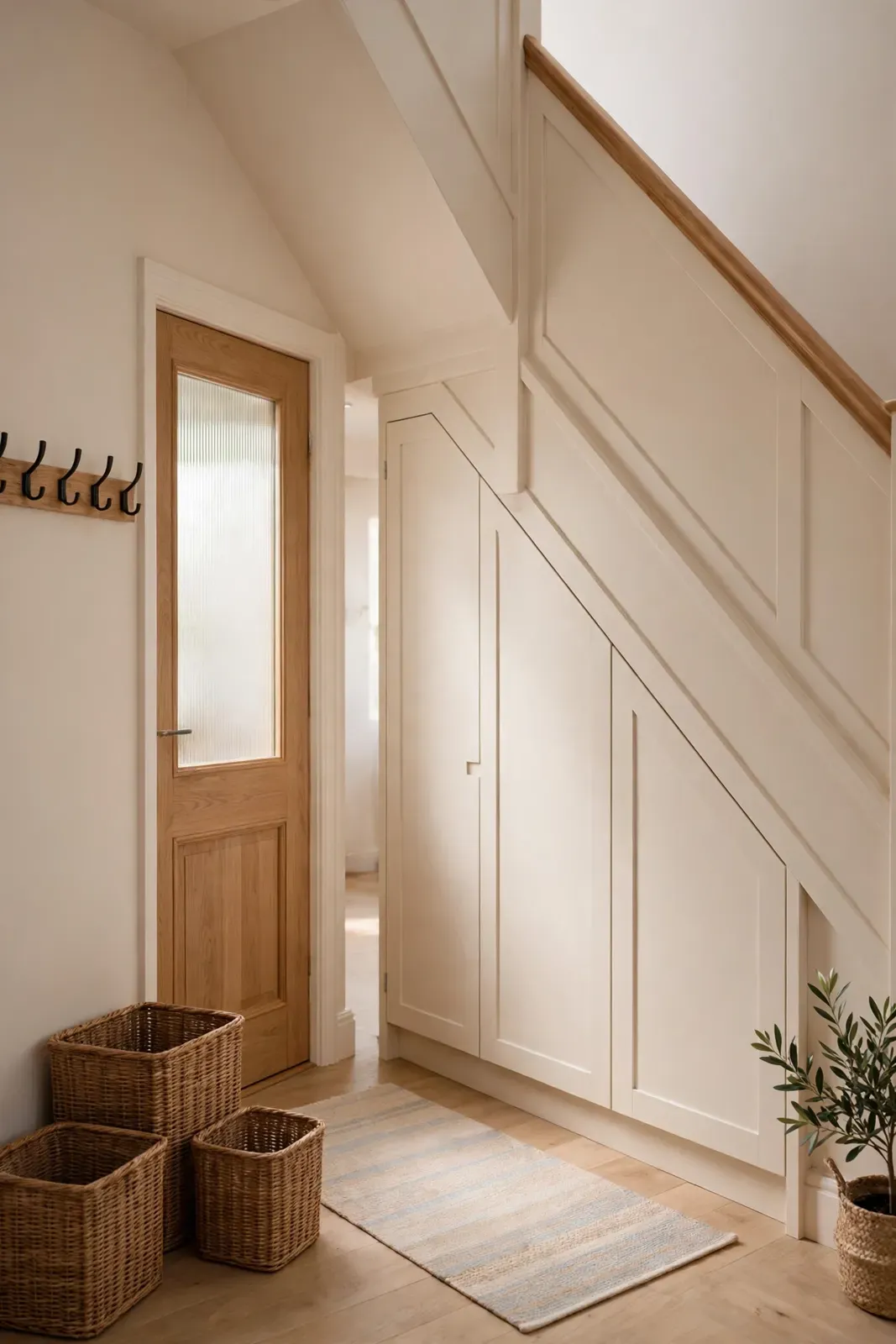
Every home has the same awkward wedge of wasted space: the triangle under the stairs. In many houses it hides a hoover, a pile of shoes and a door that barely opens. An under stairs storage transformation turns that dead triangle into some of the hardest-working storage in the house: full-depth drawers that glide out, a proper coat and shoe cupboard, even a desk or a reading nook. Because the space already exists inside your floor plan, every litre you win here is a litre your other rooms get back.
This guide covers the main routes, from simple open shelving to fully fitted joinery, with honest planning steps, realistic budget bands and the mistakes that leave people with beautiful cupboards that fit nothing. The shape you are working with is dictated by the staircase itself, its pitch, its supporting structure and, in many homes, the position of meters and pipework that also live under the flight.
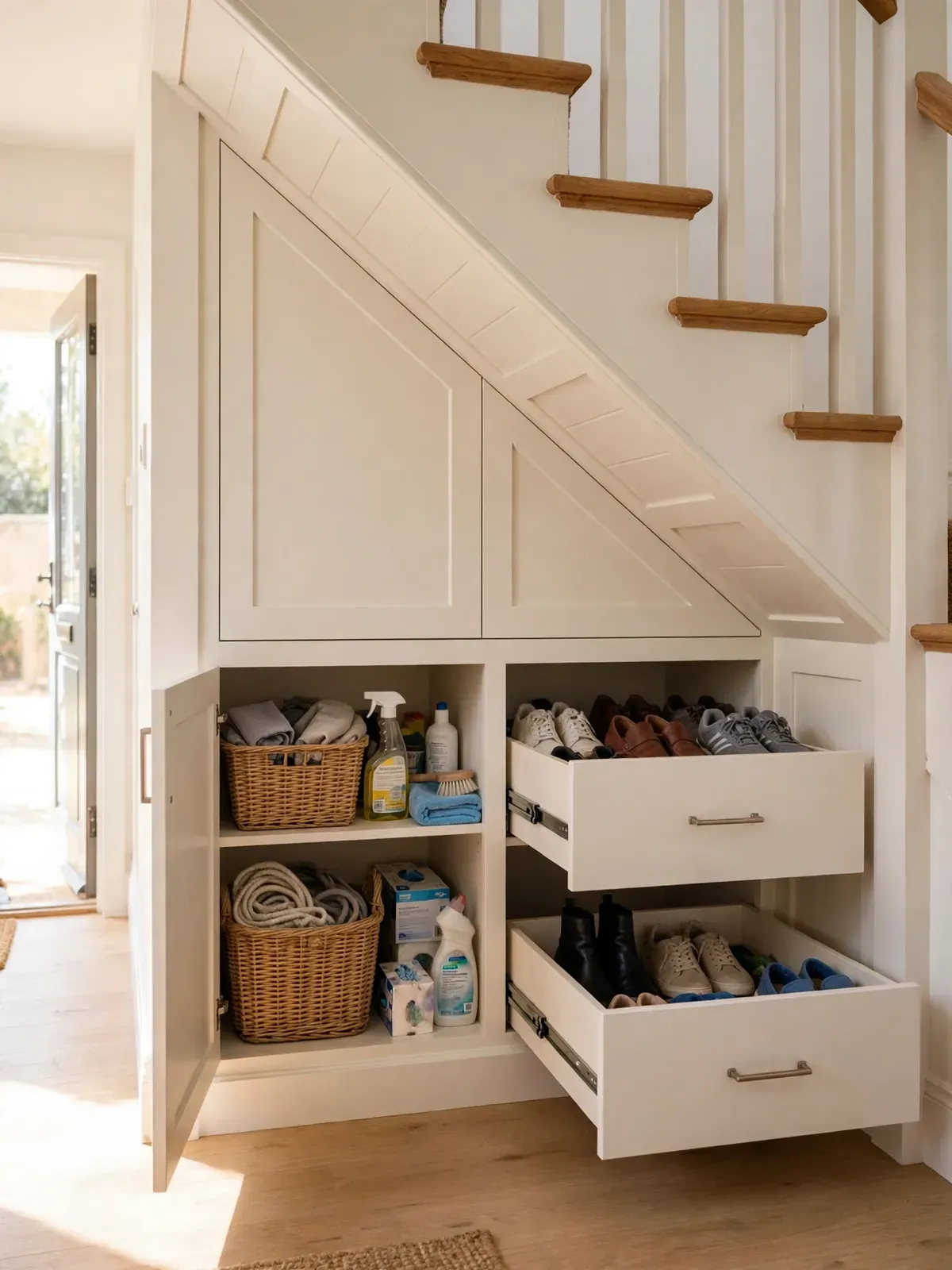
Table of Contents
Measure the Triangle Before You Dream
Under stairs storage space is not one space; it is a gradient. Near the bottom step you may have barely 60 centimetres of head height, while the tall end under the landing can reach full standing height. Sketch the triangle on paper and divide it into zones by height: the tall zone (over 150 cm) suits hanging coats or a person-sized use like a desk; the middle zone (90 to 150 cm) is perfect for drawers and shelving; the low zone (under 90 cm) works for pull-out under stairs storage on runners, because a drawer brings the contents to you instead of asking you to crawl.
Check what already lives in the space before planning anything fixed. Gas and electricity meters, stopcocks and consumer units are commonly tucked under stairs, and they must stay accessible. A good design works around them with a removable panel or a cupboard section, never by boxing them in permanently. Also knock on the wall under the flight: in many homes it is a stud partition that can be opened from the hall side, which is where most under stairs storage transformations begin.
Pull-Out Drawers: The Under Stairs Storage Transformation That Earns Its Keep
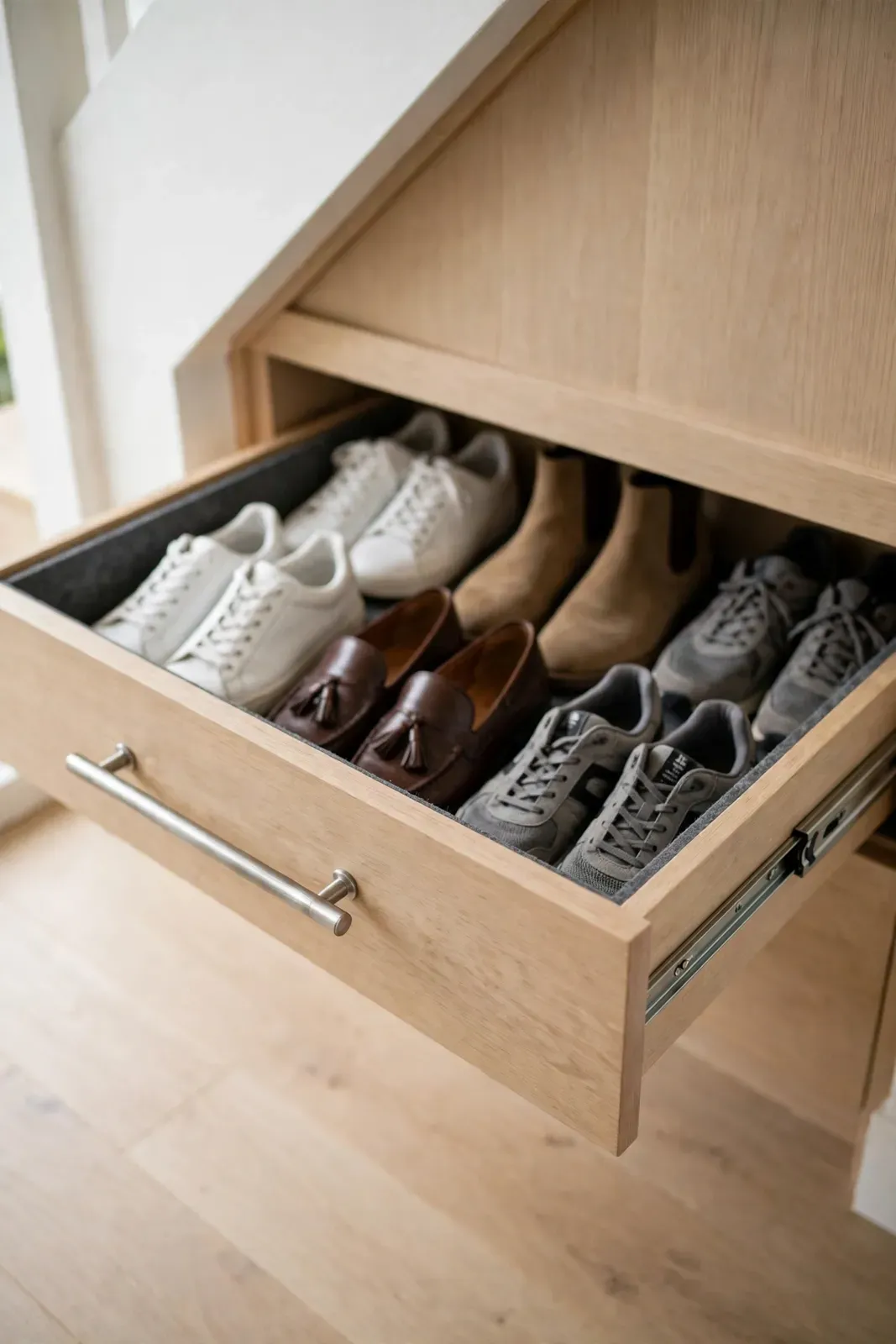
If you choose one under stairs storage upgrade, choose deep drawers on heavy-duty runners. A drawer under the middle section of the flight can run 80 to 100 centimetres deep, far deeper than any standard cupboard, and it presents everything at waist height when open. Shoes are the classic use: one deep drawer holds eight to twelve pairs in two rows. The same format swallows board games, tools, craft supplies, dog leads and the seasonal clutter that otherwise migrates around the house.
Specify runners rated well above the expected load, because a full shoe drawer is heavier than it looks, and insist on soft-close mechanisms if the hall is near bedrooms. Drawer fronts can be made to match your skirting and door style so the whole installation disappears into the wall when closed. A traditional cupboard door at the tall end, with drawers stepping down beside it, is the layout most joiners recommend, because it mixes bulk storage with easy daily access.
Step-by-Step: Planning a Fitted Under-Stair Build
- Empty and photograph the space. Measure width, depth and the height at three points along the flight; note meters, pipes and sockets.
- List what must live there. Be specific: coats for five people, ten pairs of shoes, the vacuum, gift wrap, tools. Storage designed for named things always works better than storage designed for “stuff”.
- Assign zones to the list. Hanging and tall items to the tall end, drawers to the middle, pull-out or basket storage to the low end.
- Choose your route. Fitted joinery, modular units cut down to fit, or open shelving with baskets. Get at least two quotes for fitted work and ask what the carcass material is; plywood outlasts chipboard in a damp-prone hall.
- Plan the finish. Doors and drawer fronts painted to match the hall woodwork make the transformation look original to the house. Add handles you can grip with full hands and, if children will use it, soft-close everything.
Beyond Storage: A Desk, a Nook or a Pantry Overflow
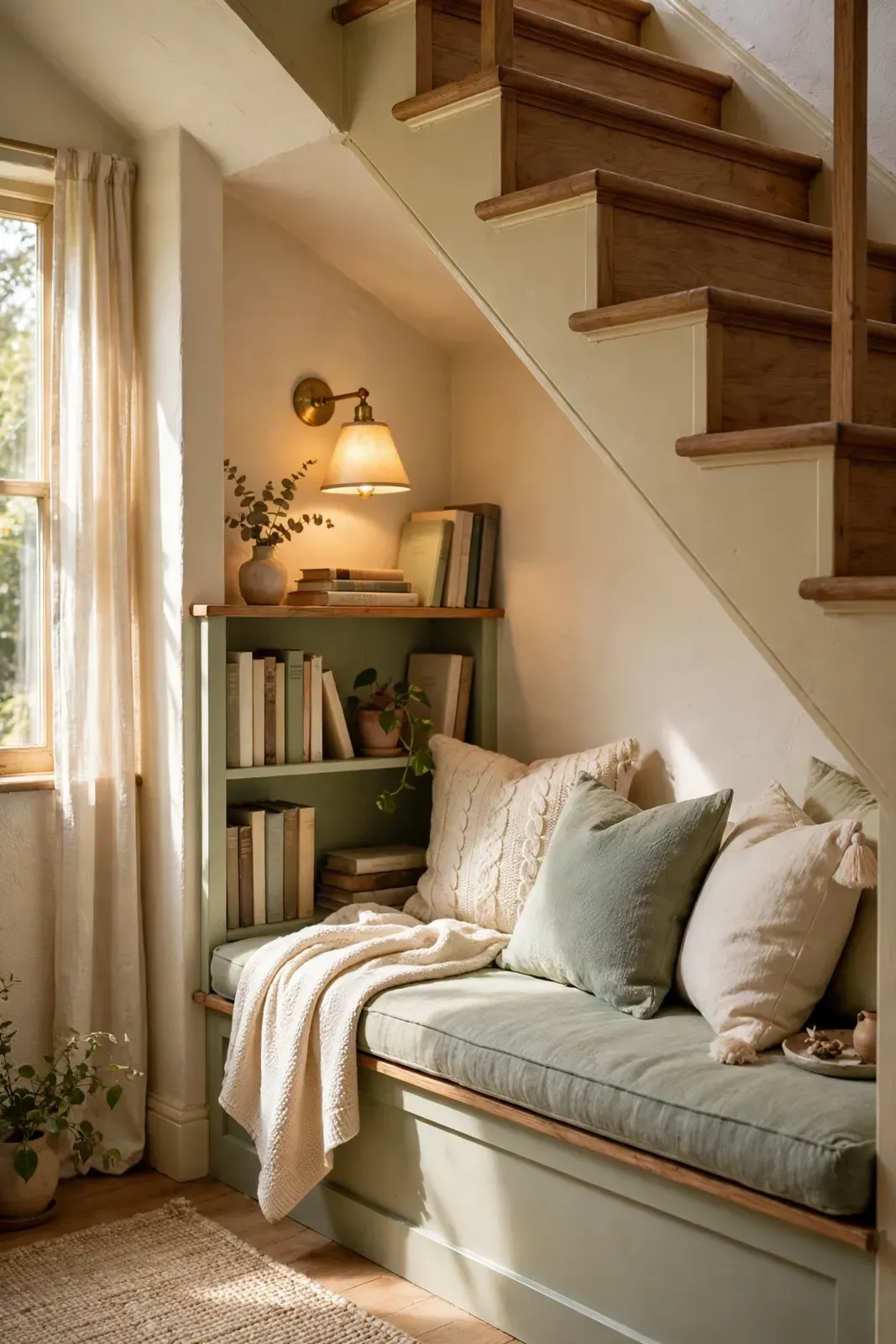
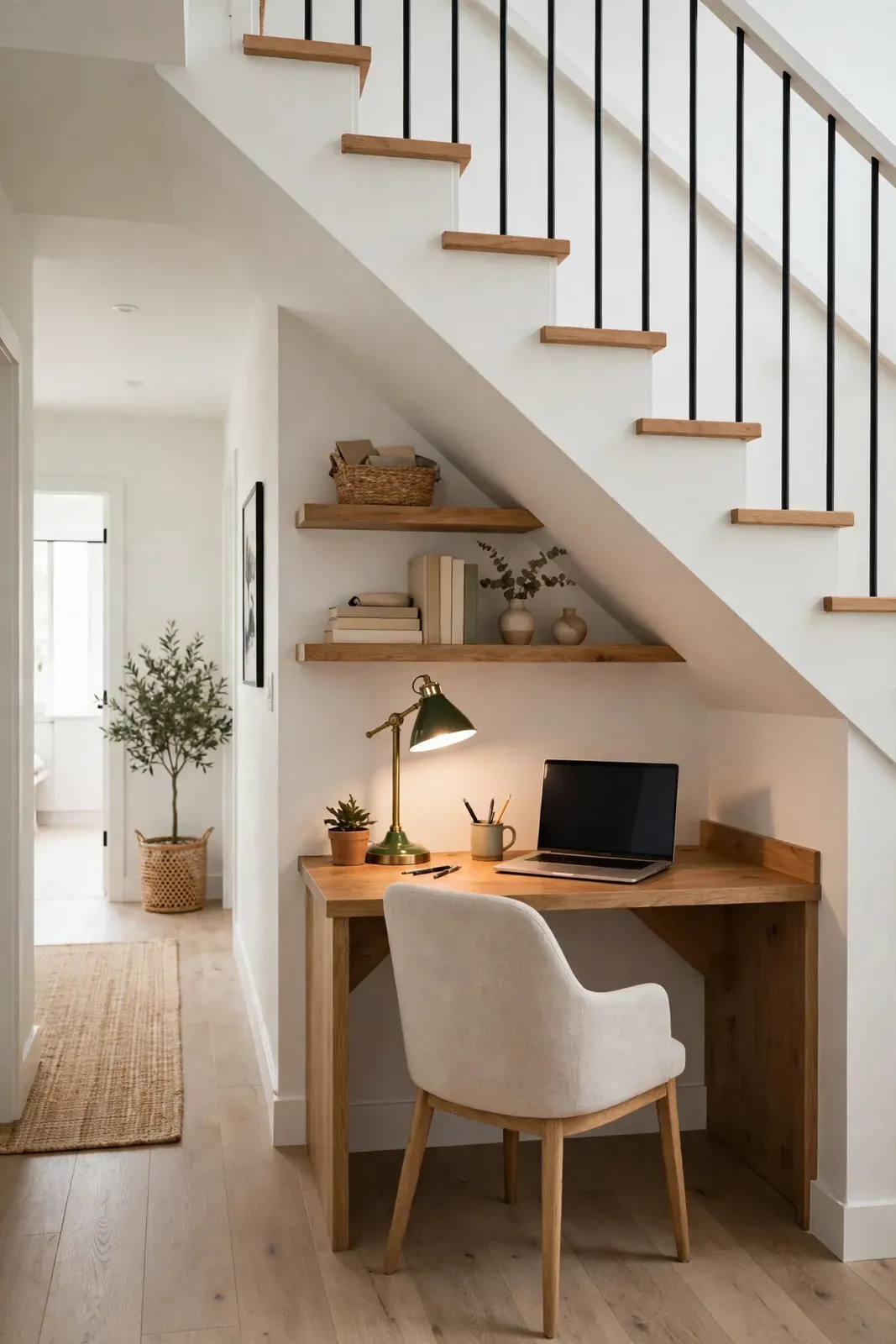
The tall end of the triangle can hold more than coats. A compact desk with a shelf above fits neatly under most flights and gives homework, laptops and household admin a permanent home that is not the dining table. A reading nook is the low-effort, high-charm option: a bench cushion, a small shelf, a lamp and cushions turn the middle section into the seat every child in the house will argue over. In homes where the kitchen runs short on space, the cool, dark under stairs storage zone also works as a pantry overflow for bulk buys, preserving jars and seasonal cookware, as long as food is kept in sealed containers.
Budget and Buying Advice
Costs spread widely. Open shelving with baskets can be done for the price of a family takeaway night if you already own basic tools. Modular drawer units adapted to the slope sit in the middle band. Fully fitted under stairs storage is the investment option, priced like a small kitchen, and worth it when the hall is your daily entrance and the storage will be used ten times a day. Whichever route you take, spend on the moving parts: runners, hinges and handles. Carcasses can be simple and painted; hardware is what you touch every day, and cheap runners under a deep drawer will sag within a year.
One money-saving order of operations: do the dusty work, opening the partition and making good the plaster, before you decorate the hall, and paint the inside of the under stairs storage space bright white whatever route you choose. It makes a deep, naturally dark space far easier to use, and small items stop disappearing into shadow. Our small living room layout ideas guide uses the same zone-by-height thinking for tight rooms, if you are tackling storage across the whole home.
Mistakes to Avoid With Under Stairs Storage
The classic error is building fixed shelves at standard depths and discovering the vacuum, the suitcase or the Christmas tree box does not fit. Measure your bulkiest items first and design around them. The second is blocking access to meters and stopcocks, which turns a routine reading or an emergency shut-off into a joinery demolition. The third is forgetting light: a battery motion-sensor strip light inside each under stairs storage section costs very little and doubles how usable the space feels. Finally, do not ignore the door swing. A tall-end cupboard door that collides with the front door or the newel post will annoy you every single day.
Frequently Asked Questions
Do I need permission to open up the wall under my stairs?
In most homes the under-stair wall in the hall is a non-structural stud partition, and opening it for under stairs storage is ordinary internal work. If your staircase sits against a masonry wall, or you live in a listed building or a flat, check with a builder or your local authority first, because the wall may be structural or part of a fire escape route.
How deep can under-stair drawers be?
Drawers for under stairs storage commonly run 80 to 100 centimetres deep under the middle of the flight, using the full depth that a cupboard wastes. Use runners rated for at least 30 to 45 kilograms for shoe or tool drawers, and divide very deep drawers with inserts so small items do not migrate to the back.
What is the cheapest worthwhile under-stairs upgrade?
The cheapest under stairs storage upgrade is painting the interior white, adding battery sensor lights, and fitting open shelves with labelled baskets at the tall end. It costs little, takes a weekend, and already beats the single-door chaos most homes start with. You can always commission drawers later for the middle section.
Can the space under the stairs be a toilet or bathroom?
It can, and many homes do it, but it is a plumbing project rather than an under stairs storage project: you need a soil pipe route, ventilation and building-control sign-off in most areas. Budget and plan it as a small bathroom renovation, not as part of a storage build.
How do I keep the under-stair space from smelling musty?
Ventilation and dry contents keep under stairs storage fresh. Leave a small air gap or vent grill in the door, never store damp shoes or wet cleaning tools in a closed section, and add a small moisture absorber if your hall is prone to condensation. Pull-out drawers stay fresher than deep cupboards because air circulates each time they open.
The triangle under your stairs is already paid for in every square metre of your home. A measured plan, honest zones and decent hardware turn it from the house’s junk drawer into under stairs storage that everything else depends on.