Some of the most useful pieces of furniture in a home were never bought as furniture at all. A vintage suitcase side table is a good example: two or three old suitcases, stacked neatly beside a sofa or a bed, become a steady table with a flat top for a lamp, a book and a cup of tea, and with real storage hidden inside. It costs very little, it takes an afternoon at most, and it gives a room a story that a flat-pack side table simply cannot match.
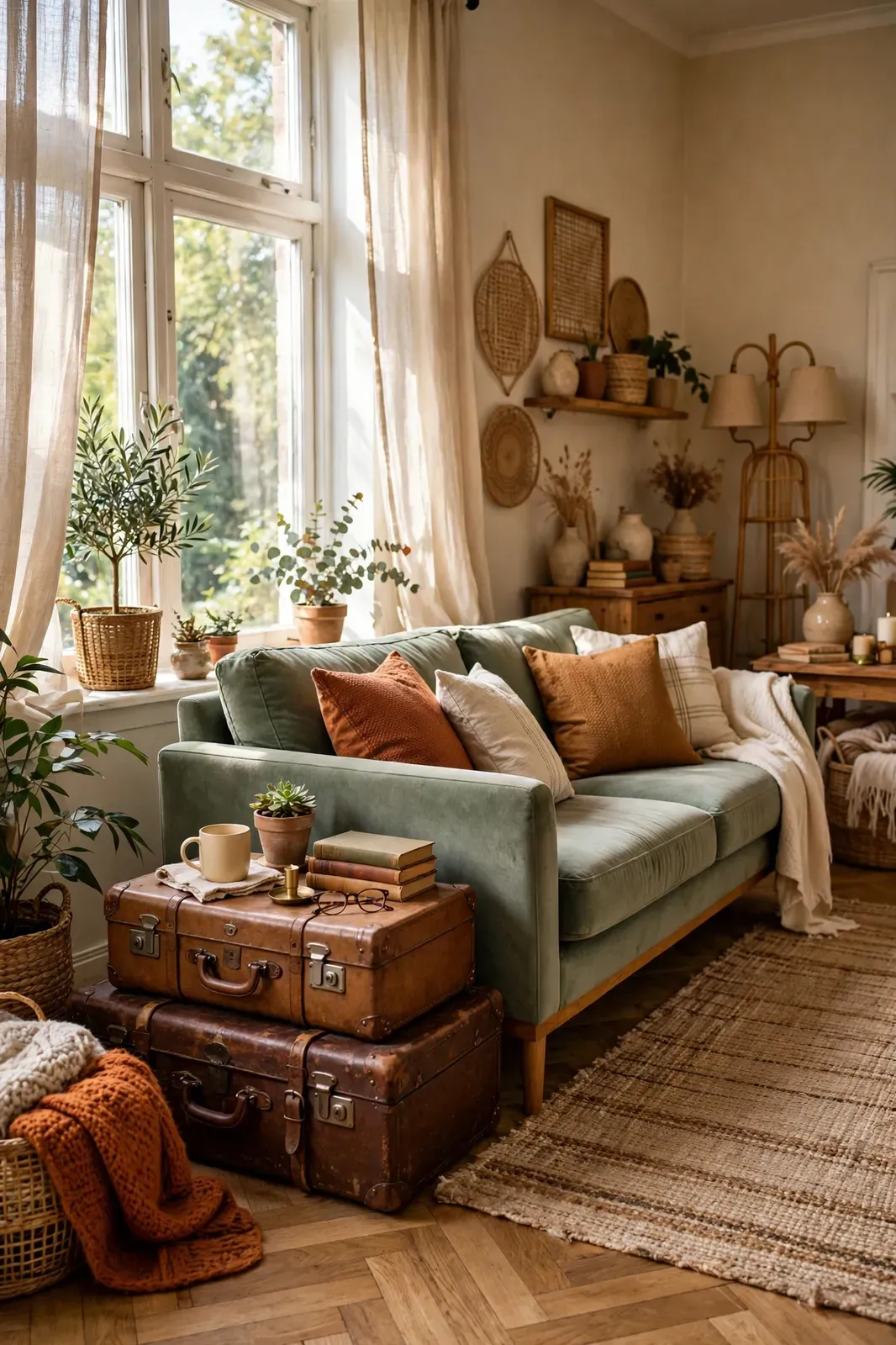
You do not need matching cases, special tools or woodworking skills for the stacked version in this guide. You need cases with flat lids, a level floor, and a little care about height and balance. Below is how to choose the right suitcases, stack and secure them step by step, style them, and avoid the mistakes that make a stack wobble or slide.
Why a Vintage Suitcase Side Table Works So Well
A stacked suitcase table works for three plain reasons. First, height. Most sofas and beds need a side surface roughly level with the seat or the mattress, usually between 55 and 70 centimetres. Two medium suitcases, or three slimmer ones, land in that range without any legs, cutting or drilling. Second, storage. Every case in the stack still opens, so blankets, board games, spare chargers, winter scarves or the remote controls that vanish every evening can live inside the table itself, out of sight but within reach.
Third, character. Old suitcases carry marks of real journeys: worn corners, brass latches, faded labels and leather softened over decades. The history of the suitcase and how early luggage was made explains why older cases were built over rigid frames with metal corners, which is exactly what makes them sturdy enough to stack today. Giving a sound old case a daily job is also a clear example of what upcycling means and why reusing old pieces adds value instead of sending useful things to landfill.
Choosing the Right Cases for Your Vintage Suitcase Side Table
Start with structure, not looks. Pick up the case and press the lid in the centre. A good table case feels firm, with only a little give. Hard-shell cases, leather cases over a wood or fibre frame, and sturdy mid-century cases all work well. Soft fabric cases, cases with a domed or deeply curved lid, and thin decorative reproduction cases are poor choices, because the top surface will rock and drinks will not sit safely.
Check the base as carefully as the lid. The bottom case carries the whole stack, so it should be the largest and heaviest, with a flat base and corners worn but not crushed. Open every case before you buy it and look for mould, crumbling lining and loose hinges. A mild old-luggage smell usually airs out in a day outdoors, helped by a small bowl of bicarbonate of soda left inside overnight. Mould, flaking interiors and broken frames are reasons to walk away, however cheap the case looks.

Size the stack before you commit. Measure the height you need beside your sofa or bed, then add up the depths of your cases. The largest goes at the bottom, the smallest on top, and each lid should sit fully on the case below, with no overhang. Colour can stay mixed: brown and tan leathers stack happily together, and one painted case in sage or cream can lift a corner. Keep the family close, though — five unrelated bright colours read as a pile, not a table.
How to Build a Vintage Suitcase Side Table: Step by Step
The stacked version needs no legs and no power tools. Allow about an hour, including cleaning and styling.
- Clean every case properly. Empty each one, vacuum the interior, and wipe the outside with a cloth dampened with mild soapy water. Let everything dry fully with the lids open before bringing the cases into the room.
- Decide what each case will store. Fill the bottom case with heavier, rarely used items such as spare blankets, and keep the top case for everyday things. Weight low down makes the stack steadier.
- Set the bottom case in place. Push it against the sofa or bed and check it sits flat. Add felt pads under the corners if it rocks at all — correct a rock now, not after stacking.
- Add grip between cases. Place a thin non-slip mat, rug underlay or four small grip pads on top of each case before adding the next. This invisible layer stops the slow sideways creep that makes stacks lean.
- Stack largest to smallest and align the fronts. Line up the front edges and handles so the stack reads as one piece of furniture.
- Check the height and level. Set a mug and a book on the top lid. The stack should not shift when you press one corner. If it sits slightly low, a slim train case on top often solves it.
- Secure it if children or pets use the room. Strap tall stacks together discreetly, or push them into a corner where two walls support them. Worked examples in this guide to vintage suitcase upcycle projects and furniture conversions show why stationary stacks stay tighter and safer than stacks on casters.
Styling Your Vintage Suitcase Side Table in Different Rooms
Beside a sofa, treat the top like any side table: a lamp if the corner is dark, one small stack of books, and a coaster that lives there permanently. Leave at least a hand’s width of clear space, because a table you cannot actually put a cup on is only decoration. The same corner-first thinking behind small living room layout ideas that make the most of every corner applies here: one useful piece, placed well, beats three small pieces scattered around the seating.
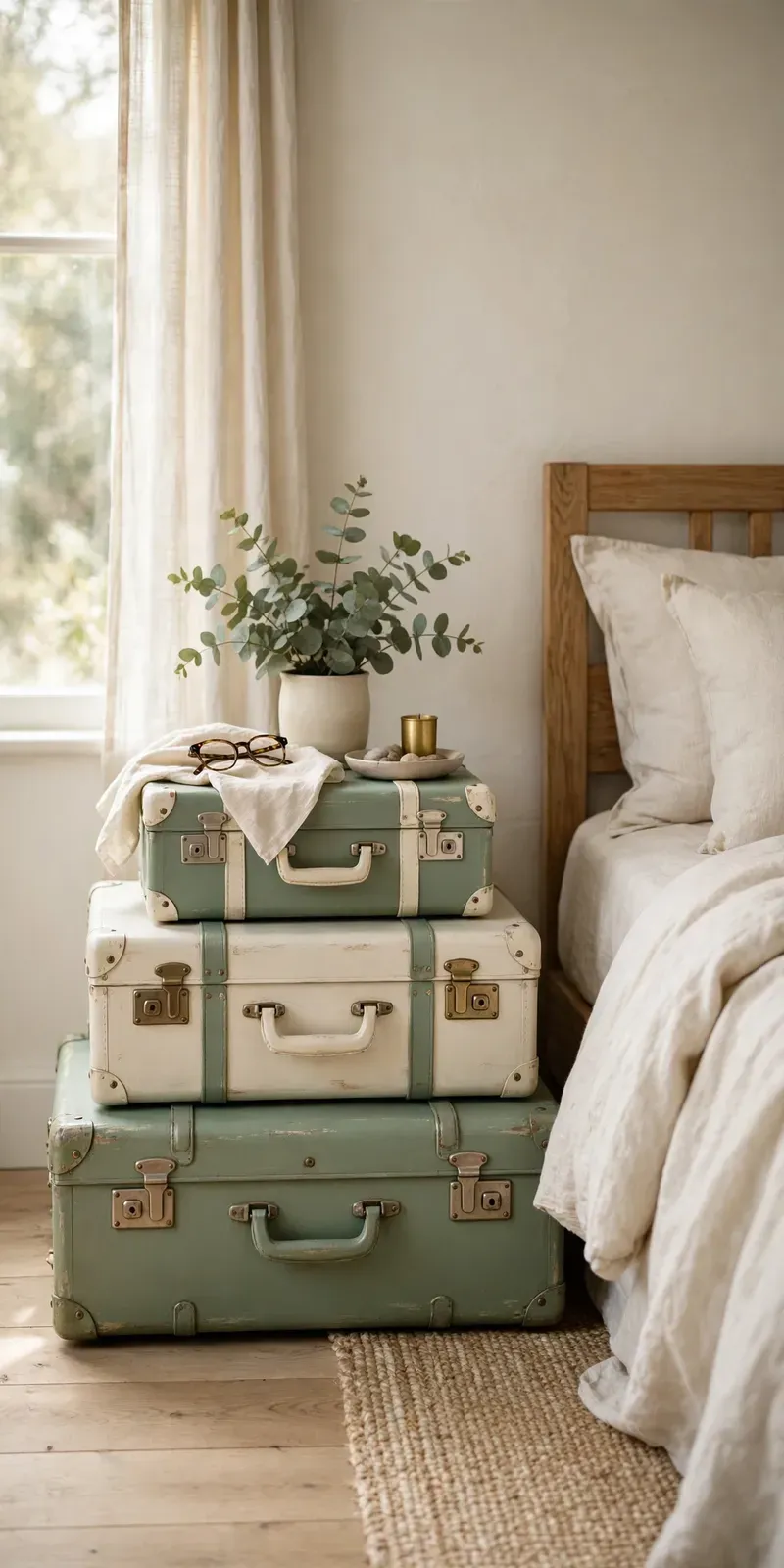
As a bedside table, the stack is even better. The top case holds night creams, medicines and a phone charger, the middle case keeps books and spare bedding, and a small lamp on top brings light to exactly reading height. Painted cases in pale colours suit a calm bedroom, as the sage and cream stack in the photo shows, while dark leather suits a study or a reading chair.
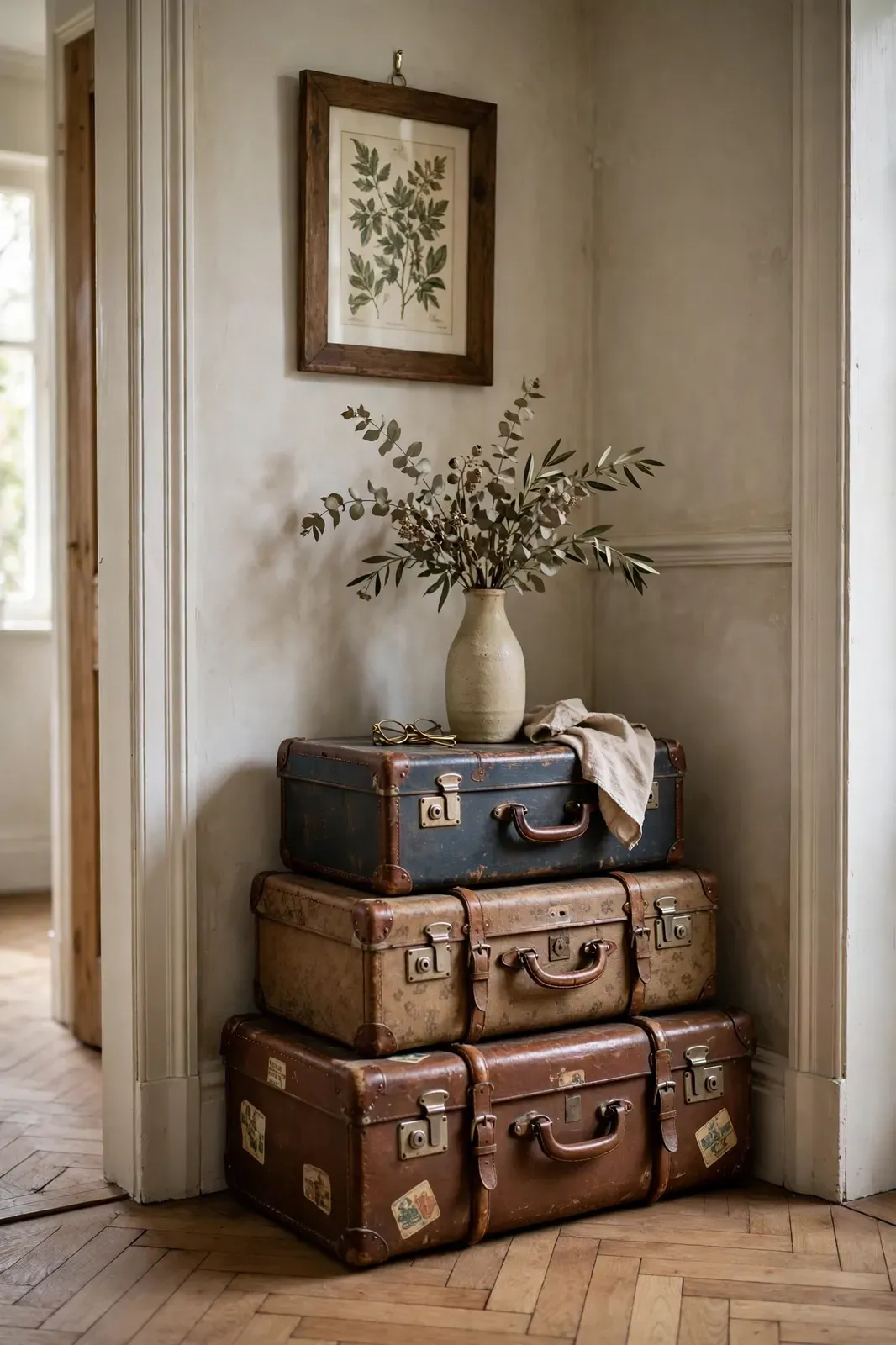
In a hallway, a taller stack becomes a display point — a vase on top, a framed picture above, gloves and scarves stored inside near the door. In a guest room, leave the top case empty and tell your guest it is theirs for the stay.

Vintage Suitcase Side Table on a Budget: Where to Find Good Cases
This is one of the cheapest side tables you can make. Single vintage cases in charity shops, flea markets, estate sales and online marketplaces commonly cost less than a new cushion, and a full stack of two or three often comes in well under the price of the simplest new side table. Prices rise for large leather steamer trunks and famous maker names, and for a side table you do not need either. Plain, solid, mid-size cases are the sweet spot.
Buy in person when you can, so you can press the lid and smell the interior yourself. Online, ask for each case’s depth, a photo of the open interior, and a clear answer about mould. Budget a little extra for felt pads, non-slip matting and leather cleaner. Spend in that order: sound cases first, grip and pads second, decoration last — a wobbly stack with a beautiful lamp on it is still a wobbly stack.
Common Vintage Suitcase Side Table Mistakes to Avoid
The first mistake is choosing looks over structure: a beautiful case with a soft, sagging lid will never hold a lamp steady. The second is stacking widest on top — a top-heavy stack slides and can fall, so the largest case always goes at the bottom. Third, skipping the grip layer, so the stack creeps out of line a little with every bump. Fourth, overloading the top with decor, leaving nowhere for a drink. Fifth, putting leather in direct sun or against a radiator, which dries and cracks it. Finally, never store bedding in a case with active mould or a crumbling interior.
Frequently Asked Questions
How many suitcases do I need for a vintage suitcase side table?
Two cases suit most sofas, and three slimmer cases suit most beds. Measure the height beside your seat or mattress first, then add case depths until you reach it. One case alone is usually too low unless it is a deep trunk-style case or you add legs.
Will a vintage suitcase side table wobble?
A well-chosen stack should not. Flat lids, a flat base, the largest case at the bottom and a non-slip layer between cases keep it steady for daily use. If a stack still rocks, check the floor and the bottom case first; the fault is almost always there, not in the upper cases.
What can I store inside a vintage suitcase side table?
Almost anything dry and not too heavy: blankets and throws in the bottom case, books, board games, chargers, craft supplies and spare bedding in the others. Keep the top case for things you reach for daily. Avoid damp items, and air the interiors now and then if the room is humid.
Can I paint a vintage suitcase side table?
Yes, and one painted case can pull a mixed stack together. Clean the surface well, use a chalk-style or multi-surface paint, and leave the handles, latches and corner caps unpainted so the case still reads as luggage. Keep at least one case in its original leather if you want the vintage character to stay clear.
Is a vintage suitcase side table safe around children?
It can be, with simple care. Keep the stack to two cases in open areas, weight the bottom case, add grip between cases, and place taller stacks in a corner or strap them together. Check that old latches close smoothly and that no sharp metal edges are exposed before little hands explore it.
A vintage suitcase side table asks for very little: a few sound old cases, an hour of cleaning and stacking, and a corner that needs a useful surface. In return you get storage, a table at exactly the height you chose, and a piece that guests ask about. Start with two cases beside the seat you use most, live with the stack for a week, and adjust the height or colours once you know how it feels in daily life.