Table of Contents
No doors, no drawers, no hiding: a wardrobe open rail display puts clothes on an open rail, styled like a small boutique in your own bedroom. It suits small rooms that cannot spare space for a bulky wardrobe, rented homes where fitted furniture is not an option, and anyone who wears the same five things because the rest are buried in a dark cupboard. When your clothes are visible, you use more of them, and getting dressed gets faster.
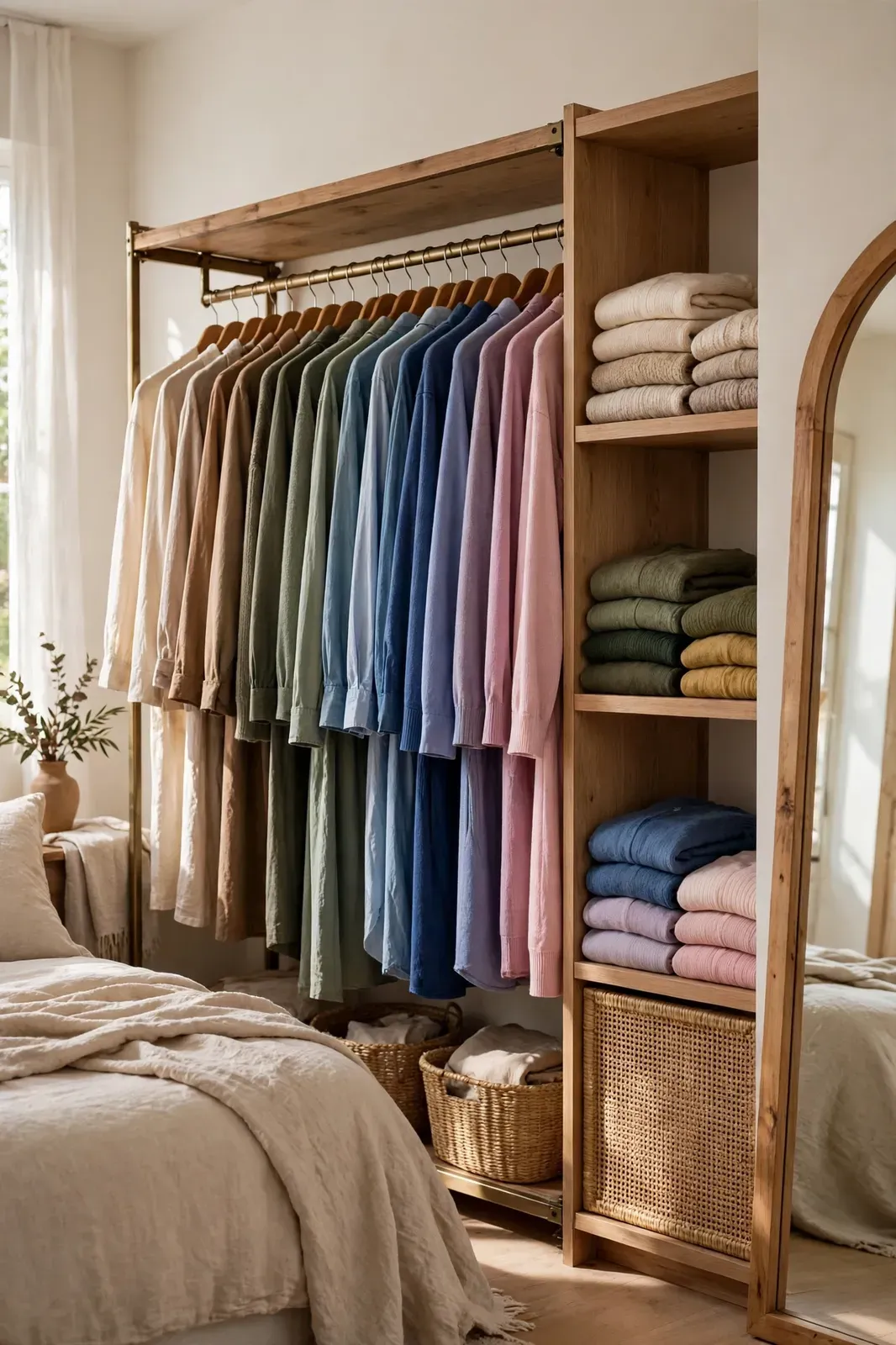
Why a Wardrobe Open Rail Display Changes Your Mornings
An open rail works on a simple truth: you wear what you see. A wardrobe with closed doors protects clothes from dust and light, but it also hides them so well that favourites get forgotten for months. The rail keeps this week’s and this season’s clothes in front of you, planned at a glance. That is why stylists and small boutiques display rather than store: the rail becomes a working shortlist, not an archive.
There are space gains too. A rail needs roughly 60 cm of depth including hangers, needs no door swing, and can run along a wall, into an alcove or across a spare-room corner. For guests, a simple rail with a few hangers and a shelf is kinder than an apologetic corner of a cupboard. The trade is honesty: an open rail shows clutter instantly, so it rewards a small, edited collection and a two-minute weekly tidy.
Choosing a Rail for Your Wardrobe Open Rail Display
Start with strength. A rail must carry real weight; a metre of winter clothes is heavier than it looks. Wall-mounted rails fixed into studs or solid wall carry the most and look cleanest. Freestanding A-frame and garment-rack styles suit renters and spare rooms; choose steel over thin chrome tubing, check the base is wide, and avoid the cheapest racks, which lean within a month. Wooden rails and brass finishes soften the look in a bedroom; black metal suits modern and industrial rooms.
Plan the levels. One long rail suits dresses and coats; most people do better with a double layout, a high rail for shirts and jackets over a lower rail for trousers and skirts, with a shelf above for boxes and bags. Keep 100 to 110 cm of drop for the long section. Matching hangers, all wood or all slim velvet, are the cheapest visual upgrade there is: mixed wire and plastic hangers make even beautiful clothes look like a jumble sale.
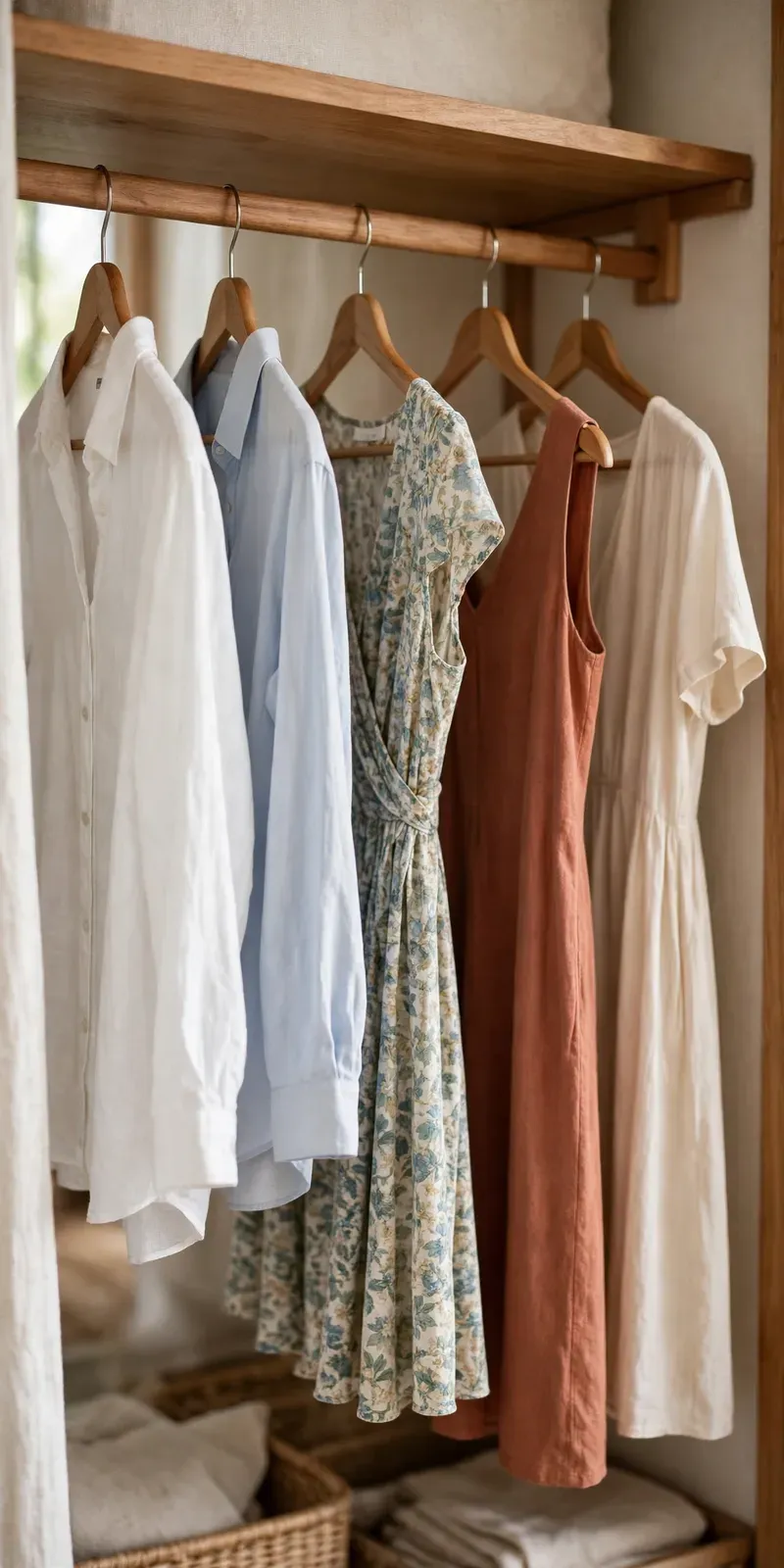
How to Style a Wardrobe Open Rail Display: Step by Step
Step 1: Edit first. The rail holds this season only. Off-season clothes go into boxes on the shelf above or under the bed. If it does not fit the rail, it does not get displayed.
Step 2: Hang by category, then by colour within each category: shirts together from light to dark, then dresses, then jackets. This is the boutique trick that makes any collection look calm, and it mirrors the zoning approach in our small living room layout ideas guide: order comes from grouping, not from owning less for its own sake.
Step 3: Space the hangers. A finger’s width between hangers lets clothes hang without creasing and lets your eye read each piece. A rail you cannot slide hangers along is overfilled.
Step 4: Build the base. Shoes in a low row or rack underneath, a basket for bags or gym kit beside it, and folded knits on a shelf rather than hangers, because knitwear stretches on hangers.
Step 5: Finish the frame. A mirror beside the rail, a small plant or a framed print above the shelf, and warm light nearby turn storage into a corner that looks intentional. A clothes valet or a single hook beside the rail holds tomorrow’s outfit and stops the chair becoming the second wardrobe.
Keeping a Wardrobe Open Rail Display Dust-Free and Calm
Dust is the honest cost of open storage, and it is manageable. Clothes in weekly rotation barely gather any; pieces hanging untouched for months do, which is another reason the seasonal edit matters. A quick lint roller pass when you dress, a weekly shake of the least-worn items and keeping the rail away from an open window’s direct sun, which fades fabrics, covers most of it. In very dusty homes, a light cotton cover over the top bar protects shoulders between wears.
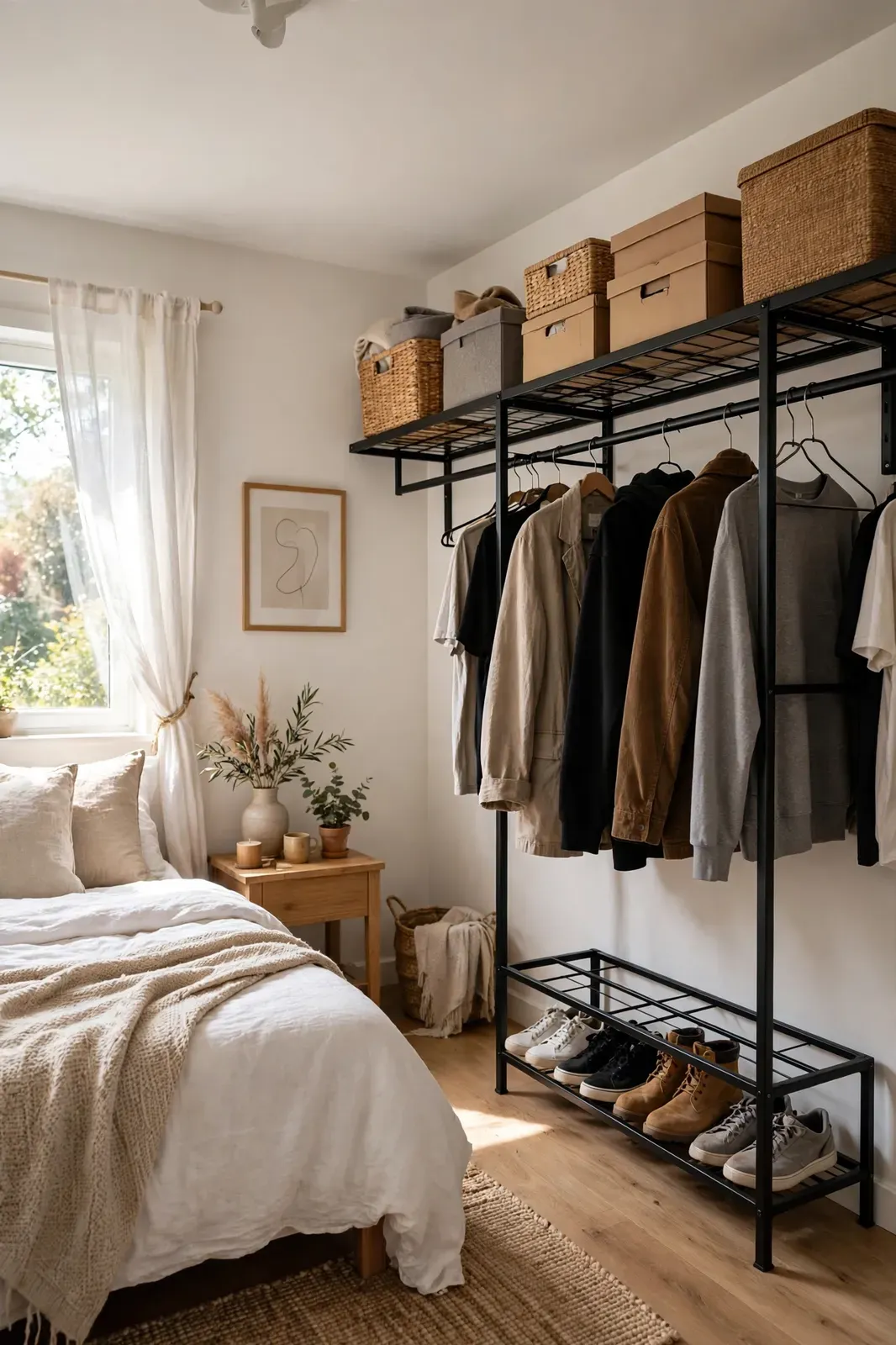
Wardrobe Open Rail Display: Budget and Buying Advice
A sturdy freestanding rail is a modest purchase, and wall-mounted rails with shelf brackets cost less again if you can fix into the wall. Spend on the rail itself and the hangers; save on everything decorative, because baskets, boxes and mirrors are easy to gather second-hand. Measure your longest dress before choosing rail height, and measure the wall before ordering a fixed system. If you are testing the idea, start with one freestanding rail for a month: if the habit suits you, build the fuller wall system with confidence.
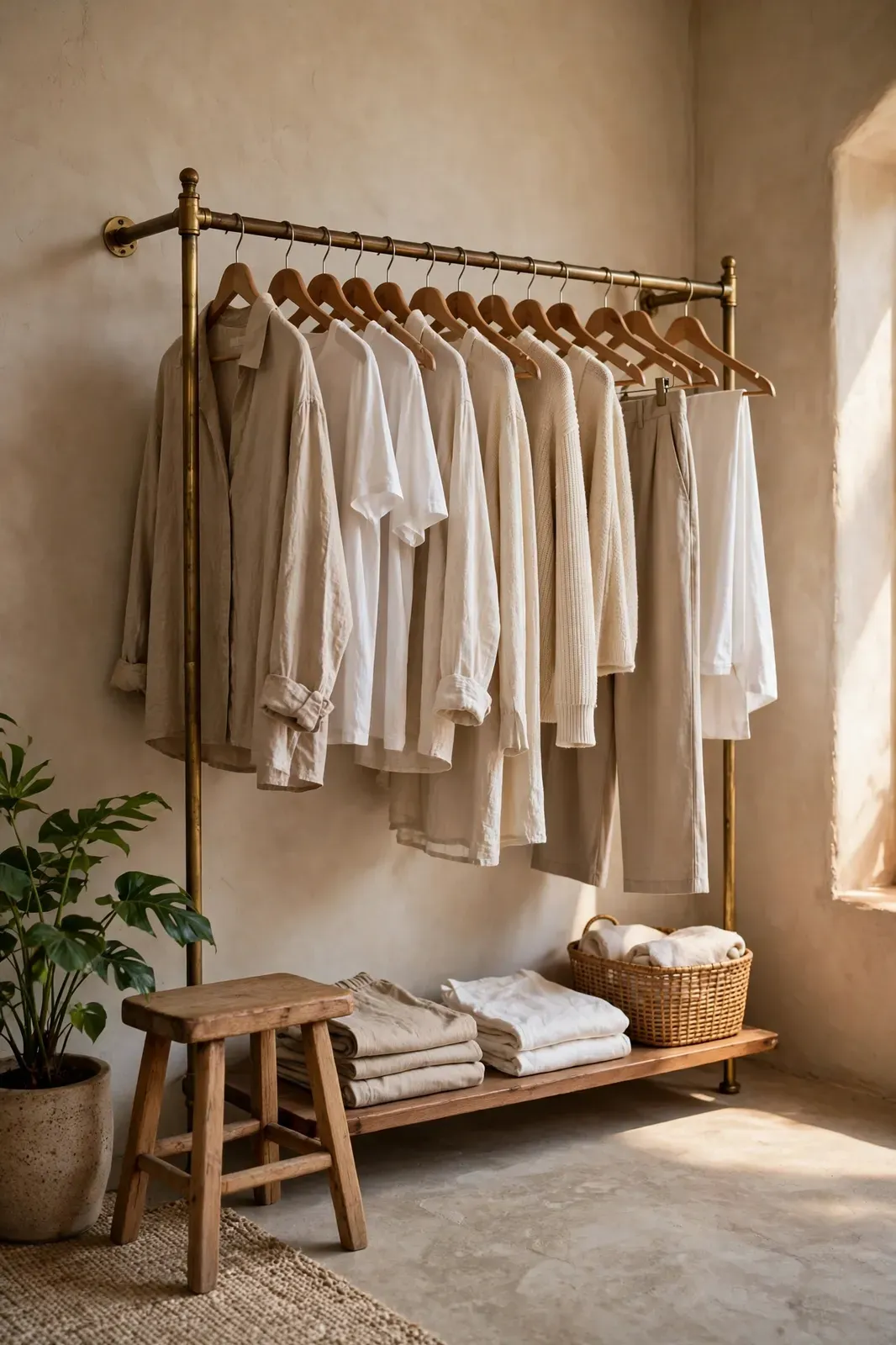
Wardrobe Open Rail Display: Common Mistakes to Avoid
Overfilling is mistake number one; a rail at 120 percent capacity looks messy and creases everything. Second is mixing hanger types and sizes, which destroys the calm line along the top. Third is hanging knitwear, heavy jumpers in particular, which stretch out of shape; fold them. Fourth is placing the rail in harsh direct sunlight, which fades one shoulder of every garment. Fifth is skipping the edit and displaying three seasons at once. The rail is a shortlist, and its whole charm is that everything on it earns its place.
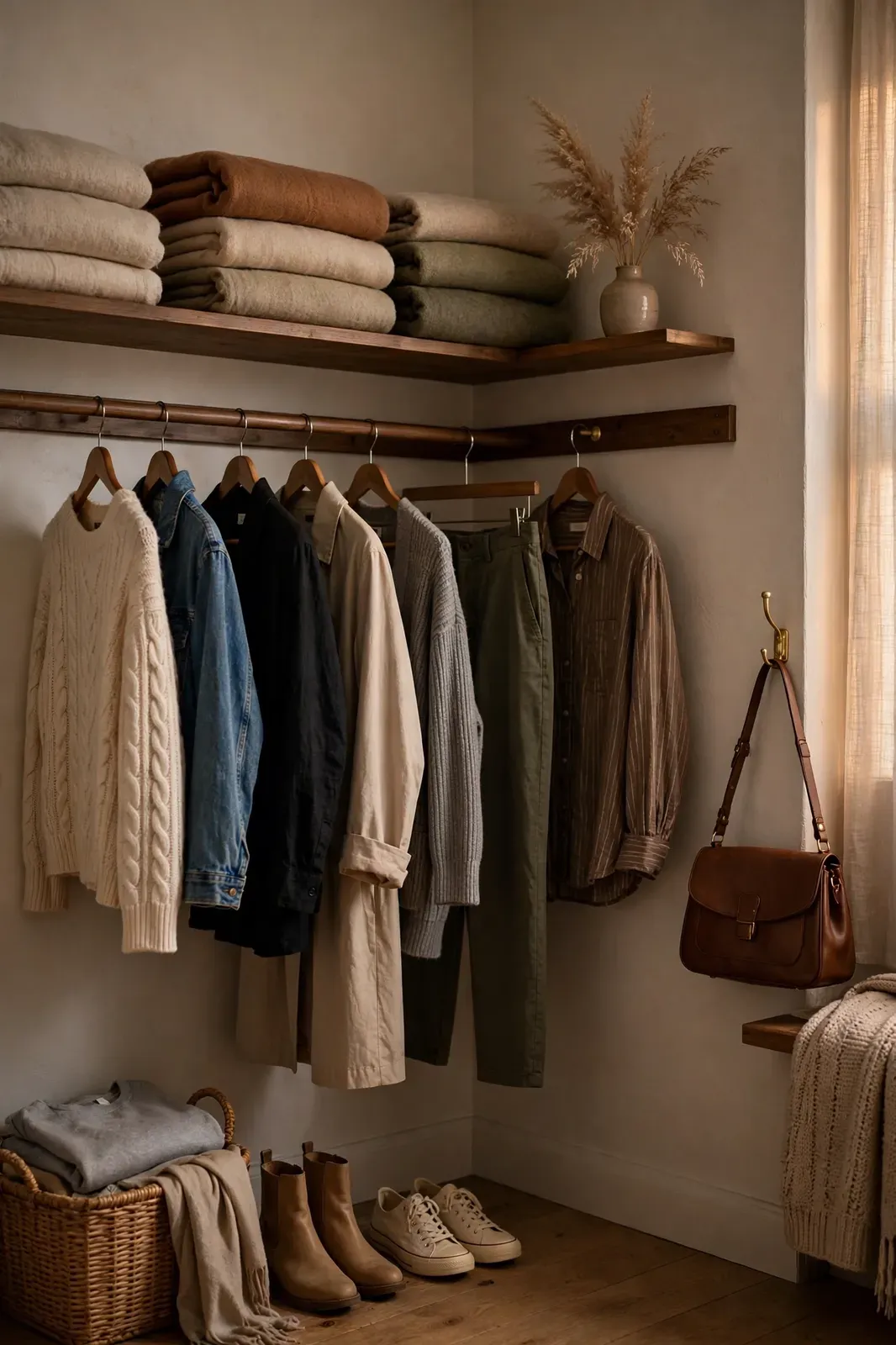
A Wardrobe Open Rail Display for Small and Rented Homes
The open rail is often the only wardrobe that honestly fits a small or rented room. A box room that would lose a quarter of its floor to a hinged wardrobe keeps almost all of it with a rail along one wall, and the room feels larger because you can see the wall above and beyond the clothes. In a rented home the freestanding version needs no drilling, moves rooms in minutes and leaves with you, which makes it a better buy than a flat-pack wardrobe that rarely survives a second assembly.
For a guest room, a short rail, five good hangers and a shelf for folded blankets tell visitors they are expected rather than accommodated. And in a child’s room, a low rail at their own height quietly teaches independence: clothes they can reach are clothes they can choose, hang up and put away themselves, which is a morning-routine gift no closed wardrobe can offer.
Frequently Asked Questions
Do clothes on an open rail get dusty? Clothes you wear regularly gather very little dust. The seasonal edit, a weekly shake of rarely worn pieces and an occasional lint roll keep an open rail perfectly presentable in a normal home.
How much weight can a clothes rail hold? A quality steel freestanding rail typically holds 20 to 30 kg, and a wall-mounted rail fixed into solid structure holds more. Check the maker’s rating and fix wall rails into studs or masonry, not plasterboard alone.
What should not go on the rail? Heavy knitwear, which stretches, and anything you have not worn in a year. Fold knits on a shelf, box the off-season pieces, and let the rail carry what you actually wear.
Can an open rail work in a small bedroom? It is often the best option in a small room, because it needs no door swing and only about 60 cm of depth. Run it along the longest clear wall or into an alcove.
How do I make it look tidy every day? Matching hangers, colour order within categories, space between hangers and a strict one-in, one-out habit. Two minutes a week resetting the order keeps it boutique-calm.
A wardrobe open rail display asks a little discipline and gives back a lot: faster mornings, clothes you actually wear, and a bedroom corner that looks like a small, well-run shop. Edit hard, hang with space, keep the hangers matching, and the rail will stay the calmest spot in the room.