When the cold settles in, the first instinct is to turn the heating up another notch and accept the bill that follows. But a room loses warmth in predictable places: bare floors pull heat from your feet, a thin sofa cover does nothing against a draught, and a bed made with a single summer duvet leaves you cold by 3 a.m. Winter layering rugs and throws works on all three fronts at once. You add soft, insulating layers where your body actually touches the room, and the thermostat can stay where it is for longer stretches of the day.
Table of Contents
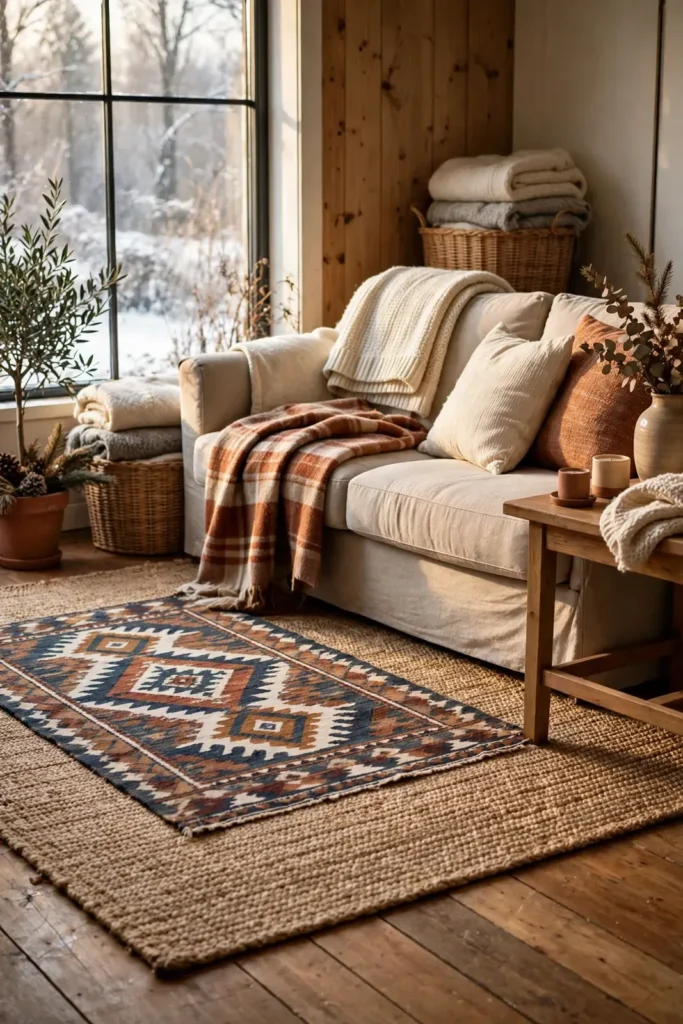
Why Winter Layering Rugs and Throws Works So Well
A floor is one of the largest cold surfaces in any home. Tiles, laminate and stone feel icy in January because they draw heat away from bare feet and from the air just above them. A rug breaks that contact. Two rugs break it better: a large, flat base rug covers the cold area, and a smaller, thicker rug on top adds the pile your feet sink into where you sit or stand most. The air trapped between the two layers is itself insulation, which is why layered rugs feel warmer than one rug of the same total thickness. This is the floor half of winter layering rugs and throws.
Throws work the same way on furniture. A sofa on its own is a cold seat for the first twenty minutes of an evening. A throw folded over the seat cushions, a second one for your legs, and cushions in heavier covers turn that same sofa into a place your body warms quickly and keeps warm. Wool, a natural fibre with a crimped structure, is especially good at this because its fibres trap pockets of still air and keep insulating even when the room is a little damp.
Start With the Floor: How to Layer Two Rugs Properly
Choose the base first. A flatweave in jute, sisal or low-pile cotton should be large enough to sit under the front legs of the sofa and chairs, anchoring the seating area. It does not need a pattern; its job is coverage and grip. Then place the top rug smaller, centred on the coffee table or the space in front of the sofa, so a border of the base shows on all sides. That visible border is what makes the combination look planned rather than piled.
Keep the top rug in the warmest material you can manage: wool or a wool blend first, then a dense synthetic pile, then cotton. A traditional rug, in use for centuries as floor insulation as much as decoration, earns that history in winter. Add a non-slip underlay beneath the base rug on hard floors; layered rugs can creep, and a shifting corner is both a trip hazard and a daily annoyance. In bedrooms, run the layered pair beside the bed rather than under it, so the first steps of the morning land on warmth.
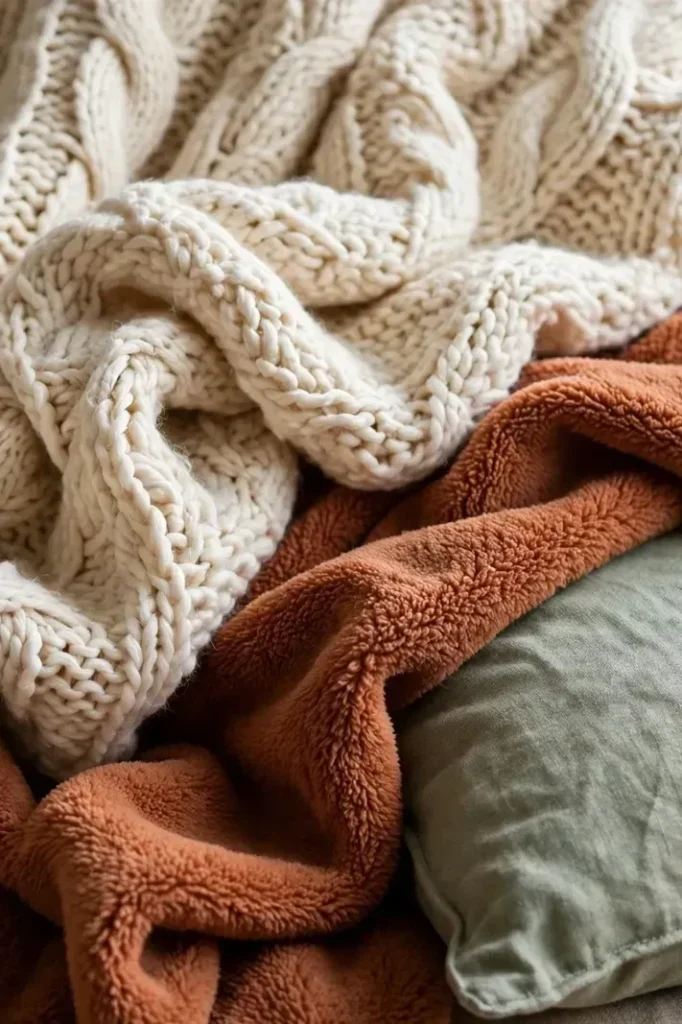
Winter Layering Rugs and Throws on Sofas and Armchairs
Think in threes for a family sofa: one throw across the seat or back where people lean, one folded within arm’s reach for legs and laps, and one spare rolled in a basket for guests. Vary the textures rather than matching them exactly. A chunky knit beside a smooth woven throw and a brushed fleece gives hands something interesting and lets each person pick the weight they like. With winter layering rugs and throws, the sofa becomes a warm zone of its own.
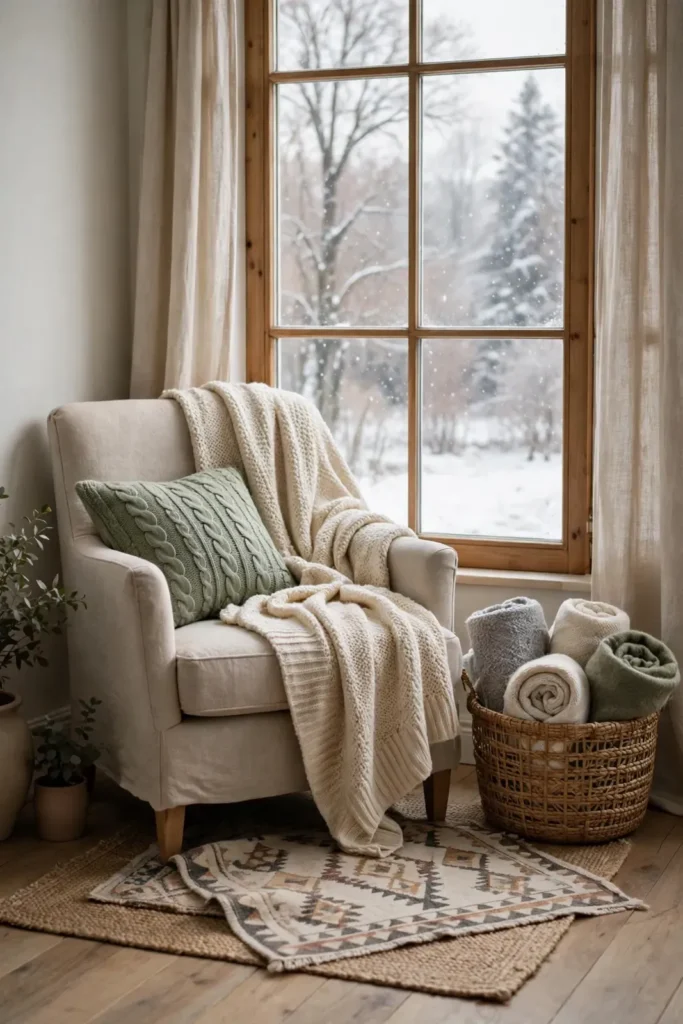
Drape with a little intention. A throw folded lengthwise over one arm and trailing onto the seat looks settled; a throw scrunched in a heap reads as laundry. Tuck the seat throw’s edge under the cushion so it stays put through an evening of shifting around. For armchairs, one throw folded over the back and one cushion in a heavy cover is usually enough — a single chair disappears under more than that. If you are planning the wider room around these layers, our guide to small living room layout ideas helps keep the seating and walkways working together.
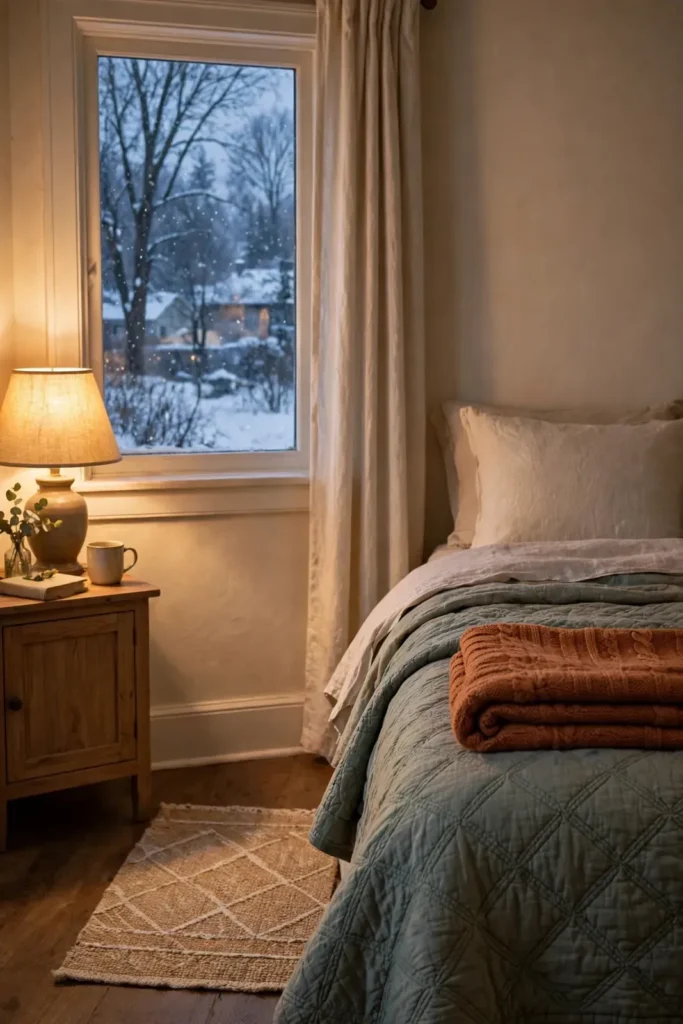
Winter Layering Rugs and Throws: Beds, Blankets and a Warmer Night
Night is when layering pays back most clearly. Keep the duvet you have, and add a folded throw or lightweight blanket across the foot of the bed. Feet are the body’s thermostat for sleep: a warm foot layer lets the rest of you settle under a lighter cover without the midnight chill that wakes people up. In very cold weeks, place a second blanket between the sheet and the duvet rather than on top, so its weight is held in place and its insulation sits close to the body. At night, winter layering rugs and throws work together, from the rug beside the bed to the layer across your feet.
Choose bed throws you can wash easily, because the foot of the bed collects more dust and pet hair than anywhere else. Keep one spare blanket folded in a bedroom basket or ottoman for the nights a guest stays or the temperature drops sharply. A small rug layered beside the bed — even a washable cotton one over a non-slip mat — finishes the routine: warm floor, warm feet, warm bed.
Winter Layering Rugs and Throws in Hallways and Forgotten Corners
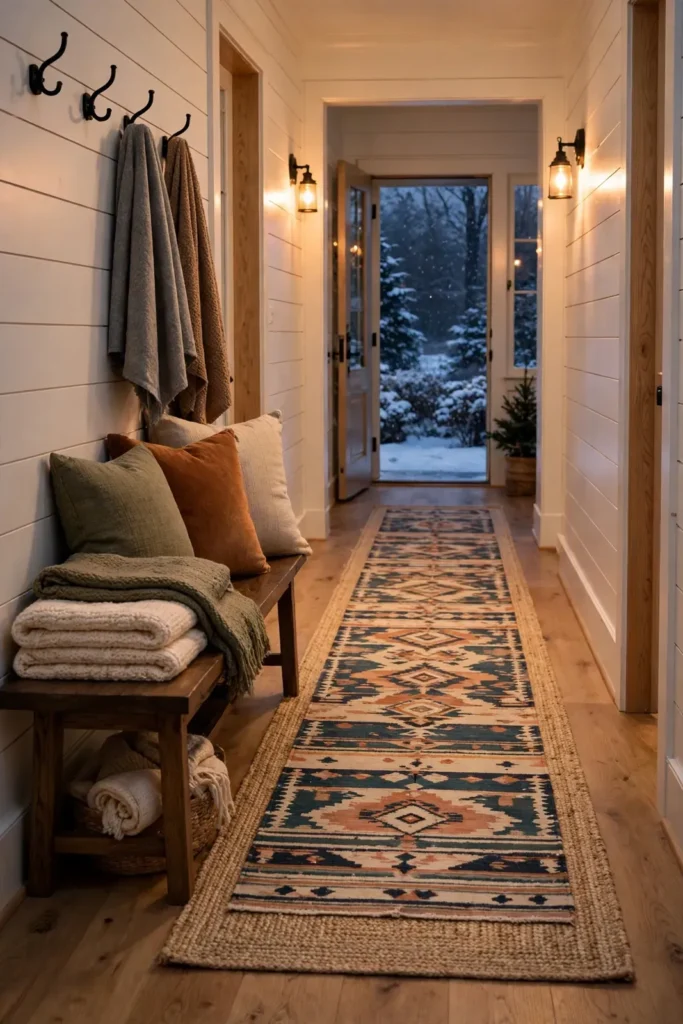
Hallways are draught corridors. A long runner, layered over a thin non-slip base, warms the route between rooms and catches the cold air rolling in under a front door. Choose a runner with a pattern or a darker tone here; hallways take mud, grit and wet shoes, and a pale plush runner will show every mark by February. A hallway is where winter layering rugs and throws often make the quickest difference.
Reading corners, window seats and the chair by a desk all benefit from the same treatment in miniature: a small rug underfoot, a throw over the chair, a cushion behind the back. These are the spots people abandon in winter because they feel cold, and a twenty-minute layering job brings them back into daily use without heating the whole house for one person.
Your Winter Layering Rugs and Throws Weekend: Step by Step
Step 1 — Audit what you own. Gather every rug, throw and spare blanket in the house into one room. Most homes already own more layers than they use; they are just stored in the wrong places.
Step 2 — Floors first. Clean the hard floors, lay underlay and base rugs, then position the top rugs and walk the routes in socks to check for slipping corners and trip edges.
Step 3 — Seats second. Dress the main sofa in the three-throw system, then each armchair with one throw and one heavy cushion cover.
Step 4 — Beds and hallway last. Add foot-of-bed layers and bedside rugs, then the hallway runner. Sleep one night, note any cold spot that remains, and move a layer there before buying anything.
Winter Layering Rugs and Throws — Budget Advice: Where the Money Actually Helps
Spend first on the rug your bare feet meet most — usually beside the bed or in front of the sofa. That single purchase changes every morning and evening. Spend second on one genuinely warm wool or wool-blend throw for the main seat. Everything else can be moved, borrowed from another room, or bought slowly. Prioritising this way keeps winter layering rugs and throws affordable.
Shop your own cupboards before any store: spare duvet covers make decent throw covers, and an unused guest blanket is a layer waiting for a job. When you do buy, check the fibre label rather than the photograph. A thin throw that looks chunky in pictures will not trap air, while a modest-looking wool blend will work for a decade.
Winter Layering Rugs and Throws — Common Layering Mistakes to Avoid
The first mistake is layering without grip: rugs stacked on polished floors slide, bunch and trip people. Underlay is not optional. The second is blocking heat sources — a thick rug pushed against a radiator or a throw draped over a heater wastes the very warmth you are paying for, and draping fabric over heaters is a fire risk. Keep layers clear of heat vents and radiators.
Third, avoid making every surface the same depth of pile. A room layered only in thick textures feels heavy and is hard to clean; contrast is what keeps it comfortable. Fourth, do not forget washing. Throws and small rugs in daily winter use need a wash every few weeks, so choose sizes and fibres your machine can handle.
Frequently Asked Questions
Does layering rugs really make a room warmer?
It makes the room feel warmer where it counts: at floor level and on the surfaces your body touches. Two rugs with air trapped between them insulate bare floors noticeably, and warmer feet change how warm your whole body judges a room to be.
What size should the top rug be compared with the base rug?
Leave a visible border of the base rug on all sides — roughly a hand’s width to a forearm’s length. That border frames the top rug and proves the layering is deliberate. If the two are nearly the same size, the edges curl and the pair looks accidental.
Which throw material is warmest for the money?
Wool and wool blends trap the most air for their weight and last for years. A good brushed fleece is the budget alternative: lighter, cheaper and easy to wash, though it wears out sooner. Cotton throws are better for mild winters and allergy-prone homes.
How many throws does one sofa need?
Three is a practical number: one dressing the seat or back, one for legs and laps, and one spare for guests. More than that becomes tidying work, and the sofa starts to look like a linen cupboard.
Can I layer rugs over carpet?
Yes, and it is a good way to add warmth and define a seating area in a rented home. Use a thin top rug with a grippy backing so it does not ripple on the carpet pile, and keep the combination away from door swings.
A warm home in winter is rarely about one big purchase. It is about layers in the right places: under your feet, over your legs, and across the foot of the bed. Start with what you own, fix the cold spots one by one, and the heating bill has a chance to surprise you on the lower side this year.