Table of Contents
Few things date a room faster than wood that almost matches. The floor is one honey tone, the table a slightly different honey, the sideboard a third — and the whole room hums with a quiet wrongness nobody can name. This wood tone matching furniture guide names it, then fixes it. The secret is that woods do not need to match at all; they need to agree — on undertone, on contrast, and on which piece leads. Once those three decisions are made, mixing light oak floors with a dark walnut table stops being a risk and becomes the most natural-looking thing in the house.
Undertone First: The Rule Behind Wood Tone Matching Furniture
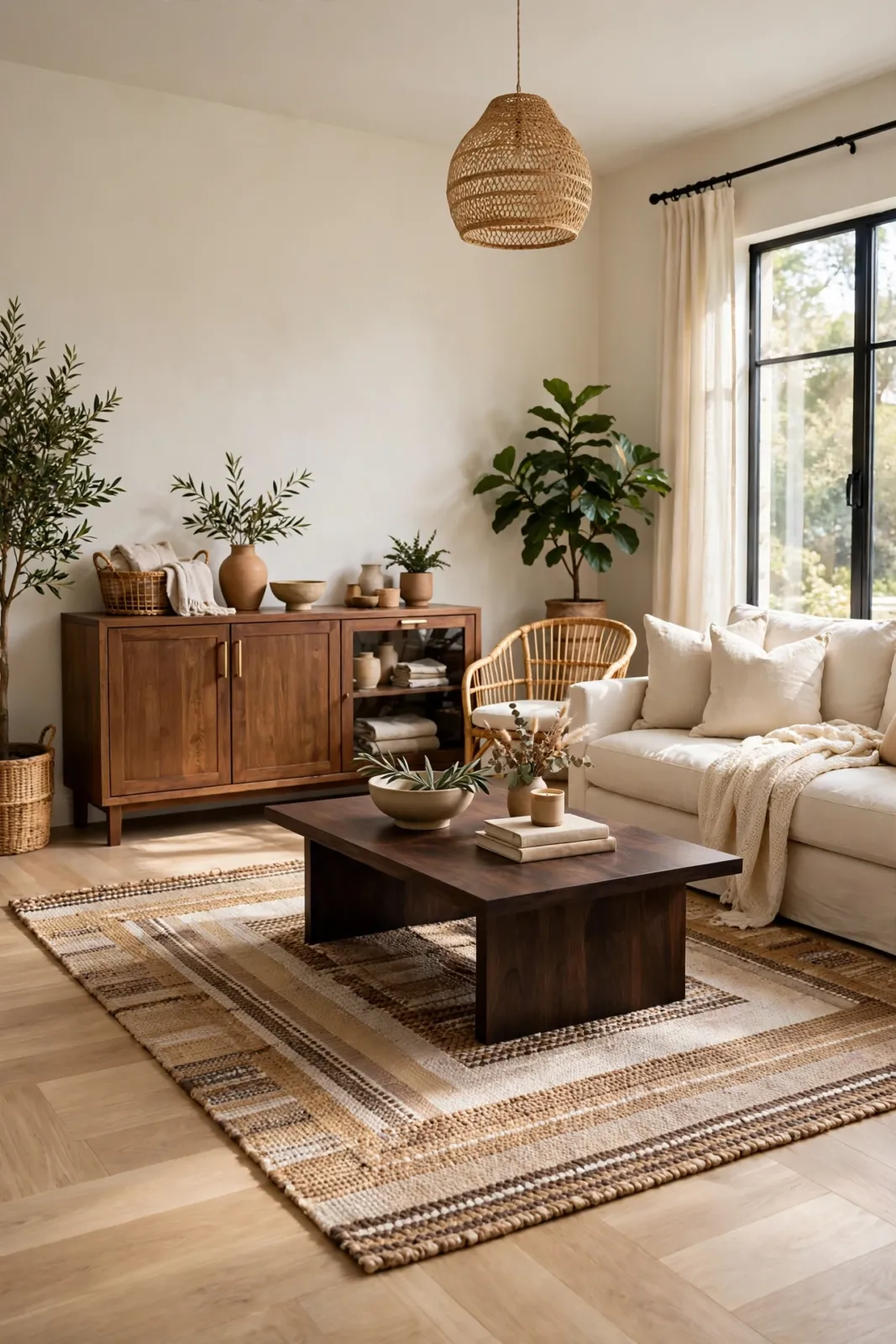
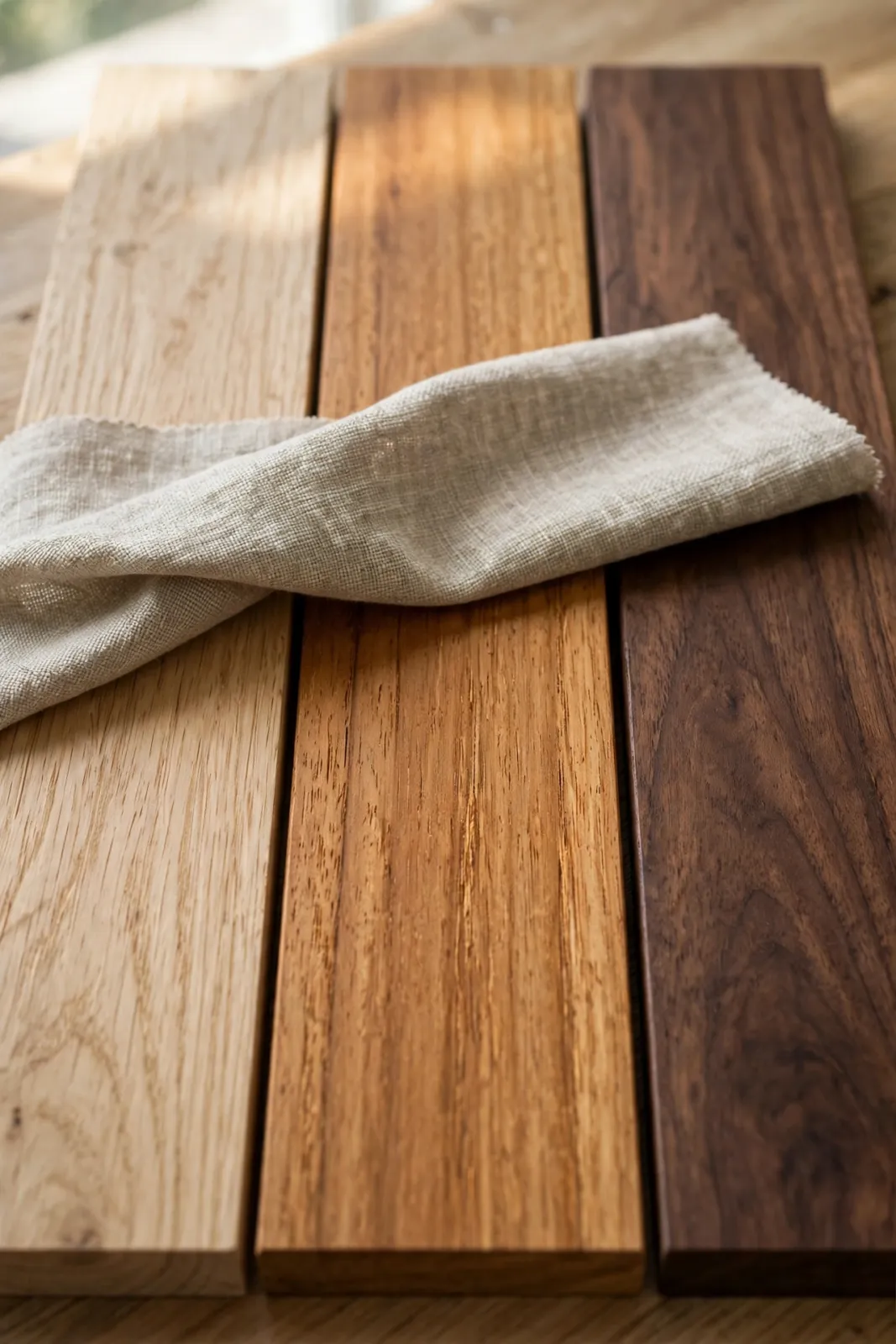
Every wood has an undertone — warm (red, orange, golden), cool (grey, ashy, taupe) or neutral. Matching succeeds or fails here, long before it is about light versus dark. Warm woods live happily together even at very different depths: a pale warm oak floor and a deep warm walnut table share a family resemblance your eye reads instantly. A warm pine beside a grey-washed cool oak, at nearly the same depth, will quarrel all day. Test undertone by looking at the wood in daylight and asking what colour you would call its shadow: peach and amber mean warm; silver and mushroom mean cool.
If your room already holds clashing undertones, you do not have to replace furniture. A large rug in a bridging colour, upholstery in a warm-or-cool neutral chosen deliberately, and even the wall colour can pull a mixed set into agreement — you are surrounding the woods with a referee. Wood finishing also shifts undertone: oils warm and deepen, while liming and grey stains cool a piece down, which is why one refinished piece can sometimes reconcile a whole room.
Contrast on Purpose: Light, Mid and Dark
Once undertones agree, arrange depths deliberately. The calm formula is one dominant depth — usually the floor or the largest piece — supported by one contrasting depth, with mid-tones as the bridge. Light floor, dark table, medium sideboard: each piece is clearly itself, and the eye travels happily between them. The uncomfortable zone is the near-miss, two pieces within a shade or two of each other but not equal. Near-misses read as mistakes; clear contrast reads as a decision.
Repeat each depth at least twice in the room. A single dark piece among light woods looks lost; the same piece with a dark picture frame, a dark lamp base or a second dark stool looks curated. This repetition rule is the quiet engine of most “collected” rooms. Wood grain plays a part too: bold, cathedral grain counts as visual pattern, so pair a dramatic grain with calmer, straighter-grained pieces rather than two dramatic grains shouting across the room.
Step by Step: Auditing a Room’s Wood
Step one: photograph the room in plain daylight, no lamps. Step two: list every wood surface — floor, doors, skirting, each furniture piece — and label each warm, cool or neutral, and light, mid or dark. The list usually reveals the problem in under a minute: five warms and one cool intruder, or six pieces all crowding the same mid-tone.
Step three: choose the leader — the surface you cannot or will not change, almost always the floor. Step four: decide the contrast plan from the leader: if the floor is light, give the room one dark anchor piece; if the floor is dark, keep large furniture lighter and let small pieces carry the depth. Step five: fix the worst near-miss first, by moving it to another room, refinishing it, or bridging it with textiles. Step six: repeat each depth once more somewhere small. Live with the result a fortnight before buying; wood rooms settle slowly in the eye.
The Floor Decides More Than You Think
Floors cover the largest area, so their undertone is the room’s constitution. Warm floors welcome warm and neutral furniture of any depth and forgive a great deal; cool grey floors are the fussy ones — they demand cool or truly neutral pieces and make warm pine look orange by contrast. If you are choosing a new floor for a home full of warm furniture, a neutral mid-tone floor is the peacemaker that lets everything you own stay.
Rugs are the floor’s negotiator. A rug covering the centre of the room reduces the floor’s vote and creates a neutral island on which mixed furniture can meet. In rooms where the floor and a beloved table genuinely clash, a large, low-contrast rug solves in an afternoon what refinishing would take a month to do — put the effort into choosing its undertone to sit between the two woods.
Budget and Buying Advice
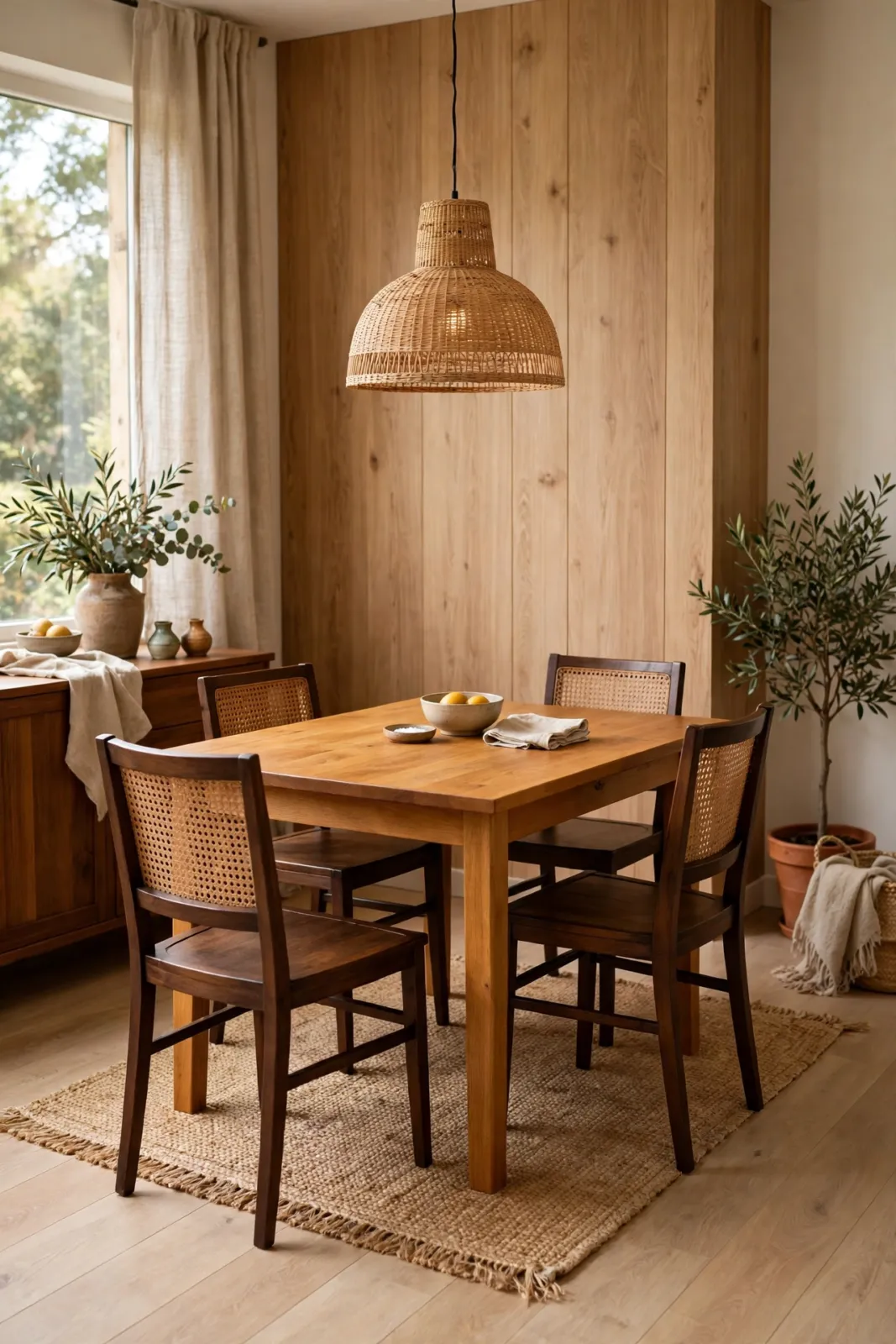
The cheapest fixes are moves and finishes, not furniture. Swapping two pieces between rooms costs nothing and resolves a surprising share of clashes, because most homes have the right pieces in the wrong rooms. A tin of tinted oil or stain, used on the single worst near-miss piece, costs little and an afternoon. Sanding and re-oiling a table that has yellowed with age often brings it back into the family entirely.
When buying new, take a drawer front, a cushion and daylight photos of your floor to the shop — memory of wood colour is notoriously unreliable under showroom lighting. Buy the large piece first and live with it before matching anything to it. And be wary of full matching suites: identical wood on table, chairs, sideboard and shelves is the fastest route to a flat, showroom room. Agreement beats sameness, in budgets as in looks.
If warm metal is part of the mix, brass and wood traditional accents shows how brass can bridge light and dark timber, acting as a warm accent that both depths agree on.
Common Mistakes to Avoid
Mistake one is the near-miss: buying “oak effect” pieces from three shops, each a slightly different oak. Mistake two is mixing undertones unknowingly — usually a grey-toned floor chosen from a trend photo, meeting a house full of warm inherited furniture. Mistake three is letting small woods multiply without a plan: frames, stools, trays and bowls in six unrelated tones read as clutter even when each piece is lovely.
Mistake four is judging wood under warm evening bulbs at the shop or at home; always check in daylight, ideally beside the floor it will live with. Mistake five is painting a good piece in a panic. Paint is nearly permanent; a move, a rug or a refinish usually solves the clash while keeping the wood — and the option to change your mind — alive.
Frequently Asked Questions
Can I mix light and dark wood in a small room?
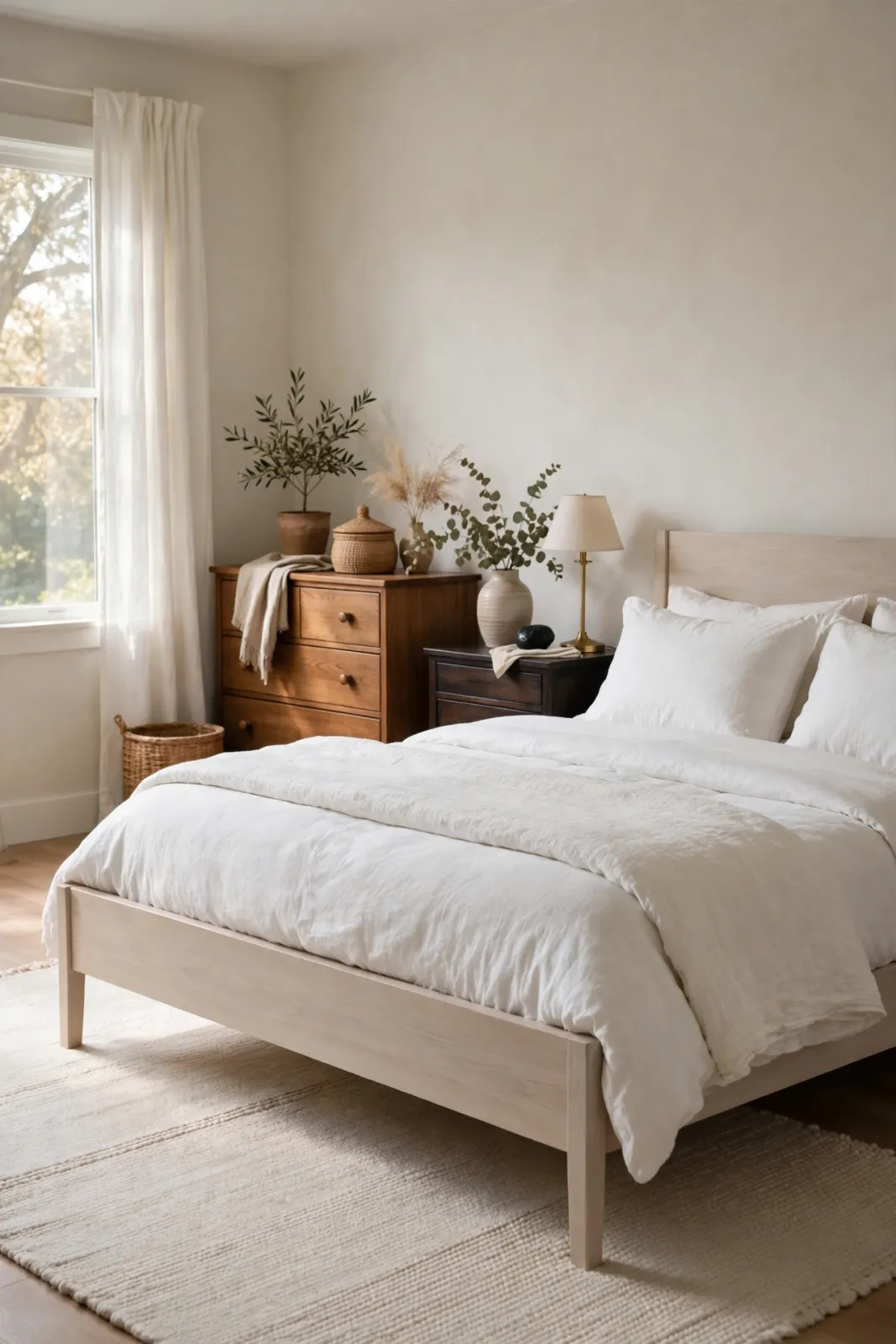
Yes — small rooms often look better with clear contrast than with everything mid-toned, which turns muddy at close range. Keep the largest surfaces (floor, wardrobe) one depth, and let contrast live in smaller pieces: a dark bedside table, a light stool. Repeat each depth once and the room reads deliberate.
How do I tell a wood’s undertone?
Look at it in daylight beside a sheet of plain white paper. If the wood throws peach, gold or red against the white, it is warm; if it throws grey or greenish taupe, it is cool. Phone photos with flash off, taken at noon, show the same thing surprisingly well.
My floor and table clash and I cannot replace either. What now?
Bridge them. A large rug in a tone between the two, chairs or upholstery in a neutral that leans toward the floor’s undertone, and one repeated accent in the table’s tone elsewhere in the room will reconcile most clashes. Refinishing just the table’s top is the next step if textiles are not enough.
Should skirting boards and doors match the floor?
They do not need to match, and painted skirting in the wall’s family often looks cleaner than a third wood tone competing at floor level. If doors are wood, bring them into the audit list like any other piece — one repeated tone among the furniture will usually tie them in.
Is a matching furniture set ever a good idea?
A pair — two bedside tables, two matching chairs — gives useful symmetry. A full suite in one identical finish tends to flatten a room and shows every near-miss when one piece is replaced later. Buy pieces that agree in undertone and depth instead; they will survive future changes far better.
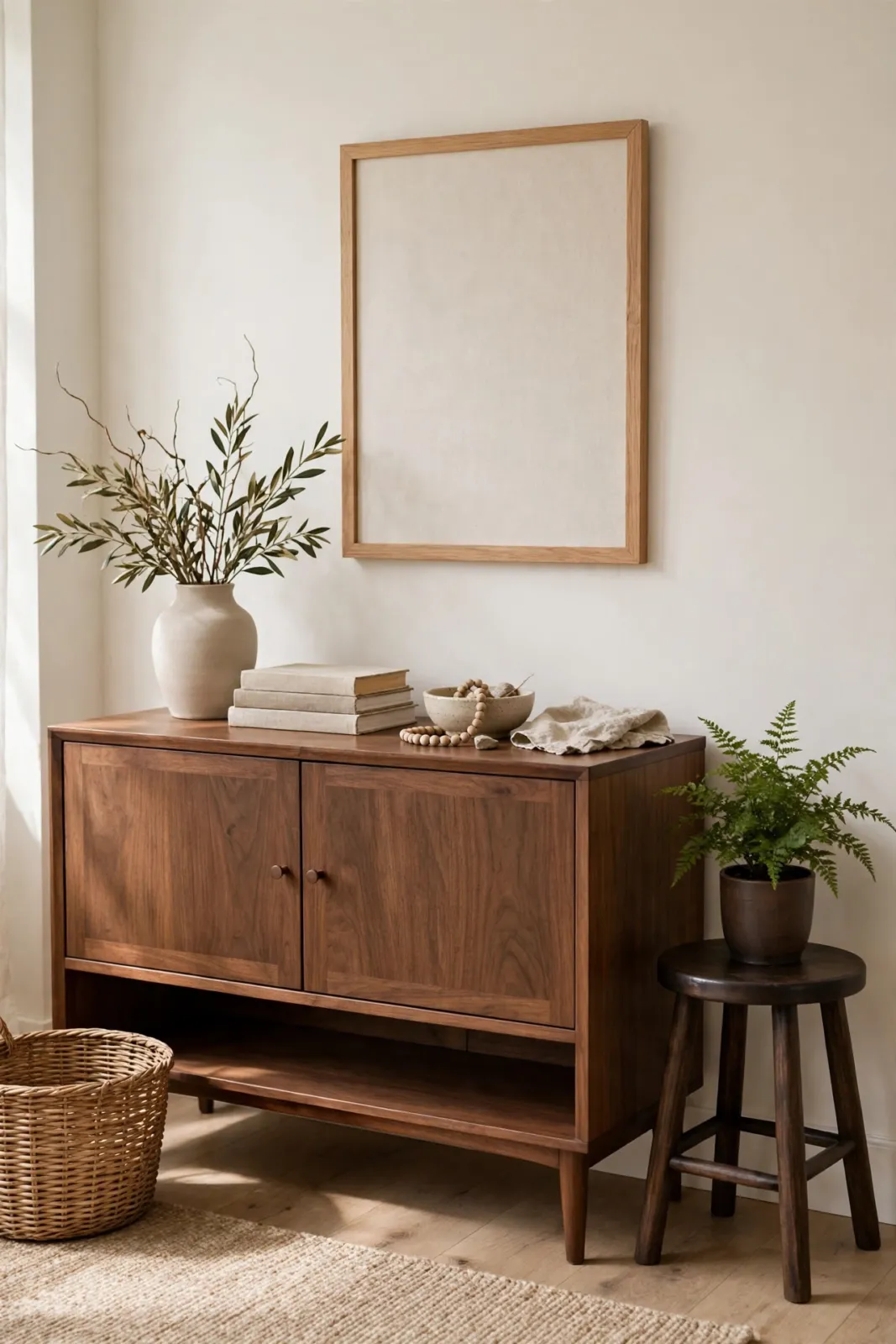
Woods That Agree, Rooms That Settle
Wood tone matching furniture is not about sameness at all. Agree on undertone, choose contrast on purpose, let the floor lead, and repeat each depth twice — four decisions, and mixed woods stop looking accidental. The inherited table, the new sideboard and the old floor can all stay. They just needed introducing properly.
Remember the order. Wood tone matching furniture begins with undertone. Wood tone matching furniture is decided by the warmth or coolness under the surface, never by depth alone. Wood tone matching furniture asks for contrast on purpose: one leading depth, one supporting depth, nothing in between by accident. Wood tone matching furniture lets the floor lead, because the floor is the largest voice in the room. Wood tone matching furniture also forgives the near-miss. Bridge it with a rug, repeat the depth elsewhere, and wood tone matching furniture turns a clash into a choice. That is wood tone matching furniture in one breath.
That is the quiet promise of wood tone matching furniture: pale oak, warm teak and dark walnut sharing one room at ease. Wood tone matching furniture repeats each depth twice, so no single piece stands alone. Wood tone matching furniture keeps undertones in agreement — warm with warm, cool with cool. Wood tone matching furniture turns separate pieces into one settled home. And wood tone matching furniture rewards patience: learn it once, and wood tone matching furniture makes every next room easier. In the end, wood tone matching furniture is not a rule book. Wood tone matching furniture is a habit of seeing.