Table of Contents
Some rooms have everything — good light, decent furniture, a colour you like — and still float. Nothing feels anchored; your eye slides around and finds nowhere to rest. The fix decorators reach for is contrast, and the strongest, cheapest contrast is black. Black accents grounding a room is not about turning a home dark or dramatic. It is about placing a few deliberate dark notes — a frame, a lamp base, a door handle, a window edge — so the pale, soft majority of the room suddenly looks intentional.
Think of it the way a photograph needs true black to look crisp. Without a darkest value, every other colour weakens. A room works the same way, and the doses required are smaller than most people expect.
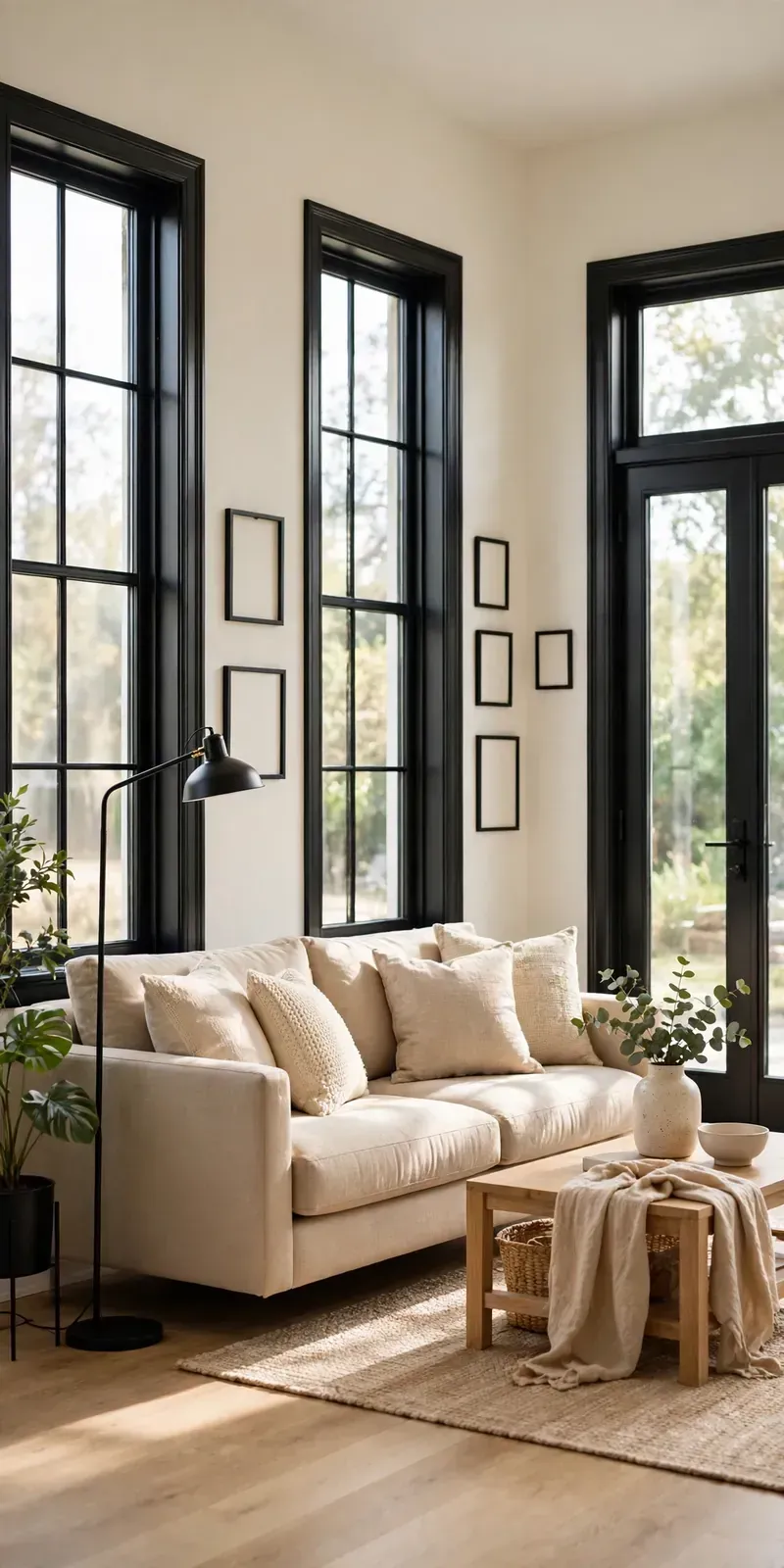
Why Black Accents Grounding a Room Works in Almost Any Style
Black is the one colour that belongs to every period and style. Traditional blacksmith-made ironwork, modern matte hardware and Scandinavian black-framed prints are all the same visual note: the darkest possible value, which the eye reads as weight and certainty. Historically that note came from wrought iron — hinges, latches, bed frames and gates whose dark silhouettes structured otherwise pale rooms for centuries. Today’s powder-coated steel and matte black finishes are the direct descendants of that ironwork.
Black also outlines. It draws the edges of a room — window frames, picture frames, the legs of a table — so shapes become readable instead of dissolving into each other. In the language of interior design, this is contrast doing structural work: it defines the architecture of a space without any building at all, which is why a handful of black pieces can reorganise a room you thought needed new furniture.
Where Black Earns Its Place: Frames, Doors and Lines
Start with the room’s lines. Black picture frames are the easiest entry: a gallery wall in mismatched pale frames looks scattered, while the same prints in slim black frames become a single composed statement. Window frames and interior doors painted black have the same effect at architectural scale — they turn openings into deliberate features, and they are paint, not purchases.
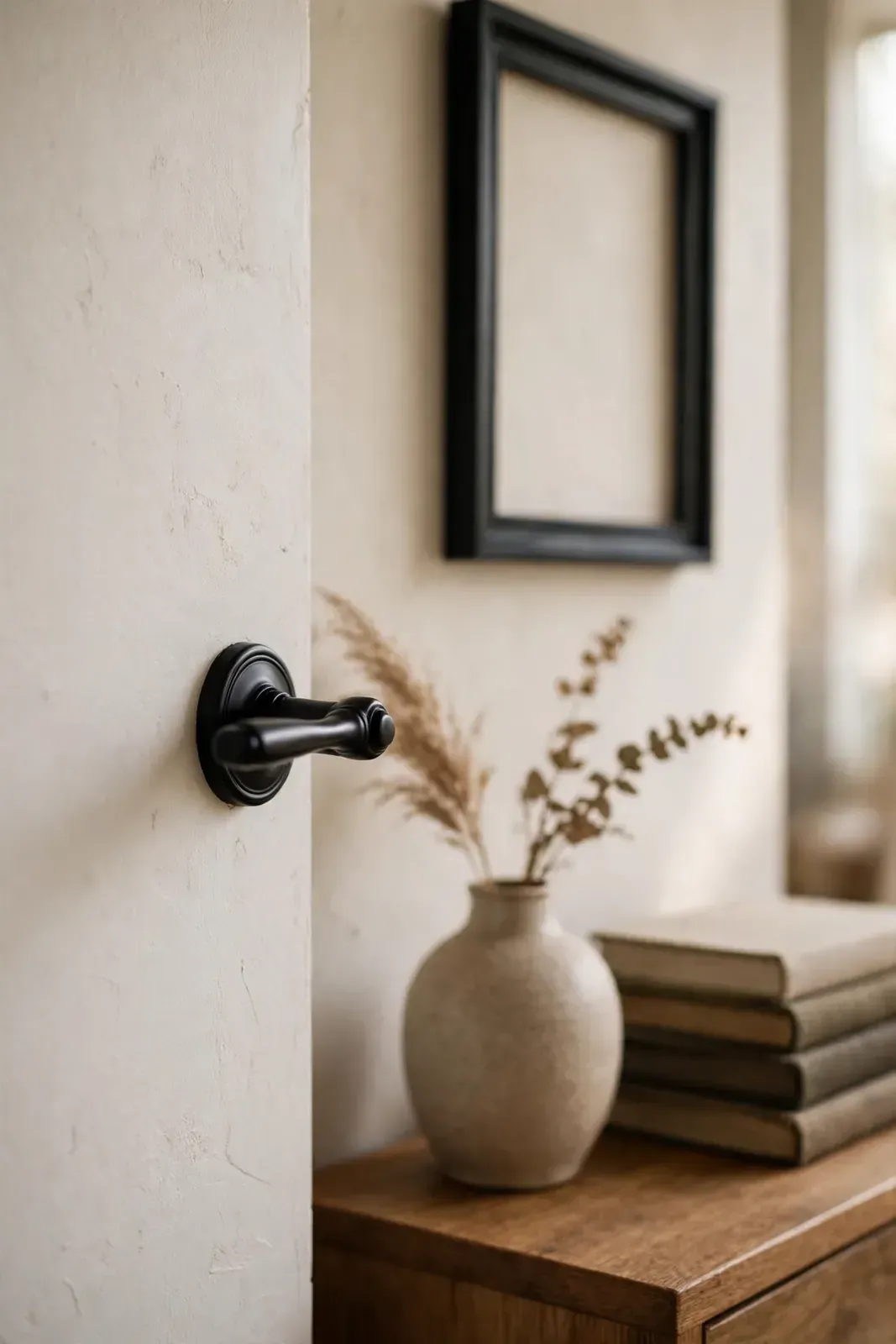
Furniture legs, lamp bases and side-table frames form the next layer of lines. A pale sofa on pale legs over a pale rug can look like it is hovering; the same sofa with dark legs, or one black-framed side table beside it, sits down properly. Curtain rods, cabinet handles and light switches are the smallest lines of all, and changing them to matte black ties a room together quietly, especially in kitchens and hallways where you see many of them at once.
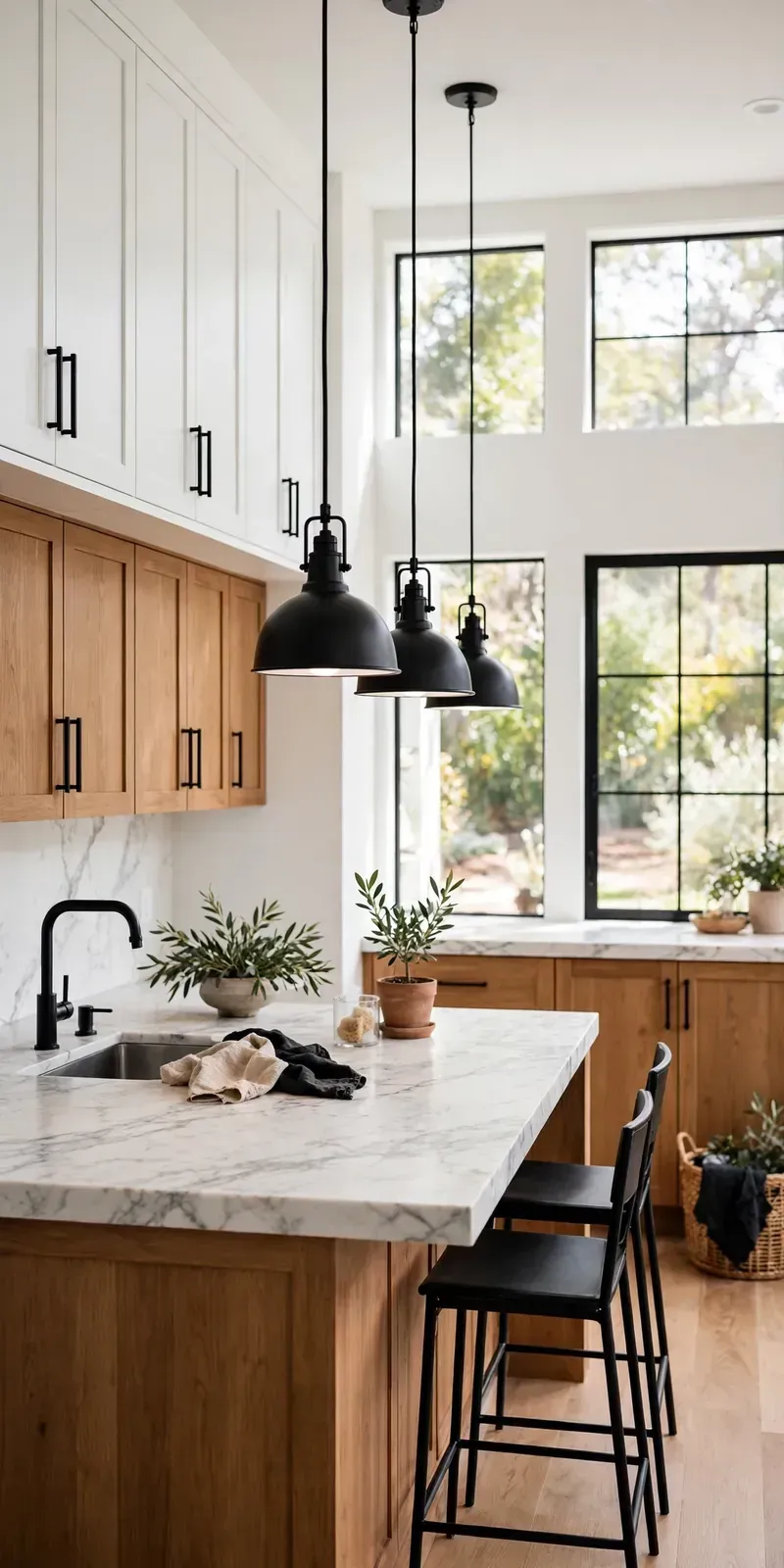
Black Accents Grounding a Room in Kitchens and Bathrooms
Kitchens forgive — and reward — more black than living rooms do. Matte black taps, handles and pendant lights over an island give white or wood cabinetry a finished, deliberate edge, and they hide the visual noise of a working room behind a few strong silhouettes. The rule is consistency: choose black for all the small metal in the room, or none of it. One black tap among chrome handles looks like a replacement part; a full set looks like a decision.
Bathrooms work similarly. A black-framed mirror, black towel rail and black tapware against white tile is a combination that has survived every trend cycle because the contrast is doing honest work. Keep surfaces matte rather than gloss — gloss black shows every water spot and fingerprint, while matte and powder-coated finishes stay calm in steamy, splashy rooms.
How to Add Black Accents Grounding a Room, Step by Step
Step one: photograph the room and squint at the photo. Where does your eye fail to settle? Those drifting zones need the anchor. Step two: add black at the room’s edges first — frames, a mirror, the door or its handle — because edges organise everything inside them. Step three: place one black piece low (legs, a basket, a side table) and one at eye level, so the weight is distributed rather than floating at picture height.
Step four: repeat black in at least three places, at different scales. The decorator’s rule of three applies with force here: a single black object looks accidental, a pair looks like a coincidence, three or more read as a scheme. Step five: soften. Add the warm counterweights — wood, woven texture, a plant, warm lamplight — because grounding only works when there is something soft to ground. Step six: live with it a week before adding more; black is potent, and most rooms reach “enough” sooner than expected.
Balancing Black With Warmth: Wood, Texture and Light
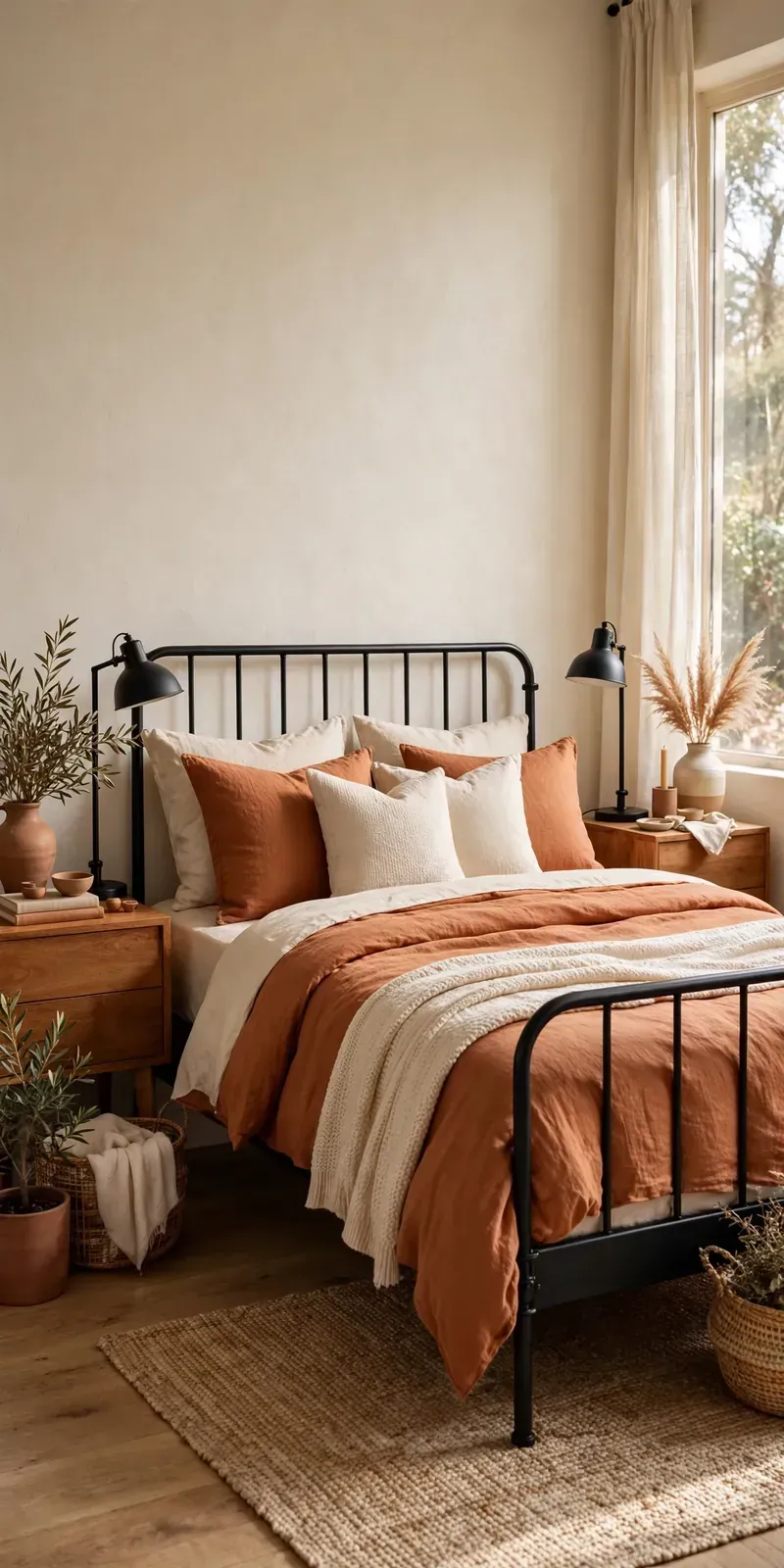
Black’s partner is warmth. This is the part of black accents grounding a room that people skip, and it is the part that makes the contrast feel kind rather than stark. Mid-tone and dark woods — walnut, oak, teak-look finishes — share black’s depth without matching it, so a black-framed mirror over a wooden console feels composed rather than stark. Woven textures do the same job at the soft end: jute rugs, linen cushions, cane and rattan all tell the eye that the black is there to serve comfort, not to make a statement.
Light decides whether black reads as cosy or cold. Warm bulbs and at least one pool of lamplight near your largest black piece keep it in the “evening library” family rather than the “showroom” one. And give black something green nearby when you can: a plant against a black-framed window or beside a black console is one of the most reliable vignettes in decorating, because living green and true black sharpen each other.
Budget and Buying Advice for Black Accents
Black accents grounding a room is the friendliest route for a small budget, because paint does so much of the work. A tin of matte black paint transforms tired frames, a dated mirror, an old side table or a door, and spray paint made for metal revives lamp bases and hardware for very little. The second-hand market is full of iron and steel pieces — bed frames, candlesticks, trivets, plant stands — that need only a clean and, occasionally, one coat of paint. In other words, black accents grounding a room is achievable at almost any price point.
Spend real money only where hands and water test the finish: taps, shower fittings and frequently used door handles, where cheap black coatings chip to reveal bright metal underneath. For those, powder-coated or PVD finishes are worth their premium. For everything else — frames, legs, lamps, trays, planters — inexpensive is fine, because black is visually identical at almost every price point once it is matte.
Common Mistakes With Black Accents G
The most common mistake is the lonely accent: one black cushion or a single black vase, which looks like it wandered in from another house. Black must repeat to read as intention. Repetition is what turns single objects into black accents grounding a room. The second mistake is gloss. Shiny black plastic and lacquer reflect light in hard patches and look cheap at exactly the moments matte black looks expensive; if an item is glossy and cannot be painted, it probably should not be the room’s anchor.
Third, beware the black hole effect in small, dark rooms: black furniture against dark walls with little light collapses into a shapeless mass. In such rooms use black only as line and frame, never as the big surfaces. And finally, do not let black become the only dark value in an otherwise pastel room without a bridge — a mid-tone wood or a deep cushion colour between the black and the pale shades keeps the jump from feeling abrupt.
Frequently Asked Questions
How much black do black accents grounding a room actually need?
Far less than you think. For black accents grounding a room, roughly five to ten percent of the visible surfaces, repeated in at least three places, grounds most rooms. A door, a set of frames and a lamp can be the entire allowance for a small bedroom. That small allowance is black accents grounding a room in practice.
Will black accents make my small room look smaller?
Used as lines and frames, black accents grounding a room does the opposite — it defines the edges, which makes the space read more clearly, not smaller. It is large black surfaces, like a whole sofa or wall in a tiny dark room, that can close a space in.
Can black accents work with a soft, feminine style?
Yes, and they often complete it. Black frames and one black side table give floral and pastel schemes the contrast they need to look finished rather than sugary. Keep the black pieces slim and matte and the balance stays gentle — that is black accents grounding a room at its softest.
Should all my black pieces be exactly the same black?
They should share a finish family — all matte or all satin — but exact colour matching matters less with black than with any other colour. Black accents grounding a room is forgiving that way: slight variations between iron, painted wood and powder-coated metal read as texture, not error.
What is the cheapest way to test black accents?
Paint. One small tin of matte black on your existing frames and a mirror gives you the full effect for the price of a takeaway meal, and it is reversible in an afternoon if you dislike it — the simplest try-out of black accents grounding a room there is.
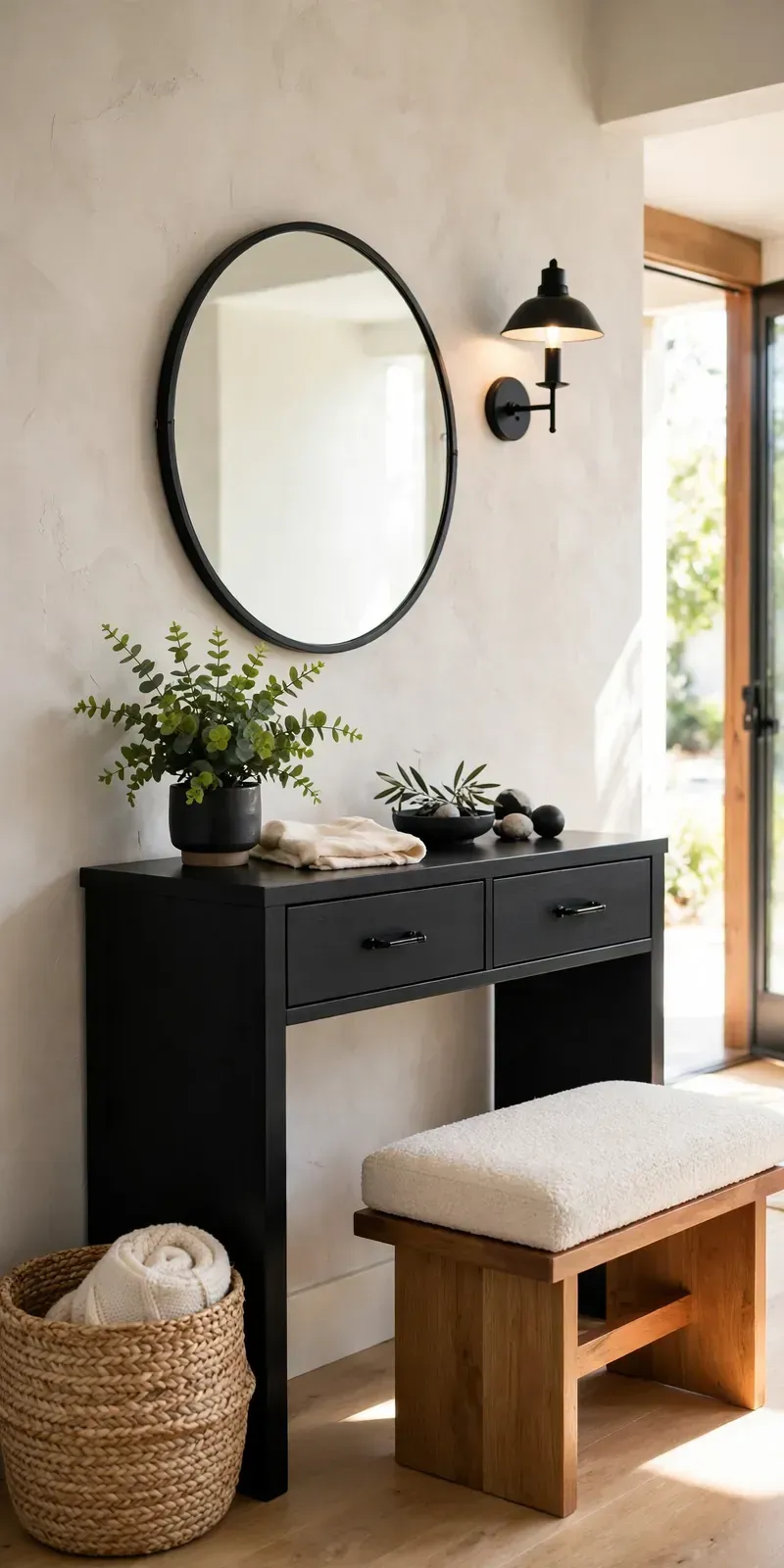
Give the Room Its Darkest Note
Black accents grounding a room is a small, learnable discipline: edges first, three repeats minimum, matte always, and warmth standing by to soften the result. Photograph your floatiest room, paint its frames, and add one low, one high and one handheld black note. The furniture you already own will look like it finally knows where it lives.