Table of Contents
One curtain is rarely enough. Sheers alone leave you exposed after dark and woken at dawn; blackout curtains alone turn every daytime room into a cave while they are closed, and a bare frame while they are open. Window treatment layering, sheer plus blackout on the same window, solves both halves of the day: the sheer filters light and softens the view while the sun is up, and the blackout panel draws across at night for privacy, darkness and insulation. It is the arrangement hotels use for a reason, and it is far easier to fit at home than most people expect.
This guide explains how window treatment layering works in practice: the hardware that holds two layers on one window, which fabrics earn their place, fitting steps in the right order, honest costs, and the mistakes that leave layered windows looking bulky instead of tailored. A window treatment, in the broad sense, covers everything from blinds to shutters to curtains; here we focus on the soft, two-layer curtain combination that suits most living rooms and bedrooms.
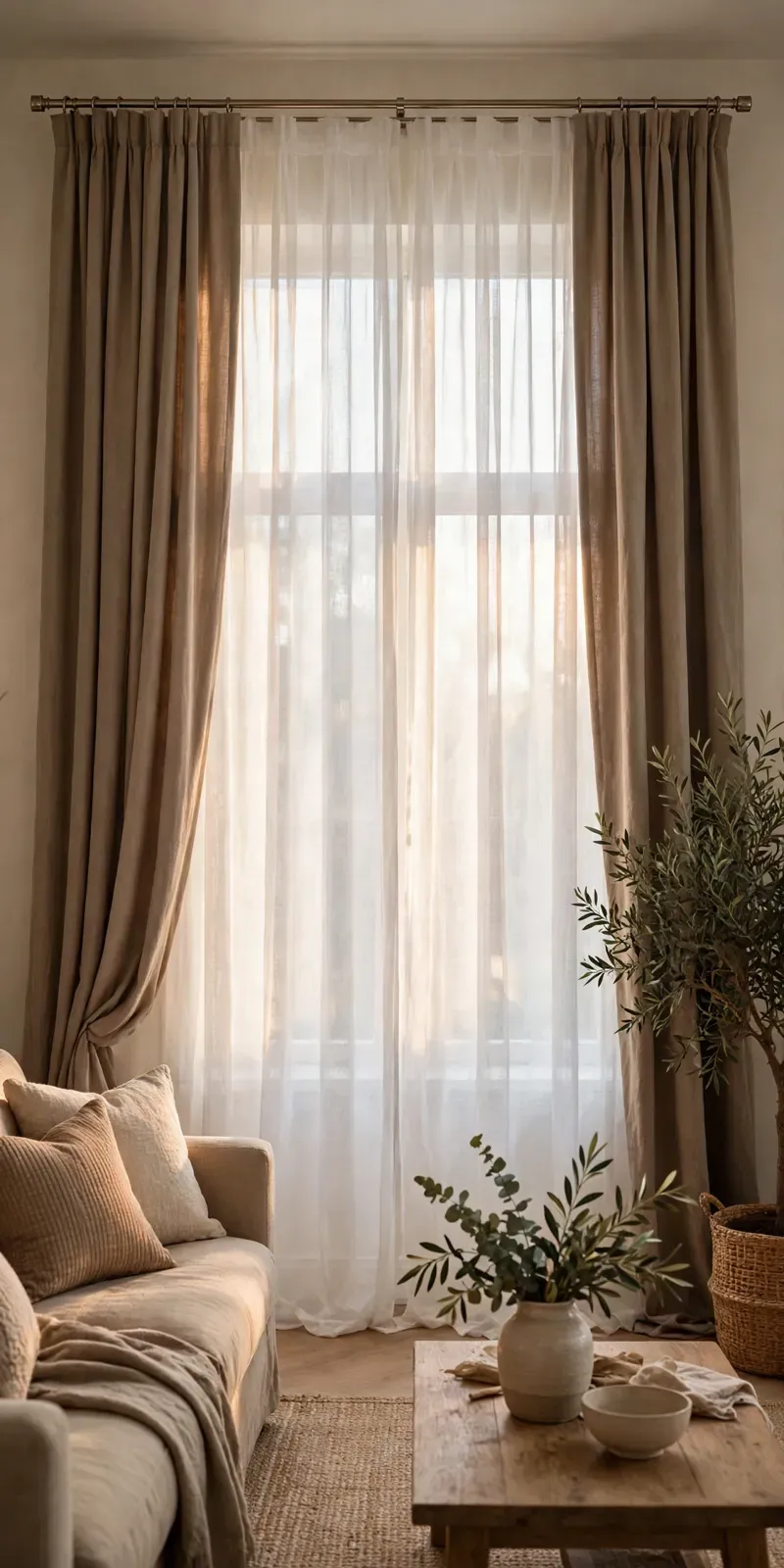
How Window Treatment Layering Sheer Plus Blackout Actually Works
In window treatment layering, the sheer is the inner layer, hanging closest to the glass. Its job is daytime: it scatters harsh sunlight into a soft glow, blurs the view in from the street, and lets you keep curtains “closed” all day without losing the light. The blackout is the outer layer, hanging on the room side. Its job is the night shift: a proper blackout lining blocks street light and early sun, adds a layer of insulation against draughts and heat, and gives the window its finished, dressed look with colour and texture.
Because the layers work independently, you get four states from one window: both open for full light and view, sheer only for bright privacy, blackout only for sleep or a film afternoon, and both drawn for the darkest, warmest result on a winter night. A single curtain layer, however good, gives you only two states. That flexibility is the real product you are buying when you layer, and it is why the combination suits bedrooms first, living rooms second, and nurseries and shift workers’ rooms most of all.
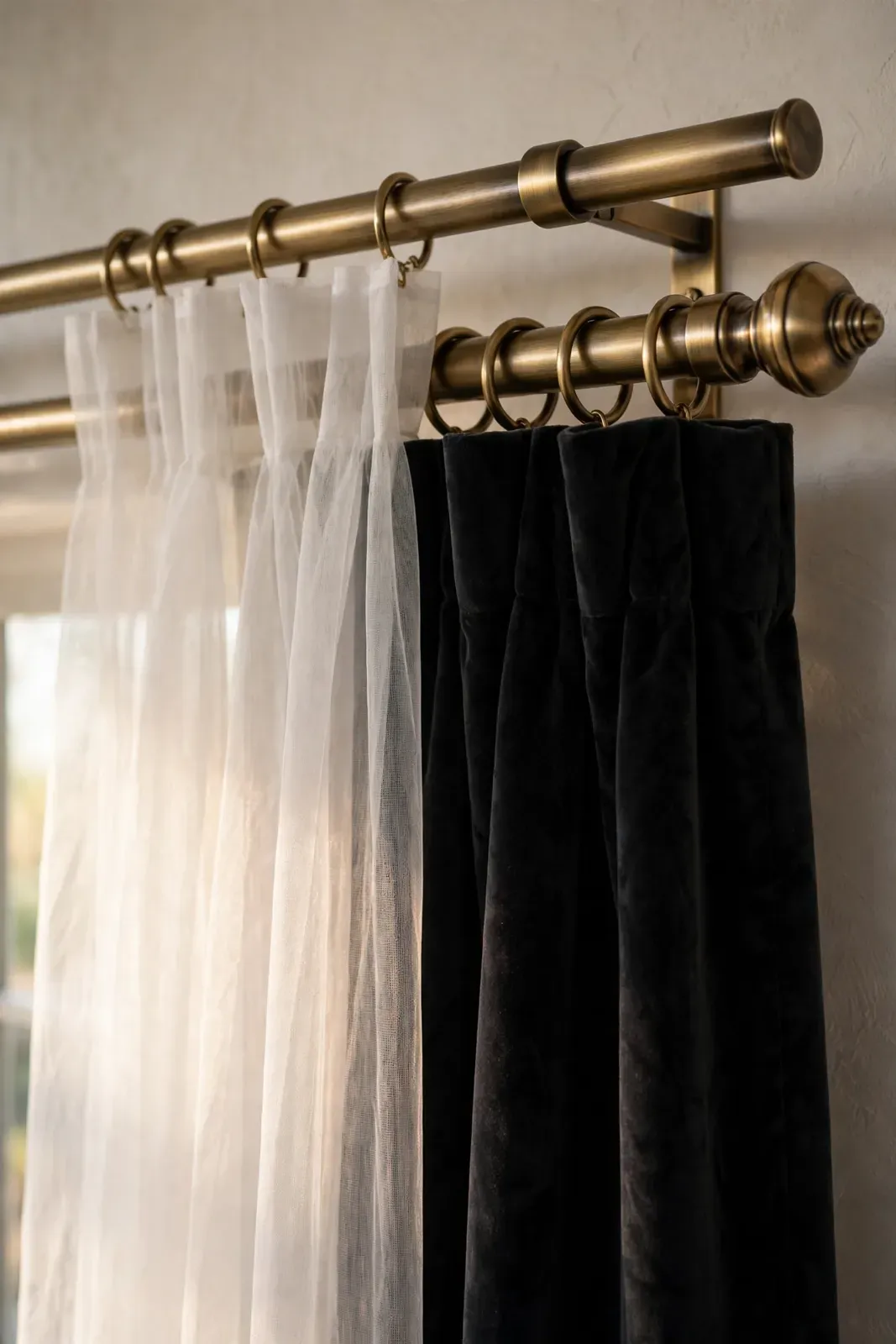
Hardware for Window Treatment Layering: Double Rods, Tracks and Ceiling Mounts
Window treatment layering needs two hanging lines. The standard solution is a double curtain rod: two parallel poles on shared brackets, the sheer on the back pole, the blackout on the front. Brackets must project far enough from the wall that the front curtain’s folds clear the back one, so look for brackets with at least 15 centimetres of total projection. The alternative is a double track, which glides more smoothly and suits ceiling mounting; a ceiling-mounted track also lets curtains run wall to wall and floor to ceiling, the most tailored look of all, and it hides radiators and uneven walls behind the fabric.
Measure before you buy anything. The rod or track should extend 15 to 25 centimetres beyond the window frame on each side, so the opened blackout panels stack mostly off the glass and the sheer can still cover the window fully. Height matters just as much: mount as close to the ceiling as the brackets allow, because layered curtains hung at frame height chop the wall visually and make ceilings feel lower, while high-hung layers lengthen the whole room. For bay windows, flexible bay tracks exist but are a fiddly fit; many people layer only the centre window of a bay and dress the side windows with the sheer alone.
Fitting Layered Curtains, Step by Step
- Measure the window and the wall. Width of frame plus stack-back allowance on both sides; drop from the intended rod height to the floor or sill.
- Fit the double rod or track level and secure. Use fixings suited to your wall type; layered curtains are heavy, and plasterboard needs proper anchors, not the screws in the box.
- Hang the sheers first. They go on the back line. Check they move freely and cover the glass edge to edge.
- Hang the blackout panels. Dress the folds by hand, spacing the pleats evenly, and train them for a few days with ties if the fabric is stiff.
- Set the lengths. Sheers usually finish at the floor or just above it; blackout panels look best skimming the floor, never pooling heavily, which traps dust and fights the sheer behind.
- Test all four states. Open, sheer only, blackout only, both. Adjust stack positions until each state looks intentional.
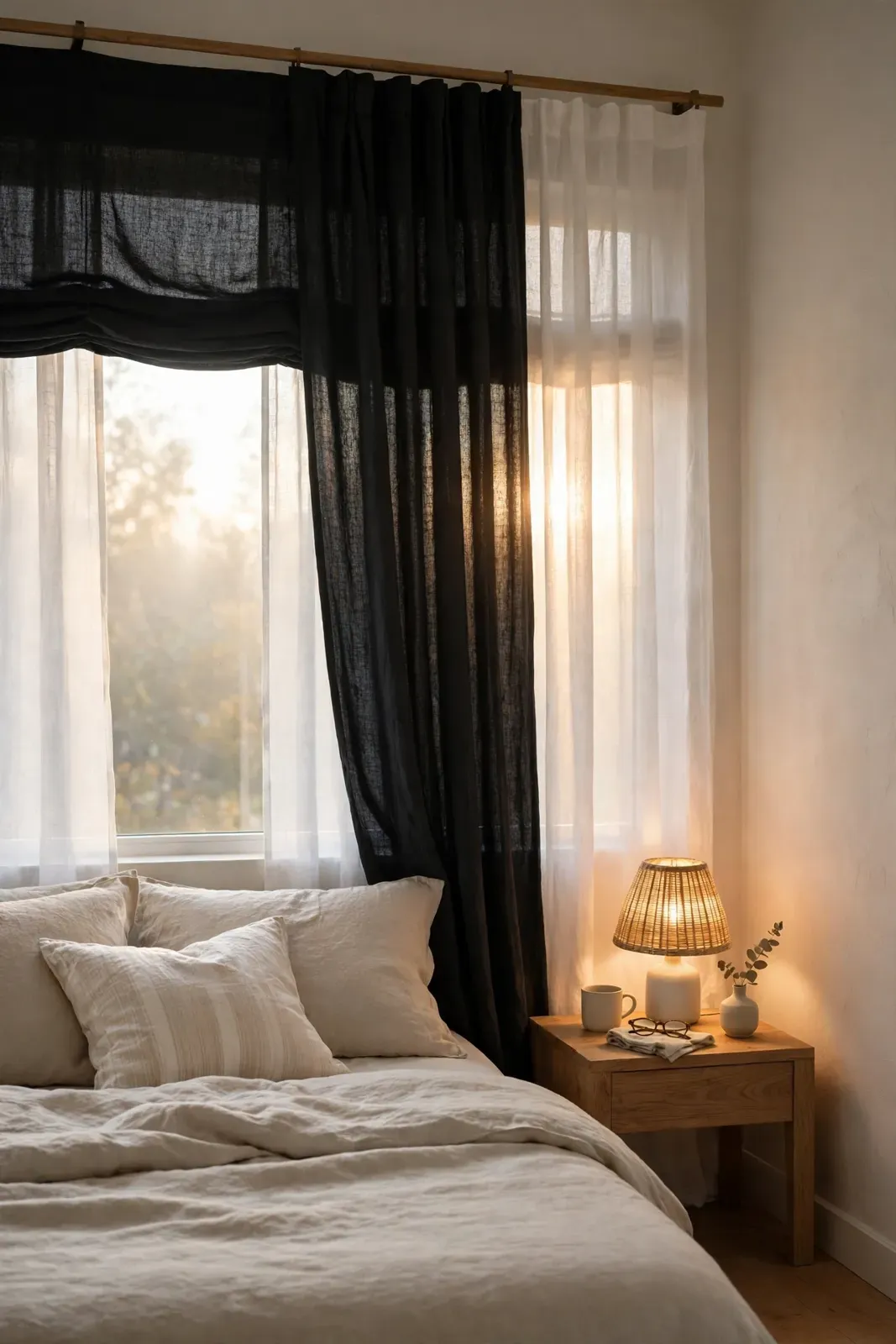
Fabric Choices and Budget Advice for Window Treatment Layering
For sheers in window treatment layering, plain voile is the budget workhorse; linen-look sheers cost a little more and repay it with texture that hides creases and dust. Avoid heavily patterned sheers under patterned blackout curtains; one pattern per window is plenty. For the blackout layer, you can buy curtains with the blackout coating built in, or any decorative fabric with a separate blackout lining. Separate linings are the smarter long-term buy, because you can rehang them behind new curtains when you redecorate, and they hang more softly than stiff coated fabrics.
Costs depend mostly on window size and fabric taste. Ready-made double-layer sets for a standard window sit in the modest band; made-to-measure runs higher, like any tailored item. A sensible order of spending: hardware first, because cheap brackets sag under two layers; blackout lining quality second, because poor lining cracks and leaks light at the folds; decorative fabric last, because it is the easiest layer to change later. If you are dressing several rooms, start with the main bedroom, live with the system for a month, and then repeat what you learned. Our TV unit wall design ideas guide shows the same layered thinking applied to a media wall, if the living room is next on your list.
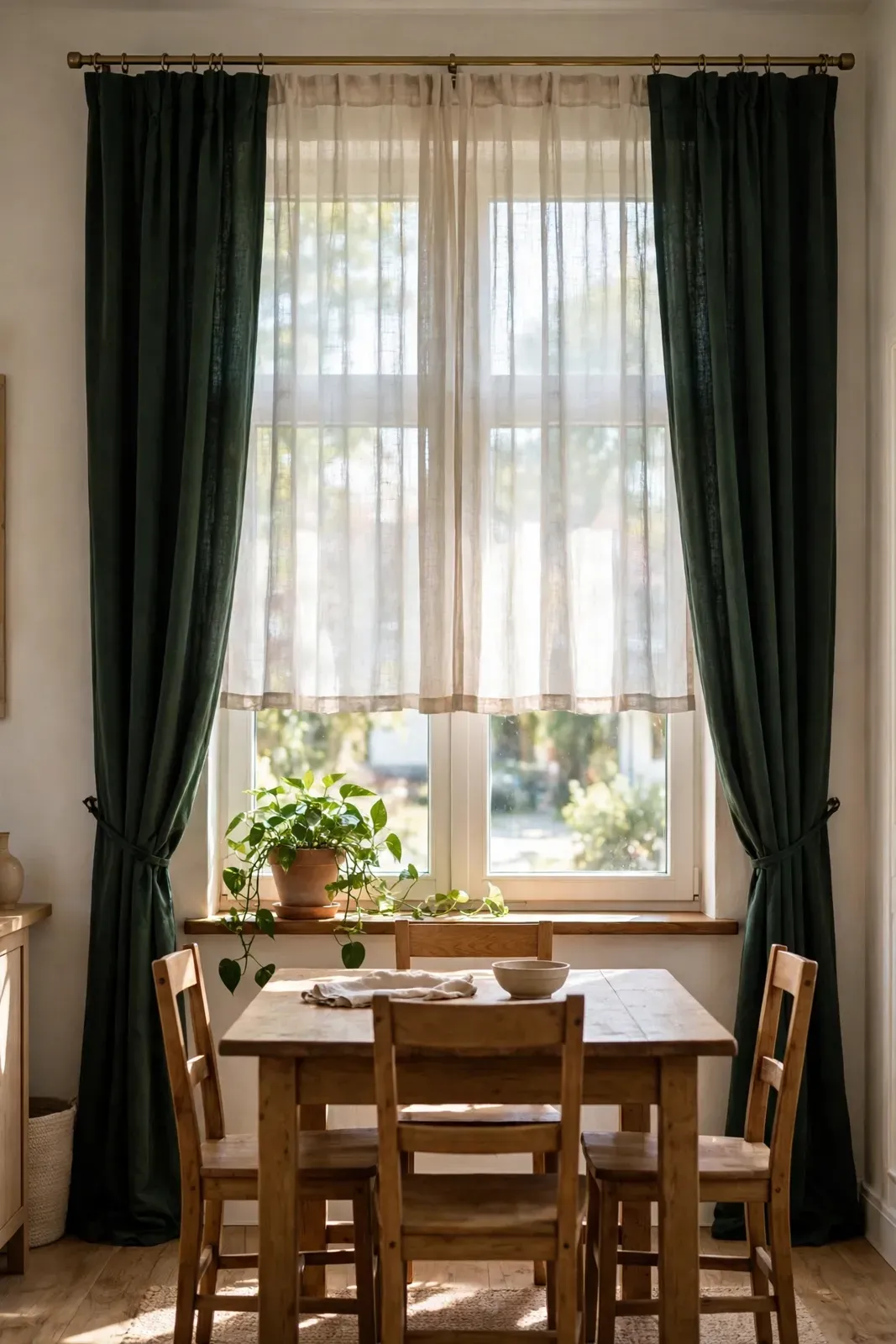
Window Treatment Layering Mistakes That Ruin Layered Windows
The most common window treatment layering mistake is a rod with too little projection, so the blackout curtain drags across the sheer every time it moves and both layers end up bunched to one side. The second is mixing lengths, a floor-length blackout over a sill-length sheer, which looks like a mistake even when it was a choice. The third is forgetting that two layers halve your patience for dust: sheers show grime quickly in city homes, so choose sheers that machine wash at home rather than dry-clean-only fabrics. Finally, do not hang blackout panels so wide that their open stacks cover a third of the glass; you fitted layers to gain light control, not to lose the window.
Frequently Asked Questions
Which layer goes in front, the sheer or the blackout?
In window treatment layering, the sheer hangs at the back, closest to the glass, and the blackout hangs in front on the room side. This order lets the sheer do its daytime work undisturbed, keeps the decorative fabric visible in the room, and means the blackout lining faces the sheer rather than fading in direct sun.
Do layered curtains really help with heating and cooling?
Yes, modestly but noticeably. Two fabric layers trap air between them and against the glass, which reduces draughts at the window and slows heat loss on cold nights. The effect of window treatment layering is strongest with floor-length blackout panels that sit close to the wall at the sides, and weakest with short curtains over a radiator, which can block heat from entering the room.
Can I do window treatment layering on a single existing rod?
Not properly. Window treatment layering on one pole means both layers move together and bunch, and you lose the four independent states that make layering worthwhile. The inexpensive fix is a second, slim rod or a clip-on back rod fitted behind the first; the better fix is a proper double rod or double track.
How do I wash layered curtains without a wrestling match?
Take one layer down at a time, so the window is never bare and you can note how it was hung. Most sheers machine wash cold on a gentle cycle and rehang damp to drop their creases. Blackout linings usually prefer a cool wash or a wipe down; heat and rough cycles crack the coating, so always check the label before the first wash.
Are layered curtains suitable for a kitchen or bathroom?
Generally no. Steam, grease and humidity punish fabric, and blackout layers near a hob are a poor idea. In steamy rooms, blinds are the practical choice, with a sheer cafe curtain at most for privacy at street level. Keep layering for bedrooms and living spaces where it earns its keep.
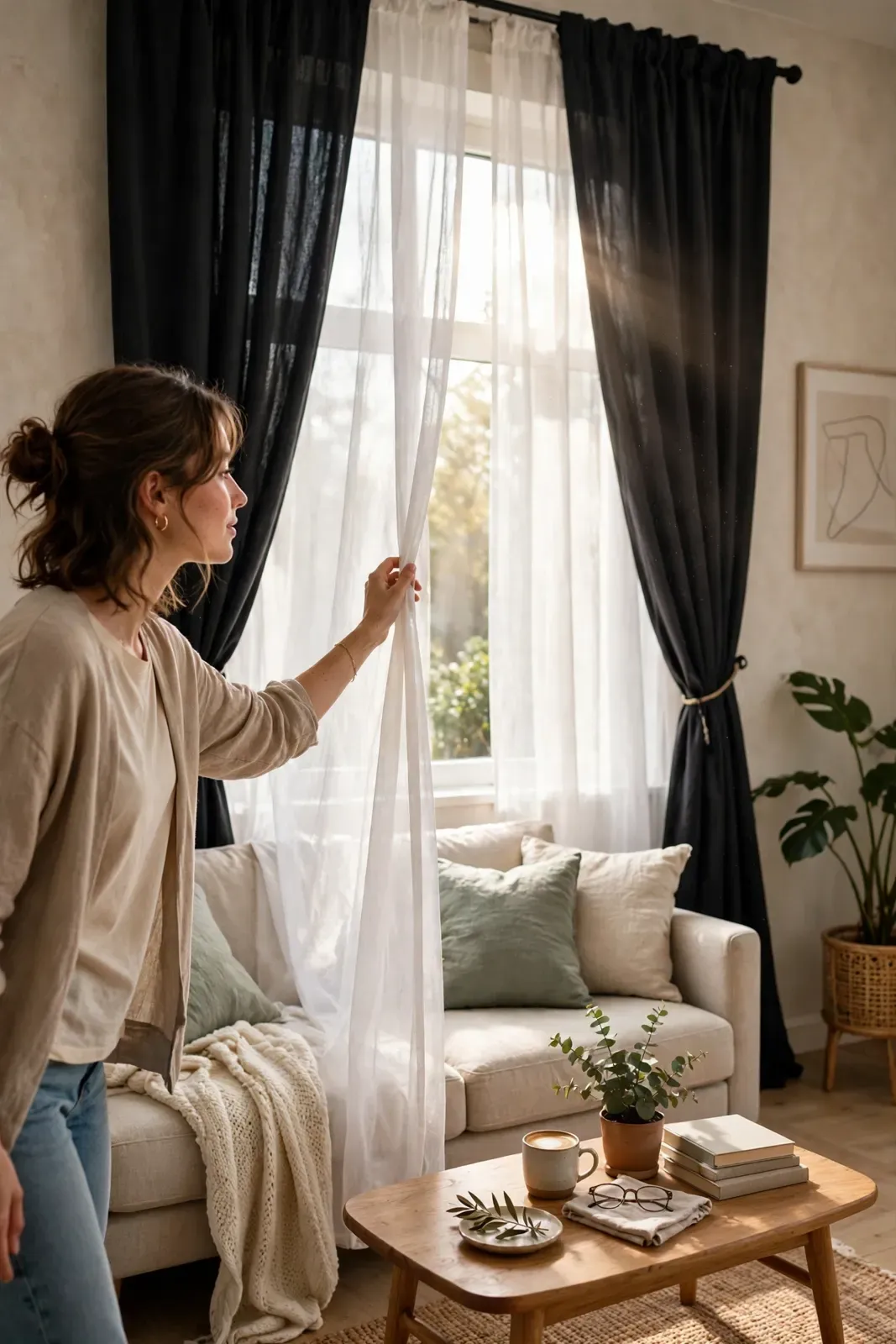
Sheer for the day, blackout for the night, and a window that finally behaves in both halves of life: window treatment layering is a small system with an outsized effect on how a room feels to live in.