Nobody wants a litter tray as the centrepiece of a room, yet most cats vote with their paws when a hidden spot is dark, stuffy or hard to reach. Good cat litter box discreet placement solves both sides of that bargain at once: the tray disappears into furniture, a corner or a cupboard, while air keeps moving through it so smells do not build up and your cat still feels safe using it.
This guide covers the rooms that work best, the enclosures that breathe properly, a step-by-step setup, honest budget advice, and the mistakes that send cats looking for a laundry pile instead. Done well, cat litter box discreet placement simply removes the tray from view without removing it from your cat’s routine.

Table of Contents
Cat Litter Box Discreet Placement: Why Hidden Still Needs Airflow
A litter box is a simple tray filled with absorbent material, but what happens around it matters. In an open room, air dilutes odour between cleanings. Seal that same tray inside a tight cabinet with no vents and the air inside turns warm and sharp, which is unpleasant for you at cleaning time and far worse for the cat who has to step into it. Ventilation is not a luxury extra; it is the difference between a hidden tray a cat uses happily for years and one that gets quietly rejected. That tension sits at the heart of cat litter box discreet placement: out of sight for you, fresh and open-feeling for the cat.
The other half of the equation is how cats judge a toilet spot. A healthy cat is a territorial animal with a strong sense of smell and a preference for a quiet corner where it can see an exit. That is why cat litter box discreet placement works best when the hiding place is calm, always accessible and never a dead end. Hide the tray from human eyes, by all means, but never make the cat feel trapped, watched by a dog, or forced past a roaring washing machine to reach it.
The Best Rooms for Cat Litter Box Discreet Placement
The laundry or utility room is the classic choice, and for good reason: hard floors, a nearby bin, water for washing hands, and a window or extractor in most homes. A bench cabinet under the window, or a cupboard at the end of the counter, keeps the tray out of the walkway while the room’s own airflow does most of the odour work. Just keep the tray away from the cat’s food and water bowls, which should live in a different room entirely. For most homes, the laundry room is where cat litter box discreet placement works first time, with the least building and the least complaint from either species.
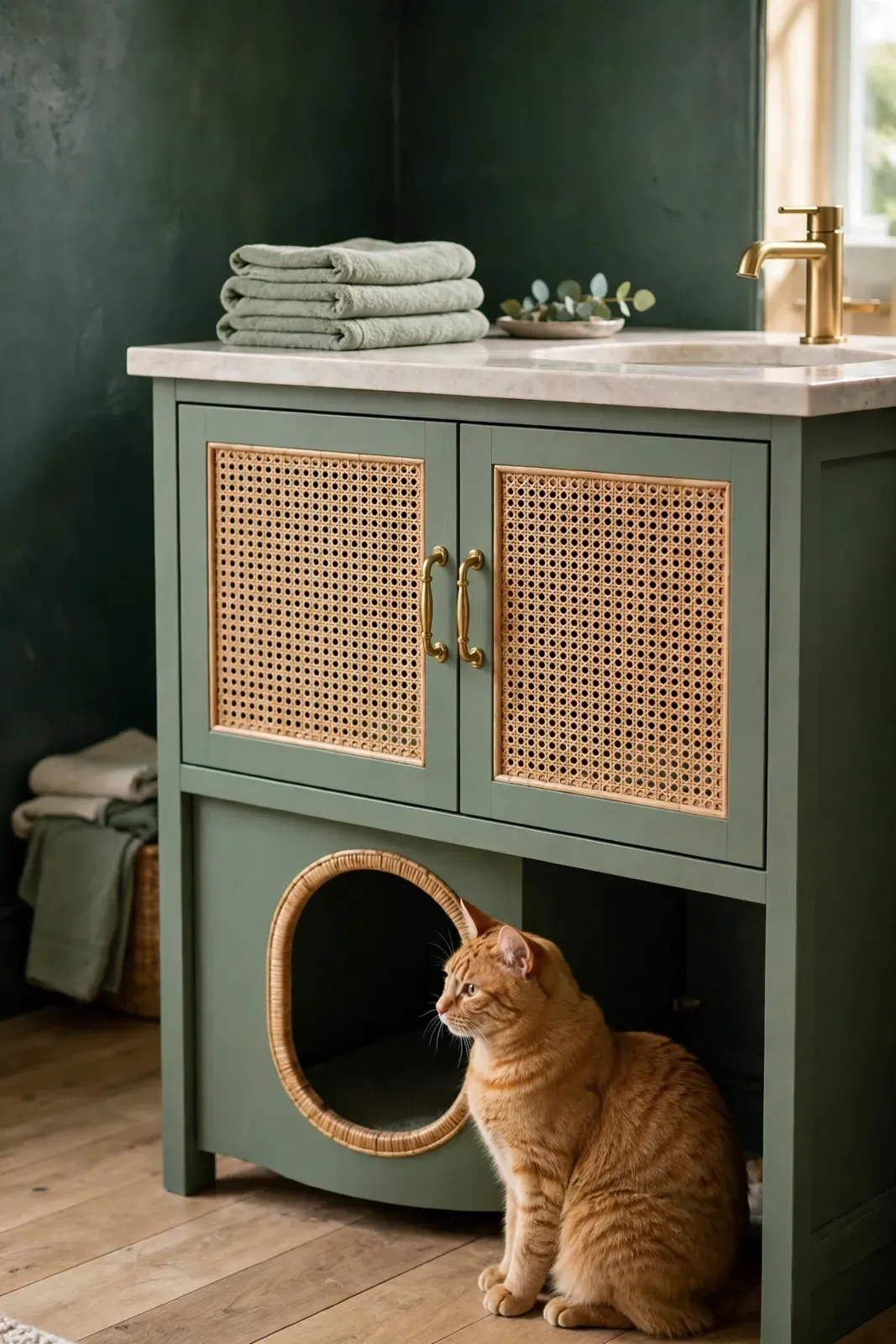
Bathrooms come second, especially a family bathroom with a vanity cupboard that can lose one side to a tray behind a cat-sized opening. Hallway corners, the dead space under the stairs, and a spare-bedroom wardrobe with the door left ajar all work too. Living rooms suit furniture enclosures, where cat litter box discreet placement hides inside a sideboard or side table that earns its place visually. Bedrooms and kitchens are the last resort: both are rooms where you spend long, close hours, and even a well-kept tray belongs at a distance from pillows and food preparation.

Step by Step: Setting Up a Ventilated Hidden Spot
Step 1: Watch where your cat already goes. For two days, note the quiet corners your cat inspects and the route it takes. The best hidden spot sits close to a route the cat already trusts, not in a room it rarely enters.
Step 2: Choose the enclosure and measure the tray. Measure your existing tray first, then pick a cabinet, bench or cover that leaves at least a few centimetres spare on every side and enough height for your cat to stand and turn. If you are converting furniture for cat litter box discreet placement, check the cat can enter without squeezing.
Step 3: Cut the entry on the side, not the front. A side entry forces a small turn inside, which keeps litter off the floor and stops the tray being the first thing you see. Sand the edges smooth, or trim them with an edging strip.
Step 4: Add ventilation high and low. Drill or cut a row of slots low on one side and a grille or second row high on the opposite side, so air enters low, passes over the tray and leaves high. A small stick-on charcoal filter over the upper vent tames odour without perfume.
Step 5: Line, light and test. Put a washable mat inside the entry and a litter-catching mat outside, add a battery motion light if the interior is dark, and leave the enclosure door open for the first day. Most cats investigate a new cabinet within hours; once yours has used it twice, close the door and keep the routine identical. Good cat litter box discreet placement should feel almost boring after this point, and boring is exactly the goal.
Enclosures, Cabinets and DIY Covers That Breathe
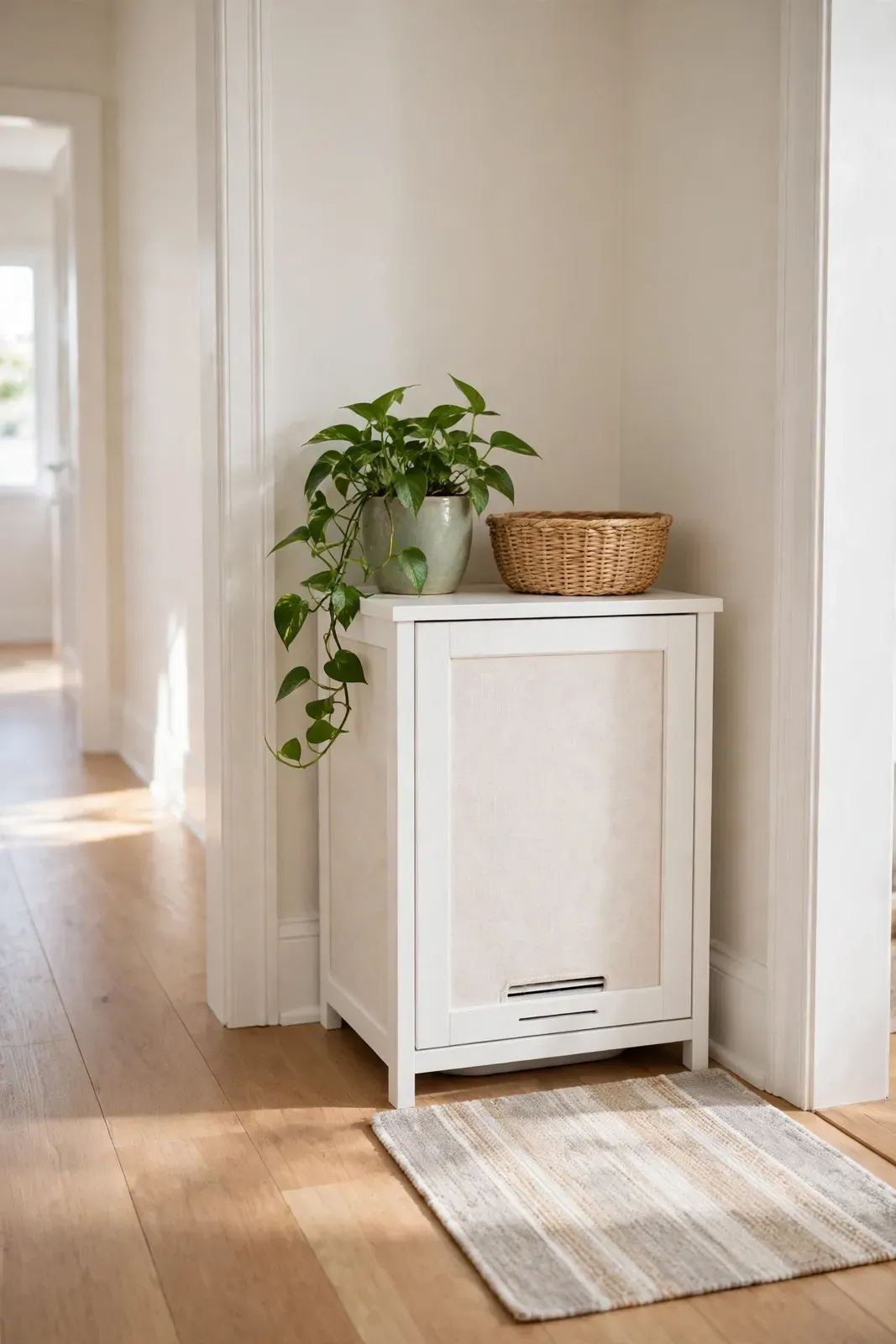
Ready-made litter furniture ranges from simple side tables with a cat hole to long sideboards that hold a large tray plus a storage shelf for litter and bags. Look for models with real openings at the back or sides, a waterproof or wipeable interior, and a door or lift-up top wide enough that cleaning is not a wrestling match. Rattan and cane-web fronts are more than a style choice: the woven panel lets air through across the whole door, which is why they suit warm rooms so well.
DIY versions of cat litter box discreet placement can be better value and a better fit. A basic storage cube, a secondhand cupboard or an old washstand converts in an afternoon with a jigsaw, sandpaper and vents. Line the base with a cut-to-size tray or stick-on vinyl so spills never reach the wood, and paint the inside with bathroom paint that wipes clean. Whatever route you take, the principle behind good cat litter box discreet placement stays the same: solid cover for the eyes, open paths for the air.
Budget and Buying Advice for Cat Litter Box Discreet Placement
Spend in the order your cat notices things: size first, access second, looks third. A plain, roomy enclosure that is easy for you to open will beat a beautiful small one every time. Converting a cupboard you already own costs little more than vents, a filter and a mat, and is the honest best value for most homes. Mid-priced ready-made cabinets earn their money when they save you the conversion work and come with a washable interior; expensive designer pieces mostly buy finish, so check the internal tray space rather than the catalogue photo.
Budget for the running extras that keep a hidden tray pleasant: charcoal filters every month or two, a spare liner tray so one can dry while the other is in use, and a good clumping litter that controls odour at the source. One warning on scented products: heavy perfumes that please owners often push cats away from an enclosed space, where the scent concentrates. Plain, well-scooped and well-vented beats fragranced in every test a cat has ever set.
Common Mistakes to Avoid
The most common mistake in cat litter box discreet placement is sealing the tray in. A cabinet with one small cat hole and no vents is a smell box, and it is the main reason hidden setups fail. Second is placing the enclosure somewhere noisy or busy: beside a tumble dryer, behind a door that bangs, or in a corridor where children charge past. Third is changing everything at once, new spot, new enclosure and new litter in a single day; cats accept one change at a time, so keep the same litter and tray while only the location changes.
Fourth is a hidden spot that is hidden from you too, so scooping slips from daily to weekly. If cat litter box discreet placement makes cleaning harder to reach, odour wins. Fifth, in multi-cat homes, one glamorous hidden tray is not enough; keep the old rule of one tray per cat, plus one extra, each in its own quiet place.
Frequently Asked Questions
Will my cat use a litter tray inside a cabinet?
Most cats accept an enclosure quickly if the entry is generous, the inside is ventilated and the tray and litter stay familiar. Leave the door open for the first day or two, let the cat explore at its own pace, and never lift the cat and put it inside, which turns a toilet into an ambush.
How do I stop a hidden litter box smelling?
Vent it high and low, fit a charcoal filter over the upper vent, scoop daily and wash the tray weekly. Airflow does more than any scented product, because it removes the smell instead of covering it, and cats strongly prefer unscented air.
What size entry hole does a cat need?
For an average adult cat, an opening around 20 to 25 centimetres across is comfortable. Larger breeds and older cats with stiff joints do better with a wider, lower opening, ideally with no step up, so entering never involves a jump or a squeeze.
Where should I never put a hidden litter box?
Never beside food and water bowls, never in a spot a dog can guard, and never somewhere the cat can be cornered by another pet. Avoid cold, damp corners too, and any cupboard whose door might be shut for hours with the cat locked out.
How many hidden trays do I need for two cats?
Plan on three trays in separate spots. Two cats sharing one hidden tray in one cabinet is the fastest route to one cat choosing the bath mat instead. Separate locations also mean one bold cat cannot block the other’s only toilet.

A hidden litter tray should make the whole home calmer, for the people who no longer see it and for the cat who gets a quiet, fresh corner of its own. That is cat litter box discreet placement at its best: invisible in the room, effortless in the routine. Choose a calm room, give the enclosure real airflow, set it up one step at a time and keep cleaning effortless. Get those four things right and the tray simply stops being part of the room, which is exactly what everyone, cat included, wanted all along.