Table of Contents
Every wardrobe contains the same quiet lie: plenty of clothes, nothing to wear. The real problem is rarely the clothes. It is that the wardrobe has no system, so the five things you love are buried under forty things you tolerate, and getting dressed becomes archaeology.
Wardrobe organisation hacks sound like small tricks, but the good ones share one principle — zones. Give every category a fixed place, sized to how much of it you truly own, and the wardrobe starts working like a small, well-run shop instead of a jumble sale.
Below are nine wardrobe organisation hacks built around zones, a step-by-step method for reorganising a whole wardrobe in one afternoon, honest advice on which organisers are worth buying, and the mistakes that undo a tidy wardrobe within a month. No special equipment is required to start, and nothing here asks you to throw away clothes you love — only to make the ones you keep easy to see, reach, and put back.

Zones First: Wardrobe Organisation Hacks That Actually Last
Divide the wardrobe into zones before you buy a single box. The hanging zone splits in two: long hang for dresses and coats, short hang for shirts, trousers, and jackets — and the space under short hang is prime land for a small drawer unit or shoe rack, not a heap.
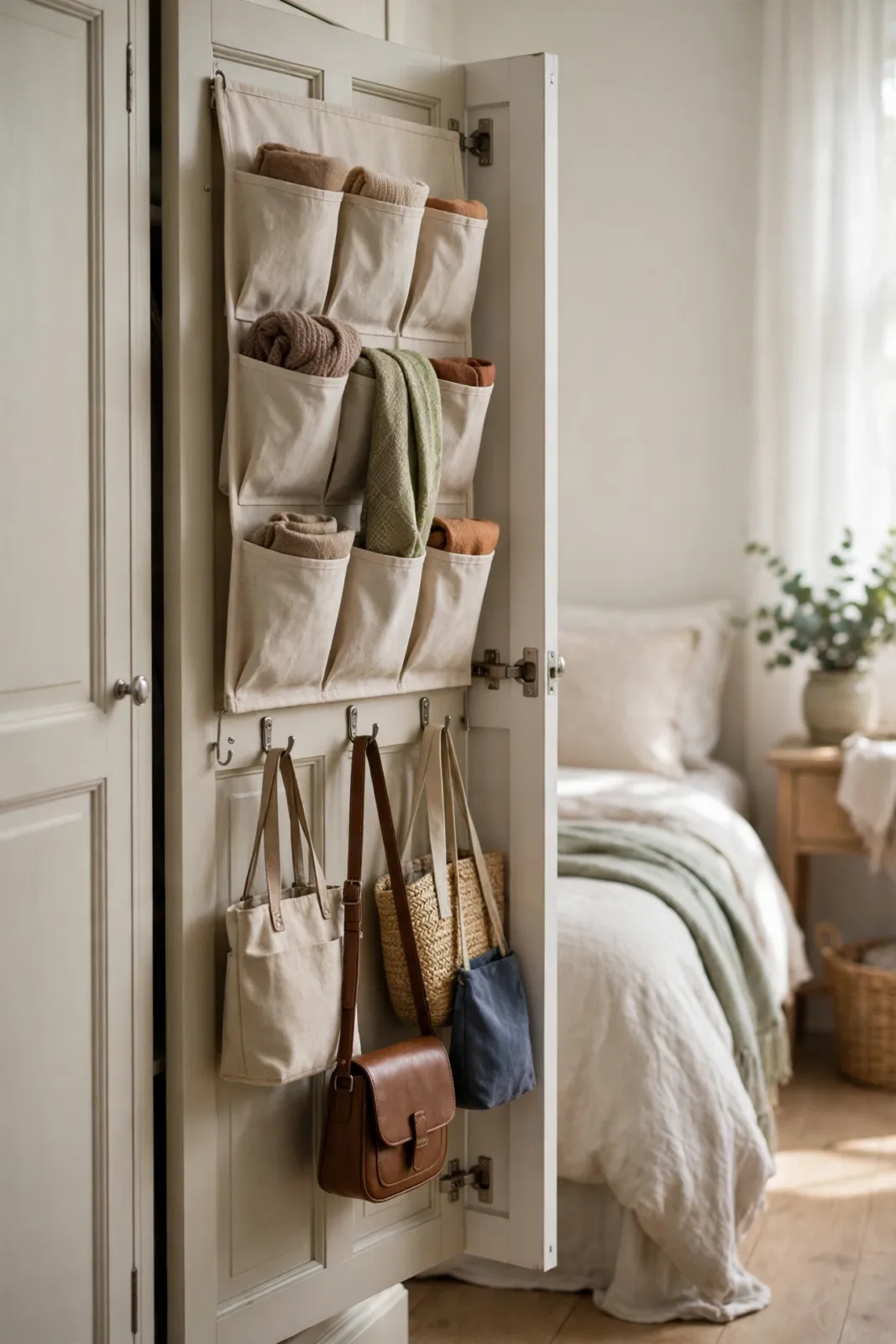
The shelf zone takes folded knits, jeans, and t-shirts. The top zone, hardest to reach, is for out-of-season storage only. The door and floor zones are bonus territory: hooks on the door, a slim rack on the floor. A traditional wardrobe evolved exactly these compartments over centuries; modern fitted closets work the same way.
Within each zone, order by category, then by colour, lightest to darkest. Category order is what you use when dressing — all shirts together beats all blue things together — while colour order inside the category is what makes it look calm and lets you spot duplicates at a glance. Keep everyday things between knee and shoulder height; anything you reach for daily that lives above your head or on the floor will quietly stop being worn. That is why wardrobe organisation hacks built on zones outlast a single enthusiastic tidy-up.
Nine Wardrobe Organisation Hacks for Everyday Order
One: use one hanger type throughout — slim, matching hangers genuinely fit a third more clothes on the rail and stop garments sliding into heaps. Two: file-fold t-shirts and knits upright in drawers or boxes so every item is visible at once, like files in a cabinet. Three: keep one empty hanger at the front as the designated home for tomorrow’s outfit. Four: store out-of-season clothes in labelled boxes on the top shelf, washed first, so the working wardrobe only ever holds what the weather allows. Five: give accessories one shallow home — a tray, a hanging pocket organiser, or a single drawer — never three scattered ones.
Six: hang trousers by the hem on clip hangers so creases fall out and hems stay even. Seven: keep a small donation bag permanently in the bottom of the wardrobe; the moment something disappoints you while dressing, it goes in the bag, not back on the rail. Eight: photograph each shelf once organised — the photo is your reset map. Nine: apply the one-in-one-out rule per category, which keeps every zone at its designed size forever.

Step by Step: Reorganising a Wardrobe in One Afternoon
Allow three hours and finish in one session; a half-done wardrobe reorganisation tends to stay half-done.
Step one: empty one zone completely — only one — and clean the empty space. Step two: sort that zone’s contents into keep-here, keep-elsewhere, and let-go piles, honestly and quickly; if you have not worn it in a year and it is not occasion wear, it is a let-go. Step three: count what is returning and measure the space it must fit; this is the moment to discover you own eleven black t-shirts, not after rehanging them. Worked in this order, wardrobe organisation hacks turn a chaotic rail into a working system in a single session.
Step four: return items in category-and-colour order, leaving a finger of space between sections so the zones stay readable.
Step five: label shelf edges and boxes with plain words — knitwear, gym, occasion — because labels are what turn a tidy afternoon into a lasting system. Step six: repeat zone by zone, and finish by photographing the result. However your storage is built — a freestanding unit or a fitted closet — the sequence is identical: empty, judge, measure, return in order, label.

Budget and Buying Advice: Organisers Worth Paying For
Worth buying: one full set of matching slim hangers, two or three sturdy boxes for the top shelf, a drawer divider set, and a door hook rail. That short list solves most wardrobes for the price of a single garment. Think of them as wardrobe organisation hacks you buy once, rather than storage you keep replacing.
Worth skipping: vacuum bags for everyday clothes (they crease everything and slow you down), scented everything, elaborate jewellery furniture for three necklaces, and any organiser bought before measuring — the returns pile of unused organisers is its own category of clutter.
Measure three numbers and keep them on your phone: rail length, shelf width and depth, and the gap under short hanging. Buy to those numbers, favour plain over pretty, and choose boxes you can lift down one-handed when full. Storage you cannot lift safely is storage you will stop using properly. The most useful wardrobe organisation hacks are usually the plainest ones, bought to fit the space you actually have.

Common Wardrobe Mistakes to Avoid
The biggest mistake is organising by enthusiasm instead of by category — a beautifully colour-rainbowed rail that mixes coats with camisoles looks charming and dresses badly. Next: keeping clothes that do not fit, in the prime zones, as a motivation strategy; store them boxed and labelled, or let them go, but do not let them tax every morning.
Overstuffing is the third: a rail packed so tight that shirts crease on the hanger recreates the problem you just solved, so if the zones are full, the one-in-one-out rule is the fix, not harder pushing.
Finally, hiding the good things — best knitwear saved for occasions that come twice a year while you wear the tired jumper daily. Zones should put favourites at the front. Avoid those four traps, and wardrobe organisation hacks stop being a weekend project and become a habit.
Frequently Asked Questions
How often should I reorganise my wardrobe?
One full reorganisation a year is enough if the zones hold, plus a fifteen-minute seasonal swap when the weather turns. If you find yourself digging daily, a zone has outgrown its space — resize the zones rather than redoing the whole wardrobe. Between those swaps, a quick reset using the same wardrobe organisation hacks keeps everything in place.
Is it better to fold or hang knitwear?
Fold it. Hangers stretch knitted shoulders out of shape, especially heavier jumpers. File-folding in a drawer or box keeps knits visible and undamaged; only fine, structured knitted tops that crease badly are better hung, on padded hangers. It is one of the simplest wardrobe organisation hacks there is: fold the knits, hang the rest.
What do I do with a very small wardrobe?
Shrink the working wardrobe, not the standards. Keep only the current season in the wardrobe itself, box the rest properly, and be stricter with one-in-one-out. Small wardrobes stay tidy more easily than big ones once the seasonal rotation is in place. In a small space, wardrobe organisation hacks matter even more, and the zoning approach works beyond the bedroom too — these small living room layout ideas apply the same make-space-work-harder thinking to the rest of the home.
Should I keep clothes that no longer fit?
Keep at most a small, honest selection, boxed and labelled outside the prime zones. If the box has not been opened in two years, donate it. Prime rail and shelf space should serve the body and life you have now.
Do I need to colour-coordinate everything?
Only within categories, and only roughly — light to dark is enough. Full rainbow rails look striking in photos but slow down dressing. Category first, colour second, and the wardrobe stays both calm and practical. It is one of those wardrobe organisation hacks that removes decisions instead of adding them.
A Wardrobe That Gives Your Clothes Back
An organised wardrobe is not a showpiece; it is a tool that hands you the right clothes in thirty seconds and takes them back without a fight. Zones sized to your real life, one hanger type, labels you can read, and a donation bag always in residence — that is the whole system. Set it up in one afternoon, defend it with one-in-one-out, and the nothing-to-wear problem quietly disappears. Keep those wardrobe organisation hacks in place, and getting dressed goes back to being the easiest part of the morning. That is the quiet promise of good wardrobe organisation hacks: less searching, more wearing.