Many bedrooms are lit like small offices: one bright white ceiling light that flattens everything, casts shadows under the eyes, and keeps the brain wide awake long after the body is tired. It does not have to stay that way. Bedroom lighting without harsh white is mostly a matter of swapping a few bulbs, adding light at lower heights, and letting lamps do the evening work — no rewiring, no renovation, and usually no electrician. The room feels calmer within a single evening of changing it.
This guide explains nine practical ways to achieve bedroom lighting without harsh white, starting with the bulb numbers that actually matter, then a step-by-step evening lighting plan, what to buy on a small budget, and the common mistakes — like mixing one warm lamp with one cold ceiling bulb — that keep a bedroom feeling clinical. If your bedroom currently feels more like a waiting room than a place to sleep, start at the first section and work down.
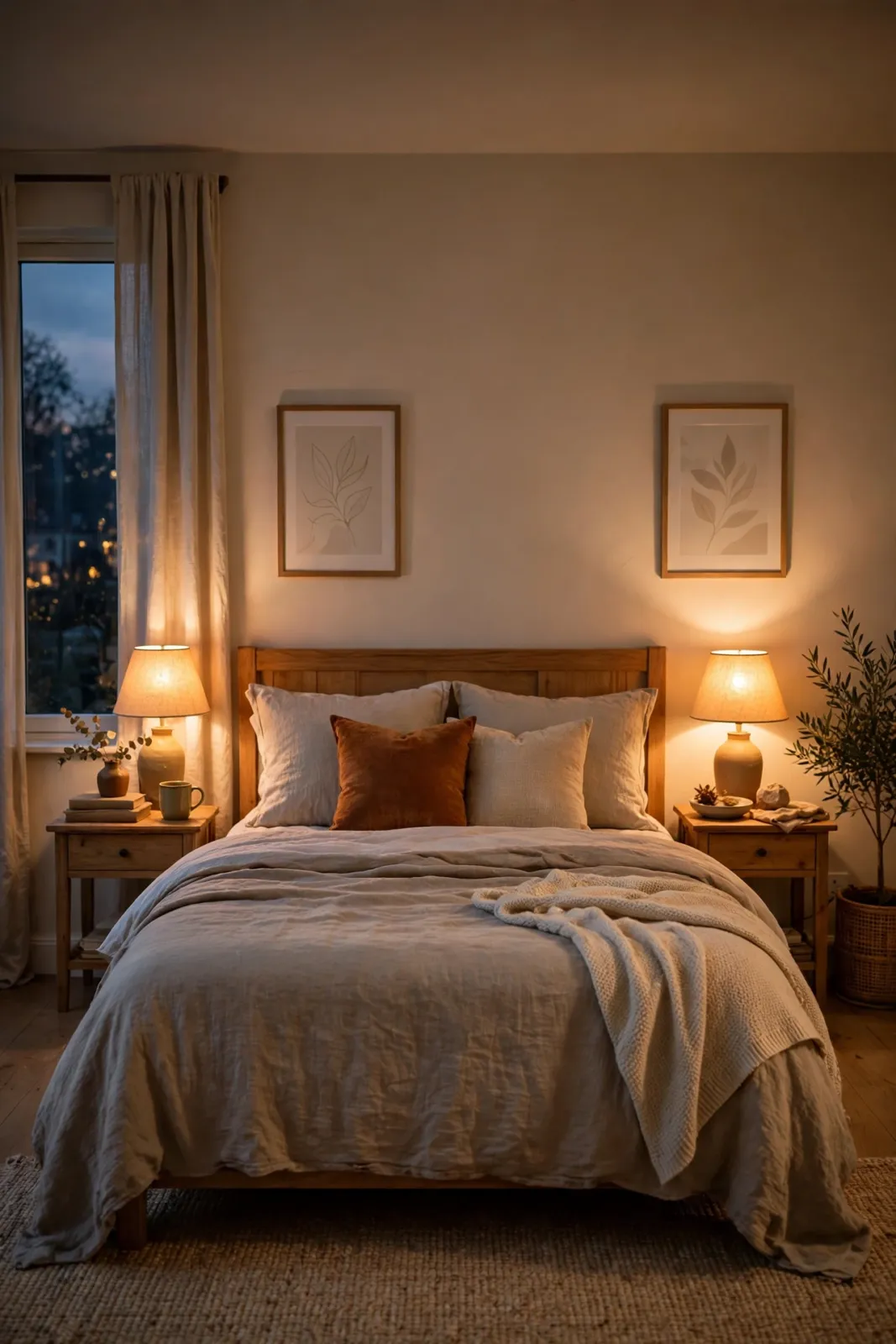
Table of Contents
Start With the Bulbs: Bedroom Lighting Without Harsh White Basics
Light colour is measured in kelvin. Harsh white ceiling bulbs are usually 4000K and above — the blue-leaning light sold as “daylight” or “cool white”. For a bedroom, choose bulbs marked 2700K or lower, often labelled warm white or soft warm; 2200–2400K gives the amber, firelight end of the scale for bedside lamps. Check the box before buying, because wattage tells you brightness, not colour, and two bulbs of identical wattage can make the same room feel like a café or a clinic. The science of lighting colour is simple in practice: lower kelvin in the evening, and your eyes and sleep both relax.
Brightness matters too. A bedroom needs far fewer lumens than a kitchen. Bedside lamps work well around 400–800 lumens each with a shade softening them; the ceiling light, if you keep one, should be dimmable or fitted with a lower-lumen warm bulb so it stops being the main event. Matching every bulb in the room to the same kelvin value is the quiet detail that makes the whole scheme feel deliberate. Getting bedroom lighting without harsh white right comes down to exactly this balance of colour and brightness.
Nine Ways to Get Bedroom Lighting Without Harsh White
One: replace the ceiling bulb with a 2700K dimmable one, or fit a warm shade that diffuses it. Two: make bedside lamps the main evening light — one each side, shades at shoulder height when sitting up. Three: add a low, warm light for the night path to the bathroom, so nobody needs the ceiling light at 3 a.m. Four: use wall lights or plug-in sconces beside the bed if nightstands are small. Five: put the reading light on its own — a directed lamp that lights the page without flooding the room, ideal when two people keep different hours. The bedside surface matters too — see these nightstand styling essentials for what to keep within reach and what to clear away.
Six: dress the windows for the light you have; sheer curtains soften hard daylight and hide a glaring streetlight’s direct beam. Seven: choose fabric or frosted shades over clear glass, which shows the bulb and creates glare spots. Eight: add one warm accent — a small lamp on a dresser or a short string of warm lights — to give the room depth so it never depends on a single source. Nine: standardise spare bulbs; label them by room so a blown warm bulb never gets replaced by whatever cold spare is in the drawer. Room-by-room guides to types of light fixtures make the same point: bedrooms want several soft sources, not one strong one.

Step by Step: An Evening Lighting Plan That Works
Build the evening in three levels. Level one, arriving and changing: the ceiling light on its warm, dimmed setting, or both bedside lamps if the room is small. Level two, reading and winding down: ceiling off, bedside lamps only, plus the accent lamp if the room feels flat. Level three, last half hour: one bedside lamp only, on the side of whoever falls asleep last, or a dimmed lamp at its lowest setting. This descent in brightness is the signal your body reads as bedtime approaching, and it costs nothing once the bulbs are right. That three-level descent is the heart of bedroom lighting without harsh white.
To set it up: swap bulbs first and live with them for two nights before buying anything else — half of all harsh bedrooms are fixed by bulbs alone. Then place lamps, checking from the bed that no bare bulb is visible at pillow height. Then test the night route in the dark and add the low light if you are still reaching for the ceiling switch. Finally, remove or re-bulb any remaining cold light in the room, including the en-suite doorway bulb you forgot about. Follow the steps in order and bedroom lighting without harsh white follows almost automatically.

Budget and Buying Advice
Bulbs first, always: a full bedroom’s worth of warm LED bulbs costs less than one new lamp and changes more. Buy them in one batch of the same brand and kelvin so the colour matches exactly, plus two spares. Lamps come second — buy for shade and stability, not ornament; a fabric shade in a natural colour warms any bulb slightly and hides glare. Dimmer plugs that sit between socket and lamp are a cheap way to give a non-dimmable lamp a second, lower gear, and they suit renters perfectly. Shop in that order and bedroom lighting without harsh white stays cheap.
Skip smart-bulb systems unless you genuinely enjoy apps; a warm bulb and a lamp switch achieve the same evening result for a fraction of the price. If you do buy one treat, make it matching bedside lamps — symmetry at the bed is what makes a lighting scheme look designed rather than accumulated. Matching bedside lamps are the one purchase that most visibly delivers bedroom lighting without harsh white.

Common Lighting Mistakes to Avoid
Mixing kelvin values is the number-one mistake: one warm lamp cannot rescue a room whose ceiling light is still 5000K, because the eye reads the mixture as wrongness without knowing why. Then comes the single central light relied on for everything, bare bulbs in clear shades at eye level, and lamps so short their light hits the book at a glancing angle and strains the eyes. Daylight bulbs in the en-suite are the stealth offender — one blast of cold light on a night visit undoes an evening of careful dimming.
And finally, buying by wattage habit from the old bulb box; with LEDs, always buy by lumens and kelvin. Every one of these mistakes pushes a room away from bedroom lighting without harsh white and back towards the clinic feel.

Frequently Asked Questions
What kelvin is best for a bedroom?
Around 2700K suits most people for general bedroom light, with 2200–2400K at the bedside for the last hour of the evening. Anything labelled daylight, cool white, or 4000K and above is what makes a bedroom feel harsh, however nice the lamp is. In short, bedroom lighting without harsh white starts with the kelvin number on the box.
Can warm lighting make a room feel dark?
Only if the total brightness drops too far. Warm light at the right lumen level feels cosy, not gloomy. If a warm room feels dim, add a second soft source at a different height rather than reaching for a brighter, colder bulb. It is a common worry when switching to bedroom lighting without harsh white, and layering fixes it.
Do I need an electrician to fix bedroom lighting?
Almost never. Bulb swaps, lamps, dimmer plugs, and plug-in wall lights need no wiring at all. An electrician is only needed for new ceiling fittings, hardwired dimmer switches, or adding sockets — worthwhile in a forever home, unnecessary for the colour fix.
What about the light for getting dressed and makeup?
Keep one honest light for morning tasks: a brighter warm-neutral bulb near the mirror or dressing area, used in the morning and switched off in the evening routine. Warm does not have to mean dim everywhere, all day — it means the evening descent is protected.
Are warm bulbs worse for reading?
No. Reading comfort comes from enough light falling on the page at a good angle, not from blueness. A warm lamp of 600–800 lumens beside your shoulder is excellent for reading, and kinder than a cold ceiling light that also lights the whole room. That is why bedroom lighting without harsh white can be kinder for evening reading, not worse.
Evenings That End Softly
A bedroom lit warmly and low does not just look better in photographs; it changes the last hour of the day. Swap the bulbs to one warm kelvin, let lamps at bed height do the evening work, and give the night a low light of its own. Three small changes, no rewiring — and the room finally feels like it is on your side when it is time to sleep. That is bedroom lighting without harsh white in practice: warm, low and layered.