A barley sun straw visor solved a problem I had every summer: I wanted shade on my face without the flat, hot, hat-hair feeling of a full hat. The visor’s brim is woven from pale barley-coloured straw, wide enough to shadow my eyes and cheeks, while the open top lets heat escape and my hair stay exactly as I left it. It is the rare sun accessory that still looks like an outfit choice rather than equipment.
I reach for my barley sun straw visor on garden days, market days and every walk that lasts longer than twenty minutes. A barley sun straw visor also packs flat for a tote bag, survives being sat on more gracefully than a structured hat, and pairs with everything from sundresses to a striped tee. Here are nine easy ways to wear it, a step-by-step for fit and placement, the hairstyles it loves, and buying and care advice to keep the straw crisp. If you also love a full hat, our guide to straw sun hat outfits with dresses and summer looks shows how to rotate a barley sun straw visor with a classic brim through the week.
Table of Contents
9 Easy Ways to Wear a Barley Sun Straw Visor
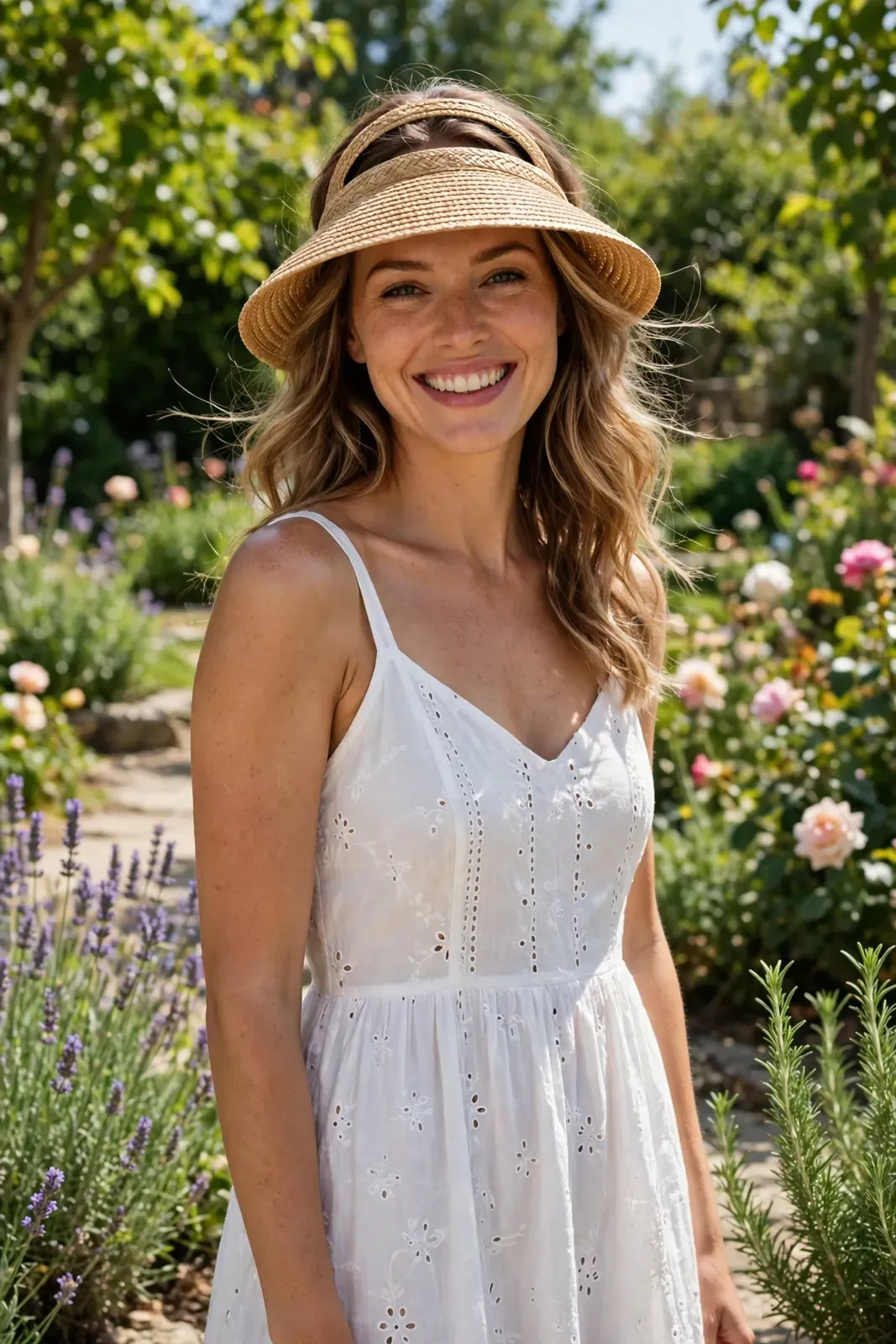
First, the hero look above: a barley sun straw visor with a white sundress in the garden. Pale straw against white cotton is a clean, classic summer pairing, and the brim throws just enough shade to keep you from squinting in photos. Second, the market look in the photo below — striped t-shirt, denim shorts, ponytail pulled through the open top. Third, the beach version: visor plus a swimsuit and an open linen shirt, where the open crown keeps you cool between swims. Fourth, the gardening uniform: linen shirt, sleeves rolled, visor keeping both sun and hair off your face while you work.
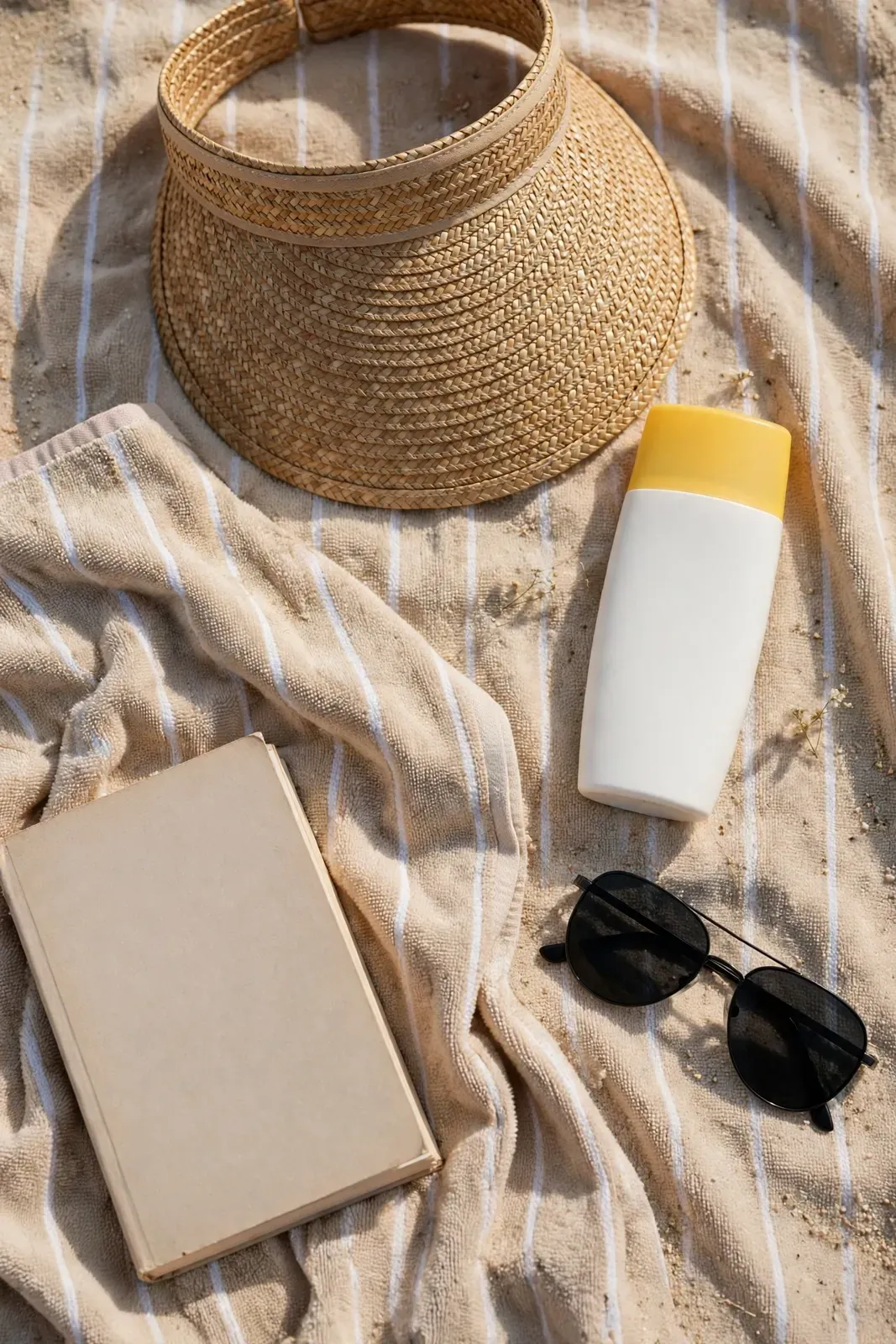
Fifth, the sporty walk: leggings, a loose tank and trainers, the visor doing the job of sunglasses and a cap at once. Sixth, the picnic dress: a floral midi and flat sandals, visor as the practical finish. Seventh, the city version: a sleeveless jumpsuit and a tote — the woven texture softens a plain outfit. Eighth, the poolside read: visor low over the eyes with a paperback, as the flat-lay below suggests. Ninth, the travel day look: it sits happily over loose hair on trains and terraces, then tucks into your bag when the sun drops.
How to Fit and Place a Straw Visor, Step by Step
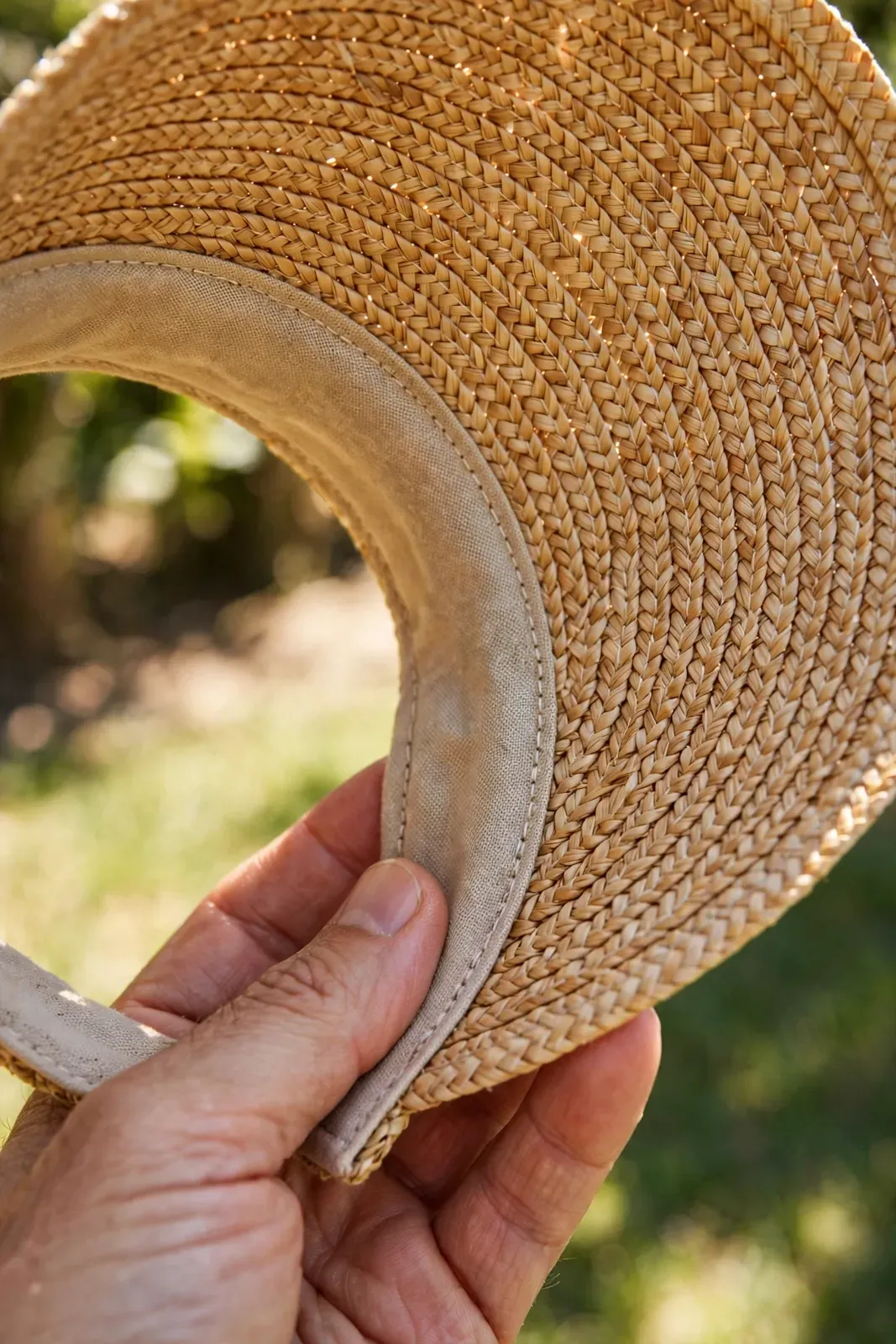
Step one: look at the weave, shown in the close-up — a good visor has a tight, even weave with no gaps that let striped sunlight through onto your face. Step two: sit the band across your forehead, just above the eyebrows, not pushed back like a headband; the brim only shades you when it sits forward. Step three: angle it. A slight downward tilt at the front gives the most eye shade; worn flat, it shades less but looks sportier.
Step four: adjust the back strap so it is snug enough to stay in a breeze but never leaves a mark — two fingers should slide under the band. Step five: settle your hair after the visor is on: ponytail through the opening first, then the band, so nothing pulls.
Hairstyles That Love a Barley Sun Straw Visor
The open crown is the visor’s gift to hair. A high ponytail or top knot passes straight through, which no full hat allows. Loose waves work too — the band sits like a wide headband and the brim frames the face. A low braid keeps ends tidy on windy beach walks. Short hair looks neat with the band worn slightly lower.
The one style to avoid is a high, teased crown: the band will flatten the front and leave the back oddly tall. And because the top is open, remember the parting of your hair still sees the sun — a dab of sunscreen along the parting on very bright days is a small, wise habit. That open crown is exactly why a barley sun straw visor suits a high ponytail so well. Whatever your hairstyle, a barley sun straw visor sits over it without flattening your style.

Buying a Barley Sun Straw Visor That Lasts
When you shop for a barley sun straw visor, check the brim width first: around 9 to 11 centimetres at the front gives real shade without hiding your face. Look for a fabric inner band — it grips kindly, absorbs sweat and stops straw scratching your forehead; the history of the visor shows it began as pure function, so the comfort details matter.
Prefer natural straw over plastic imitations: a real straw hat weave breathes and ages gracefully, while synthetic versions can feel hot and crack. Test the back closure — hook-and-loop or an elastic section both work; avoid fixed bands unless you can try the fit. Finally, hold it to the light: an even weave with no thin patches is the sign it will shade properly and survive more than one summer.
Barley Sun Straw Visor Care: Keeping the Brim Crisp
Straw hates being crushed wet. If your visor gets rained on, shake it off, reshape the brim with your hands and let it dry in open air away from direct heat. Brush dust off with a dry, soft brush, always following the weave. Store your barley sun straw visor flat or hanging by its band — never under a pile of bags. A faint sweat mark on the inner band usually lifts with a cloth barely dampened with water and a drop of mild soap. Travel tip: pack it brim-down in the top of your case with soft clothes tucked around it, or wear it on the journey. With this simple routine, your barley sun straw visor stays crisp for seasons.

Mistakes to Avoid With a Barley Sun Straw Visor
Wearing a barley sun straw visor too far back is the classic error — the brim becomes decoration and your face burns anyway. Second, forgetting the open top: your scalp and parting are unprotected, so plan hair or sunscreen accordingly. Third, choosing a narrow fashion brim for a full day outdoors; it will not shade your cheeks at midday. Fourth, folding a stiff visor flat into a suitcase — some roll gently, others crease forever, so check before you force it. And fifth, leaving it on a hot car dashboard, where heat and sun together fade and brittleness the straw in a single afternoon.
Barley Sun Straw Visor FAQs
Does a visor protect as well as a hat?
It shades the face, eyes and forehead well, but not the scalp, ears or neck. For long midday exposure, pair it with sunscreen on the exposed spots, or choose a full hat. For mornings, evenings and general out-and-about shade, a barley sun straw visor is plenty.
Can I wear a visor with my hair up?
That is its best trick. Ponytails, buns and top knots pass through the open crown, so you get shade without flattening your style — the main reason many people switch from caps to visors.
How do I stop it blowing off?
Fit the back strap snugly, sit the band low on the forehead rather than high on the hair, and on genuinely windy days add a scarf tied over the crown or choose a chin-strap style. A barley sun straw visor worn correctly stays put in a normal breeze.
What brim width should I choose?
Around 9 to 11 centimetres at the front suits most faces and gives honest shade. Wider brims look glamorous and shade more but can catch the wind; narrower ones are sportier and better for active days.
Can a straw visor get wet?
A light splash is fine. Soaking is not: reshape it and air-dry it flat, never with a hairdryer. Repeated soaking loosens the weave, so keep a fabric cap for truly wet days and save the barley sun straw visor for sun
A barley sun straw visor is summer common sense with good looks: shade where you want it, air where you need it, and hair that survives the day. Fit your barley sun straw visor forward, mind the open top, store it kindly, and it will earn its place by the door all season.