There is a particular kind of crochet that looks like it took someone patient all winter — tiny, dense stitches packed close as grains, soft cream cotton, a scalloped edge that finishes it like lace. A couscous crochet cream top has that handmade richness: the stitch is fine and grain-like, the colour goes with everything, and the openwork breathes on warm evenings when an ordinary top feels like a blanket.
Mine has become the piece friends borrow in their heads — they plan outfits around it out loud. It dresses jeans up, softens a sharp skirt, and layers over camisoles and dresses alike. This guide shares nine soft ways to wear a couscous crochet cream top, how to layer it step by step without bulk, the colours and bottoms it loves, and buying and care advice so the stitches stay neat for years. In other words, a couscous crochet cream top works as both the outfit and the finishing touch. If you love handmade warm-evening layers, our crochet halter top for warm evenings guide shows another soft way to style openwork for after-dark plans.
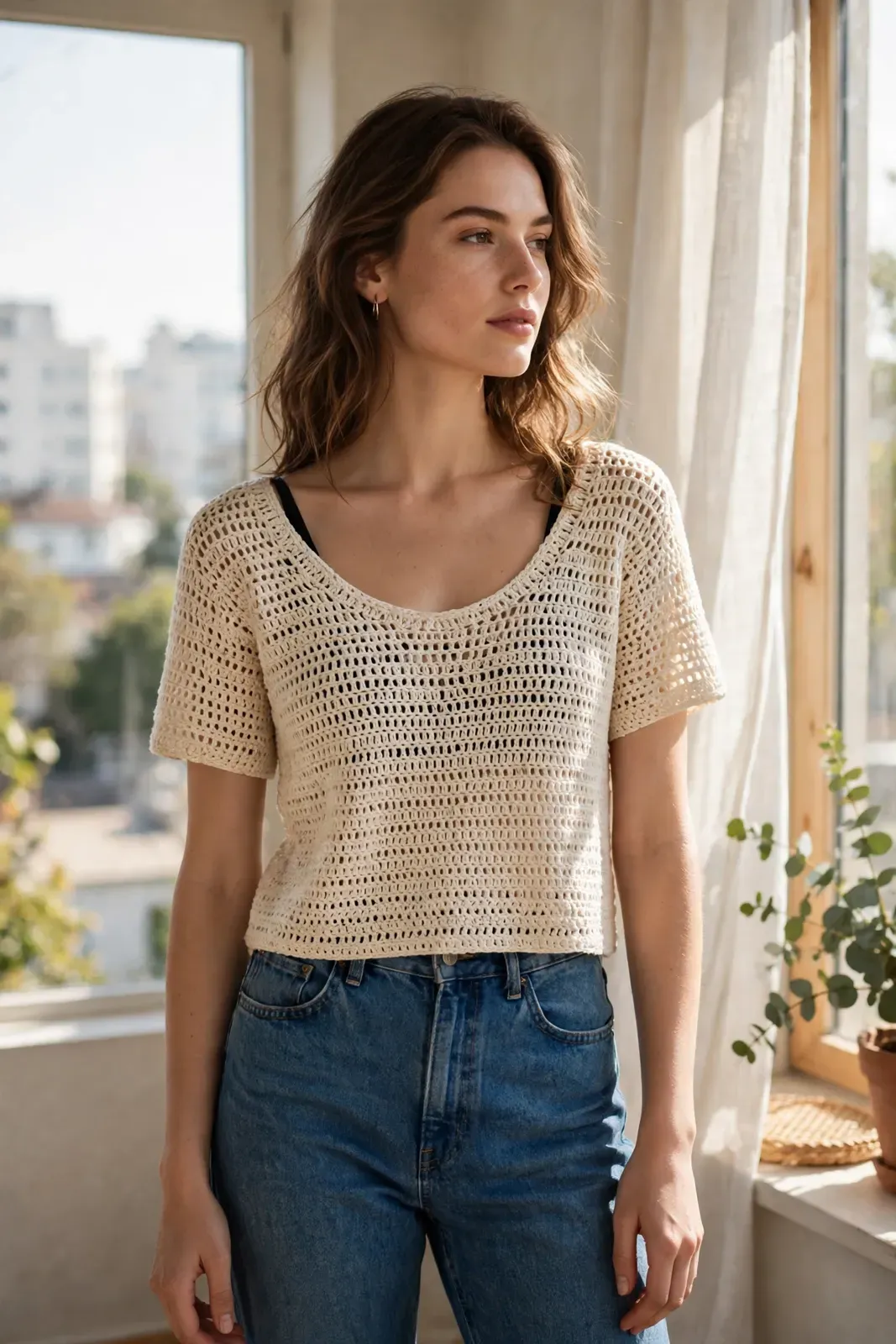
Table of Contents
9 Soft Ways to Wear a Couscous Crochet Cream Top
First, the hero look above: the top over a slim camisole with high-waisted jeans by a bright window. Cream on denim is the pairing this top was born for — the texture does all the talking.
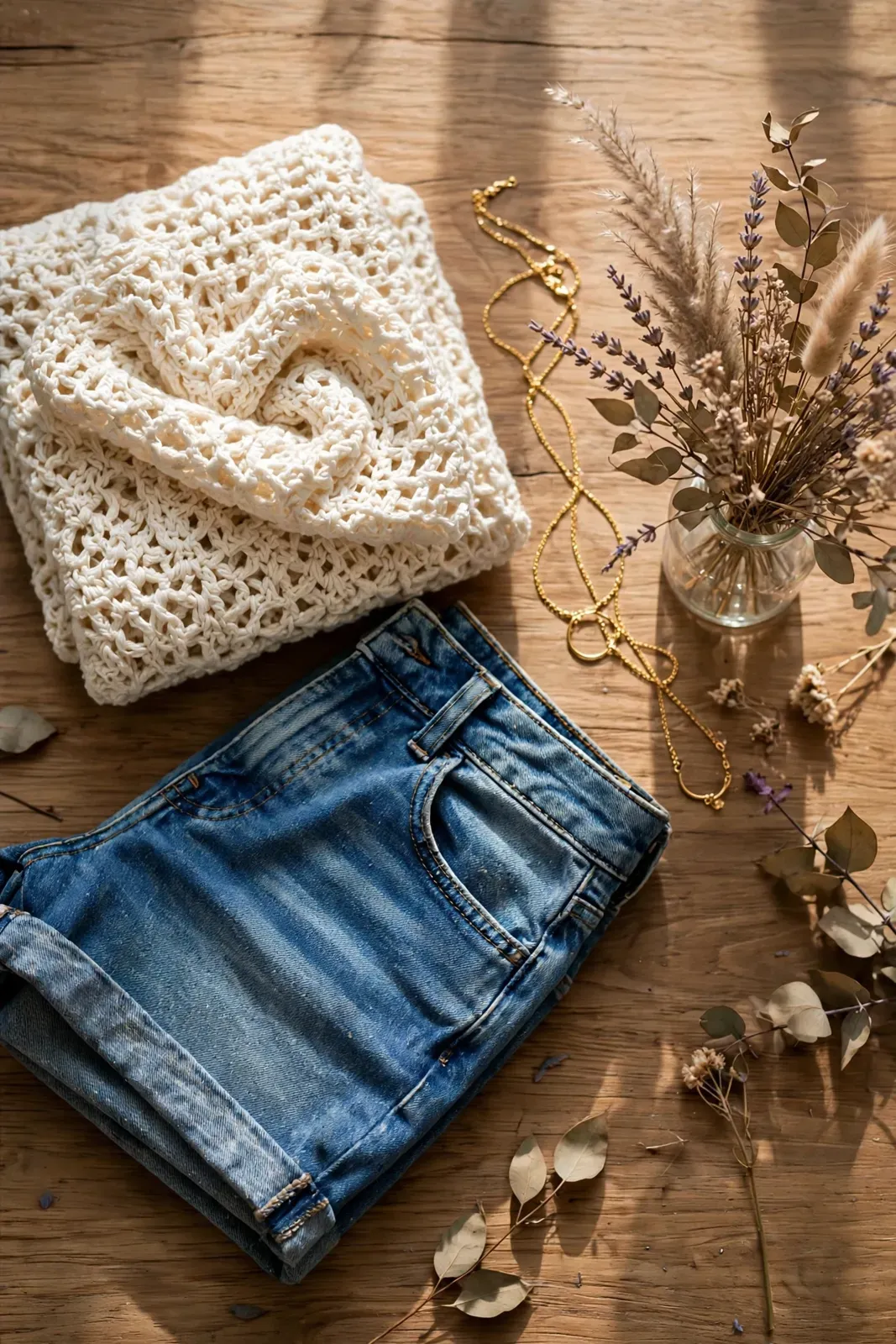
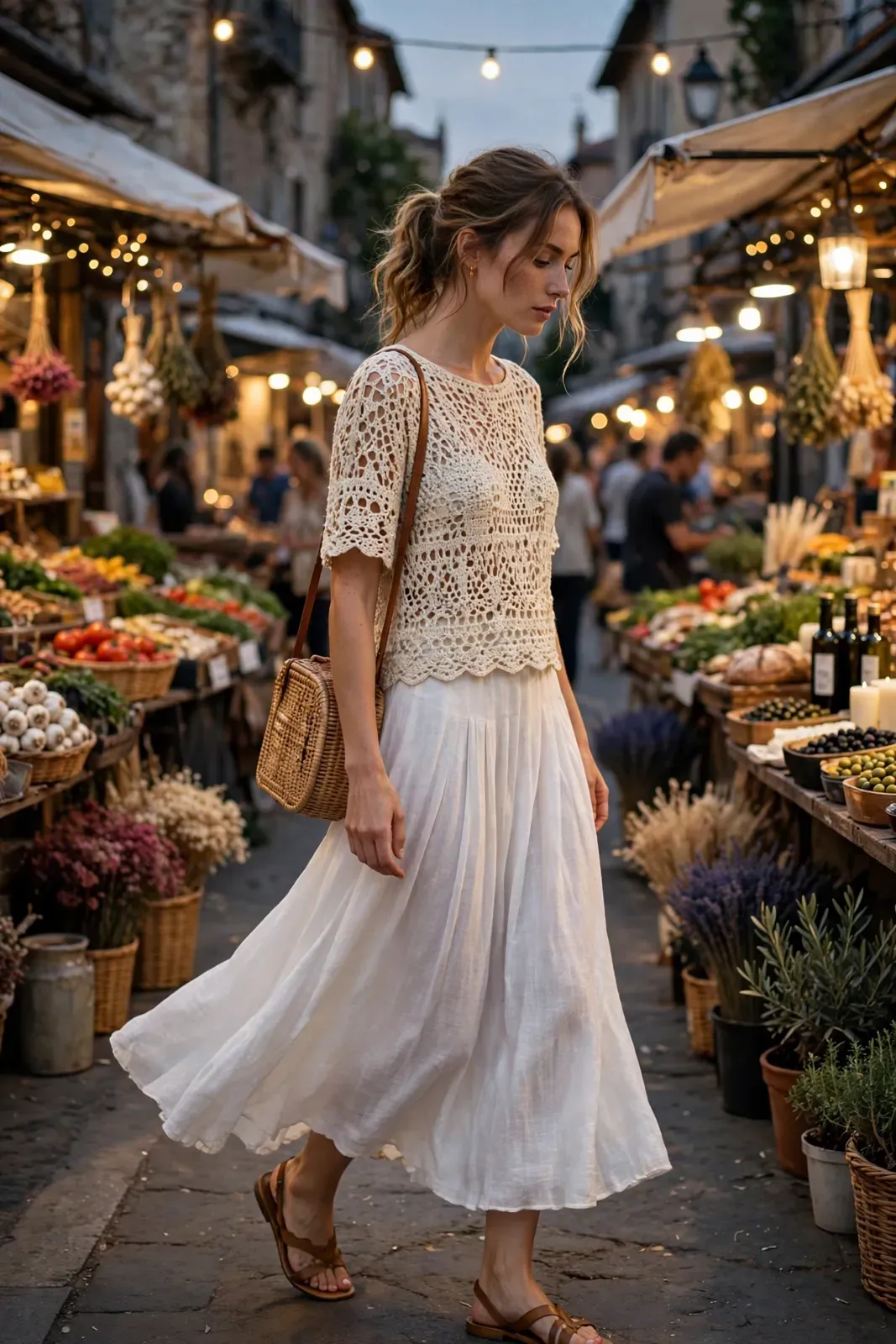
Second, the market look in the photo below: a flowing white midi skirt and sandals, tonal and romantic for warm evenings. Third, the shorts version from the flat-lay: denim shorts, a fine gold necklace, the crochet as the pretty layer of a simple outfit. Fourth, the slip dress trick — wear the top over a plain satin slip dress so the dress becomes a skirt with a crochet bodice.
Fifth, the office-soft look: tailored cream or stone trousers and loafers, crochet adding hand-made warmth to clean lines. Sixth, the beach cover: over a swimsuit with linen trousers, the openwork drying and breathing as no t-shirt can.
Seventh, the evening version: black slim trousers and heeled sandals — cream crochet against black looks almost like lace. Eighth, the layered autumn version: a fine long-sleeve tee underneath in a contrast colour peeking through the stitches. Ninth, the balcony look in the last photo: linen trousers, a book, golden hour — the top in its natural habitat. For example, a couscous crochet cream top with jeans is the easiest starting point if you are new to crochet.
How to Layer a Couscous Crochet Cream Top, Step by Step
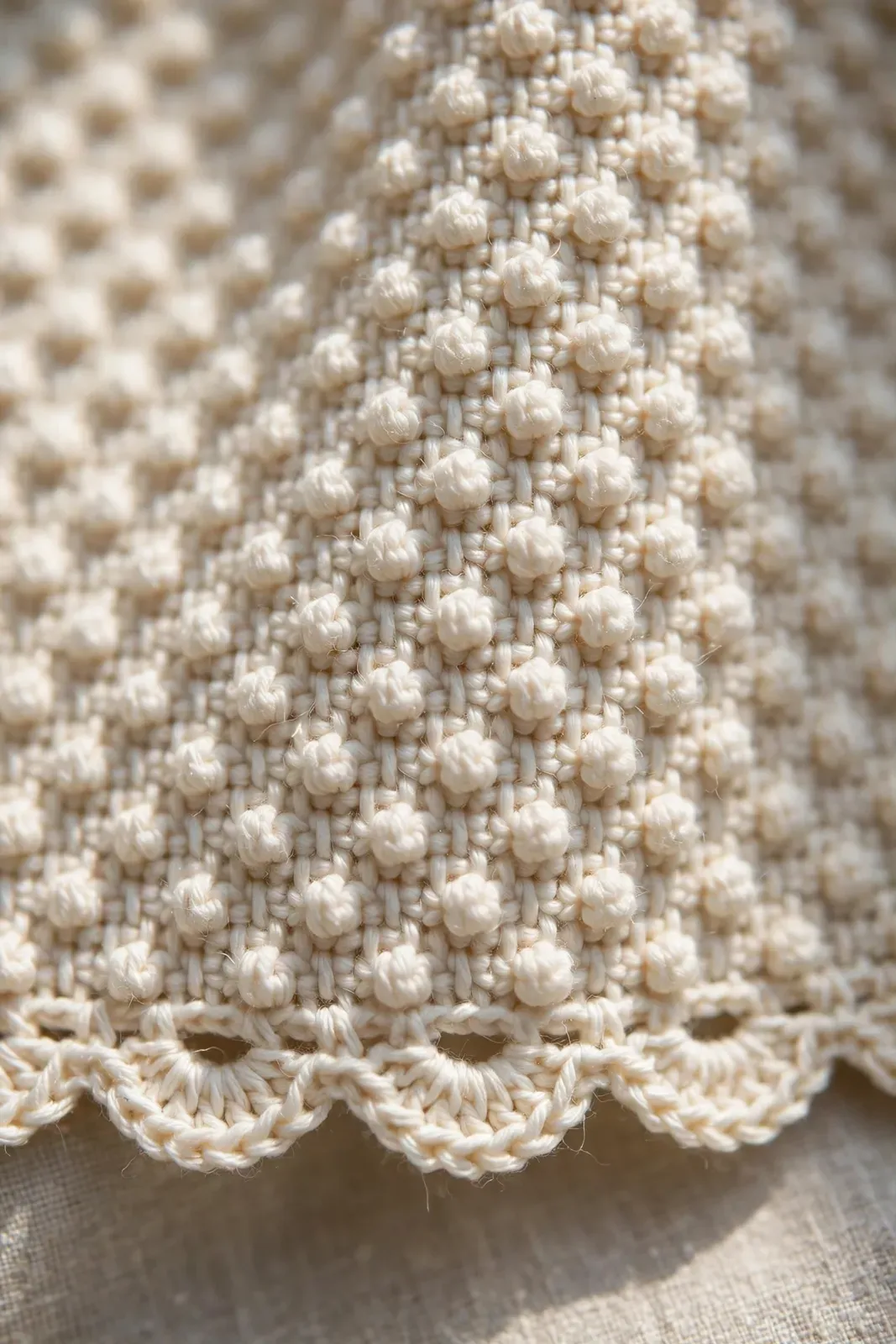
Step one: choose the underlayer by the stitch. The close-up shows the dense, grain-like pattern — small gaps mean a plain camisole in cream, nude or a deliberate contrast all work; match the camisole to your skin or the top for a seamless read, or pick black for definition. Step two: mind the straps; wide camisole straps hide better under crochet than spaghetti straps, which wander.
Step three: settle the hem. Let the scalloped edge sit over the waistband of jeans or a skirt rather than tucking it — the edge is the prettiest part. Step four: add jewellery outside the texture, not through it: a pendant that rests on top of the crochet, never threaded near the stitches where it can snag. Step five: check the silhouette in daylight — openwork reads sheerer in sun than in a bedroom mirror.
Colours and Bottoms That Suit a Couscous Crochet Cream Top
Cream is the diplomat of colours: it warms denim, softens black, and blends tonally with white, stone and beige for the quiet-luxury look in the flat-lay above. It also loves faded, dusty colours — sage, clay, washed rose — which suit its handmade mood better than brights. For bottoms, structure balances the softness: firm denim, tailored trousers and linen with a crease all hold their shape against the drape of crochet. Very soft, slinky bottoms can look unfinished beside it. Metal-wise, gold echoes cream’s warmth; silver works when the underlayer is white or grey. Consequently, a couscous crochet cream top pairs easily with almost every bottom you already own.
Buying a Couscous Crochet Cream Top That Lasts
Start with the fibre. Cotton or a cotton-rich blend holds the dense stitch crisply and breathes; the craft itself — crochet — is worked with a single hook, which is why each top carries slight, charming irregularities. Pure acrylic can feel warm and may pill against the bobbles.
Check the stitch density against the light: you are looking for even, close work with no loose loops waiting to catch. Examine edges — the scalloped hem and neckline should be firm, not wavy-tired. If you sew or have a maker in the family, note that grain-like textures like this are sometimes compared to couscous for their tiny, packed grains — a good search word when hunting patterns or handmade versions. Similarly, try the couscous crochet cream top on with the camisole you plan to wear underneath. Finally, size for drape: crochet relaxes with wear, so a neat fit on day one becomes the right fit by day ten.
Care for a Couscous Crochet Cream Top: Wash Gently, Store Flat
Crochet’s enemy is hanging — its own weight pulls the stitches long. Wash yours in cool water with mild soap, ideally in a mesh bag on a gentle cycle or by hand, then roll it in a towel, reshape it on a flat surface and dry it flat. Store it folded in a drawer, never on a hanger. Snags happen: never cut a pulled loop — ease it back through with a crochet hook or a blunt needle, working the slack along the row. A fabric shaver used very lightly lifts surface fuzz from cotton blends without harming the pattern.

Mistakes to Avoid With a Couscous Crochet Cream Top
The first is the wrong underlayer — a bright, lacy bra under cream openwork shouts through every stitch. Second, tucking away the scalloped hem, which deletes the detail you paid for. Third, hanging it in the wardrobe and finding it two sizes longer by spring. Fourth, wearing it with a heavily textured bottom — crochet on crochet, or beside chunky fringe, turns busy. Fifth, jewellery that hooks: rough pendants and charm bracelets catch loops all evening. Smooth, fine pieces are the crochet-safe choice.
Couscous Crochet Cream Top FAQs
What do I wear under a crochet top?
A plain camisole or bandeau. Cream or skin-tone disappears for a seamless look; white freshens it; black or a colour adds contrast through the stitches. Choose smooth fabric so nothing competes with the texture.
Is a crochet top warm-weather only?
No — it is a brilliant layer. Over a fine long-sleeve tee or a thin roll-neck it carries into autumn, and the openwork stops it feeling bulky under a jacket. In summer it breathes better than most woven tops.
How do I stop it stretching out of shape?
Never hang it, wash it cool and gentle, dry it flat, and store it folded. Cotton crochet relaxes a little in wear and recovers in the wash if you reshape it while damp.
Can I wear it to work?
Yes, with a neat camisole beneath, tailored trousers and closed shoes. The handmade texture reads like a fine knit in most offices, especially in cream. Keep the underlayer opaque and the fit tidy.
Does crochet suit all body shapes?
The dense, fine stitch of this style is one of the most forgiving — it skims rather than clings, and the texture distracts the eye kindly. Choose a length that ends at a point you like, hip or waist, and let the scalloped edge do the finishing.
A couscous crochet cream top is slow fashion you can wear on fast days: handmade texture, a colour that befriends your whole wardrobe, and a softness that suits jeans and silk alike. Layer it smoothly, store it flat, and it will keep its grain-fine stitches — and its compliments — for years.