Table of Contents
Some plants sulk in a bathroom, and some act as if the room was made for them. If you have ever stepped out of a hot shower and wished the steamy, soft light could do something more useful than fog the mirror, start with bathroom plant humidity lovers: the ferns, vines and orchids that come from warm, damp forests and feel completely at home next to a bath. In most homes the bathroom is the one room where the air is regularly warm and moist, and for tropical plants that is not a problem to survive. It is the whole point.
This guide walks through bathroom plant humidity lovers, the plants that genuinely thrive in steam, how to match them to the light you actually have, where to put them in a small room, and how to water them when the shower is already doing half the work.
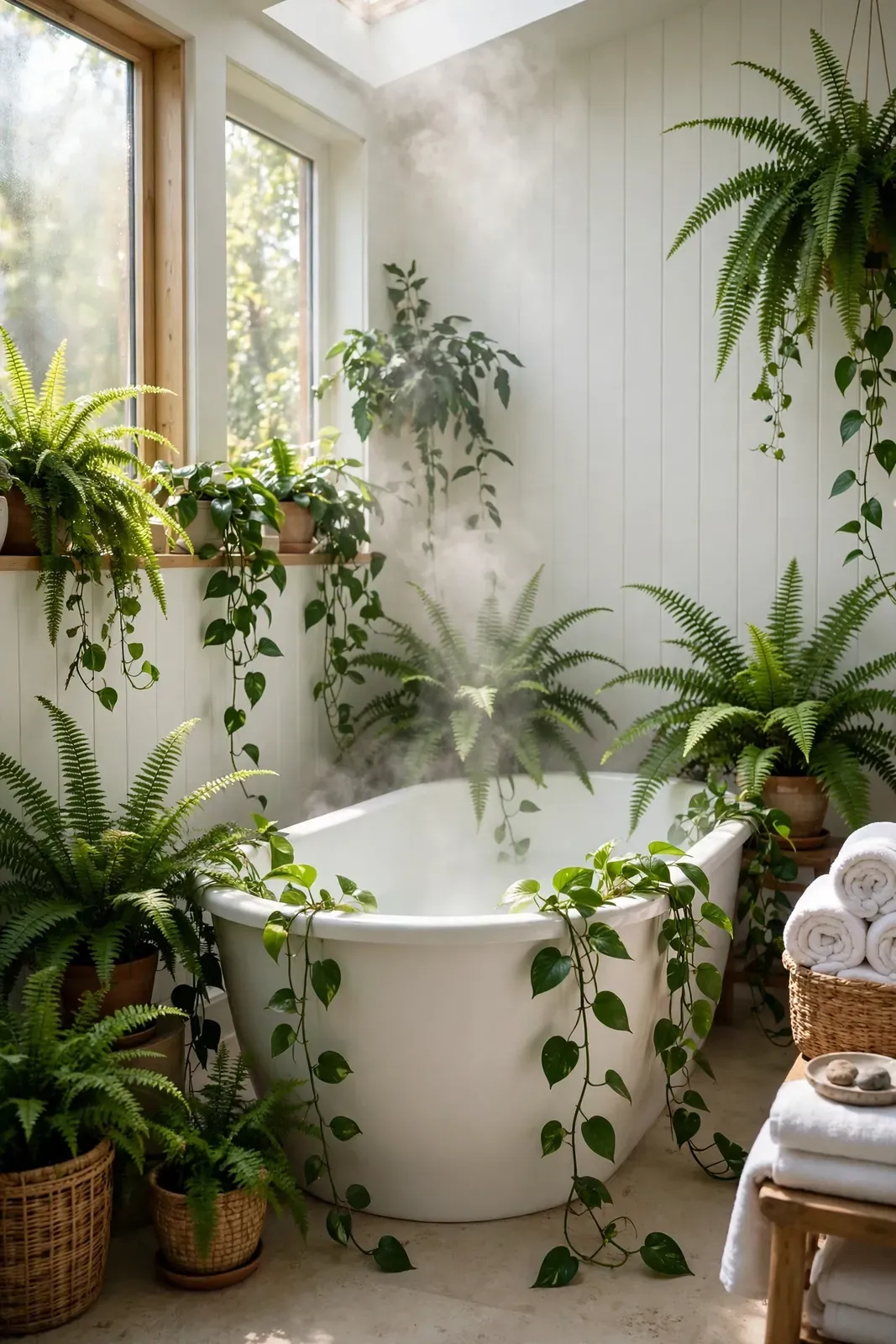
Why Steam Suits Bathroom Plant Humidity Lovers So Well
Most popular houseplants come from the floor or canopy of tropical forests, where the air stays damp all day. A bathroom after a shower copies those conditions better than any other room. Humidity that rises for part of the day keeps fine leaves from drying at the edges, helps new fronds unfurl without sticking, and discourages the spider mites that love dry, heated indoor air in winter.
Warmth matters as much as moisture. Bathrooms tend to stay in the comfortable middle range these plants prefer, without cold draughts or the hot, dry blast near a radiator. Steam also lands directly on leaves, which is how many of these plants naturally drink. Many orchids and air plants are epiphytes, plants that grow on tree bark rather than in soil and take moisture from the air around them. A steamy shelf is the closest a home ever gets to that life in the canopy.
The Best Bathroom Plant Humidity Lovers by Light Level
Light, not humidity, usually decides success, so choose by window first and by looks second. For a bright bathroom, the classic choice among bathroom plant humidity lovers is a fern. Ferns are an ancient group of plants that reproduce by spores rather than flowers, and Boston fern, maidenhair fern and bird’s nest fern all love bright, indirect light with damp air. Maidenhair is the fussy beauty, worth it if you keep its soil evenly moist; Boston fern is far more forgiving and fills a corner fast.
For medium light, a few steps back from the window, pothos is the plant almost everyone succeeds with. Golden pothos, known to botanists as Epipremnum aureum, is a tough tropical vine that trails happily from a shelf and shrugs off a forgotten watering. Calathea also suits this middle band: its patterned leaves adore humidity and quickly show brown edges in a dry living room while staying handsome here.
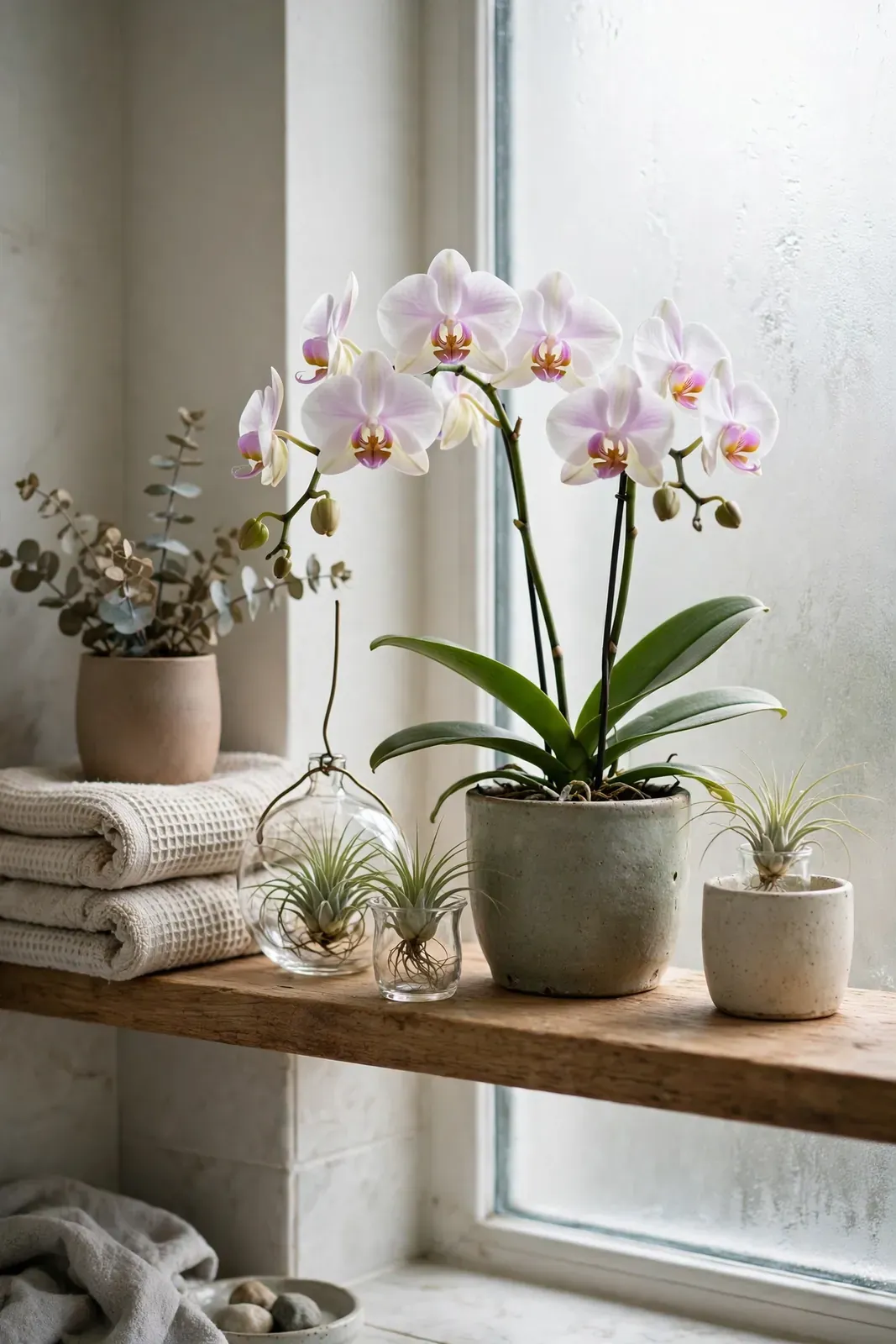
Orchids deserve a place on the bright shelf in the second photo. The moth orchids sold everywhere are canopy plants in the wild, so steamy air and bright light without harsh midday sun suit them, and their flowers last for weeks. Air plants, the small tillandsias in glass holders in that photo, need no soil at all: they take water through their leaves, so steam plus a weekly soak keeps them content.
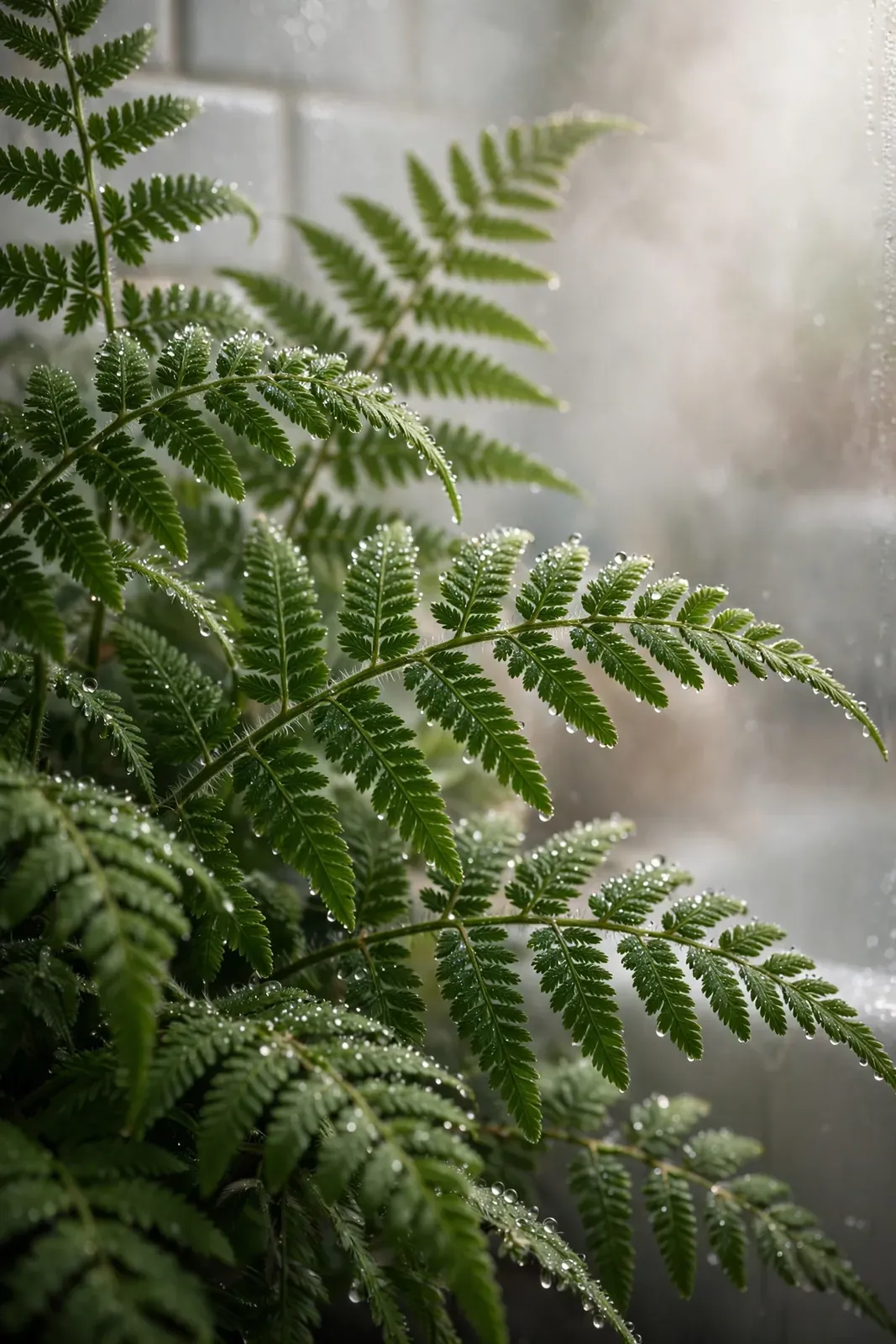
Windowless Bathrooms: What Still Works for Bathroom Plant Humidity Lovers
A bathroom with no window is not a reason to give up, but it does change the plan. No plant lives forever in true darkness, because light is its food. What works is rotation: keep two pothos or two ferns and swap them every couple of weeks between the bathroom and a bright spot elsewhere, so each plant spends half its life recovering in good light while enjoying its steamy weeks.
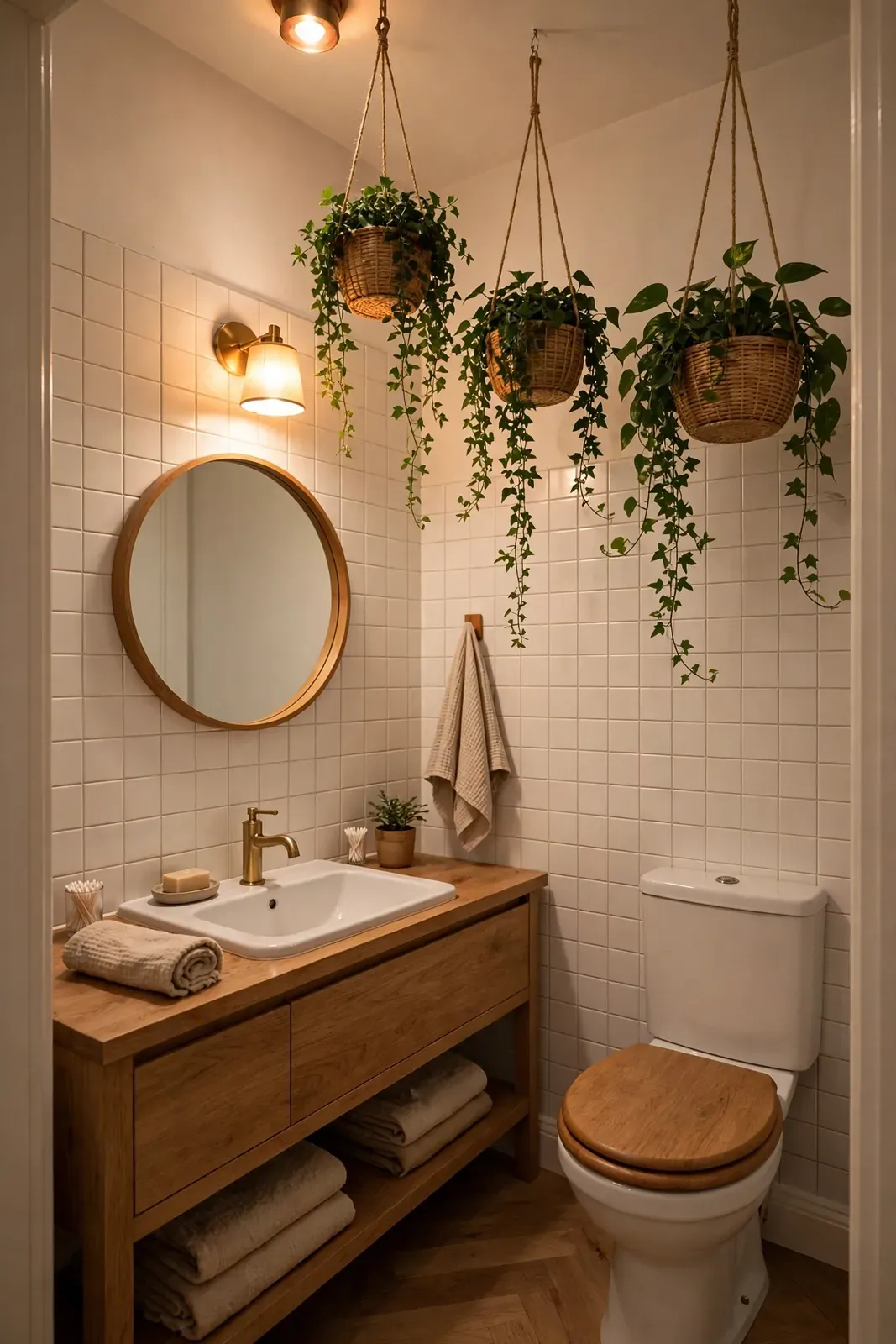
The small warm-lit bathroom in the fourth photo shows the other approach: hanging planters under a decent ceiling light, using vertical space that costs no floor room. A simple full-spectrum bulb in the existing fitting, left on while you are awake, also makes a real difference and costs little to run. What does not work is shutting a bright-light plant in the dark and hoping. Choose rotation, and a windowless room can still be green.
Placement for Bathroom Plant Humidity Lovers: Shelves, Hanging Pots and the Bath Edge
Placement is mostly about keeping plants in the steamy zone but out of the splash and knock zone. A shelf above the bath or beside the shower catches rising steam and keeps pots away from elbows. The windowsill is prime space for orchids and air plants, as long as the glass is frosted or the sun is gentle; harsh midday sun through clear glass can scorch leaves. For the shelf itself, this floating shelves styling guide shows how to arrange the pots so they look deliberate.
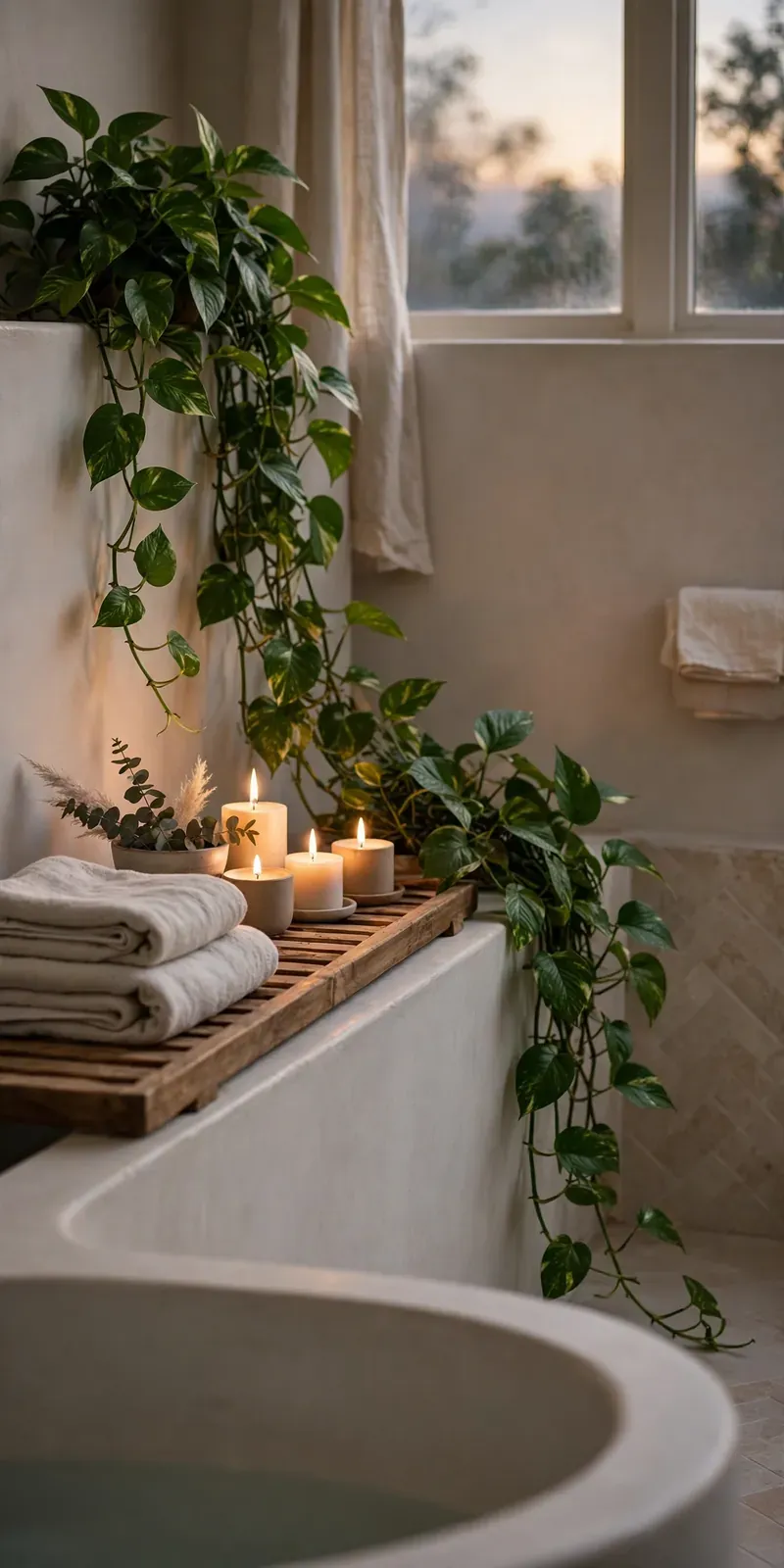
Hanging planters suit trailing pothos and ferns, and keep every surface free for bottles and towels. Use secure hooks, not suction cups, for anything heavier than an air plant, and hang pots where a drip lands in the bath, not on the floor. The bath edge itself, shown in the last photo with trailing pothos and candles, is the prettiest spot of all: a wide rim or wooden bath tray holds one trailing plant beautifully. Keep flames well away from leaves. On the floor, one large fern in a basket fills an awkward corner and loves the low, damp air.
How to Set Up Your First Bathroom Plant Corner, Step by Step
Step one: watch your bathroom for a day before buying anything. Note where the light falls, how long the room stays steamy after a shower, and which shelf or corner is genuinely free. Step two: pick just two or three bathroom plant humidity lovers matched to that light, one trailing, one upright, and, if the light is bright, one flowering orchid for colour.
Step three: sort drainage before decoration. Every pot needs a drainage hole and a saucer, or a plain nursery pot inside a prettier outer pot so you can empty standing water. Step four: place the plants and live with them for a week before fixing hooks or drilling anything. Step five: set a tiny routine: check soil with a fingertip when you clean the bathroom, soak air plants weekly, and turn each pot a quarter turn so growth stays even.
Watering Bathroom Plant Humidity Lovers When the Room Does Half the Work, and the Mould Balance
Bathroom plants usually need less watering than the same plants in a living room, because steam wets the leaves and damp air slows drying. That does not mean no watering. Ferns and calathea like their soil lightly moist, so check weekly and water when the top feels just dry. Pothos is happier drying a little between drinks. Orchids in bark need a thorough soak and drain, roughly weekly, and air plants need a weekly bath in a bowl, then a shake and time upside down so water does not sit in the crown and rot it.
The balance to strike is plants versus mould, and ventilation is how you win both. Run the extractor fan or open the window for twenty minutes after showers. That clears walls and ceilings, where mould starts, while plants keep the benefit of the steamy spell itself. Black spots on a wall are a ventilation problem, not a plant problem.
Budget and Buying Advice for Bathroom Plant Humidity Lovers
Start cheap while you learn your room. Small pothos and Boston ferns are among the least expensive houseplants anywhere, and one pothos gives free spares: snip a stem below a bump, stand it in a jar of water, and in a few weeks it will have roots ready to pot up.
Spend money on healthy plants, not fancy pots. Look for firm leaves with no yellowing, no webbing underneath, and new growth at the centre. Avoid bargain plants that are bone dry or sitting in water. If you want the lush look in the photos, buy one mature fern rather than three tiny ones: it gives instant effect and is harder to kill. Prove the spot works first, then add slowly.
Common Mistakes to Avoid with Bathroom Plant Humidity Lovers
The most common mistake is choosing by photograph instead of by light, then blaming the plant. A sun lover in a dark bathroom and a shade lover scorched on a clear windowsill both fail for the same reason. The second mistake is overwatering out of kindness: in a steamy room soil stays damp far longer than it looks, and more bathroom plants die from soggy roots than from thirst. Always feel the soil first.
Third, people forget ventilation, then blame plants for mould really caused by a fan that is never switched on. Fourth, they crowd pots where they get knocked into the bath or splashed daily with soapy water; soap is not plant food, so rinse splashed leaves and choose spots out of the shower’s direct line.
Frequently Asked Questions About Bathroom Plant Humidity Lovers
Which plant is best for a complete beginner’s bathroom?
Golden pothos is the safest first choice. It tolerates medium and lower light, forgives irregular watering, trails prettily from a shelf, and is easy to propagate for free.
Can plants really cope with a bathroom that has no window?
Yes, with rotation. Swap two suitable plants every couple of weeks between the bathroom and a bright room, or fit a full-spectrum bulb.
Will bathroom plants cause mould in my home?
Healthy potted plants do not cause mould on their own. Mould comes from moisture sitting on walls and ceilings without ventilation. Run the fan or open a window after showers, empty saucers, and let soil dry appropriately between waterings.
How often should I water plants in a steamy bathroom?
Less often than in other rooms. Check weekly with a fingertip: water ferns and calathea when the surface just dries, let pothos dry a little more, soak orchid bark weekly and drain it fully, and give air plants a weekly soak followed by a shake dry.
Are bathroom plants safe around children and pets?
Mostly, with sensible placement. Pothos can irritate if chewed, so hang or shelve it out of reach of pets and small children. Boston fern is generally considered a safer choice for floor level. Check the specific plant before buying and place anything doubtful up high.
Steam, soft light and leaves that love both.
That is the whole secret of bathroom plant humidity lovers: the room you already steam up every morning is the room these plants have been waiting for. Start with one pothos and one fern, put them where the light is honest, open the window after your shower, and watch the plainest room in the house quietly become everyone’s favourite.