Charcoal Pinstripe Waistcoat Look: 9 Smart Ways to Wear a Waistcoat With Trousers and Dresses
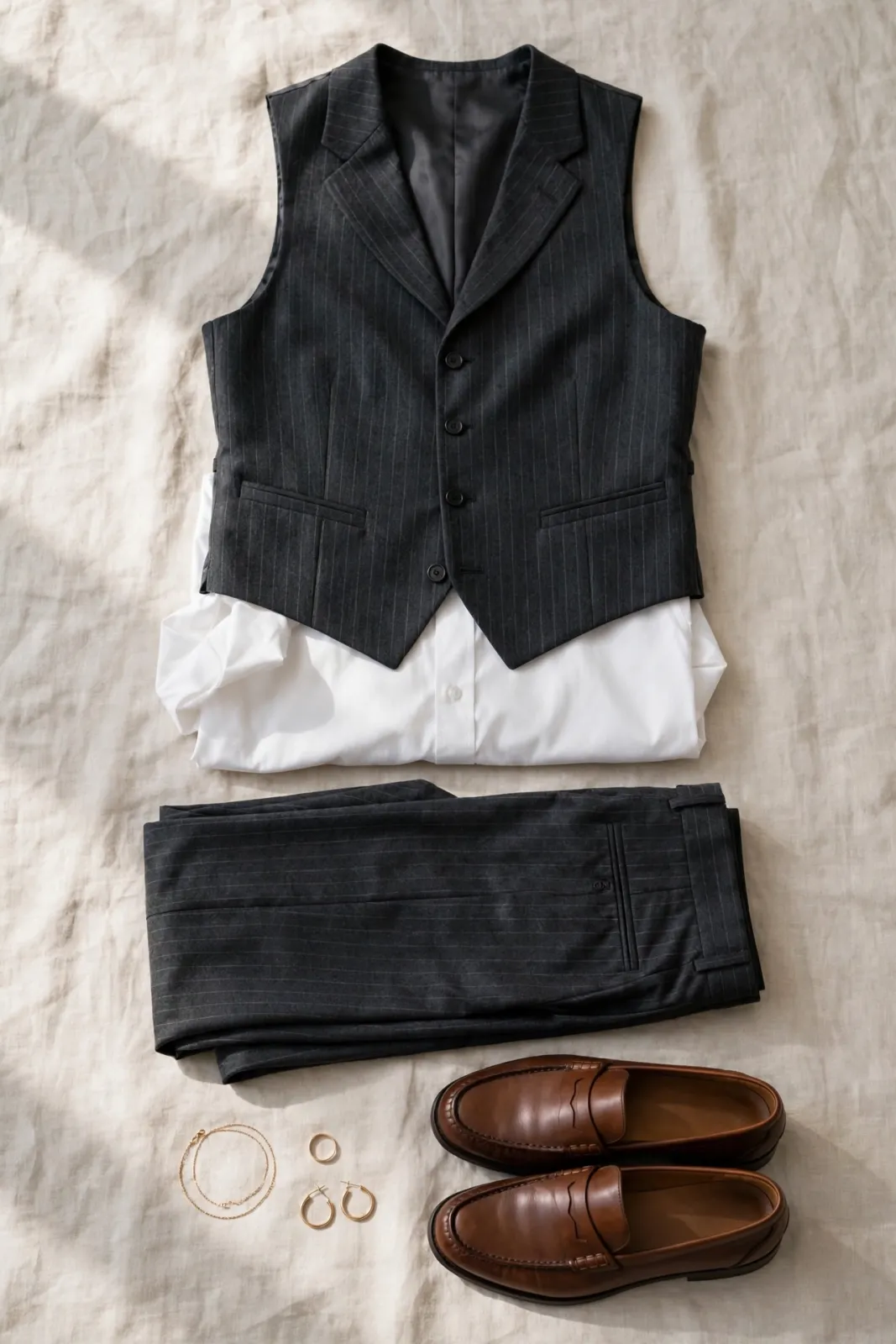
There is something quietly confident about a charcoal pinstripe waistcoat. It is not loud, it does not chase trends, and yet the moment you button one over a simple shirt, your whole outfit looks considered. The fine white lines soften the charcoal, and the tailored shape gives you a waist even on days when you do not feel put together.
I bought my first one for a job interview, thinking it would live at the back of the wardrobe afterwards. Instead it became the piece I reach for when jeans feel too casual and a blazer feels like too much effort. It works with matching trousers, over dresses I already owned, and even over a plain white tee. Here are nine wearable ways to make it your own.

Why Charcoal Pinstripe Works So Hard
Charcoal is kinder than black. Black pinstripe can look severe in daylight, while charcoal reads softer against most skin tones and pairs easily with white, cream, pale blue, burgundy and soft pink. The thin vertical lines also draw the eye up and down, making the torso look longer and the outfit feel sharper without extra accessories.
A waistcoat adds structure in the middle, where shirts can billow and dresses can lose their shape, and it is a finished layer that is cooler than a jacket in a warm office. One good waistcoat can sit over shirts, knitwear, dresses and tees.
1 to 3: The Classic Ways With Trousers
1. The matching trouser set. Wear the waistcoat with trousers cut from the same fabric, over a crisp white or pale blue shirt. Keep the trousers high-waisted and straight or gently wide, so the waistcoat ends cleanly at the waistband with no shirt bunching in between. Loafers finish it for work; clean white trainers make the same set feel relaxed.
2. Waistcoat as a top on warm days. Buttoned fully, a well-fitted waistcoat can work on its own as a top. This only works if the armholes sit high and close, the neckline is modest, and the fit is snug without pulling. Pair it with matching or plain black wide-leg trousers and simple jewellery. If you feel exposed, add a fine short-sleeve tee underneath.
3. Broken tailoring with plain trousers. You do not need the matching bottoms every time. It looks just as good with plain charcoal, black or navy trousers, as long as the tones sit comfortably together. Breaking the set makes it feel like a normal wardrobe piece rather than a costume. A belt in the trouser loops is fine, but never belt over the waistcoat itself.

4 to 6: Softer Pairings — Dresses, Skirts and Jeans
4. Over a simple dress. My favourite trick for dresses that feel shapeless. Button the waistcoat over a plain midi shirt dress, slip dress or fitted knit dress, and it creates a waist and adds a tailored edge. It works best when the dress fabric is smooth, not bulky, and the colour is solid — black, cream or navy. Let the hem fall well below the waistcoat.
5. With jeans for every day. Straight or wide-leg jeans in a dark wash make the waistcoat feel current rather than formal. Wear it over a white tee, fine striped shirt or thin roll-neck, tuck everything in neatly, and add loafers or ankle boots. Avoid very distressed denim; the contrast with a sharp waistcoat usually looks accidental. Clean, dark jeans keep the balance right.
6. With a skirt. Try it with a black satin midi, a pleated skirt or a simple pencil skirt. The mix of tailored top and softer bottom suits evenings and creative workplaces. Keep the top underneath slim — a fitted tee or silk camisole — so the waistcoat sits flat, and choose a skirt that starts where the waistcoat ends, with no gap between them.
7 to 9: Layers and Finishing Touches
7. Under a blazer or coat. The waistcoat was born as a middle layer, and it still does that job well. Between a shirt and a blazer it adds warmth without bulky sleeves, and the pinstripe at the front looks polished. In winter, try it over a thin merino roll-neck with a long wool coat on top. Check the layers sit flat and do not fight at the buttons.
8. Open over knitwear. Not every wear needs to be buttoned and formal. Leave it open over a fine-knit jumper or fitted long-sleeve top, and it works almost like a sleeveless jacket, adding shape without hiding the knit. This suits weekends and travel days. Keep the knit thin; chunky jumpers underneath almost always bunch.
9. Dressed up for evening. Wear the matching set with a silk shirt in cream or champagne, or wear the waistcoat alone with wide trousers and heels. Swap loafers for strappy heels, add a small clutch, and choose one piece of jewellery — long earrings or a fine necklace — rather than lots of small pieces competing with the buttons. The pinstripe is detail enough.

How to Get the Fit and Buttoning Right, Step by Step
Fit makes or breaks a waistcoat, so work through it in order. First, the shoulder seams should sit at the edge of your shoulders, not sliding down the arm. Second, the armholes should sit fairly high and close, so a shirt layers neatly underneath with no gaping when you move.
Third, do up the buttons standing naturally and check the mirror. The fabric should lie flat, with no pulling and no X-shaped creases. You should fit two fingers between the waistcoat and your body at the waist — snug, not squeezed. Fourth, check the length: it should just cover the waistband of your trousers or skirt, with no shirt showing below. Fifth, check the back sits smooth, using the strap only for a small refinement.
On buttoning, leave the bottom button undone. It lets the waistcoat sit and move properly when you sit down, and stops the front kicking out at the hem. Button the rest for a polished look, and if you wear it open, keep the layer underneath neat and tucked.
Buying Advice: Fabric, Fit and Length
Start with fabric. A wool or wool-blend waistcoat drapes best, holds its shape, and works across most of the year. Look for a smooth weave where the pinstripe is fine and even. Polyester-heavy versions can look shiny under office lights, though a matte viscose blend is fine on a budget. A linen blend breathes better in heat but creases more.
Check construction closely. Buttons should be sewn firmly, buttonholes cleanly finished, and the lining flat without bubbling. Pinstripes should line up at the front edges — mismatched stripes are the quickest sign of careless making. Sewn-shut decorative pockets are normal, so do not force them open.
On length, petite frames usually suit a shorter waistcoat ending at the waistband, while taller frames can carry a longer line. If you will wear it over dresses, try it on over a dress, because the extra layer changes how it sits. Buy for the body you have now.
Caring for Your Waistcoat So It Lasts
A tailored waistcoat does not need washing after every wear. Hang it on a shaped hanger, let it air overnight away from direct heat, and brush it lightly to lift dust from the weave. Spot-clean small marks with a damp cloth, and air it rather than washing constantly, which fades charcoal and softens the structure.
When it needs a proper clean, check the label. Wool waistcoats with lining are usually best dry-cleaned, but only a few times a year. Between cleans, gentle steam freshens creases; hold the steamer away from the cloth and never press a hot iron flat onto the front, which can leave shine marks. Store it buttoned so the lapels keep their shape.

Common Mistakes to Avoid
The most common mistake is buying too small because waistcoats look sleek in photos. Pulling buttons and a front that rides up always look less smart than a slightly easier fit, so size for comfort when buttoned and seated. Length matters too: ending above the waistband with shirt showing below looks unfinished, while far too long swamps the trousers.
Styling mistakes are just as easy. A belt over a waistcoat, buttoning every button, or pairing pinstripe with another busy pattern muddles the look. Let the pinstripe be the only pattern, or keep a second pattern very small and only in the shirt. And do not save it only for formal days.
Frequently Asked Questions
Can I wear a charcoal pinstripe waistcoat without the matching trousers?
Yes, and most people wear it that way more often. It pairs well with plain black, charcoal or navy trousers, dark jeans and midi skirts, as long as the other piece is solid. Keeping the rest plain lets the pinstripe stay the focus.
Should the bottom button stay undone?
For a classic single-breasted waistcoat, yes. It lets the front sit flat and move naturally when you sit, and it is how tailored waistcoats are designed to be worn. A very short fashion waistcoat may be an exception, which the fit will make obvious.
What shirt works best underneath?
A plain white, cream or pale blue shirt is safest, in smooth cotton that does not bunch underneath. Fine stripes can work if they are much smaller or larger than the pinstripe, but avoid checks and bold prints. Make sure the collar sits neatly above the neckline.
Can a waistcoat be worn over a dress in winter?
Yes, over a fitted knit dress or shirt dress. Choose a smooth dress without bulky pockets or a thick waist tie where the waistcoat will sit, and add tights and boots. It adds warmth and gives a plain dress a sharper shape.
How do I stop it looking like a uniform?
Break up the formality in one place: swap the shirt for a tee or fine knit, wear the set with trainers, or pair it with jeans instead of matching trousers. One relaxed element is enough to make it look like personal style rather than workwear.
A Final Word
A charcoal pinstripe waistcoat makes simple clothes look deliberate. Learn its fit once — flat buttons, clean length, bottom button undone — then wear it without overthinking: with matching trousers when you want to feel sharp, over a dress when a dress needs shape, and with jeans on an ordinary day.