Lavender Gingham Headband Set: 9 Sweet Ways to Wear Gingham Headbands Every Day
Some accessories are bought for one outfit and forgotten in a drawer. A lavender gingham headband set is not one of them. The soft purple check lifts a plain dress or a simple t-shirt in seconds, and it solves the most common hair problem of all: hair that will not cooperate on a busy morning.
I bought my first set on a whim before a spring picnic, thinking I would wear one band once. Instead I reached for them on school runs, work calls, market mornings and lazy Sundays. A good set gives you a few widths and shades — a deeper lavender, a pale lilac, a soft lavender-and-white mix — so one always suits your outfit and your mood.

Why Lavender Gingham Works With Almost Everything
Gingham never really leaves. The small, even check reads as neat and fresh rather than loud, so it sits comfortably with florals, stripes, denim and plain block colours without fighting any of them. The tiny check behaves almost like a texture, adding interest close to your face where it matters most.
Lavender does the rest. It flatters most skin tones, softens dark hair with a pretty contrast, and adds light around blonde and light brown hair without washing it out. It feels made for cotton dresses in summer, yet it also brightens grey knits in cooler months. If you live in neutrals — white, cream, grey, navy, denim — lavender is the easiest pastel to add.
1 to 3: The Everyday Classics
1. Loose waves and a wide band. Push a wider band back two finger-widths from your hairline, let waves or your natural texture fall around it, and tuck a little hair over each side near your ears. It suits sundresses, linen shirts and knit tops, and takes less than a minute.
2. The neat low ponytail. Sweep hair into a low ponytail at the nape of your neck and add a medium-width band on top. The gingham adds the polish a plain ponytail lacks, so it reads as intentional rather than rushed. Leave two face-framing pieces loose for a softer finish.
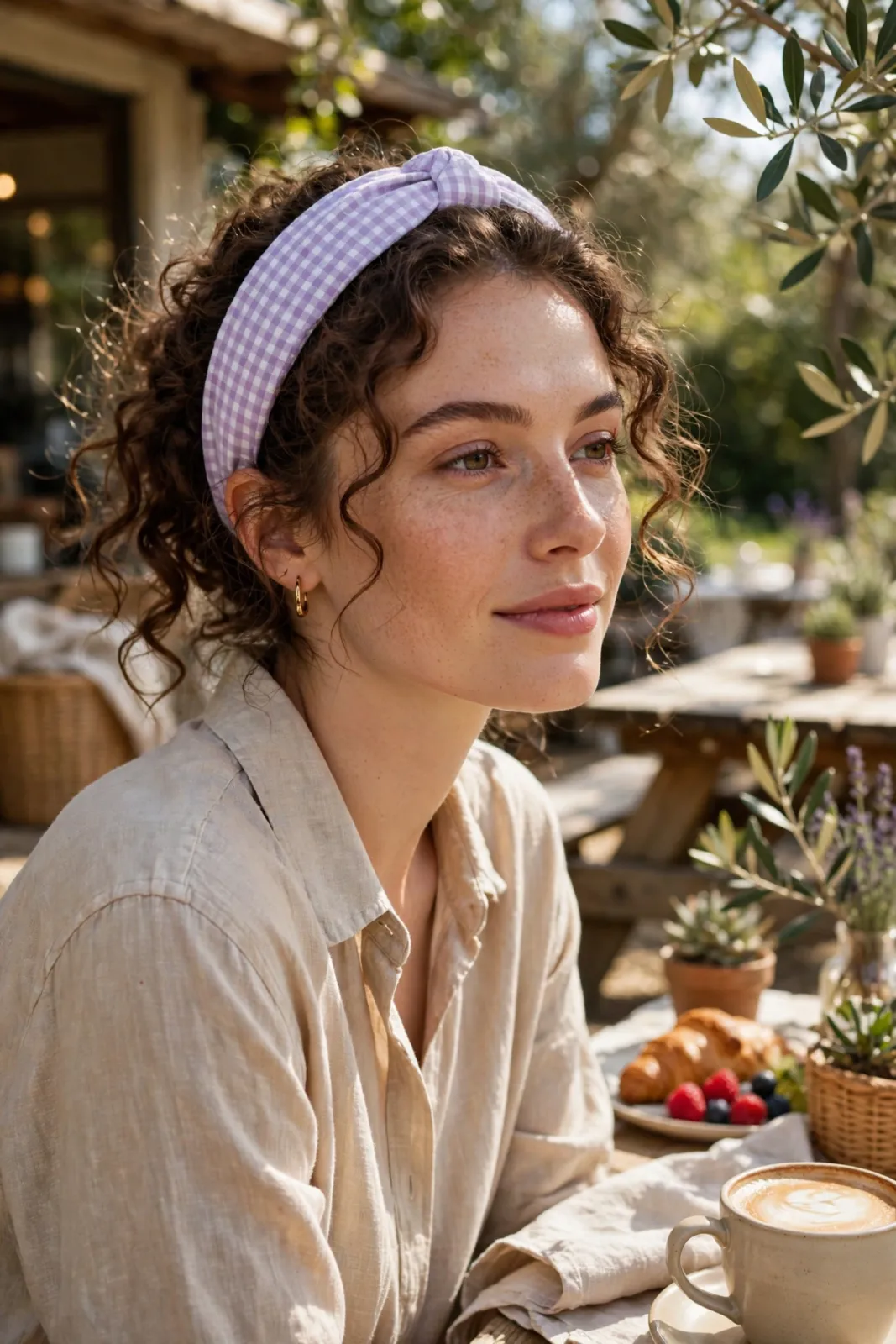
3. The knotted band with a messy bun. Pile hair into a loose bun, slip on the band with the small bow or top knot, and pull a few wisps free. The knot gives the bun a focal point, so even third-day hair looks styled. Perfect with t-shirts, dungarees and trainers.

4 to 6: Pretty Variations for Different Hairstyles
4. Sleek and straight with a slim band. Choose the slimmest band and wear it closer to the hairline for a clean, graphic line. Smooth hair against checked fabric looks crisp and modern, especially with a centre parting. Keep the outfit simple and let the lavender be the single soft note.
5. Loose curls pushed back. A soft, wider band worn slightly further back lifts curls from your face without squashing the volume on top, and the gingham peeking through looks relaxed and romantic. Fluff the curls in front of the band forward a little so nothing looks pulled flat.
6. Half-up, half-down. Gather the top section into a small half-ponytail or clip, then place the band just in front of it. The band hides the join, adds colour around your face, and keeps the front tidy while lengths stay loose. It photographs beautifully for daytime events.
7 to 9: Dressing It Up and Cooling Down
7. With a summer dress for daytime events. Match a pale lilac band to a white, lemon or soft floral dress and keep makeup light. Gingham brings a gentle vintage charm that suits garden parties and picnics far better than anything sparkly. Add sandals and a woven bag, and the outfit feels considered.
8. The braided front. Braid a small section along one side of your parting, pin it back, and slide the band over the pin. Or braid all your hair into a low side plait and wear the band above it. The braid-and-check mix is charming, practical in heat, and forgiving for a fringe growing out.
9. Active days and fresh-air walks. A soft cotton band keeps flyaways out of your eyes on walks, for gardening and beach days, and looks far prettier in photos than a plain sports band. Pick the widest, softest band, wear it with a high ponytail, and wash it afterwards.

How to Wear a Headband Without Slipping or Headache
Most complaints come down to fit and placement. Start with dry hair that has a little texture: bands grip far better on day-two hair, a touch of dry shampoo, or a light wave than on freshly washed, silky strands. If your hair is very smooth, roughen the section under the band with your fingers first.
Place the band in two stages. Rest it around your neck first, then pull it up into position in one smooth movement, so the hairstyle underneath stays intact. Settle it one to two finger-widths behind your hairline — on the hairline looks harsh and slips forwards, while too far back loses the face-framing benefit.
If it still creeps back, cross two small grips in an X just behind each ear, over the band and under a layer of hair: invisible, but everything locks in place. For headaches, choose wider bands that spread the pressure, avoid stiff plastic cores for all-day wear, and take the band off briefly in the evening. It should feel secure, never tight.

Buying Advice: Fabrics, Widths and What a Good Set Includes
Fabric matters more than price. Cotton and cotton-blend gingham is the best everyday choice: breathable, soft on the forehead, washable, and it grips better than shiny synthetics, which tend to slide. Linen blends are lovely for summer but crease easily; padded satin-look bands are prettier for events, less practical on warm days. The inner surface should feel soft, with no rough elastic edge.
A useful set gives variety, not three copies of the same band. Look for two widths — a slim band around two centimetres for sleek styles, a wider one around four to five centimetres for loose hair — plus shades from pale lilac to richer lavender. Woven gingham, where the check is part of the fabric, keeps its colour far better than a printed check, which can crack and fade.
Check the construction too: neatly finished ends, even stitching, and a knot or bow sewn rather than glued. Sets with a short elastic section at the back give the most forgiving fit. And buy for your real wardrobe — if you live in denim, white and grey, one good lavender set will be worn constantly.
Care and Washing: Keeping Gingham Fresh
Headbands collect what your hairline does — oils, sunscreen, makeup along the inner edge — so gentle washing keeps fabric and skin happier. Hand wash in cool water with a little mild detergent, rinse well, press water out in a towel without wringing, and reshape the band while it dries flat or over a bottle to hold its curve.
Cotton bands can go in the machine in a mesh laundry bag on a gentle, cool cycle with similar colours, but padded or bow bands are safer hand washed. Lavender fades in harsh sun and strong detergent, so dry in shade, never on a hot radiator, and rotate a spare. Store flat, on a hook, or over a rolled towel, not crushed in a drawer.
Common Mistakes to Avoid
The biggest mistake is wearing every band in the same position. A slim band near the hairline and a wide band pushed back are practically two accessories, so experiment before deciding headbands are not for you. The second mistake is matching too hard: lavender band, dress, nails and bag together tip a sweet look into fancy dress. One accent is charming; keep the rest neutral.
Skipping grip tricks on smooth hair is another frustration — dry shampoo or two hidden grips save a day of pushing a sliding band back. Do not force a stiff, narrow band through a whole day if it hurts by lunchtime, either; a band you keep adjusting never looks effortless. Finally, wash printed gingham kindly, because a cracked, faded check loses its crisp charm.
Frequently Asked Questions
Can I wear a gingham headband to work?
Yes, in most workplaces a neat band reads as tidy and polished, especially a slimmer width in a deeper lavender shade. Pair it with a low ponytail or smooth hair and simple clothing. In very formal settings, save knotted and bow styles for weekends.
Do headbands damage your hair?
Soft fabric bands at a comfortable tightness do not damage hair. Problems start only with very tight bands worn for many hours, rough inner edges, or yanking a band backwards through tangles. Choose smooth bands, vary the position slightly, and slide them off gently.
What hairstyles suit a lavender gingham headband best?
Loose waves, low ponytails, messy buns, half-up styles and low braids suit it best, because the band frames the face neatly in each. Shorter hair works too: a slim band adds shape and colour to a bob or pixie cut in seconds.
How many headbands should a set include?
Three to five is the sweet spot: two widths, a small range of lavender shades, and ideally one knotted or bow style among plainer bands. More only helps if the extras add a new width or fabric, not another copy of the same shade.
Will lavender suit my hair colour?
Usually, yes. Lavender looks soft on blonde hair, fresh against light and medium brown, and strikingly pretty against dark brown and black hair, where the contrast makes it glow. On red hair, choose the cooler, paler lilac shades, which sit more harmoniously than warmer purples.
A Final Word
A lavender gingham headband set asks for almost nothing — a minute in the morning, a gentle wash now and then — and gives back tidy hair, a softer face frame and a small lift of colour on the plainest days. Start with loose waves or the knotted bun, learn the grip tricks for your hair, and rotate your shades through the week.