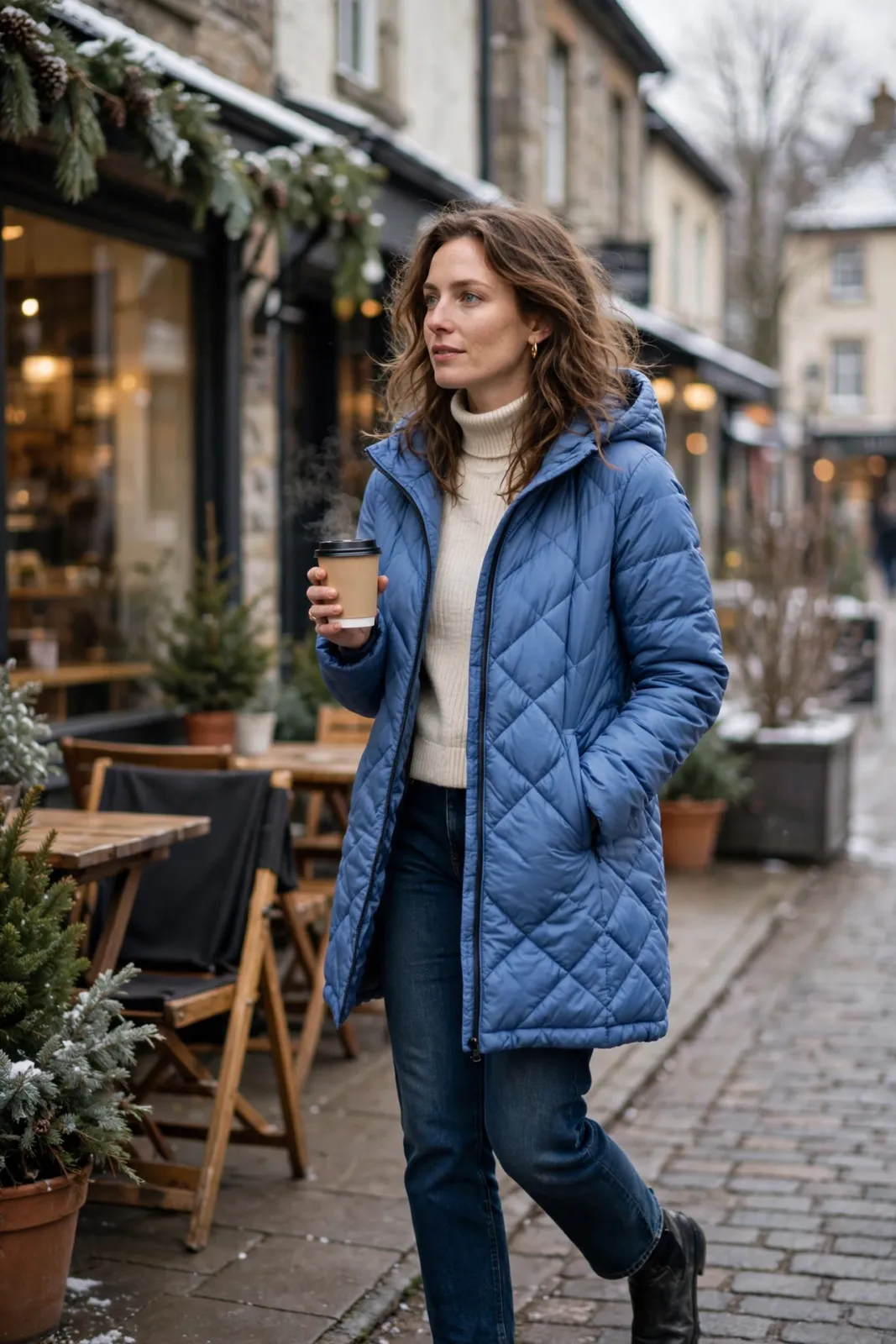
There is a kind of cold that makes most coats feel like a compromise. You want to be warm on the school run, the commute and the trip to the shops, but you do not want to disappear inside something black and gloomy. That is why I keep coming back to a cornflower quilted puffer coat. The colour is soft and cheerful without being loud, the quilting keeps the shape neat, and the padding does the practical job properly.
I bought mine when my old coat had started to look tired at the cuffs, and I have worn the blue one far more than I expected. It goes with cream knits and dark denim, it brightens a plain dress, and it still looks put together with leggings and boots. Below are the nine ways I actually wear it, plus the fit, buying and care lessons I learned along the way.
Ways 1 to 3: Your Everyday Cold-Day Uniforms
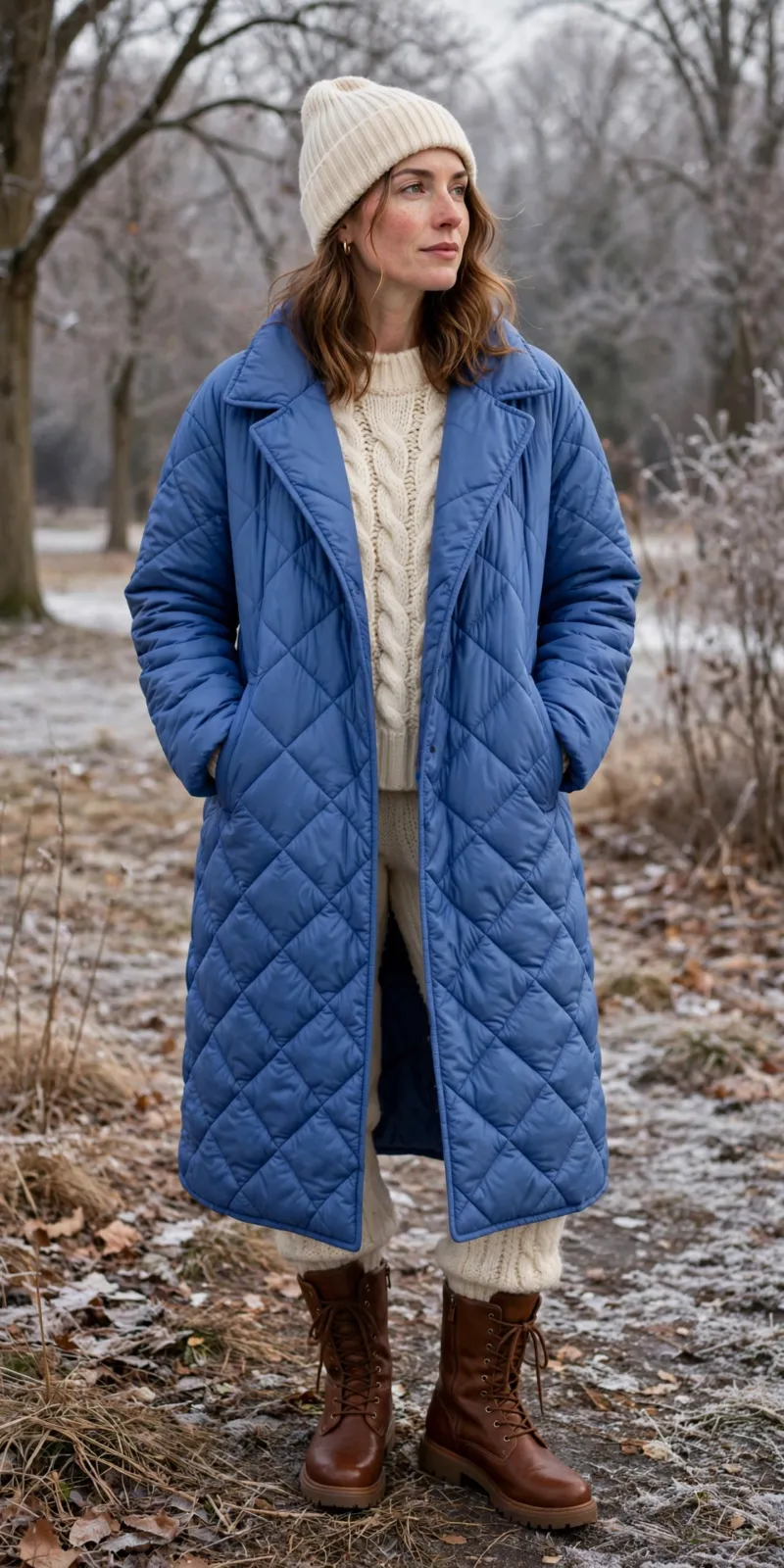
1. Cream knit, straight jeans and sturdy boots. This is the outfit I reach for most. A cream cable knit softens the blue, while straight jeans keep a longer puffer balanced. Finish with brown or black lace-up boots and a cream beanie. If your coat sits below the knee, let the knit finish at the hip so you do not add bulk around the middle.
2. All navy underneath for a tidy, longer line. Navy trousers and a navy fine knit under the coat create one dark column, with the lighter cornflower blue on top doing the interesting work. It looks a little smarter without any extra effort. Add a grey scarf or silver earrings to break up the blue just enough, and choose ankle boots or thick-soled loafers.
3. Leggings, a long sweatshirt and trainers for errands. A puffer should earn its keep on ordinary days too. Over black leggings, a long sweatshirt that covers the hips and clean trainers, the coat looks sporty rather than scruffy because the quilting is neat and the colour is fresh. Zip it halfway, add a crossbody bag, and wear thick socks.
Ways 4 to 6: Dresses, Work and Smarter Plans
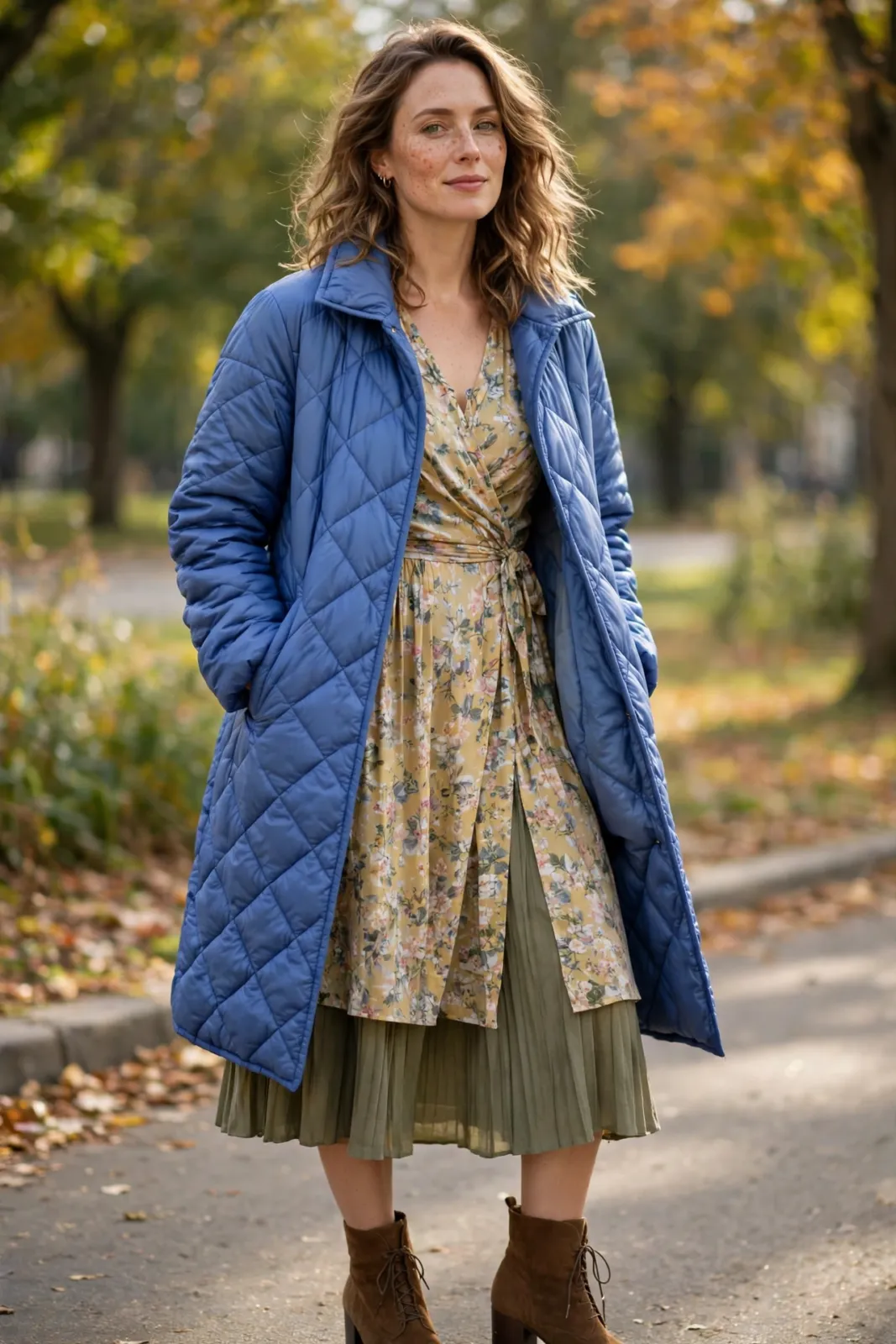
4. Over a midi dress with tights and ankle boots. Yes, a puffer works with dresses if the lengths make sense. Choose a midi dress that ends just below or just above the coat hem, wear warm tights, and pick ankle boots with a firm sole. Floral, burgundy, mustard and soft green dresses all sit happily under cornflower blue. Leave the coat open when you arrive so the dress shows.
5. Tailored trousers and a roll neck for work. Keep everything under the coat simple and fitted: charcoal or black tailored trousers, a thin black or cream roll neck, and pointed ankle boots. Swap a big scarf for a smaller one that tucks inside the collar, and carry a structured bag. Once the coat comes off, the outfit underneath still looks complete.
6. A pleated skirt, knit top and a little shape at the waist. If your puffer has a belt or drawstring, use it over a pleated skirt. If it does not, wear the coat open over a tucked-in knit and a skirt that moves as you walk. The mix of soft pleats and quilted padding is pretty without being fussy. Stick to navy, cream, olive or a small print, and avoid a very wide skirt that bunches under a long coat.
Ways 7 to 9: Evenings, Travel and Deep-Winter Days
7. Monochrome blue for evenings out. For dinner when it is properly cold, wear different blues together: dark denim or navy trousers, a silky navy top, and the cornflower coat as the lightest layer. It feels calm and pulled together, and you stay warm walking home. Add a small shoulder bag and simple jewellery.
8. Travel days with layers you can peel off. On trains and long drives I wear the coat over a T-shirt, a light knit and a scarf I can remove easily. The puffer doubles as a pillow or a blanket across your knees, and deep pockets hold a phone and tissues. Choose soft trousers with stretch and slip-on boots.
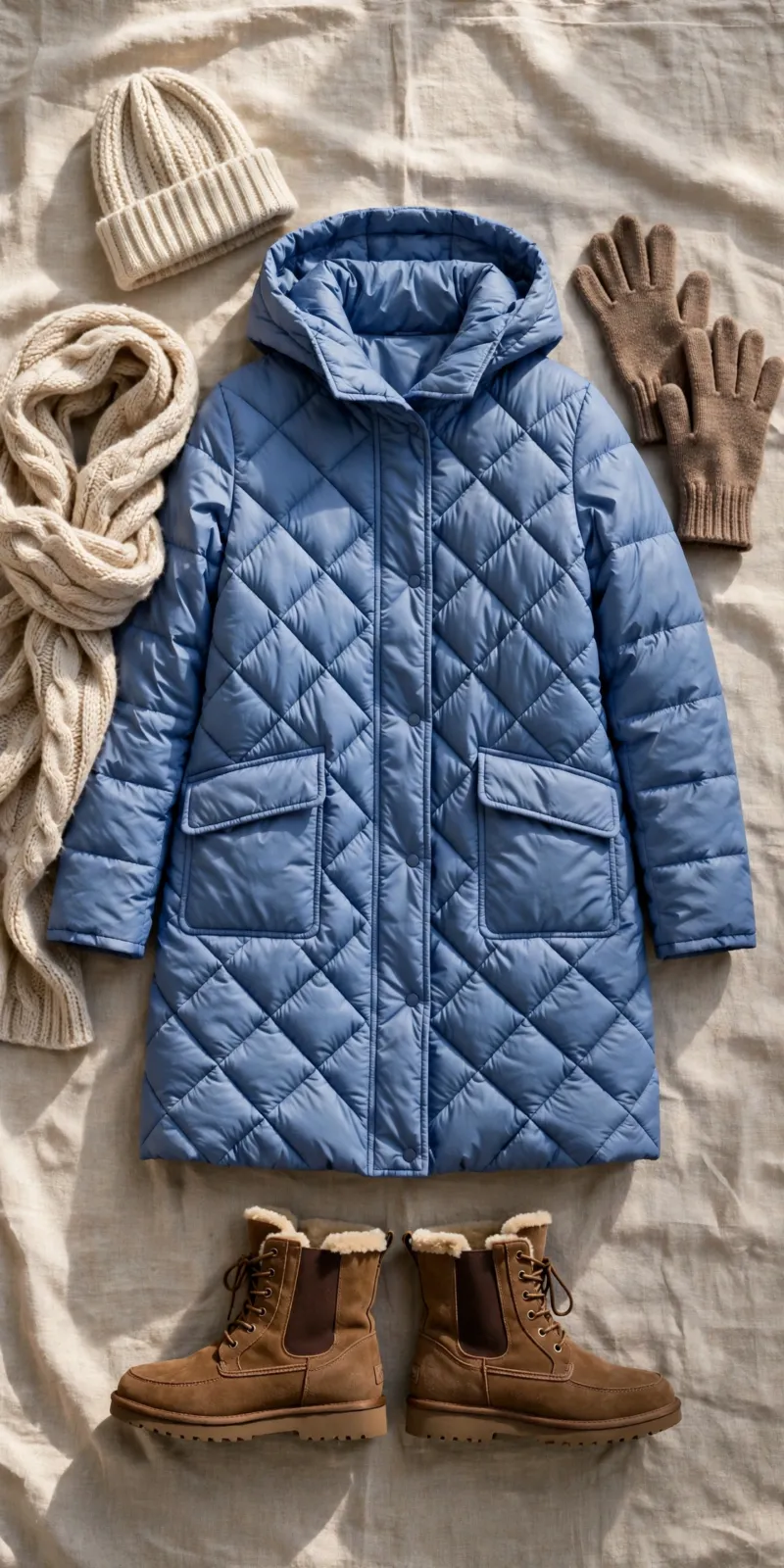
9. Deep-winter layering with scarf, beanie and gloves. When the temperature really drops, treat the coat as the outer layer of a system. Thermal top first, then a warm knit, then the puffer zipped to the chin. Add a chunky scarf in cream, camel or grey, a beanie that covers your ears, and matching gloves in one of those neutrals. Waterproof boots with good grip finish it.
How to Style It Step by Step
Start with the weather, not a photo you saw online. Will you be outside for ten minutes or two hours? Layer for the longer time. Step one is a warm base that fits close, such as a thermal vest or fine merino top. Step two is your middle layer: a knit, dress or shirt you would be happy to be seen in when the coat comes off. Step three is the bottom half, chosen to balance the coat length. Longer coats like slimmer trousers, leggings or a straight skirt, while shorter puffers can handle wider jeans.
Step four is shoes, and they matter more than people think. Boots ground a long puffer, trainers make it feel modern for daytime, and a heeled ankle boot lifts it for smarter plans. Step five is accessories in a small palette. Pick two neutrals, for example cream and brown, and repeat them in your scarf, hat, gloves and bag. Finally, check the mirror from the side. If the outfit looks wide in the middle, tuck the knit, open the coat or add a belt. If it looks top-heavy, swap a huge scarf for a slimmer one.
Fit, Buying and Budget Advice
Fit is where a puffer either flatters or overwhelms. You should be able to zip it over your thickest knit without the zip pulling, lift your arms comfortably, and sit down without the hem riding up. The shoulder seam should sit close to your natural shoulder, sleeves should reach your wrist bone, and a longer coat usually looks best ending just below the knee or at mid-calf, not across the widest part of the leg.
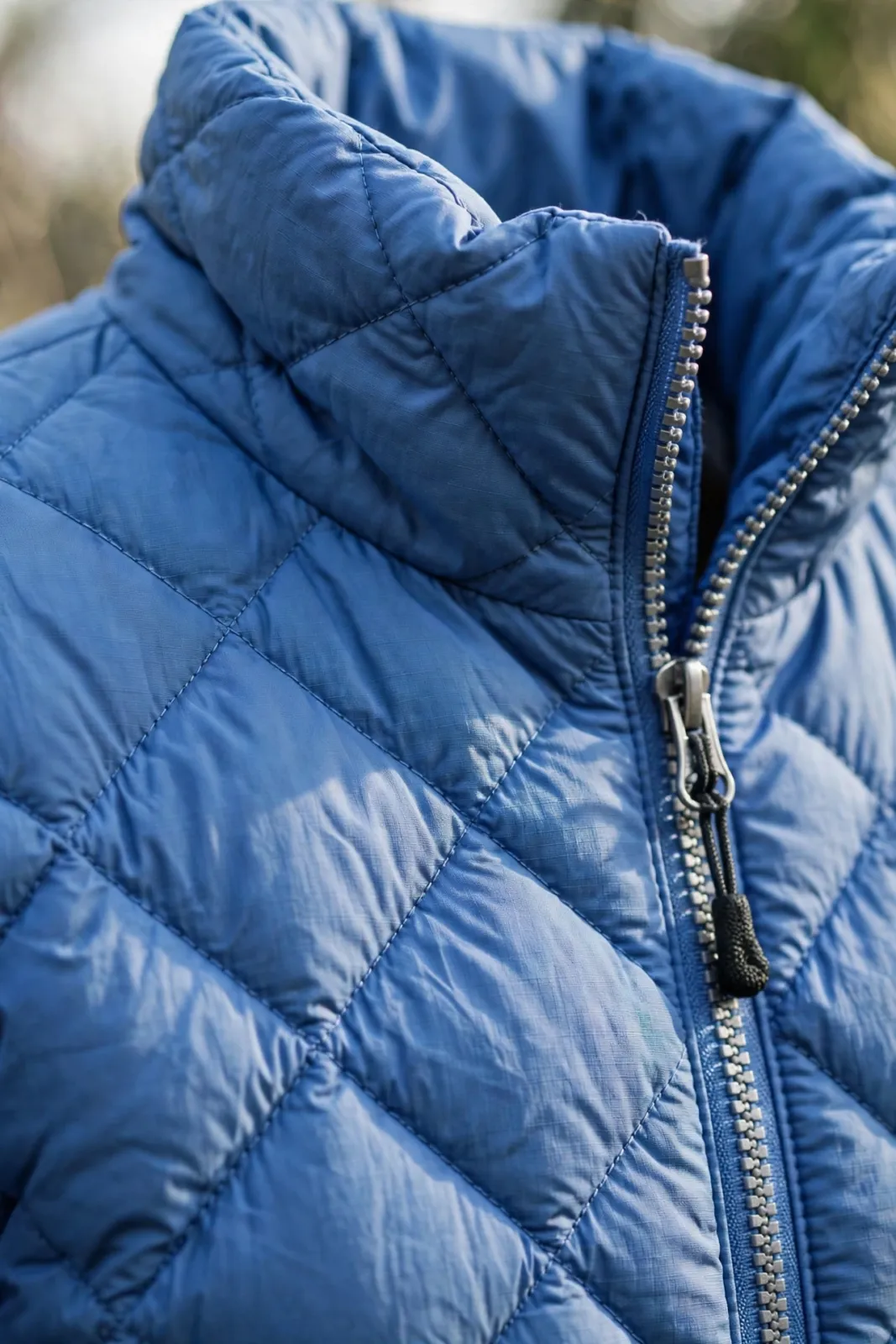
When buying, check the details that show quality. Quilting should be even, with no flat patches where filling has shifted. A two-way zip is worth paying for because it makes sitting, driving and walking easier. Deep pockets that close keep a phone safe, and a high collar or hood helps on windy days. Cornflower shades vary a lot, so check the colour in daylight. Some lean grey and muted, others are brighter and cleaner. Choose the one that suits your wardrobe.
On budget, cost per wear is a kinder measure than the ticket price. A mid-priced coat worn four or five times a week from late autumn to early spring will work harder than a cheap coat that loses its loft after one wash. If money is tight, buy the best plain version you can afford, skip novelty trims, and check end-of-season sales, but only in your real size. A bargain puffer that is too tight over knits will stay on the hanger.
Care, Storage and Common Mistakes to Avoid
Most quilted puffers wash better than people fear, but always read the label first. Wash on a gentle, cool cycle with mild detergent, fasten the zip, and turn the coat inside out. Skip fabric softener, as it can coat the filling and reduce warmth. Dry flat, or tumble dry on low if the label allows, pausing to shake and separate the filling so it puffs back evenly. Between washes, hang the coat to air after a wet walk and sponge small marks straight away.
Store it on a wide hanger in a breathable cover, not crushed in a vacuum bag for months, which can flatten the filling. Common mistakes include wearing a very bulky knit under a slim puffer so the arms feel tight, choosing another bright colour that clashes with the blue, and buying a length that fights every skirt and dress you own. Think about your real wardrobe before you pay.
Frequently Asked Questions
Can I wear a cornflower puffer coat with black?
Yes, black is one of the easiest partners for it. Black jeans, trousers or leggings make the blue look cleaner and brighter, and black boots keep the outfit grounded. Add one softer piece, such as a cream knit or grey scarf, so the contrast does not feel too sharp.
Does a quilted puffer work for petite frames?
It can, if the length and volume are right. Look for a coat that ends at the knee or just below, rather than mid-calf, and avoid very wide quilting channels. Slimmer trousers underneath and an open coat indoors help keep your proportions clear.
What colours go best with cornflower blue?
Cream, navy, charcoal, camel, brown and soft grey are the most reliable partners. For a little more colour, try burgundy, mustard or olive in a dress or scarf. Keep bright accessories to one piece at a time so the coat stays the focus.
How warm is a quilted puffer compared with a wool coat?
A good puffer is usually warmer for its weight, especially in wind, because the filling traps air. A wool coat can look smarter and drapes more smoothly, but it often needs extra layers. Many people keep the puffer for the coldest, wettest days and the wool coat for drier, smarter occasions.
Can I wash my puffer at home without ruining it?
In most cases yes, if the care label allows machine washing. Use a gentle cool wash, mild detergent and no fabric softener, then dry carefully and shake the filling back into place. If the coat is very large or has a delicate finish, a professional clean once a season is safer.
If you have been putting off a coloured winter coat because you worry you will not wear it, cornflower is a kind place to start. It is cheerful on dark mornings, calm enough for work and errands, and it pairs with the creams, navy and denim most of us already own. Choose a fit that works over your real knits, look after the filling, and rotate the nine outfits above. You may find, as I did, that the coat you bought for practicality becomes the one you enjoy wearing most.