Table of Contents
A dressing table is the one piece of furniture that has to work hard before you have even had tea. It holds the morning routine, the evening tidy-up, and usually a small crowd of bottles that multiply when nobody is looking. Good dressing table setup ideas are not about buying a prettier table. They are about giving every item a clear place, putting the mirror and light where your face actually is, and keeping the surface calm enough that getting ready feels quick instead of chaotic.
This guide walks through nine dressing table setup ideas that suit large bedrooms and tight corners alike, a step-by-step method for setting up a vanity from scratch, honest advice on what to buy first, and the mistakes that turn a tidy table into a dumping ground within a week.

Start With the Mirror: Dressing Table Setup Ideas Begin With Light
The mirror decides everything else. Sit on your stool, not standing, and mark where your eyes fall — the centre of the mirror should sit close to that height, or you will spend years leaning forward. Round mirrors soften a rectangular room and suit smaller tables; tall rectangular mirrors help in narrow bedrooms because they borrow visual height. A traditional dressing table was designed around exactly this seated position, with the glass placed for use rather than decoration. If you want the full height and position rules, our guide to wall mirror placement ideas covers mirrors in every room.
Light matters more than the mirror shape. Daylight from the side is kindest; light from directly behind you puts your face in shadow, and a single overhead bulb creates tired-looking shadows no makeup can fix. If the table cannot sit near a window, use two warm lamps, one on each side of the mirror at face level, so both sides of your face are lit evenly. Bulbs around 2700–3000K read warm and honest. Avoid very white bulbs here — they flatter nobody and make evening routines feel clinical.
Zones on the Surface: Dressing Table Setup Ideas That Stop Clutter
Divide the surface into three zones and defend them. The daily zone, within easy reach of your seated hand, holds only what you use every day: moisturiser, one or two makeup staples, a hairbrush. The weekly zone, a tray or small box at the back, holds occasion items — party makeup, special perfumes, hair accessories. The third zone is deliberately empty space. That empty patch is not wasted; it is where you set things down mid-routine, and without it the daily zone slowly swallows the whole table.
Trays are the quiet heroes of dressing table setup ideas. A single tray groups small bottles so they read as one object instead of ten, and lifting one tray makes cleaning take seconds. Keep tall bottles at the back, short items at the front, and never let skincare migrate in from the bathroom — duplicates in two rooms are how surfaces fill up. Among the many types of household furniture, the vanity earns its space only when it stays a workstation, not a shelf.

Drawers and Hidden Storage for Dressing Table Setup Ideas
Drawers should be divided, not deep and empty. Shallow dividers, small boxes, or even cut-down cardboard inserts turn one chaotic drawer into sections for jewellery, hair tools, cotton pads, and chargers. Store by frequency, not by category alone: the top drawer is daily, the lower drawer is backup stock and refills. Jewellery does better on a flat tray or in a lined box where pieces do not tangle; necklaces hung on small hooks inside a wardrobe door stay untangled and out of sight.
If your table has no drawers, borrow storage from around it. A narrow shelf above the mirror holds perfumes safely out of the work zone. A small rolling cart beside the table takes hair tools and their cords, which are the worst surface clutter of all. A stool with a lift-up seat hides flat items like straighteners. The rule is simple: everything on the surface should earn its place daily, and everything else needs a home within arm’s reach.
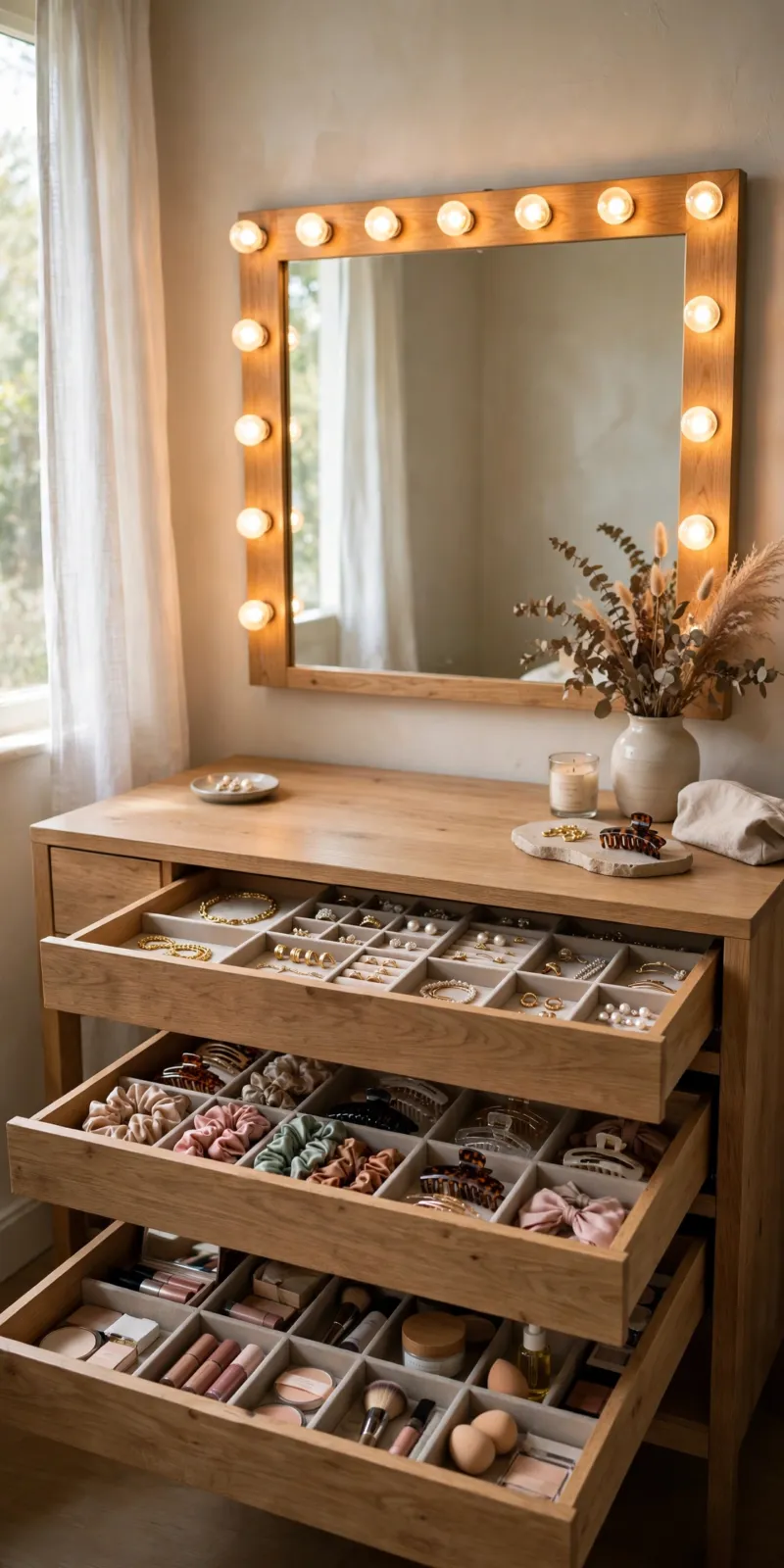
Small Corners and Shared Rooms: Dressing Table Setup Ideas That Fit Anywhere
A dressing table does not need a big footprint. A 70–80 cm table fits most corners, and a wall-mounted fold-down shelf with a mirror above it works in rooms where even that is too much. Corners near a window are ideal — you gain daylight and use space that beds and wardrobes cannot use well. In shared rooms, keep the setup visually quiet: closed boxes instead of open bottles, one colour family for containers, and a stool that tucks fully under the table so the walkway stays clear.
Renters can do all of this without drilling. Lean a large mirror against the wall behind the table, use adhesive hooks for necklaces inside cupboard doors, and choose a lamp with a heavy base instead of wall lights. When you move, the whole setup moves with you, which is more than can be said for fitted furniture. That makes it one of the most portable dressing table setup ideas of all.

How to Set Up Your Dressing Table Step by Step
First, empty the table and drawers completely and clean the surface. Second, sort everything into daily, weekly, and elsewhere piles — be honest; the elsewhere pile usually leaves the room. Third, place the mirror and check it from your seated position, adjusting height before anything else goes down. Fourth, set the lighting and test it at the time of day you actually get ready, morning and evening.
Fifth, lay out the daily zone in a tray, tallest items at the back. Sixth, divide the drawers and assign each section before putting items in. Seventh, add one personal touch — a small plant, a framed photo, a candle — and stop there. Finally, use the table for three days and move only what annoyed you; small adjustments after real use beat a perfect-looking setup that fights your routine.
What to Buy First: Budget Advice for Dressing Table Setup Ideas
Spend first on light, then on the stool, then on storage. Two decent lamps change the routine more than any organiser. A stool at the right height — your feet flat, knees comfortable — matters daily.
After that, one tray and drawer dividers cost little and do most of the organising work. Buy the table itself second-hand if budget is tight; solid wood vanities are common, sturdy, and easy to repaint. Perfume stands, acrylic towers, and matching bottle sets look lovely in photos but solve problems most people do not have. Set a small total budget, buy in the order above, and keep receipts — if an organiser has not earned its place in two weeks, return it while you can. In most dressing table setup ideas, that order matters more than any single purchase.
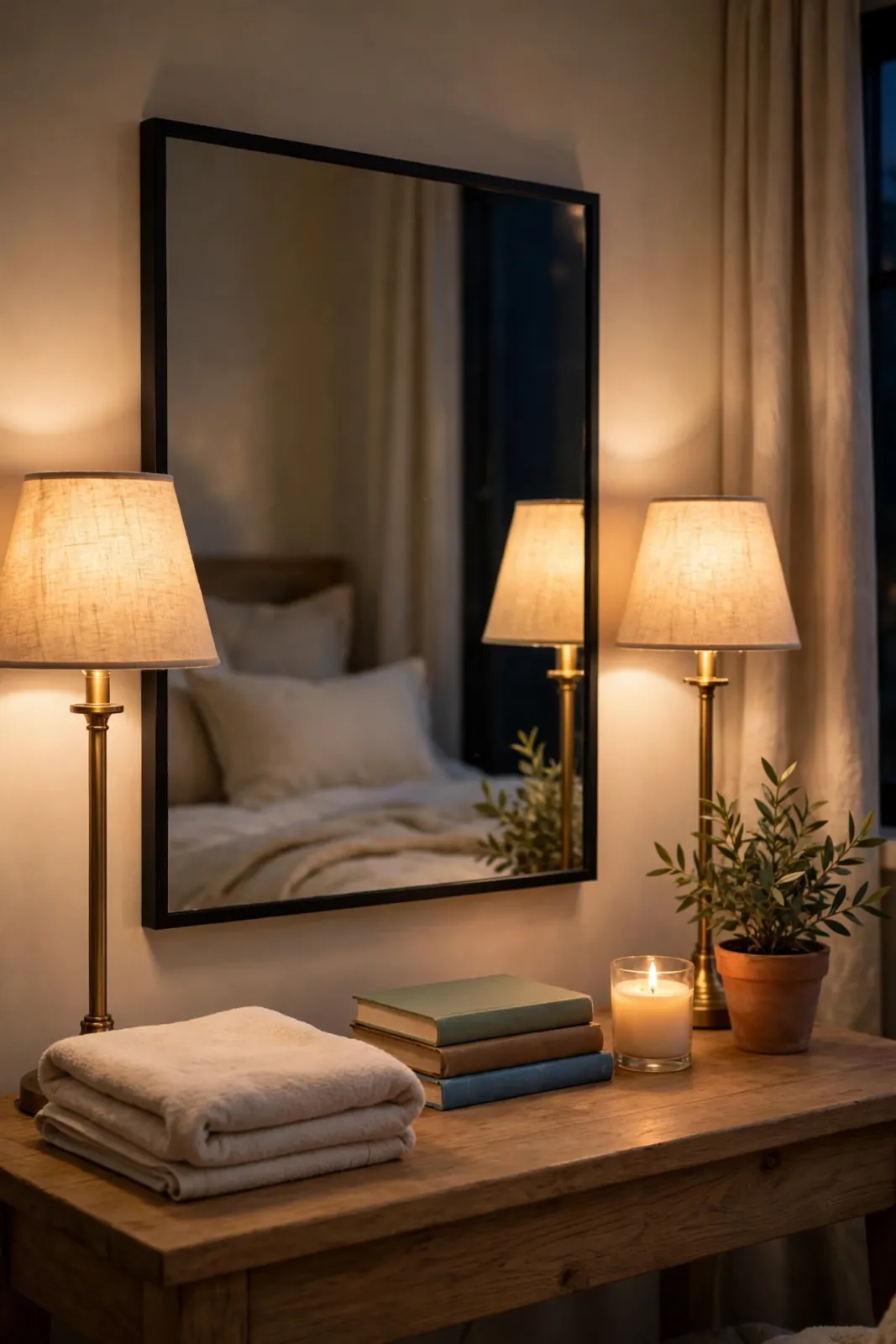
Common Mistakes That Ruin a Good Setup
The most common mistake is styling the table like a shop display: everything out, nothing stored. It photographs well and fails by Tuesday. Second is a mirror hung for standing height over a seated table. Third is keeping every product you own on the table instead of the five you use. Fourth is ignoring cords — one small cable box or clip keeps the surface calm. Last is buying storage before sorting; you end up organising clutter instead of removing it. Sort first, measure second, buy third. Avoid those five habits and dressing table setup ideas tend to stay tidy on their own.
Frequently Asked Questions
How much space do I need for a dressing table?
A table 70–100 cm wide and 40–45 cm deep suits most people, plus about 60 cm of clear space in front for the stool and your knees. In very small rooms, a wall-mounted fold-down shelf with a mirror above gives the same routine in half the depth. Most dressing table setup ideas scale down to that footprint happily.
Where should a dressing table go in the bedroom?
Near side daylight is best, ideally with the window to your left or right rather than behind you or directly in front. A corner works well because it uses dead space and keeps the walkway clear. Avoid placing it where wardrobe doors or the bedroom door swing into the stool.
How do I stop my dressing table getting messy again?
Keep the surface zones strict: daily items in one tray, weekly items in a closed box, and one patch deliberately empty. A two-minute reset while the kettle boils — everything back in its zone — prevents the slow slide. If an item has no zone, it does not belong on the table. That small habit is what makes dressing table setup ideas last beyond the first week.
What lighting is best for a dressing table mirror?
Two warm light sources at face level, one on each side of the mirror, give the most even and honest light. Around 2700–3000K is a safe range. Avoid a single overhead bulb, which casts shadows, and very cool white bulbs, which distort colours. Even simple dressing table setup ideas fail without that even light.
Can I make a dressing table without buying one?
Yes. A narrow desk, a sturdy shelf at seated height, or even a wide windowsill setup with a mirror and a tray covers the basics. What makes it a dressing table is the seated mirror, the light, and the zones — not the label on the furniture.
A good dressing table disappears into your routine: you sit down, everything is where your hand expects it, and you get up ready. Start with the mirror and light, zone the surface, divide the drawers, and resist adding anything that does not earn its place. Small, honest dressing table setup ideas like these outlast any passing trend — and they make mornings noticeably calmer.