You do not need a house on the coast of Spain or Italy to live with this look. The simplest mediterranean touches indoors start with three honest ingredients: a soft arch, the warm colour of baked clay, and a clear sea blue set against plenty of white.
Together they make an ordinary flat or family home feel sunlit and calm, even on a grey day and even in a rented room where you cannot knock down a single wall.
This guide keeps the idea practical. You will learn where arches work hardest, how to use terracotta without turning a room orange, and how to place blue so it stays fresh rather than cold. There is a step-by-step plan for one room, clear budget advice, and the mistakes that most often make this style look like a theme restaurant instead of a home. In short, mediterranean touches indoors are a palette and a handful of shapes, repeated calmly from room to room.
Table of Contents
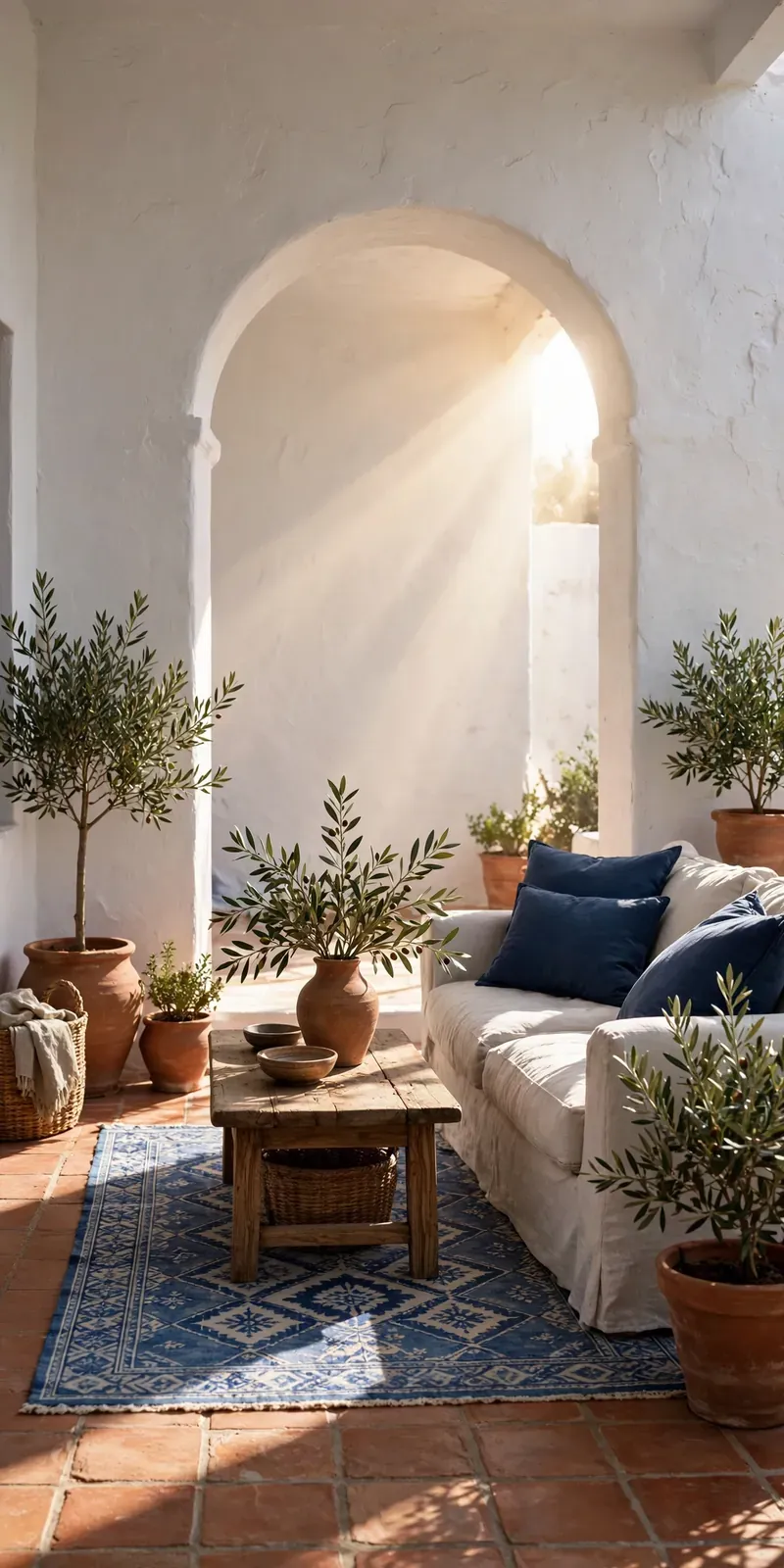
Start With Arches: Mediterranean Touches Indoors That Shape the Room
The arch is the signature shape here, with a long history around the Mediterranean Sea. The story behind Mediterranean Revival architecture shows how arched doors, windows and niches spread from Spanish and Italian homes worldwide, because a curve softens a room in a way a sharp corner never can. That long history is why mediterranean touches indoors still feel familiar, even far from the sea.
If your home already has an arched doorway or alcove, make it the hero. Paint it the same white as the walls so the shape, not a colour contrast, does the work, and keep the opening clear of tall furniture.
If you have no arch at all, suggest one. An arched mirror over a console, an arched bookcase, a curved headboard, or a painted arch in a soft clay tone behind a reading chair all give the same feeling for very little money. Even an arched floor lamp or a row of arched picture frames can set the rhythm. If you choose an arched mirror, these wall mirror placement ideas to brighten any room show where to hang it so it catches the most light. That repeated curve is what makes mediterranean touches indoors easy to recognise.
Terracotta: The Warm Heart of the Look
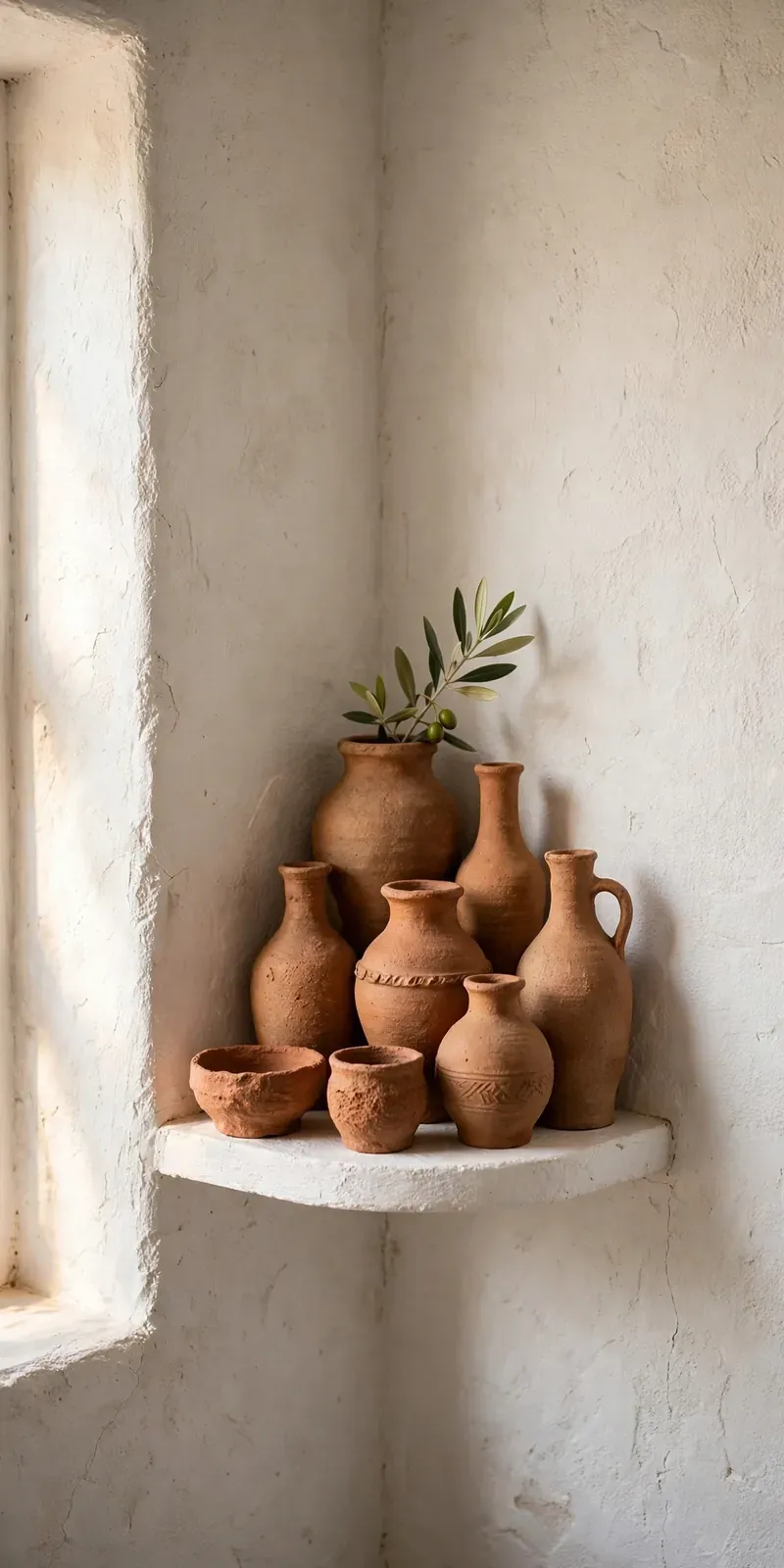
Terracotta is simply baked earth, and that is why it feels so grounding indoors. Used for roof tiles and pots for thousands of years, real terracotta carries small variations in colour, from pale apricot to deep rust, and those variations are exactly what keep it looking natural.
A floor is the boldest place for it, but most of us will start smaller: plant pots, a serving bowl, a lamp base, a cushion in a faded clay stripe.
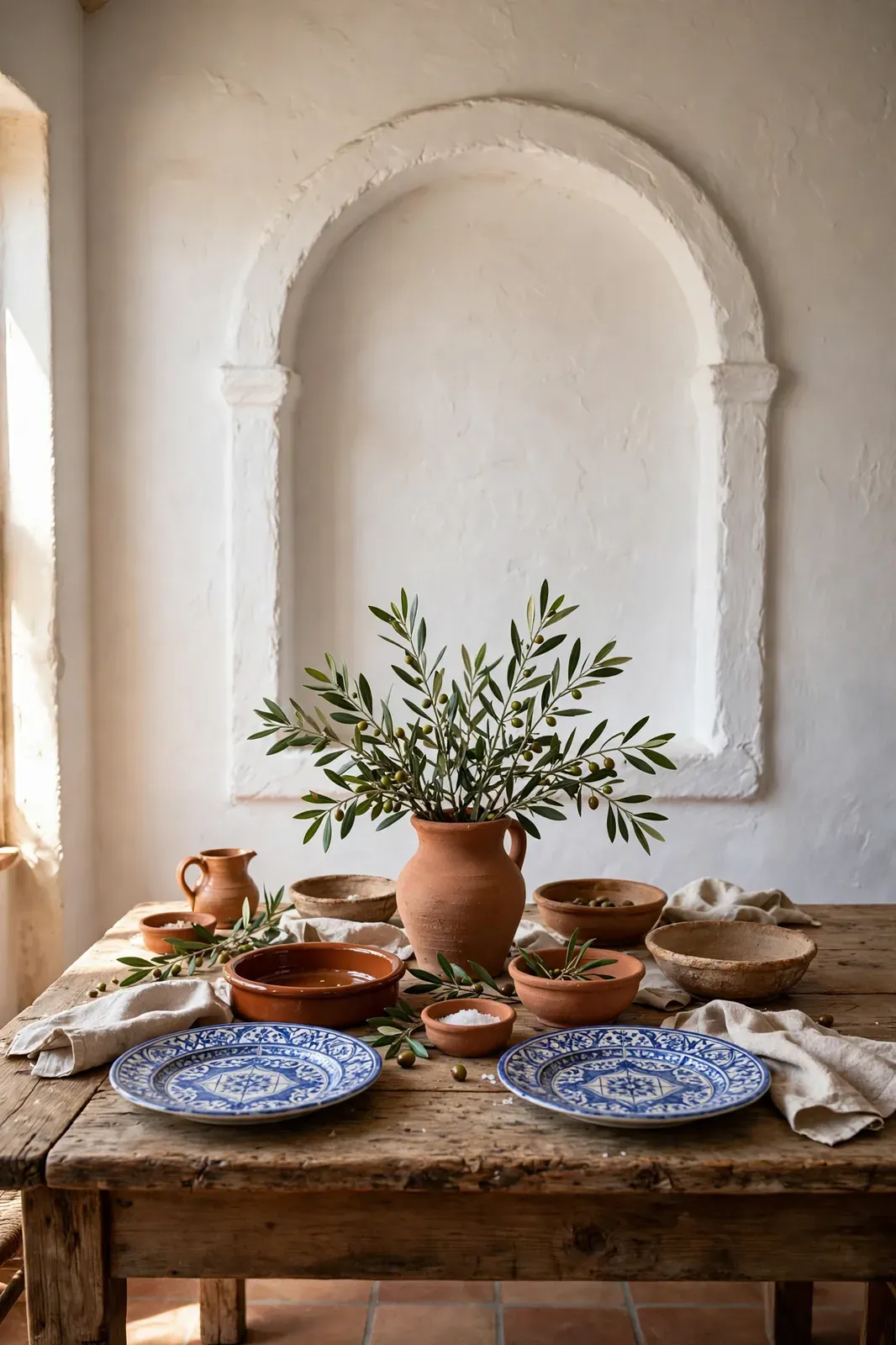
Group terracotta in odd numbers and mix its finishes. A rough unglazed pot beside a smooth glazed jug and a woven basket reads as collected over time, which is the whole point. Keep the surrounding colours quiet so the clay can glow: warm white walls, natural wood, linen in oatmeal or stone. Terracotta also loves green. An olive branch, a small potted herb or trailing leaves against the orange-brown is one of the oldest and easiest colour pairings in this style. Grouped like this, mediterranean touches indoors feel collected over time rather than bought as a set.
Blue and White: Mediterranean Touches Indoors for Light and Air
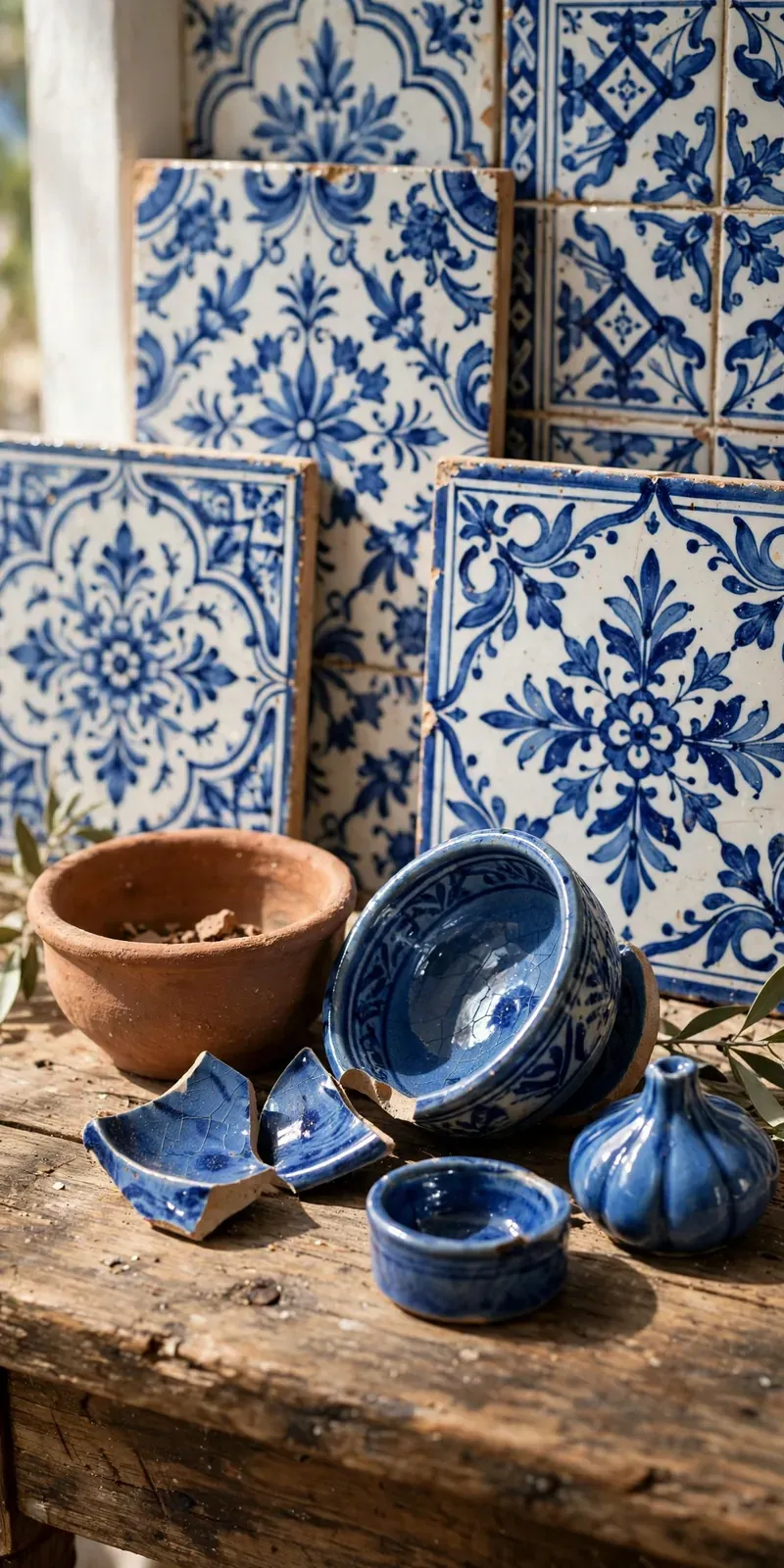
If terracotta is the earth, blue is the sea and sky. The classic partner is a clear cobalt or deep Mediterranean blue, used against a lot of white so it stays crisp. Think of hand-painted tiles, a patterned rug, glazed pottery, or cushions in a blue-and-white print.
One strong blue piece per view is usually enough; the white around it is what makes it sing. Used with restraint, mediterranean touches indoors stay light and airy instead of themed.
Pattern belongs here too. Hand-painted blue and white patterns bring movement without heat; keep them in one or two places so the room stays calm. Balance the temperature of the palette. Blue can feel cold on its own, which is why this style almost always pairs it with warm terracotta, wood and brass or wicker. If a corner feels chilly, the answer is rarely more blue; add something warm and textured next to it.
How to Add Mediterranean Touches Indoors, Step by Step
Step one: clear and lighten the base. Remove anything dark and heavy from the room, then get as much warm white in place as you can, through paint, a light throw over a sofa, or plain linen curtains. This style needs a pale background to work against. Keep this order in mind: mediterranean touches indoors work best when the pale base comes first.
Step two: place one arch. Choose the mirror, bookcase, painted arch or arched lamp and put it where the eye lands first when entering the room. Step three: build a terracotta cluster. Gather three clay pieces of different heights near a plant or a window and leave space around them.
Step four: add blue in one clear statement, such as a rug, two cushions or a set of patterned plates on open shelving.
Step five: layer natural texture: a jute or woven rug underfoot if you did not use a blue one, a wooden stool, a rattan basket, cotton and linen fabrics.
Step six: finish with living green and warm light. Add an olive-style branch or herbs in your terracotta pots, and use warm bulbs in the evening so the clay colours glow instead of greying. Stand back after each step and remove one thing if the room feels busy; restraint is part of the style. At every stage, mediterranean touches indoors reward restraint over abundance.
Textures and Small Details That Finish the Room
Mediterranean rooms are rarely glossy. Walls look best in matte, slightly textured finishes: limewash-style paint, a rough plaster effect, or simply flat warm white. Fabrics are natural and a little rumpled: washed linen, cotton, wool in winter. The best mediterranean touches indoors are felt as much as seen: rough clay, cool tile and rumpled linen.
Wood is pale or mid-toned and visibly grained, never dark and polished. Metal, where it appears, is aged brass, blackened iron or simple ceramic, used sparingly for a lamp, a handle or a mirror frame.
Budget and Buying Advice
Start with paint and textiles, because they change the most for the least. A warm white on the walls, two blue cushions and a clay-coloured throw can shift a room in one afternoon.
Terracotta pots are genuinely inexpensive at garden centres and local pottery markets, and in Pakistan hand-thrown clay pieces from local makers often cost less than imported glazed ceramics while looking far more authentic. Buy real clay where you can; plastic pots painted orange fool nobody at close range. Honest, inexpensive materials are the backbone of mediterranean touches indoors.
Spend more only on the piece you will touch or see every day, such as a good arched mirror or a rug. Save on tiles by using a small quantity in one place, or tile-look alternatives for a rental. Add one element per month rather than buying a whole matching set at once; collected slowly is exactly how these rooms look best. Bought slowly, mediterranean touches indoors look layered and personal.
Common Mistakes to Avoid
The most common mistake is using too much of everything: arches on every wall, terracotta on every surface and blue pattern on every fabric, until the room shouts. Pick one lead colour per room and let the other support it. The second mistake is cold white. Blue-white or grey-white paint kills the warmth this style depends on; always test a warm, creamy white first. Most problems with mediterranean touches indoors come from excess, not from one wrong purchase.
Other frequent slips: choosing orange paint and calling it terracotta, when real clay is browner and softer; using shiny, perfect replicas where handmade variation is the charm; blocking natural light with heavy curtains when sheer linen would keep the brightness; and forgetting greenery, without which the palette can feel dry.
Frequently Asked Questions
Can I use this style in a small flat?
Yes, and small rooms often suit it best. Keep the walls warm white, use one arched mirror to add depth, limit terracotta to a small cluster of pots, and choose one blue textile. The pale base makes a compact room feel larger and brighter. That restraint is how mediterranean touches indoors should work in a compact home.
What if I cannot change my floor or walls?
Work at furniture level. A terracotta-toned rug or blue patterned rug covers a floor, a painted arch on removable board or a large arched mirror suggests the shape, and cushions, throws and pottery carry the colours. Nothing in this plan needs to be permanent.
Which blue works best indoors?
A clear cobalt or deep sea blue reads most Mediterranean against warm white. Softer dusty blues can work, but test them beside terracotta first; if the pairing looks grey or dull in your light, choose the clearer blue and use less of it. Testing blue against clay is a core habit for mediterranean touches indoors.
How much terracotta is too much?
When it stops looking like an accent and starts covering every surface, pull back. A good guide is three to five clay pieces grouped in a room, plus perhaps one textile in a clay tone. Surround them with white, wood and green so each piece stands out.
Does this style work in a bedroom?
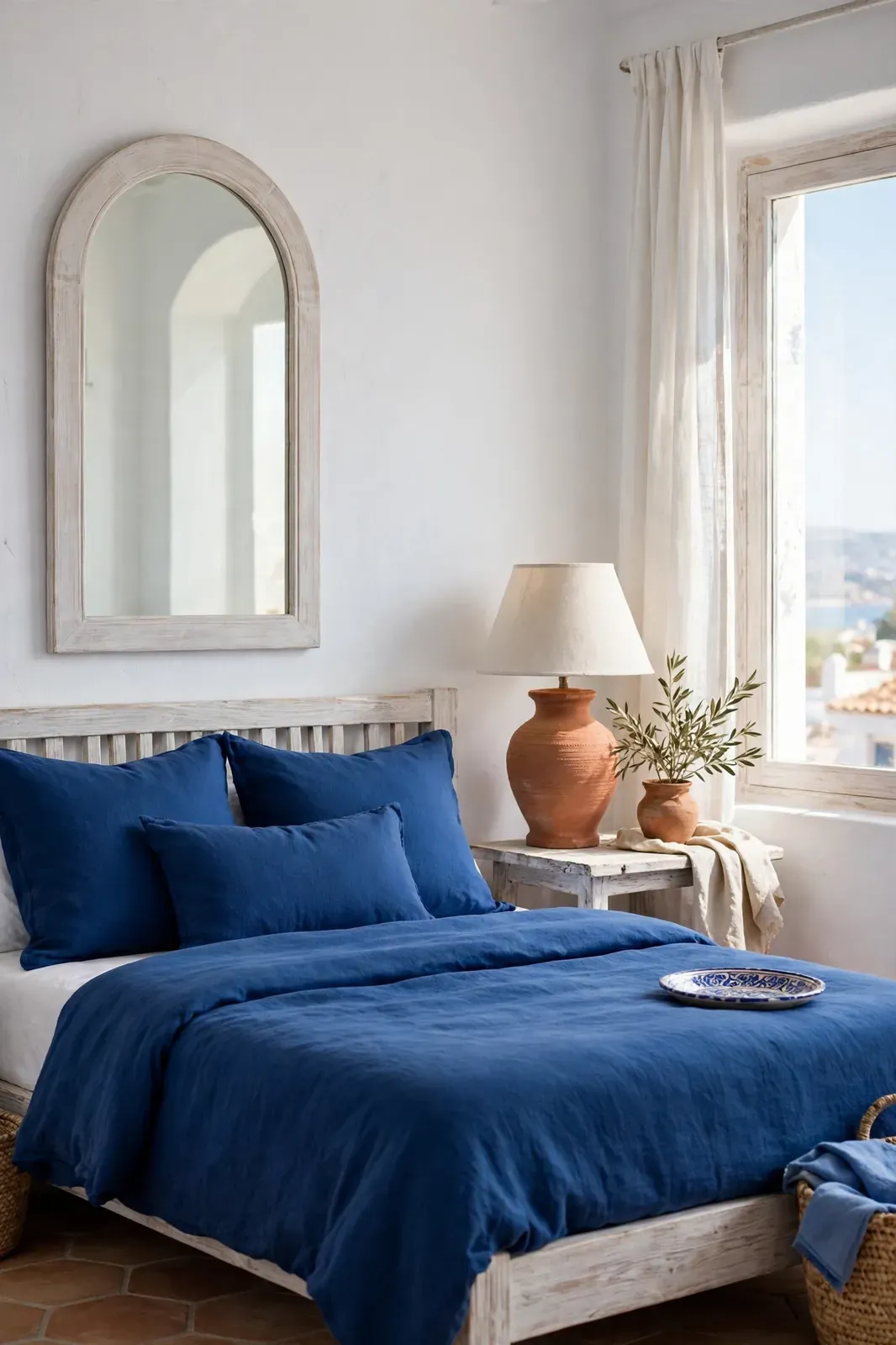
Very well. Use white or pale bedding with two blue cushions, a terracotta lamp or pots on the windowsill, and an arched mirror or headboard shape. Keep pattern to one place so the room stays restful, and choose warm evening light. Bedrooms show mediterranean touches indoors at their calmest and simplest.
A Room That Feels Like a Slow Afternoon
Good mediterranean touches indoors are not about buying a new identity for your home. They are about a curve instead of a corner, clay instead of plastic, and blue set calmly against white. Start with one arch, one cluster of terracotta and one clear blue statement, live with it for a week, and add only what the room still asks for. Done slowly, an ordinary room begins to feel like a slow, sunny afternoon, and that feeling is the real point of the style.