Choosing a runner sounds simple until you stand at the bottom of your stairs with a handful of swatches and realise every sample looks different in daylight, under a bulb, and against your wood. Your staircase runner pattern choice decides far more than colour. It affects how safe the steps feel under socks, how quickly the middle of each tread looks tired, and whether dirt from the front door shows up on day one or disappears into the design for a week. A good pattern works hard in a busy house, especially where children, guests and everyday trips up and down wear the same narrow path again and again.
Stairs are the highest-traffic route in most homes, yet they get less thought than a living room rug. The bend over each step nose and the constant heel pressure in the centre mean a runner that looks lovely in a bedroom can fail quickly here. This guide walks through grip, colour and wear in plain terms, so you can pick a pattern you still like after a year of daily use. Get the staircase runner pattern choice right, and the whole flight feels safer and looks smarter.
Table of Contents
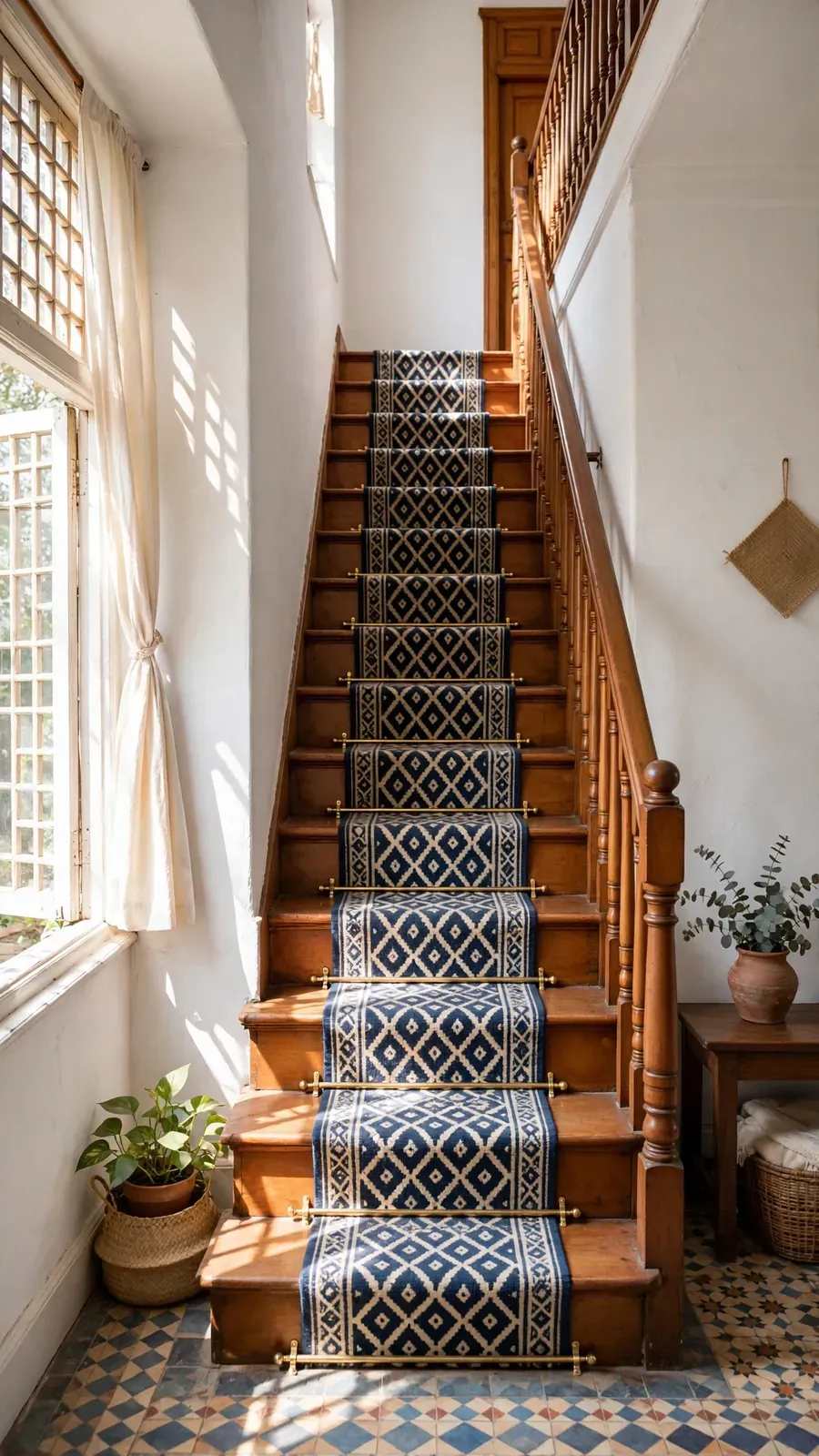
Why Your Staircase Runner Pattern Choice Matters for Grip and Safety
Grip starts with construction, not just pattern. A low, dense pile or a flatweave gives your foot more contact with the step than a thick, loose pile that can feel soft but slippery in socks. Look closely at the weave: small loops, tight twists and a firm backing usually hold the step nose better and resist stretching. Pattern helps too, because a broken, all-over design makes it easier to read where each step begins. Strong contrast that blurs tread edges can be confusing in low light, while a clear border and a repeat that sits evenly on each tread help everyone judge depth, which matters for older relatives and half-asleep trips downstairs at night.
Safety also depends on fitting, over a good underlay with no loose edges. The basic structure of a staircase, including flights, landings and handrails affects how a runner turns a corner. On winders or a half landing, ask how the pattern will be joined, because a large motif cut badly at the turn can create a raised seam that catches feet. If you are also refreshing the hallway at the foot of the stairs, look for our guide to small entryway styling on Noor Fashion for ideas that pair a runner with a console and mirror. A careful staircase runner pattern choice also guides that hallway pairing, because the runner sets the colours everything else follows.
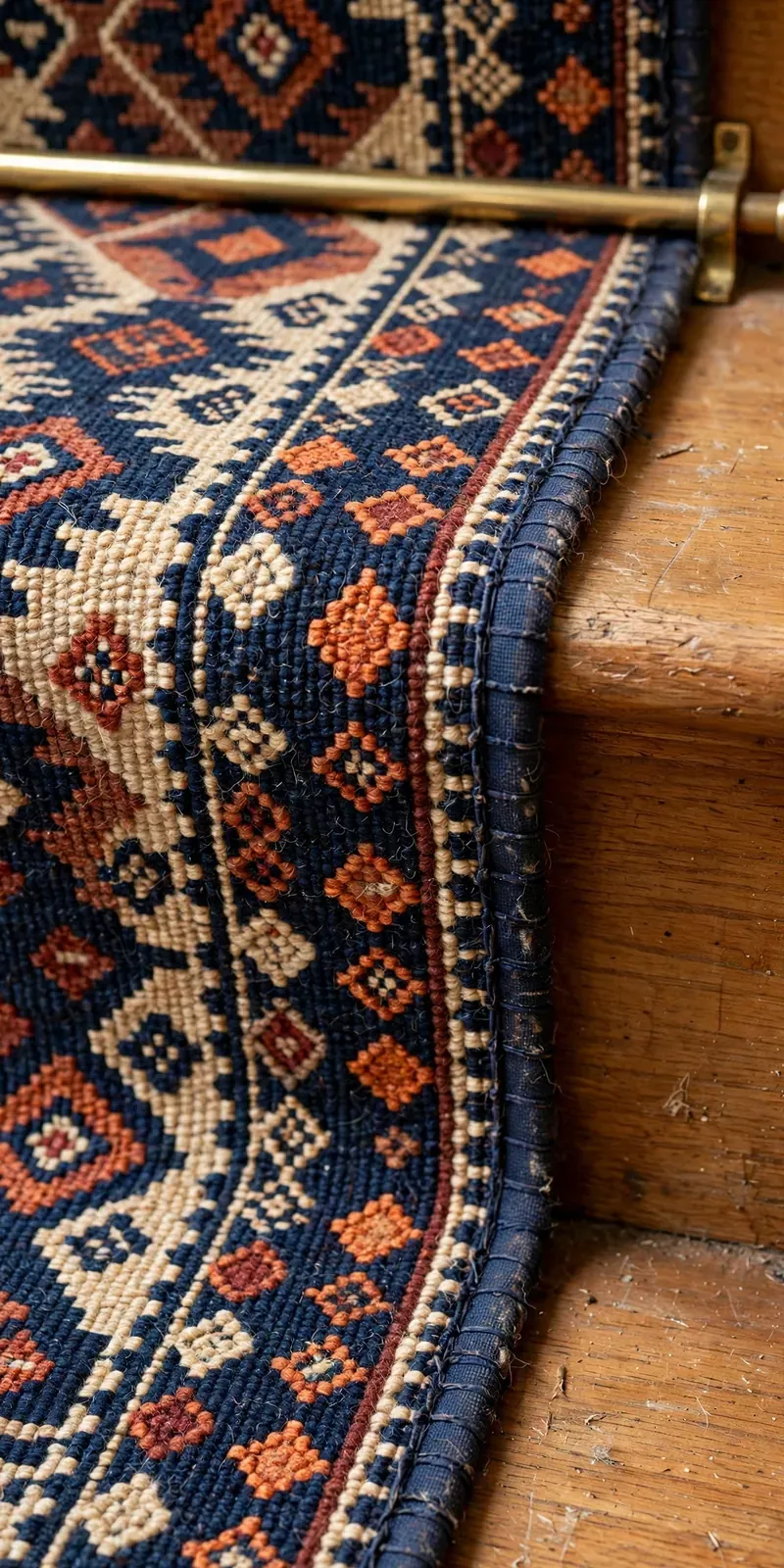
Patterns That Hide Wear Best on Busy Stairs
The centre of each tread takes the punishment. Over time it flattens, lightens and collects fine grit even in homes where shoes come off at the door. Small, busy, all-over patterns are the most forgiving here. Tiny diamonds, small geometrics, herringbone, speckled tweeds and traditional oriental-style motifs scatter the eye, so a worn path does not stand out as a pale stripe down the middle. A flecked yarn with two or three tones mixed together hides crumbs, pet hair and dust far better than a solid block of colour. This is why a staircase runner pattern choice matters more on stairs than anywhere else in the house.
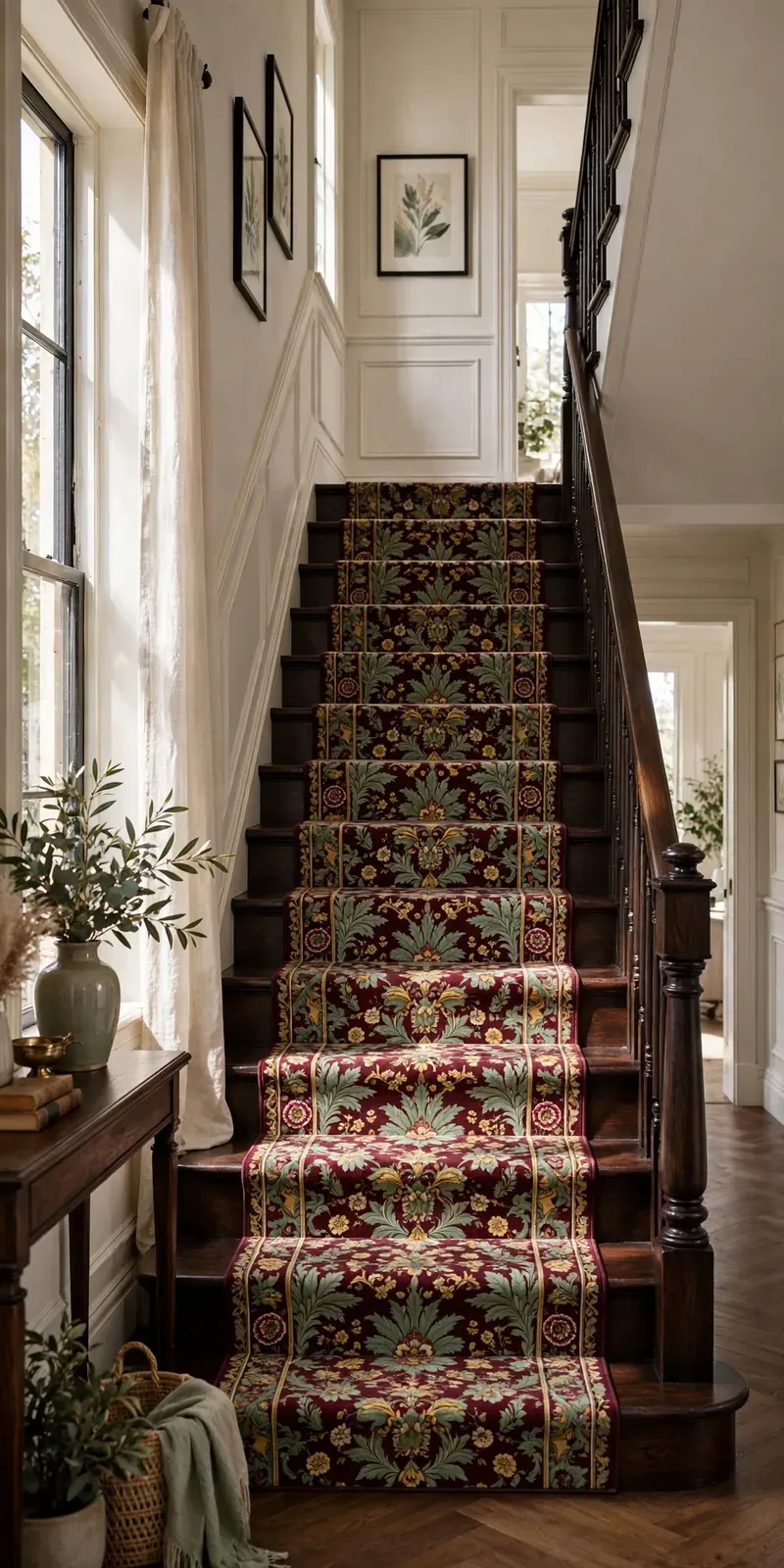
Large-scale patterns need more caution. A big medallion or bold floral can look stunning, as the burgundy example here shows, but it must be centred on every tread or it will look lopsided, and large plain areas show flattening sooner. Stripes running down the flight draw the eye up and make a narrow staircase feel longer. Avoid a single wide pale stripe where feet land; thin, multi-tone stripes spread wear and are easier to live with. Whatever you pick, judge your staircase runner pattern choice at tread level, not from a small swatch alone.
Fibre matters too. Learning how carpet fibres such as wool, nylon and wool blends differ in durability and staining helps you match pattern to real life. Wool blends spring back well, solution-dyed nylon handles busy family stairs and cleans easily, and flatweaves give a crisp striped look but less cushion. Match the fibre to your household traffic, and your staircase runner pattern choice will age far more gracefully.
Staircase Runner Pattern Choice: Colour That Works With Light, Wood and Dirt
Start with the light you actually have, not the light in the shop. Take swatches home, lay them on three different steps, and check them in the morning, at midday and under your evening bulbs. North-facing halls pull colours cooler and can make a grey runner look blue and dull. Warm afternoon sun can turn a beige stripe yellow. Mid-tone colours are the safest workhorses: navy, charcoal, deep terracotta, sage, warm taupe and burgundy hide daily marks while still giving the hall a clear identity. Your staircase runner pattern choice will look different in each light, so trust the stairs, not the shop shelf.
Then look at your wood and paint. A navy and cream diamond runner sharpens pale walls and honey-coloured wood, while a charcoal stripe calms a white staircase. Warm rust and beige suit older timber and tiled entry floors common in many Pakistani homes, where pale dust shows sharply on very dark runners. Black hides mud but shows lint; cream hides dust but shows scuffs. A patterned mix of dark, mid and light tones solves both problems at once. A staircase runner pattern choice that respects the wood tone rarely fights the room.
Finally, link the runner to the rooms it connects. It does not need to match the living room rug; one shared colour from a cushion, artwork or tile is enough to make the hall feel planned. Think of your staircase runner pattern choice as the thread that ties the two floors together.

How to Choose a Staircase Runner Pattern: A Step-by-Step Method
Step 1: Measure properly. Count the treads and risers, measure the width you want covered, and note any landing or winders. Most runners leave a margin of exposed wood or painted step on each side, often around five to ten centimetres, so decide that margin before you shop.
Step 2: List your wear risks. Write down who uses the stairs, whether shoes stay on, whether you have pets, and where dirt enters. That list points you to a small pattern, a flecked yarn or a stripe, instead of choosing on looks alone.
Step 3: Narrow to three pattern families. Shortlist one small geometric, one stripe and one traditional or floral option. Seeing three different families side by side on your own stairs tells you more than ten similar swatches.
Step 4: Test grip and feel. Place each swatch over a step nose, press and twist your foot in socks and in shoes, and check the edge binding. Reject anything that feels slick, too thick to fold cleanly over the nose, or rough under bare feet if your household goes barefoot indoors.
Step 5: Check the repeat. Ask for the pattern repeat length and how it will sit on each tread and across the landing. Photograph the swatches on the stairs and look at the picture later; drift and clashes you missed in person show up clearly on a phone screen.
Step 6: Confirm fitting and underlay. Get the fitting method, underlay type and landing join in writing before you pay. Good fitting protects both grip and pattern alignment.
Budget and Buying Advice for a Runner That Earns Its Cost
Price the whole job, not just the runner per metre. The total includes underlay, grippers or rods, fitting, landing joins and any stair preparation. A cheaper runner fitted badly is poor value, while a mid-priced wool blend fitted well can last for years and still look smart. As a rough way to plan, spend first on fibre and fitting, then on pattern complexity. Intricate woven designs cost more, and large repeats create more waste on landings, so ask how much extra length the repeat requires.
For a tighter budget, choose flatweave stripes or small geometrics in a wool blend or good nylon. They need less pattern matching and are widely stocked as ready-made runners, which cuts fitting time. Keep the width standard rather than custom. Do not skip underlay: it improves feel, reduces noise and extends the runner’s life. On a budget, a wise staircase runner pattern choice saves money twice: once at the till and again in slower wear.
Before ordering, confirm the returns rule for cut lengths, ask for a spare offcut, and keep the product name, colour code and batch. Dye lots vary, so a later repair in a different batch will show. Keep the receipt with your notes, so your staircase runner pattern choice is easy to match or extend later.
Common Mistakes to Avoid With Stair Runners
The most common mistake is choosing a pale, plain runner for a busy entrance hall because it looked calm in a showroom. It will show a grey path within months. The second is picking a pattern that is too large for the width, so only half a motif fits and the stairs look cropped. Third, many people forget the landing: a pattern that works on a straight flight can clash with itself at a turn if the join is not planned. Each of these errors starts with a rushed staircase runner pattern choice made in the shop instead of on the stairs.
Other mistakes are practical. Do not ignore thickness at doors that open onto the landing. Do not fit a runner over worn or uneven steps without preparation, because bumps telegraph through and wear the pile in spots. Do not clean a wool runner with harsh bleach-based products, and do not vacuum a loose edge repeatedly until it frays; get it re-fixed. Finally, do not judge grip only in shoes. Test in socks, because that is how many slips happen at home.

Frequently Asked Questions
What pattern is best for hiding wear on stairs?
A small, all-over pattern in a flecked mix of tones hides wear best. Tiny geometrics and traditional small motifs break up the central path where feet land, so flattening does not show as a clear stripe. Plain pale runners show wear fastest. In short, the best staircase runner pattern choice for wear is a small, busy pattern in mixed tones.
Are striped runners a good choice for narrow stairs?
Yes, stripes that run down the length of the flight make narrow stairs feel longer and neater. Choose thin, multi-tone stripes rather than one wide pale band in the centre. Check that the stripe stays centred on each tread and lines up sensibly at the landing. For narrow stairs, a striped staircase runner pattern choice keeps the flight looking neat and longer.
Which colour runner shows the least dirt?
Mid-tone patterned runners show the least dirt overall. Navy, charcoal, terracotta and warm taupe with a mix of light and dark tones hide both pale dust and dark marks. Very dark runners show lint and dust, while cream runners show scuffs and mud. Overall, the lowest-maintenance staircase runner pattern choice pairs a mid-tone colour with a broken pattern.
How wide should a staircase runner be?
Most runners leave a visible margin on each side, commonly about five to ten centimetres. The runner should cover the main walking path comfortably without bunching at the edges or touching the skirting.
Can I fit a patterned runner on stairs with a landing turn?
Yes, but plan the turn before you buy. A fitter may mitre, seam or use a separate landing piece, and a small pattern or stripe is easier to join neatly than a large motif. Always ask to see how the pattern will meet at the corner and get that method confirmed in the quote.
A staircase runner works harder than almost any other textile in your home. When pattern, colour and fibre pull in the same direction, the stairs feel safer and the hall looks finished. Take swatches home, test them honestly, and choose the design that still makes sense after a busy week.