Table of Contents
Sharing a bedroom and trying to do homework in it can feel like studying in the middle of someone else’s day. One person wants music on, the other is on a call, and the bed is always right there, looking far more inviting than a maths worksheet. A teen study desk focus zone does not need a spare room or a big budget. It is simply a small, clearly defined corner of the shared bedroom that is set up for one job only: sitting down and getting homework done.
A corner, a sensible desk and a few ground rules can change how the room feels after school. When the desk looks the same every day, starting homework stops being a daily negotiation. This guide covers choosing the corner for your teen study desk focus zone, setting up the desk step by step, sorting light and storage, and doing it all without spending much.

Why a Teen Study Desk Focus Zone Works in a Shared Bedroom
A shared bedroom has two jobs that often clash: rest and work. If homework happens on the bed, the brain links that spot with sleep and scrolling, and concentration fades quickly. A separate teen study desk focus zone gives studying its own place, even if that place is only a metre wide. Sitting at the desk becomes a small signal that it is work time, and leaving the desk becomes a clear signal that the work is finished.
This matches what is known about simple study skills that support focus and recall: finding a quiet, suitable place to study, keeping everything needed close at hand, and taking planned breaks rather than drifting onto a phone. You cannot make a shared room silent, but you can make one corner predictable. A screen, a bookshelf or even a curtain line tells both siblings, without an argument, that this side of the room is the homework side.
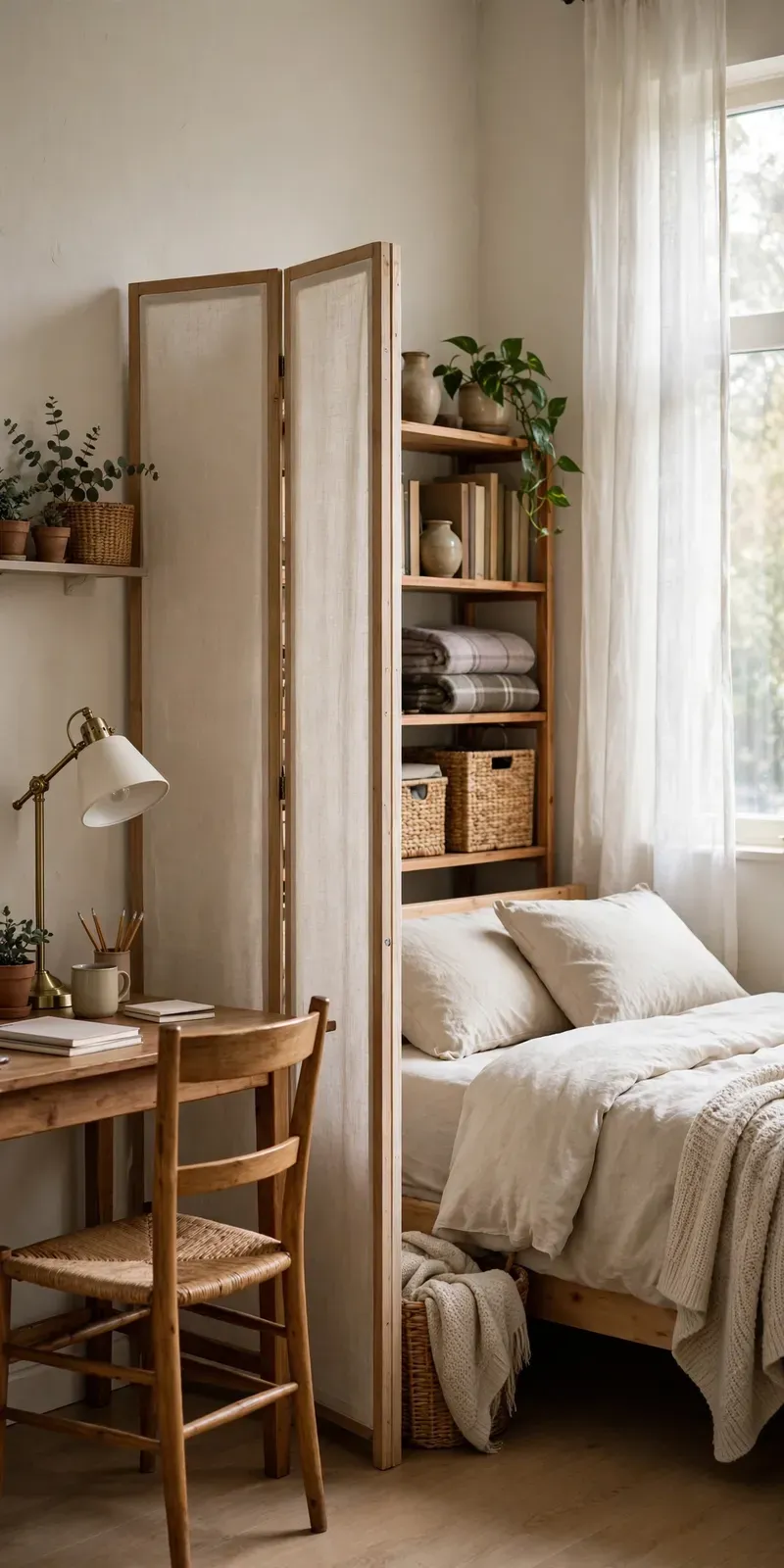
Build Your Teen Study Desk Focus Zone Step by Step
Step 1: Pick the corner with the best light and the least traffic. A spot near a window is ideal for a teen study desk focus zone, as long as the sun does not shine straight onto a screen. Avoid the strip of floor everyone crosses to reach the wardrobe or door. Measure first; a desk 100 to 120 centimetres wide fits a laptop, an open notebook and a lamp.
Step 2: Mark the boundary. Place a low bookshelf, a folding screen or a storage cube unit at right angles to the wall so it works like a soft wall between the bed and the desk. Even a half-height divider blocks the view of the bed, adds storage, and makes your teen study desk focus zone feel like its own small room.
Step 3: Set the desk and chair up properly. Push the desk flat against the wall so nothing rolls behind it. The chair should let feet rest flat on the floor, with elbows roughly level with the desktop. A cushion or a small footrest box fixes most height problems without buying a new chair.
Step 4: Add light in two layers. Keep the room light for general use, then add a desk lamp that points at the page, not at the eyes. Place the lamp on the opposite side to the writing hand to reduce shadows, and choose a warm-white bulb that is bright enough to read by without glare.
Step 5: Give everything a home. One tray for current homework, one pot for pens, one folder for finished work. When each item has a home, the two-minute tidy at the end of a session actually happens.
Step 6: Agree the house rules. Headphones mean do not disturb unless it is important. Homework time is phone-on-silent time. A short chat with a sibling about the teen study desk focus zone at the start saves a dozen small arguments later.

Light, Chair and Posture: Small Fixes That Help Your Teen Study Desk Focus Zone
Teenagers can study in almost any position for a week, but sore necks and headaches build up quietly. It helps to follow basic ergonomics principles for fitting a workspace to the person using what you already own. The top of a laptop screen should sit a little below eye level; a stack of sturdy books under the laptop, plus a separate keyboard if you have one, gets surprisingly close. Books should be raised too: a simple stand, or a thick folder propped at an angle, stops the constant hunching over a flat page.
Light matters more than most people expect. A desk in a dim corner makes eyes work harder and sleepiness arrive sooner. If your teen study desk focus zone has no window, choose the brightest comfortable lamp you can and keep the bulb clean.
In the evening, a warm lamp on the desk and a dimmer room light also signals to a sibling that this corner is in use, a bit like a ‘do not disturb’ sign made of light. For the rest of the room, warm bedroom lighting without harsh white helps keep the sleep side soft while the desk stays bright. And build in movement: a stretch and a glass of water between subjects beats pushing through for two solid hours.

Storage That Keeps Your Teen Study Desk Focus Zone Clear
A clear desk is not about being tidy for its own sake. Every extra object on the surface is one more thing the eye lands on instead of the page. The rule that works in most shared rooms is simple: only tonight’s work lives on the desk. Everything else goes up, under or beside it. Floating shelves above the desk hold textbooks and a small plant. A pinboard takes timetables, revision cards and reminders off the surface and onto the wall, where they are easier to see anyway.
Under the desk, a single basket or crate swallows sports kit, chargers and the art supplies that otherwise migrate. Beside the desk, the divider shelf can hold shared items in the middle and personal items on each person’s own side. Labels sound fussy, but on baskets they end the daily ‘where is my calculator’ search in seconds.
Colour helps too. One calm colour in your teen study desk focus zone, such as sage green, soft blue or warm grey, makes it read as a separate place. Keep busy patterns on the sleep side and let the desk side stay plain.
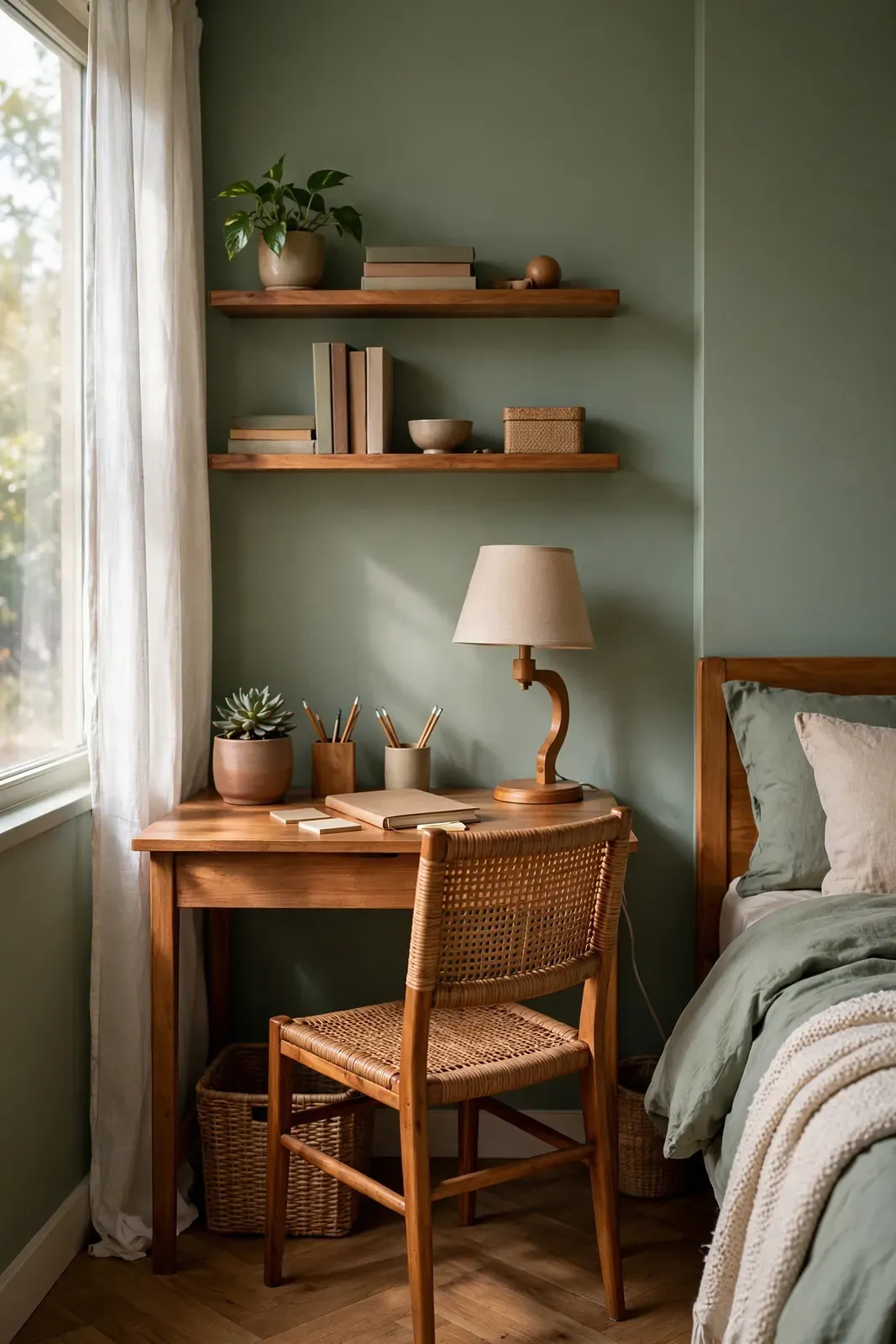
Budget Picks for a Teen Study Desk Focus Zone and Where to Save Money
Most of a teen study desk focus zone can be built from things already at home. Start with the free moves: swapping the desk to a better corner, borrowing a dining chair that is the right height, using a shoebox covered in paper as a storage tray, and turning an old bedsheet into a simple curtain divider on a tension rod. A weekend of rearranging costs nothing and shows you what the room actually needs before you buy anything.
If you do spend, spend in this order. First, a decent desk lamp, because light changes every session. Second, one storage piece that closes, such as a lidded box or a small drawer unit, because hidden clutter calms a room faster than open shelves. Third, a comfortable chair cushion. A second-hand desk is usually a smart buy: solid wood desks last for years, a light sand and a coat of paint make them look new, and they often cost less than a flimsy new one.
Skip the extras at first. Matching stationery and wall art can wait a month, until the zone is in daily use. By then you will know what is actually missing, instead of filling the desk with things that must be moved before homework starts.
Common Mistakes to Avoid
The most common mistake is putting the desk facing the beds or the television, so every movement in the room lands in the student’s eyeline. Face the desk to a wall whenever you can. A wall is boring, and boring is exactly what homework needs. The second mistake is sharing one desk surface between two people at the same time. If siblings must share, split the hours instead of the desk: a simple timetable on the pinboard beats two elbows fighting over one lamp.
Another frequent problem is letting your teen study desk focus zone become general storage. Once bags and laundry land on the desk, the focus signal is gone and homework drifts back to the bed. Protect the surface for the first few weeks and the habit will hold. Also tame the cables: one clip or a small charger box ends both the trip hazard and the messy look.
Last, do not decorate the zone only for looks and forget sound. In a shared bedroom, noise is the biggest distraction of all. Ordinary headphones, a door that closes properly, and agreed quiet hours do more for grades than any poster.
Frequently Asked Questions
How small can a study zone be in a shared bedroom?
About a metre of wall is enough for a teen study desk focus zone: a narrow desk, a chair, a lamp and one shelf above. The boundary matters more than the size. A screen, shelf or rug edge marking the zone helps the brain treat it as a separate place.
What if both siblings need to study at the same time?
Stagger the desk hours with a simple timetable you both agree on. For overlap days, the kitchen table or a fold-down surface can act as a backup spot. Keep the main desk for whoever has the heaviest work that evening.
Should the desk face a window or a wall?
A wall is usually better for focus, with daylight coming from the side. Facing a window is pleasant, but movement outside, changing light and glare on a screen all pull attention away. If the window is the only option, a sheer curtain softens the view without losing the light.
How do we keep the desk zone tidy every day?
End each session in your teen study desk focus zone with a two-minute reset: current work in the tray, finished work in the bag folder, pens in the pot, surface empty. A weekly five-minute sort of the shelf and basket stops clutter building up again.
Can a study zone work without buying a new desk?
Yes. A wide shelf board fixed at desk height, or a dressing table cleared of everything else, can do the job. What matters is a flat, stable surface at the right height, a supportive chair, and keeping that surface only for study.
A shared bedroom will never be a silent library, and it does not need to be. With one defined corner, decent light, clear-desk storage and a couple of fair rules, a teen study desk focus zone gives homework a home of its own. Start with the free changes this weekend, live with them for a week, then buy only what the room shows you it needs.