Table of Contents
Pattern is where a room gets its personality — and where it most often tips into visual noise. The good news is that textile mixing patterns safely is not a talent, it is a small set of rules that keep repeating in every calm, pattern-rich room you have ever admired: one shared colour palette, patterns at clearly different scales, and enough plain fabric in between for the eye to rest. Learn those three and cushions, rugs, curtains and bedding stop competing and start sounding like one room. This guide walks through the rules, a step-by-step for the trickiest spot (the sofa), and the mistakes that make mixed rooms feel restless.
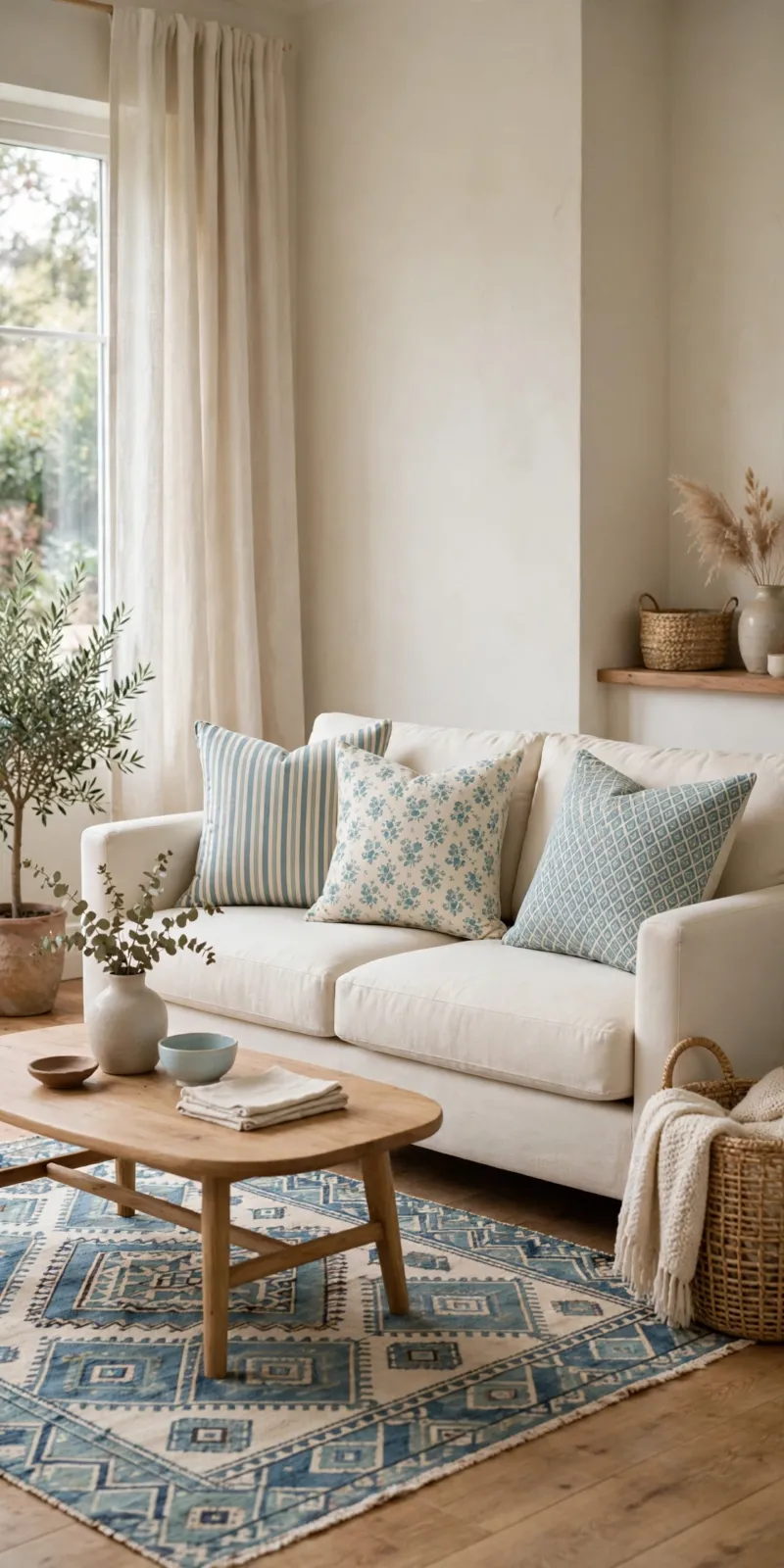
The Three Rules Behind Textile Mixing Patterns Safely
Rule one: colour connects everything. Choose two or three colours plus a neutral, and let every pattern in the room draw from that same small set. A rust, sage and cream palette can carry a stripe, a floral and a geometric without a whisper of clash, because the eye reads colour agreement before it reads pattern disagreement. Rule two: scale separates everything. Use one large-scale pattern, one medium, one small — a bold rug, a medium cushion print, a fine pinstripe or tiny check. Two patterns at the same scale fight; three at different scales harmonise, the same way voices at different pitches can sing together. Get colour and scale right and textile mixing patterns safely is halfway done.
Rule three: plains are not the absence of pattern, they are the frame for it. Aim for roughly half the textiles in the room to be plain or quietly textured — the sofa body, one set of curtains, the main bedding. Texture counts as the gentlest pattern of all: a woven throw, a slubby linen, a ribbed cushion give interest without adding a single motif. Rooms that feel “too much” have almost always broken rule three, not rules one and two. Honour all three rules and textile mixing patterns safely becomes repeatable.
Pattern Types and How They Behave
Stripes are the diplomats — they sit calmly beside florals, checks and geometrics, and they add order. Florals and other organic prints bring softness and movement; keep them at one scale per room. Geometrics bring structure and a modern edge, and a little goes a long way. Heritage patterns carry centuries of mixing wisdom: ikat’s soft, blurred geometry pairs beautifully with plain linens because its edges are gentle, while a crisp check pattern reads almost like a neutral at small scale, which is why checked cushions slip into so many schemes unnoticed.
Animal prints and very bold novelty prints behave like soloists: one per room, on the smallest item — a single cushion or a footstool — with everything else stepping back. If two soloists enter, the room turns into a stage set. When in doubt, photograph the arrangement and look at the picture: clashes that your eye forgives in real life show up honestly on a screen. Restraint like that is the quiet core of textile mixing patterns safely.
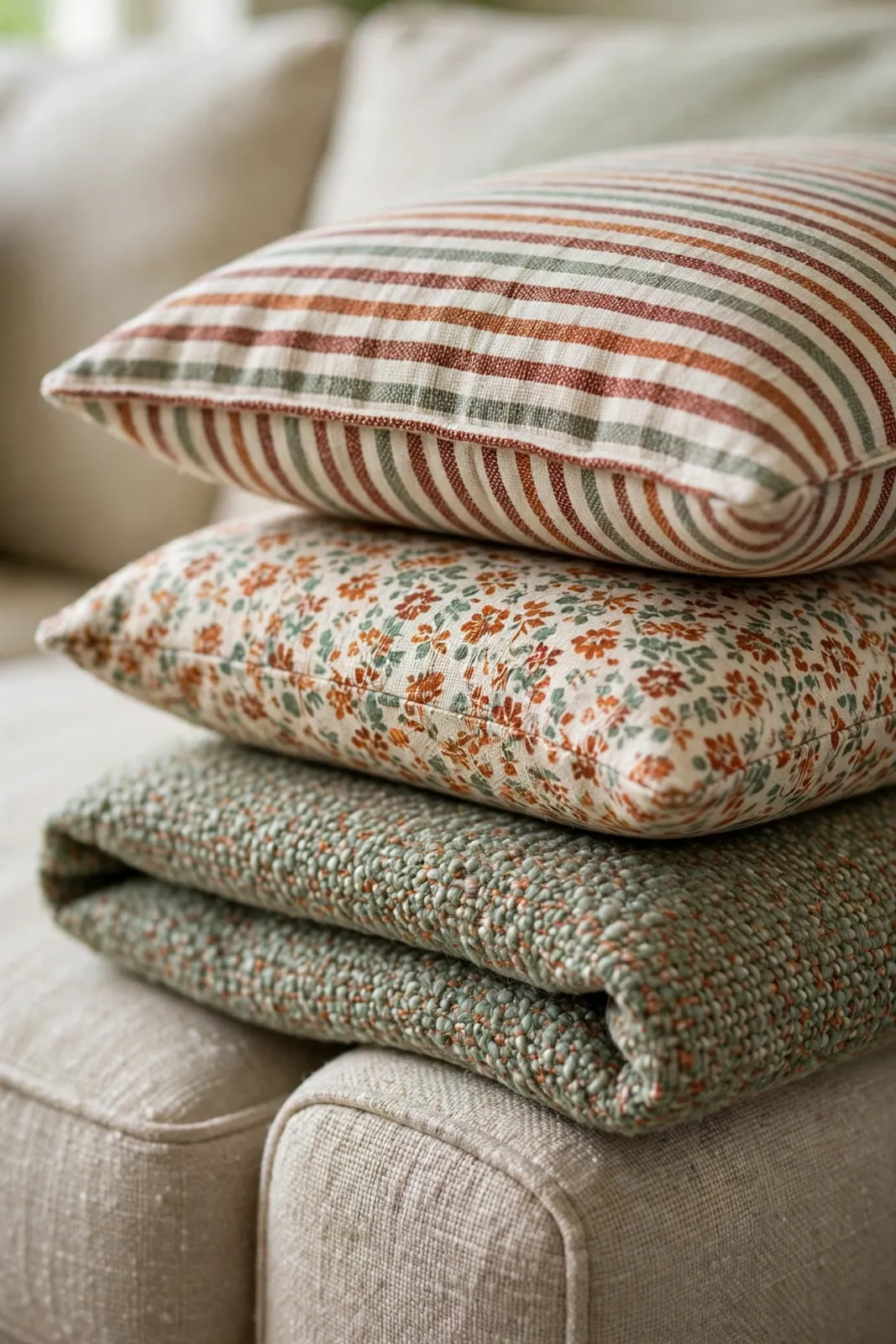
Step by Step: Mixing Patterns on a Sofa
Start with the sofa plain, or imagine it plain if it is not — this is your canvas. Step one: pick the largest pattern first, usually the rug or the biggest cushion, and pull your palette from it. Step two: add the medium pattern in one of those colours — a floral or a medium geometric on two cushions. Step three: add the small pattern — a fine stripe or mini check — on one cushion, ideally in the palette’s neutral. Followed in order, these steps make textile mixing patterns safely feel straightforward.
Step four: add one purely textured plain — a woven throw or a boucle cushion — in the deepest colour of the palette. Step five: stand across the room, squint, and check the balance: pattern should appear at both ends of the sofa and somewhere at floor level, not all bunched in one corner. Step six: remove one item. Almost every first attempt has one cushion too many, and the removal is what makes it look deliberate. Live with it a week before buying anything new; your eye will tell you which piece, if any, is missing. Work through the steps in order and textile mixing patterns safely stops feeling like a risk.
Room by Room Notes
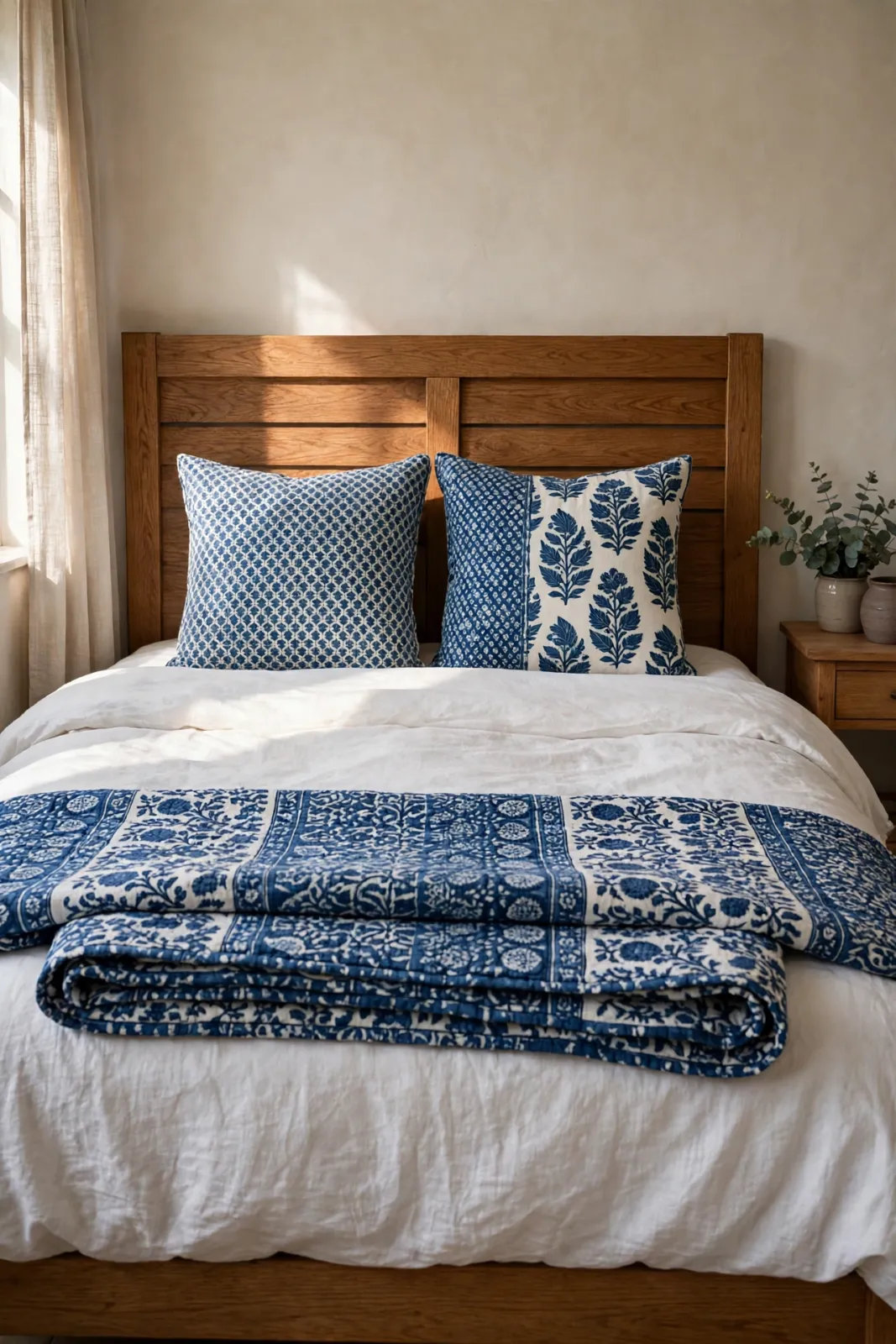
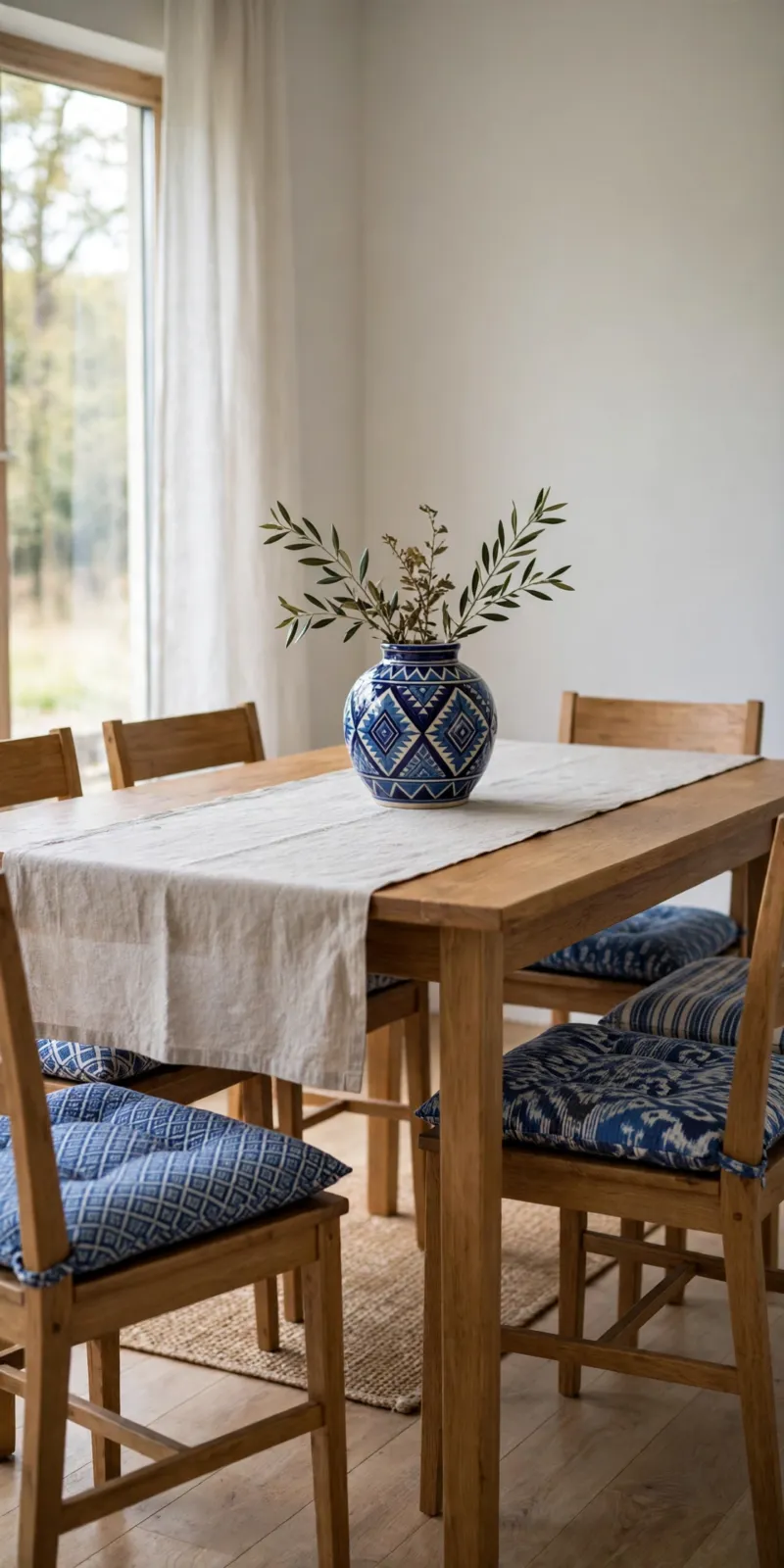
In bedrooms, bedding does the heavy lifting: plain sheets, one patterned quilt or coverlet, cushions in two scales. Keep the palette softer than the living room’s — pattern at pillow height is close to your face at rest. In dining rooms, pattern belongs low and washable: seat cushions, a runner, one patterned vase or jug as the table’s single print. Curtains there are best plain, because table settings bring their own visual busy-ness.
Bathrooms take one patterned textile happily — a shower curtain or a set of towels — against plain tiles. Children’s rooms can carry one more pattern than adult rooms before tipping, because their objects are smaller; still anchor with a plain rug or plain bedding so the room can rest at night. Hallways, seen in passing, tolerate the boldest rug you own — it is the safest place in the house to be brave. The same judgement applies to hard accents: brass and wood traditional accents warm a patterned scheme without adding another print.
Budget and Buying Advice
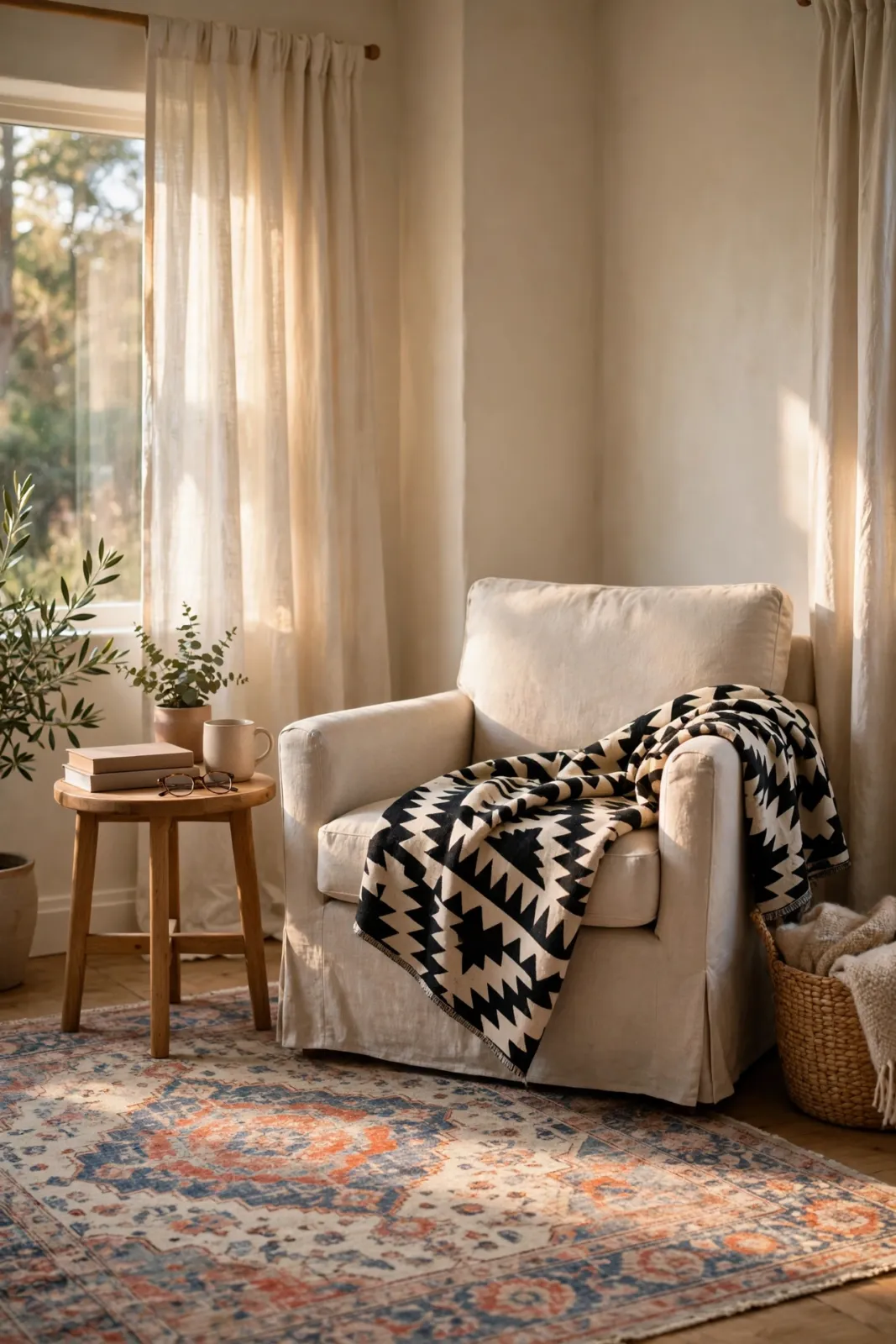
Cushion covers are the cheapest pattern laboratory in the home: covers only, not filled cushions, cost little, store flat, and let you test a combination for a season before committing. Buy the rug with the most care and money — it is the largest pattern, the hardest to change, and the one that sets the palette. Curtains come second; everything else can be small, secondhand or swapped between rooms.
Shop your own house before any shop. The patterned throw in the bedroom and the checked cushion in the study may be exactly the pair the living room needs, and swapping costs nothing. When you do buy, take phone photos of your existing textiles in daylight and shop with them open on your screen — memory lies about colour, especially warm tones, and most pattern regrets are really colour regrets. Buy in that order and textile mixing patterns safely stays kind to a budget.
Common Mistakes to Avoid
Mistake one: two large-scale patterns in the same room — a bold rug under a bold sofa print guarantees restlessness. Mistake two: matching sets, where the cushions, curtains and rug all share one identical print; the room reads as a showroom, not a home, and the pattern somehow feels louder for being repeated exactly. Mistake three: forgetting the floor — pattern at cushion height only makes rooms feel top-heavy; the rug or a floor cushion must join the scheme.
Mistake four: mixing warm and cool versions of “the same” colour — a blue-grey floral beside a warm cream stripe will quarrel quietly all day. Mistake five: adding pattern to hide a room’s real problem, usually too much stuff or tired paint. Pattern is seasoning; it cannot rescue a room that needs editing first. Clear, then pattern.
Frequently Asked Questions
How many patterns can one room hold?
Three is the comfortable maximum for most rooms: one large, one medium, one small, all in a shared palette, with plains making up at least half the textiles. Very large rooms with clear zones can take a fourth in a separate area, treated as its own small arrangement. Even then, textile mixing patterns safely depends on the plains doing half the work.
Can I mix floral and geometric patterns?
Yes — it is one of the most reliable pairings, because their shapes contrast completely. Keep them in the same colours and at different scales, and separate them with a plain or a stripe. A floral cushion beside a geometric one on a plain sofa works in almost any palette.
What if my sofa is already patterned?
Then the sofa is your large-scale pattern, and everything else steps down: small-scale or plain cushions only, a plain or very quietly patterned rug, plain curtains. Pull cushion colours directly from the sofa’s print and the room will look planned rather than accidental.
Do curtains and cushions need to match?
No — matching exactly usually flattens a room. Better: curtains plain or in the smallest scale of the scheme, cushions carrying the medium and bold prints. They should share colours with the rest of the room, not share the same fabric.
How do I test a combination before buying?
Gather stand-ins from around the house — scarves, shirts, tablecloths in similar colours and scales — and drape them where the new textiles would go. Photograph the result in daylight and again at night. If it pleases you in both lights for two days, buy with confidence. That two-day test is textile mixing patterns safely at its most practical.
Pattern With a Steady Hand
Textile mixing patterns safely comes down to kindness to the eye: shared colours so nothing jars, different scales so nothing competes, and plains so everything can breathe. Start with the sofa, use the three rules, remove one thing at the end — and the room that results will look collected over time, which is the nicest thing a patterned room can look.