Table of Contents
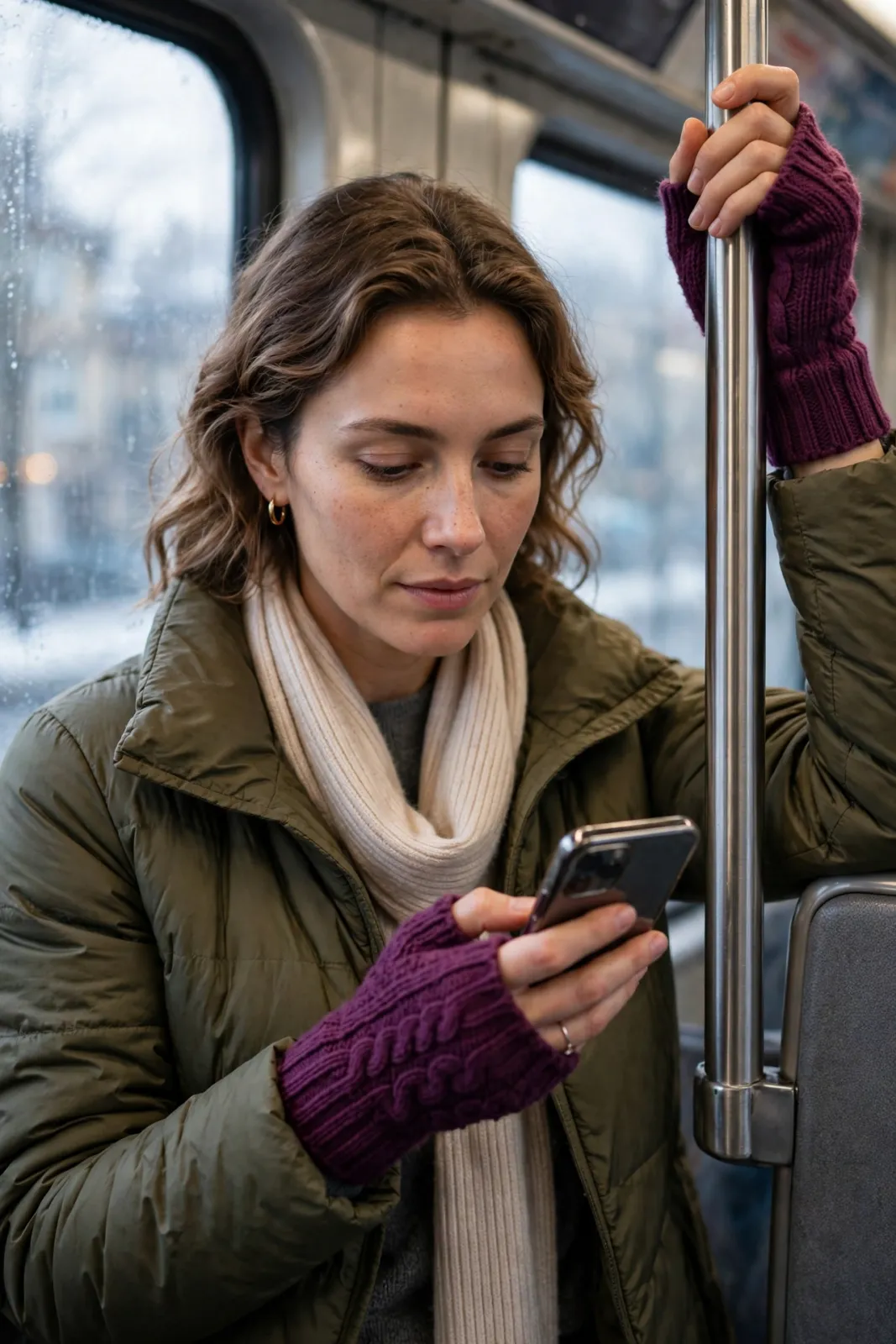
There is a particular cold that only commuters know: a platform at half past seven, a windy bus shelter, and a train door that opens just long enough to steal the warmth from your hands. That is exactly where boysenberry knit fingerless mittens earn their place. They keep your palms and the backs of your hands wrapped in soft knit, while your fingers stay free for a travel card, a phone, a coffee lid and the zip on your bag.
I started wearing mine when I could not face choosing between warm hands and using my phone. Full mittens come off at every barrier, and sooner or later one ends up on the floor of a carriage. These boysenberry knit fingerless mittens stay on. The boysenberry shade helps, too: a deep berry purple, rich without being loud, that lifts the grey and navy coats most of us live in all winter. This guide covers nine cosy ways to wear them, how to check fit and knit quality, and how to make a pair last.
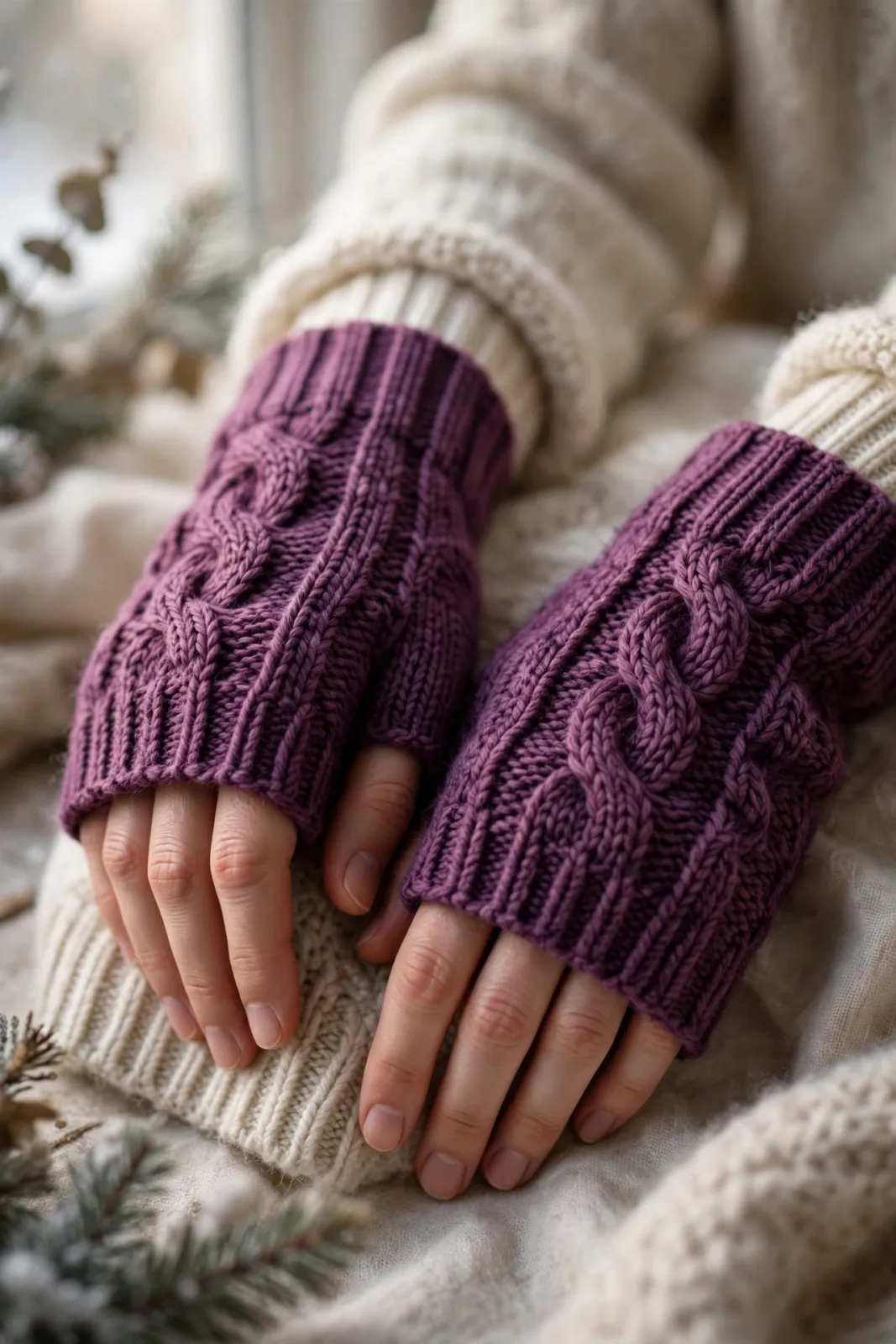
Why Boysenberry Knit Fingerless Mittens Work So Well for Cold Commutes
Most heat escapes from the back of the hand and the wrist, where blood vessels run close to the skin. Cover those with a decent knit and your hands feel far warmer than you would expect, even with fingertips out. A long ribbed cuff tucked under your coat sleeve closes the gap where cold air sneaks in, and that detail matters more than a thicker yarn does. That warmth is the first reason boysenberry knit fingerless mittens suit winter travel so well.
The fingerless part of boysenberry knit fingerless mittens is not a compromise, it is the point. You can tap a card reader, type a message, turn a book’s pages and hold a hot cup properly. On a crowded train, bare fingers also grip a rail securely, where thick mitten fabric slips.
Then there is the colour. Boysenberry sits between plum and raspberry, so it pairs with far more than plain purple does. It looks expensive next to cream and camel, cheerful next to charcoal, and neat with olive and denim.
9 Cosy Ways to Wear Boysenberry Knit Fingerless Mittens
1. With a cream coat and a hot coffee. Cream softens the berry, and the berry stops cream looking washed out.
2. Over the cuffs of a navy pea coat. Pull the cuffs of your boysenberry knit fingerless mittens over your coat sleeves. The berry band becomes a deliberate stripe of colour at the wrist, with no cold gap.
3. With a matching knit scarf. A scarf in the same knit makes the set look planned. If you want more ways to tie it, our guide to wool scarf tying for a chunky winter scarf is a good next read. Keep everything else plain so the colour carries the outfit.
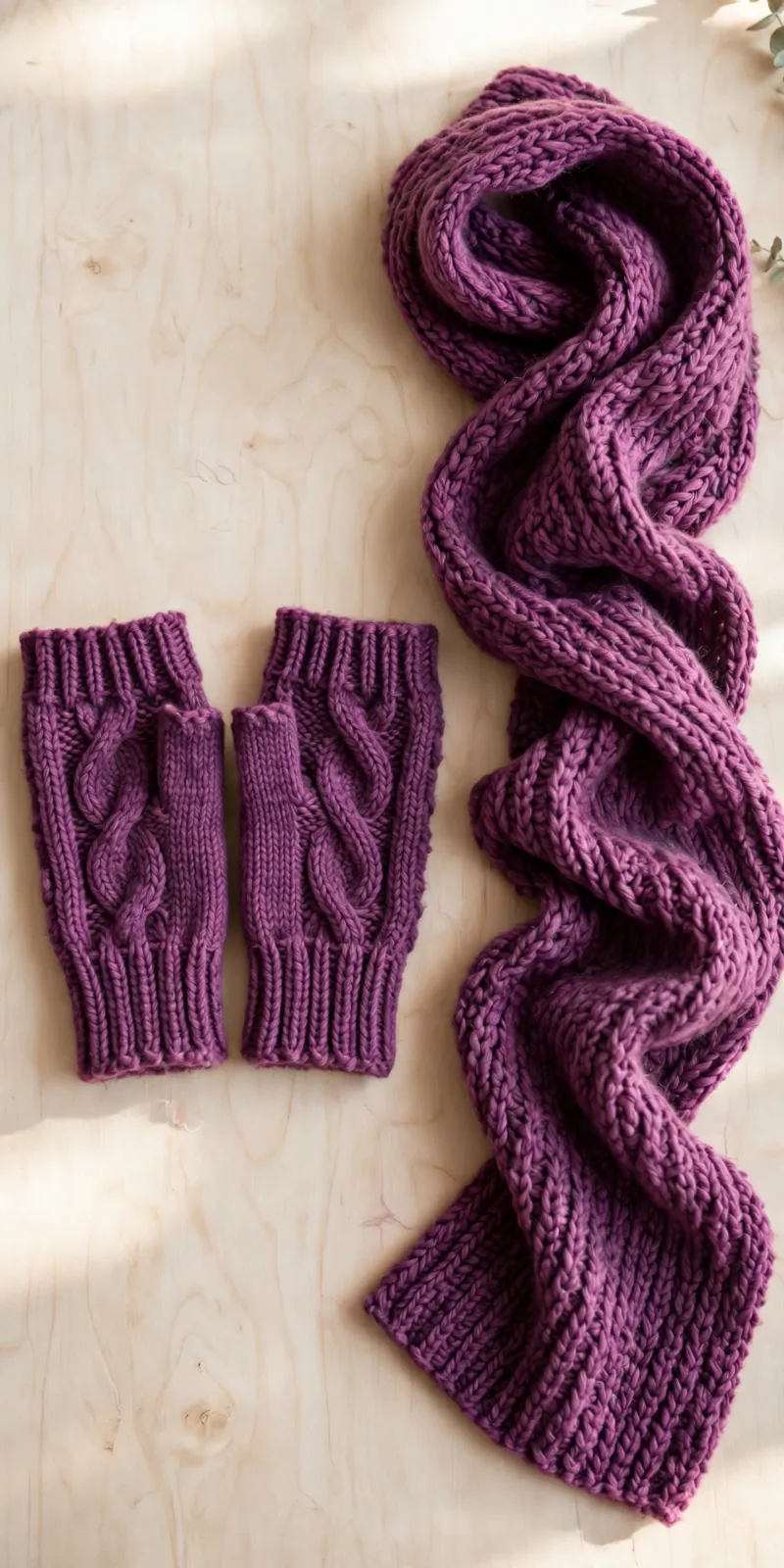
4. Layered over thin liner gloves on bitter days. On the coldest mornings, wear slim plain gloves underneath your boysenberry knit fingerless mittens. You get full coverage outdoors and can slip the top layer off indoors.
5. With a grey tailored coat for work. Berry and grey reads smart rather than sweet, especially with a leather bag.
6. With denim and a chunky jumper at the weekend. Dark jeans, an oatmeal jumper and boysenberry knit fingerless mittens is my Saturday market outfit, when my hands are in and out of my bag all morning.
7. Paired with an olive or khaki parka. Berry against olive looks better in real life than it sounds, and both colours hide city grime well.
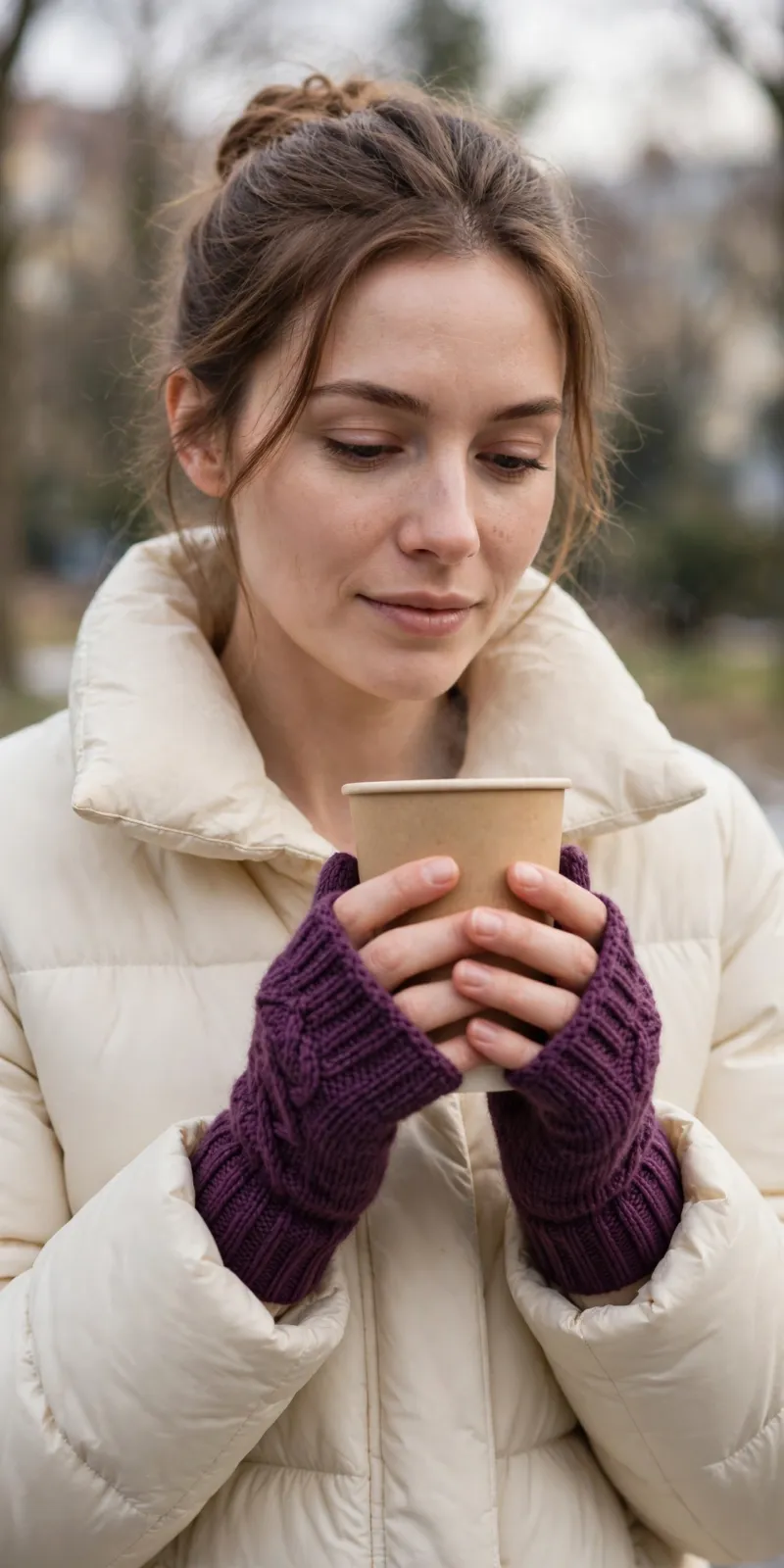
8. With a black outfit, as the only colour. Head-to-toe black can look flat by February. Berry mittens pull it back together with almost no effort.
9. At your desk, not just outdoors. In a chilly office, they let you type and use a mouse while your wrists stay warm.
Boysenberry Knit Fingerless Mittens: How to Wear Them, Step by Step
Getting the fit of your boysenberry knit fingerless mittens right takes two minutes and decides whether a pair becomes a daily favourite or a drawer ornament.
Step 1: Check the thumb opening. Push your thumb through its opening. The edge should sit at the base of your thumb without digging in. If it pulls tight when you make a fist, the gusset is too small.
Step 2: Check the finger edge. The top edge should end around your first knuckles, leaving fingertips and main joints free. Much longer and you lose dexterity; much shorter and your knuckles catch the cold.
Step 3: Test the cuff. The cuff should hug your wrist and spring back when stretched. Good ribbing snaps back; baggy ribbing lets cold air straight in.
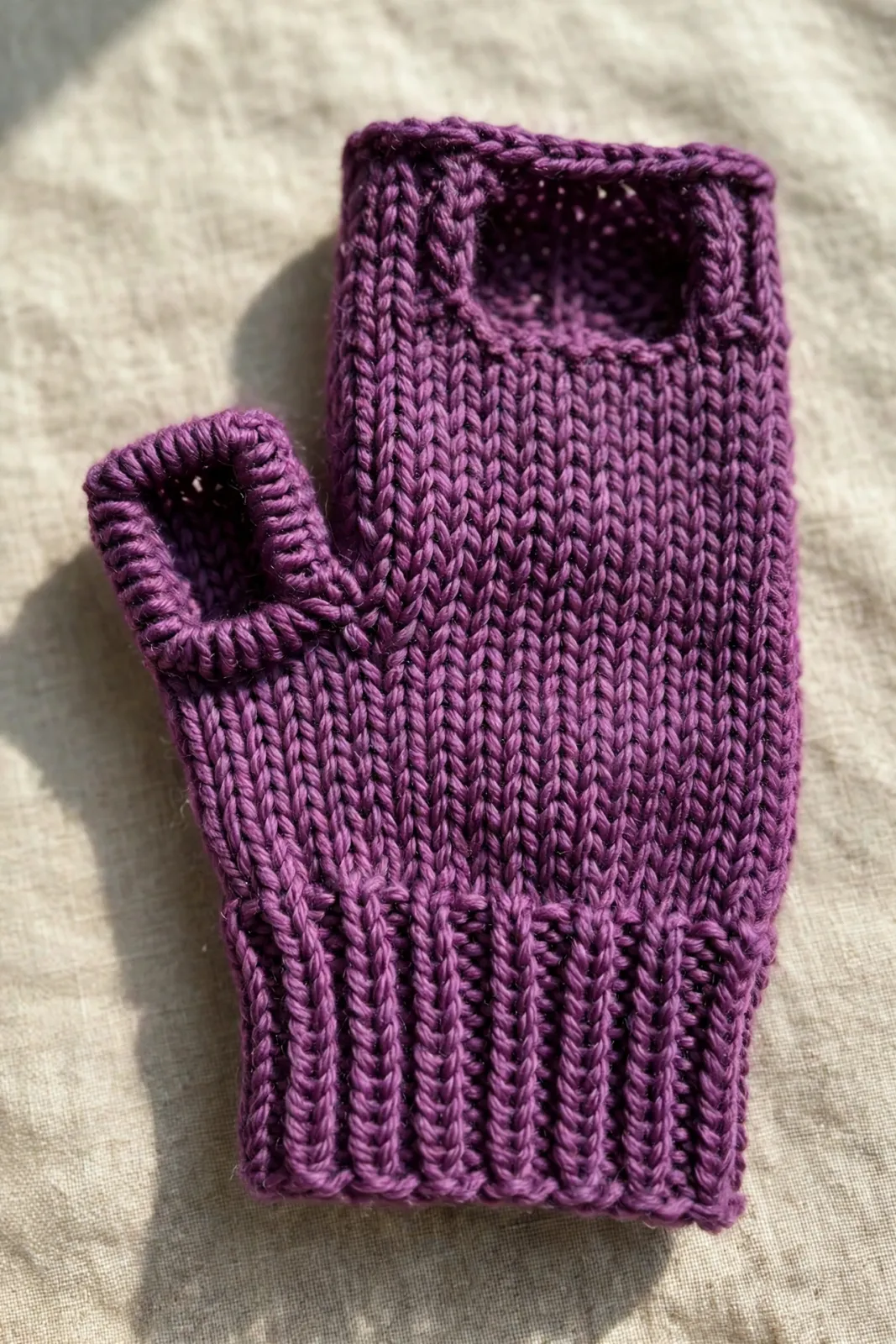
Step 4: Read the knit. Hold the mitten up to the light. Stitches should be even, with no thin patches or loose loops. Turn it inside out and check the thumb seams, where cheap pairs fail first.
Step 5: Do the phone test. Unlock your phone, type a message, tap your travel card, and open your bag’s zip. If you can do all four without thinking, the fit is right.
Step 6: Wear them under your coat once. Put your coat on over the cuffs and raise your arms as if reaching for a luggage rack. The mittens should stay put, not bunch at the wrist.
Choosing Your Pair: Fibre, Care and a Little Budget Sense
Yarn decides warmth and lifespan. Pure wool is warmest but needs gentle washing. A wool and nylon blend is the commuter’s sweet spot: nearly as warm, tougher at the thumb and palm, and usually cheaper. Acrylic costs least and washes easily but can pill. Cotton absorbs damp and stays cold, so save it for autumn. Whichever fibre you choose, boysenberry knit fingerless mittens in a tight, even knit will hold their shape longest.
The colour itself has a nice story behind it. The boysenberry is a cross of blackberry, raspberry, loganberry and dewberry in the Rubus family of bramble fruits, and if you have a few minutes on the train, the story of Walter Knott, the farmer who rescued and popularised the boysenberry in California, is genuinely worth reading. Knowing the shade comes from a real berry with a rescue story attached makes it feel like a colour with roots, not a random fashion purple.
Care for boysenberry knit fingerless mittens is simple. Wash cold, by hand or on a wool cycle in a mesh bag, with mild detergent. Reshape while damp and dry flat on a towel away from a radiator. Never wring a knit; press the water out in the towel. Store them clean at the end of winter, because moths are drawn to worn wool. On budget: one well-made blended pair worn daily will outlast three flimsy pairs, so spend on thumb seams and the cuff, not decoration.
Common Mistakes to Avoid
The most common mistake is buying boysenberry knit fingerless mittens a size too big because they feel cosy in the shop. Knit relaxes with wear, so a loose pair soon twists round your hand. Second is choosing looks over the cuff: a short decorative cuff leaves your wrist bare. Third, people forget the thumb. A simple slit instead of a gusset will stretch out of shape within a month.
Warm-water washing shrinks and felts wool blends, and drying on a hot radiator makes yarn brittle. Finally, do not leave a damp pair balled up in a coat pocket all week; they will smell musty and you will stop reaching for them.
Frequently Asked Questions
Are fingerless mittens actually warm enough for winter?
For commuting, yes. Boysenberry knit fingerless mittens warm your palms, the backs of your hands and your wrists, which is where most of the chill starts. On truly bitter days, layer them over thin liner gloves, or choose full mittens for long outdoor waits and keep the fingerless pair for travel days.
Can I use my phone while wearing them?
That is their main advantage. Your fingertips touch the screen directly, so typing, scrolling and contactless taps all work as normal. Just check the finger edge ends near your first knuckles, so nothing bunches over the screen.
How do I stop the thumb hole from stretching?
Choose a pair with a shaped, knitted thumb gusset rather than a simple slit, and avoid hooking the mittens off by the thumb when you remove them. Washing gently and drying flat also helps the opening keep its shape.
What colours go best with boysenberry?
Cream, camel, charcoal, grey, navy and olive all sit happily next to it. Boysenberry is deep enough to work as a neutral-adjacent colour, so it rarely clashes. If you are nervous, start with a cream or grey coat and let the mittens be the single bright note.
How many pairs do I need?
One good pair of boysenberry knit fingerless mittens is enough for most people. A second pair is worth it if you commute daily in wet weather, so one can dry properly while you wear the other. Rotate them and both will last longer.
A Warm Note to Finish
Small things carry a commute: a window seat, a saved podcast, and hands that stay warm while you hold your coffee. Boysenberry knit fingerless mittens are a tiny purchase, but one you notice every cold morning. Choose a snug cuff, a proper thumb and even stitching, look after the knit kindly, and let that deep berry colour do quiet, cheerful work against your winter coat all season.