Table of Contents
I bought my first sorrel red linen headscarf on a whim at a small market stall, mostly because the colour stopped me mid-step. It was not bright scarlet and not quite rust either, just that warm, earthy red that seems to flatter almost everyone. I tied it on right there over messy hair, and by the time I got home I had already decided this little square of linen was going to earn its place in my wardrobe. A good sorrel red linen headscarf does that. It rescues a bad hair day, adds colour to a plain outfit, and feels light even when the afternoon turns hot.
If you have a scarf sitting in a drawer because you never know how to tie it, this guide is for you. I will walk you through three reliable ways to wear it, step by step, plus what to pair it with, how to choose a good one without overspending, and how to wash it so that lovely red stays rich. No special skills needed, just a mirror, two minutes, and a bit of patience the first time.

Why a Sorrel Red Linen Headscarf Works With So Many Outfits
Sorrel red sits in a sweet spot. It is warm without being loud, so it pairs happily with cream, white, denim blue, olive, camel, and even soft pink. On days when I wear a plain white shirt and jeans, the scarf becomes the whole point of the outfit. With a floral dress, it picks out the red tones in the print and pulls everything together. Because linen has a slightly textured, matte finish, the colour looks soft rather than shiny, which makes it easy to wear in the daytime.
Linen itself is the other half of the charm. It breathes, so your head does not feel wrapped in plastic on a warm day. It has just enough grip that a knot holds better than it would on slippery satin, and the natural creases are part of its character. You do not need to iron it to perfection before every wear. A relaxed fold, a slightly uneven tail, that lived-in look suits linen perfectly.
Size matters too. A square around 70 to 90 centimetres gives enough fabric for all three ties below without bulky leftovers, so start there if it is your first one.

How to Tie a Sorrel Red Linen Headscarf Three Ways, Step by Step
Before you start, brush your hair and decide whether to tuck it all away or leave a few strands out at the front. If your hair is very smooth, a cotton under-cap band helps the linen grip.
Way One: The Classic Triangle Knot at the Back
Fold the square into a triangle. Place the long edge across your hairline, point falling down your back. Bring the side corners under your hair at the nape and tie a double knot. Let the tail drape over the knot or tuck it in. This is the fastest tie, and it keeps hair fully covered and off your face.
Way Two: The Twisted Turban Front
Start with the same triangle, but put the folded edge at the nape and let the point fall forward over your face. Bring the side corners up to your forehead and twist them around each other twice, then take the ends back to the nape and knot them. Tuck the front point under the twist. It looks polished enough for lunch out and frames the face nicely. If you want more scarf ideas for colder months, my guide to winter scarf styles that make your scarf the star of your outfit is a good next read.
Way Three: The Loose Babushka Knot Under the Chin
Drape the unfolded triangle over your head with the folded edge framing your face. Cross the two front corners loosely under your chin and tie a soft knot, or let them hang and knot them at the back of your neck instead for a cleaner throat line. Keep the tension gentle. This old-fashioned style has come back for good reason: it shields your hair and ears on breezy days, looks sweet with sunglasses, and takes about twenty seconds once you have done it twice.
Once those three feel easy, small tweaks create the rest: knot the classic tie at the side, wear the twist over a low bun, or fold the scarf into a wide headband. That is how one scarf becomes nine looks.
What to Wear With It, From Jeans to Dresses
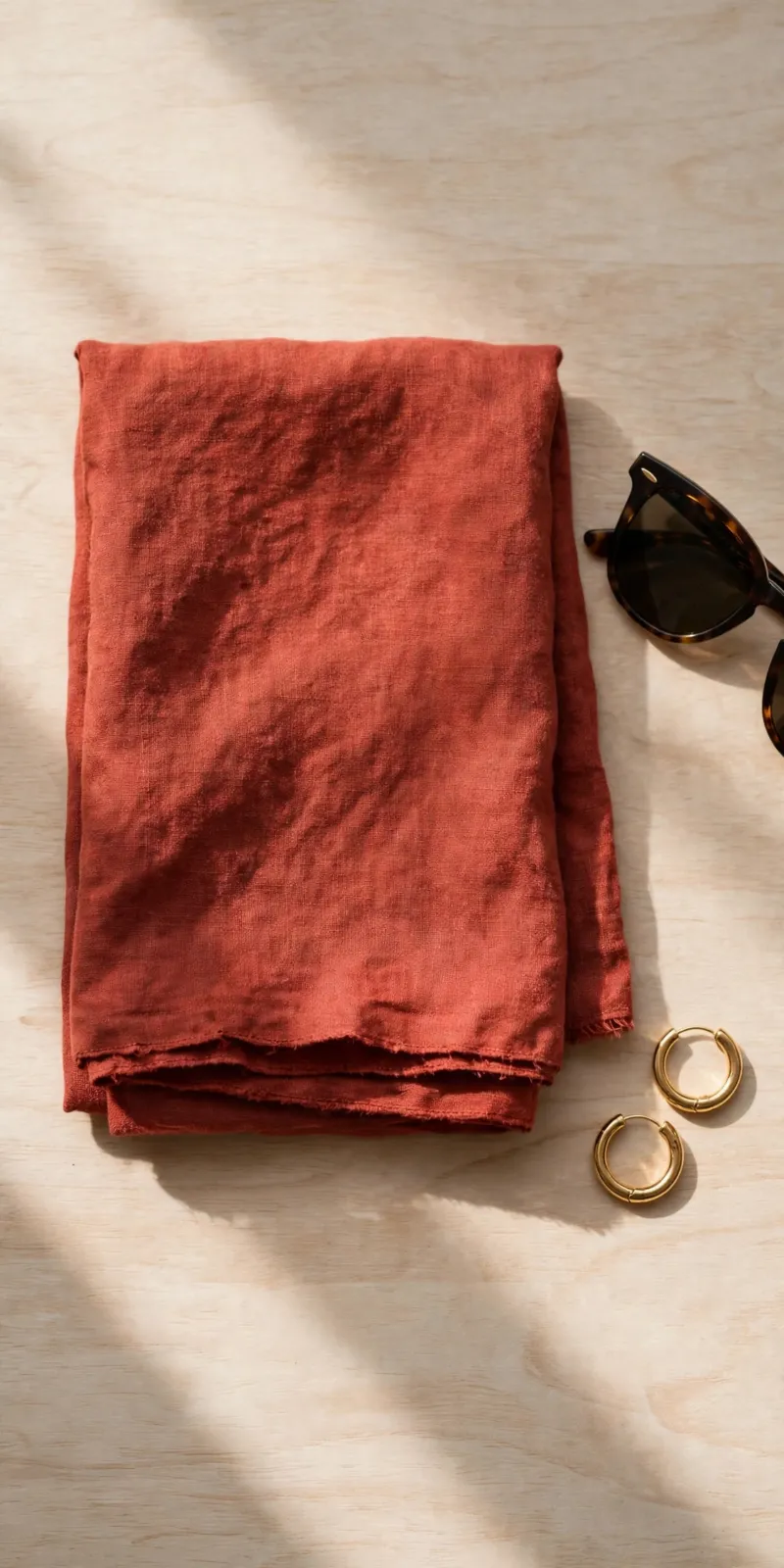
For everyday wear, I like the scarf with a cream or white blouse, straight jeans, and small gold hoops. The red does all the talking, so the rest can stay simple. A striped Breton top also works beautifully, as long as the stripe is navy or brown rather than a clashing bright red. In cooler weather, try it with a camel coat and tan boots. The colours sit in the same warm family and look considered without trying hard.
With dresses, let the print guide you. If it has any red, terracotta, or warm brown in it, the scarf will feel made to match. With a plain white dress, add a straw bag and leather sandals. Avoid neon colours and icy blues, which can make the warm red look dull.

Buying on a Budget and Caring for Linen So the Colour Lasts
You do not need to spend a lot. Look for pure linen or a linen-cotton mix, hold it to the light to check the weave is even, and rub a corner between your fingers. Good linen feels cool and slightly crisp at first, then softens with every wash. For background, this overview of the history and styles of head scarves may give you ideas beyond the three ties above.
For care, keep it simple. Wash your scarf cold, by hand or on a gentle machine cycle, with a mild detergent and similar colours for the first few washes, since red dyes can shed a little at the start. This practical reference on linen fabrics and how household linens are traditionally cared for explains why linen prefers gentle handling and air drying over harsh heat. I dry mine flat or on a line in the shade, smooth it with my hands, and skip the iron unless I want a crisp band fold. Store it loosely folded, not stuffed in a ball, and the fabric will thank you by staying smooth and strong for years.
Budget tip: one well-made scarf in a colour you love will get worn far more than three cheap ones you feel unsure about. If you sew, a metre of linen also makes two generous scarves.
Common Mistakes That Make a Headscarf Slip or Look Messy
The most common mistake is tying on freshly washed, silky hair with no grip underneath. Second-day hair holds a scarf far better, and a simple cotton band or a few hidden grips at the sides solve most slipping. The second mistake is tying too tightly. A scarf that pulls at your temples will give you a headache by noon and leave a deep mark on your forehead. Snug is enough; the knot does the work, not the squeeze.
Also check the back in a mirror. The classic tie can ride up and show a gap at the nape if the knot sits too high, so pull the point down before you knot it. And do not overload the look: one statement piece near the face is plenty.

Frequently Asked Questions
Will a linen headscarf stay on all day?
Mostly, yes, if you give it something to grip. Wear it over hair that is not freshly conditioned, add a cotton band underneath if needed, and use a double knot rather than a single one. A quick re-tie after lunch is normal and takes seconds.
Is sorrel red hard to match with clothes?
Not at all. It is a warm, muted red, so it sits comfortably with cream, white, denim, camel, olive, and brown. Start with neutrals if you feel unsure, then try it with soft floral prints that contain a little red or terracotta.
Can I wear a linen headscarf in winter?
You can, though linen is a breathable fabric rather than a warm one. In winter I wear it as a colour layer under a coat hood or over a thin cotton cap. It works best as a style piece in cold weather rather than your only protection from the wind.
How do I stop the red colour from fading?
Wash it cold, turn it inside out, keep it out of long direct sun while drying, and avoid strong detergents. Linen softens and lightens very slightly over many washes, which most people find adds to its charm rather than spoiling it.
What size scarf should a beginner buy?
A square between 70 and 90 centimetres is the easiest starting point. It gives enough fabric for a back knot, a front twist, and an under-chin tie without leaving long, flappy ends that get in the way while you learn.
A Small Scarf, Lots of Good Days
What I love most about this scarf is how little it asks and how much it gives back. Three simple ties, a colour that lifts plain clothes, and a fabric that gets softer every year. If yours has been waiting in a drawer, pull it out tomorrow morning, try the classic triangle first, and give yourself a week of practice. By the third or fourth wear, your hands will know the knots on their own, and that warm sorrel red will start to feel like a small, happy signature.
Your Sorrel Red Linen Headscarf Quick Checklist
Here is the short version to remember. Fold your sorrel red linen headscarf on the diagonal for the classic knot, or start at the nape for the turban twist. If your sorrel red linen headscarf slips, add a cotton band underneath and finish with a double knot.
Pair your sorrel red linen headscarf with cream, denim, camel, or olive for the easiest outfits, and let the sorrel red linen headscarf be the one statement piece near your face.
Wash your sorrel red linen headscarf cold and dry it in the shade so the warm red stays rich, then store your sorrel red linen headscarf loosely folded by the door. One sorrel red linen headscarf, three easy ties, and plenty of good hair days: that is the whole idea.
Keep a spare sorrel red linen headscarf in your bag on windy days, and swap your sorrel red linen headscarf for a fresh one whenever the first feels tired.
That really is all a sorrel red linen headscarf needs: a gentle wash, a loose fold, and a regular place in your week, and your sorrel red linen headscarf will keep paying you back in good hair days.
On market days my sorrel red linen headscarf goes with a straw tote and sandals, and on work days the same sorrel red linen headscarf sits happily with a blazer.
If you take one tip from this whole guide, let it be this: wear your sorrel red linen headscarf often, because a sorrel red linen headscarf only gets softer, easier, and more yours every time your sorrel red linen headscarf comes out of the drawer.