Table of Contents
Rainy days rarely cause trouble outside the house. The trouble starts in the first metre inside the front door, where wet umbrellas get propped against walls, boots leave dark puddles on the floor, and coats drip onto anything that happens to be nearby. A planned umbrella stand entryway corner ends that small daily mess with very little furniture: one sturdy stand with a drip tray, a mat that can take water, and a hook or two within reach. Everything wet lands in one contained spot, dries there, and stays out of the rest of the home.
The corner does not need to be large. In most homes the useful space is the patch of floor beside the door that is too narrow for a console table and too visible to leave empty. That patch, treated on purpose, becomes the place where the whole family drops rain gear without thinking, which is exactly the point. Good storage is the kind nobody has to remember to use. Pair it with wall mirror placement ideas that brighten a small entryway and the corner feels finished as well as practical.

Why an Umbrella Stand Entryway Corner Solves the Wet-Weather Pile-Up
Architects have a name for this in-between zone: a vestibule is the small space between an outer door and the rooms inside, and even homes without a formal one still have the same job to do at the threshold. Dirt, water and cold air should stop there, not travel through the house. An umbrella stand entryway corner is the furniture version of that idea. It marks a clear boundary: wet things stay on the mat, dry things move on.
The second job is drying. Umbrellas shut while soaking and left in a heap stay damp for days, smell musty, and stain pale floors with rusty rings from their tips and frames. Standing upright in a ventilated holder, the same umbrellas drip in one direction, into a tray, and dry by morning. Add a pair of boots on the same mat and a coat on the hook above, and the whole wet outfit is contained in about half a square metre of floor. Half a square metre is all an umbrella stand entryway corner really needs.
Choosing the Right Stand: Height, Weight and Drip Control
Start with height. A full-length umbrella, a device with a folding canopy on a central shaft, needs a holder roughly 45 to 55 centimetres tall so it sits deep enough not to topple, while compact folding umbrellas suit shorter, wider stands or a divided holder with a lower section. If your household mixes both, choose a tall stand with an inner divider or a removable drip cup, so short umbrellas do not vanish into the depths and have to be fished out by their tips.
Weight is the quiet deciding factor. A light, empty stand tips the first time a heavy wet umbrella lands off-centre. Look for a weighted base, a solid metal or ceramic body, or a design you can anchor visually into the corner so two walls brace it. Open-frame metal stands let air circulate and dry canopies fastest; solid ceramic and metal cylinders hold water neatly but need emptying more often; woven rattan looks warm and suits dry climates, but belongs over a tray in genuinely wet regions. A steady stand is the backbone of any umbrella stand entryway corner.
Check the drip solution before you buy. The best stands have a removable tray or inner bucket you can carry to a sink without moving the whole stand. A shallow fixed base fills quickly in a storm week and then overflows exactly where you were trying to protect the floor. In an umbrella stand entryway corner, the drip tray quietly does more work than any other part, so choose it well.

The Floor Underneath: Trays, Mats and Protecting Wood and Tile
Even the best stand drips a little when a soaked umbrella is dropped in quickly, so the floor layer is part of the system, not an extra. A boot tray with a raised lip under the stand and the day’s wet shoes catches almost everything, and it lifts out for a rinse in seconds. On wood floors, that tray is non-negotiable: standing water finds the joints between boards and leaves marks that no amount of mopping removes later. That layered protection is what lets an umbrella stand entryway corner cope with real storm weather, not just light drizzle.
Over the tray zone, or instead of it on tile and stone, use a low-pile, washable mat with a rubber backing. Low pile matters because the front door usually swings over this patch, and a thick rug will catch the door, bunch up, and become a trip hazard of its own. Darker, patterned mats hide the inevitable muddy splashes between washes. In homes where rain is seasonal but heavy, like monsoon months, a second cheap mat to swap in while the first dries keeps the corner working all season. Kept simple like this, an umbrella stand entryway corner is easy to rinse, wipe and reset after every storm.
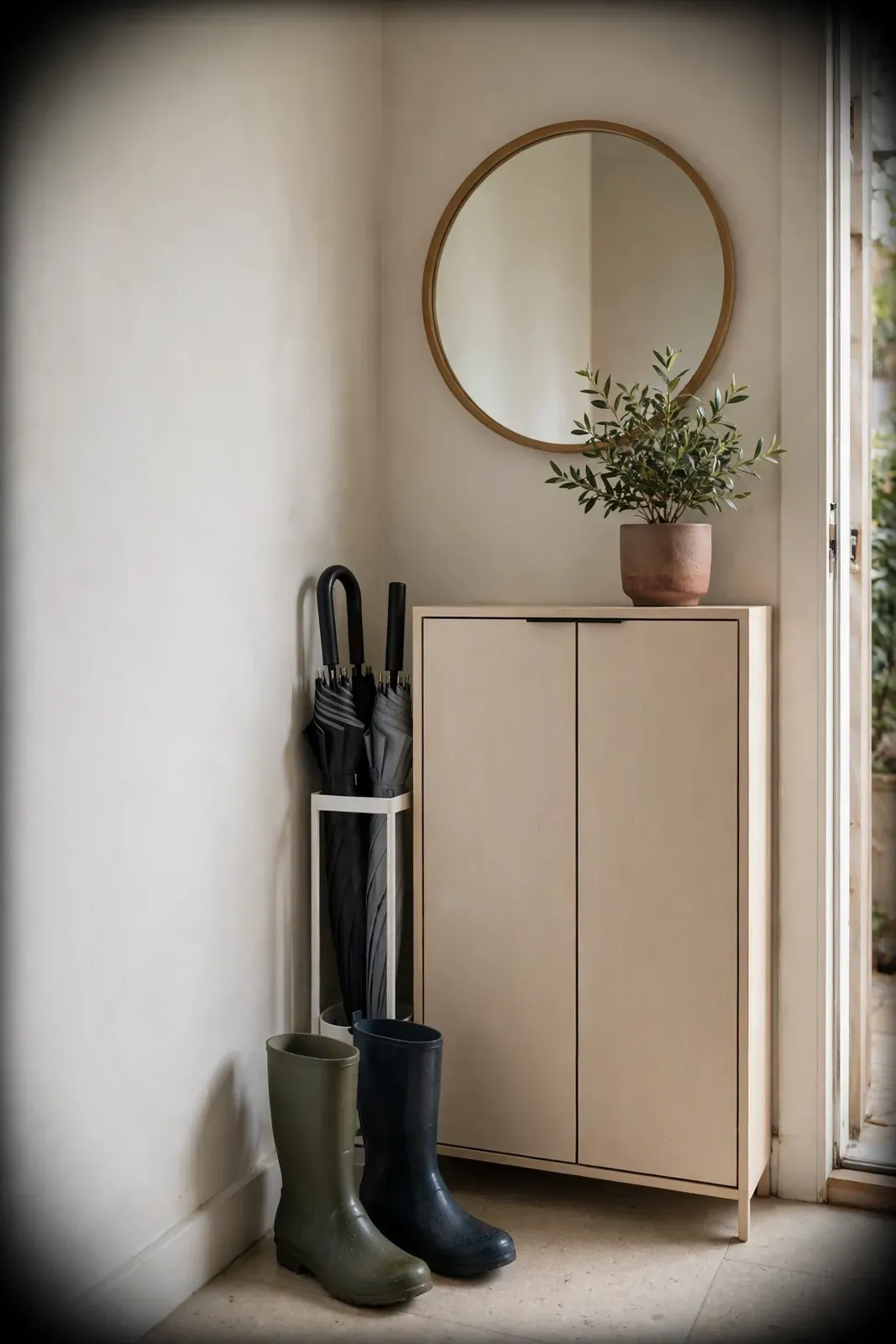
Step by Step: Setting Up the Corner in Under an Hour
Step 1: Watch one rainy arrival. Notice where umbrellas, boots and coats actually land today. Put the corner there, not where a photo suggests it should go, because habits beat intentions every time.
Step 2: Measure the swing and the patch. Open the door fully and mark the floor it sweeps. Your stand, tray and mat must sit outside that arc, with at least a hand’s width to spare, so nothing gets knocked each time someone comes home.
Step 3: Lay the floor layer first. Put the boot tray down, then the mat if you are using both, mat beside or partly under the tray rather than stacked in a way that creates a ridge to trip on.
Step 4: Place the stand deep in the corner. Push it into the angle of the two walls so it cannot be clipped by passing bags. Fill it with the household’s real umbrellas and check that handles sit at a comfortable grabbing height.
Step 5: Add one hook rail above. A short rail or two hooks at shoulder height take the wet coat and the dog lead, keeping drips falling onto the mat instead of a chair in the next room.
Step 6: Set the emptying habit. Tip the tray into the sink after each wet day and leave the stand’s umbrellas open for ten minutes over the mat on very wet evenings. That small routine prevents smells more reliably than any scented extra. It takes a minute, and it keeps the umbrella stand entryway corner fresh and ready for the next wet day.
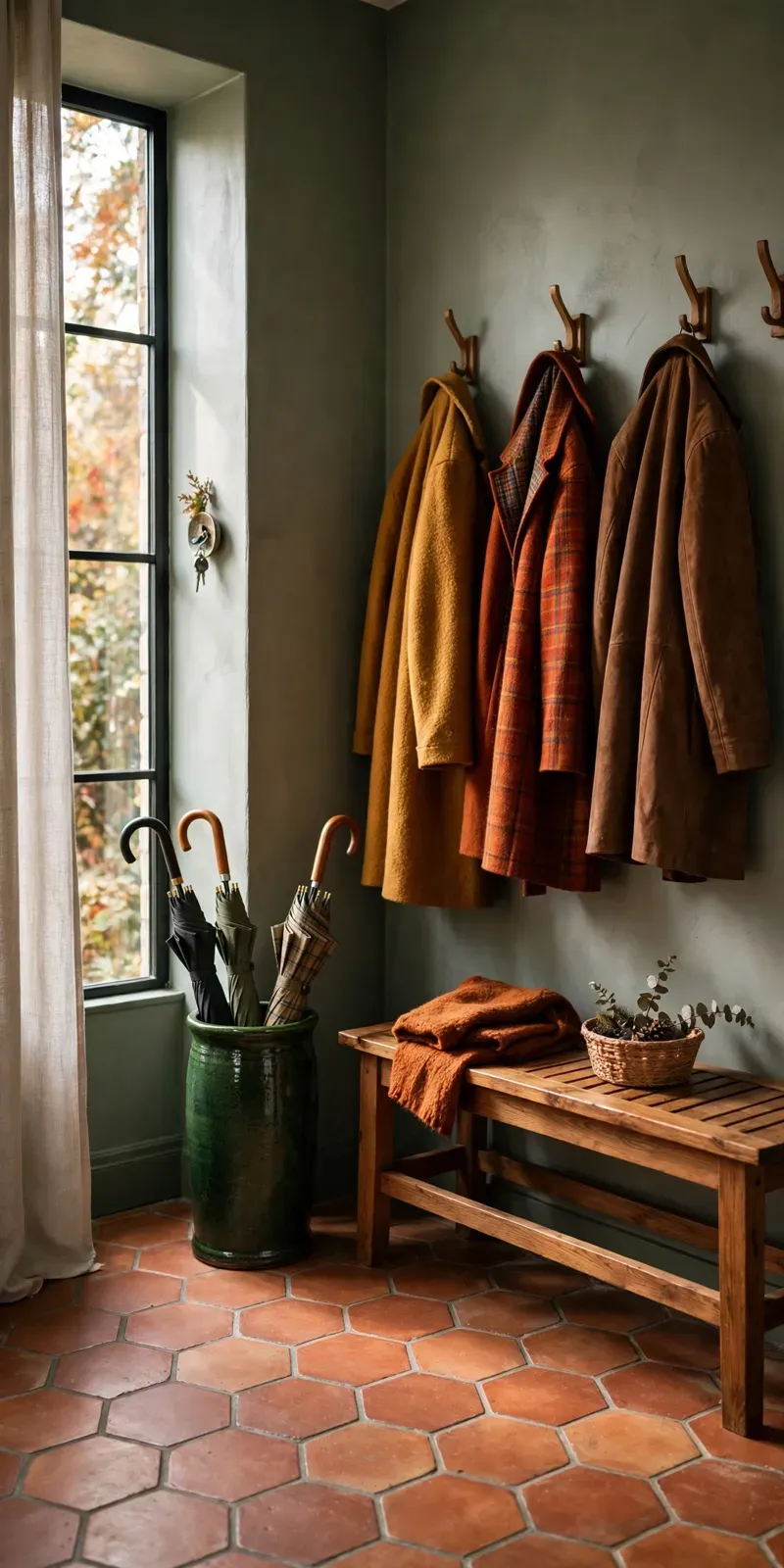
Budget and Buying Advice: Where to Spend and Where to Save
An umbrella stand entryway corner is one of the cheapest corners in the house to get right. Spend first on the stand’s base and tray: solid metal or glazed ceramic with a removable drip cup will outlast several flimsy holders and protect the floor, which is where the real money sits. A mid-priced stand that stands firm is better value than a decorative one that rocks. Second, spend on a proper rubber-backed washable mat in the right size; cheap foam mats slide and curl at the corners within weeks.
Save on everything decorative. A second-hand ceramic pot, a sturdy metal bucket, or a tall waste bin with a tray inside can all serve as a stand while you learn what your household actually needs. Hooks are inexpensive and easy to upgrade later. Avoid matching entryway sets sold as bundles: they often pair a good bench with a thin stand and a mat that is the wrong size for your door swing, and you end up replacing two of the three pieces anyway.
Buy after measuring, in this order: tray width, stand height, mat length. Take the door swing measurement with you, on paper, because entryways are always smaller in the shop than they looked at home.
Common Mistakes to Avoid
The most common mistake is a stand with no drip control at all, bought for its looks, which quietly pools water at its base and damages the floor it was meant to protect. The second is placing the corner inside the door swing, so the stand is nudged daily until it migrates into the walkway. Third, overfilling: a stand crammed with guest umbrellas, walking sticks and broken spares holds the everyday umbrellas at an angle, dripping outside the tray. Keep a separate home for rarely used pieces.
Fourth, forgetting folding umbrellas. If half the household carries compact umbrellas, provide a small basket or a divided section for them, or they will be tossed on the bench and drip there instead. Finally, never place the corner on a pale, unwashable rug for the sake of a matched look. This patch of floor has a wet job to do; dress it for the job. Every one of these mistakes works against the point of an umbrella stand entryway corner, which is to keep water in one predictable place.

Frequently Asked Questions
How tall should an umbrella stand be?
Aim for 45 to 55 centimetres for full-length umbrellas, deep enough that the canopy sits inside without the stand tipping. For mostly folding umbrellas, a shorter stand around 30 centimetres, or a divided holder, stops them sinking out of reach.
How do I stop an umbrella stand smelling musty?
Empty the drip tray after wet days, wipe the inside weekly, and let umbrellas dry open for a few minutes over the mat before closing them away. Airflow does most of the work. A spoonful of bicarbonate of soda in the tray during a very wet week absorbs lingering odours. In a small umbrella stand entryway corner, that weekly wipe matters even more, because there is less air moving through.
Can this corner work in a very small flat?
Yes. Use a slim rectangular stand that hugs the wall, a tray that doubles for shoes, and a single hook above. The whole umbrella stand entryway corner can fit in a strip 30 centimetres deep beside the door, which is space most small entryways have but rarely use on purpose.
What is the best material for a stand on a wood floor?
Metal or glazed ceramic with a separate removable tray is safest, because the tray, not the stand’s base, holds the water. Whatever the material, keep the boot tray underneath and check beneath it monthly so no hidden damp sits against the boards.
Where should the stand go if there is no corner free?
Place it flat against the wall on the hinge side of the door, outside the swing, with the tray beneath. A corner is ideal because two walls brace the stand, but a wall-side spot with a weighted base works nearly as well in practice.
A front door area will always be a busy, practical place, but it does not have to be a soggy one. One steady stand, a tray that catches what falls, a mat that can be washed, and a hook for the coat: four simple pieces that give every wet arrival a place to land. Set the umbrella stand entryway corner up once, keep the tray emptying habit, and rainy days will stop following you into the house.